

- 14 Views
- 21 Min Read
- (0) Comment
If you want a safari that delivers fast, Chobe is hard to beat. A Chobe River cruise is more than a relaxing add-on after Victoria Falls. It is one of the best safari experiences in Botswana for close wildlife viewing, eye-level photography, and easy sightings. The big advantage is simple: animals gather along the river, boats often get you closer than vehicles, and the cruise works for first-time visitors, couples, families, and photographers.
In short, a Chobe River cruise is best for travelers who want high wildlife density, easy viewing, and strong elephant sightings with minimal effort. If you book one, the most important things to understand are season, boat type, border logistics, and whether you want a shared or private trip.
Booking windows that actually make sense
Logistics, Transfers and Booking Tips
What to pack and what actually helps
Pricing, Packing, Accessibility and Safety
Photographers who care about angles
Families who need easier pacing
Couples who want a relaxed mix
Sample Itineraries for Couples, Families and Photographers
Boat Types and How They Shape Your View
Day, Sunset and Private Cruises Compared
What the sub-seasons actually mean
Why birds and water animals dominate the view
Flood regime and wildlife concentration
What Makes the Chobe River Special
The trade-off you should expect
Why a Chobe River Cruise Feels Like a Different Safari
Table of Contents
- Why a Chobe River Cruise Is a Different Safari Experience
- What Makes the Chobe River Special for Safari Cruises
- Best Time for a Chobe River Cruise
- Chobe Day Cruise, Sunset Cruise, and Private Cruise Compared
- Best Chobe River Boat Types for Wildlife Viewing and Photography
- Sample Chobe River Cruise Itineraries for Couples, Families, and Photographers
- Chobe River Cruise Prices, Packing List, Accessibility, and Safety
- Chobe River Cruise Logistics, Transfers, and Booking Tips
- FAQ, Chobe River Cruise Questions People Also Ask
- Is a Chobe River cruise worth it?
- How long is a Chobe River cruise?
- What animals can you see on a Chobe River cruise?
- What is the best time of day for a Chobe River cruise?
- What is the best month for a Chobe River cruise?
- Can you do a Chobe River cruise from Victoria Falls?
- Are private Chobe River cruises better than shared cruises?
- Is a Chobe River cruise safe?
Why a Chobe River Cruise Is a Different Safari Experience
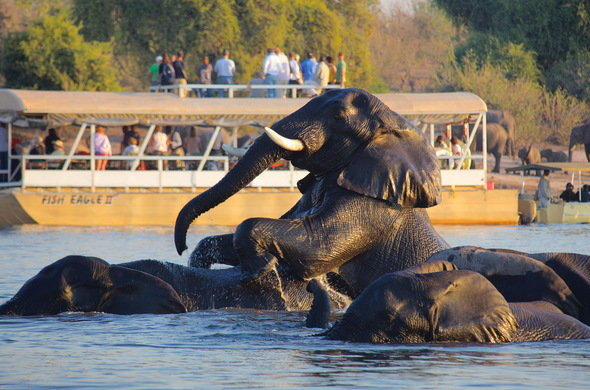
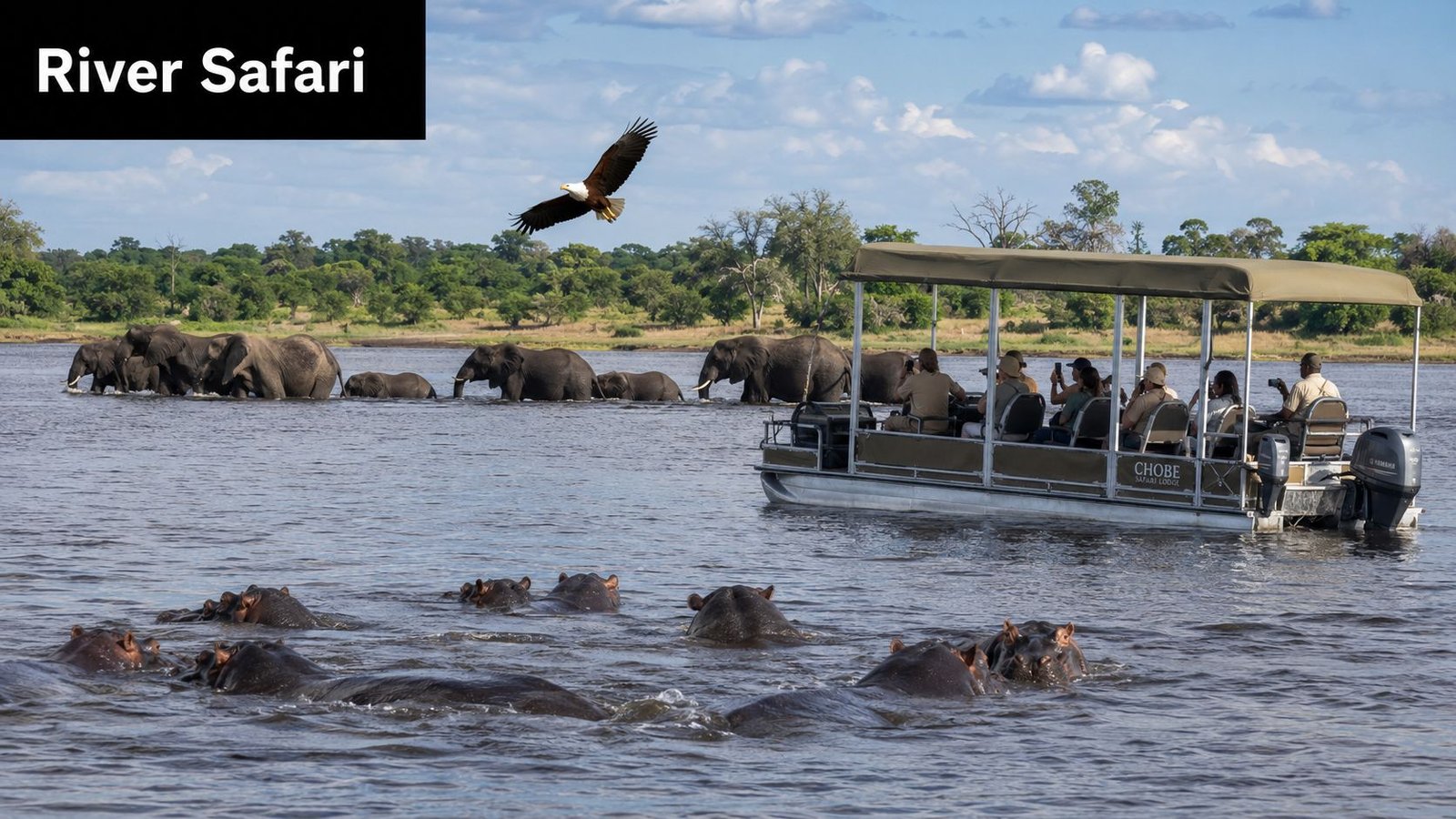
A Chobe River cruise feels different because you watch wildlife from water level, not from a vehicle track. That lower angle changes everything. Elephants wade across the channel, hippos surface close to the hull, and birds work the reeds with far less tension than they often show around a convoy of vehicles.
A good Chobe morning starts quietly. The engine drops to idle, the boat glides toward the bank, and within minutes you see why this is not just a scenic ride. It is a safari with its own rhythm. On land, guides read tracks, shade, and movement. On the water, the river itself pulls animals into view because it is the permanent water source.
Why a Chobe safari boat gets you so close to wildlife
The biggest advantage of a Chobe River cruise is proximity without as much pressure on the animals. A quiet boat can often drift closer than a road vehicle usually should, because the viewing angle is lower and animals do not always react the same way to an approach from the water. That matters when you are watching elephant behavior, hippo posture, crocodiles on the bank, or birds moving through the reed line.
Quick answer: if you want eye-level wildlife viewing, the river often beats a vehicle. If you want to change direction fast or chase a sighting inland, a game drive still wins.
This format also rewards patience. You can hold position near bathing elephants, wait for a fish eagle to dive, and stay put when the guide spots movement on the far bank. That is much harder on a rushed game drive, and it is one reason river cruises often produce better behavior-based sightings than people expect.
If you are comparing Chobe with other safari products, read what makes Chobe National Park special before you book, because the river only makes full sense once you understand the wider wildlife corridor.
Chobe River cruise trade-offs to expect before booking
The downside is straightforward. You do not control the route as freely as you do on land, you work within departure windows, and the best boats can sell out early. Boat size matters too. A larger deck usually gives you more comfort, while a smaller platform often gives you quieter movement and better photo angles.
The smart way to choose is not asking whether you should do a boat safari or not. It is asking what matters most to you: stable viewing, better photo access, or group comfort. In Chobe, those differences become obvious very quickly.
What Makes the Chobe River Special for Safari Cruises
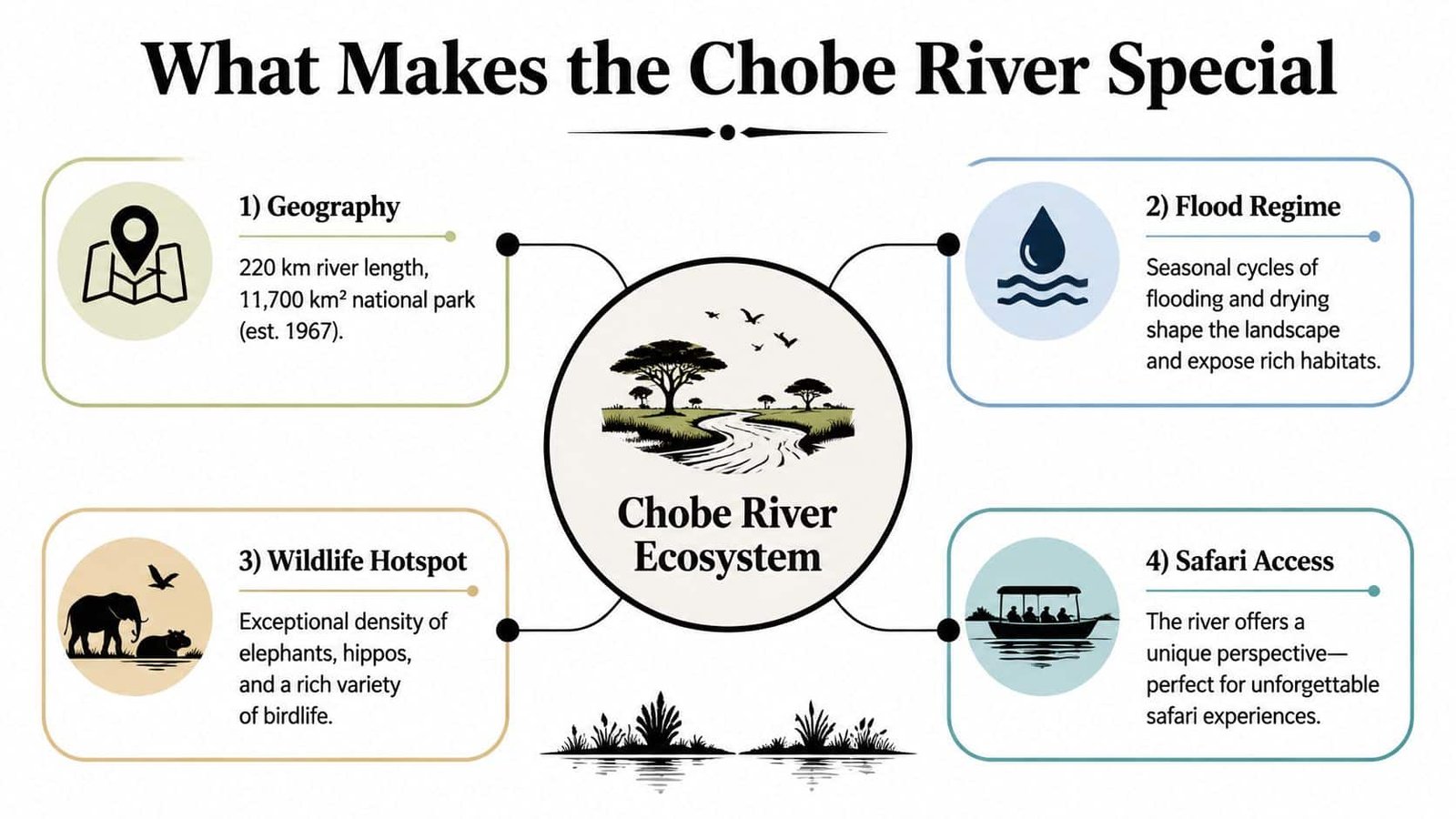
The Chobe River is special because it combines protected habitat, permanent water, and a major wildlife corridor in one of southern Africa's best-known safari regions. In simple terms, it creates the exact conditions that make boat safaris work well.
Chobe National Park was officially established in 1967 and covers about 11,700 square kilometres (Chobe National Park overview). That scale matters because the river is not just a scenic edge. It sits directly along the park's northern boundary, which means cruise boats travel on a real wildlife line, not somewhere outside the main action.
The river also lies in one of the region's most unusual border zones. Botswana tourism sources describe the area around Kazungula as the point where Botswana, Namibia, Zimbabwe, and Zambia meet, and they note that the Chobe forms part of the broader Kavango Zambezi transfrontier conservation area (Botswana tourism on Chobe National Park). That helps explain why Chobe river cruises pair so naturally with Victoria Falls and why multi-country safari plans work so well here.
Flood patterns and Chobe wildlife concentration
The Chobe is not a static river. Annual floodwaters are generated far upstream and travel more than 1,000 km before reaching the system, with the peak pulse usually arriving toward the end of the wet season or the start of the dry season (PLOS flood timing summary). That seasonal pulse changes shoreline shape, launch conditions, and how closely boats can work along the banks.
Wildlife concentration changes with it. During the May to October dry season, animals gather near the permanent river corridor. During the wet months, they spread out more widely into the surrounding habitat. The basin can be inundated across roughly 12% to 62% of its area depending on flood timing (PLOS floodplain dynamics). In practical terms, that means Chobe river cruise sightings are usually densest when the land away from the river is drier.
Why birds, hippos, and crocodiles dominate Chobe River sightings
Birds and water-based species stand out on a Chobe River cruise because you are watching directly along the river edge they use every day. Hippo pods, crocodile basking banks, kingfishers, fish eagles, herons, and storks are not side sightings here. They are central to the experience.
Simple rule: if the operator can hold a quiet line near the bank, you usually get the best Chobe sightings. If the boat is noisy or too large for the channel, sighting quality can drop fast.
That is why Chobe is often described as one of Africa's classic river safari destinations. The protected setting, cross-border ecology, and seasonal flood cycle all support a very specific experience, a low-impact safari focused on shoreline wildlife and natural behavior.
There's also a useful pairing point for travelers building a bigger trip. If you're already interested in the regional context, discovering Chobe's wildlife gem makes the most sense before you compare cruise dates, because the riverfront is only one slice of the park experience.
Best Time for a Chobe River Cruise
The best time for a Chobe River cruise is usually the dry season, from May to October. This is when wildlife gathers along the river, sightings feel more concentrated, and first-time visitors get the classic Chobe experience.
If you care more about lower prices, greener scenery, and fewer people on the boat, the wetter months can still work well. Chobe cruises run year-round, but what changes is the viewing pattern, not whether cruises operate.
Dry season vs wet season for Chobe River cruises
The easiest way to compare Chobe cruise seasons is this: May to October is best for wildlife density, while November to April is better for green landscapes and lower prices. In the dry months, water is scarce away from the river, so elephants and other animals gather near the channel. In the wetter months, the landscape opens up and animals disperse more widely.
| Chobe Cruise Season Comparison | Period | Wildlife Density | Scenery | Weather | Price Level (vs Peak) |
|---|---|---|---|---|---|
| Chobe Cruise Season Comparison | Dry season, May to October | Highest concentration along the river corridor | Cleaner, more open sightlines | Cooler mornings, hotter afternoons | Peak |
| Chobe Cruise Season Comparison | Shoulder months, May, June, October | Strong, but less crowded than peak | Balanced mix of green and open banks | Variable, comfortable | Lower than peak |
| Chobe Cruise Season Comparison | Green season, November to April | More dispersed viewing | Lush, wet, and very green | Rain can interrupt comfort | Lowest |
For most travelers, the elephant sweet spot is August to October. Herds cluster along the river, visibility is strong, and wildlife behavior can be especially rewarding to watch. If you want classic elephant scenes on the riverbank, this is the best window.
What Chobe cruise sub-seasons mean for wildlife and price
Operators usually split the year into three pricing bands: peak, shoulder, and green season. The price gap between those periods can be meaningful, but the bigger difference is how the cruise actually feels. Peak season usually brings fuller boats and more reliable wildlife concentration. Green season often feels calmer, more spacious, and more relaxed.
June to August mornings are the coolest of the year, so bring a fleece or light jacket. By September and October, afternoon heat can feel intense, which makes shade and water more important than extra clothing. November to March can also bring higher water, which may limit access for some smaller craft on certain sections.
Best time summary: book dry season for the strongest first-time Chobe cruise experience, shoulder season for a balance of value and sightings, and green season for lower costs and lush scenery.
If you are comparing operator calendars, timing matters more than the marketing label. This Chobe timing guide is the right place to cross-check your travel priorities.
Chobe Day Cruise, Sunset Cruise, and Private Cruise Compared
The best Chobe River cruise depends on what you want most. Choose a day cruise for wildlife volume, a sunset cruise for atmosphere and golden light, or a private cruise for flexibility and more control over your experience.
Shared Chobe day cruises
A shared day cruise is often the easiest and most affordable place to start. Most run for about 3 hours in the morning or afternoon, and they work especially well in dry season when wildlife gathers close to the river. If your goal is to see as much as possible at a manageable price, this is usually the best-value option.
Chobe sunset cruises
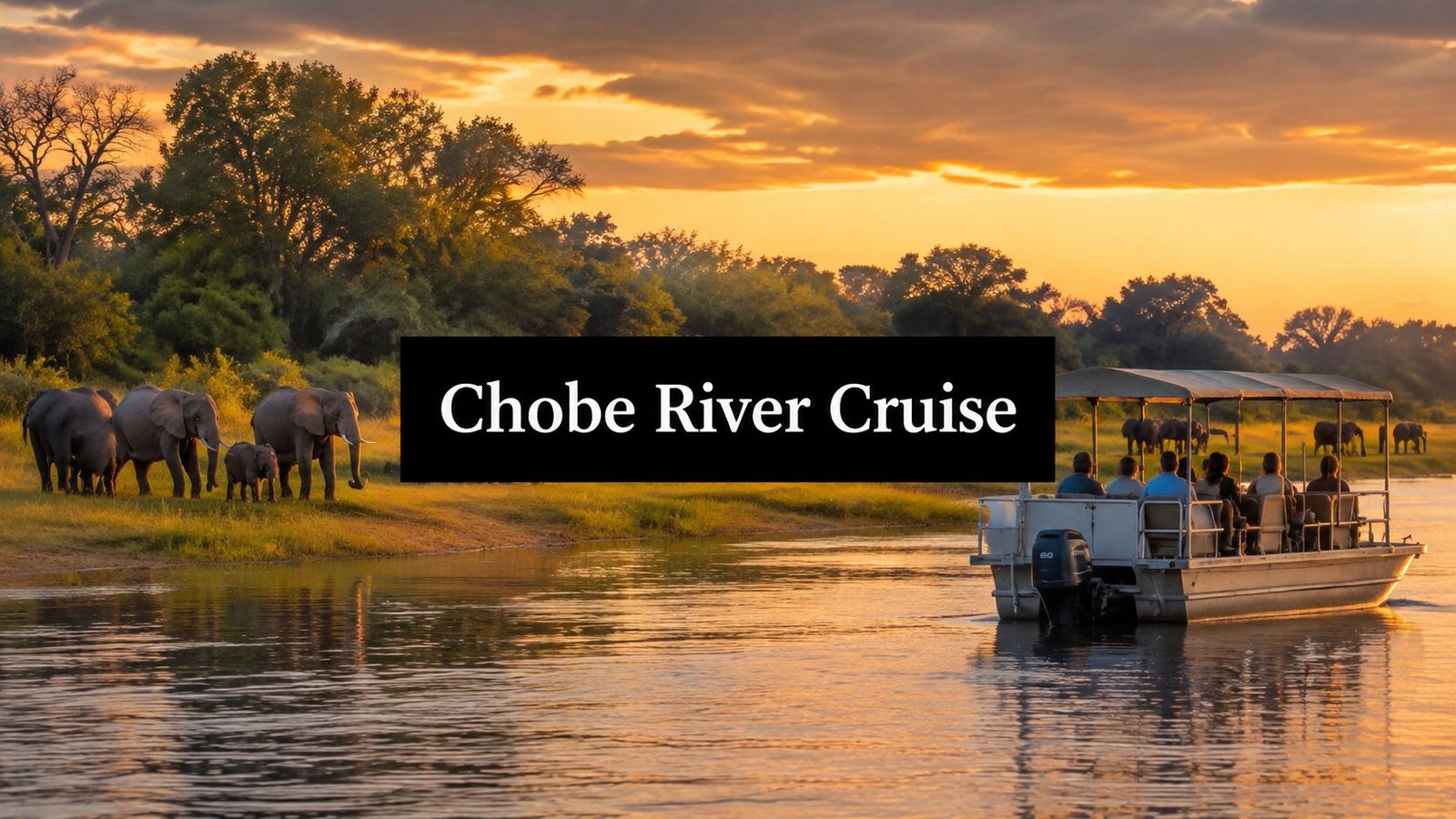
A Chobe sunset cruise is popular for a reason. The light softens, hippos become more vocal, and the whole river feels calmer by late afternoon. If you want a more memorable mood, better warm light, and a relaxed pace, sunset is often the best slot to book.
Private Chobe River cruises and charter boats
A private or charter cruise is best for travelers who want flexibility. You can shape the outing around first light, stay longer with a promising sighting, or focus on a quieter bank away from the main shared departures. For wildlife photographers and small groups, that extra control can be worth the higher price.
| Day, Sunset and Private Cruises at a Glance | Format | Duration | Price Range (USD) | Group Size | Best For |
|---|---|---|---|---|---|
| Day, Sunset and Private Cruises at a Glance | Day cruise | 3 hours | Shared boat pricing varies by operator and season | Shared | Budget, wildlife volume |
| Day, Sunset and Private Cruises at a Glance | Sunset cruise | 2 to 3 hours | Shared boat pricing varies by operator and season | Shared | Golden light, atmosphere |
| Day, Sunset and Private Cruises at a Glance | Private charter | Flexible | Higher than shared departures | 2 to 6 guests | Flexibility, intimacy, camera work |
The practical choice is simple. Pick day for sightings, sunset for mood and light, or private for control. If you are still undecided, compare your options against this Chobe day trip breakdown before you commit.
Best Chobe River Boat Types for Wildlife Viewing and Photography
Boat type matters on the Chobe River because it affects comfort, photo angles, noise, and how close you feel to the water. In simple terms, smaller boats feel more intimate, larger boats feel more comfortable, and pontoons often give the most open view.
Small Chobe riverboats
Smaller riverboats usually sit lower to the water and move quietly along the bank. They are often the best choice for photographers and private groups because low gunwales make framing easier and it is simpler to reposition around the boat. If closeness is your main priority, this is usually the strongest option.
Large safari boats and Chobe houseboats
Larger safari boats and houseboats trade some intimacy for more comfort. They suit families, mixed-age groups, and travelers who care about shade, restrooms, seating space, and a steadier ride. You may feel a little farther from the action, but the overall experience is often easier and more relaxed.
Chobe pontoon boats
Pontoon boats often sit low and offer broad, open sightlines. They can be excellent for photography because the viewing lines are less blocked, but they also expose you more to sun and spray. If camera access matters more than cabin-style amenities, the trade-off can make sense.
| Chobe Cruise Boat Types Compared | Boat Type | Capacity | Deck Access | Noise Level | Photo Access | Best For |
|---|---|---|---|---|---|---|
| Chobe Cruise Boat Types Compared | Smaller riverboats | 8 to 16 seats | Low, close to water | Lower | Strong | Photographers, private groups |
| Chobe Cruise Boat Types Compared | Large houseboats or double-deck safari boats | 30 to 60 seats | Upper viewing deck plus indoor space | Moderate | Good, less intimate | Families, comfort-focused travelers |
| Chobe Cruise Boat Types Compared | Pontoon boats | 10 to 20 seats | Open, lowest to water | Low to moderate | Very strong | Wide views, sun and spray are acceptable |
The main trade-off is clear. Shade and amenities usually mean a little more distance from the wildlife, while proximity and photo access usually mean giving up some comfort. If you want a boat that fits your wider itinerary, these Chobe activities are worth reviewing.
Sample Chobe River Cruise Itineraries for Couples, Families, and Photographers
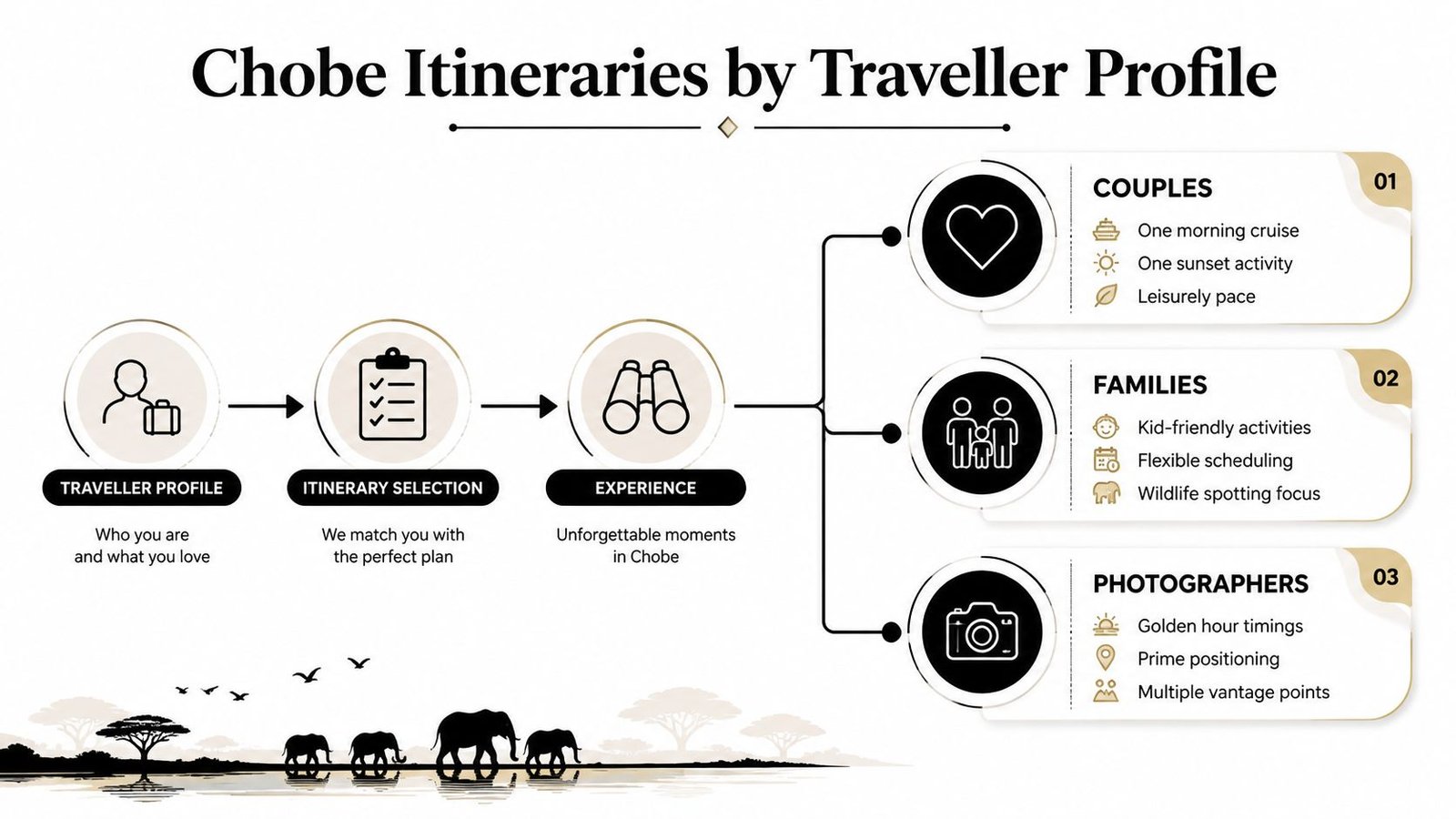
The right Chobe plan depends on the traveler. Couples usually want atmosphere, families need easier pacing, and photographers need control over timing and boat position. That is why a generic package is not always the best fit.
Best Chobe itinerary for couples
For couples, a good Chobe itinerary is usually a 3 to 4 night stay built around one morning cruise, one sunset cruise with drinks, one private full-day charter with a bush lunch, and one game drive. That mix gives you water, land, and different light conditions without making the trip feel overplanned.
A realistic land-only budget for this style is roughly $1,400 to $2,200 per couple. For most couples, the value comes from variety and pacing, not from making every activity private.
Best Chobe itinerary for families
Families usually do best with shared afternoon cruises, a half-day houseboat cruise with lunch, and shorter game drives. Boats with shade and restroom access are especially useful with children, and afternoon departures are often easier than very early starts. In this case, comfort and pacing matter more than chasing the perfect wildlife window.
A family-focused package often lands around $900 to $1,400 per person including lodge. That is usually better value than paying for exclusivity you may not use fully.
Best Chobe itinerary for photographers
Photographers should aim for two private morning cruises at first light, one private late-afternoon cruise on a low pontoon, and a full-day boat with a picnic and an off-river walking slot. This is the clearest case where private access is worth paying for.
A serious photography itinerary can run about $2,800 to $4,500 per person. That is expensive, but flexibility is the point. If the guide spots behavior worth waiting for, you want the freedom to stay with it.
The cleanest way to think about it is simple. Couples want atmosphere, families need easy logistics, and photographers need control. If you want a wider trip-planning view, Maximum Adventure Trails also lists Chobe day-trip options that combine the river cruise with other safari activities, which is useful when you are matching a lodge stay to a tighter schedule.
Chobe River Cruise Prices, Packing List, Accessibility, and Safety
Chobe River cruise prices vary most by trip length, boat type, and whether the cruise is shared or private. For 2026, shared sunset cruises are generally quoted around US$55 to 110 per person, full-day cruises around US$120 to 250, and private charters around US$900 to 2,000 for up to 12 guests. Those are the most useful comparison numbers when you start requesting quotes.
| Chobe River Cruise Price Comparison (2026) | Cruise Format | Duration | Price (USD) | Typical Inclusions |
|---|---|---|---|---|
| Chobe River Cruise Price Comparison (2026) | Sunset cruise | 2 to 3 hours | US$55 to 110 per person | Drinks, guide, park handling depending on operator |
| Chobe River Cruise Price Comparison (2026) | Full-day cruise | Full day | US$120 to 250 per person | Meals, drinks, guide, and transfers may be included |
| Chobe River Cruise Price Comparison (2026) | Private charter | Flexible | US$900 to 2,000 for up to 12 guests | Exclusive boat hire, route flexibility, guide support |
What to pack for a Chobe River cruise
For a Chobe River cruise, pack neutral layers, a wide-brim hat, binoculars, a 200 to 400 mm lens if photography matters, reef-safe sunscreen, a motion-sickness remedy, a waterproof phone pouch, and a light rain shell for the November to March period. If you want to travel lighter without forgetting genuinely useful gear, smart gear choices for travel is a practical packing reference.
Packing tip: bring one more warm layer than you think you need for the morning, and one less camera accessory than you are tempted to carry. Comfort matters more than overpacking on the river.
Accessibility is manageable, but it is not perfect. Most boats require boarding via a step-up gangway and do not have lifts, so travelers with mobility concerns should ask specifically for a larger houseboat or flatter boarding setup. If an operator cannot explain the boarding process clearly before payment, that is a red flag.
Safety is straightforward. Stay seated when the boat is moving, avoid standing near the rails, follow the guide around elephant bulls and hippo pods, and never feed or call wildlife. Botswana law requires life jackets for all passengers, and operators provide them.
Chobe River Cruise Logistics, Transfers, and Booking Tips
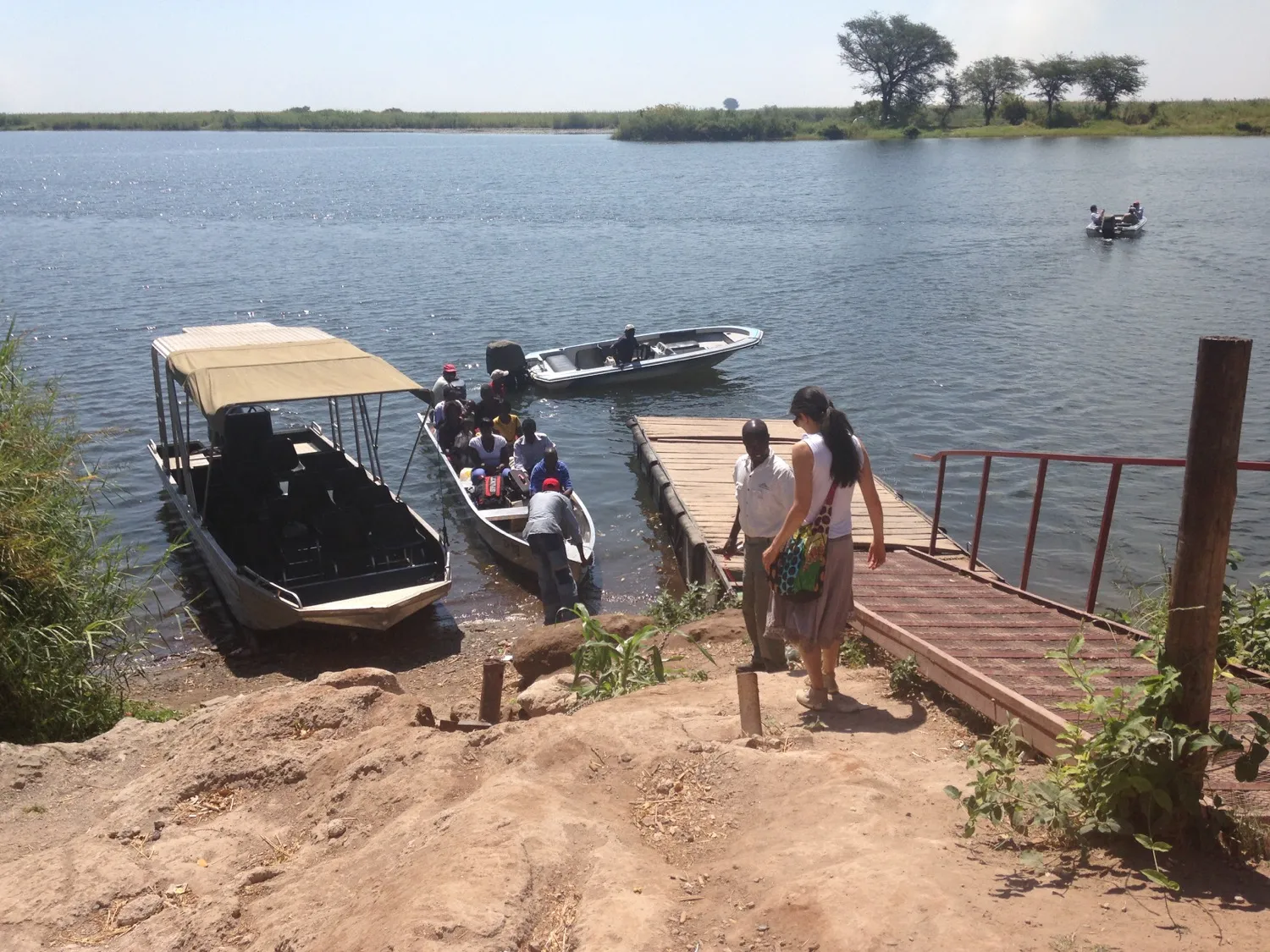
Most Chobe cruises launch from Kasane Immigration Jetty in Botswana. For many travelers, the real challenge is not the cruise itself but the border logistics around it. That is especially true on itineraries that include a houseboat moored on the Namibian side.
Many routes involve arriving in Botswana, then clearing immigration again to board a vessel, and the transfer can take 45 to 60 minutes (AmaWaterways Chobe cruise logistics). That is why timing matters more than the simplified version most brochures suggest.
Victoria Falls to Chobe transfers and border timing
If you are traveling from Victoria Falls, road transfers usually take about 1.5 to 2 hours depending on border processing and traffic. From Livingstone, the Kazungula Bridge generally makes the route feel more direct than older crossing patterns did. The key is to plan around border timing, not around the hope of a quick same-day connection.
Visa rules are worth checking before you book, especially if your route crosses into Namibia as part of a houseboat plan. Recent coverage notes that UK citizens have needed a Namibia visa since 1 April 2025 (AmaWaterways Chobe cruise logistics). US and EU passport holders should verify current entry requirements before departure, because this is exactly the kind of trip where an extra border can affect the day.
Park fees are often paid at the jetty by cash or card, so do not assume they are bundled automatically. Ask the operator what the deposit covers and what you will still pay locally.
Best time to book a Chobe River cruise
Shared shuttle transfers are often quoted around US$45 to 75 per person each way, while private vehicles are commonly US$180 to 260. If your lodge includes the cruise, confirm exactly what is covered before comparing it against outside operators.
Some lodges build cruises into the stay, including Chobe Safari Lodge, Sanctuary Chobe Chilwero, and The Old House. That can make planning easier, but only if you confirm whether cruise timing, park fees, and transfers are part of the nightly rate.
Booking answer: reserve sunset cruises 2 to 3 weeks ahead in peak dry season, book full-day and private charters 60 to 90 days out, and target April to early June for shoulder-season value with decent wildlife density.
Before paying a deposit, get the boat name, departure jetty, and park fee handling in writing. That one step prevents most Chobe booking problems.
FAQ, Chobe River Cruise Questions People Also Ask
Is a Chobe River cruise worth it?
Yes, a Chobe River cruise is worth it for most safari travelers because it offers close wildlife viewing, strong elephant sightings, and easier photography than many land-based drives. It is especially good for first-time visitors, couples, families, and anyone who wants a high-reward safari with less physical effort.
How long is a Chobe River cruise?
Most Chobe River cruises last 2 to 3 hours for standard shared departures. Full-day cruises and private charters can run much longer, depending on the operator, route, and whether meals or combined safari activities are included.
What animals can you see on a Chobe River cruise?
You can often see elephants, hippos, crocodiles, buffalo, antelope, and a wide range of birdlife on a Chobe River cruise. Common bird sightings include fish eagles, kingfishers, herons, storks, and other water-associated species.
What is the best time of day for a Chobe River cruise?
The best time of day depends on your goal. Morning cruises are usually best for active wildlife and calmer temperatures, while sunset cruises are best for warm light, atmosphere, and relaxed viewing.
What is the best month for a Chobe River cruise?
For classic wildlife density, the best months are usually August to October. If you want greener scenery, lower prices, and fewer crowds, the months from November to April can still be a good fit.
Can you do a Chobe River cruise from Victoria Falls?
Yes, many travelers do a Chobe River cruise as a day trip from Victoria Falls. The journey usually takes about 1.5 to 2 hours by road, but border processing can affect total travel time.
Are private Chobe River cruises better than shared cruises?
Private Chobe River cruises are better if you want flexibility, privacy, or more control over timing and boat position. Shared cruises are usually better for value and are often enough for travelers who mainly want good wildlife viewing at a lower cost.
Is a Chobe River cruise safe?
Yes, Chobe River cruises are generally safe when run by licensed operators and when passengers follow guide instructions. Standard safety rules include staying seated when the boat is moving, wearing or keeping a life jacket close by, and never trying to attract wildlife.
If you want a straightforward booking path instead of juggling operators, border notes, and boat types on your own, Maximum Adventure Trails can line up Chobe options around the way you travel. Visit Maximum Adventure Trails to compare river cruise day trips, lodge stays, and cross-border safari combinations before you lock your dates.