

- 128 Views
- 18 Min Read
- (0) Comment
You've landed at Victoria Falls with a few precious days ahead, a camera in your bag, and one practical question on your mind: should you spend more time watching the Zambezi thunder over the gorge, or follow elephants and lions through the bush? A safari and Victoria Falls journey can deliver both, but the strongest itinerary doesn't treat them as two unrelated attractions. It matches the season, park, border route, and pace to the experience you care about most.
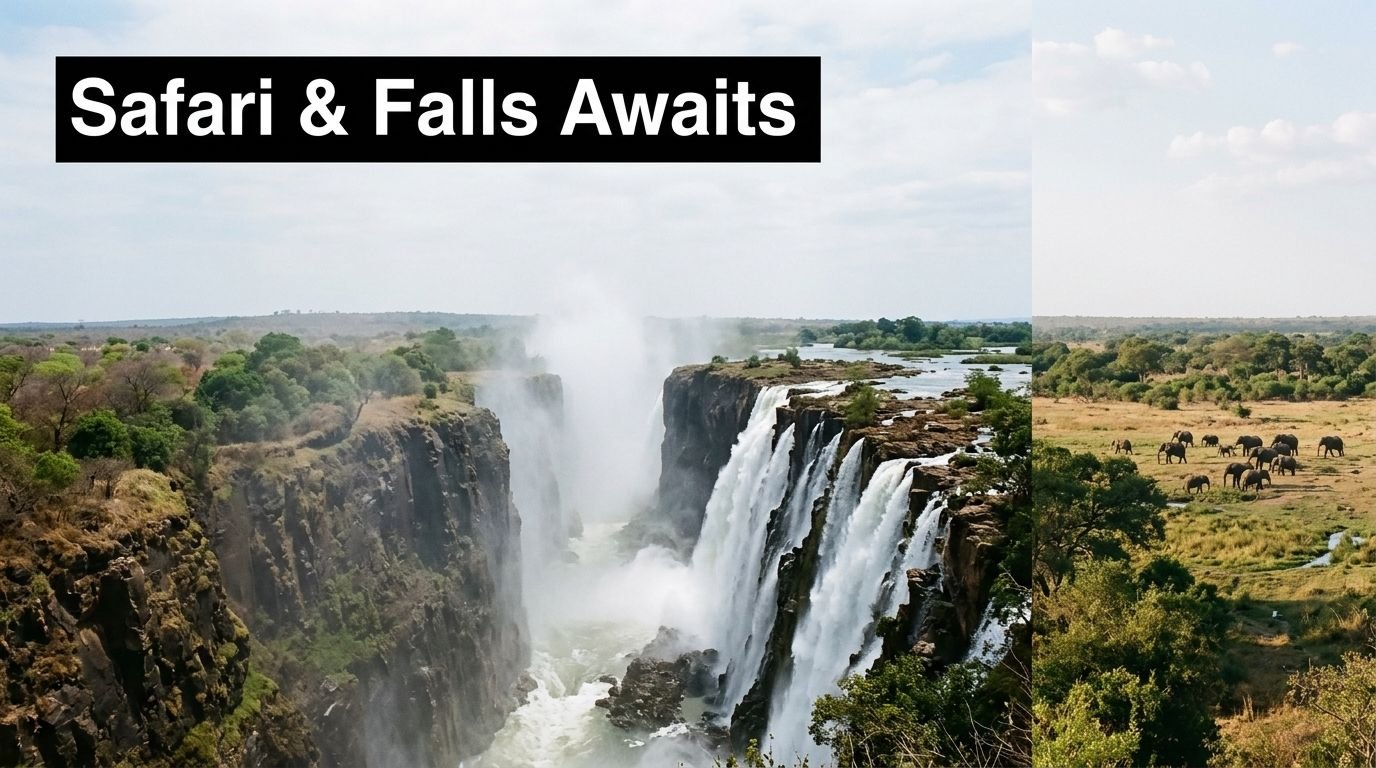
Table of Contents
- Introduction to Your Safari and Victoria Falls Adventure
- How Safari and Victoria Falls Fit Together as One Trip
- When to Go for Waterfall Views Versus Wildlife Sightings
- Choosing Your Safari Park Near Victoria Falls
- Sample Itineraries From 3 to 10 Days
- Transfers Visas Health and Money Essentials
- How to Book and Budget With Confidence
Introduction to Your Safari and Victoria Falls Adventure
Arriving in Victoria Falls can feel like opening the first page of a much larger journey. You may begin with a rainforest walk, spray drifting through the trees, then watch the Zambezi turn gold at sunset while choosing between Hwange, Chobe, or a longer Botswana route. The waterfall gives the trip a clear starting point. Nearby wildlife areas change the pace, replacing rushing water and crowded viewpoints with quiet roads, open bush, and patient game viewing.
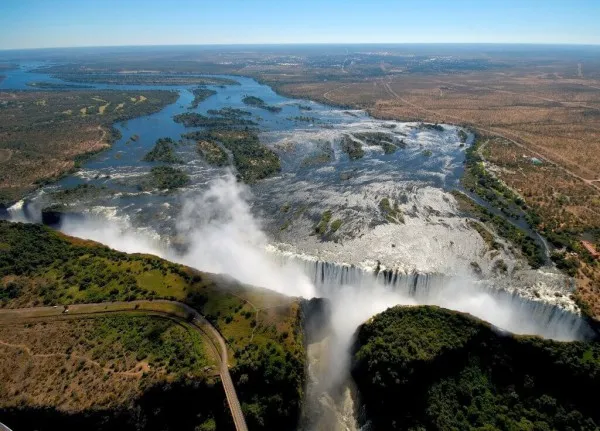
The central planning decision is seasonal. Higher water can make the Falls feel immense and theatrical, while a drier period may offer clearer rock and gorge views. Wildlife conditions also change as water becomes less evenly distributed across parks. Your itinerary therefore works best when it matches the spectacle you want with the animal sightings you value.
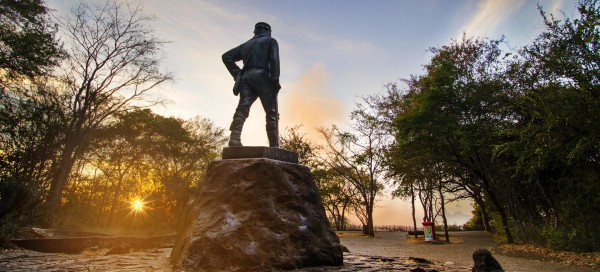
Victoria Falls has a modern tourism history shaped by two milestones. David Livingstone first saw the Falls in 1855 and named them after Queen Victoria. UNESCO inscribed the site as a World Heritage Site in 1989 and recognizes Victoria Falls as the world's greatest sheet of falling water. The protected area extends across Zambia and Zimbabwe, giving the landmark a major place in regional safari and adventure routes. UNESCO and tourism background on Victoria Falls
The Falls also support a substantial visitor economy. The rainforest attracts well over 1.5 million visitors annually, while the south-bank rainforest recorded 394,681 visitors in 2024, including 295,084 international visitors, according to the visitor figures cited in the supplied tourism context. That regular flow means travelers can find varied accommodation, transfers, activities, and onward connections into Zimbabwe and Botswana.
A simple arrival story
A first-time visitor from Europe or North America may arrive with a hotel, a rainforest visit, and one wildlife excursion already booked. The open question is whether a day trip will provide enough safari time or whether the animals deserve several nights. Season, personal priorities, and available travel time decide the answer more reliably than a general “best time” label.
A short holiday can combine the Falls with a Chobe day excursion. A longer trip can make Victoria Falls the first gateway in a Zimbabwe and Botswana circuit. Someone focused on wildlife may stay briefly at the waterfall before continuing to Hwange or the Okavango Delta. A photographer may reverse that balance, allowing more time for changing light, spray, and viewpoints.
This guide helps international travelers compare those choices in practical terms. It explains how the destinations connect, how water levels affect the Falls, and how nearby parks suit different safari aims. It also covers routes from three to ten days, plus transfers, visas, health preparation, money, and booking decisions. For broader regional planning, review these African tourism attractions before finalizing your route.
How Safari and Victoria Falls Fit Together as One Trip
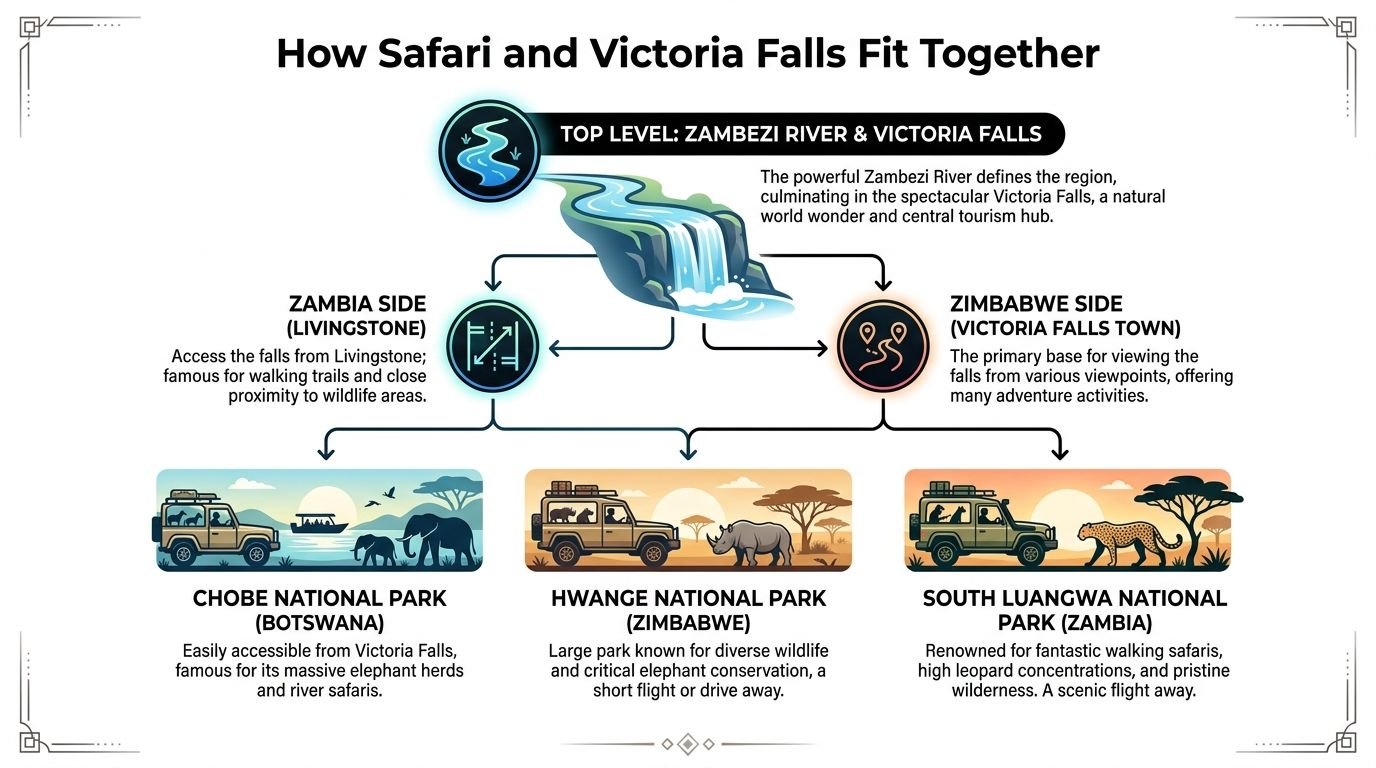
A traveler can land at Victoria Falls, spend a day surrounded by spray and rainforest, then reach a wildlife area without rebuilding the entire journey from scratch. The town works like a hub with several safari spokes. It sits on the Zambezi River, where the river forms part of the border between Zambia and Zimbabwe, and connects naturally with Zimbabwe's parks, Botswana's Chobe region, longer Zambian routes, and the Okavango Delta.
The local name, Mosi-oa-Tunya, means “Smoke that Thunders.” The name captures why the Falls feel less like a single viewpoint and more like a live natural performance. Water, mist, sound, rainforest, and gorge change the experience from one season to another. High discharge can fill the air with spray and hide sections of the gorge. Lower flow can reveal more rock and make some river activities more practical, subject to safety conditions.
The geography in practical terms
Victoria Falls belongs to two countries, yet visitors can treat the area as one connected travel base. The Zimbabwe side is associated with broad rainforest viewpoints. The Zambian side provides a different angle closer to the river, along with seasonal experiences such as Livingstone Island or Devil's Pool. Water levels affect access, so confirm operating conditions instead of assuming a particular activity will run on your travel date.
The nearby safari areas each answer a different planning question:
- Hwange National Park provides a classic Zimbabwe safari setting and pairs naturally with a Victoria Falls stay.
- Zambezi National Park is close to the Falls, making it suitable for travelers who want wildlife without a long transfer.
- Chobe National Park in Botswana adds river-based wildlife viewing and a practical cross-border extension.
- The Okavango Delta and Moremi suit a longer Botswana journey, with floodplains, water channels, and several nights in a more immersive wilderness setting.
- South Luangwa can extend a Zambia itinerary, although reaching it requires more careful transport planning than the closest parks.
Each spoke changes the pace. Victoria Falls is concentrated and sensory, with sound, mist, viewpoints, and short walks demanding attention. A game drive slows the focus across tracks, woodland, waterholes, and animal behavior. Chobe shifts attention to the river, while the Okavango Delta spreads the experience across a larger wetland system.
Why the gateway matters
Victoria Falls also functions as a useful arrival and connection point for regional travel. National tourist arrivals rose by 54% in 2023, reaching 1,602,781, compared with 1,043,781 in 2022. According to the tourism context cited here, national arrivals reached 1,613,901 in 2024, approximately 1% year-on-year growth. Zimbabwe tourism arrival context
According to the Zimbabwe Parks and Wildlife Management Authority annual figures, Victoria Falls and nearby Zambezi National Park together recorded 597,299 visitors in 2024, including 435,191 international visitors. Those figures help explain why operators organize waterfall visits, airport pickups, park transfers, and cross-border excursions around the town.
The planning choice is straightforward. A short trip can use Victoria Falls as a base for a nearby wildlife add-on. A longer itinerary can begin there and continue through Zimbabwe and Botswana. Travelers prioritizing convenience may choose Zambezi National Park or Chobe. Those seeking greater wildlife depth may allocate more nights to Hwange, the Okavango Delta, or South Luangwa. Browse safaris from Victoria Falls to compare ways to combine the waterfall with nearby parks.
When to Go for Waterfall Views Versus Wildlife Sightings
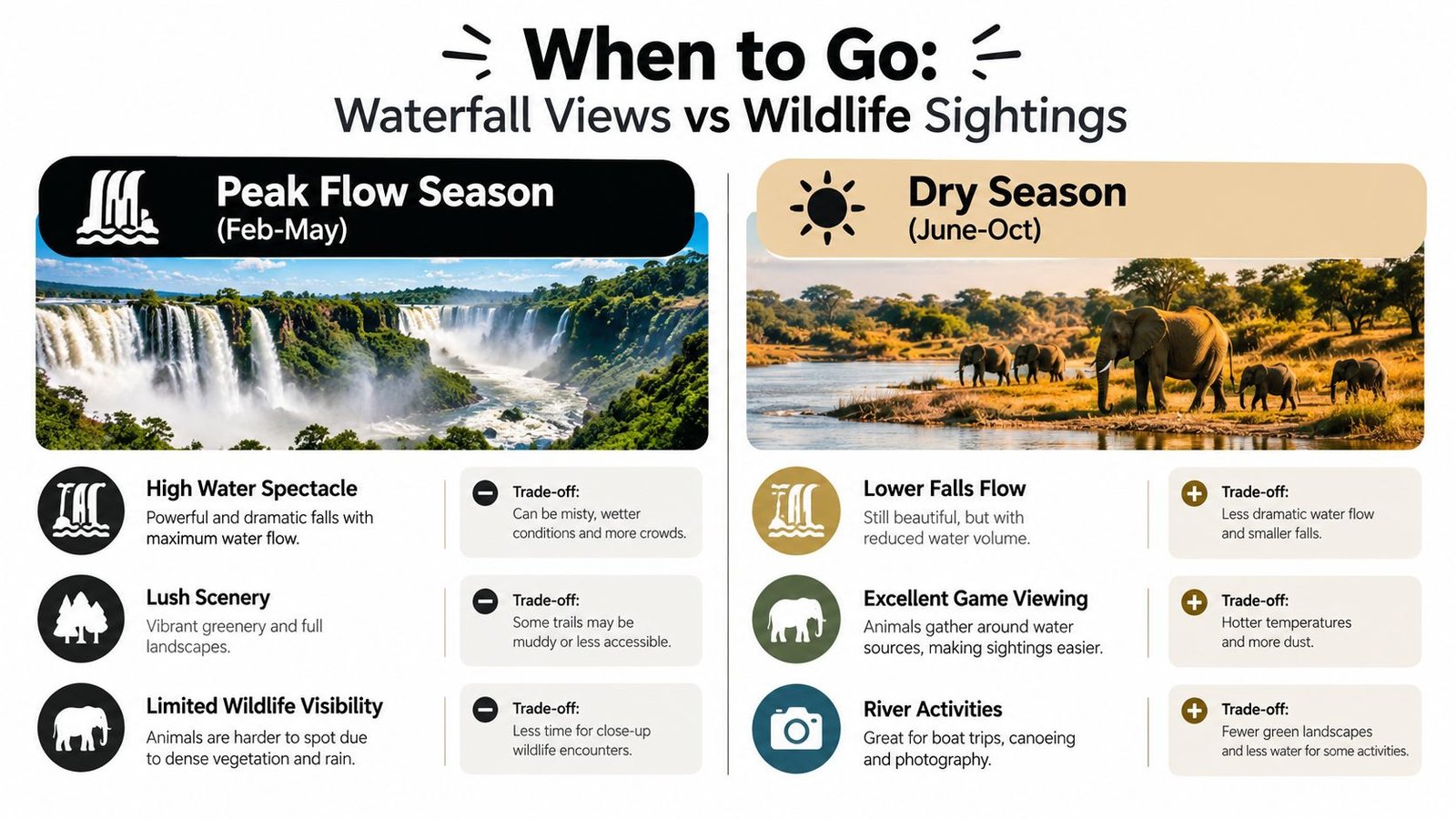
You arrive at Victoria Falls expecting one perfect view, then discover that the river is making the decision with you. Higher Zambezi flow creates the most dramatic waterfall spectacle, while drier conditions often make wildlife easier to find and photograph. The right dates therefore depend on whether the waterfall or the safari should carry more of the trip.
Long-run hydrology and tourism research links declining Zambezi discharge with lower visitor arrivals during drought periods, including 1982, 1998, 2016, and 2019/2020. Research on hydrology, tourism, and Victoria Falls demand Water levels affect the view itself, the comfort of walking near the Falls, and which activities operators can run safely.
High flow favors spectacle
Strong discharge creates heavy spray and a powerful, room-filling impression. Viewpoints can feel humid and wet, while mist may hide parts of the gorge. First-time travelers often enjoy the sound, drama, and atmosphere. Photographers may prefer a clearer season if distant views and detailed compositions matter more than scale.
High-flow months suit a waterfall-first itinerary. Rainforest walks and viewpoint stops become the main activity, so waterproof bags, lens cloths, and quick-drying layers are more useful than elaborate camera equipment. Allow enough time for several viewpoints because spray can make one overlook appear completely different from another.
Lower flow favors detail
As flow declines, sections of the gorge may become easier to see. Photographers can often work with clearer compositions, while travelers interested in geological forms, gorge walks, and close observation may notice more detail. Some water-based activities become possible only after operators judge conditions safe, so their decision remains final.
The wildlife side often strengthens during the dry season. Animals gather around remaining water sources, and thinner vegetation can make game drives feel less like searching through a wall of leaves. The Falls may look less uniformly powerful, but wildlife can become the stronger half of the journey.
Planning rule: Choose your priority before choosing your dates. A waterfall-first traveler and a wildlife-first traveler may reasonably select different seasons.
Shoulder season is the compromise
Recent enquiry data shows growing interest in shoulder-season travel. April, May, September, and October accounted for 38% of safari enquiries in 2025, while Victoria Falls appeared in 10% of enquiries. Safari enquiry and travel trend context These months can suit travelers balancing waterfall conditions, photography, wildlife, and a manageable pace. For a month-by-month view of water levels and viewing conditions, see this guide to the best time to see Victoria Falls.
Use the following choices as a practical starting point:
- First-time waterfall visitor: Favor a period when the Falls remain visually strong, and allow time for more than one viewpoint.
- Photographer: Consider a lower-flow or shoulder window when spray is less likely to hide the gorge, then check current river conditions.
- Safari-focused traveler: Favor a drier period and give more nights to a wildlife area than to waterfall sightseeing.
- Mixed-interest couple or family: Use shoulder season and divide the itinerary so neither experience feels like an afterthought.
Visitor demand remains strong. Victoria Falls recorded 61,139 visitors in Q1 2025, while recent reporting also described more than 64,000 visitors in Q1 2026. Recent Victoria Falls visitor trend reporting Booking ahead can help during popular travel windows, particularly when your preferred park, guide, or viewpoint schedule is limited.
Choosing Your Safari Park Near Victoria Falls
The closest park isn't automatically the right park. Choose according to the experience you want, the number of nights available, and whether you prefer a quick excursion or a slower safari with repeated game drives.
| Park | Distance and Access | Signature Experience | Best Trip Fit |
|---|---|---|---|
| Hwange National Park | Road transfer from Victoria Falls, usually planned as an overnight stay rather than a rushed outing | Zimbabwean woodland and open country, with strong large-animal viewing opportunities | Travelers with time for a dedicated Zimbabwe safari |
| Chobe National Park | Cross-border road access from Victoria Falls through the Botswana gateway | River-focused wildlife viewing, especially attractive during dry conditions | A day trip for limited time, or an overnight extension |
| Zambezi National Park | Close to Victoria Falls and easy to combine with a town-based stay | Shorter game drives and riverine landscapes near the Falls | First-time visitors wanting a convenient wildlife add-on |
| Okavango Delta and Moremi | Best reached through a planned Botswana route, often using road and air connections | Water channels, floodplains, and multi-day wilderness immersion | Longer holidays with a strong safari emphasis |
Hwange for depth and classic game drives
Hwange makes sense when you want the safari to feel like a major part of the holiday rather than a side activity. The transfer from Victoria Falls takes planning, but the reward is more time in a dedicated wildlife environment. A stay here works particularly well after the excitement of the Falls because the pace becomes quieter and more spacious.
First-time safari travelers often benefit from at least one overnight stay, since game viewing depends on light, animal movement, weather, and guide decisions. A short visit can still be worthwhile, but a longer stay gives you more opportunities to experience different drives and habitats. See this practical guide to a Hwange National Park safari when comparing lodge-based options.
Chobe for a convenient cross-border day
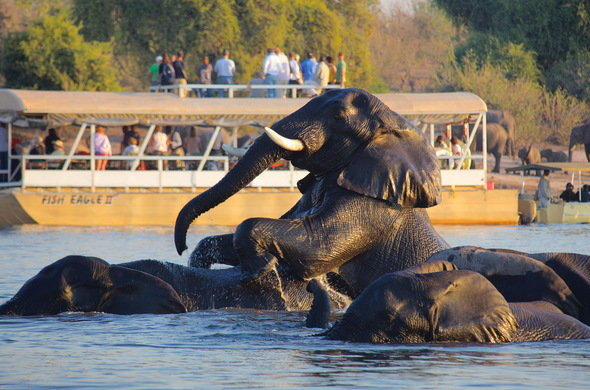
Chobe is the natural choice for travelers who want Botswana included without committing to a long circuit. The river creates a different viewing experience from a standard vehicle drive, and a combined land-and-water day can add variety to a short itinerary.
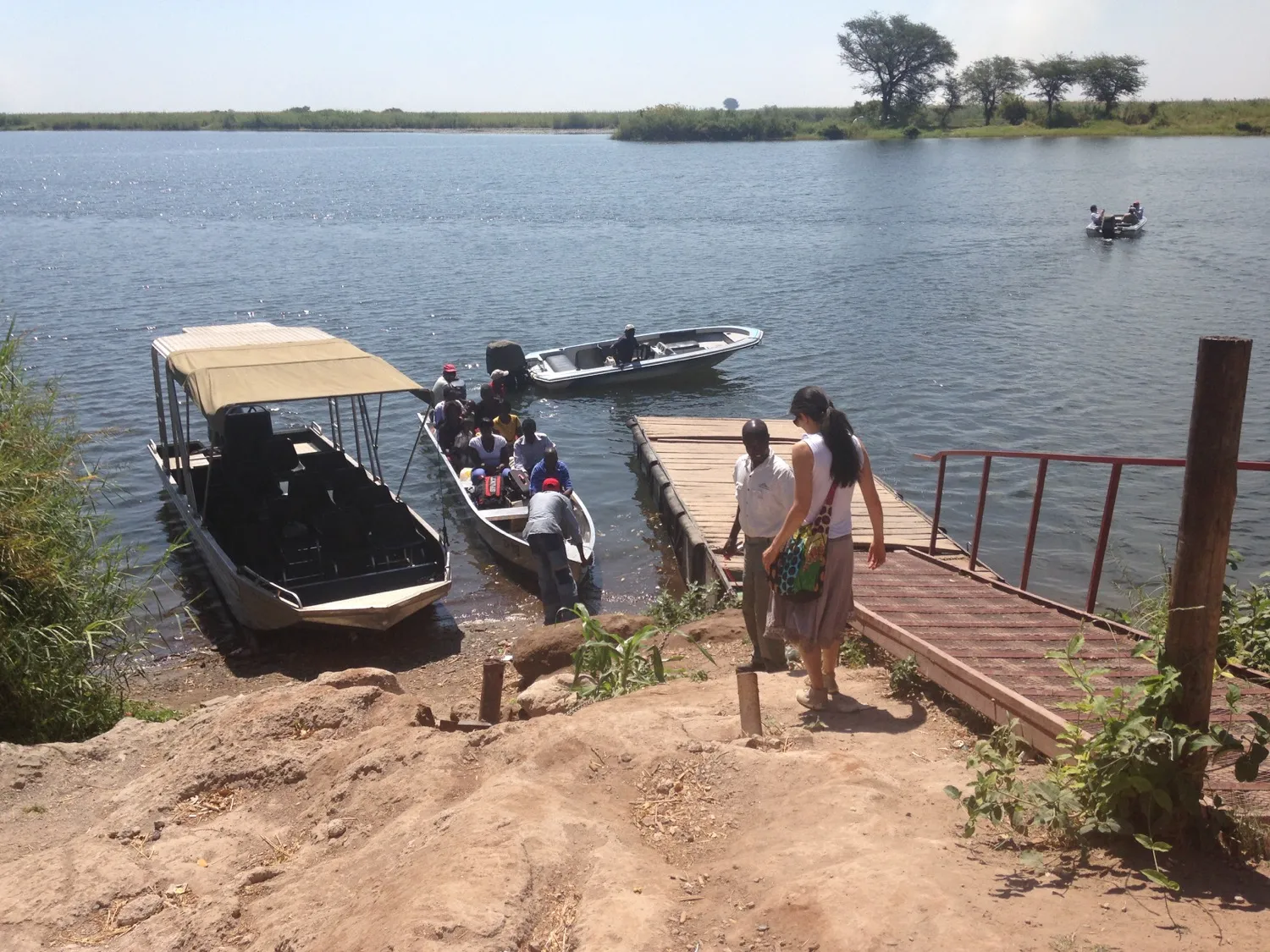
The trade-off is time. Border formalities and transfer scheduling can make the day feel full, especially when many visitors arrive at similar times. An overnight stay in the Kasane area gives you more breathing room, while a day trip suits travelers who have only a few nights.
Zambezi National Park for ease
Zambezi National Park is useful when you want wildlife without leaving the Victoria Falls base for long. It can fit around waterfall viewpoints, river activities, and town-based accommodation. This option is particularly practical for families, short-stay travelers, or anyone who doesn't want a border crossing.
It won't replace a multi-night safari in a larger wildlife area, but it can add an authentic game-drive experience without complicating the route. Treat it as a nearby complement, not as a substitute for every other park.
Okavango and Moremi for a longer journey
The Okavango Delta and Moremi belong in a longer itinerary. Their appeal comes from immersion, water-based environments, and the time required to reach and explore them properly. Adding them to Victoria Falls can create a memorable multi-country journey, but the route needs carefully coordinated flights, road transfers, accommodation, and park logistics.
For a traveler with limited time, Chobe or Zambezi National Park may offer better value in terms of movement. For someone with a longer holiday and a strong interest in varied habitats, the Okavango route can justify the additional planning.
Sample Itineraries From 3 to 10 Days
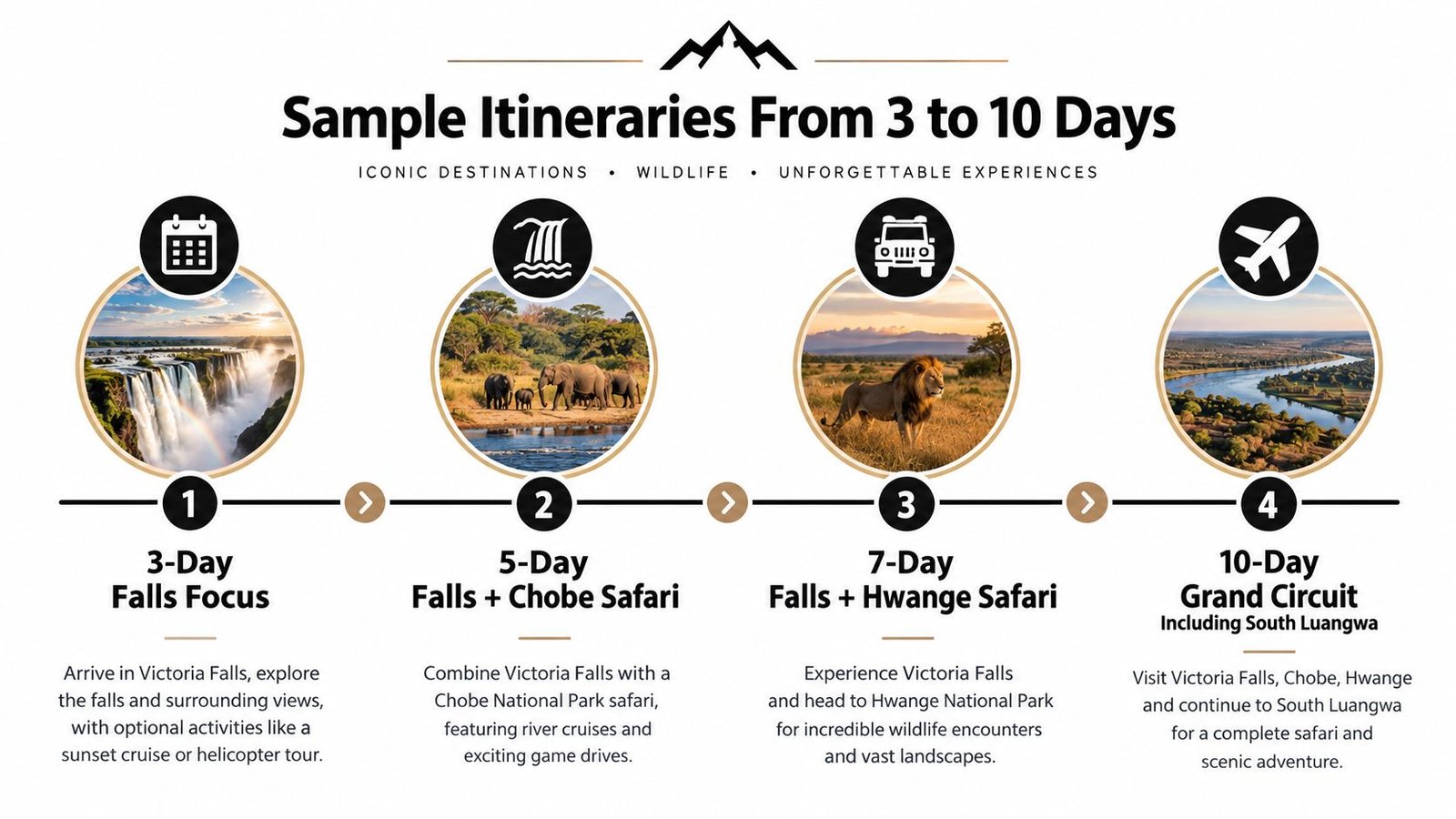
A good itinerary protects the trip from becoming a sequence of transfers. The waterfall needs enough time to feel substantial, and the safari needs enough time for wildlife viewing to unfold naturally. These templates show how to balance both without forcing every traveler into the same route.
Three days for the Falls and Chobe
Day one: Arrive in Victoria Falls, settle into your hotel, and take a relaxed river or town activity if flight timing allows.
Day two: Visit the Victoria Falls rainforest in the morning, allowing time for several viewpoints and changing spray conditions. Keep the afternoon flexible rather than filling it with another fixed excursion.
Day three: Take a Chobe day trip from Victoria Falls, including the border crossing and wildlife activities, then return to Victoria Falls or continue onward if your transport allows.
This route suits travelers who want a concentrated introduction to the region. It is active, so don't schedule a late international departure immediately after the cross-border excursion.
Five days for Victoria Falls and Hwange
Spend the first two days around Victoria Falls, with one day for the rainforest and another for a river, scenic, or adventure activity. On day three, transfer to Hwange and settle into a lodge or camp. Use days four and five for game drives, then depart through the most convenient onward connection.
This itinerary is better for travelers who value a proper Zimbabwe safari over a quick cross-border sample. In a lower-flow period, you can place more emphasis on wildlife and photography. In a high-flow period, preserve a full waterfall day because spray and weather may affect visibility.
Seven days for Zimbabwe and Botswana
Start with two nights in Victoria Falls. Continue to Chobe or the Kasane area for two nights, allowing the border crossing to happen once rather than repeatedly. Finish with additional safari time in Botswana or return to Victoria Falls for departure, depending on your flight plan.
This route suits travelers who want national variety without attempting every major park. It also gives you a better chance to absorb the contrast between the Falls, river-based wildlife viewing, and a slower lodge stay. A packaged route such as Victoria Falls, Chobe, and Okavango Delta can help coordinate the sequence when multiple operators and borders are involved.
Ten days for a grand circuit
Allocate two nights to Victoria Falls, then move through Zimbabwe and Botswana before continuing toward the Okavango Delta. Keep the final part of the journey near a reliable flight connection, and avoid placing a complicated border or long road transfer immediately before an international departure.
The longer route works best when you accept that every destination has a different role. Victoria Falls supplies the major landmark and adventure energy. Hwange can provide a Zimbabwean game-drive setting, Chobe introduces river-focused viewing, and the Okavango adds a deeper water-and-wilderness experience. South Luangwa may also form part of a longer Zambia-focused version, but it requires separate transport planning.
Transfers Visas Health and Money Essentials
The difference between a smooth safari and Victoria Falls trip and a tiring one often comes down to small logistical decisions. Confirm how you'll move between airports, hotels, parks, and borders before you pay deposits.
Transfer planning
- Choose the arrival airport around the route: Victoria Falls Airport and Livingstone Airport serve the two sides of the destination. Your arrival point should match your accommodation and first activity.
- Treat Hwange as an overnight transfer: A road journey can work well, but don't compress it into a same-day wildlife experience unless your operator confirms the timing.
- Allow flexibility for Chobe: A border crossing involves more than driving from one town to another. Build in time for formalities, vehicle changes, and park-entry procedures.
- Use flights for longer circuits: The Okavango and distant Zambian parks require more deliberate air and road coordination than nearby add-ons.
Visitor flow is now large enough to affect scheduling. Official reporting cited 1,225,167 border-processed travelers in the Victoria Falls region during 2025, up 7.87% year on year, while Zimbabwe-side park statistics recorded 61,139 visitors in Q1 2025, including 47,633 international arrivals, compared with 44,110 in Q1 2024. Regional travel flow reporting
Border warning: Don't schedule a tightly timed international flight after a same-day cross-border excursion. Traffic, documentation checks, and park timing can all shift the day.
Visa and health preparation
Ask your operator or the relevant consulates whether the KAZA UniVisa fits your exact Zimbabwe and Zambia plans. Visa rules, passport validity requirements, entry conditions, and border availability can change, so verify them before departure rather than relying on an old travel forum post.
Health preparation should begin with a consultation appropriate to your nationality, itinerary, existing conditions, and travel dates. Review which travel vaccines you need with a qualified medical professional, and ask about mosquito protection, prescriptions, travel insurance, and emergency arrangements.
Money and daily comfort
Carry a practical mix of payment methods. Confirm with your accommodation which currencies and cards it accepts, and keep small notes available for personal purchases and tips. Don't assume every rural lodge, activity provider, or border-area vendor processes cards reliably.
Pack light, breathable clothing, a waterproof pouch, a lens cloth, comfortable walking shoes, sun protection, and a light layer for early game drives. The Falls can soak clothing and equipment, while safari vehicles can feel cool before sunrise even in warm seasons.
How to Book and Budget With Confidence
Start by deciding whether you need a single coordinated package or separate bookings. A short Victoria Falls and Chobe trip can be assembled from individual activities, but a Zimbabwe, Botswana, and Okavango route benefits from one planner coordinating transfers, park access, accommodation, and flight connections.
Price differences usually reflect the season, accommodation standard, park choice, transport method, guide arrangements, and what's included. Compare proposals line by line. Ask whether the quotation covers park fees, rainforest entry, airport transfers, cross-border transport, meals, game drives, boat activities, and local guiding.
Read the itinerary as a logistics document
A polished itinerary can still be under-scoped if it hides long transfers or assumes every activity runs daily. Check where each night is spent, how many early departures are required, and whether a same-day border crossing connects safely with your next booking.
Victoria Falls operates as a high-throughput destination, so popular arrival waves and excursion periods can affect entry timing and vehicle availability. Pre-booking rainforest visits and coordinating lodge check-in with park activities can protect the guest experience, particularly during busy travel windows.
Direct or bundled booking
Book direct when your route is simple, you know the hotels you want, and you can manage separate confirmations. Choose a bundled multi-country arrangement when you're combining Victoria Falls with Chobe, Hwange, and the Okavango, because one accountable coordinator can reduce gaps between suppliers.
Maximum Adventure Trails offers Victoria Falls activities, safari tours, accommodation bookings, and multi-day routes covering destinations such as Hwange, Chobe, Moremi, and the Okavango Delta. Before reserving, send the operator your travel dates, preferred waterfall viewing conditions, wildlife priorities, arrival airport, passport nationalities, and desired pace. Those details produce a more useful proposal than asking for a generic safari price.
Maximum Adventure Trails can help match Victoria Falls viewing, nearby wildlife areas, transfers, and multi-country safari routes to your available days and preferred season. Visit Maximum Adventure Trails with your dates and priorities, and request an itinerary that makes the waterfall and safari work as one carefully paced journey.