

- 9 Views
- 8 Min Read
- (0) Comment
Key takeaways
- Maun is the launch point for almost every Okavango Delta safari, connecting international arrivals to remote water camps by light aircraft.
- Most inner-Delta camps are reachable only by scenic flight, turning a long 4×4 drive into a short hop over the wetlands.
- The Okavango floods during Botswana's dry winter, so June to August usually brings the highest water for mokoro and boat safaris.
- The Okavango Delta System is a Ramsar Wetland of International Importance covering 5,537,400 hectares (Ramsar, 1996).
- Book camps, charter seats and road transfers together so your Maun arrival connects smoothly to your flight into the Delta.
Maun is where an Okavango safari begins. As Botswana's tourism hub and the Okavango gateway, this dusty, friendly town on the Delta's southern edge is where international travelers land, meet their guides, and board the small planes that carry them into one of Africa's great wilderness areas. If you are planning an Okavango Delta trip, almost every route runs through Maun first.
The town itself is modest, but its job is large. From here, scenic flights fan out to remote water camps that have no roads, and road transfers reach the camps closer to the Delta's fringe. Understanding how Maun connects to the Delta makes the whole journey easier to plan.
Why Maun Is the Okavango Gateway for Delta Safaris
Maun is the practical starting line for Okavango Delta safaris because it holds the region's main airport and sits closest to the wetlands. International guests fly in from Johannesburg, Gaborone, Kasane or Victoria Falls, then connect to the Delta from here. Guides, charter operators and lodge agents all cluster in and around town.
The Okavango is vast and largely roadless at its heart. The Okavango Delta System is listed as a Ramsar Wetland of International Importance and covers 5,537,400 hectares (Ramsar, 1996). A wetland that size, with shifting channels and seasonal floods, simply cannot be served by a web of highways. That is why a single gateway town matters so much.
Maun solves a logistics puzzle. Instead of attempting long, uncertain overland routes to each camp, travelers stage in one place and let the air network do the heavy lifting. Maximum Adventure Trails builds its Okavango itineraries around this reality, lining up your arrival, your charter seat and your camp so the pieces connect without gaps.
For travelers arriving from the north, it helps to know how the other hubs link up. A Chobe leg can pair neatly with an Okavango leg, with both connecting through Maun.
Scenic Flights Into Remote Water Camps
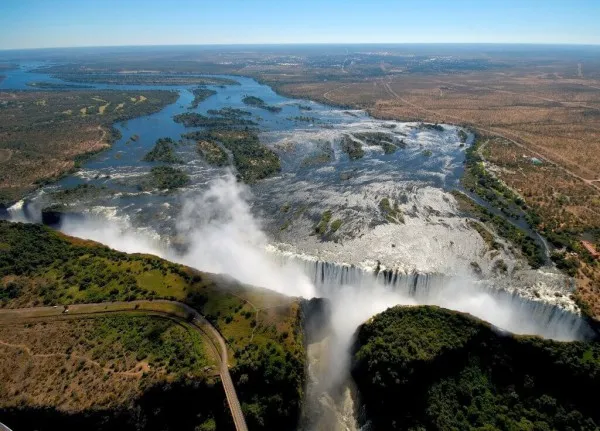
Light aircraft are the standard way to reach the inner Delta, and the flight is part of the experience. Most transfer hops from Maun to a camp airstrip take roughly 15 to 45 minutes, which replaces hours of slow, flooded-track driving. From a few hundred feet up, the Delta reveals its pattern of islands, lagoons and winding channels.
These are not large jets. Charter planes are small, often six to twelve seats, and they land on short bush airstrips cut into the islands. Luggage is limited, usually to a soft bag within a strict weight allowance, because every kilogram counts on a light aircraft. Your camp or operator will confirm the exact limit before you fly.
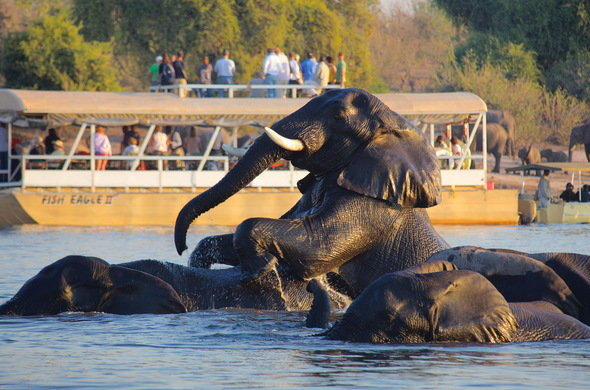
The scenery does real work here. You will often spot elephant, hippo pods and buffalo from the air, and the braided water courses look like nothing else on the continent. The Okavango is extraordinarily rich in plant life, birds and large mammals, and much of that life is clustered along the very channels you fly over.
Because seats and weight are limited, inner-Delta flights reward early planning. If you want to understand how the camps and regions fit together before you choose, our Okavango Delta map guide lays out the regions and how to navigate between them.
What to See and Do Around Maun
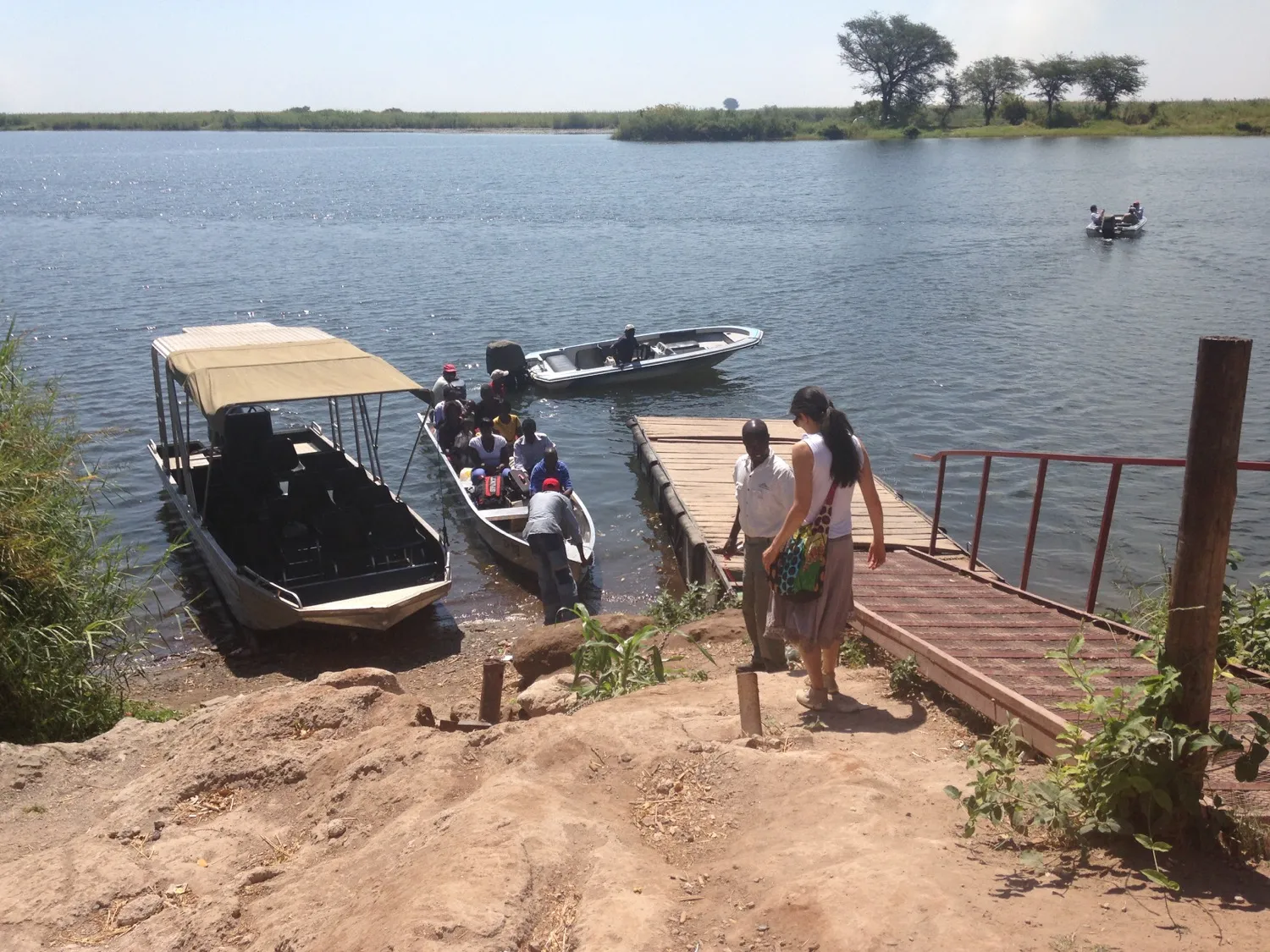
Maun is a working town rather than a resort, and that is part of its charm. Many travelers spend a night here at the start or end of a trip to rest, resupply and meet their guide. The pace is relaxed, and the riverside setting along the Thamalakane gives it a pleasant frontier feel.
A scenic flight over the Delta is the most popular activity for people with a spare afternoon in town. These short flights give you the aerial view of the wetlands without committing to a full fly-in camp stay, which suits families or anyone short on time. You can also arrange day trips toward the Delta's edge by mokoro, the traditional dugout canoe poled through shallow channels.
Around town you will find craft shops, casual restaurants, fuel and groceries, which makes Maun the logical place to stock up before a remote stay. It is also a natural meeting point for combined trips. Travelers building a wider Botswana route often pair the Delta with Chobe or a camping leg, and Maun sits at the center of that network.
Families in particular tend to use Maun as a comfortable base before heading into wilder camps. If you are traveling with children, plan the Maun night as a buffer so everyone arrives at camp rested rather than rushed.
Best Time to Fly Into the Delta
The Okavango floods during Botswana's dry winter, which surprises many first-time visitors. Floodwaters originate from summer rains in the Angolan highlands and take months to travel south into the Delta. As a result, water levels usually peak between June and August, well into the dry season.
That timing shapes your safari. For mokoro trips, boat cruises and water-based game viewing, the high-water months of roughly June through August are ideal. Wildlife concentrates near permanent water as the surrounding land dries out, and clear winter skies make scenic flights reliable and comfortable.
The shoulder months still deliver. From September into October the land grows hot and dry, water recedes, and game viewing around remaining channels can be exceptional, though some water routes shrink. The green season from November to around March brings rain, migratory birds and lower rates, with lusher scenery but more variable flying conditions.
Choosing a window is really about matching water levels to the activities you most want. A water-camp honeymoon leans toward peak flood, while a wildlife-and-value trip might favor the shoulder. Lining up your travel dates early gives you the widest choice of camps and charter seats.
Planning a Smooth Okavango Arrival
A smooth Delta arrival comes down to connecting the links in the right order: international flight, Maun arrival, charter hop, then camp. Because inner-Delta flights run on fixed schedules and tight weight limits, small timing mistakes can cascade. Planning the sequence as one chain, rather than separate bookings, keeps the day calm.
Build in a buffer. Landing in Maun with a comfortable gap before your Delta charter protects you against delayed international flights and gives time for the bush plane check-in. Many travelers choose to overnight in Maun at the start of a trip for exactly this reason, especially after a long-haul journey.
Pack to the rules. Soft bags, a strict weight allowance, and layered clothing for cool mornings and warm afternoons all matter on a light aircraft. Confirm your luggage limit early, and keep essentials and any medication in your carry-on in case a bag follows on a later flight.
When several moving parts have to align, a single operator managing the whole chain removes most of the risk. Maximum Adventure Trails coordinates your Maun arrival, your scenic flight and your camp so each handoff is arranged in advance. To start fitting the Delta into a broader trip, see our guide on how to plan the perfect African safari journey, then pick your travel window and let the gateway do the rest.
Frequently asked questions
Why is Maun called the gateway to the Okavango Delta?
Maun sits on the southern edge of the Delta and holds the region's main airport. Nearly all international travelers pass through Maun to board the light aircraft and road transfers that reach inner-Delta safari camps.
Do I have to fly into the Okavango Delta, or can I drive?
Some camps on the Delta's edges are reachable by 4×4, but most water-based camps in the inner Delta are reached only by light aircraft from Maun. Scenic flights turn hours of difficult driving into a short, memorable hop.
When is the best time to fly into the Okavango Delta?
Floodwaters usually peak between June and August, during Botswana's dry winter. That period brings the highest water levels for mokoro and boat trips, plus concentrated wildlife and clear skies for scenic flights.
How long is the scenic flight from Maun into the Delta?
Most transfer flights from Maun to inner-Delta airstrips take roughly 15 to 45 minutes, depending on the camp. The short duration is why flying is the standard way to reach remote water camps.
What is there to do in Maun before heading into the Delta?
Maun works well as a staging town. You can stock up on supplies, visit local shops and riverside spots, take a scenic flight over the Delta, and meet your guide before transferring to camp.