

- 7 Views
- 24 Min Read
- (0) Comment
I’ve spent years building travel and affiliate content, watching which posts convert and which collect dust. One pattern keeps repeating: someone searching “Namibia safari itinerary” is one of travel’s most valuable readers. They aren’t browsing. They’re planning a trip that will cost thousands, and they want a route they can follow step by step.
That’s why generic itineraries hcii ekcod. They list places but skip what makes or breaks the trip: the drive that looks like 2 hours on the map and takes 5, the gravel roads that punish rental tyres, the fuel stops that don’t exist, and the gear that earns its place in your bag.
This guide fixes that. You’ll get a complete Namibia safari itinerary of 12 days, a condensed 10-day version, extensions for longer trips, a cost breakdown, driving advice, entry and safety notes, and a gear list built around real problems travellers run into.
Affiliate disclosure: This post contains Amazon affiliate links. If you buy through them, I may earn a small commission at no extra cost to you. I only recommend gear categories I’d genuinely pack, and I’ll tell you when something isn’t worth buying.
What’s Inside
- What a Namibia safari itinerary actually is
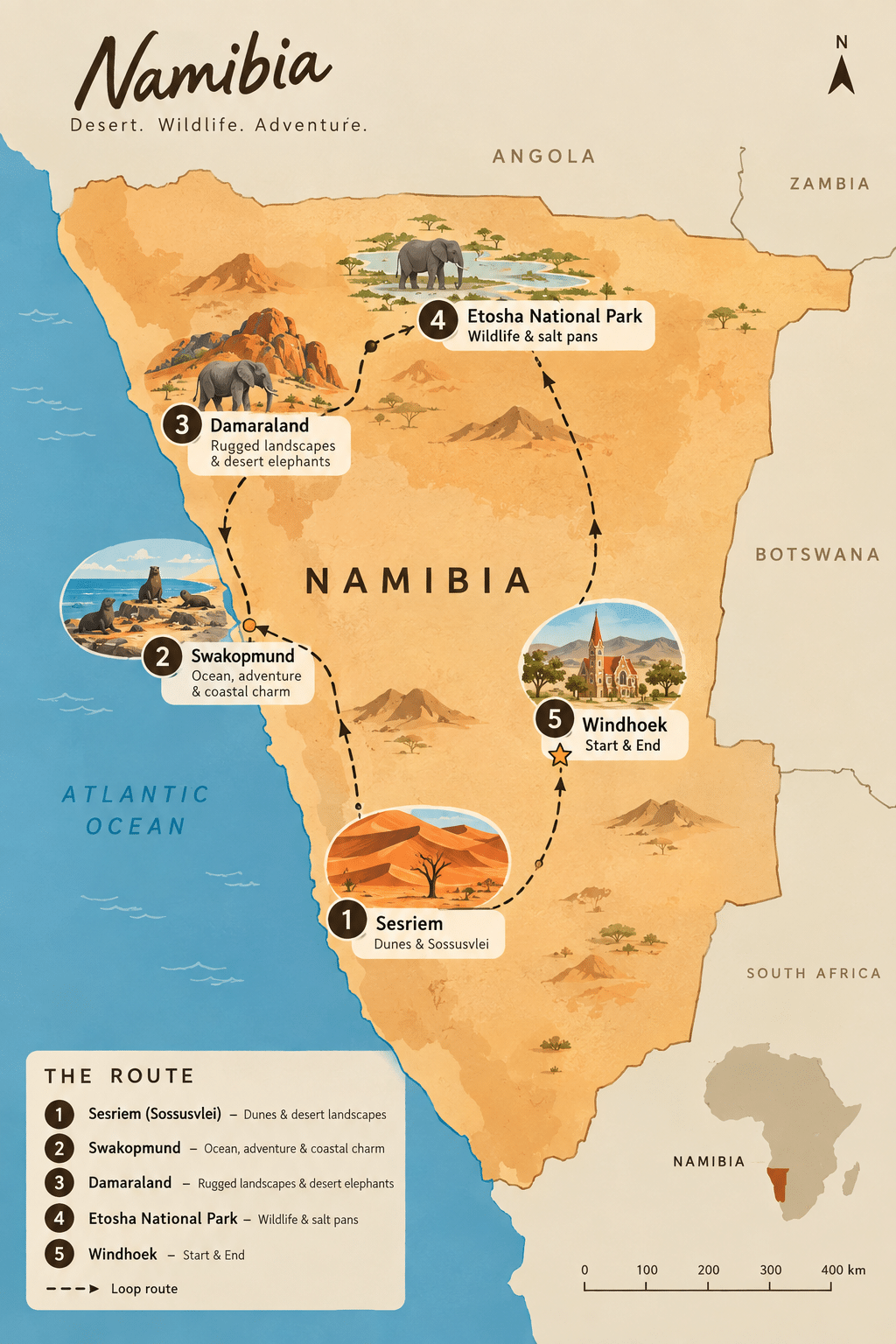
- The 12-day itinerary at a glance
- Best time to go
- How many days you need
- Self-drive vs. guided (and whether you need a 4×4)
- Driving rules that matter
- The 12-day itinerary, day by day
- The 10-day condensed version
- Extensions: Fish River Canyon, Skeleton Coast, Kaokoland and more
- Accommodation, wildlife and photography
- Costs, entry requirements and safety
- Packing list and gear
- Mistakes to avoid
- FAQ
What Is a Namibia Safari Itinerary?
A Namibia safari is not a week in a single game reserve. It’s a multi-day circuit through very different regions: the Namib Desert, the Atlantic coast, rugged Damaraland and Etosha National Park.
Most routes start and finish around Windhoek.
That variety is the appeal. In East Africa, wildlife is the headline. In Namibia, the contrast is the headline: Etosha’s wildlife-rich plains, the red dunes of Sossusvlei, the cool Atlantic coast, Damaraland’s geology and rock art, and the vast empty landscapes in between.
Namibia is also one of Africa’s best self-drive destinations. The Namibia Tourism Board lists self-drive among the country’s most popular ways to travel, and its self-drive material favours circular routes because they reduce backtracking between major attractions. That’s exactly how this itinerary is built.
Why it works for so many travellers:
• It’s the original self-drive safari. Main routes are well established, the country is stable, and independent travel is genuinely feasible.
• The landscapes are unreal. In one trip you can climb enormous dunes, walk across a frozen-in-time clay pan, and sit beside a waterhole as rhinos drink nearby.
• It’s uncrowded. Namibia is among the least densely populated countries on Earth.
• Etosha is world-class. Reliable waterhole viewing makes it easy to see wildlife without a guide.
Namibia Safari Itinerary at a Glance (12 Days)
| Day | Route | Highlights |
|---|---|---|
| 1 | Arrive Windhoek | Rest, car pickup, supplies |
| 2 | Windhoek → Sesriem | Desert scenery, arrive for sunset |
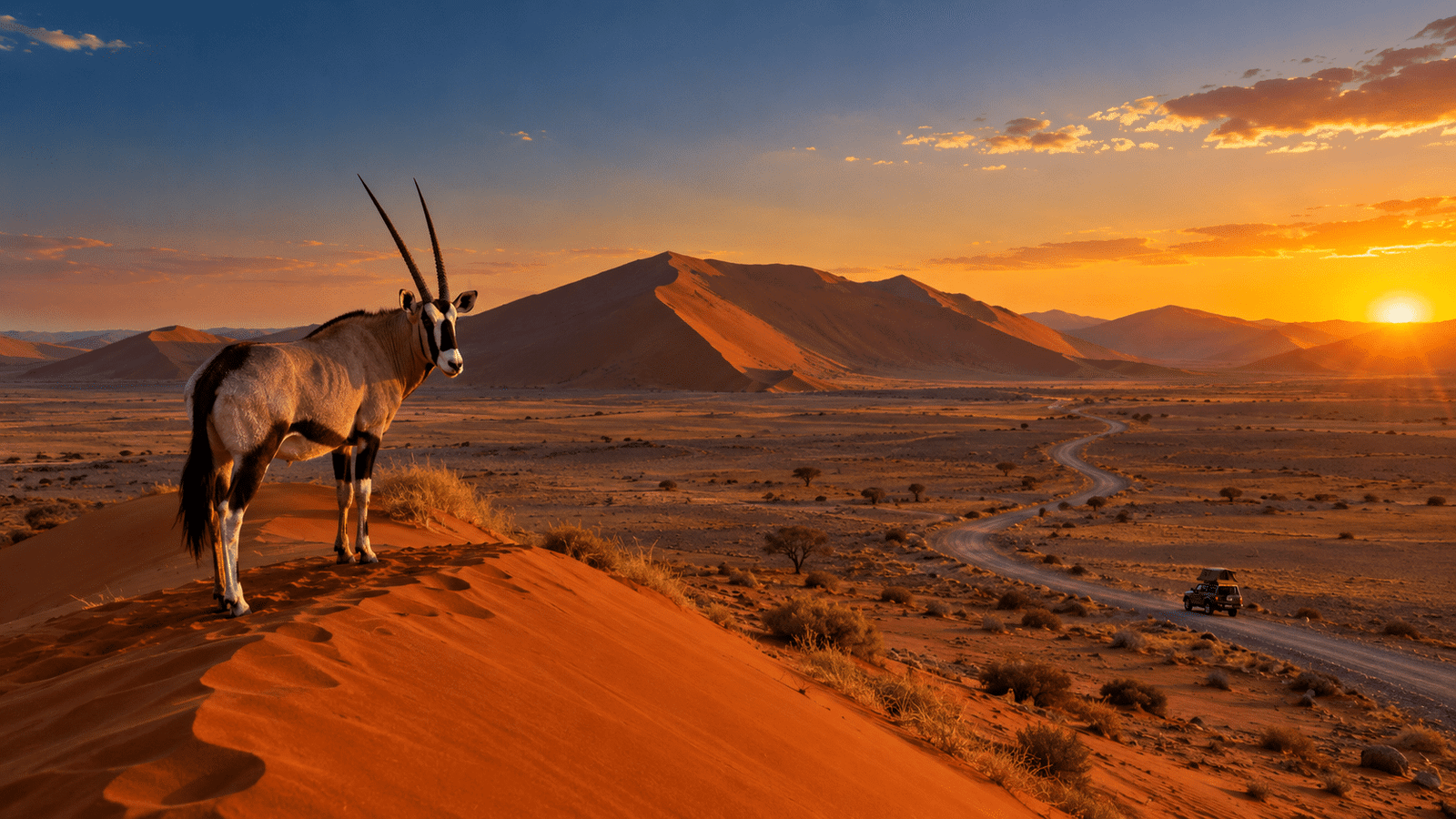
| 3 | Sossusvlei | Dunes, Deadvlei, Sesriem Canyon |
| 4 | Sesriem → Swakopmund | Desert to Atlantic coast |
| 5 | Swakopmund & Walvis Bay | Sandwich Harbour, marine cruises |
| 6 | Swakopmund → Damaraland | Cape Cross, Spitzkoppe, rock formations |
| 7 | Damaraland | Twyfelfontein, desert wildlife |
| 8 | Damaraland → Etosha | First waterhole at dusk |
| 9 | Etosha | Full game-drive day |
| 10 | Etosha | Second full day, new sections |
| 11 | Etosha → Windhoek | Return drive |
| 12 | Departure | Fly home or extend |
Best Time for a Namibia Safari
Namibia is a year-round destination, but the right month depends on what you want.
May to October: best for wildlife
This is the dry season. Vegetation thins, water sources shrink, and animals concentrate around waterholes, which makes Etosha far easier. The end of the dry season is often the most productive time for big game.
June to August: cool and dry
Daytime conditions are pleasant, but desert nights can be cold, sometimes dropping below freezing in the Namib.
September to October: excellent safari conditions
The landscape is dry, skies are clear, and wildlife viewing is strong, though daytime heat builds.
November to April: green season
Rain transforms parts of the country, with dramatic clouds, lush scenery and excellent birding. The trade-off is that wildlife is more dispersed because water is more widely available.
Peak season runs from roughly July to November, according to the Namibia Tourism Board, which recommends pre-booking in that window. In my experience, the best Etosha camps and rental vehicles sell out months ahead, so book 6 to 9 months early if you’re travelling in peak months.
How Many Days Do You Need?
5 to 7 days: highlights only.
Windhoek → Sossusvlei → Swakopmund → Etosha. It’s doable, but you’ll cut time everywhere and spend a lot of it driving.
8 to 10 days: a good first-timer option.
Windhoek → Sossusvlei → Swakopmund → Damaraland → Etosha. Tight, but rewarding.
12 to 14 days: the sweet spot.
This is the range I recommend for a classic first Namibia safari. You see the major attractions without turning the holiday into a marathon of long driving days.
16 to 21 days: a comprehensive journey.
Add Fish River Canyon, Lüderitz, the Skeleton Coast, Kaokoland, Epupa Falls, Waterberg or the Zambezi (Caprivi) Region.
Self-Drive or Guided Safari?
Self-Drive
The tourism authority notes that at least 80% of Namibia’s roads are gravel, though many are well maintained, and the country drives on the left.
Pros: freedom, flexible photography stops, privacy and often lower costs for couples and groups.
Cons: long distances, gravel roads and remote stretches demand careful planning. You handle navigation, fuel and tyre problems yourself.
Guided Safari
Pros: no driving stress, expert interpretation of wildlife and culture, and logistics handled for you.
Small-group tours also make Namibia easier for solo travellers, and fly-in safaris save a lot of driving time.
Cons: higher cost and a less flexible schedule.
My Take
If you’re comfortable driving on the left on gravel, self-drive is the best way to do this itinerary. If you’re nervous, travelling solo or want deeper wildlife knowledge, consider a guided or hybrid trip, with a guide for Damaraland and Etosha.
Do You Need a 4×4?
For Etosha, Swakopmund and Sossusvlei, standard vehicles can reach many areas. But a high-clearance 4×4 or SUV gives you better ground clearance, a higher viewpoint, and more peace of mind on gravel and sand. The Tourism Board recommends 4x4s for venturing off the main routes and advises against serious off-road driving without experience or guidance.
Questions to ask your rental company:
• Are there two spare tyres, a jack and a wheel spanner?
• What does insurance cover, particularly tyres, windscreen and underbody?
• What’s the excess, and can it be reduced?
• Is there a 24-hour breakdown number that works in remote areas?
• Are cross-border permits included if you’ll leave the country?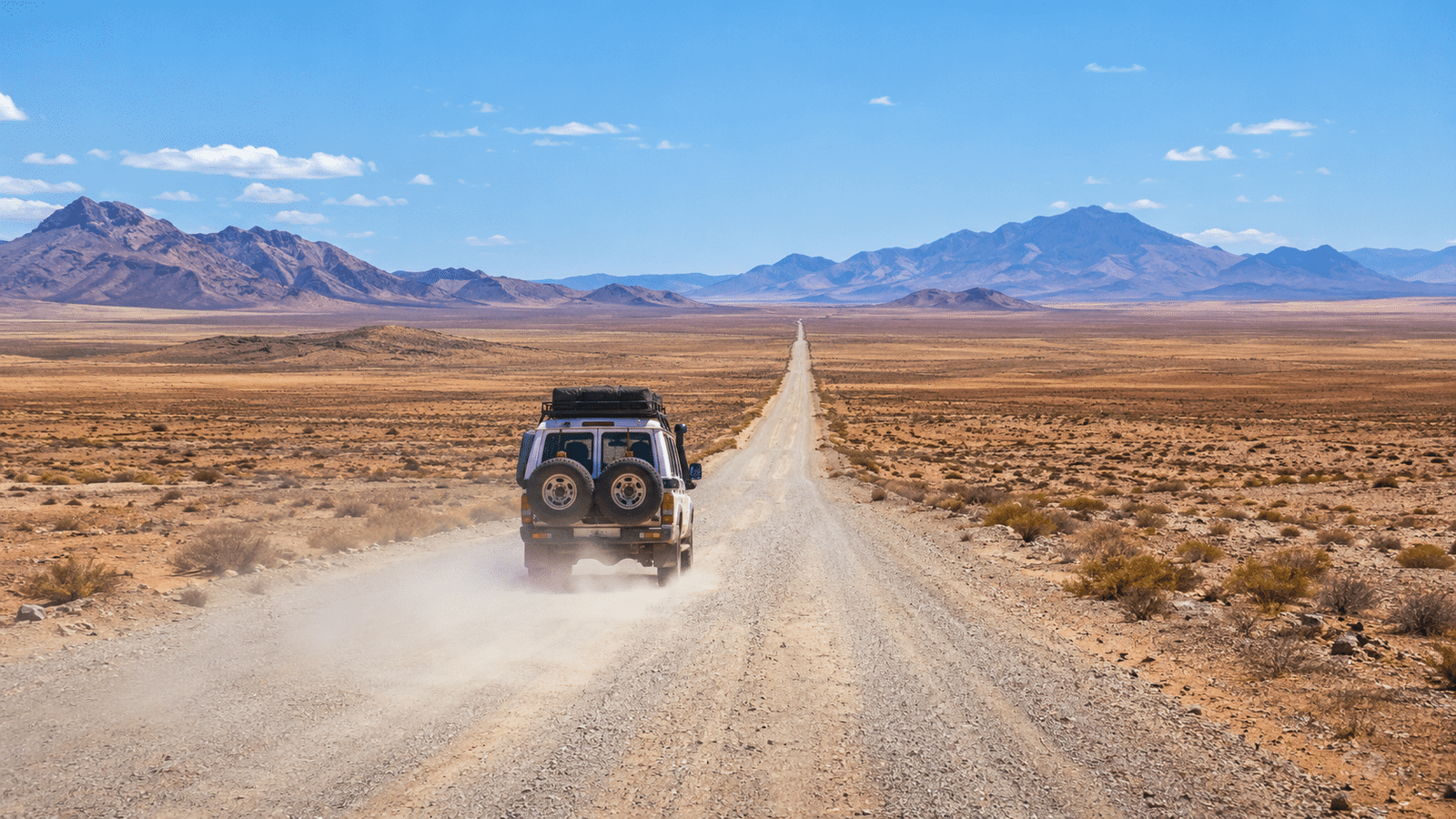
Driving in Namibia: What You Need to Know
Namibia looks easy on a map, and distances are deceptive. Allow time for fuel stops, photography, wildlife sightings, road conditions, meals, tyre checks,s and delays.
- Drive on the left.
- Keep gravel speeds at or below 80 km/h. The Tourism Board recommends this, and journeys take much longer than you expect.
- Never drive at night. Wildlife, livestock and pedestrians are hard to see. Plan to arrive before sunset.
- Fill up whenever you can. Don’t pass a fuel station with less than half a tank in remote areas.
- Carry plenty of drinking water. Water is scarce, and the tourism authority specifically advises self-drivers to bring lots.
- Watch for dips and dry riverbeds, especially after rain.
- Expect animals on the road, including kudu and warthogs.
- Carry the essentials: spare tyre, basic emergency kit, offline maps, charged phone and power bank, and cash for places where card facilities are unreliable.
The 12-Day Namibia Safari Itinerary, Day by Day
Day 1: Arrive in Windhoek
Begin in the capital. Recover from your flight, collect your rental vehicle if you’re self-driving, and explore at a relaxed pace. A first night in Windhoek helps you avoid starting a long desert drive straight after an international flight.
Do this today:
• Inspect the rental car thoroughly. Photograph and film its condition, and check both spare tyres.
• Download offline maps before leaving the city. Signal fades fast.
• Buy water, snacks, and supplies. Windhoek is your last big shop before the remote areas.
• Pick up a local SIM or eSIM and exchange some cash.
Overnight: Windhoek
Best for: Arrival, rest, supplies
Day 2: Windhoek to Sesriem (Gateway to Sossusvlei)
Drive southwest toward Sesriem. The landscape shifts from central highlands to open desert, and this is often the first moment the scale of Namibia sinks in. Allow roughly 5 to 6 hours with stops.
Tips:
• Leave early so you arrive with daylight to spare.
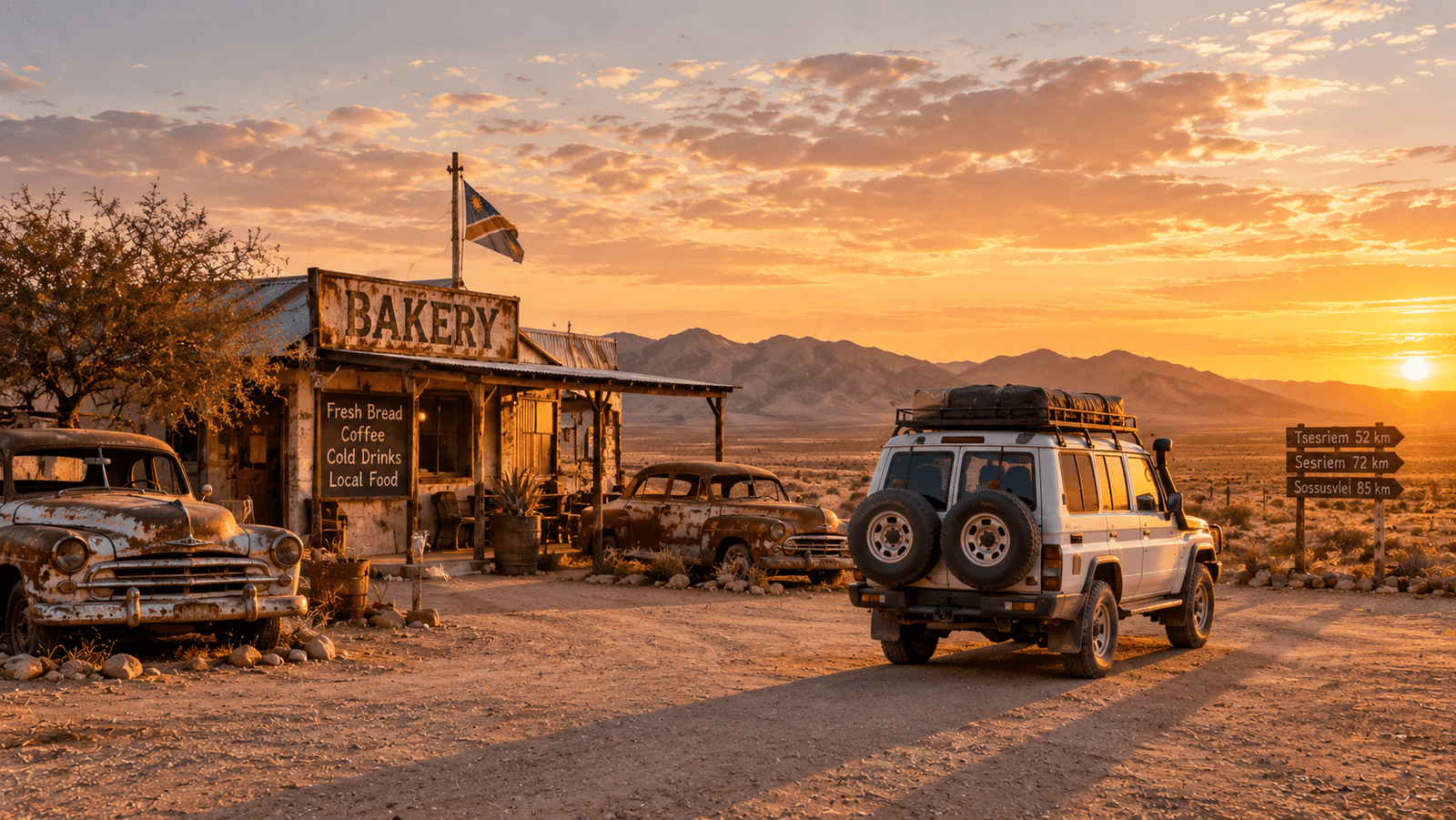
• Stop at Solitaire, a tiny roadside settlement known for apple pie, rusting vintage cars, and fuel.
• Check tyre pressure before long gravel sections.
Try to stay inside the park gate area or at a camp very close to it. I’ll explain why tomorrow.
Overnight: Sesriem / Sossusvlei area
Day 3: Sossusvlei, Deadvlei & the Namib Desert
This is the day most travellers picture when they search for a Namibia safari itinerary.
Start very early. The Tourism Board highlights the early morning for the dunes because the changing light is at its best for photography. Staying near the gate means you reach the dunes ahead of visitors driving in from farther away.
What to see:
• Dune 45: The classic sunrise climb.
• Big Daddy Dune: Roughly 325 metres high. A tough climb with a huge payoff.
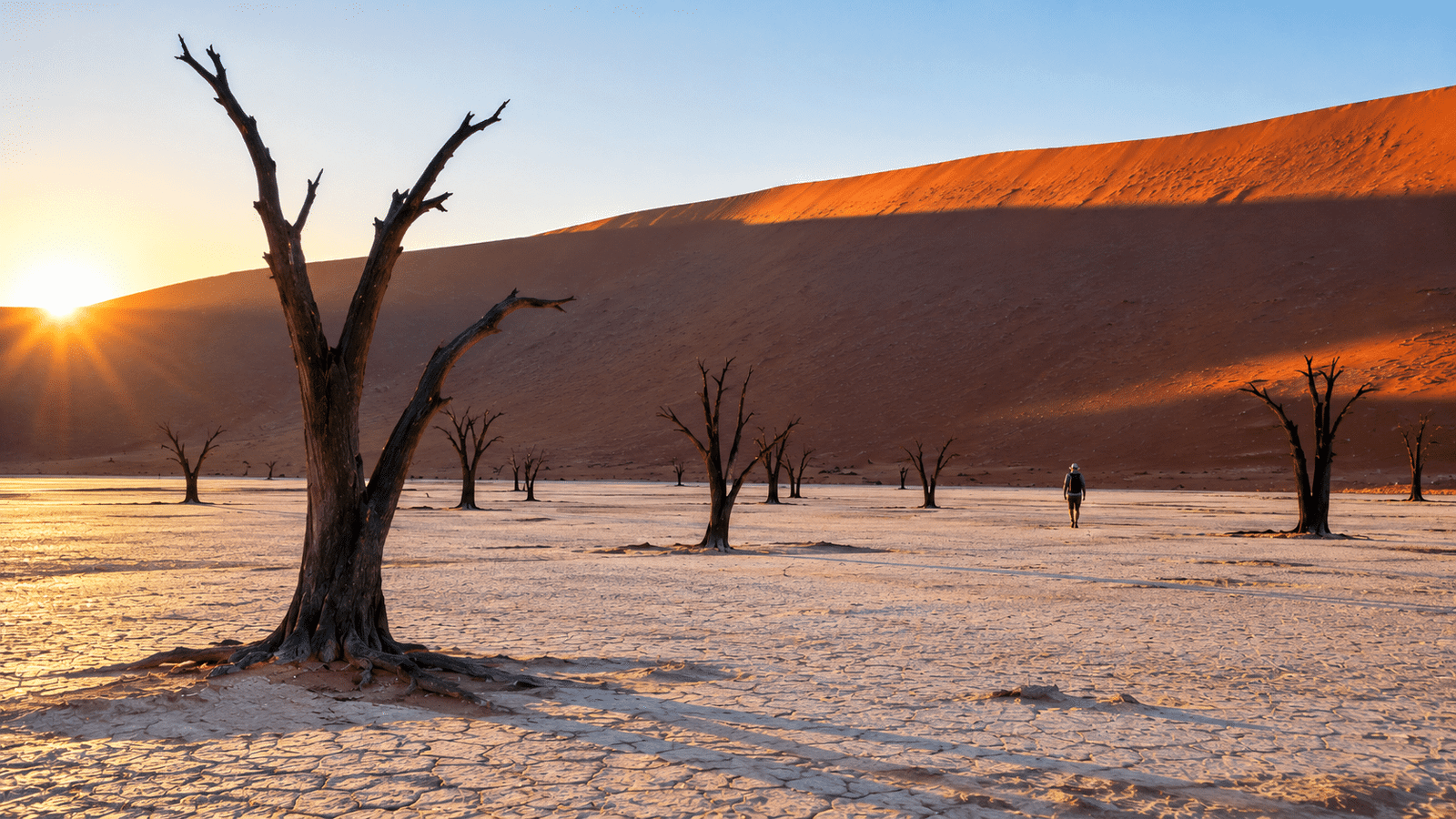
• Deadvlei: A white clay pan scattered with ancient dead camel-thorn trees against orange dunes. This is the image that makes people book the trip.
• Sossusvlei: The pan at the heart of the area.
• Sesriem Canyon: A narrow gorge, ideal for a short walk when the heat builds.
The final stretch toward Sossusvlei is deep sand, and many visitors use the park shuttle if they don’t have a suitable 4×4. Check conditions at the gate.
Bring: lots of water, sun protection, a wide-brimmed hat, a lightweight buff or scarf, and dust protection for your camera.
Overnight: Sesriem
Day 4: Sesriem to Swakopmund
Continue northwest to Swakopmund, Namibia’s coastal town. Expect 5 to 6 hours of driving, plus photo stops.
You move from a hot desert to a much cooler Atlantic atmosphere, often with fog from the cold Benguela Current. Swakopmund is known for German-influenced architecture and works well as an adventure base. After days of dust and distance, it feels like a reset.
Evening: Walk the jetty and try fresh seafood, including Namibian oysters.
Overnight: Swakopmund
Day 5: Swakopmund & Walvis Bay
Keep a full day for the coast instead of rushing north.
Popular options:
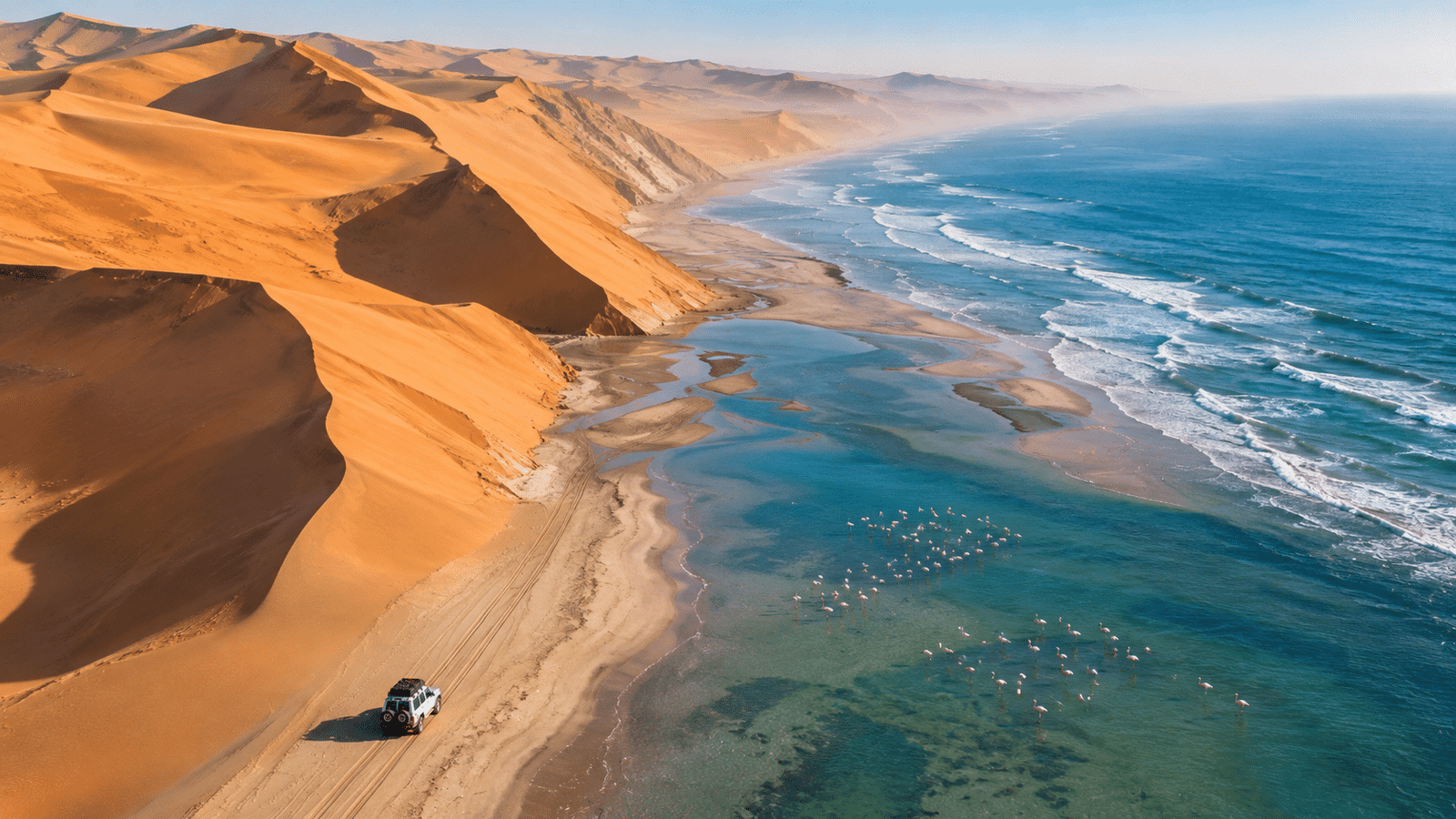
• Sandwich Harbour 4×4 excursion: Dunes meeting the Atlantic in an extremely unusual landscape, with birdlife in the lagoon.
• Marine cruise from Walvis Bay: Dolphins, seals and often oysters.
• Kayaking, quad biking and sandboarding
• Scenic flights: Over the dunes and the coast.
• Desert excursions such as the Living Desert tour.
Book popular activities a few days ahead in peak months. Operators supply the vehicle, so it’s a good day to leave the driving behind.
Overnight: Swakopmund
Day 6: Swakopmund to Damaraland
Leave the coast and head inland. This section is less about conventional safari and more about geology, desert-adapted wildlife and cultural heritage. The route includes significant gravel driving, and the Tourism Board advises allowing extra time for slower speeds and frequent stops.
Potential stops:
• Cape Cross Seal Reserve: A huge, loud and pungent Cape fur seal colony just north of Swakopmund.
• Spitzkoppe: Dramatic granite peaks, superb for sunset photos.
• Brandberg
• Petrified Forest
• Burnt Mountain and Organ Pipes
You won’t fit all of these in one day, so choose two or three.
Overnight: Damaraland / Twyfelfontein area
Day 7: Damaraland & Twyfelfontein
Spend a full day exploring.
Twyfelfontein became Namibia’s first UNESCO World Heritage Site in 2007. It holds a very large concentration of prehistoric rock engravings, many believed to be thousands of years old. Guided routes are available on site.
Desert-adapted wildlife: Depending on area and season, Damaraland can offer sightings of animals adapted to extremely dry conditions, including desert-adapted elephants. These sightings are less predictable than Etosha’s waterholes, so go for the landscape first and treat wildlife as a bonus. A local lodge guide dramatically improves your odds.
Overnight: Damaraland
Day 8: Damaraland to Etosha National Park
Today you reach the wildlife heart of the trip. Etosha looks completely different from Damaraland: a huge white salt pan surrounded by plains and a network of waterholes where wildlife gathers, especially in the dry season.
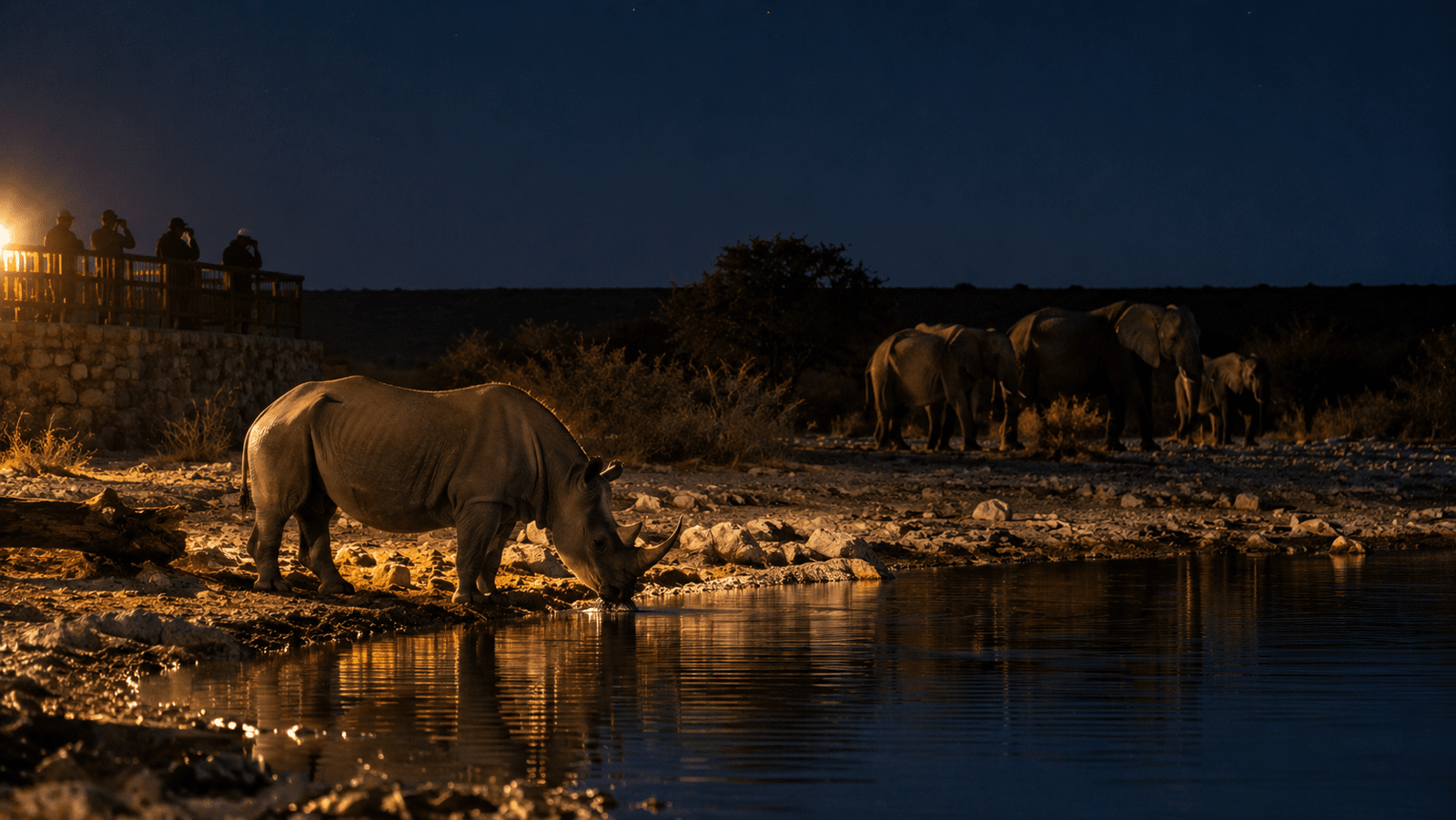
You can enter through several gates, including Andersson, Von Lindequist, Galton, and King Nehale Lya Mpingana. Choose the gate that fits your route and accommodation. If you’re coming from the west, a stay at Okaukuejo Rest Camp is a good option. Its floodlit waterhole is one of the best free wildlife shows in Africa, and after dark you can watch rhinos, elephants and predators come to drink. Check current park rules, fees, and gate times before you travel, since they change.
Overnight: Etosha National Park
Day 9: Etosha Game-Drive Day
This is your main safari day. Spend as much time as possible on the park roads and around productive waterholes.
How to get better sightings:
• Time it right. Early morning and late afternoon are best, when animals are more active in cooler temperatures.
• Be patient. Park at a waterhole and wait. In the dry season, the animals come to you.
• Check sighting boards at rest camps for recent reports.
• Scan under trees. Lions in shade are easy to miss.
• Follow the rules. Stay in your vehicle outside designated areas and be back at camp before gates close at sunset.
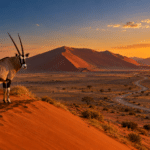
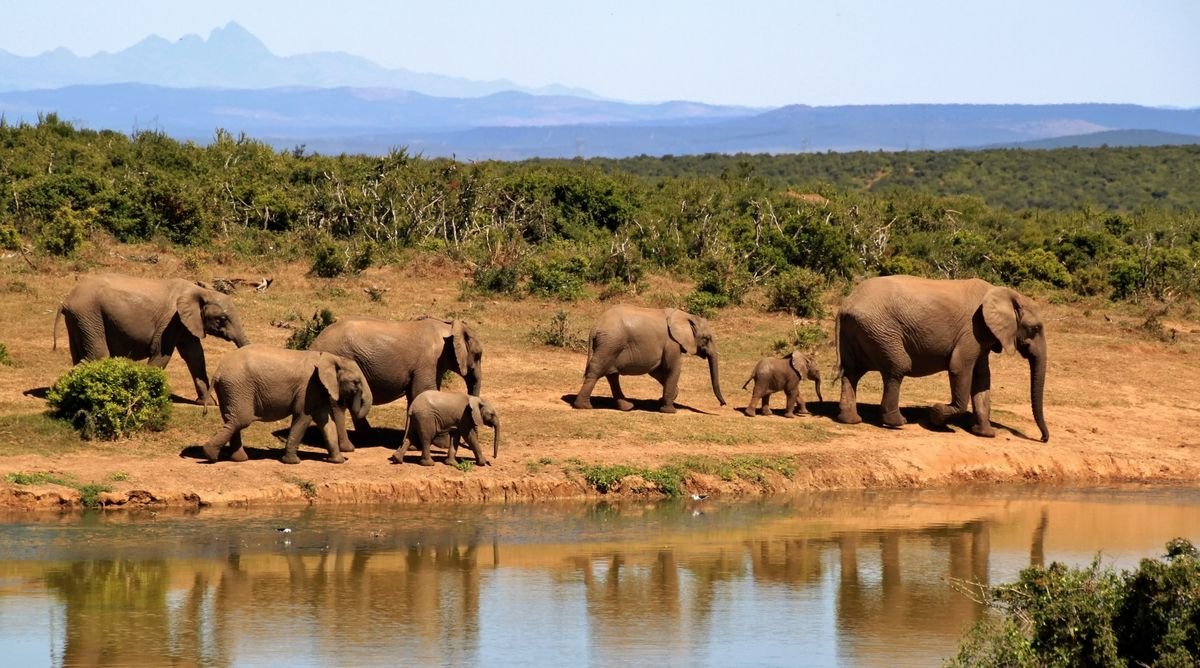
You may see: elephants, lions, giraffes, zebras, springbok, gemsbok (oryx), wildebeest, rhino, cheetah, and many antelope species. Leopards are far more elusive.
Overnight: Etosha
Day 10: Second Full Day in Etosha
Don’t rush Etosha. A second full day lets you explore different sections of the park and revisit productive waterholes. Part of Etosha’s magic is sitting quietly and watching rather than constantly driving to the next attraction.
If you stay in a camp or lodge with a waterhole, take advantage of the floodlit viewing after dark where available. Namibia Wildlife Resorts notes that its Etosha resorts offer waterhole access and guided game-drive options.
Break the day up with the Etosha Pan viewpoints, where the white salt flats stretch to the horizon.
Overnight: Etosha
Day 11: Etosha to Windhoek
This is primarily a travel day, and the drive is long, so leave early. If your flight is soon after, consider staying one more night in central Namibia instead of rushing to the airport.
Overnight: Windhoek
Day 12: Departure
Have breakfast and depart from Hosea Kutako International Airport, or continue to another Southern African destination.
The 10-Day Condensed Version
If you’re short on time, trim these:
• Day 1: Windhoek
• Day 2: Windhoek → Sesriem
• Day 3: Sossusvlei and Deadvlei
• Day 4: → Swakopmund
• Day 5: Swakopmund / Walvis Bay
• Day 6: → Damaraland
• Day 7: Twyfelfontein and Damaraland
• Day 8: → Etosha
• Day 9: Etosha game drives (full day), overnight at a second camp
• Day 10: Etosha → Windhoek and departure
You lose a second full Etosha day and a rest buffer, so this works best if your flight departs in the evening of Day 10 and you’re comfortable with long driving days.
Optional Extensions for Longer Trips
Fish River Canyon and the South
For travellers with extra time, this is an excellent southern add-on. According to Namibia Tourism Board information, the canyon is about 161 km long, up to 27 km wide, and almost 550 metres deep. A southern loop could look like this:
Windhoek → Fish River Canyon → Lüderitz → Sossusvlei → Swakopmund → Damaraland → Etosha → Windhoek
Lüderitz also puts you near Kolmanskop, a ghost town where diamond-era houses are slowly filling with sand. This route involves a lot more driving, so it suits a two- to three-week trip, not a squeeze into seven or eight days.
Skeleton Coast
Ideal for travellers who want remote landscapes, foggy Atlantic conditions, shipwrecks and marine wildlife. It can be added after Damaraland or around Swakopmund depending on access and trip type.
This area is better handled with a specialist operator or a fly-in arrangement.
Kaokoland and Epupa Falls
For a more adventurous route, continue north into Kaokoland toward Epupa Falls. Official route information describes rugged mountain scenery and the Himba heartland, with Opuwo serving as a key refuelling and supply point. The region is far more remote than the classic circuit and suits experienced 4×4 drivers or guided travel. Add 3 to 5 days or more.
Waterberg and the Zambezi Region
Waterberg Plateau is a good stop on the way back from Etosha. The Zambezi (Caprivi) Region in the northeast offers a lush, river-based contrast to the desert, ideal for travellers who want water, birdlife and a very different Namibia.
Accommodation Options
• Luxury lodges: Best for honeymooners and premium travellers. These often bundle meals and guided activities.
• Tented camps: A good balance of comfort and wilderness atmosphere.
• Campsites: Great for adventurous self-drivers. Some rental companies offer 4x4s with rooftop tents, fridges, and cooking gear.
• Hotels and guesthouses: Best in Windhoek and coastal towns like Swakopmund.
A mixed approach works well: guesthouses in towns, a desert lodge near Sossusvlei and camps or lodges in Etosha. Where possible, plan two-night stays to break up the driving.
Wildlife You Can See on a Namibia Safari
Despite the arid environment, Namibia has diverse wildlife: lion, elephant, rhino, giraffe, zebra, wildebeest, oryx, springbok, cheetah, warthog, jackal, and many bird species. Etosha is the star because its waterholes concentrate animals in the dry season.
One firm rule from experience: never build an itinerary around a guarantee of seeing one animal. Sightings are wild and unpredictable. Buffalo, for example, aren’t a feature of Etosha, so a full classic Big Five tally isn’t realistic on this route.
Photography Opportunities
| Location | Best For |
|---|---|
| Sossusvlei | Dunes, Deadvlei trees, sunrise and sunset, minimalist landscapes |
| Etosha | Waterhole photography, elephants, rhino, lions, zebras, wide environmental shots |
| Damaraland | Rock formations, desert landscapes, rock art, wildlife in arid settings |
| Swakopmund & Walvis Bay | Atlantic coast, dunes, marine wildlife, aerial shots |
Scenic flights operate over areas including Sossusvlei, the Namib Desert, the Skeleton Coast and Damaraland, and they are well worth considering if photography is a priority.
How Much Does a Namibia Safari Cost?
Prices change by season, operator and exchange rate, so treat this as a framework and get current quotes before you commit.
What drives the cost:
• Accommodation level: camping, mid-range or luxury lodges
• Vehicle: 2WD, 4×4 or fully equipped camping vehicle
• Self-drive vs. guided
• Domestic charter flights
• Park and conservation fees
• Activities: Sandwich Harbour, scenic flights and guided tracking are extras
• Season: peak months (roughly July to November) cost more and require earlier booking
• Number of travellers: sharing a vehicle makes self-drive much cheaper per person
Money-saving tips:
• Travel in shoulder months such as May, early June or the start of the green season.
• Split vehicle costs between 2 to 4 travellers.
• Mix camping with lodges if you’re comfortable with it.
• Book vehicles, Etosha camps and key lodges early.
• Don’t skip insurance. One cracked windscreen or blown tyre can erase your savings.
The currency is the Namibian dollar (NAD), pegged to the South African rand. Cards work in towns, but carry cash for remote fuel stops and small shops.
Entry Requirements, Health and Safety
Visas: Rules depend on your nationality and can change. Namibia adjusted parts of its visa regime from 1 April 2025, and eligible travellers may have online application or visa-on-arrival options. Check the Ministry of Home Affairs, Immigration, Safety and Security (MHAISS) shortly before you travel, and make sure your passport has enough validity and blank pages.
Safety: Namibia is generally considered one of Africa’s safer destinations for visitors. Use normal city precautions: keep valuables out of sight, don’t leave items in parked cars and avoid walking alone at night. The biggest real-world risk is usually on the road, not crime.
Health: Visit a travel clinic before departure. Malaria risk varies by region and season, with higher risk in the north, so ask a health professional what applies to your route. Carry a basic first-aid kit, rehydration salts and personal medication, and take sun protection seriously.
What to Pack (and What’s Actually Worth Buying)
This is where my affiliate experience matters. Years of testing product-led travel content taught me two things:
- Readers hate 40-product lists. They want a short, curated set that solves real problems.
- Trust converts. When you tell people what not to buy, they believe the rest.
Practical clothing beats a mountain of luggage. In desert areas, expect strong sun during the day and big temperature drops at night.
Gear Worth Buying
1. Binoculars (8×42)
Etosha and Damaraland reward patient viewing. Choose 8×42 for brightness and stability, and avoid anything above 10x because it’s hard to hold steady in a vehicle.
» [Amazon Link: 8×42 Binoculars]
2. Dustproof camera bag and cleaning kit
Fine dust gets everywhere. Pair a padded, zippered bag with microfibre cloths and a blower.
» [Amazon Link: Camera Dust Protection / Cleaning Kit]
3. Power bank and 12V car charger
Offline maps and photos drain your phone fast.
» [Amazon Link: 20,000mAh Power Bank]
» [Amazon Link: 12V Car USB-C Fast Charger]
4. Correct travel adapter
Namibia uses Type D and M sockets. Plenty of cheap universal adapters don’t cover them reliably, so verify before you buy.
» [Amazon Link: Travel Adapter for Namibia / South Africa]
5. Portable tyre inflator and gauge
Useful when switching between tar and gravel. Check with your rental company about what they recommend.
» [Amazon Link: 12V Portable Tyre Inflator]
6. Rechargeable headlamp (red-light mode)
For camping, night walks back from the waterhole and pre-dawn starts.
» [Amazon Link: Rechargeable Headlamp]
7. Fleece and packable wind jacket
Hot days, freezing desert nights and foggy coast mornings.
» [Amazon Link: Packable Wind Jacket]
8. Neutral clothing and a wide-brim hat
Khaki, olive and beige work best. Choose a hat with a chin strap for windy dunes.
» [Amazon Link: Wide-Brim Safari Hat]
9. Insulated water bottle
You’ll drink far more than usual.
» [Amazon Link: Insulated Water Bottle]
10. Packing cubes and a soft duffel
Soft luggage is easier to fit in vehicles and small planes.
» [Amazon Link: Packing Cubes Set]
Also Bring
Comfortable walking shoes, sunglasses, sunscreen, a camera with a telephoto lens, personal medication and your travel documents.
What I’d Skip
• Generic “safari kits” with a dozen random items. Most go unused.
• Camouflage clothing. It’s inappropriate or restricted in some African countries. Stick to neutral civilian colours.
• Heavy hiking boots, unless you’re planning real hikes.
From the affiliate side: Amazon’s standard cookie window is short, so readers often buy within 24 hours of clicking. That’s why I place gear links where the reader needs them, in context, not in one giant dump at the bottom. Natural spots here are binoculars in the Etosha days, dust protection at Sossusvlei and power solutions in the driving section.
Who Is a Namibia Safari Best For?
• First-time African safari travellers who want wildlife plus landscapes
• Photographers after dramatic desert and wildlife scenes
• Couples and honeymooners who want luxury desert lodges and private experiences
• Families looking for a road-trip-style African holiday
• Adventure travellers into 4×4 routes, camping and remote wilderness
• Birdwatchers, especially in the wetter months
• Road-trippers who love long scenic drives
Advantages
The biggest advantage is diversity: desert dunes, Atlantic coast, ancient rock art, wildlife waterholes and canyon landscapes in one journey. The self-drive-friendly infrastructure is another major plus.
Challenges
The biggest challenge is also part of the charm: distance. Trying to cram in every highlight makes the trip exhausting. Weather contrasts matter too, with warm desert afternoons followed by cold nights in winter and fog along the coast. Build in two-night stays wherever possible.
Common Mistakes to Avoid
- Underestimating distances. Namibia is huge. Don’t try to see everything in a week.
- Booking too late. Peak-season Etosha camps and top lodges sell out.
- Skipping insurance. Gravel, tyres and windscreens add up.
- Packing only for heat. Desert nights and coastal fog are cold.
- Driving at dusk or night. The most avoidable risk of the trip.
- Rushing Etosha. Give it at least two full days.
- Relying on mobile data. Download offline maps and keep a paper backup.
- Skipping local guides in places like Damaraland, where they change what you see.
Frequently Asked Questions About a Namibia Safari Itinerary
How many days do you need for a Namibia safari itinerary?
Ten days is workable for a first trip, but 12 to 14 days is the sweet spot for the classic circuit of Sossusvlei, Swakopmund, Damaraland and Etosha without constant rushing. With 16 to 21 days you can add the south, the Skeleton Coast, Kaokoland or the Zambezi Region.
What is the best time of year to go on a Namibia safari?
The dry season from May to October is best for wildlife, especially at Etosha’s waterholes. Peak season runs roughly July to November, so book early. The green season (November to April) has fewer visitors, lush scenery and great birding, but wildlife is more dispersed.
Is Namibia good for a self-drive safari?
Yes. It’s one of the best self-drive destinations in Africa. At least 80% of roads are gravel, many well maintained, but you should drive carefully, carry a spare tyre and plan fuel and water.
Do I need a 4×4 in Namibia?
Not for every route, since standard vehicles can reach many major attractions. A high-clearance 4×4 or SUV is recommended for comfort, safety and flexibility on gravel and sand, and it’s strongly advised for remote areas.
What is the speed limit on gravel roads?
The Namibia Tourism Board recommends not exceeding 80 km/h on gravel, and journeys often take far longer than distances suggest.
Is Namibia safe for tourists?
Namibia is generally regarded as a safe, stable destination. Take normal precautions in cities, avoid driving at night and follow park rules. Road conditions are usually the biggest concern.
How much does a Namibia safari cost?
It depends on season, accommodation, vehicle and whether you self-drive or go guided. Camping and mid-range self-drive trips are generally more affordable than fully guided luxury safaris. Always request current quotes for your dates.
Is Etosha worth visiting?
Absolutely. Etosha’s waterholes make wildlife viewing accessible, and the floodlit waterholes at some camps offer rare after-dark encounters. Plan at least two full days.
Can I see the Big Five in Namibia?
Etosha offers lion, elephant, rhino and sometimes leopard, but buffalo aren’t a feature of the park. Buffalo can be seen in the northeast, around the Zambezi Region.
Do I need a visa for Namibia?
It depends on your passport. Namibia changed parts of its visa regime from April 2025, so check the official Ministry of Home Affairs, Immigration, Safety and Security website before you travel.
Do I need malaria tablets?
Risk varies by region and season, with higher risk in northern areas. Speak to a travel health professional about your specific route.
What should I pack for a Namibia safari?
Layers, neutral clothing, sun protection, binoculars, a dust-proof camera bag, a power bank, a car charger and the correct plug adapter. See the gear section above.
Conclusion: Your Namibia Safari Itinerary Awaits
A Namibia safari isn’t a typical safari. It’s a road trip through some of the planet’s most dramatic
landscapes, with world-class wildlife along the way. This 12-day Namibia safari itinerary gives you the
strongest mix of wildlife, desert, coast, culture and geology: the dunes of Sossusvlei, the coastal
adventure of Swakopmund, the rock art and rugged beauty of Damaraland and the waterholes of
Etosha.
The key takeaways to remember:
- Choose 12 to 14 days if you can. It’s the sweet spot for the classic circuit without exhausting
driving days. - Travel in the dry season (May to October) for the best wildlife viewing, and book early if you’re
going in peak months from July to November. - Self-drive works brilliantly if you’re comfortable on gravel, but respect the rules: drive on the left,
stay under 80 km/h on gravel, carry water and never drive at night. - Give Etosha two full days and don’t build the trip around guaranteed sightings.
- Check visa rules, park fees and prices for your exact dates before you book, because they
change. - Pack a short, smart kit (binoculars, dust protection, power bank, the right adapter and warm
layers) instead of a long list of gadgets.
Before you go, take one practical step today: decide your travel month, then check availability for your
rental vehicle and Etosha camps. Those two bookings shape everything else. Once they’re secured, the
rest of the Namibia safari itinerary falls into place.
Plan early, drive carefully, pack smart and leave room to be amazed. If you remember one thing, make
it this: don’t rush. The magic of Namibia is in the space between the places.