

- 6 Views
- 7 Min Read
- (0) Comment
You are probably trying to figure out when to go and what to put in your bag. The Chobe National Park Botswana weather follows a simple pattern, but the difference between a dusty, bright game drive and a green, muddy one is big. Pick the wrong month and you may spend your trip sweating at 104°F or dodging afternoon storms.
Here is the short answer. Chobe has a dry season from May to October and a wet season from November to April. Days run warm to hot all year, nights get chilly in June and July, and rain falls mostly between December and March. September is dry and hot, with temperatures climbing toward the high 90s and animals crowding the Chobe River. If you are reading this in October, expect the heat to peak just before the rains arrive.
Below, you will find the weather in Chobe National Park month by month, with typical temperatures, rainfall, and what each season means for wildlife. We have guided travelers through Chobe since 2019, so we also share what to pack and the best months for river cruises and game drives.
Why Chobe’s weather matters for your safari
Weather decides where the animals are
Chobe is a semi-arid park, so water controls almost everything. In the dry season, inland pans and waterholes shrink, and elephants, buffalo, and giraffe move to the Chobe River to drink. That gives you dense sightings from a boat or a riverfront drive, sometimes dozens of elephants crossing at once. You also get clear views through thinner bush, which makes photography easier.
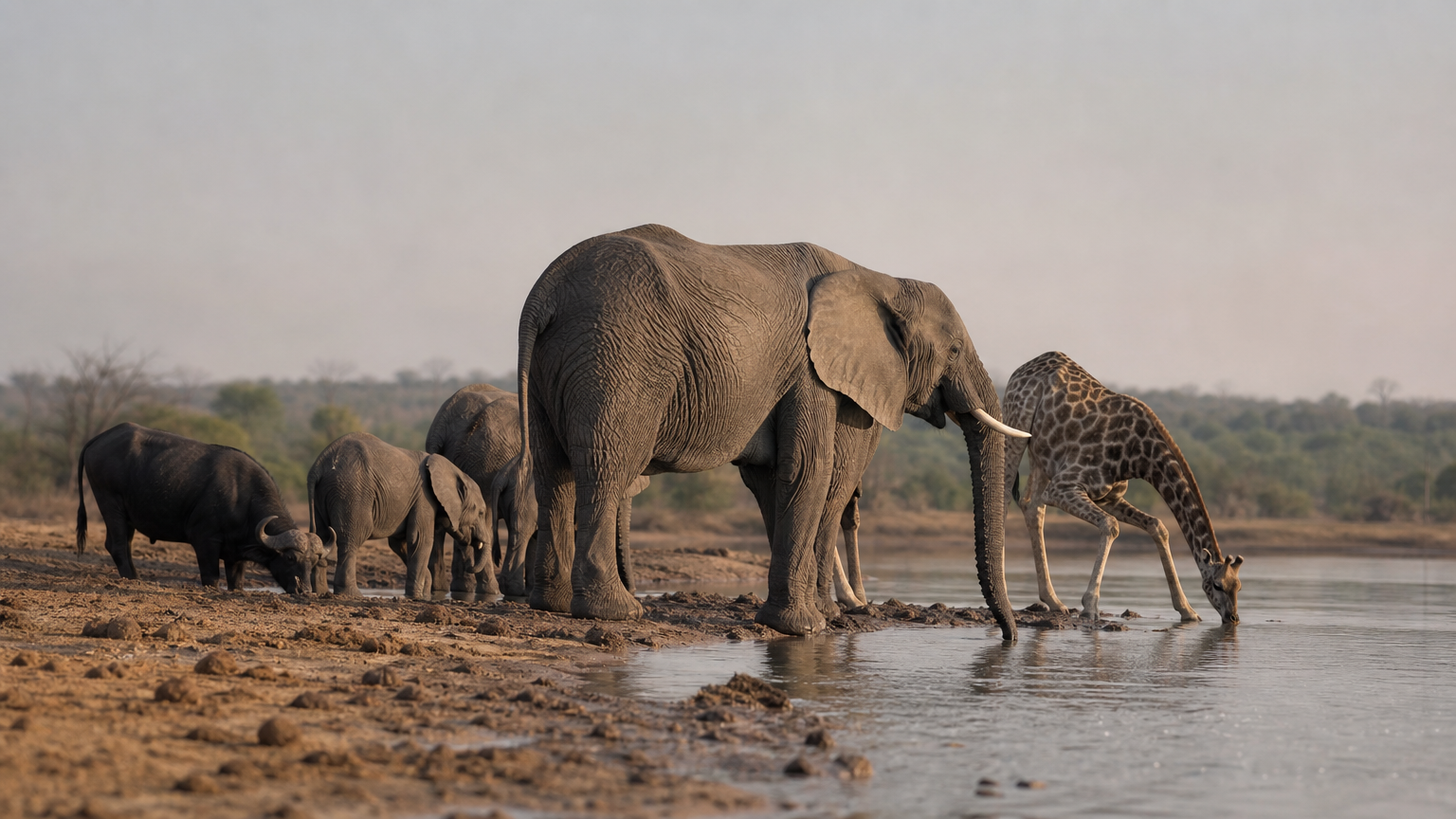
In Chobe, rainfall decides where animals gather, and the dry season puts them on the river in front of you.
Once the rains arrive, animals spread into the interior as temporary pans fill. Sightings take more patience, but the park turns green, impala drop their lambs, and migratory birds arrive in large numbers. If birding matters more to you than big herds, the wet season has a real case.
Weather shapes comfort, roads, and cost
Temperatures change how a safari feels. Early game drives in June and July can start near 45°F in an open vehicle, while October afternoons pass 100°F. The weather in Chobe National Park also affects the ground. Heavy rain turns sandy tracks to mud and can close sections of the park, so your route may change on the day.
Here is how the two seasons compare on the points that affect most trips:
| Season | Wildlife viewing | Comfort | Typical rates |
|---|---|---|---|
| Dry (May to October) | Best, animals concentrated on the river | Cool nights, hot September and October | Peak prices |
| Wet (November to April) | Harder, but strong for birds and newborns | Hot, humid, afternoon storms | Lower rates |
Book dry-season dates early, because riverfront lodges and cruise slots fill months ahead. Travelers who can handle heat and some rain often find better value between November and April.
How to read Chobe’s dry and wet seasons
Two seasons, four phases
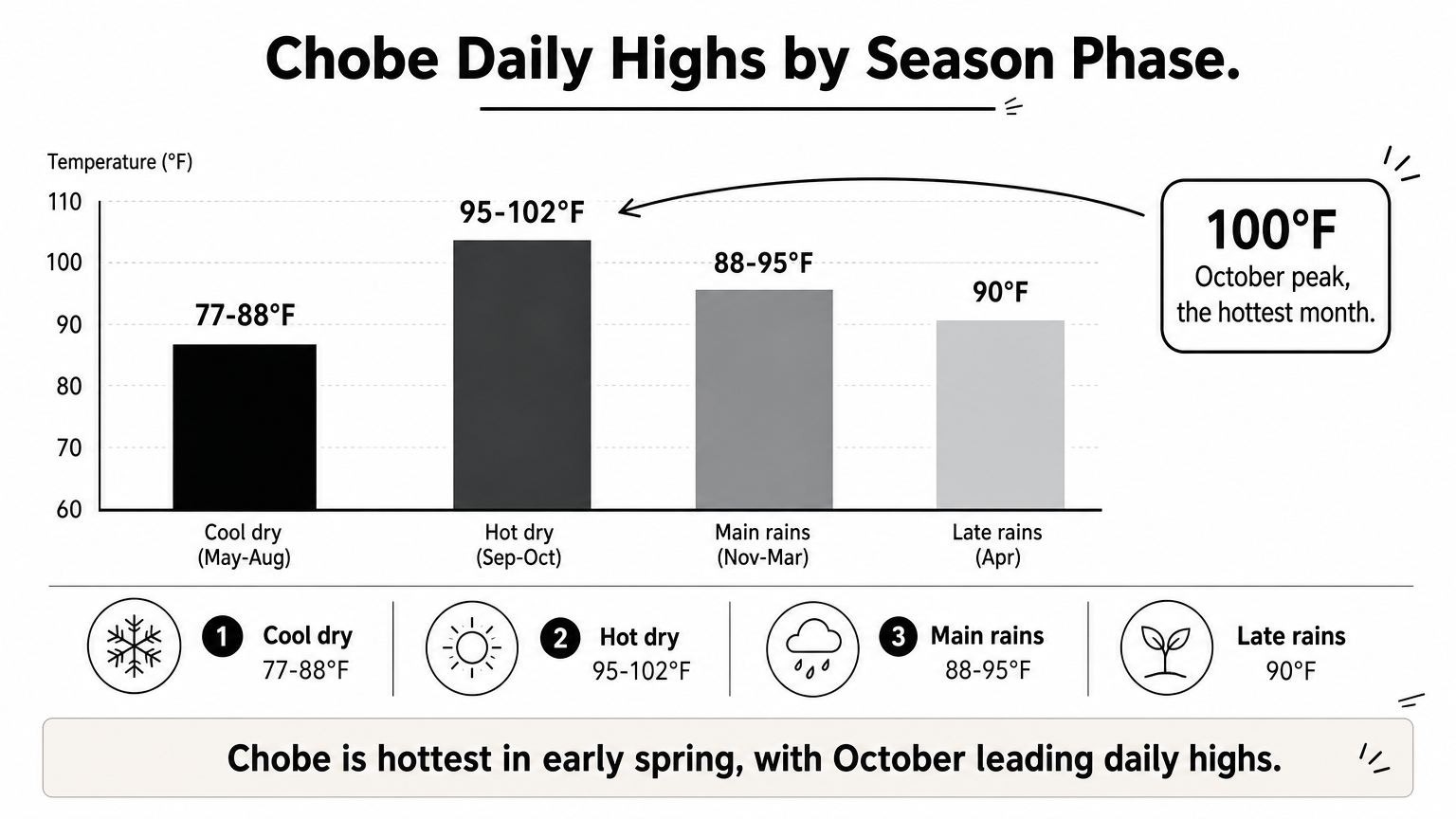
Chobe’s calendar has two seasons, but each one splits into two phases. The phase matters more than the monthly average, because the middle of a season feels very different from its edges. That is why weather in Chobe National Park in June and in September can feel like two different trips.
A dry season month can be crisp or scorching, so read the phase, not just the season label.
| Phase | Months | Typical highs | What it feels like |
|---|---|---|---|
| Cool dry | May to August | 77 to 88°F | Crisp mornings, lows near 45°F in June and July |
| Hot dry | September to October | 95 to 102°F | Dusty, little shade, no rain |
| Main rains | November to March | 88 to 95°F | Humid, afternoon storms |
| Late rains | April | About 90°F | Green bush, rain fading |
Where the edges trip people up
Transitions are less predictable than the calendar suggests. Early rains can arrive in late October, and a dry spell can interrupt the wet season in January. Treat the dates as a guide, not a promise.
Rain here falls in short, heavy bursts, not all-day drizzle. Mornings often stay clear, so a wet-season trip rarely means a washed-out day. The area averages about 25 inches of rain a year, and most of it falls between December and March.
Chobe weather by month, including September
Typical temperatures and rainfall
This table shows Chobe National Park Botswana weather across the year. The figures are approximate averages for the Kasane riverfront area.
| Month | High (°F) | Low (°F) | Rain (in) |
|---|---|---|---|
| January | 90 | 69 | 6 |
| February | 90 | 68 | 5 |
| March | 90 | 66 | 3.5 |
| April | 90 | 62 | 1 |
| May | 86 | 55 | 0.2 |
| June | 81 | 46 | 0 |
| July | 81 | 45 | 0 |
| August | 86 | 50 | 0 |
| September | 95 | 59 | 0.2 |
| October | 100 | 68 | 1 |
| November | 95 | 69 | 2.5 |
| December | 91 | 69 | 5 |
Chobe National Park weather in September
September is the driest, clearest stretch before the heat peaks. Highs reach about 95°F, mornings start near 59°F, and rain is rare. Water is scarce inland, so animals head for the river.
September in Chobe means hot, dry days and animals packed along the river.
Expect dust and little shade on land drives, so book afternoon boat cruises when the sun is strongest. By October the heat climbs to 100°F, which makes September the better month for most travelers.
How to pack and plan around Chobe’s weather
What to pack for Chobe’s temperature swings
Layers beat any single heavy item. In June and July, a dawn game drive can start near 45°F and finish in the low 80s, so dress in layers you can peel off as the sun climbs. Choose neutral colors like khaki, olive, and tan. Dark blue and black attract tsetse flies, and bright colors stand out on a quiet walk or boat trip.
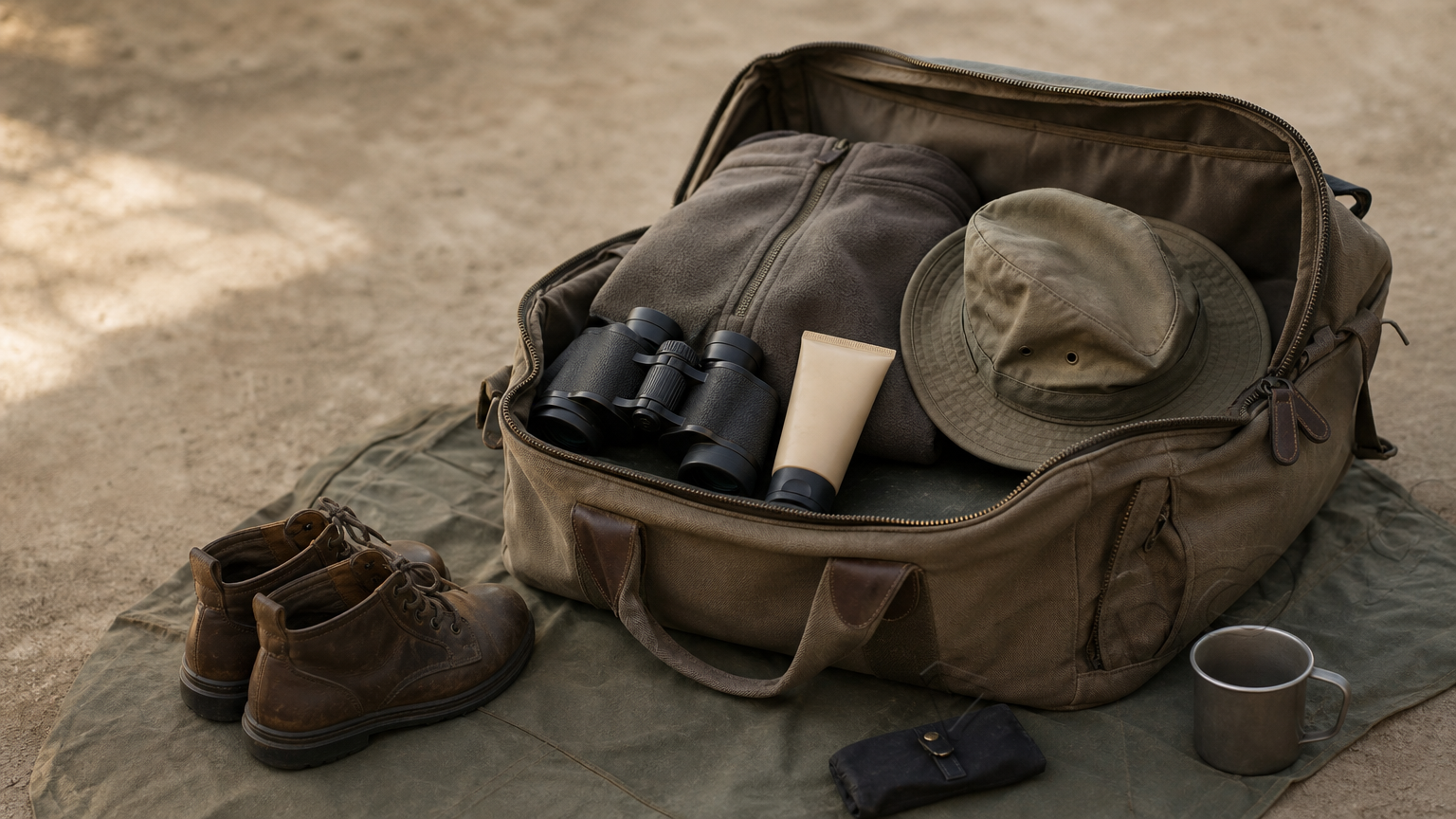
Pack for the swing between dawn and midday, not for the daily high.
- Fleece and windbreaker for May to August mornings
- Wide-brim hat, sunglasses, and SPF 30+ sunscreen
- Light rain jacket for November to April
- Closed shoes and insect repellent
- Binoculars with a dust cover
How to plan around the season
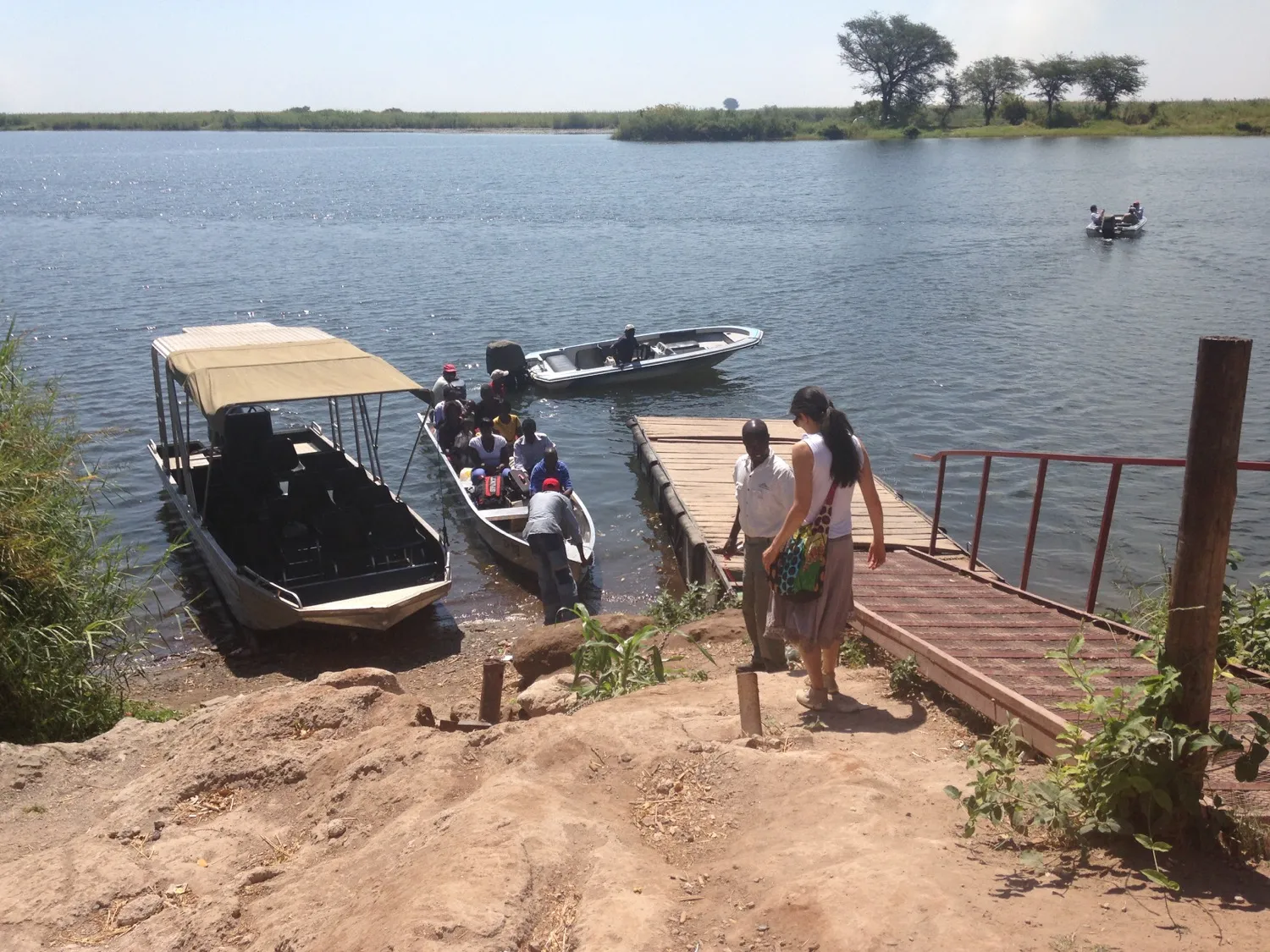
Plan river activities for the hottest hours. In September and October, afternoon boat cruises give you shade, a breeze, and elephants at the water’s edge, while morning game drives avoid the worst heat. Since the Chobe National Park weather peaks near 100°F in October, bring a refillable bottle and drink steadily.
Wet-season travelers should keep one day flexible, because a storm can delay a drive or close a muddy track. Mornings usually stay clear, so schedule your key activities early. Ask your doctor about malaria prevention well before you fly, since the risk is higher from November to May.
Common questions about Chobe’s climate
Which month has the best weather?
For most travelers, August and September strike the best balance. Days sit between the mid 80s and mid 90s, nights stay mild, and animals still line the river.
Cold-sensitive visitors should skip June and July. A dawn drive near 45°F in an open vehicle feels colder than the number suggests, especially at speed.
Can you trust a forecast for Chobe?
Short-range forecasts handle temperature and sunshine well, but they struggle with storms. Wet-season cells are small and local, so a forecast for the weather Chobe National Park Botswana may promise rain that never reaches your boat. Check it five days out when you finalize your packing.
Early October shows the problem. Highs near 100°F are reliable, while the first storm is not. So pack for heat and still carry a light rain jacket.
Use the forecast to fine-tune your bag, and use the season to choose your dates.
Does weather cancel cruises or game drives?
Rarely. Boat cruises run all year, and operators pause only for lightning or strong wind. Most delays last under an hour.
Game drives are more sensitive. After heavy rain, guides may reroute around flooded tracks, so you still see wildlife, just along a different stretch of river.
Choosing your month in Chobe
The Chobe National Park Botswana weather comes down to one choice. Go between May and October for dense river wildlife and dry roads, and pick August or September if you want warm days without the October furnace. Go between November and April if you prefer green scenery, birds, and lower rates, and accept some afternoon storms.
Whatever month you choose, pack layers, carry a light rain jacket, and keep your plans flexible. A forecast five days out helps you fine-tune your bag, but the season should set your dates.
Our guides have run Chobe trips since 2019, and they can match your dates to the right cruise or game drive. When you are ready, plan your Chobe safari with Maximum Adventure Trails and we will handle the bookings, transfers, and itinerary for you.