

- 6 Views
- 9 Min Read
- (0) Comment
Key takeaways
- The Big Five are the lion, leopard, elephant, buffalo, and rhino, a term that originally came from big-game hunters rather than photographers.
- Hwange National Park in Zimbabwe offers four of the Big Five in one place, while Matobo National Park is the country's best bet for rhino on foot.
- Chobe National Park in Botswana holds one of the densest elephant concentrations on Earth, and the Okavango Delta is prime territory for leopard and lion.
- The May to October dry season concentrates wildlife around shrinking water sources, making it the easiest time to complete a Big Five sighting.
- Ethical viewing means keeping distance, staying quiet, and choosing operators who fund anti-poaching and community conservation.
To complete a Big Five safari in Southern Africa, pair Zimbabwe's Hwange National Park, which holds four of the five species, with Matobo National Park for rhino, then add Botswana's Chobe and Okavango Delta for extraordinary elephant and predator viewing. The Big Five, the lion, leopard, elephant, buffalo, and rhino, are spread across these parks, and the dry season between May and October gives you the best odds of seeing every one.
This guide explains where each animal lives, how to raise your chances on a game drive, and how to watch wildlife in a way that helps protect it.
Meet the Big Five
The term Big Five did not come from photographers. Nineteenth-century big-game hunters coined it for the five African animals that were the hardest and most dangerous to hunt on foot. The name outlived the hunting era and became the checklist that shapes almost every safari itinerary today.
- Lion. Africa's largest cat and the only truly social one. Prides rest through the day and hunt in the cool of dawn and dusk. Lion numbers have fallen sharply across the continent as their habitat has shrunk.
- Leopard. The most elusive of the five. Solitary, secretive, and largely nocturnal, leopards often rest in trees. Spotting one is the highlight of many trips.
- Elephant. The world's largest land animal, living in tight family herds led by an older female. Southern Africa holds some of the healthiest elephant populations left.
- Buffalo. The Cape buffalo travels in large herds and has a formidable reputation. Old solitary bulls, known as dagga boys, are among the most unpredictable animals in the bush.
- Rhino. Both black and white rhino occur in the region, though poaching has made them the rarest of the five. Seeing a wild rhino is increasingly a privilege rather than a certainty.
The recovery of the rhino shows how fragile these sightings are. According to the Save the Rhino International population figures, there were 6,788 black rhinos in Africa as of the latest count, up 5.2 percent from the previous year. That slow climb is the direct result of intensive protection, and it explains why rhino viewing is so tightly controlled.
Lions tell a harder story. The African Lion Database reports that lions now occupy only about 6 percent of their historic range, with the area they inhabit having declined 34 percent since 2004. Roughly 20,000 to 25,000 wild lions remain. Numbers like these are part of why where you go matters so much.
Best Parks in Zimbabwe and Botswana for Each Species
Zimbabwe and Botswana share the Kavango Zambezi conservation landscape, so a single trip can move between them and pick up every member of the Big Five.
Zimbabwe: Hwange and Matobo
Hwange National Park is the anchor of any Zimbabwe safari. It is the country's largest park, roughly the size of Belgium, and it carries one of the biggest elephant populations in Africa alongside strong numbers of lion, leopard, and buffalo. In the dry months, herds gather at the pumped waterholes, and it is common to watch elephants, buffalo, and lions in a single afternoon. Four of the Big Five are reliably present here. For a deeper look at the reserve, see our guide to a Hwange National Park safari and its best areas.
The missing piece is rhino, and that is where Matobo National Park comes in. Matobo is a designated intensive protection zone for both black and white rhino, and its breeding success has been strong enough to supply rhinos for reintroduction elsewhere in the country. It is the best place in Zimbabwe to track rhino on foot with an armed guide, an experience that puts you closer to the animal than any vehicle can.
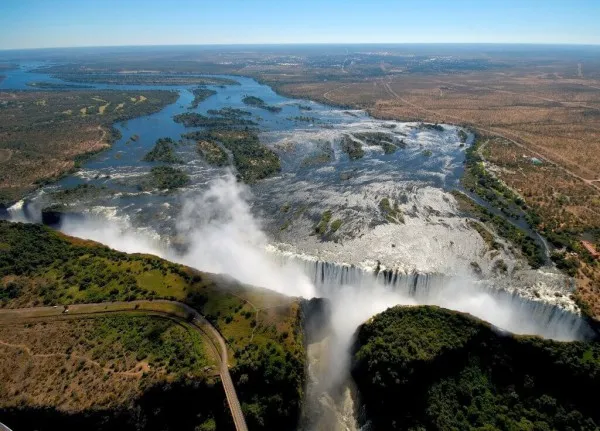
The area around Victoria Falls adds convenience. The adjacent Zambezi National Park brings buffalo and elephant within easy reach of town, so many travelers combine wildlife with the waterfall itself.
Botswana: Chobe and the Okavango Delta
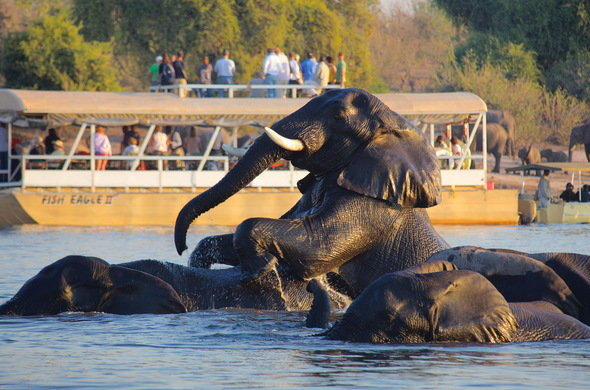
Chobe National Park is famous for elephants. It holds one of the highest concentrations of elephant anywhere on the planet, and in the dry season the herds pour down to the Chobe River in numbers that can run into the hundreds. A boat cruise here puts you at eye level with drinking and swimming elephants, buffalo, and the predators that follow them.
The Okavango Delta is the region's premier predator destination. Its maze of channels, islands, and floodplains supports dense lion prides and gives leopards the cover they favor, so the delta offers some of the finest big-cat viewing in Africa. Buffalo herds move through the same mosaic. For a fuller plan, our guide to the Okavango Delta for first-timers walks through when to go and what to expect.
Put simply, Botswana delivers the elephant spectacle and the cats, while Zimbabwe rounds out the list with accessible rhino.
Big Five Safari Tips for Maximizing Sightings
Seeing all five species is partly luck and partly strategy. These habits improve your odds.
- Go in the dry season. From May to October, water becomes scarce and vegetation thins out. Animals cluster around the remaining waterholes and rivers, which makes them far easier to find.
- Drive at dawn and dusk. Predators are most active in the cool hours. The first and last light of the day are when lions and leopards move, and when the light for photography is best.
- Be patient at waterholes. Sitting quietly at a productive waterhole often beats covering long distances. Wildlife comes to you.
- Trust your guide. A skilled local guide reads tracks, alarm calls, and behavior that you will never notice. Their knowledge is the single biggest factor in a good sighting.
- Look up for leopards. Scan the forks of large trees, especially along rivers. A leopard draped over a branch is easy to miss at a glance.
- Give it time. Rhino and leopard in particular reward multi-day stays. A single afternoon drive rarely completes the set.
Ethical and Conservation-Focused Viewing
The animals you have traveled to see are under real pressure, so how you watch them matters. The steep decline in lion range and the slow, hard-won rhino recovery both show that these populations depend on careful management and funding.
Responsible viewing comes down to a few principles. Keep a respectful distance and never crowd an animal, especially a mother with young. Stay quiet and remain in the vehicle unless a guide leads you out on foot. Avoid pressuring a driver to chase a sighting or to break away from a track. Fewer vehicles at a sighting means less stress for the animal and a better experience for everyone.
The bigger contribution is where your money goes. Park fees and well-run tours help pay for anti-poaching patrols, habitat protection, and the community programs that give people who live alongside wildlife a reason to protect it. When you book, ask how an operator supports conservation. The World Wide Fund for Nature explains why community involvement is central to keeping wildlife alive, and the connection between tourism revenue and protection is direct. Choosing a responsible trip is itself an act of conservation.
Curated Big Five Itineraries to Consider
The most efficient way to see all five species is to combine countries rather than betting everything on one park. A classic route starts in Zimbabwe and crosses into Botswana.
- The complete circuit. Begin at Victoria Falls, move to Hwange for elephant, lion, leopard, and buffalo, then travel to Matobo for rhino. Cross into Botswana for Chobe's elephant herds and finish in the Okavango Delta for cats. This covers every member of the Big Five with room to spare.
- The short combination. If time is tight, pair Hwange with Chobe. You will see four of the five easily and can add a rhino tracking day at Matobo if the schedule allows.
- The water-focused trip. Center the journey on Chobe and the Okavango Delta for a boat-and-mokoro experience, then add a Zimbabwe extension for rhino.
At Maximum Adventure Trails we build these routes as guided packages with the border crossings, park permits, and lodges arranged for you, so you can focus on the wildlife instead of the logistics. If you want to compare structures and price points before deciding, our overview of how to combine a Chobe and Okavango safari in Botswana is a useful starting point.
The next step is simple: pick the season that suits you, decide how many of the five are non-negotiable, and let those two choices shape the route. A dry-season trip through Hwange, Matobo, Chobe, and the Okavango Delta gives almost any traveler a genuine shot at the full Big Five, and it is the itinerary we would build first.
Frequently asked questions
What are the Big Five safari animals?
The Big Five are the lion, leopard, African elephant, Cape buffalo, and rhinoceros. The name comes from the difficulty and danger of hunting these animals on foot, and it stuck as safari terminology.
Where is the best place to see the Big Five in Southern Africa?
Zimbabwe's Hwange National Park combined with Matobo National Park covers all five species, and Botswana's Chobe and Okavango Delta add exceptional elephant and predator viewing. A combined Zimbabwe and Botswana trip gives the best odds.
What is the best time of year for a Big Five safari?
The dry season from May to October is ideal. Sparse vegetation and shrinking waterholes push animals into predictable locations, improving your chances of spotting all five species.
Can you see rhinos in Zimbabwe?
Yes. Matobo National Park is a designated intensive protection zone for both black and white rhino and is Zimbabwe's premier location for tracking rhino on foot with a guide.
Is it ethical to go on a Big Five safari?
Responsible safaris support conservation and local livelihoods. Choose operators who follow distance rules, limit vehicle numbers at sightings, and contribute to anti-poaching and community programs.