

- 9 Views
- 20 Min Read
- (0) Comment
You're probably planning dates right now and seeing the same vague advice everywhere: “Go in the dry season” or “visit after the rains.” That sounds helpful until you realize Victoria Falls can feel like two different destinations depending on when you arrive. One traveler steps out to a wall of thunder, drifting mist, and wet viewpoints. Another arrives months later and sees rock faces, deep gorge detail, and clearer panoramas.
That difference is why Victoria Falls weather matters so much. It doesn't just affect whether you need a light rain jacket or a sunhat. It changes what you see at the falls, how your photos turn out, how comfortable a walking tour feels, and whether a safari add-on pairs well with your trip.
I've found that many visitors from the UK, the US, France, Germany, and elsewhere make one simple mistake. They check rainfall or temperature, but they don't connect that information to the experience on the ground. At Victoria Falls, that link matters more than almost anywhere else.
Table of Contents
- Introduction to Victoria Falls Weather and Why It Matters
- How Victoria Falls Climate Works Throughout the Year
- Month by Month Temperature and Rainfall Breakdown
- How Weather Shapes What You Actually See and Do
- Best Time to Visit for Different Experiences
- Packing and Safety Tips for Every Season
- Planning Your Perfect Victoria Falls Trip Around the Weather
Introduction to Victoria Falls Weather and Why It Matters
A couple arrives in March in light clothes, sees warm temperatures on their phone, and assumes the day will be simple. Ten minutes at the viewpoints later, they are laughing, soaked by wind-blown spray, and trying to protect their camera. Months later, a family visits under clear September skies and wonders why the falls look so different from the huge white curtain they saw in travel photos.
Both groups picked a good time. They just stepped into two very different versions of Victoria Falls.
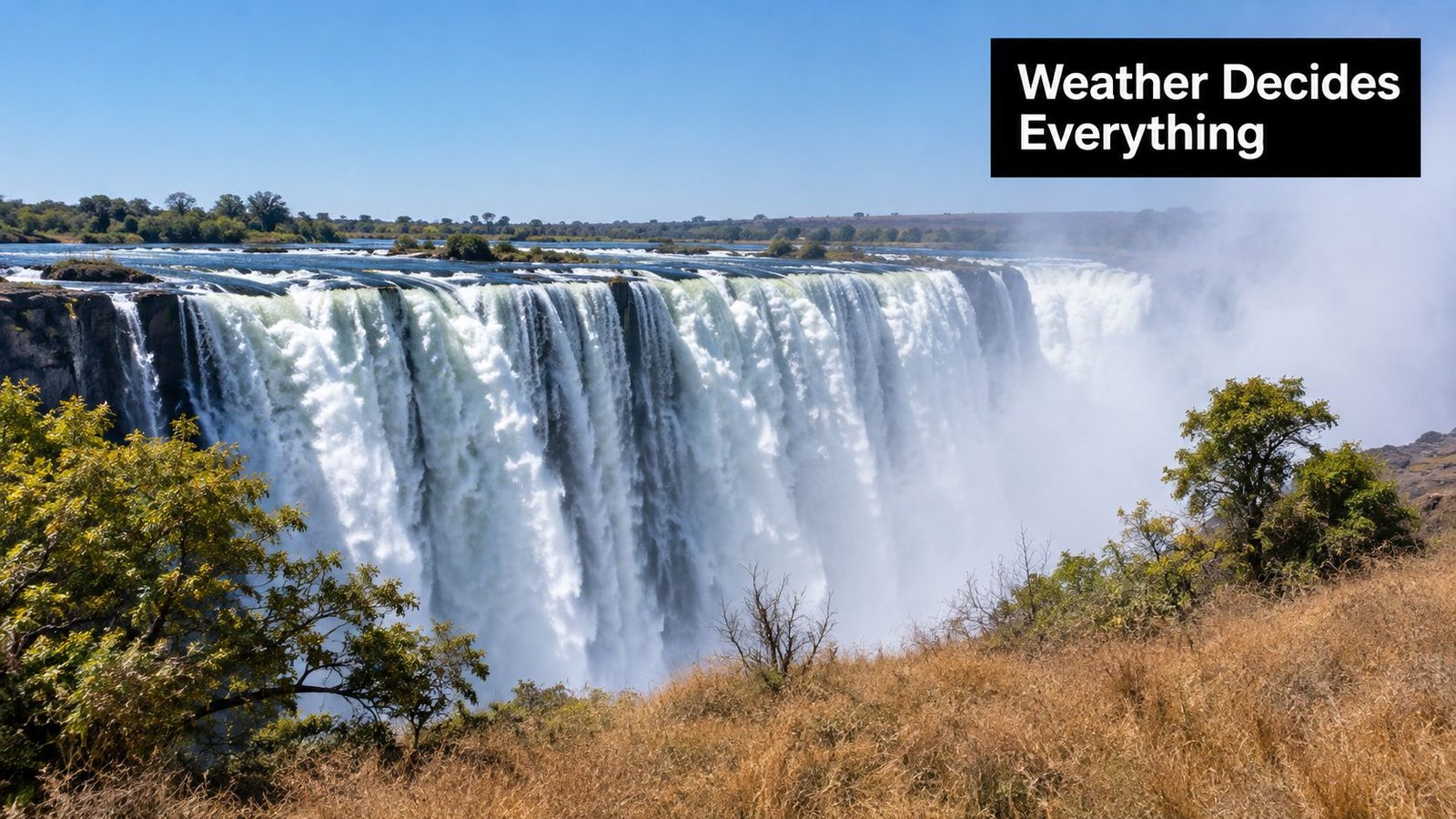
The useful way to read Victoria Falls weather
For Victoria Falls weather, temperature and rainfall are only the starting point. Travelers usually want answers to a more practical set of questions:
- Will the falls look full and powerful, or will more of the rock face show?
- Will viewpoints be clear, or will mist hide the panorama?
- Will the day feel pleasant for walking, cruising, or a safari add-on?
- What should I carry so I stay comfortable from morning to afternoon?
That shift matters because local weather does not always match what you experience at the gorge.
Victoria Falls works a bit like a tap and a cloud at the same time. The Zambezi's flow depends on rainfall across a much wider area upstream, not only the rain falling in town that week. Then, once that water crashes into the gorge, it creates its own mist, humidity, and cooling effect around the viewpoints. So you can have a dry day with poor visibility from heavy spray, or a hot day with clearer views but less water pouring over the edge.
Why this catches travelers out
Visitors from the UK, the US, and across Europe often check a weather app and expect it to answer everything. At Victoria Falls, it cannot.
A forecast may tell you the day is sunny. It does not tell you whether the main viewpoints will feel like standing near a rainstorm. It may show little local rainfall. It does not explain whether the river is still carrying months of upstream rain and sending thick spray into the air.
That is why the same season can suit one traveler perfectly and frustrate another. If you care most about dramatic water volume, you may accept wet paths, damp clothes, and misty photos. If you want wide scenic views, easier walking, and stronger safari conditions, you may prefer a drier period even though the waterfall looks less like the classic flood-season image.
The weather here shapes the experience in opposite ways. More water often means more drama and less visibility. Drier air often means clearer panoramas and a less thunderous falls. Once you understand that trade-off, it becomes much easier to choose the right month for your kind of trip.
How Victoria Falls Climate Works Throughout the Year
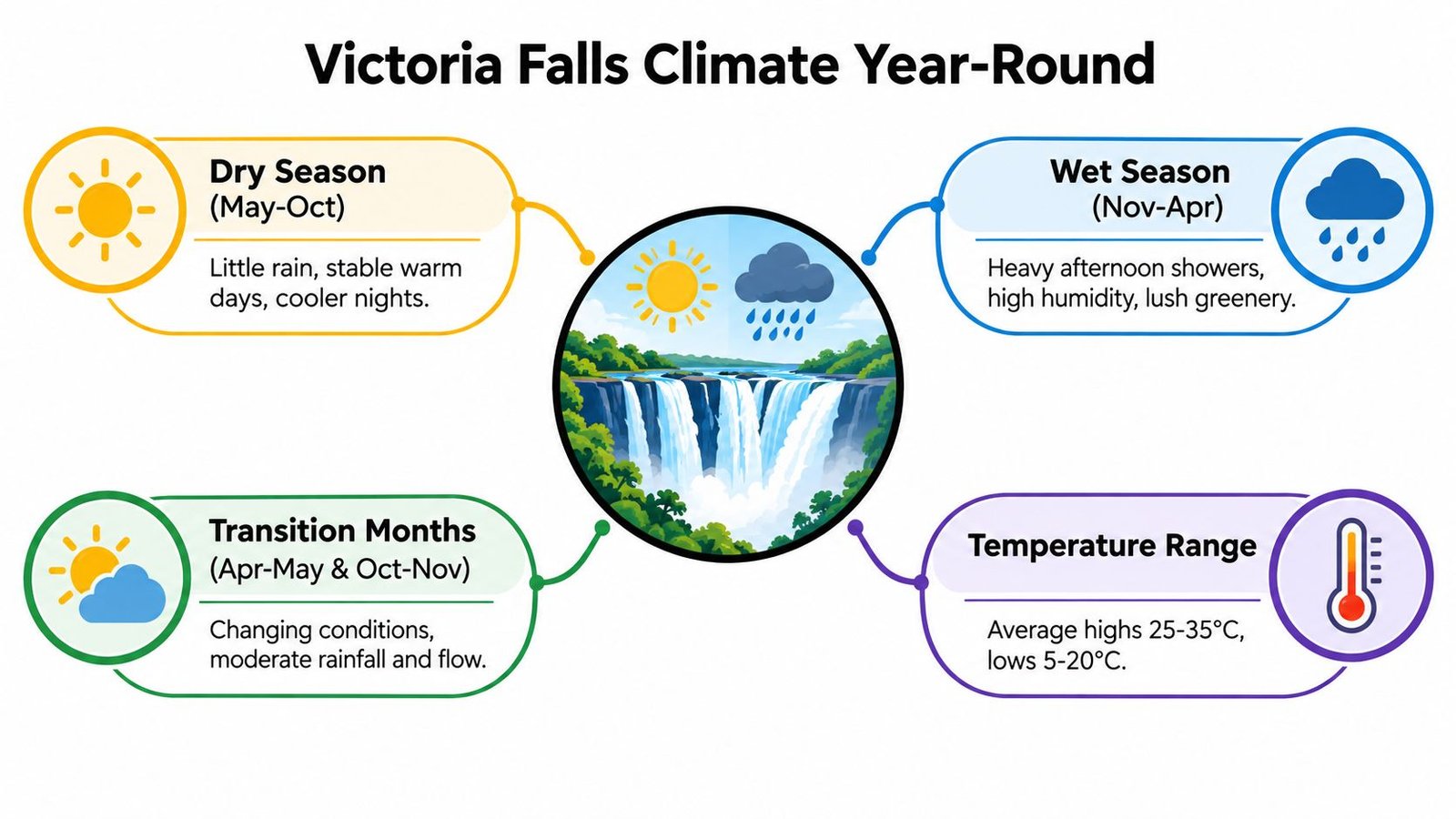
Victoria Falls has a yearly rhythm, and it works a bit like a river with a long memory. The town moves from rain, to cooling, to dry air, to intense heat, but the falls themselves do not respond only to what fell from the sky that week. That is the part many first-time visitors miss.
The wet half of the cycle
From roughly November to March, the region shifts into its rainy season. Storms usually build in bursts rather than falling all day without pause, so a wet-season trip can still include bright mornings, dramatic clouds, and usable activity windows between showers.
What changes most is the feel of the place. The bush greens up fast. The air gets heavier. Footpaths can turn slick, and the rainforest zone near the viewpoints feels even denser because local rain and constant spray are working together.
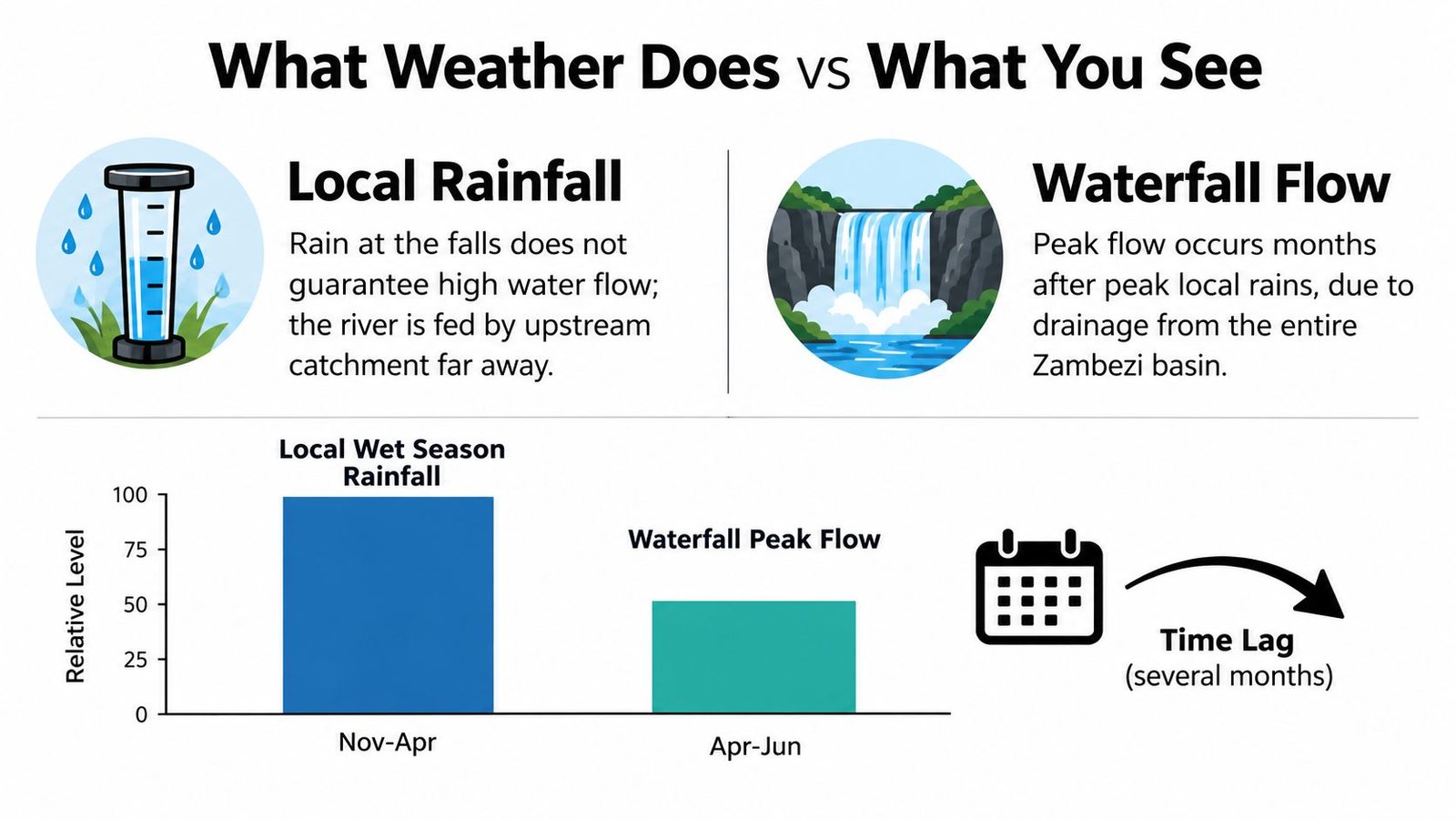
This is also the season when travelers often confuse rainfall with waterfall conditions. Rain in town matters for comfort and mud. The bigger waterfall story depends on water travelling down from far upstream, so the strongest visual impact often arrives with a delay rather than on the same day as the rain.
The dry half of the cycle
From about May through September, rain becomes scarce and the air is usually much drier. Skies are often clearer, walking conditions are easier, and many visitors find this part of the year more comfortable for longer days outdoors.
Dry does not mean one steady temperature from start to finish, though.
Early dry-season months can feel pleasantly cool in the mornings and evenings. Later in the dry season, especially as October approaches, heat builds sharply. So two travelers who both say they visited in the "dry season" may have had very different experiences, one in light layers at sunrise, the other looking for shade by late morning.
Why the seasons affect activities in opposite ways
Victoria Falls becomes easier to understand if you stop asking only, "Will it rain?" A better question is, "What will the mix of water volume, spray, heat, and humidity do to my day?"
High water and heavy mist usually create the most dramatic power at the falls. They can also soak clothes, soften distant views, and make photography harder from some viewpoints. Drier months often bring clearer panoramas and easier walking, but less curtain-like water over parts of the rock face.
The same trade-off shows up in other activities. Cooler, drier air often feels better for game drives and general sightseeing. Warmer months can bring greener scenery and stormy skies that some photographers love, but the humidity can make midday outings feel harder than the thermometer alone suggests.
Why month labels can mislead
"Rainy season" sounds like a washout to many visitors from the UK, the US, and Europe. In practice, it usually means shifting conditions, higher humidity, and a greater chance of storms, not nonstop rain from breakfast to bedtime.
"Dry season" can mislead in the opposite direction. Around the viewpoints, spray can still leave you damp, and late dry-season heat can feel surprisingly strong.
If you want a closer look at how seasonal timing affects trip planning, this guide to the rain season in Victoria Falls adds useful detail.
Month by Month Temperature and Rainfall Breakdown
You can land in Victoria Falls in two different months and feel like you have arrived in two different places. In one part of the year, afternoons build toward storms and the air feels full and tropical. In another, the sky stays clear for days, nights turn cool, and the ground dries out fast. That swing matters because it changes comfort, road dust, walking conditions, and the feel of each day.
Monthly climate averages help most when you read them like a seasonal sketch, not a promise for a specific afternoon. Averages show the shape of the year. Real travel days still have personality.
What the annual pattern tells you
Victoria Falls has a strong wet season and a strong dry season. Rain builds from about November, peaks around the middle of the southern summer, then drops away sharply into the cooler dry months. By midyear, local rainfall is often close to zero, and winter nights can feel much cooler than first-time visitors expect.
That pattern explains why the same destination can suit very different travel styles across the year. If you want greener surroundings and stormy skies, the wetter months usually fit better. If you want easier walking conditions and more settled days for touring, the dry middle of the year is often simpler.
Victoria Falls monthly climate at a glance
| Month | Avg High Temp | Avg Low Temp | Rainfall | Rain Days |
|---|---|---|---|---|
| January | Warm to hot | Mild to warm | One of the wettest times of year | Frequent |
| February | Warm to hot | Mild to warm | Very wet | Frequent |
| March | Warm | Mild | Still wet, but easing from peak summer rains | Regular |
| April | Warm | Cooler nights begin | Transition month, with rain dropping | Fewer |
| May | Warm days | Cooler mornings and evenings | Very little rain | Low |
| June | Warm days | Cool nights | Dry to near-dry | Very low |
| July | Warm days | Cool nights | Driest part of the year | Very low |
| August | Warming days | Cool to mild nights | Dry | Very low |
| September | Hotter days | Mild nights | Dry | Very low |
| October | Hottest period | Mild to warm nights | Mostly dry before the main rains return | Low |
| November | Hot with changing conditions | Warm nights | First meaningful rains often return | Rising |
| December | Warm and humid | Warm nights | Wet season established | Frequent |
How to read this like a traveler
A dry month here does not always feel mild. September and October are the best example. Rain is still low, but heat can build hard by midday, a bit like standing beside an oven that has been left on too long. Visitors from the UK, northern Europe, or cooler parts of the US often find that surprising.
A wet month does not mean all-day rain either. Summer weather often arrives in bursts. You may get a bright morning, a dramatic afternoon storm, then a clear spell again. That can still leave plenty of useful time for sightseeing, sunset cruises, or a short activity between showers.
Three habits make this table more useful:
- Read across several months, not one box. April feels different from January, even though both sit in the wetter half of the year.
- Separate heat from rain in your mind. October is often drier than summer, but many travelers find it more tiring because of the heat.
- Remember that local rain is only one part of the falls story. This table helps with comfort and general conditions in town. It does not fully predict spray levels or how much water you will see over the edge.
That last point causes the most confusion. Visitors often expect the wettest local month to give the biggest waterfall views at the same moment. The Zambezi does not work that neatly. River flow responds to a much larger upstream catchment, so the best month for cool game drives, clear photography, or huge spray can be a different answer depending on what you care about most.
A useful way to choose your dates
Start with the month you can travel, then match your plans to the conditions that month usually brings. A family with school-holiday dates in August may enjoy the easier logistics, cooler mornings, and dry paths. A photographer with flexibility might prefer late summer for greener scenery, cloud drama, and moodier light, even with more humidity.
That approach works better than searching for one perfect month, because Victoria Falls gives different rewards at different times of year.
How Weather Shapes What You Actually See and Do
You arrive at the first viewpoint just after breakfast. The forecast looked simple enough. Warm day, little chance of rain. Then the path turns slick, your camera lens fogs, and the falls vanish behind a wall of white spray.
That surprises a lot of visitors, because weather in town and conditions at the falls are related, but they are not the same thing.
Why rain and waterfall flow don't match perfectly
Victoria Falls sits on a big river system, not a small local stream. Rain that falls near the town affects comfort, cloud cover, and how muddy a trail feels underfoot. The volume pouring over the edge depends on a much larger upstream catchment in the Zambezi basin, so the falls often respond with a delay rather than in lockstep with local showers.
A simple way to read it is this. Local weather helps answer, "What will the day feel like?" River flow helps answer, "What will the falls look like?"
That difference matters more here than in many other destinations. You can visit during a relatively dry local spell and still meet huge spray. You can also have humid weather, green scenery, and dramatic skies without getting the clearest full-face view of the rock wall.
What that means on the ground
Around the viewpoints, the mist creates its own small weather zone. It can feel cooler on your skin, wetter on your clothes, and more slippery under your shoes than the general forecast for town suggests.
Heat and humidity also change the pace of the day. A hot dry afternoon can feel tiring in open sun, even if the paths are easier. A cooler misty morning may be more comfortable for walking, while being harder on cameras, glasses, and phone screens.
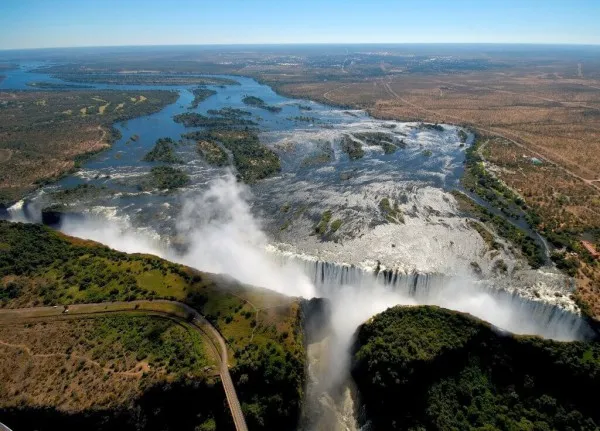
Here's a quick visual before we talk activities.
The big trade-offs for travelers
The falls reward different visitors in different ways.
High water and heavy spray often create the classic "Smoke that Thunders" feeling. You hear the roar early, feel moisture in the air, and sometimes catch bright rainbows in the drifting mist. Ground-level photography gets harder, though, because wide views may close in and lenses need constant wiping.
Lower spray usually brings cleaner sight lines. You see more of the gorge, more cliff detail, and more of the shape of the waterfall itself. That can be better for panoramic photos and easier walking, even if the first emotional hit feels less overwhelming.
Different activities respond to these patterns in opposite ways:
- Photography: Mist adds drama, atmosphere, and rainbows. It also reduces visibility and soaks equipment.
- Scenic walks: Cooler damp viewpoints can feel magical, but wet stone and muddy patches require more care.
- Adventure activities: Comfort depends on heat, footing, wind, and visibility, not just whether it rained that week.
- Safaris and cruises: Drier air and less midday humidity often make long outings feel easier, especially for families and older travelers.
A strong waterfall month is not always the best month for the photos or activities you care about most.
If your plans include more than the viewpoints, this guide to Victoria Falls activities helps you match the season to the kind of trip you want.
Best Time to Visit for Different Experiences
You can arrive in Victoria Falls on two sunny mornings and have two completely different trips. On one day, the viewpoints feel like standing beside a giant outdoor shower, with mist on your face and rainbows hanging in the air. On another, the paths are drier, the gorge opens up, and you can study the shape of the falls more clearly. That is why the best time to visit depends less on the forecast alone and more on what you want to see, photograph, and do.
If your priority is maximum waterfall drama
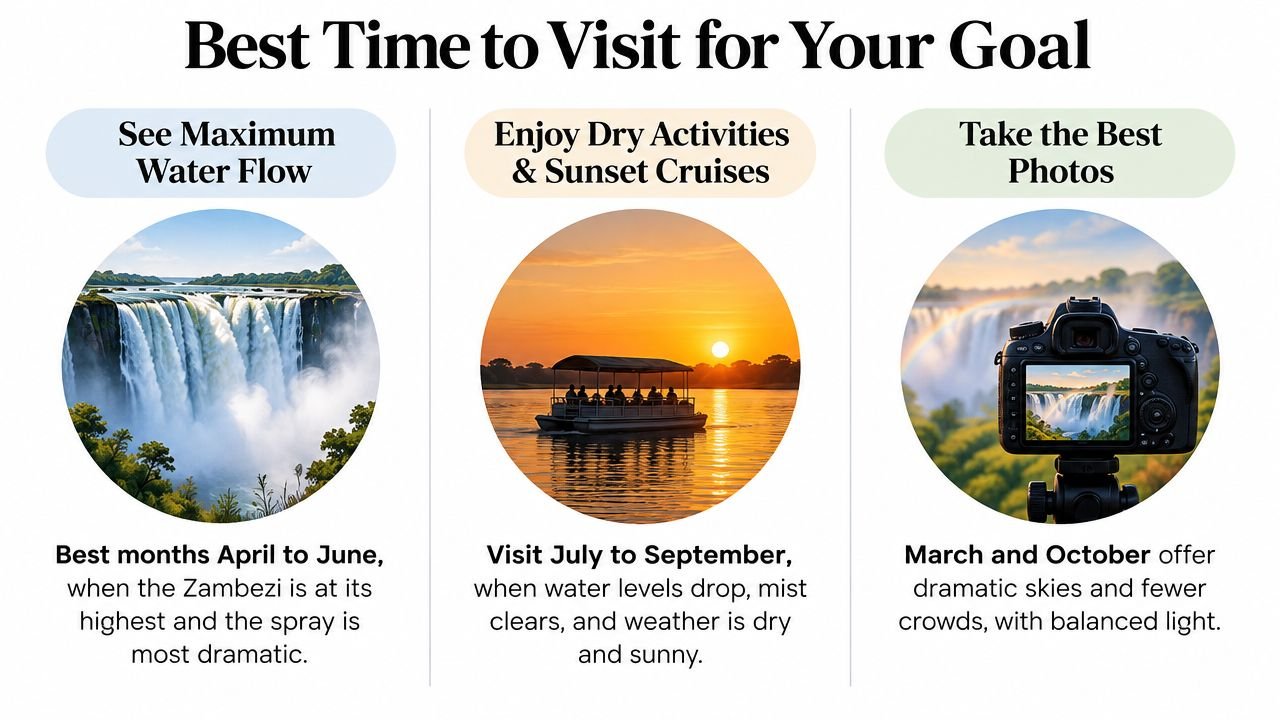
Go when the Zambezi is pushing hard and the spray is thick. This is the classic thunder-and-mist experience many first-time visitors dream about. You hear the falls before you see them, and the whole area feels alive.
The trade-off is simple. Strong flow often means less clear ground-level visibility. You may not get the neat, postcard-style full view from every lookout, but you do get the feeling that the falls are taking over the whole area.
If you want clearer views and easier outdoor comfort
Choose a drier part of the year, especially if you enjoy longer walks, easier viewpoint stops, and combining the falls with other activities in the same day. Less airborne spray usually means better sight lines and less stopping to wipe glasses, phones, or camera lenses.
This period often suits families, older travelers, and anyone who wants the falls to be part of a broader holiday rather than the whole physical challenge of the day.
If photography is your main goal
The best photography season depends on the picture you want to bring home.
Mist works like a soft curtain. It adds mood, rainbows, and that famous sense of scale, but it can also hide the rock walls and blunt wide shots. Drier conditions do the opposite. You lose some of the floating drama, but you gain cleaner lines, more gorge detail, and a better chance of sharp panoramic images.
A simple way to choose:
- For mist, mood, and rainbows: pick a wetter, greener period.
- For clearer panoramas and rock detail: pick a drier period.
- For a mix of both: aim for the shoulder months, when conditions can shift day by day.
If you're combining the falls with safari or river activities
Many travelers get caught out. Rain falling in Victoria Falls town is only part of the story. The water pouring over the edge depends heavily on rainfall much farther upstream in the Zambezi catchment, so local weather and waterfall volume do not always move in step.
For safaris, game drives, and long days outdoors, drier air and lower humidity usually feel easier. For scenic flights or certain adventure activities, visibility and wind matter as much as rain. For sunset cruises, a hot day with calmer conditions can be lovely, even if it was not the best day for walking through heavy spray near the viewpoints.
A simple decision guide
| Your priority | Time that often fits best | Main trade-off |
|---|---|---|
| Full-power waterfall feeling | Higher-flow months | More spray and less consistent visibility |
| Clean panoramic views | Drier months | Less of the engulfing mist effect |
| Easier walking and mixed-age travel | Early to mid dry season | The falls may feel less overwhelming |
| Lush scenery and dramatic skies | Wet season and shoulder periods | More humidity and less predictable conditions |
| Safari, cruises, and falls in one trip | Dry season | Better comfort and clearer outings, but less raw waterfall force |
If you want a fuller breakdown by travel style, this guide to the best time to visit Victoria Falls for every traveler helps match the season to the kind of trip you want.
Packing and Safety Tips for Every Season
Packing for Victoria Falls goes wrong when people pack for the forecast and forget the microclimate. A sunny day can still leave you wet near the viewpoints. A dry-season morning can start cool and become hot by midday.
What to pack by season
For wetter months, keep things simple and practical:
- Quick-dry clothing: Light fabrics are easier to manage than heavy cotton once mist or rain starts.
- Rain layer: A compact waterproof jacket helps more than an umbrella on viewpoint walks.
- Waterproof protection for gear: Camera covers, zip bags, and a dry pouch for your phone make a real difference.
For dry months, especially when heat builds later in the season, focus on exposure and comfort:
- Sun protection: Hat, sunscreen, sunglasses.
- Water bottle: Dry air and long walking routes can catch people out.
- Layers for early starts: Mornings and evenings can feel cool even when afternoons warm up.
Safety mistakes first-time visitors make
The most common issue isn't dramatic weather. It's small, avoidable problems. Slippery paths, wet electronics, wrong shoes, and underestimating the sun cause more hassle than storms.
Practical packing check: shoes with grip matter more here than fancy travel outfits.
A few habits help a lot:
- Watch your footing: Spray zones can make stone and concrete slick.
- Protect documents and electronics: Keep passports, cards, and phones in waterproof sleeves.
- Hydrate before you feel thirsty: Hot, dry months can drain you.
- Don't dress for the hotel lobby: Dress for the viewpoint, the boat, or the safari vehicle.
If you want a broader trip checklist that also works for safari extensions, this safari packing list is a practical reference.
One balanced approach works best
The smartest packers prepare for movement across conditions in one day. Think layers, not heavy bags. Think protection, not clutter. A light daypack with water, a rain shell, lens cloth, and sun protection usually beats overpacking every time.
Planning Your Perfect Victoria Falls Trip Around the Weather
The easiest way to choose your dates is to start with your priority, not the calendar.
If you want the falls to feel massive, loud, and dramatic, lean toward the wetter side of the year and accept that spray may hide some views. If you want clearer panoramas, easier walking, and stronger safari pairing, the drier months usually make life simpler. If you want a middle path, look closely at the shoulder periods.
A quick way to decide
Ask yourself these three questions:
- Do I want power or clarity?
- How well do I handle heat, humidity, or getting wet?
- Am I pairing Victoria Falls with safari, cruises, or adventure activities?
Those answers usually narrow the season quickly.
Before you book
Close to departure, it's always worth checking the short-term forecast and recent local conditions. Seasonal patterns tell you the broad story, but the final feel of a trip also depends on timing within the month, current spray levels, and what activities matter most to you.
If you're putting together a wider itinerary through Zimbabwe or Botswana, one practical planning option is safari and Victoria Falls trip ideas, especially if you want to align the falls with Hwange, Chobe, Moremi, or the Okavango Delta.
Victoria Falls rewards travelers who understand its rhythm. Once you stop asking only “Will it rain?” and start asking “What experience do I want?”, the right travel window becomes much easier to choose.
Maximum Adventure Trails helps travelers book Victoria Falls activities, accommodation, and wider safari trips across Zimbabwe and Botswana, which makes it useful if you want your dates to match both weather conditions and the kind of experience you want on the ground. If you're comparing seasons for the falls, Hwange, Chobe, Moremi, or the Okavango, visit Maximum Adventure Trails to explore trip options built around the timing that suits you best.