
- 2 Views
- 26 Min Read
- (0) Comment
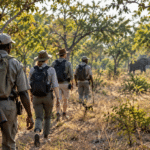
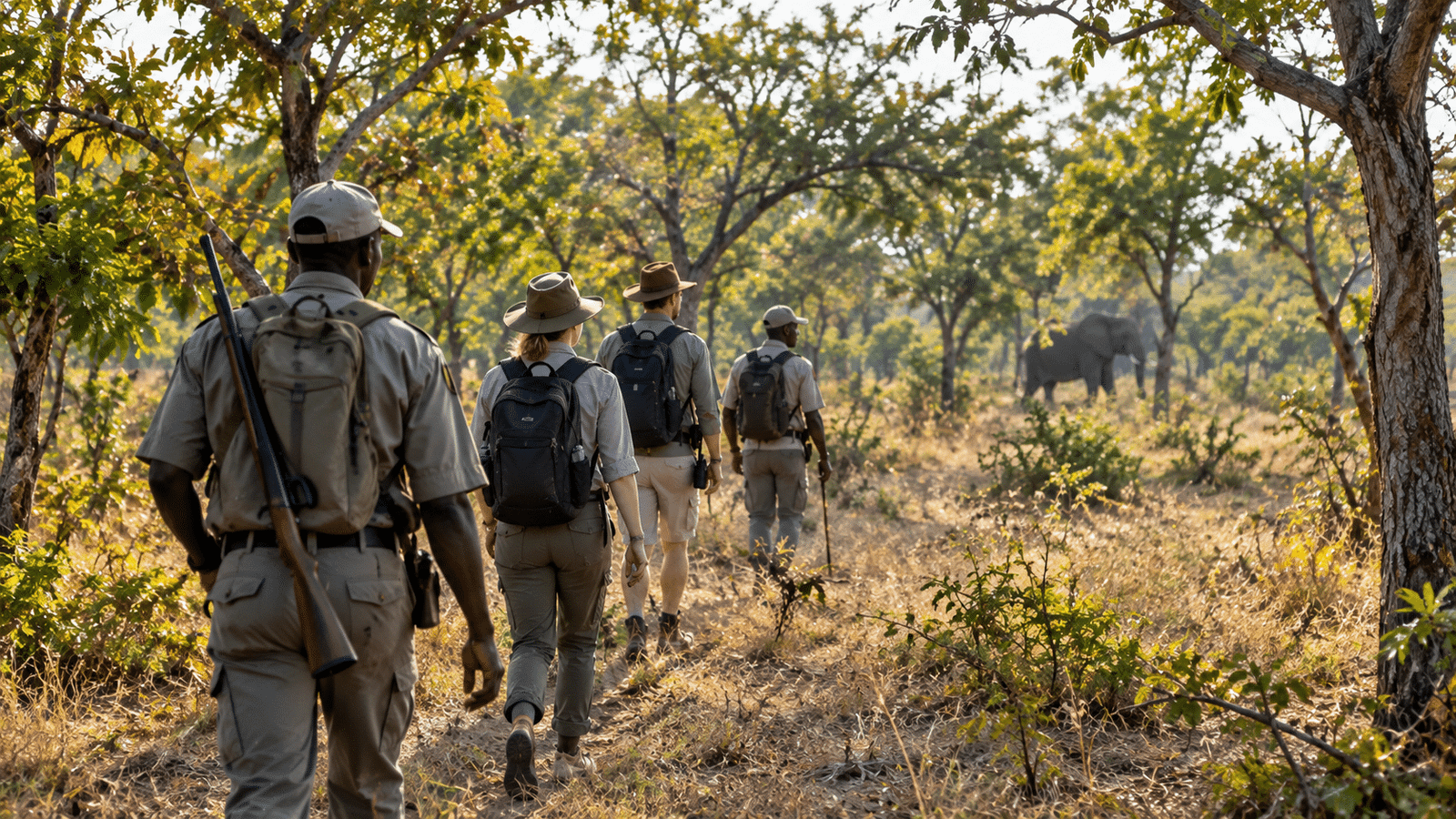
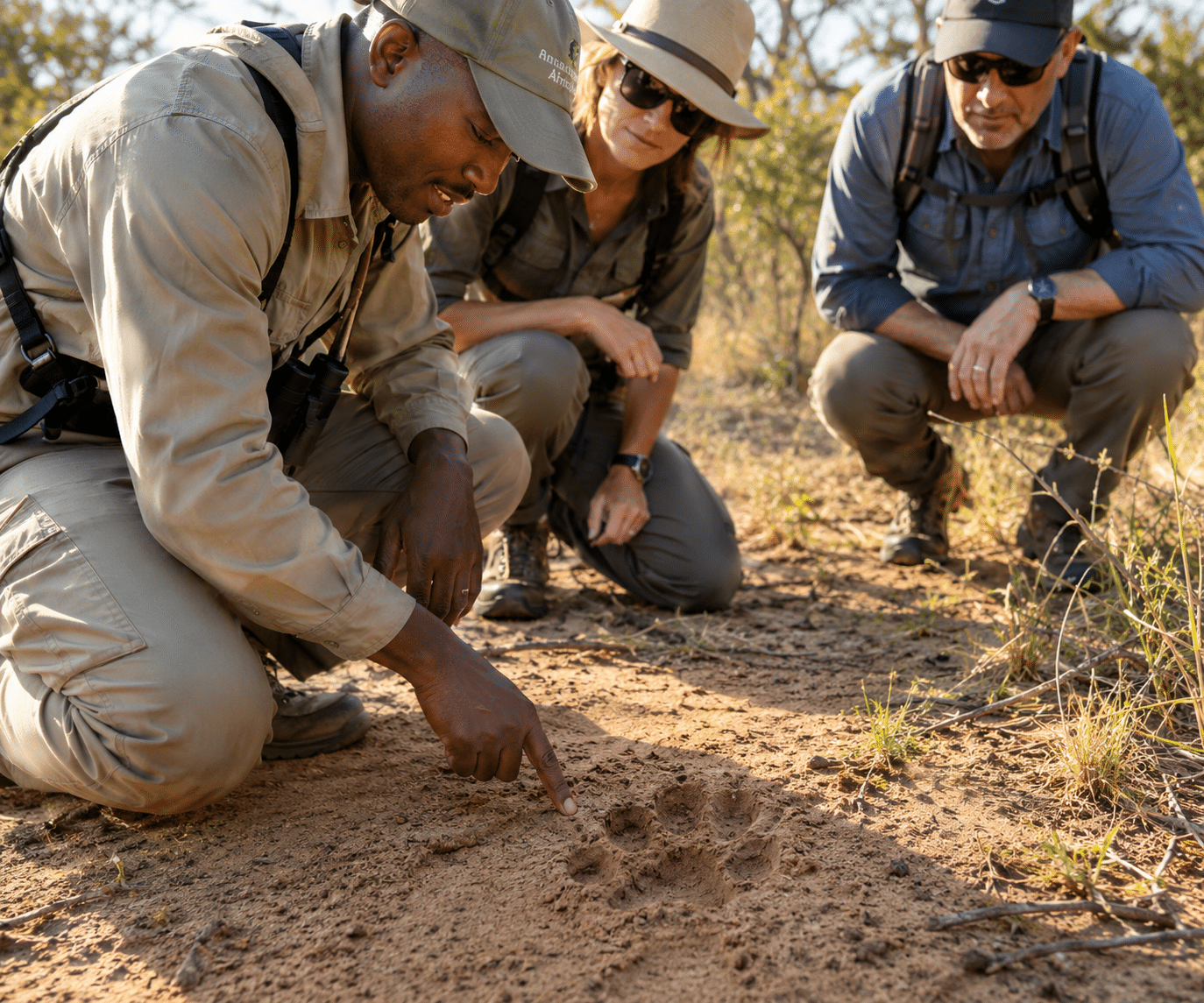
A Zambia walking safari is a different way to experience Africa’s wilderness. Instead of watching wildlife only from a vehicle, you explore the bush on foot with an experienced professional guide. You learn to recognise animal tracks, listen to bird calls, identify plants and understand the smaller details of the ecosystem. You walk quietly in single file, read the signs around you, and notice what a moving vehicle never lets you see: a fresh leopard track in the sand, a puku’s alarm call, the smell of elephants drifting on the breeze.
Zambia is the birthplace of the walking safari, and nowhere is the tradition stronger than in South Luangwa National Park. From the riverbanks and woodlands of South Luangwa to the remote wilderness of North Luangwa, the country lets you slow down and develop a deeper understanding of African wildlife.
Whether you are planning your first African safari or returning for something more immersive, this guide covers where to go, when to travel, what it costs, how to stay safe, and how to prepare. It also covers the gear that makes the difference between an enjoyable walk and a miserable one. I’ve spent years in affiliate marketing reviewing outdoor and travel gear on Amazon, and I’ve seen which purchases travellers regret and which ones they thank themselves for.
In This Guide
- What Is a Zambia Walking Safari?
- Why Zambia Is the Home of the Walking Safari
- Why Choose a Walking Safari in Zambia?
- Best Places for a Zambia Walking Safari
- Best Time to Go
- What a Typical Day on Foot Looks Like
- Wildlife You May Encounter
- Walking Safari vs Game Drive
- Is a Walking Safari Safe?
- Fitness Level and Who It Suits
- What to Pack: The Gear That Matters
- How Much Does a Zambia Walking Safari Cost?
- How to Choose an Operator
- How to Plan Your Trip
- Sample Itineraries
- Responsible and Sustainable Walking Safaris
- Common Mistakes to Avoid
- Frequently Asked Questions
- Plan Your Safari with Max Adventure Trails
What Is a Zambia Walking Safari?
A Zambia walking safari is a guided wildlife experience in which you explore suitable areas of the African bush on foot rather than relying entirely on a vehicle. You are accompanied by a qualified safari guide and the safety personnel the operator and park require. In Zambia’s national parks, that usually includes an armed National Parks scout. Together they help you interpret the landscape and understand animal behaviour.
A typical walk involves:
- A small group, usually 2 to 6 guests.
- A professional walking guide with advanced training in tracking and ecology.
- Additional safety personnel, typically an armed park scout, as required by the park and operator.
- A slow pace, with frequent stops to interpret tracks, plants and animal behaviour.
- A duration of two to four hours, usually in the cooler hours of early morning or late afternoon.
During a walk, your guide may explain how to recognise fresh tracks, identify bird species, understand feeding patterns and see how plants, insects and animals interact. You may walk through woodland, open grassland, along riverbanks or across natural animal trails, depending on location and conditions.
Wildlife sightings can happen, but they are never guaranteed. The purpose of a walking safari is not only to find large animals. It is to understand the wilderness and appreciate the details that are easy to miss from a vehicle.
There are two main formats:
- Day walks from a base camp. You stay at one lodge or bush camp and walk out each morning or afternoon, usually combined with game drives and night drives.
- Multi-day walking safaris. You walk between simple, secluded bush camps, with luggage transferred separately. This is the classic Luangwa experience, offered by specialist operators in designated areas during the dry season.
What is available depends on the park, camp, season and operator. Some camps offer short morning bush walks, while specialists run longer guided walks or multi-day circuits.
Why Zambia Is the Home of the Walking Safari
The walking safari originated in the Luangwa Valley in the 1950s, pioneered by conservationist Norman Carr. He saw that the valley’s remoteness and rich wildlife made it ideal for visitors who wanted to experience the bush slowly, on foot. Zambia’s guiding culture grew around that idea, and it remains the country’s calling card.
Three things make Zambia special for this style of safari:
1. Guiding standards. Zambia has a strong tradition of professional guide training and licensing. Many walking guides spend years in apprenticeship before they lead guests on foot. Guide experience is the biggest single factor in both safety and quality on any walking safari.
2. Landscapes. The Luangwa Valley combines ancient riverine woodland, oxbow lagoons, open plains and mopane forest. In the dry season, wildlife concentrates along the river, which rewards slow observation on foot.
3. Low visitor numbers. Compared with Kenya or Tanzania, Zambia receives far fewer tourists. You can walk for hours without meeting another group.
Travellers are increasingly tired of crowded sightings and are searching for something more personal and authentic. That is why interest in walking safaris in Zambia keeps growing.
Why Choose a Walking Safari in Zambia?
1. Experience the Bush More Closely
Walking lets you observe the environment at ground level. You notice the shape of a footprint, the texture of tree bark, insects moving through the grass, and birds calling from nearby branches. These small details can make a walk as rewarding as seeing large animals.
2. Learn from Experienced Guides
A knowledgeable guide helps you interpret signs you would otherwise miss. Tracks, droppings, disturbed vegetation,n and the warning calls of other animals all tell a story. Guides also explain how wildlife uses different habitats and how seasons change animal movements.
3. Enjoy a More Immersive Experience
Without the constant presence of an engine, you pay closer attention to the natural sounds of the bush. The experience encourages patience, observation, and respect for the environment. Every walk is different. One morning may bring excellent birdwatching; the next may focus on tracks, plants or distant wildlife activity.
4. Discover Diverse Landscapes
Zambia offers riverine woodland, grassland, floodplain and dry bush. South Luangwa and North Luangwa are most closely associated with walking safaris, while selected camps in other protected areas offer guided bush walks as part of a wider safari.
5. Combine Walking with Other Activities
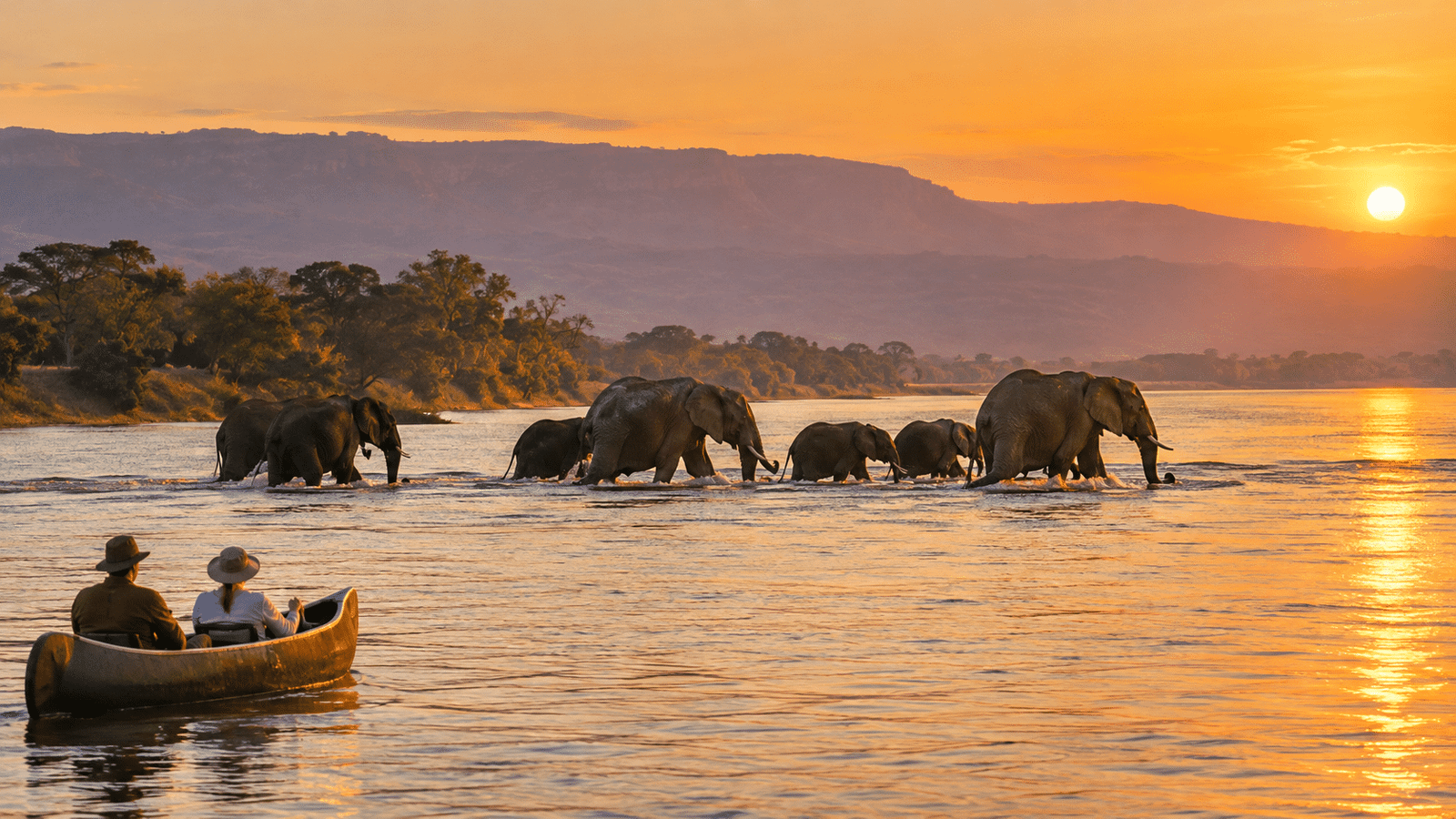
You can pair a walking safari with game drives, night drives, birdwatching and, in suitable locations, canoeing and boat trips. Walking reveals tracks and small details, while vehicles cover larger distances and help locate wildlife across wider areas. Together they give you more than one view of the landscape.
Best Places for a Zambia Walking Safari
Zambia has several parks that offer walking, but they differ in character, cost and remoteness.
South Luangwa National Park: The Walking Capital
If you choose only one destination for a Zambia walking safari, make it South Luangwa. Zambia Tourism identifies it as the place where the now-famous walking safari originated. The park’s landscapes include the Luangwa River, oxbow lagoons, woodland and seasonal grassland.
Why it works for walking:
- A reliable concentration of wildlife along the Luangwa River.
- Established, seasonal bush camps designed around walking.
- Some of the most experienced walking guides on the continent.
- A mix of habitats: riverbank, woodland, lagoon and open plain.
Wildlife highlights: Elephants, buffalo, hippos, Thornicroft’s giraffe (found only in the Luangwa Valley), Crawshay’s zebra, Cookson’s wildebeest, lions, hyenas and a strong leopard population. The valley is often nicknamed the “Valley of the Leopard.”
How to get there: Fly into Lusaka (LUN), then take a domestic flight of roughly 90 minutes to Mfuwe (MFU), the gateway to the park. Most camps arrange the transfer.
What the camps are like: Many walking-focused camps are small, rustic bush camps with a handful of reed-and-thatch chalets that open only in the dry season. Some camps offer short guided walks, while specialist operators organise longer experiences in designated areas.
Wildlife sightings depend on season, walk location and animal movements. The dry season, generally May to October, is the popular period. July to September often offers favourable conditions, although temperatures rise considerably towards October.
North Luangwa National Park: Wild and Remote
North Luangwa is the quieter, wilder sister of South Luangwa. It is one of Africa’s more remote parks, known for specialist walking-safari experiences around designated walking areas and camps. Its landscapes include river valleys, woodland and extensive natural habitats.
Why choose it:
- Far fewer visitors than South Luangwa.
- A true wilderness feel.
- Protected black rhino, which adds a rare and thrilling dimension to walking (guides take extra care).
- Walking that reveals tracks, vegetation, birdlife, and wildlife relationships that are easy to miss from a vehicle.
Keep in mind: North Luangwa needs careful planning. Access is more complicated than for better-connected destinations, and availability depends on camp operations and the season. It suits experienced safari travellers who value solitude over convenience and are comfortable with a higher price.
Lower Zambezi National Park: Walking Plus Canoeing
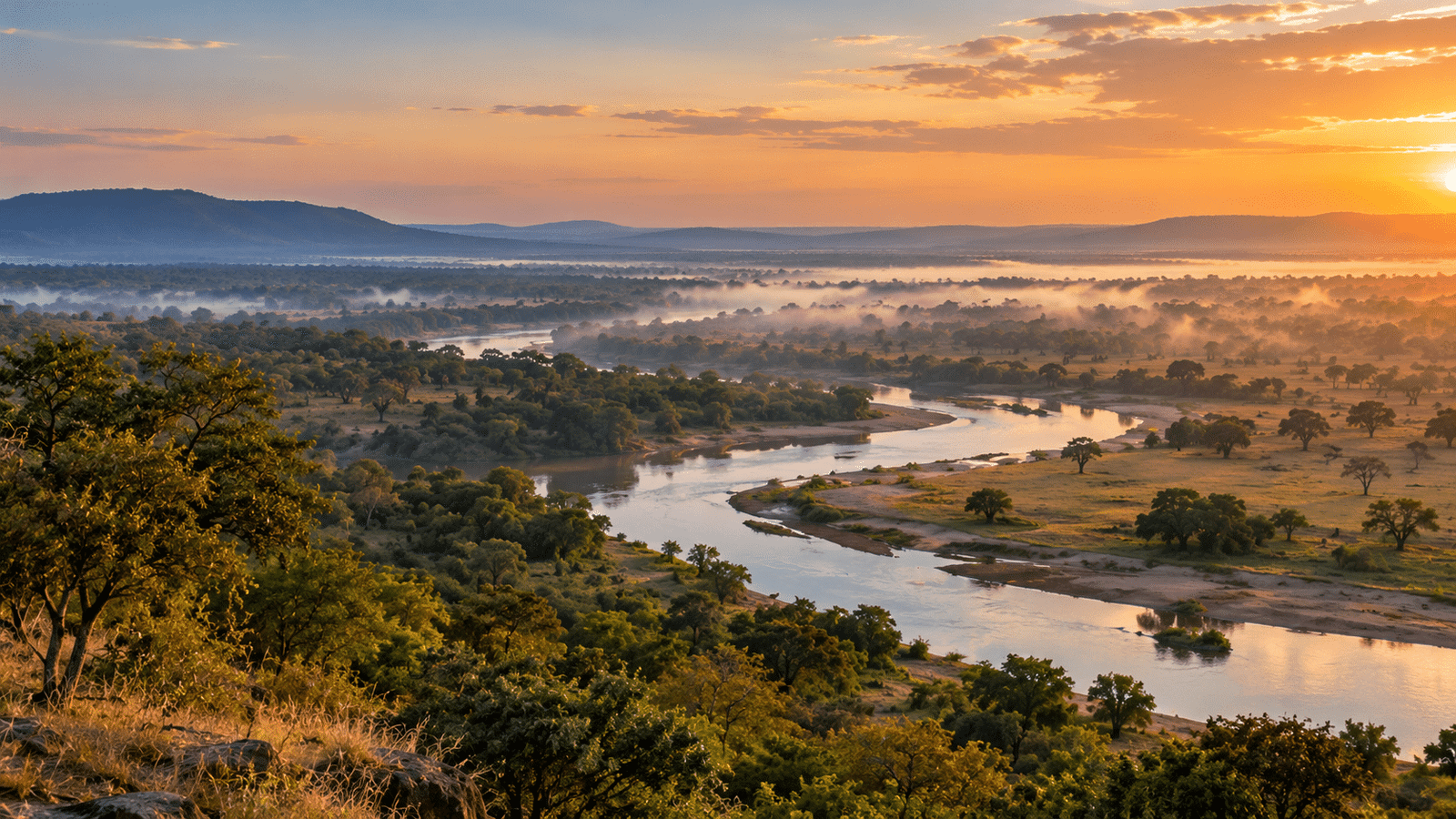
The Lower Zambezi offers a different flavour: big river scenery, an escarpment backdrop and a mix of activities. Some camps offer guided bush walks that complement game drives, canoe safaris and boat-based wildlife viewing. Depending on the camp and local conditions, you may learn about tracks, plants, birds and how wildlife uses the river environment.
Walking is not automatically available at every camp or in every area. Confirm the activities offered by your chosen operator. Walks here are typically shorter and more relaxed than in Luangwa, which suits travellers who want variety rather than a pure walking trip.
Kafue National Park: Zambia’s Largest Park
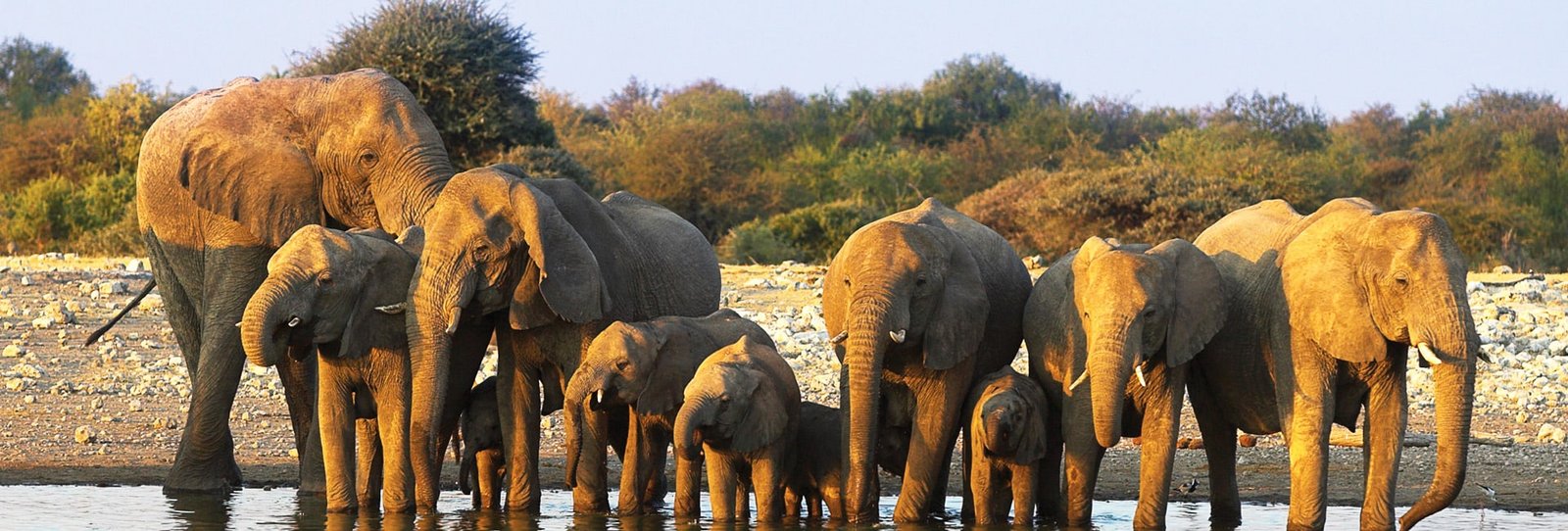
Kafue is huge, roughly the size of Wales, with woodland, grassland and seasonal floodplains. It offers a different landscape from the river-focused Luangwa Valley. Guided walks may be available at selected camps and in suitable areas, but Kafue is less specialised for walking than Luangwa. Confirm whether a camp offers dedicated walking safaris, short nature walks, or vehicle-based activities only.
Kafue suits travellers who want to add a different ecosystem to a wider Zambia itinerary.
Which Park Should You Choose?
- The classic, best-in-class walking experience: South Luangwa.
- Wilderness, solitude and rhino potential: North Luangwa.
- Walking combined with canoeing and river scenery: Lower Zambezi.
- A varied, off-the-beaten-track safari: Kafue.
Best Time to Go on a Zambia Walking Safari
The best time depends on the destination, the experience you want, and your camp’s operating season. Zambia has a pronounced dry season and a rainy season. In South Luangwa, the dry months are popular for wildlife viewing because vegetation thins and animals concentrate around remaining water.
May to August: Cooler, Dry Conditions
These months suit visitors who prefer relatively cool walking conditions. The landscape gradually dries out and viewing improves as vegetation thins. Early mornings can feel chilly, so bring a warm layer.
- May to June: Landscapes are still green after the rains, dust is minimal, and light is excellent for photography.
- July to August: Cool mornings and warm days. Many guides consider this the sweet spot.
September to October: Hotter, With Strong Wildlife Viewing
Late dry-season conditions make wildlife easier to locate around rivers and lagoons. However, temperatures can climb past 35°C, especially in October. Walks happen at cooler times of day, and you should follow your guide’s advice on heat, hydration and walk length.
November to April: The Green Season
The rains bring fresh vegetation, newborn animals and spectacular seasonal birdlife. It appeals to photographers and travellers who like greener scenery, and prices are lower. But heavy rain affects road access, walking conditions, and camp operations. Many bush camps close, and walking may be limited or unavailable.
My Recommendation
For a first Zambia walking safari, travel between late June and early October, leaning toward July to September for the best balance of comfort and wildlife density. Always confirm camp opening dates and walking availability before you book, and book early, because the best small camps sell out months ahead.
What a Typical Day on Foot Looks Like
The schedule varies by camp, but here is a typical dry-season day at a South Luangwa bush camp.
5:00 to 5:30 AM: Wake-up call. Tea or coffee and a light breakfast by the fire. Dry-season mornings can be surprisingly cold.
6:00 AM: Early-morning briefing. Your guide explains the route, conditions,s and safety rules. This is the time to ask about distance, pace, water,er and any personal needs. Pay close attention, because it is the most important part of the day.
6:15 to 9:30 AM: The walk. The group follows the guide through suitable terrain. Rather than rushing from sighting to sighting, the walk focuses on careful observation. Your guide may spend ten minutes on a single dung beetle, then freeze when fresh tracks appear.
Along the way: Tracks, droppings, feeding marks and feathers explain which animals recently used the area, although they never guarantee a sighting. Birds, insects and plants are often central. You learn how species feed, nest, communicate and adapt to the seasons.
9:30 AM: Bush tea break. Often a pop-up stop under a tree or beside a lagoon.
Late morning to mid-afternoon: Rest. Midday heat is intense. Most camps have a shaded deck or plunge pool.
Late afternoon: High tea and another activity. This might be a shorter walk or a game drive, followed by sundowners.
Evening: Night drive and dinner. Under the stars, to the sound of hippos and distant lions.
This is a general example, not a guaranteed itinerary. Timing, distance, and activities depend on the camp, weather, wildlife conditions, and safety requirements.
Wildlife You May Encounter on a Zambia Walking Safari
The species you meet depend on location, season, and conditions. Walking puts you at the animals’ level, so even small creatures become fascinating. Possible sightings include:
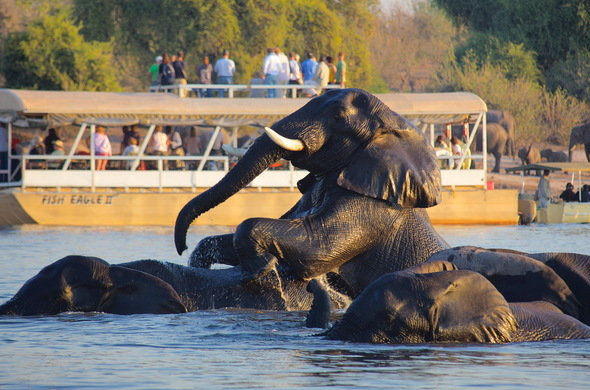
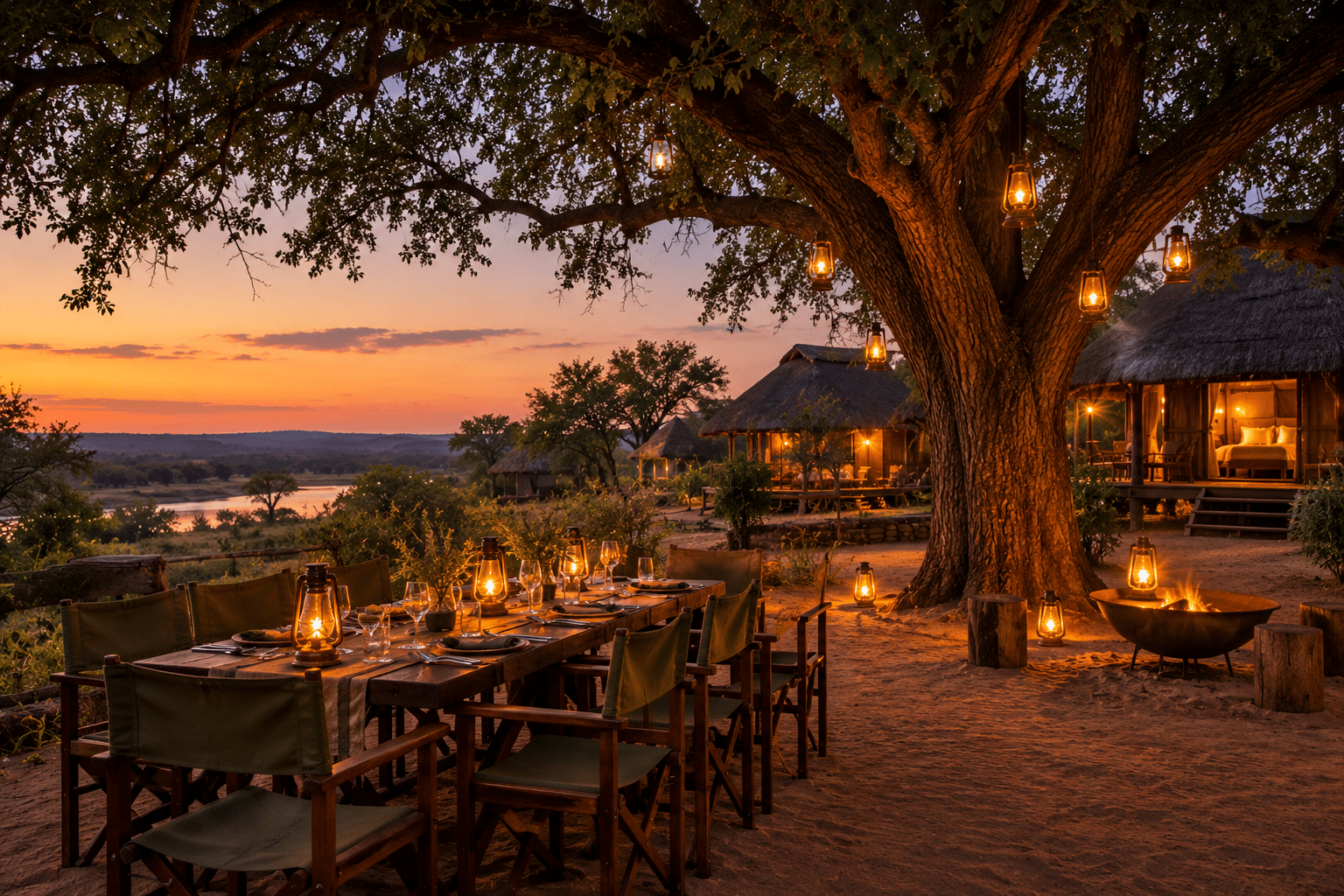
- African elephants: Often associated with woodland and river corridors. Your guide will use wind direction and cover to keep a respectful distance.
- Buffalo: Herds and lone old bulls. Guides treat them with serious respect.
- Giraffe: Including Thornicroft’s giraffe in the Luangwa Valley.
- Antelope: Impala, puku, kudu, waterbuck and bushbuck.
- Hippos and crocodiles: Viewed from safe distances along rivers and lagoons.
- Birdlife: Over 400 species in the Luangwa Valley, including bee-eaters, kingfishers, eagles and storks. Carmine bee-eater colonies are spectacular in the dry season.
- Smaller wildlife: Insects, reptiles, termite mounds and dung beetles that reveal how the ecosystem works.
Lions and leopards also occur in many areas, and tracks or signs of them are often read on morning walks. Their presence does not mean a walking group will necessarily encounter them. Leopards are seen more often on night drives than on foot.
In my experience, the guests who enjoy a walking safari most arrive curious about everything, not just the headline predators. The responsible approach is to follow your guide’s instructions and let wildlife behave naturally, without approaching, chasing,g or disturbing it.
Walking Safari vs Game Drive: What Is the Difference?
Both offer valuable ways to explore Zambia’s wilderness, but they feel very different.
Main experience
- Walking Safari: Exploring nature on foot with a guide.
- Game Drive: Exploring habitats in a safari vehicle.
Interpretation
- Walking Safari: Tracks, plants, insects, bird calls, and animal behaviour.
- Game Drive: Wildlife across larger areas and distances.
Physical activity
- Walking Safari: Requires walking and suitable mobility.
- Game Drive: Less physical exertion.
Wildlife viewing
- Walking Safari: Depends on tracks, habitat, and conditions.
- Game Drive: Covers more ground when searching for animals.
Pace
- Walking Safari: Slower and observation-focused.
- Game Drive: Varies with sightings and route.
Main consideration
- Walking Safari: Strict safety rules and fitness requirements.
- Game Drive: Vehicle access and road conditions.
For many visitors, the best choice is not one or the other. Combining walking safaris and game drives gives a more rounded experience.
Is a Walking Safari Safe?
This is the most common concern, and it deserves an honest answer. Walking safaris take place in genuine wilderness inhabited by potentially dangerous wildlife. No operator can eliminate every risk. But with well-run operators, serious incidents are rare, because several layers of protection work together.
1. Professional guides. They read wind, terrain, and animal body language constantly, and they choose routes based on current wildlife movements.
2. Safety personnel. Zambia’s national parks typically require an armed scout to accompany walks. This is a last-resort measure. The guide’s priority is always to avoid conflict.
3. Strict rules for guests. Keep these principles in mind:
- Choose a professional operator. Confirm the walk is led by a suitably qualified guide with the right safety personnel and procedures.
- Follow every instruction. Stay where your guide directs and keep the group together.
- Stay quiet and attentive. Avoid shouting, sudden movements, and phone use that distracts you from instructions.
- Never approach wildlife. Don’t move toward an animal for a photograph.
- Never run, even if you feel nervous. Running can trigger a chase response.
- Don’t leave the group, even for a photo.
- Be honest about fitness and health. Tell the operator about mobility limits before booking.
Health and Practical Safety
- Malaria: Zambia is malaria-endemic. See a travel-health professional about prophylaxis well before you travel, and use repellent.
- Tsetse flies: Present in some areas, and attracted to black and dark blue clothing.
- Sun and dehydration: Hats, sunscreen and plenty of water are essential.
- Insurance: Take travel insurance that includes medical evacuation. Remote camps can be hours from care.
Minimum ages, fitness expectations and activity levels vary by operator, so ask for details before confirming a booking.
Fitness Level and Who It Suits
You don’t need to be an athlete, but you should be comfortable walking several kilometres at a gentle pace over uneven ground, in heat, while following instructions precisely.
Who it suits: Active couples and solo travellers, photographers who love a slower pace, returning safari-goers wanting more depth, and families with older children (many camps set minimum ages, often 12 or older).
Who may struggle: People with significant mobility limits (though some camps offer shorter, gentler walks), anyone uncomfortable with close wildlife encounters, and small children.
A tip I give readers: For six to eight weeks before you go, walk 5 to 8 km on weekends in the exact boots and socks you’ll wear on safari. It builds stamina and prevents blisters.
What to Pack for a Zambia Walking Safari: The Gear That Matters
This is where my affiliate marketing background is most useful. After years of studying product reviews, return rates, and buyer complaints in the outdoor category, the pattern is clear. People overspend on flashy gear they don’t need and underspend on the few items that decide comfort. For a walking safari, those items are boots, socks, clothing colour, binoculars and sun protection.
Your operator may provide some equipment or specify extra items, so check the final packing list before departure.
1. Walking Boots or Shoes
Choose lightweight, supportive, broken-in boots or sturdy trail shoes with good grip. Terrain is mostly flat but sandy, rocky in places, and full of thorns. Look for neutral colours, breathable fabric (the dry season is hot), and enough toe room, since feet swell in heat.
What to avoid: New boots worn for the first time on safari. This is the most common and most avoidable mistake.
2. Merino or Moisture-Wicking Socks
Cotton holds sweat and causes blisters. Merino or technical blends dry fast and manage odour. Look for cushioned soles, seamless toes, and mid-calf height to guard against grass seeds. Pack four to five pairs.
3. Clothing: Colour and Fabric
- Neutral colours: Khaki, olive, tan and beige. Avoid bright colours, white, and especially black and dark blue, which attract tsetse flies.
- Lightweight, breathable, quick-dry fabrics in long sleeves and long trousers for sun, thorns and insects.
- Layers: Dry-season mornings can start near 10°C and pass 30°C by midday, so pack a fleece or packable jacket.
4. Hat and Sunglasses
A wide-brim hat with a chin strap or neck flap stays on in wind and protects your neck. Polarised sunglasses cut glare near the river.
5. Binoculars
On foot, binoculars are your main close-up tool, and for many guests they matter more than a camera. I’ve seen travellers spend heavily on camera lenses and then borrow someone else’s binoculars.
- 8×42 is the sweet spot: bright and stable. 10×42 is harder to hold steady while walking.
- Look for lightweight, waterproof, and a harness-style strap, which is far more comfortable than a neck strap.
- Avoid very cheap, unbranded pairs with poor coatings, because they tire your eyes.
6. Camera and Accessories
A compact setup works best on foot. A mirrorless or bridge camera with a 100–400mm equivalent lens is ideal. Bring spare batteries (cold mornings drain them), several memory cards, and a blower and microfibre cloths for the dust. Photography should never distract you from safety instructions.
7. Daypack and Water Bottle
A 15–20 litre pack with a padded back and side bottle pockets holds your camera, hat, snack, and sunscreen. Leave unnecessary equipment at camp.
8. Sun and Insect Protection
- SPF 50+ sweat-resistant sunscreen and SPF lip balm.
- Repellent with DEET (20–50%) or picaridin.
- Permethrin-treated clothing (pre-treated or treated before you travel).
- Moisturiser, because dry-season air is hard on skin.
9. Headlamp
You’ll walk between your chalet and the dining area in the dark. A small headlamp with a red-light mode is more useful than a bulky torch.
10. Power Bank and Adapter
Camps usually run on solar power with limited charging. A 10,000–20,000 mAh power bank helps. Zambia uses Type C, D, and G plugs, so bring a universal adapter.
11. Soft Luggage
Bush flights use small aircraft with strict weight limits, often around 12–15 kg in soft bags. Hard suitcases are usually not accepted, so confirm the limit with your operator.
12. Personal First Aid
Camps have basic first aid, but pack blister plasters, antihistamines, rehydration salts, antiseptic wipes, and any prescription medication. Follow your travel clinic’s advice on malaria prevention.
My Gear Philosophy
Spend in this order: boots and socks, binoculars, sun protection and layers, then everything else. A $400 lens won’t help if your feet hurt by day two. Before you buy, read Amazon reviews from people who describe the same type of trip you’re taking, rather than relying on the star rating alone.
How Much Does a Zambia Walking Safari Cost?
Costs vary considerably, and no single price applies to every park, camp, and itinerary. The figures below are rough planning guides only. Confirm current rates with your operator.
Approximate cost per person per night:
- Mid-range lodge with optional guided walks: $250–$450.
- Premium all-inclusive bush camp: $450–$800.
- Luxury or remote walking camp (such as North Luangwa): $800–$1,200+.
What Drives the Price?
- The park and camp you choose.
- Season and availability.
- A short guided walk versus a multi-day walking safari.
- Accommodation style, from simple bush camps to luxury lodges.
- Whether guide, safety personnel, meals and park fees are included.
- Transport, domestic flights and transfers.
Usually extra: International and domestic flights, visas, travel insurance, tips, premium drinks and laundry.
How to compare quotes: Look at what each price includes rather than the total alone. Ask whether the walk is part of the accommodation package or charged separately, and confirm minimum group size, age limits, park fees and transfers.
Budget Tips
- Travel in shoulder months (May, early June and late October).
- Mix a premium bush camp with a more affordable lodge.
- Book through a specialist Zambia operator rather than a general aggregator.
- Book early for popular camps in the main dry-season months.
How to Choose a Walking Safari Operator
Guide experience. Ask who will lead your walks and for how long they’ve guided. A great guide is worth more than a fancy room.
Group size. Smaller is better. Two to six guests allows quiet movement and better sightings.
Camp style and location. Decide between rustic bush camps and luxury tented lodges, and check whether the camp sits in good walking territory.
Transparency. The operator should clearly explain its walking activities, safety procedures, fitness expectations, and inclusions. Don’t assume every lodge near a national park offers walking safaris.
Responsible tourism. Ask about conservation practices, local employment, and community partnerships.
Reputation. Read recent feedback on independent platforms.
Flexibility. Understand deposit and cancellation terms before you book.
[INTERNAL LINK PLACEHOLDER: Link to your Zambia safari tours or “Best Safari Tour Operators in Zambia” page.]
How to Plan a Zambia Walking Safari
Step 1: Select your destination. South Luangwa is the strongest starting point for walking. North Luangwa suits those seeking remoteness, and selected Lower Zambezi and Kafue camps offer walks within wider itineraries.
Step 2: Choose the season. Decide between drier conditions for wildlife viewing and greener landscapes with seasonal birdlife. Check actual camp operating dates.
Step 3: Choose your accommodation and operator. Use the checklist above.
Step 4: Plan transport. Depending on your destination,n you may need road transfers, scheduled flights, or charter flights. Ask your operator for realistic transfer times and whether transport is included.
Step 5: Prepare for the walk. Review the expected distance, terrain and duration, and make sure your footwear is broken in.
Step 6: Allow enough time. Avoid a demanding walk straight after a long international journey. An extra night at the start or end gives you comfort and a buffer if transport changes.
Sample Zambia Walking Safari Itineraries
These are illustrative plans, not confirmed packages. The real schedule depends on the operator, camp openings, transport, and conditions.
5-Day South Luangwa Introduction
- Day 1: Arrive in Lusaka, fly to Mfuwe and transfer to your camp. Afternoon game drive.
- Day 2: Safety briefing and an introductory guided walk covering tracks, vegetation, birdlife and the procedures used on foot.
- Day 3: A longer walk along a lagoon or riverbank, focused on wildlife signs and the wider ecosystem.
- Day 4: A game drive or night drive for a different perspective and wider coverage.
- Day 5: An optional early walk, then transfer to Mfuwe and fly onward.
8-Day Walking Circuit Between Bush Camps
- Day 1: Arrive in Mfuwe and transfer to the first bush camp.
- Days 2–7: Move between two or three camps, mixing longer morning walks with shorter afternoon walks.
- Day 8: Depart.
For travellers who want a dedicated multi-day experience, a specialist walking itinerary suits better than a general safari with only one or two walks.
10-Day Zambia Highlights
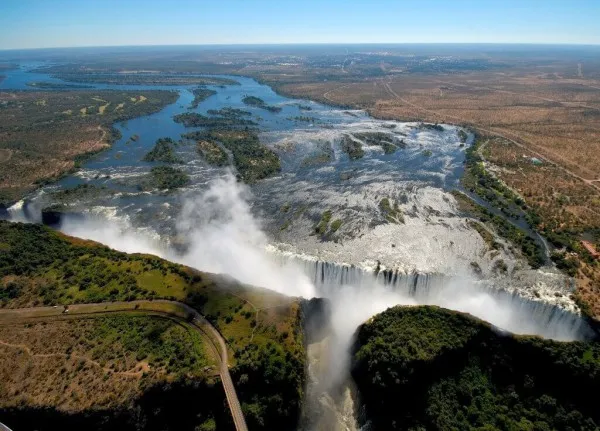
- Days 1–2: Arrive in Livingstone and visit Victoria Falls.
- Days 3–6: Lower Zambezi for walks, canoeing, and river cruises.
- Days 7–10: South Luangwa for a dedicated walking safari.
This combines variety with a classic finish.
Responsible and Sustainable Walking Safaris
A responsible walking safari respects wildlife, local communities, and the environment. Don’t litter, stay on routes approved by your guide, and never feed or touch wild animals. A sighting should never come before safety or animal welfare.
When choosing an operator, ask about conservation practices, employment of local guides, community partnerships, and compliance with the rules of the protected area. Small decisions by visitors help preserve the quality of the wilderness for future travellers.
Common Mistakes to Avoid
Wearing new boots. Break them in at home.
Wrong colours. Black and dark blue attract tsetse flies, and bright colours stand out.
Booking too late. Top camps fill many months ahead.
Overpacking. Bush-plane weight limits are strict.
Skipping insurance. Medical evacuation cover is essential.
Underestimating the sun. UV is intense even in cool months.
Ignoring the briefing. The rules exist for good reasons.
Expecting a Big Five checklist. Walking rewards curiosity, not box-ticking.
Assuming every lodge offers walks. Confirm before booking.
Buying gear last minute. Order and test everything four to six weeks before departure.
Final Thoughts: Is a Zambia Walking Safari Worth It?
Yes. A Zambia walking safari is slower, quieter, and more connected than a vehicle-based safari. You learn to read tracks, notice the wind and appreciate the small details that make a wilderness work. You may also have a moment few travellers ever do: standing quietly in the open as an elephant herd moves past.
To make it a success:
- Travel between June and October, ideally July to September.
- Start with South Luangwa.
- Choose a small-group operator with experienced guides.
- Invest in the right gear, especially boots, socks, binoculars, and sun protection.
- Prepare physically with regular walks in your safari footwear.
- Listen to your guide, always.
Frequently Asked Questions About Zambia Walking Safaris
Is Zambia good for walking safaris?
Yes. Zambia is the birthplace of the walking safari, and South Luangwa National Park is the major destination for it. Specialist options also exist in North Luangwa and at selected camps elsewhere in the country.
What is the best month for a Zambia walking safari?
It depends on your destination and preferences. July to September is popular for wildlife viewing in South Luangwa, and October offers good viewing but much hotter weather. Always confirm camp operating dates in advance.
Are walking safaris in Zambia safe?
They are conducted under professional guidance and established safety procedures, but they happen in genuine wildlife habitat. You must follow your guide’s instructions, and no operator can eliminate every risk.
How much does a walking safari in Zambia cost?
Costs vary widely. As a rough guide, premium all-inclusive bush camps often run about $450–$800 per person per night, and remote or luxury options can exceed $1,000. Always check current rates and inclusions.
Do I need to be very fit?
No, but you should be comfortable with the walking distance, terrain, and heat of your chosen activity. Ask about pace, duration, and age restrictions before booking.
How far do you walk?
Many walks last two to four hours at a slow pace with frequent stops, covering roughly 6 to 10 km. Some camps offer shorter, easier walks.
Can beginners join a walking safari?
Many first-time safari visitors can enjoy a suitable guided walk if they meet the operator’s requirements. A shorter bush walk is a good starting point.
Can I see elephants on a walking safari?
Elephants occur in several Zambian safari areas, including South Luangwa. A sighting is never guaranteed, and encounters on foot are always managed by the guide.
What should I wear?
Wear comfortable, breathable, neutral-coloured clothing in long sleeves and trousers, broken-in footwear, sun protection and a warm layer for cool mornings. Avoid black, dark blue and bright colours.
Is a walking safari better than a game drive?
Neither is universally better. Walking offers a closer look at tracks, plants and birdlife, while drives cover more ground. Combining them gives the most complete experience.
Can children go on a walking safari?
Many camps set minimum ages, often 12 or older. Policies vary, so check with your operator.
Do I need malaria tablets?
Zambia is malaria-endemic. Consult a travel-health clinic well before departure, and use repellent and cover up at dusk and dawn.
How do I get to South Luangwa?
Fly into Lusaka (LUN), then take a domestic flight of about 90 minutes to Mfuwe (MFU). Your camp usually arranges the transfer.
How many days do I need?
A short guided walk can be part of any standard safari stay, while dedicated multi-day walking safaris need more time. Five to eight days is a good range for a first dedicated trip.
Can I combine a walking safari with other destinations?
Yes. Walking safaris fit well into wider southern African itineraries, such as Victoria Falls, Zimbabwe or Botswana. Ask your operator to confirm realistic transport times rather than assuming destinations connect easily in a day.
Plan Your Zambia Walking Safari with Max Adventure Trails
A Zambia walking safari lets you discover the African wilderness beyond traditional game drives. From the wildlife-rich landscapes of South Luangwa to the remote scenery of North Luangwa, exploring on foot builds a deeper appreciation of the animals, plants and natural processes that make Zambia special. The right destination, season and professional guide make the difference, and careful preparation helps you pick an experience that suits your interests and comfort level.
At Max Adventure Trails, we help travellers discover authentic African safari experiences across Zambia, Zimbabwe, Namibia and Botswana.
Experience the African wilderness with Max Adventure Trails: Authentic. Guided. Wild.