

- 1 Views
- 6 Min Read
- (0) Comment
Hwange National Park weather follows two seasons, not four. The dry season runs from April to October, with sunny days, cold nights in June and July, and heat that peaks in October. The wet season runs from November to March, with warm days, afternoon thunderstorms, and green bush. The park sits roughly 2,800 to 3,700 feet (850 to 1,133 meters) above sea level, which is why nights cool down even when days stay warm.
A live forecast tells you what tomorrow looks like. It does not tell you which month to book. This guide covers both. You will see why the weather shapes what you see on safari, how to choose a month and read a forecast, and what temperatures and rain to expect month by month.
Maximum Adventure Trails, a travel agency established in 2019, offers safaris into Hwange from Victoria Falls.
Why Hwange National Park weather matters for your trip
Weather in Hwange decides where the animals are, how comfortable your drives feel, and which camps are open. The month you pick changes the trip as much as the lodge you choose.
The weather moves the wildlife
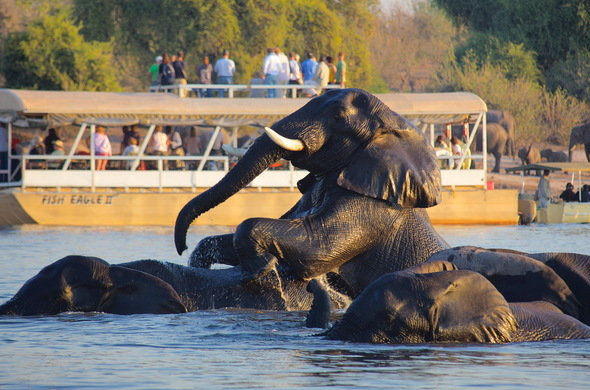
Rain controls water, and water controls where animals stand. In the dry season, natural pans dry out and elephants, buffalo, and antelope gather at the remaining waterholes. That makes sightings far easier to predict. September and October are widely considered the best months for large elephant herds.
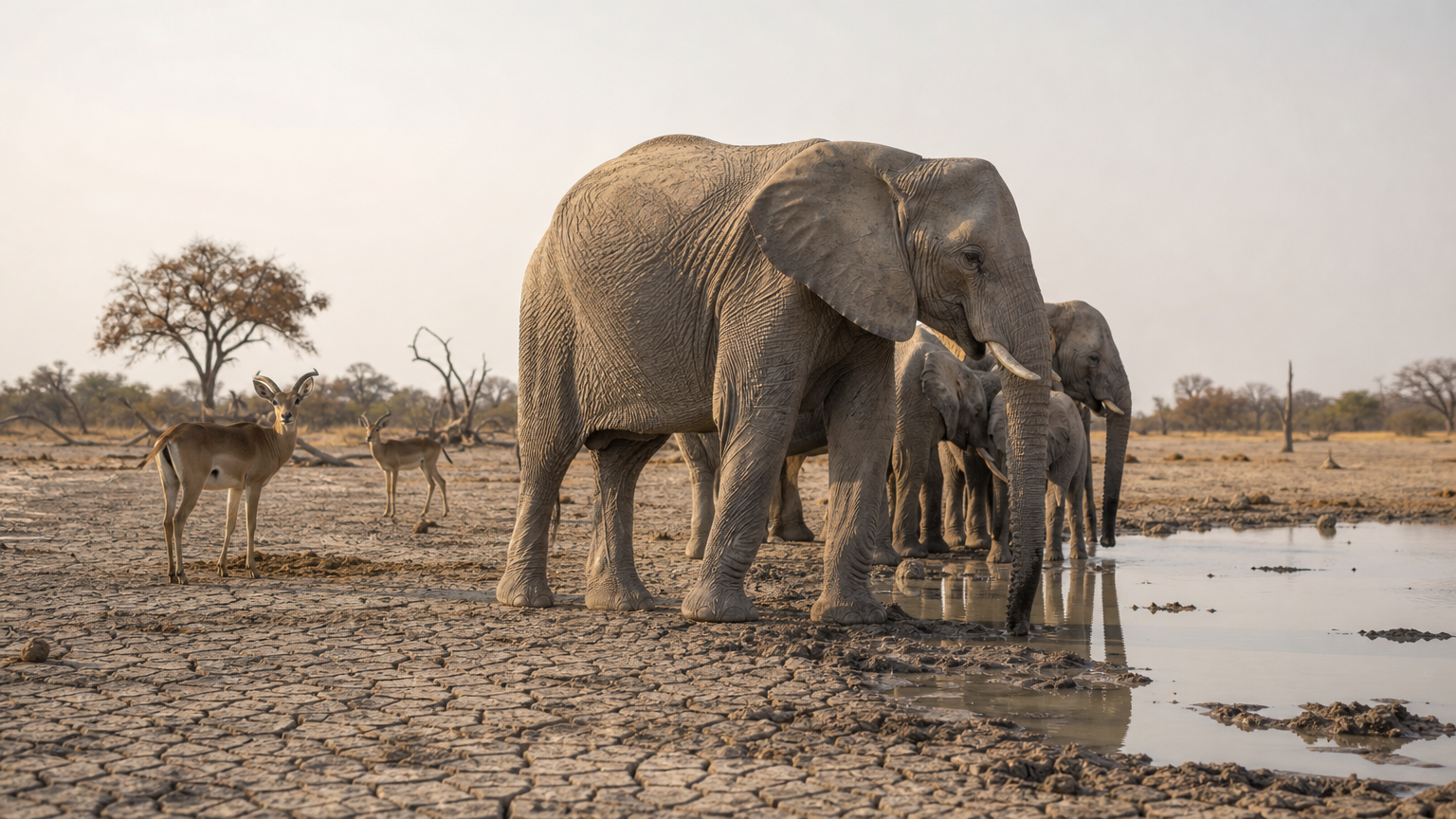
In the wet season, water is everywhere and the animals spread out. Tall grass hides them. You trade easy viewing for green scenery, migratory birds, and newborn animals.
In Hwange, water drives the wildlife and the season drives the water.
The weather shapes comfort and logistics
Game drives start at dawn in open vehicles. From April to August those mornings are cold, and winter nights can fall to 45°F (7°C). In October the opposite problem hits, with daytime highs that can pass 104°F (40°C). Neither is a reason to skip the park, but both change what you wear and when you drive.
Logistics shift with the seasons too. Some lodges around Hwange close between December and March, and the park is busiest from June to October. The dry season also carries a lower malaria risk, though you should still ask a travel doctor about prevention before you go.
How to plan around the weather and check the forecast
Choose your month by what you want to see, then check a live forecast in the final week before you travel. The season sets the big picture and the forecast handles the details.
Choose your month by what you want to see
Match your priority to the season, not the other way around. The table below sets the main goals against the months that serve them best.
| Your priority | Best months | Trade-off |
|---|---|---|
| Elephants at waterholes | September to October | Hot days, up to 104°F in October |
| Mild temperatures | April, May, September | Cool dawn drives in April and May |
| Clear skies and cold-weather safari | June to August | Nights near 45°F (7°C) |
| Green bush, birds, newborns | December to March | Afternoon storms, some camps closed |
Read the forecast the right way
Forecast sites show 10 and 14 days, but only the first few days are reliable. Treat anything past a week as a trend. Use this routine:
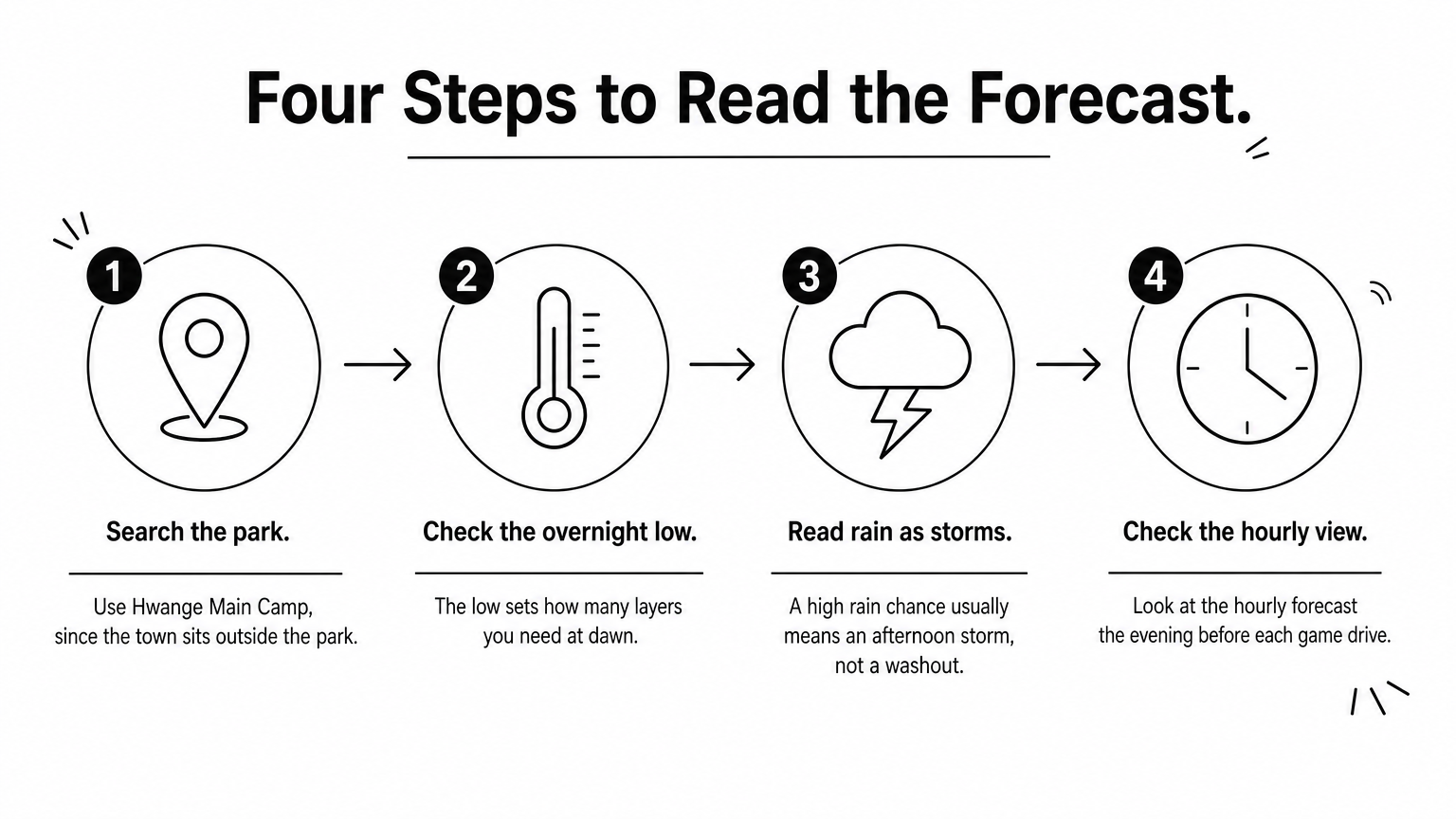
- Search for the national park or Hwange Main Camp, not just "Hwange". The town of Hwange sits outside the park.
- Look at the overnight low as well as the high. The low tells you how many layers you need at dawn.
- In the wet season, read a high rain chance as an afternoon storm, not a washout. Rain rarely lasts all day, and sunshine usually follows.
- Check the hourly view the evening before each game drive.
Trust the season for your booking and the forecast for your packing.
Hwange National Park weather by month
Daytime highs run from about 79°F (26°C) in winter to over 91°F (33°C) in September and October, and rain falls mainly from November to March. Different sources differ by a few degrees, so treat the figures as typical ranges.
Monthly temperatures and conditions
| Months | Season | Daytime high | Night low | What to expect |
|---|---|---|---|---|
| April | Dry begins | Mild to warm | Cool | Rain tapers off, early drives can be cold |
| May to August | Dry (winter) | About 79°F (26°C) | 45 to 48°F (7 to 9°C) | Very dry, clear, coldest nights in June and July |
| September to October | Dry (hot) | Above 91°F (33°C) | Warm | October is hottest and can pass 104°F (40°C) |
| November | Wet begins | About 90°F (32°C) | Warm | First rains, though not every day |
| December to February | Wet | 84 to 90°F (29 to 32°C) | 59 to 64°F (15 to 18°C) | Afternoon storms most days |
| March | Wet ends | 86 to 91°F (30 to 33°C) | 57 to 61°F (14 to 16°C) | Rain fades, skies clear |
Answers to the common questions
July is usually the coldest month, with June close behind. Nights then average 45 to 48°F, while days stay pleasant. October is the hottest month, and the first rains often arrive late that month, settling the dust and greening the bush.
December weather in Hwange is hot, humid, and wet. Expect thunderheads building through the day, a storm in the afternoon, and sunshine returning after. November sits in between. It is hot, the rain is patchy, and the park starts to turn green.
What to pack and which Hwange trip suits the season
Pack layers for the dry season and rain protection for the wet season, then match trip length to the heat. The right choice keeps you comfortable during the hours when animals are most active.
Pack by season
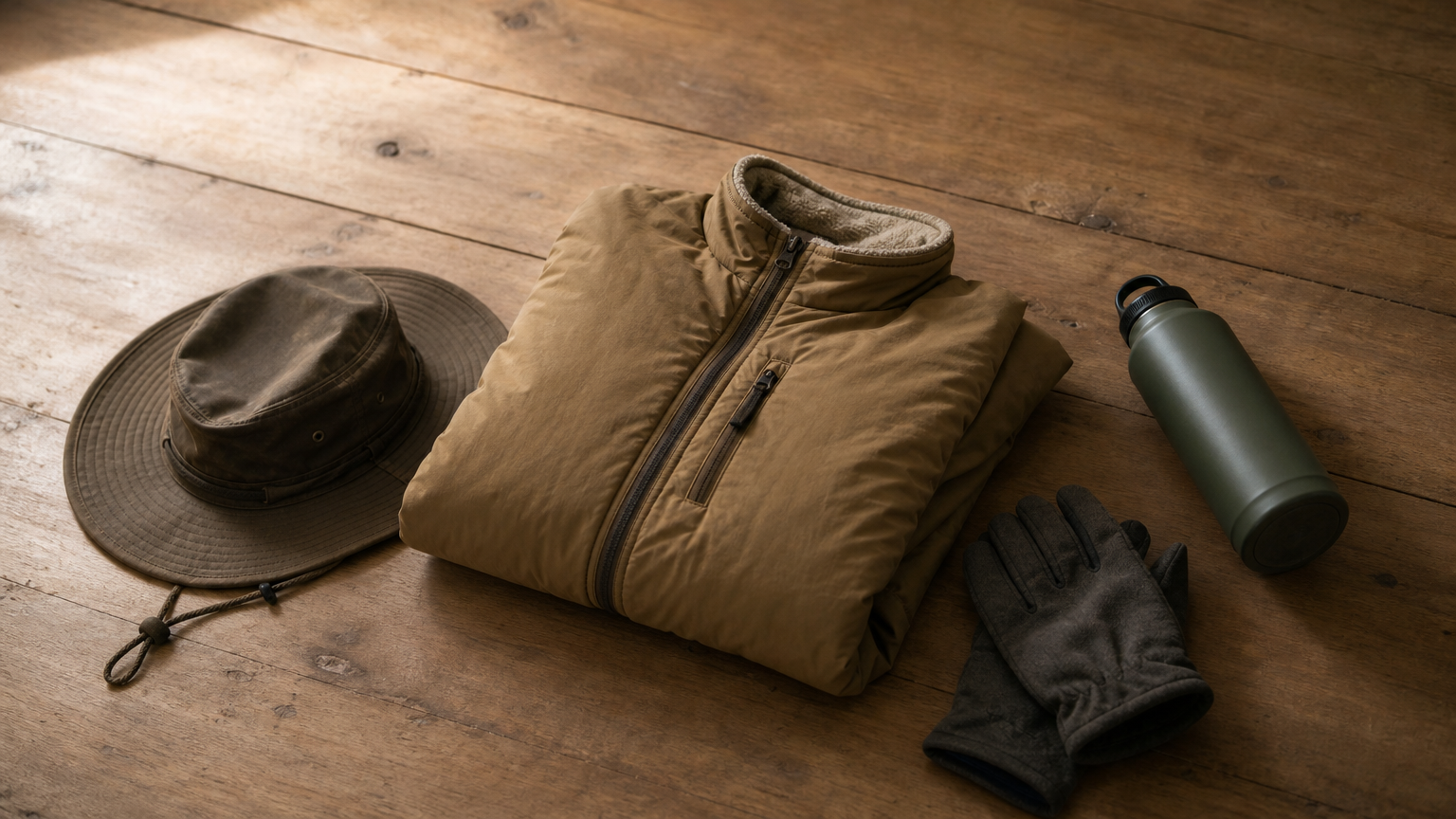
- April to August: a warm jacket, hat, gloves for dawn drives, and light clothes for midday.
- September to October: breathable long sleeves, a wide-brim hat, sunscreen, and plenty of water.
- November to March: a light rain jacket, quick-dry clothing, and insect repellent.
- Year-round: closed shoes, sunglasses, and neutral colors.
Day trip or overnight safari
Maximum Adventure Trails offers a full-day trip from Victoria Falls to Hwange for $290 per person. It lasts about 13 hours and includes two game drives and lunch in the park. The park entry fee of $24 per person is paid at the gate. It works best from May to August, when midday is mild.
In September and October, consider the 2-night safari from $800 per person. It includes stays at Gwango Heritage Resort, four game drives, and all meals. That gives you the cooler dawn and dusk hours instead of the midday heat.
Pick your month, then check the forecast
Hwange’s weather is a simple two-season pattern. Dry months bring easy wildlife viewing and cold mornings. Wet months bring green bush, afternoon storms, and fewer visitors. Choose the season that fits what you want to see, then use a short-range forecast to decide what to pack.
If you want help matching a month to a trip, plan your Hwange safari with Maximum Adventure Trails. The team can handle the bookings, itinerary, and safari transfers from Victoria Falls to Hwange.