

- 7 Views
- 21 Min Read
- (0) Comment
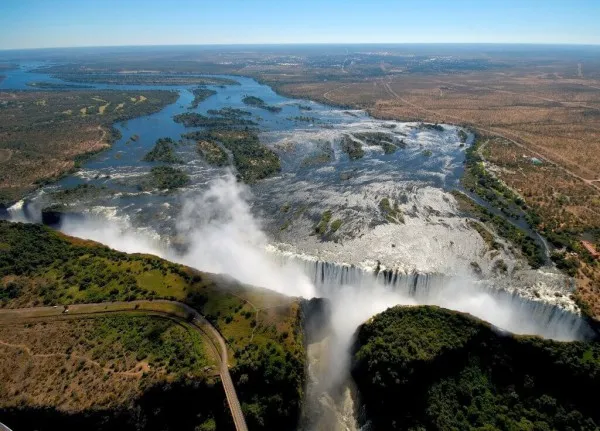
You may start in Victoria Falls, where spray from the Zambezi keeps the air cool, then continue to the dusty tracks of Hwange, the riverbanks of Chobe, or the water channels of Moremi and the Okavango Delta. A cotton shirt that feels comfortable near the falls may not be enough for a cold early drive, while a hard suitcase that works on a road itinerary may be unsuitable for a small aircraft transfer.
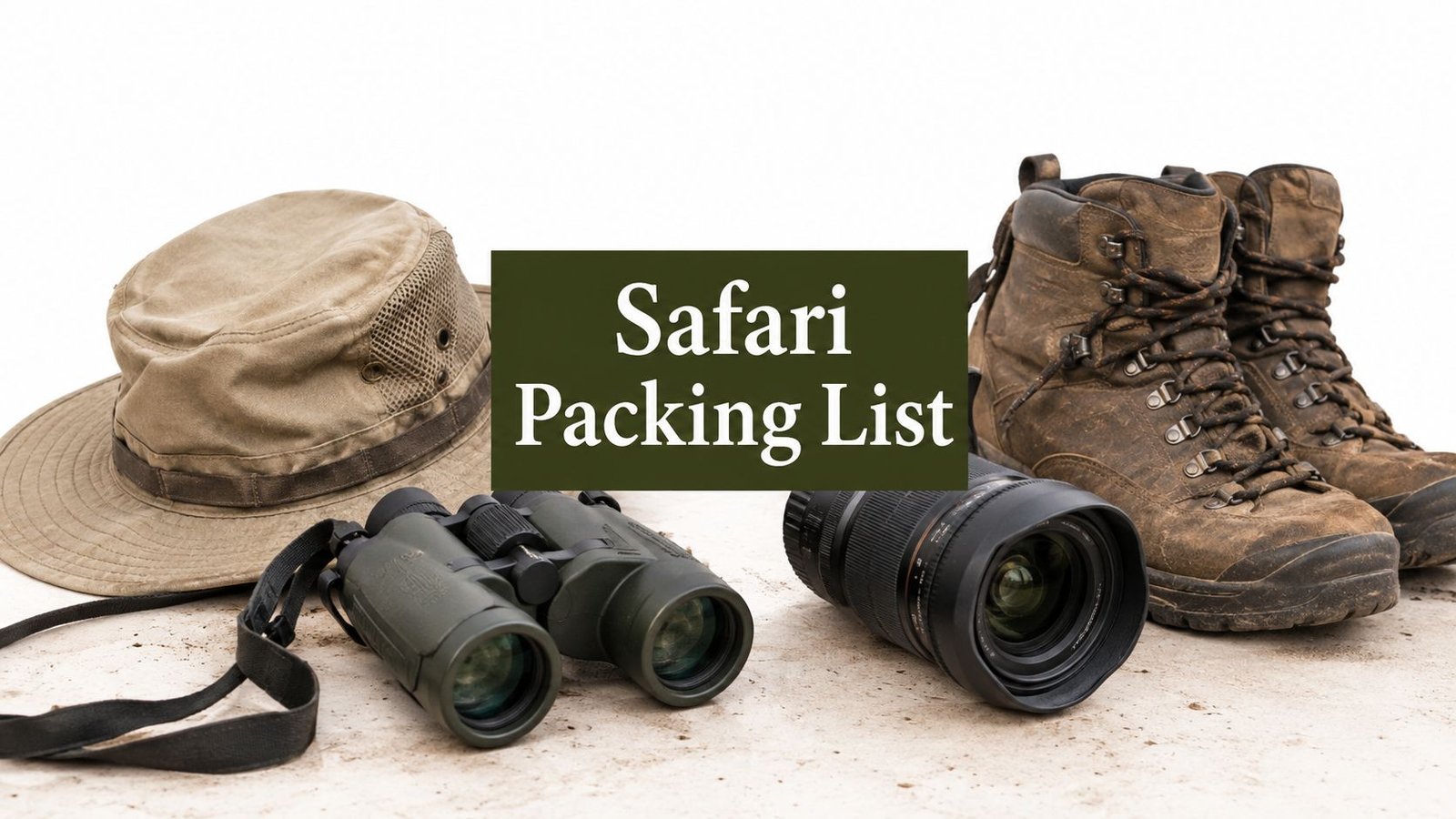
That's why a useful safari packing list needs to begin with the journey, not with a pile of products. This guide separates universal essentials from destination and season adjustments, then adapts the choices for camping, families, solo travelers, baggage limits, and visitors arriving from the UK, United States, France, Portugal, Israel, Russia, Germany, Poland, or Turkey.
You'll find practical guidance on clothing, footwear, binoculars, camera equipment, sun and insect protection, medicines, hydration, sleep gear, documents, and insurance. Check current requirements with your airline, safari operator, park authorities, medical professional, and relevant border or immigration service before departure. Rules vary by itinerary and nationality.
If you're still preparing for shorter excursions, this guide to what to pack for your day trip can help with the basics. Maximum Adventure Trails can also help coordinate activities and accommodation across Victoria Falls, Hwange, Chobe, Moremi, and the Okavango Delta.
Table of Contents
- 1. High-SPF Sunscreen 50 Plus
- 2. Lightweight Neutral-Colored Clothing
- 3. Binoculars 8×42 or 10×42
- 4. Insect Repellent DEET 20 to 30 Percent
- 5. Safari Camera or Smartphone With Telephoto Lens
- 6. Portable Water Bottle With Filtration
- 7. First Aid Kit With Safari-Specific Medications
- 8. Wide-Brim Hat With Neck Protection
- 9. Travel Insurance With Medical Evacuation Coverage
- 10. Lightweight Sleeping Bag or Travel Sleep Liner
- 10-Item Safari Packing Comparison
- Turn the Checklist Into a Departure Plan
1. High-SPF Sunscreen 50 Plus
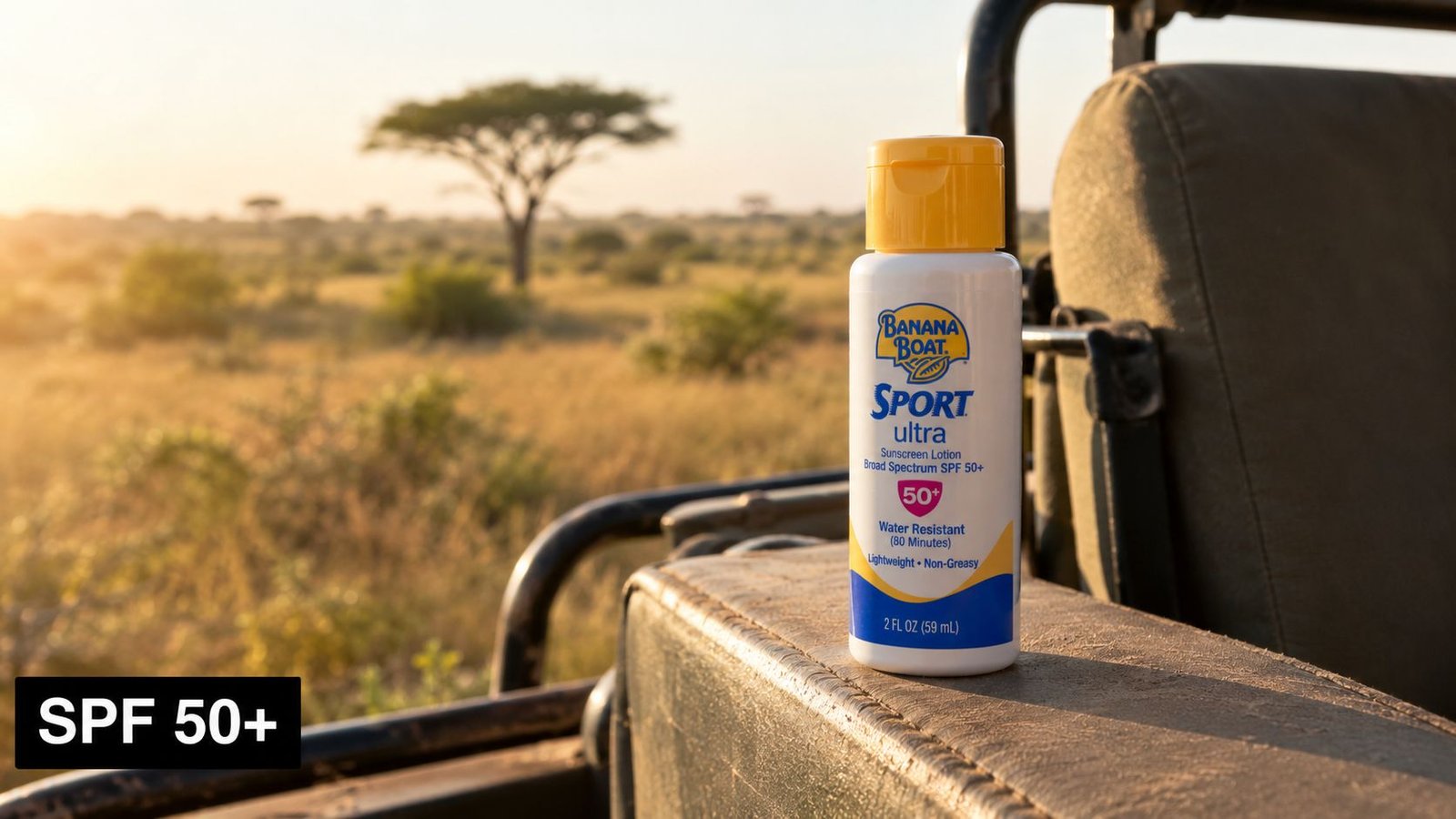
Sun protection belongs in your day bag, not at the bottom of your luggage. Game drives keep you outdoors for long periods, often with limited shade, and the combination of reflected light, heat, wind, and open vehicles can make exposure easy to underestimate.
Choose a broad-spectrum sunscreen with SPF 50 or higher if it suits your skin and medical advice. Products such as La Roche-Posay Anthelios SPF 60, Neutrogena Ultra Sheer Dry-Touch SPF 50+, and Blue Lizard Australian Sunscreen SPF 30+ are examples of widely known formulations, but the best choice is one you'll apply generously and tolerate comfortably.
Apply it before leaving for a drive, then refresh it during the day and after swimming or heavy perspiration. Cover places travelers often miss:
- Ears and neck: These areas receive direct sun in open vehicles.
- Feet and ankles: Sandals and low shoes can leave the tops exposed.
- Hair parting: A hat helps, but it doesn't cover every part line.
- Hands: Repeated washing and camera use can remove sunscreen.
A zinc oxide stick can make it easier to protect the nose, cheekbones, and other exposed facial areas without getting lotion on camera controls. If you're visiting Victoria Falls, remember that boat trips and spray can remove products faster. At Chobe, Moremi, and the Okavango Delta, keep sunscreen beside your water bottle so it remains part of your regular routine.
Practical rule: Pack enough for the whole itinerary, and keep one small container accessible during every excursion.
For more context on sun protection and tanning with SPF 30, review the product guidance before relying on a familiar beach routine.
2. Lightweight Neutral-Colored Clothing
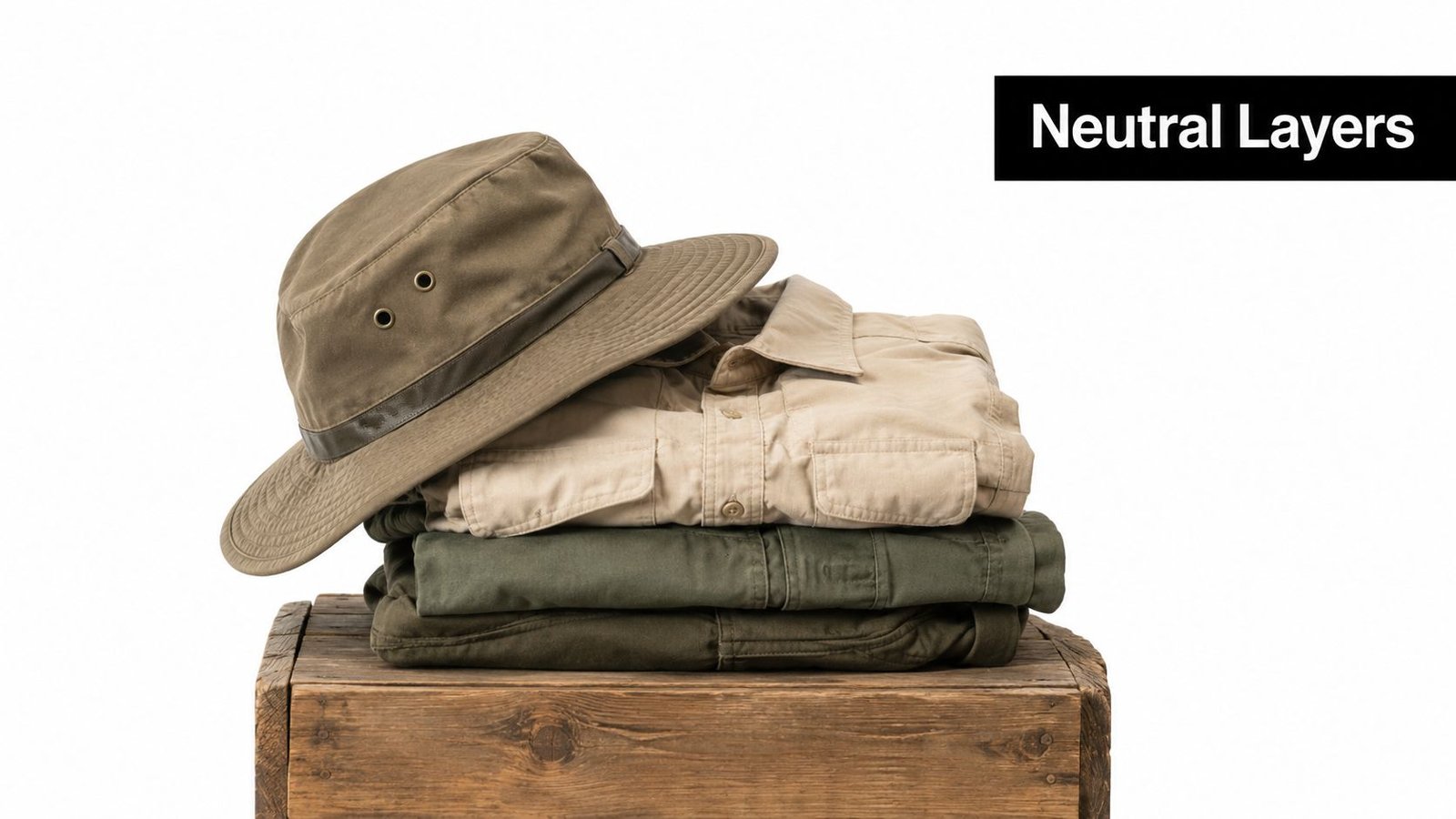
Safari clothing works best as a small layering system. Neutral earth tones such as khaki, brown, green, and tan appear repeatedly in safari guidance because they're practical in dusty environments and less visually distracting than bright colors. They also make it easier to combine every shirt, trouser, and outer layer.
Select lightweight, breathable, quick-drying fabrics. Long sleeves and long trousers offer useful protection from sun, dust, branches, and insects, especially during early drives or evening activities. A single fleece, thin jumper, or softshell layer can make a major difference before sunrise, when an open vehicle feels much cooler than the daytime temperature suggests.
Brands such as Craghoppers NosiLife, Rohan Outdoor Clothing, and other technical travel ranges offer useful examples of quick-dry and sun-protective garments. You don't need a separate outfit for every lodge dinner. One clean, lightweight top or dress is enough for most informal camp settings, and laundry availability may reduce how much clothing you need.
Build around interchangeable pieces:
- Base layers: Lightweight long-sleeve shirts and breathable T-shirts.
- Bottom layers: Quick-dry trousers, with shorts for warm lodge downtime if appropriate.
- Warm layer: A fleece or thin jumper for early morning drives.
- Rain layer: A packable shell for green-season travel and water-based activities.
- Accessories: A scarf or buff for dust, plus a hat and sunglasses.
Avoid camouflage patterns, which can be inappropriate in some travel contexts. Before departure, read these Victoria Falls packing tips and compare them with your route.
3. Binoculars 8×42 or 10×42
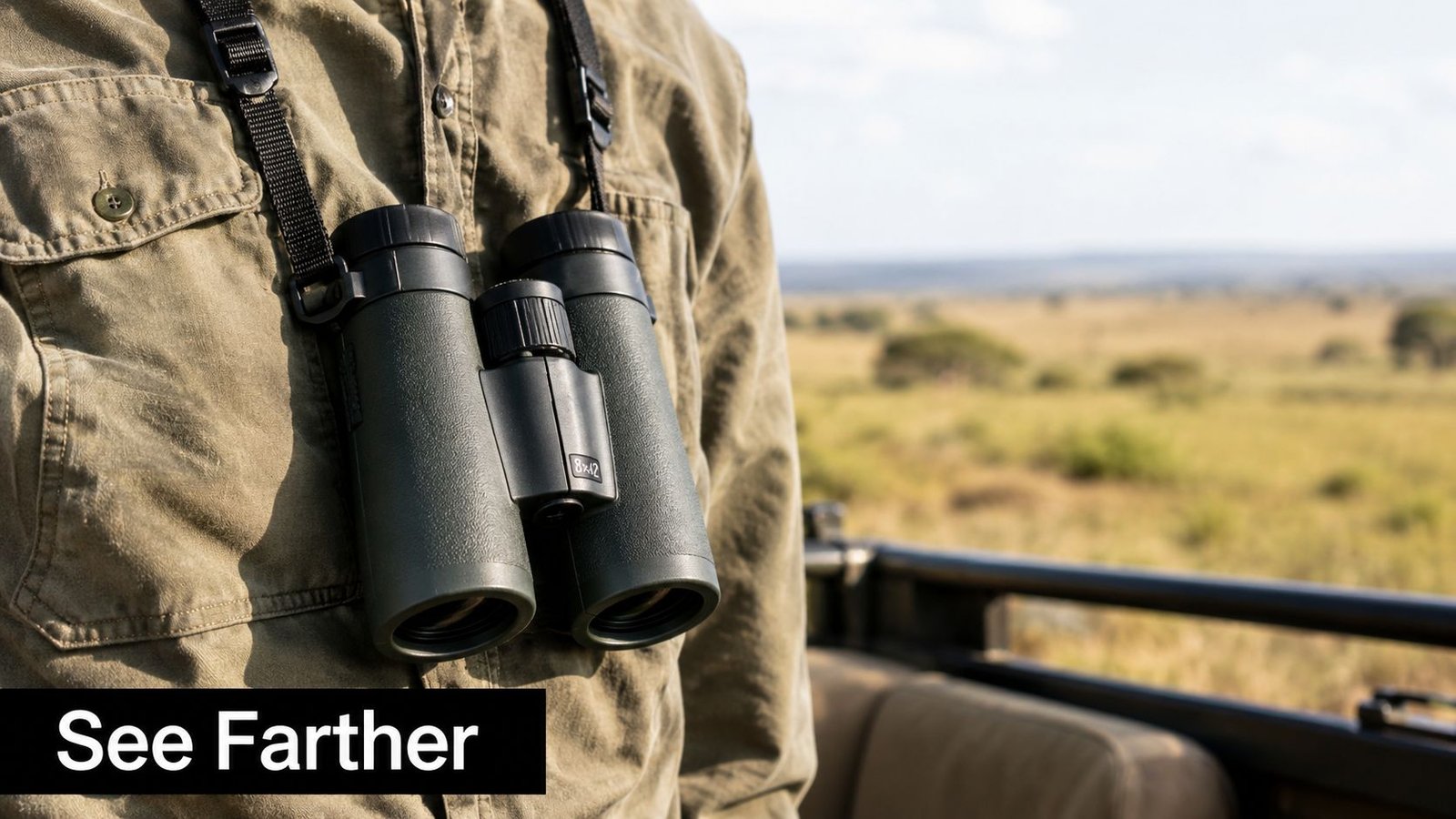
A guide can position the vehicle well, but you'll still miss detail without personal binoculars. They help you inspect distant animals, birds, tracks, and movement without asking the driver to approach or relying on someone else's equipment.
The most versatile formats for safari are 8×42 and 10×42. An 8×42 pair usually offers a steadier view from a moving vehicle and a wider field of view. A 10×42 pair can reveal more detail at distance, but it may feel harder to hold steady, particularly when you're tired or following a fast-moving subject.
Try binoculars before travel. Check whether the focus wheel is easy to reach, whether the eye cups suit glasses, and whether the neck strap becomes uncomfortable after a full drive. Swarovski EL, Zeiss Terra ED, Nikon Prostaff, and Leica Noctivid models illustrate the range from premium optics to more accessible choices. Renting is also sensible if you don't expect to use binoculars regularly at home.
Keep a lens cloth in a small protective pouch. Dust is common on Hwange tracks, while condensation can affect optics when moving between cool mornings and warmer air. Leave lens caps on when binoculars aren't in use, and avoid placing them loose on a vehicle seat.
A stable, comfortable pair that you actually carry is more useful than an expensive pair left in your room.
For Botswana, practical viewing habits matter as much as magnification. These Botswana wildlife viewing strategies can help you prepare for different distances and habitats.
4. Insect Repellent DEET 20 to 30 Percent
Insect protection should cover both clothing choices and skin care. A DEET-based repellent is commonly included in safari guidance for travel through Hwange, Chobe, Moremi, and the Okavango Delta, particularly for dawn, dusk, evening meals, and camping.
Choose a formulation that's legal and suitable for your destination and personal health needs. Examples include OFF! Deep Woods, Jungle Formula Original, and other DEET products. Mosi-guard Natural offers a non-DEET alternative, but ask a travel-health professional whether it provides appropriate protection for your route.
Apply repellent to exposed skin according to the product label. Don't spray directly onto your face. Spray onto your hands first, then apply carefully, keeping repellent away from eyes, lips, and irritated skin. Reapply as directed, especially after swimming or heavy perspiration.
Long sleeves, long trousers, socks, and closed shoes reduce exposed skin. You can also ask a specialist about treating clothing with permethrin, but follow product instructions and check whether it's appropriate for your garments and household use. Keep repellent separate from camera bodies, binoculars, and other sensitive equipment because some formulations can damage finishes or plastics.
Pack one container in your day bag and another in your main luggage. A bottle stored only in the tent won't help when mosquitoes become active during an evening activity away from camp.
Families should check age restrictions carefully, while solo travelers should keep repellent accessible rather than depending on another traveler to share. If you're taking antimalarial medicine, use repellent as an additional precaution, not as a substitute for professional medical advice.
5. Safari Camera or Smartphone With Telephoto Lens
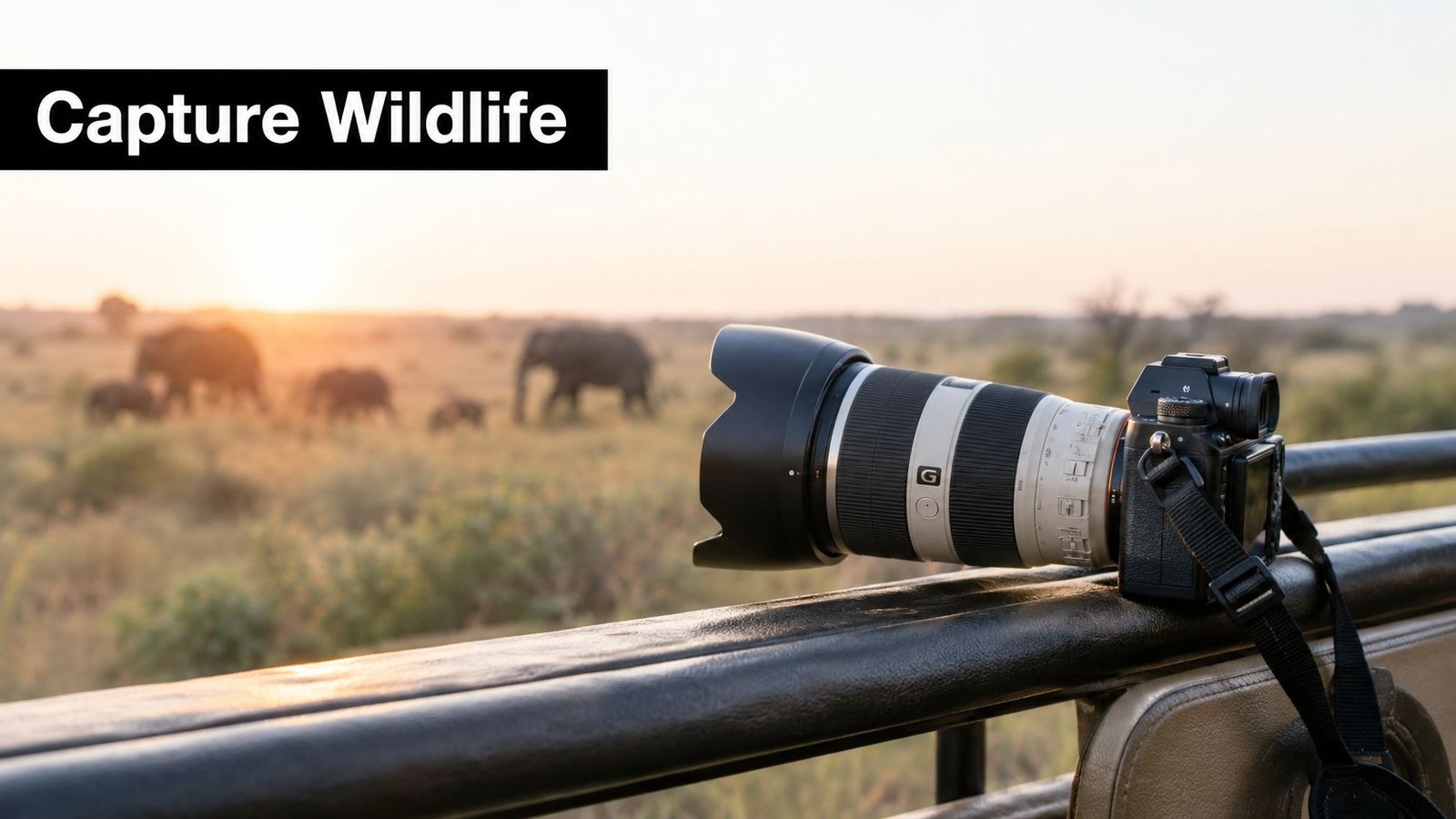
A safari camera setup should match your priorities and luggage allowance. A compact mirrorless camera with a telephoto lens can provide reach for wildlife, while a quality smartphone with a telephoto lens and stabilization may be the better choice for travelers who want lighter, simpler equipment.
Examples include the Canon EOS R5 with an RF 100-500mm lens, Sony A6700 with an E 70-350mm lens, or iPhone 15 Pro Max. A GoPro can be useful for wider vehicle or water-based perspectives, subject to operator and park rules. The lens often affects wildlife images more than upgrading the camera body, so consider renting a telephoto lens if you rarely photograph animals at home.
Pack a lens cloth, blower, spare batteries, memory cards, and a protective pouch. Dust can settle quickly on vehicles and tracks, while humidity and spray around Victoria Falls or the Okavango Delta create a different protection problem. A sealed bag helps during sudden rain or when traveling near water.
A monopod, compact tripod, or vehicle support can reduce fatigue, but don't bring a heavy support system unless you'll use it. Confirm that any mounting bracket is permitted and safe for the vehicle. Practice changing settings before the trip so you can respond quickly when a leopard crosses the road or elephants appear beside the river.
Use safari photography tips to refine your setup before you leave.
A short practical demonstration can help you think through camera handling in a moving vehicle.
6. Portable Water Bottle With Filtration
Hydration equipment needs to suit the activity, not just the destination. A sturdy bottle with a built-in filter can be useful on longer drives, walking activities, and camping trips, while lodge-based travelers may refill from approved drinking-water supplies.
LifeStraw Go, Grayl GeoPress, Sawyer Squeeze, and filtered CamelBak bottles illustrate different approaches. A filter is not automatically suitable for every contaminant, so read its specifications and ask your operator what water sources will be available. Don't drink from rivers, channels, or other natural sources unless your treatment system is designed for that water and you know how to use it correctly.
Fill your bottle with safe lodge water before leaving for a drive. Keep purification tablets as a backup if your medical or travel advice supports them, and carry emergency water according to your operator's instructions. Clean the bottle thoroughly after use, paying attention to the mouthpiece and filter components.
Victoria Falls excursions may include walking and spray, so a leak-resistant bottle is useful. In Chobe, Moremi, and the Okavango Delta, a bottle that fits securely in a vehicle pocket or dry bag is easier to manage than a large container that rolls around.
The internal plan may differ between a luxury lodge, a mobile camp, and a family itinerary. Ask whether water is provided in vehicles, whether refill stations are available, and whether your chosen activities involve walking away from camp.
Avoid treating a filter as a reason to ignore hydration. Drink regularly, particularly in heat, dust, and dry air, and follow your clinician's advice if you have a condition that affects fluid intake.
7. First Aid Kit With Safari-Specific Medications
A first aid kit should be personal, labelled, and reachable. Remote camps may be far from large medical facilities, so you shouldn't rely on finding a familiar pharmacy after arrival.
Start with routine items such as plasters, antiseptic supplies, blister care, pain relief, antihistamines, oral rehydration products, and any treatment your clinician recommends. Add destination-specific medicines only after speaking with a qualified travel-health professional. Antimalarial tablets may be advised for some travelers and destinations, but the correct prescription depends on your health, itinerary, and current medical guidance.
Store prescription medicines in their original packaging with labels intact. Keep a written list of medicine names, strengths, allergies, and relevant conditions. Copies of prescriptions can help if you need medical assistance or face questions during border procedures.
Use a waterproof pouch and protect medicines from excessive heat. Put the kit in your accessible day luggage rather than underneath clothing in a soft duffel. Families should include child-appropriate formulations and dosing information, while solo travelers should carry their own complete supply rather than assuming a guide can replace it.
Review destination advice for Chobe before departure with this guidance on whether you need malaria tablets for Chobe National Park. Also check your vaccination, allergy, and emergency plans with a clinician.
A compact specialist kit, such as an Adventure Medical Kits Ultralight/Watertight model, can protect contents from rain and dust. The brand matters less than suitability, completeness, and your ability to use every item safely.
For additional outdoor preparation, consult this resource on first aid for outdoor adventures.
8. Wide-Brim Hat With Neck Protection
A hat protects more than the top of your head. A wide brim shades the face, ears, and neck, while a secure fit helps you stay comfortable in an open vehicle where wind can catch loose headwear.
Look for breathable material, ventilation, and a chin strap. A neck flap is useful for long drives, especially in Hwange and the Okavango Delta, where you may spend much of the day exposed to sun. Tilley Hats T3, Craghoppers NosiLife Safari Hat, Sunday Afternoons Ultra Adventure Hat, and packable Buff designs show the range of styles available.
Choose a color that works with your clothing and doesn't absorb excessive heat. A hat shouldn't block your binoculars or press against your camera strap. Test it with sunglasses and headphones before traveling, because small comfort problems become distracting on long drives.
Victoria Falls adds a practical concern. If you're near spray or taking a boat activity, a hat that dries quickly and stays secure is preferable to a delicate fashion hat. For Chobe, Moremi, and the Okavango Delta, a chin cord can prevent loss during transfers and boat movement.
Pack the hat where you can reach it before boarding the vehicle. If it crushes, reshape it at the lodge and air it out after sweaty days. A spare lightweight cap can be useful for travel days, but it shouldn't replace the broader protection of your main safari hat.
Combine the hat with sunscreen and sunglasses. No single item covers every exposed area, and the back of the neck is easy to overlook when you're focused on wildlife.
9. Travel Insurance With Medical Evacuation Coverage
Travel insurance belongs in your preparation folder before you depart. A safari can include light-aircraft transfers, boat activities, walking, camping, and remote accommodation, so a basic policy may not cover every planned activity.
Check the policy wording for medical treatment, evacuation, trip cancellation, interruption, baggage, and delays. Confirm that the policy recognizes your actual activities and destinations, including Zimbabwe and Botswana if you're crossing between them. Some policies exclude particular adventure activities or require an upgrade.
Read the conditions for pre-existing medical issues and disclose them accurately. Keep the emergency assistance number in your phone and on paper. Save the policy certificate offline because mobile service may be unreliable in remote areas.
Your nationality can affect the policy options available to you. Travelers from the UK, United States, France, Portugal, Israel, Russia, Germany, Poland, and Turkey shouldn't assume that a policy designed for another residence country will provide the same terms. Buy through a provider that can legally insure your place of residence and confirm the claims process before payment.
Carry proof of coverage with your passport and itinerary. Give a trusted contact at home your policy details, operator information, and expected route. Families should check whether every traveler, including children, is named and covered for the same activities. Solo travelers should pay particular attention to emergency assistance procedures and communication options.
Insurance doesn't replace sensible planning. Follow operator safety instructions, disclose relevant medical information, and confirm whether your coverage applies to each transfer and excursion.
10. Lightweight Sleeping Bag or Travel Sleep Liner
Your sleep kit depends heavily on accommodation. Lodge travelers may need only a compact sleep liner for personal comfort, while camping travelers should ask the operator what bedding, mattresses, and insulation are already supplied.
A liner such as the Sea to Summit Coolmax can add a light personal layer in warm or humid conditions. Synthetic materials are often practical where moisture is a concern. Campers should select a sleeping bag only after confirming the expected conditions and the operator's equipment, rather than carrying a bulky bag that duplicates what camp already provides.
Hwange and Chobe can feel cold on winter nights, and early drives may require more warmth than daytime conditions suggest. A fleece, thermal base layer, warm socks, and a compact sleep liner can work together without creating a large separate bedding system. Moremi and the Okavango Delta also demand attention to humidity, sudden weather changes, and water-based transfers, so protect bedding in a waterproof bag.
Before leaving, ask:
- What the camp provides: Confirm the bag, blanket, mattress, pillow, and liner policy.
- What the season requires: Match insulation and rain protection to the forecast and operator advice.
- How the gear packs: Choose compressible equipment that fits a soft-sided duffel.
- How you'll keep it dry: Use a waterproof stuff sack for boat trips and wet conditions.
A lightweight travel liner is usually more adaptable for lodge itineraries. A dedicated sleeping bag makes more sense when the operator requires guests to bring one or when the trip involves independent camping. Review the arrangements for a Botswana camping safari before buying equipment.
10-Item Safari Packing Comparison
| Item | Implementation complexity 🔄 | Resource requirements ⚡ | Expected outcomes 📊⭐ | Ideal use cases 💡 | Key advantages ⭐ |
|---|---|---|---|---|---|
| High-SPF Sunscreen (50+ SPF) | Low 🔄, easy to use, regular reapplication | Moderate ⚡, multiple bottles, cost in remote areas | Very high UV protection; prevents burns & long-term skin damage, ⭐⭐⭐⭐⭐ 📊 | All-day sun exposure, peak midday on game drives | Portable, immediate UV defense; reef-safe options available |
| Lightweight, Neutral-Colored Clothing | Low 🔄, simple packing and layering | Low ⚡, multiple sets recommended for week-long trips | Improves wildlife approachability and sun/insect protection, ⭐⭐⭐⭐ 📊 | Game drives, photography, lodge evenings | Blends with environment, breathable layers for temperature control |
| Binoculars (8×42 or 10×42) | Medium 🔄, selection and handling practice needed | High ⚡, premium optics are costly and add weight | Dramatically improves distant wildlife viewing and ID, ⭐⭐⭐⭐⭐ 📊 | Long-distance viewing, birding, guided observation | Enables non-intrusive observation; enhances photos and identification |
| Insect Repellent (DEET 20–30%) | Low 🔄, apply/reapply per instructions | Low ⚡, affordable but needs replenishment | Strong reduction in bites and vector-borne disease risk, ⭐⭐⭐⭐⭐ 📊 | Evenings, campsites, rainy season excursions | Proven, long-lasting protection against mosquitoes and ticks |
| Safari Camera / Quality Smartphone + Stabilization | High 🔄, equipment choice, setup, learning curve | High ⚡, lenses, mounts, batteries, and backup media | Professional-quality images/videos; preserves moments, ⭐⭐⭐⭐⭐ 📊 | Photo-focused safaris, hides, early/late light sessions | Telephoto reach, stabilization, rapid sharing and creative control |
| Portable Water Bottle with Filtration System | Low–Medium 🔄, basic use, occasional maintenance | Moderate ⚡, initial cost + filter replacements | Safe hydration from natural sources; reduces plastic waste, ⭐⭐⭐⭐ 📊 | Walking safaris, remote drives, long hikes | Independence from bottled water; cost and environmental benefits |
| First Aid Kit with Safari-Specific Medications | Medium–High 🔄, prescriptions, storage, planning | Moderate ⚡, prescribed meds and kit components | Enables on-site treatment; can be life-saving before evacuation, ⭐⭐⭐⭐⭐ 📊 | Remote multi-day safaris, camping, areas far from clinics | Immediate care, antimalarials, diarrhea and allergy treatments |
| Hat with Wide Brim and Neck Protection | Low 🔄, choose fit and ventilation | Low ⚡, inexpensive and packable | Reduces facial/neck UV exposure and heat strain, ⭐⭐⭐⭐ 📊 | Long game drives, midday sun, boat safaris | Passive sun protection, UPF-rated options, improved comfort |
| Lightweight Travel Insurance with Med Evac Coverage | Medium 🔄, policy comparison and purchase timing | Moderate ⚡, premium cost varies by plan/age | Financial protection for medical emergencies and evacuations, ⭐⭐⭐⭐⭐ 📊 | Remote safaris, high-risk activities, older travelers | Covers evacuation, hospital bills, trip cancellation, peace of mind |
| Lightweight Sleeping Bag / Travel Sleep Liner | Low 🔄, select temperature rating and care | Low ⚡, modest cost, compact packing | Improved sleep comfort, hygiene, and thermal regulation, ⭐⭐⭐⭐ 📊 | Camping safaris, cold-season nights, rustic lodges | Thermal protection, hygiene barrier, lightweight and compressible |
Turn the Checklist Into a Departure Plan
A successful packing list is a sorting system. Divide everything into three groups: carry-on essentials, soft-sided safari luggage, and items to buy or confirm locally. Keep your passport, prescriptions, insurance documents, phone, wallet, essential medication, and irreplaceable camera data accessible throughout travel. Clothing, toiletries, and nonessential equipment can go into the main bag once you've confirmed the operator's requirements.
Baggage rules deserve attention before you buy a duffel. Safari guidance commonly states that bush flights and safari transfers cap baggage at 15 kg, or 33 lb, while some regions allow 20 kg, or 44 lb, and others may permit as little as 12 kg. The limit may include checked and carry-on items, so verify the exact rule with every airline, aircraft operator, and lodge transfer provider. Safari luggage guidance explains why soft-sided bags, compact layers, and multi-use equipment are so common.
Hard-sided cases can be difficult or prohibited on small aircraft. A soft duffel compresses more easily, but it won't solve an overweight camera kit. Weigh the complete system, including the day bag, binoculars, camera, chargers, toiletries, and carry-on contents. If the itinerary combines a long-haul flight with a bush flight, plan for the strictest sector rather than the most generous allowance.
A checklist also reduces omission risk. National Geographic reported that 72.9% of travelers make a packing list for each trip, while 77.1% said a list makes them less likely to forget essentials, and travelers reported forgetting an average of two essential items per trip. Chargers and toiletries were among the commonly missed items, which makes power and personal-care backups especially useful on remote itineraries. Use the safari packing guidance from National Geographic to organize your final review.
Match the kit to each destination
Victoria Falls often combines walking, spray, boat trips, and city or lodge time. Keep sunscreen, a secure hat, a refillable bottle, rain protection, quick-drying clothing, and footwear with reliable grip close at hand. You may need a more flexible day bag here than on a vehicle-only safari.
Hwange rewards a dust-conscious setup. Protect camera equipment, keep binoculars capped when not in use, carry repellent, and choose closed shoes for uneven ground. Pack layers because early drives can feel cold before the day warms.
Chobe may include river-based viewing as well as land drives. Use a water-resistant pouch for electronics, secure your hat, and carry insect protection where it's easy to reach. Confirm medical advice and water arrangements rather than assuming a lodge or boat operator follows the same system as another provider.
Moremi and the Okavango Delta require the most attention to water, weather, and transfer logistics. A packable rain shell, dry bags, quick-drying layers, and protected camera equipment can be more valuable than formal clothing. Ask whether your itinerary includes mokoro excursions, walking, camping, or additional aircraft sectors, because each activity changes the balance between footwear, rain protection, and luggage space.
Adjust for the season and travel style
Dry-season travelers often prioritize dust protection, warm early-drive layers, sunscreen, and hydration. Green-season travelers should give more space to rain protection, waterproof storage, long sleeves, and insect control. Shoulder-season conditions can change within the same day, so a layer system is more reliable than packing either only hot-weather clothes or only heavy outerwear.
Camping requires a different conversation from lodge travel. Confirm the sleeping system, tent setup, lighting, charging arrangements, laundry, and water supply before packing. A headlamp may be useful at a rustic camp, while some lodge environments provide staff assistance after dark. Don't carry equipment that the operator already supplies unless you've confirmed the details.
Families should separate each person's critical medicines, documents, and a spare clothing layer. Give children familiar sun protection, comfortable shoes, insect protection approved for their age, and a small activity kit for transfers. Solo travelers should keep their personal documents, medical information, phone battery, and emergency contacts organized in one accessible pouch.
Nationality affects entry preparation. Check passport validity, visas, permits, vaccination documentation, transit rules, currency arrangements, and insurance conditions based on your citizenship and residence. A traveler arriving from Germany may face different entry procedures from a traveler arriving from the United States or Israel, and a route through Zimbabwe and Botswana may involve requirements that don't apply to a single-country itinerary.
Complete the final equipment test
Test the camera, telephoto lens, batteries, memory cards, power bank, filtration bottle, headlamp, dry bags, and luggage before departure. Put on your hat with sunglasses. Walk in the shoes you intend to wear. Pack the rain shell into the day bag and confirm that it can be reached without unpacking everything.
Keep prescriptions in original packaging and carry medical documentation where relevant. Store copies of insurance documents, bookings, emergency numbers, and passport information offline and with a trusted contact. Ask your operator what they provide, what they restrict, and what must be carried between camps.
The best safari packing list isn't the longest one. It gives priority to protection, health, communication, observation, and comfort while leaving space for the conditions you'll encounter. Maximum Adventure Trails provides adventure, activity, and accommodation booking services across Victoria Falls, Hwange National Park, Chobe National Park, Moremi, and the Okavango Delta, so current itinerary details can be checked at Maximum Adventure Trails.
Maximum Adventure Trails can help coordinate activities, accommodation, and multi-day safari travel across Victoria Falls and Botswana's wildlife destinations. Visit Maximum Adventure Trails to match your itinerary with practical packing requirements before you depart.