

- 109 Views
- 17 Min Read
- (0) Comment
You've just opened three tabs and you're trying to answer the same question from three angles, how long should I stay at Victoria Falls, which side should I book, and how do I turn it into a proper safari without wasting money? That's the right problem to have. Victoria Falls isn't a one-stop photo stop when it's planned well, it's the hinge point for a Southern Africa trip that can stretch from Zimbabwe into Botswana and beyond, and the package you choose should reflect that.
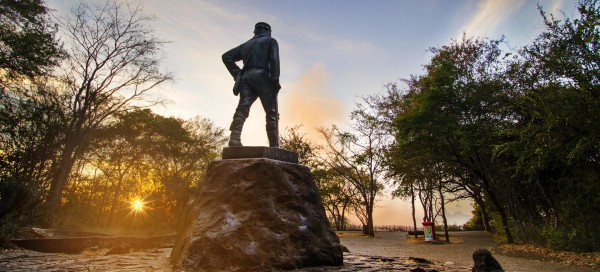
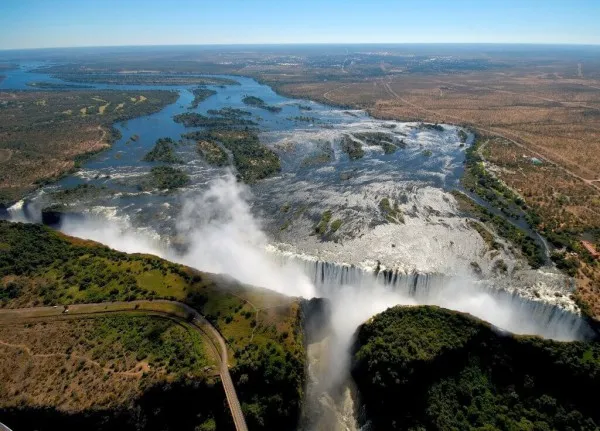
At the lip of the basalt gorge in May, the spray can soak through a rain jacket and still you'd be tempted to keep walking because the scale is absurd, 1,708 metres wide, with the drop varying by section and an estimated flow of up to 500 million litres per minute according to UNESCO's description of the site in the destination briefing Victoria Falls' UNESCO profile and scale markers. That's why travellers arrive expecting a waterfall and leave talking about itinerary design, game viewing, river time, border logistics, and whether they should have slept on the Zimbabwe side or crossed into Zambia for the activity day.
A good planning clue is this, the Falls sit in a tourism corridor that supports Zambezi National Park, Hwange, Chobe, and the wider Zimbabwe, Botswana circuit Victoria Falls' role in the wider safari circuit. If you need airport downtime before a border hop, a practical stop such as the Victoria Falls lounge guide for travelers can make the transfer day less brutal.
Table of Contents
- Why Victoria Feels Like More Than a Waterfall
- The Main Package Types at a Glance
- What Your Package Includes
- Matching Your Trip to the Right Season
- Building the Perfect Combo Itinerary
- Visas, Health, and Booking Without the Headaches
- Add-On Activities That Change the Whole Trip
- Choosing the Right Package and What to Do Next
Why Victoria Feels Like More Than a Waterfall
A Victoria Falls trip changes fast once you start planning properly. One day is enough to stare at the spray. It is not enough to make the trip worthwhile unless you use the Falls as the anchor for a wider route, with river time, game drives, or a clean transfer into Hwange or Botswana. That is why victoria falls safari packages work best when they are built around movement, not just a viewpoint.
The geography does the selling
The Zambezi gives Victoria Falls its split personality. Zimbabwe usually delivers the classic broad viewpoints, while Zambia suits travellers who want closer access and a more activity-led stay. UNESCO's heritage framing matters because world heritage status gives the place instant recognition with long-haul travellers and helps explain why it keeps drawing visitors Victoria Falls' UNESCO heritage and tourism scale. The point is simple, the Falls are the centre of a route, not the end of one.
Safari planners use Victoria Falls as a hub because the roads and border crossings open up several trip styles. You can stay close to the gorge, add a day trip into a nearby park, or push the itinerary into Botswana for riverfront game viewing. Victoria Falls stops being just a waterfall and becomes the organising centre of a wider Southern Africa itinerary.
Practical rule: if your itinerary still reads like a sightseeing transfer with one activity, it is too thin for a proper Victoria Falls safari package.
What most travellers miss at first
First-time visitors often arrive thinking about a waterfall visit and one sunset cruise. Then they realise they can base on one side, cross for activities, and build real safari time into the same trip. The smart packages answer four questions early, how long to stay, which side to use, which country combo fits, and how much activity to stack.
Those choices shape the whole trip. They affect comfort, cost, and how much of the holiday disappears into transit. Get them right and Victoria Falls becomes the trip's organising centre, not a rushed add-on. If you need a practical stop before a border hop, the Victoria Falls lounge guide for travelers keeps transfer day far less painful.
The Main Package Types at a Glance
A Victoria Falls safari package should tell you, at a glance, whether you are buying a quick Falls stop, a short activity-led stay, or the start of a proper multi-country route. The key difference is in the routing. Some packages are built for convenience, others for wildlife time, and the best ones match both to the traveller, not the brochure. For a luxury lodge-heavy build, this luxury lodge safari overview shows how lodge style and routing shape the whole trip.
How the common package shapes compare
| Package type | Duration | Price band (USD pp) | Best for | Trade-off |
|---|---|---|---|---|
| Falls-only transfer | 1 day | Low | Cruise passengers, stopover travellers, very short stays | Fast, but thin on safari time and easy to overpack with add-ons |
| Falls plus activities | 2 nights | Mid | First-timers who want the Falls, a cruise, and one big activity | Good balance, though still light on wildlife |
| Classic safari base | 3 to 4 nights | Mid to upper-mid | Travellers who want guided structure and time to breathe | Less independent, more organised, usually better logistics |
| Hwange or Chobe combo | 5 to 7 nights | Mid to premium | Serious safari travellers who want the Falls plus game viewing | Border crossings and transfer timing matter more |
| Multi-country route | 9 to 12 nights | Premium | Repeat visitors, photographers, and long-haul planners | Bigger budget, more moving parts, worth it if you want variety |
A clean itinerary treats Victoria Falls as the most dramatic entry point into a broader safari circuit. That matters because the best package is not the one with the longest inclusions list, it is the one that gives you enough time on the right side of the border and enough room for the next leg.
What I'd book for each traveller type
If someone only has a day, keep it simple and protect the schedule. If they have two nights, add one strong activity and stop there. That is the sweet spot for someone who wants the scenery without turning the trip into a logistics exercise.
For anything longer, structure starts to pay off. A 3 to 4 night base gives you room to separate the waterfall from the wildlife and avoid that rushed feeling where you tick boxes but enjoy nothing. Once you move into 5 to 7 nights, the package should behave like a real safari, not a city break with animals attached. That is where Victoria Falls starts making sense as a hub for Hwange, Chobe, and, for travellers with more time, a longer run toward the Okavango Delta.
What Your Package Includes
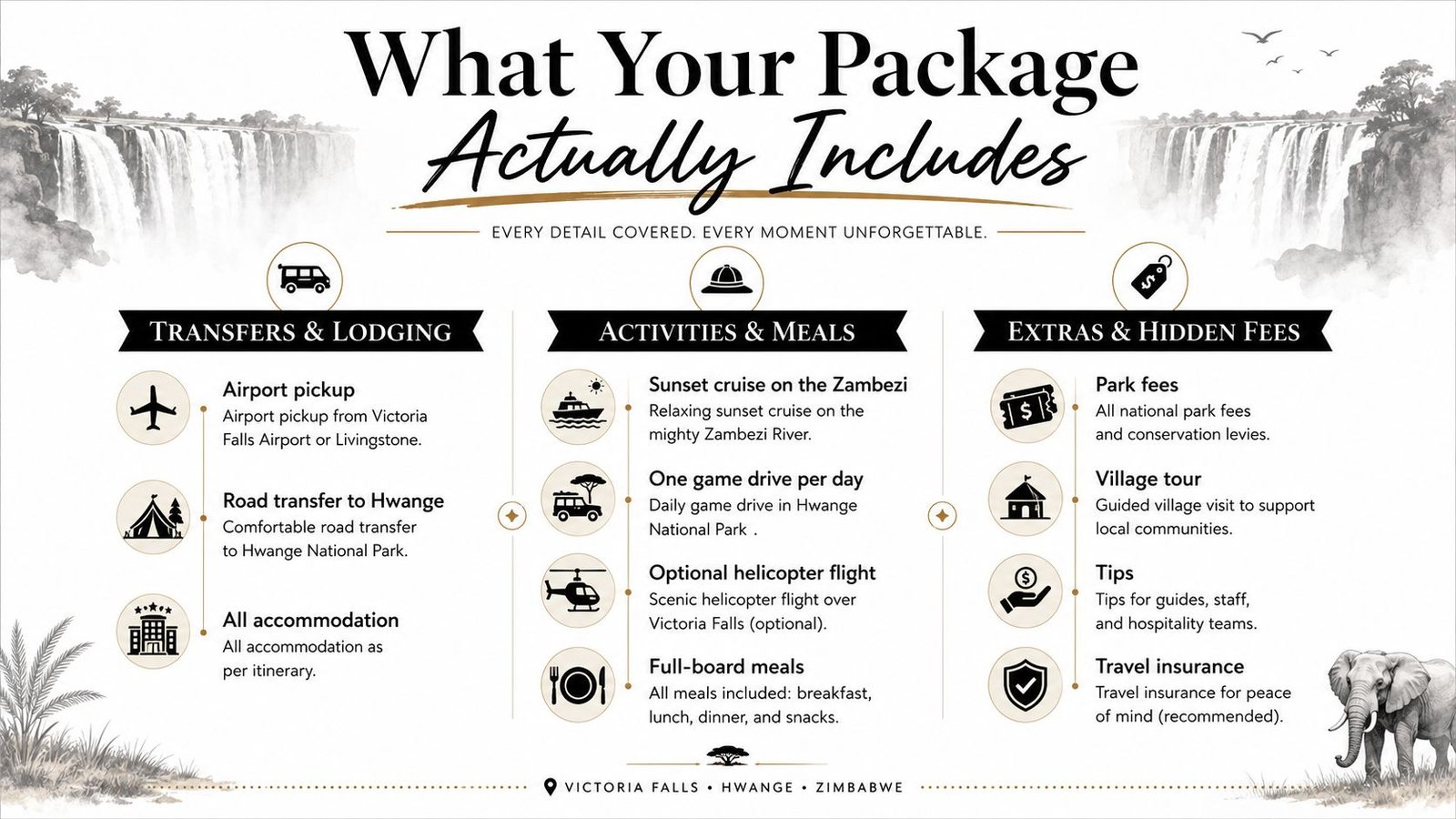
A proper package should read like a clean invoice. Airport transfers from Victoria Falls Airport or Livingstone, lodging, a guided Falls visit on the side you're using, and at least one activity per full day should all be clear before you pay. If those pieces are missing, you are looking at a base rate, not trip cost.
The core inclusions worth insisting on
Start with the practical basics, because missing them creates friction fast. I want to see airport pickup, accommodation, breakfast or full board depending on the lodge style, and park access for the Falls day itself. If the itinerary includes a safari leg, it should also state exactly which game activity is covered each day.
The waterfall visit and the safari park fees are separate items. Package builders should itemise them clearly, along with a sunset cruise on the Zambezi if it is included. That activity often sits in the middle of the itinerary as the easy, high-value add-on.
If the quote is vague about border crossings, park fees, or meal plan, assume those costs will reappear later.
What is usually excluded
Several extras are usually left out on purpose. The KAZA UniVisa may not be included, optional activities like a helicopter ride or white-water rafting are usually extra, and gratuities are on you. A sensible budgeting rule is to expect about USD 10 per day for guides and service staff, while drinks beyond water are often charged separately tipping norm in the trip brief.
The hidden costs show up when the trip gets more complex. Single supplements can bite on lodge stays, conservation levies can apply in private areas, and border days sometimes create roaming or SIM-card costs nobody planned for. If you are comparing quotes, use the Victoria Falls packing checklist to build your own budget around what the operator forgot to spell out.
Don't forget the small print
Travel insurance with evacuation cover is part of the trip structure. So are drinks, low-water surcharges where they exist, and any local transport not tied to the main lodge transfer. A quote that looks cheap at first often grows expensive once the optional activity list starts adding up.
Matching Your Trip to the Right Season
Victoria Falls changes character hard across the year, and the wrong month can make a great package feel mediocre. The Falls themselves, the wildlife, and the price all move differently, so don't let anyone sell you a generic “best time” without asking what you want from the trip. The planning trade-off is simple, water volume, animal viewing, or value.
The three windows that matter
The dry safari window runs roughly from June to October, and that's the period when wildlife viewing becomes the strongest reason to build a combo package seasonal safari guidance for Victoria Falls. The low-water viewing window is typically September to January, which is when the rock faces and gorge structure become more visible and some activity choices open up. The high-water window is usually February to May, when the Falls are at their most intense and spray can dominate the viewpoints.
That matters because the best package in one season can be a poor choice in another. A waterfall-focused short break is strongest when the water is dramatic. A safari combo is usually stronger when game drives and road access are easier.
Victoria Falls Seasons at a Glance
| Month | Waterfall Volume | Wildlife Viewing | Price Level | Best Package Type |
|---|---|---|---|---|
| January | Low to rising | Good nearby, depending on route | Moderate | Falls-plus-activities |
| February | High | Better on safari legs than at the Falls | Higher | Classic safari base |
| March | High | Strong for safari combinations | Higher | Classic safari base |
| April | High | Strong for safari combinations | Higher | Classic safari base |
| May | High to easing | Strong | Moderate | Hwange or Chobe combo |
| June | Easing | Very strong | Higher | Hwange or Chobe combo |
| July | Moderate | Very strong | Higher | Hwange or Chobe combo |
| August | Lower | Very strong | Higher | Hwange-heavy build |
| September | Low | Very strong | Higher | Hwange or Chobe combo |
| October | Lowest | Very strong | Higher | Hwange-heavy build |
| November | Rising | Mixed | Moderate | Falls-only or short stay |
| December | Rising | Mixed | Moderate | Falls-plus-activities |
For me, the clean rule is this. Pick the season that matches your primary goal, not the one that happens to fit your school holiday dates. If you want roaring water, book for that. If you want animals and easier routes, book for that instead.
If you're still undecided, the best-time guide for Victoria Falls is useful for lining up waterfall viewing against safari priorities before you commit.
Building the Perfect Combo Itinerary
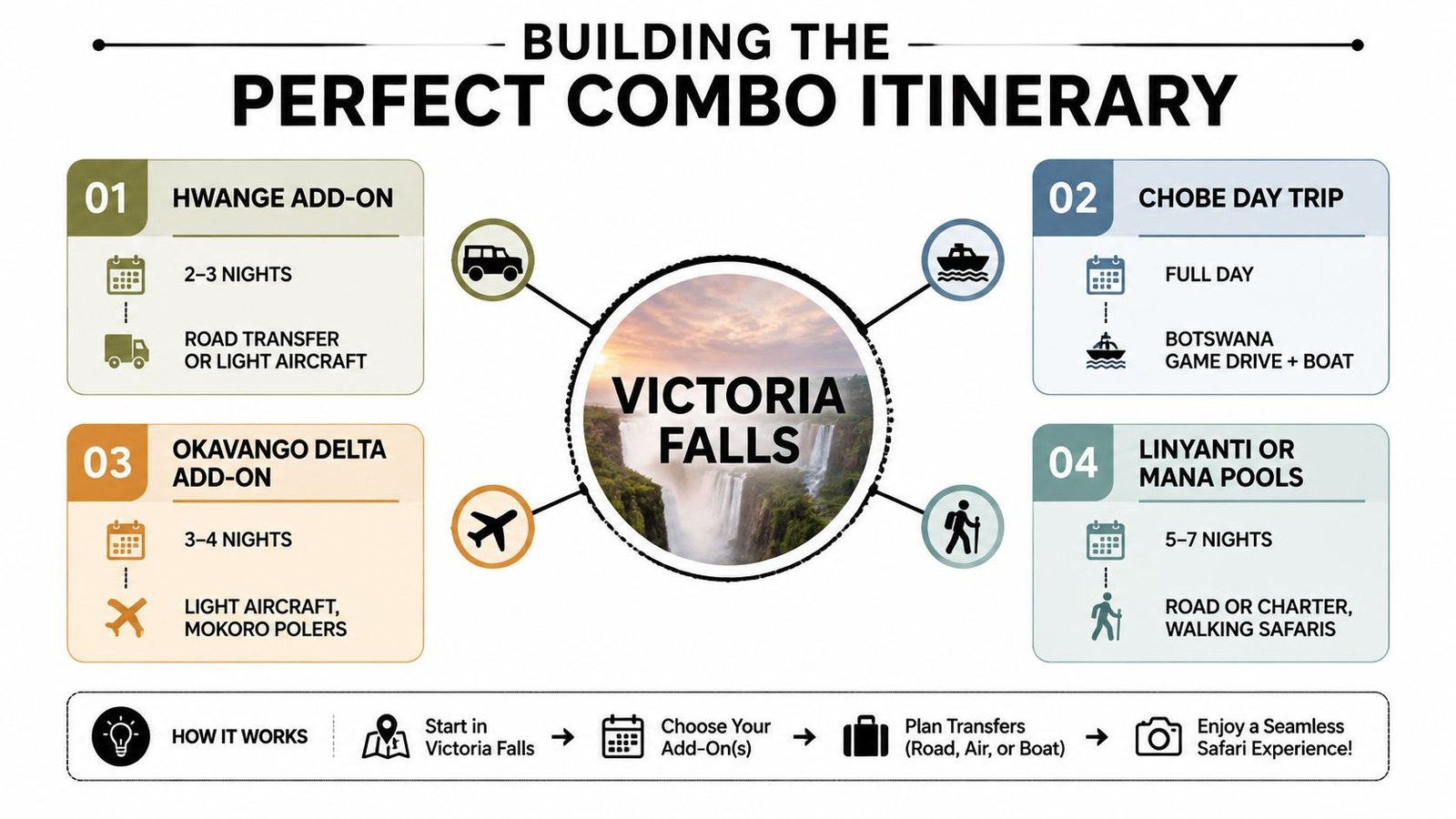
Victoria Falls works best as the hub of the trip. Treat it as a base for moving into game country in Zimbabwe and Botswana, and the package options become much easier to sort through. That is the right way to plan this region, because the Falls fit naturally into a wider safari route.
The four combos worth considering
Hwange add-on is the value-friendly choice. Give it 2 to 3 nights, use the road transfer out of Victoria Falls town, and you get a proper safari leg without paying for a flight hop.
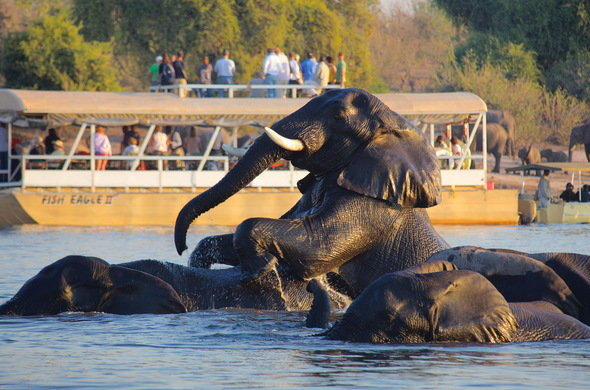
Chobe day trip is the easiest Botswana addition. It suits first-timers who want to cross into another country without changing hotels, and the river corridor is strong for elephant viewing with little fuss. If your schedule is tight, this is the least complicated way to add Botswana.
Chobe overnight suits travellers who dislike rushed days. One or two nights on the Botswana side slows the trip down, leaves room for a sunset boat cruise, and gives you a better park-drive window. The whole itinerary feels less compressed.
Okavango Delta extension is the premium route. Give it 3 to 4 nights, fly in, and the trip shifts into a different rhythm with water movement, smaller camps, and a more remote feel.
My bias: if this is your only trip to Southern Africa, do not spend it all in one postcode. Add at least one border hop.
Two sample routes that work
A 7-night build is efficient. Three nights at Victoria Falls, two in Hwange, and two in Chobe give you waterfall time, a land safari, and a Botswana river edge without wasting days in transit. A 10-night version earns the extra distance by adding the Okavango on top, which is the version I'd put in front of repeat visitors or photographers who want more variety.
Families on a budget usually do better with Hwange because the routing is easier to handle. Time-poor travellers should choose Chobe day-trip or Chobe overnight. Repeat visitors and anyone who has already done the standard Zimbabwe route should look straight at the Okavango.
The best package fits your travel rhythm, not just your aspirational itinerary.
Visas, Health, and Booking Without the Headaches
Do the paperwork before you start comparing lodge photos. Victoria Falls trips get messy when people assume the border will sort itself out, and that's where the surprise costs and delays start. A cleaner approach is to lock the entry rules, then build the route around them.
Start with visas and borders
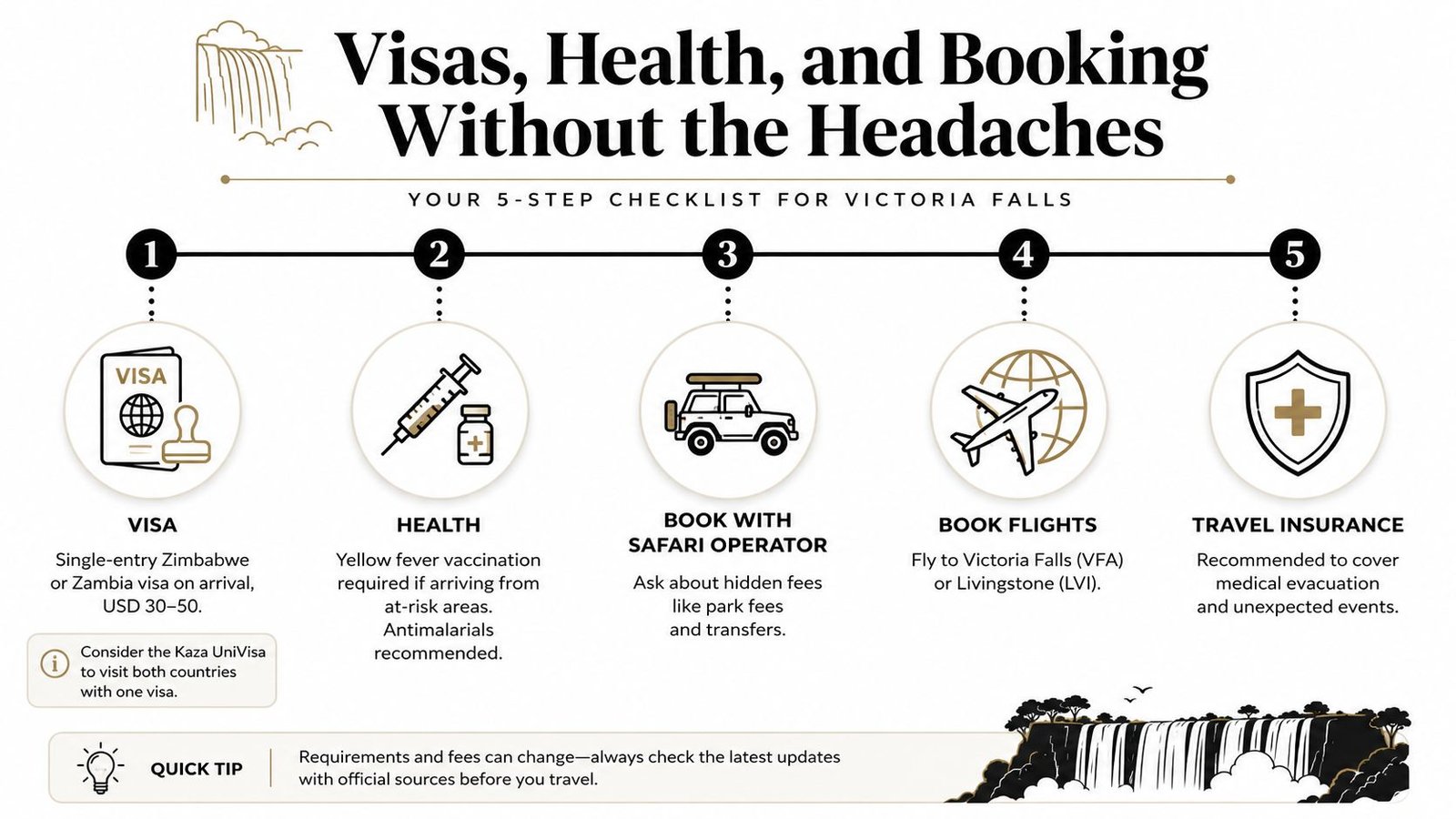
The simplest planning move is to check whether your nationality can use the KAZA UniVisa, because that visa covers both countries and day trips into Chobe. If you're not using it, you'll often be dealing with single-entry Zimbabwe or Zambia arrangements instead. Passport validity and blank pages matter too, so don't leave that until the airport.
For Zimbabwe-specific entry rules, use the Zimbabwe visa requirements guide before you pay deposits. If your package crosses both sides, ask the operator to confirm border handling in writing, not just verbally in a chat thread.
Get health and money right
Yellow fever rules depend on where you're transiting from, and malaria protection matters once you add Hwange, Chobe, or an Okavango extension. Victoria Falls town itself is less demanding than the wider safari circuit, but the moment you extend beyond it, health planning becomes part of trip design. That's not optional if you're sleeping deeper in safari country.
On money, USD cash is the cleanest option on the Zimbabwe side, especially in small denominations. Card payments are usually fine at lodges, but markets are another story. You'll be happier if you treat cash and cards as two separate systems rather than assuming one will solve everything.
For travel protection, I'd read why Expat Global Medical recommends CFAR before deciding how much flexibility you need in your booking terms.
Book in the right order
Reserve early if you're travelling in the most competitive months, and get transfers confirmed before flights are ticketed. Ask for park fees to be itemised, ask who handles the border crossings, and ask who your single point of contact is if the trip spans more than one country. That's how you avoid a good itinerary turning into a series of handoffs.
One final budgeting habit matters more than people admit, build in tipping money for guides, drivers, and boat staff before you leave home. It keeps the trip smooth and stops awkward scrambling at the end of a long safari day.
Add-On Activities That Change the Whole Trip
Some add-ons are fluff. These are not. A helicopter flight, a sunset cruise, rafting, or a microlight changes the emotional tone of the trip, and once you add two of them the itinerary starts behaving like a premium escape instead of a standard lodge break. If you want the activity layer laid out more broadly, the Victoria Falls excursions page is the place to compare what fits together.
The four activities that reshape a package
| Activity | Cost (USD) | Time Needed | Best For |
|---|---|---|---|
| Helicopter flight over the gorge | Premium | Short but itinerary-sensitive | Couples, photographers, first-time visitors |
| Zambezi sunset cruise | Moderate | Half day once transfer time is included | Easygoing travellers, wildlife watchers |
| White-water rafting | Moderate to premium | Half day to full day | Adrenaline chasers, active travellers |
| Microlight flight into the air | Premium | Short, weather-sensitive | Repeat visitors, thrill seekers, photo planners |
The helicopter is the cleanest upgrade if your goal is the big visual payoff. The sunset cruise is the easiest way to balance safari intensity with downtime. Rafting is the activity that changes the whole pace of a trip because it steals a half day and demands more physical energy than most first-timers expect. The microlight is for travellers who want a rawer, less polished aerial view.
Who should book what
Couples usually get the most out of the helicopter and cruise combination because it feels special without requiring a fitness commitment. Adrenaline travellers should choose rafting or the microlight, and they should be honest about recovery time afterward. Photographers usually prefer aerial viewing plus a separate water-based activity, because that gives them two very different angles on the same area.
There are cheaper alternatives too. The rainforest walk around the Falls gives you the core spectacle without the premium add-on cost, and Devil's Pool becomes the right choice when water levels permit. Not every trip needs a sky package and a raft package stapled on top.
A few safety habits matter regardless of what you book, wear neutral safari clothing, pack waterproof layers for the spray, bring binoculars, and don't wander around the Falls area after dusk. Some adventure activities also require a separate indemnity, so read the form before you sign it.
Choosing the Right Package and What to Do Next
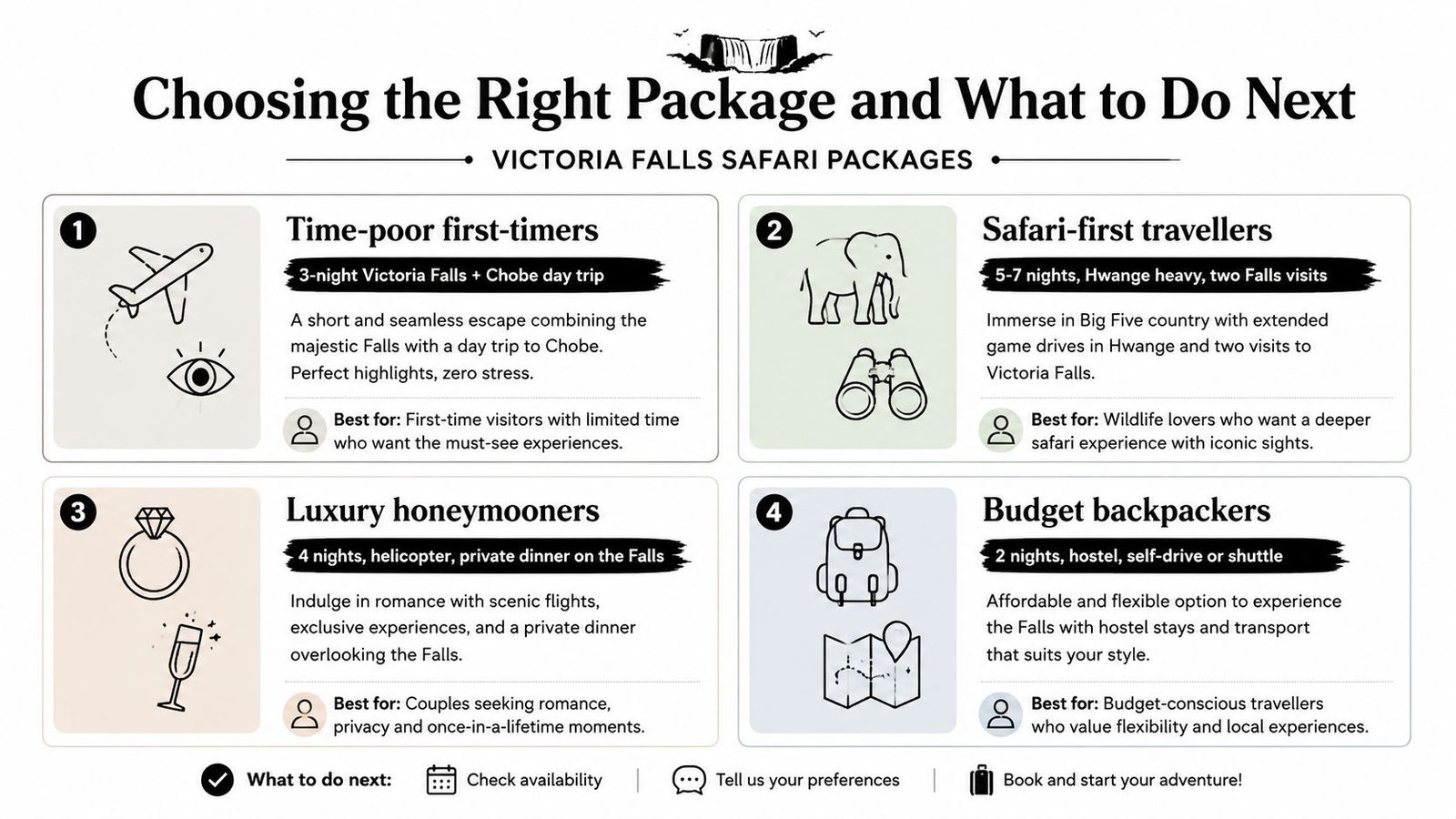
If you're short on time, book the 3-night Victoria Falls plus Chobe day trip and stop trying to force a longer route into a short calendar. If you want more wildlife and less border choreography, go 5 to 7 nights with a Hwange-heavy build and keep the Falls as the front end. If you're collecting countries, commit to the 7 or 10-night Victoria Falls, Chobe, and Okavango combo. If this is a honeymoon or a special occasion, the private Falls-only stay with a helicopter flight and sunset cruise is the one that feels designed, not assembled.
The booking checklist I'd use
- Confirm your travel month first. Season drives the whole decision.
- Lock transfers early. Cross-border routing gets clumsy when left late.
- Check KAZA UniVisa eligibility. Don't guess.
- Verify health requirements. Yellow fever rules can depend on transit history.
- Ask for itemised park fees. Avoid vague package pricing.
- Request one contact for the whole route. Multi-country trips fall apart when no one owns the handoffs.
The best package is the one that matches the traveller's pace, not the one with the most inclusions on paper.
If you want a Victoria Falls itinerary built around the right side of the Falls, the right number of nights, and the right combo with Hwange, Chobe, or the Okavango, Maximum Adventure Trails can arrange those routes and the activities around them. Visit Maximum Adventure Trails to compare package shapes and lock in the trip that fits how you travel.