

- 4 Views
- 9 Min Read
- (0) Comment
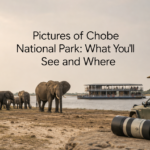
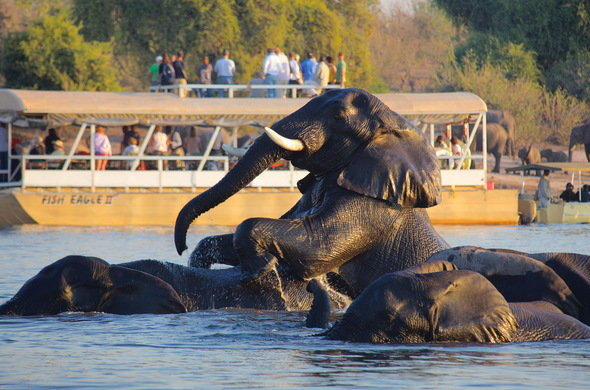
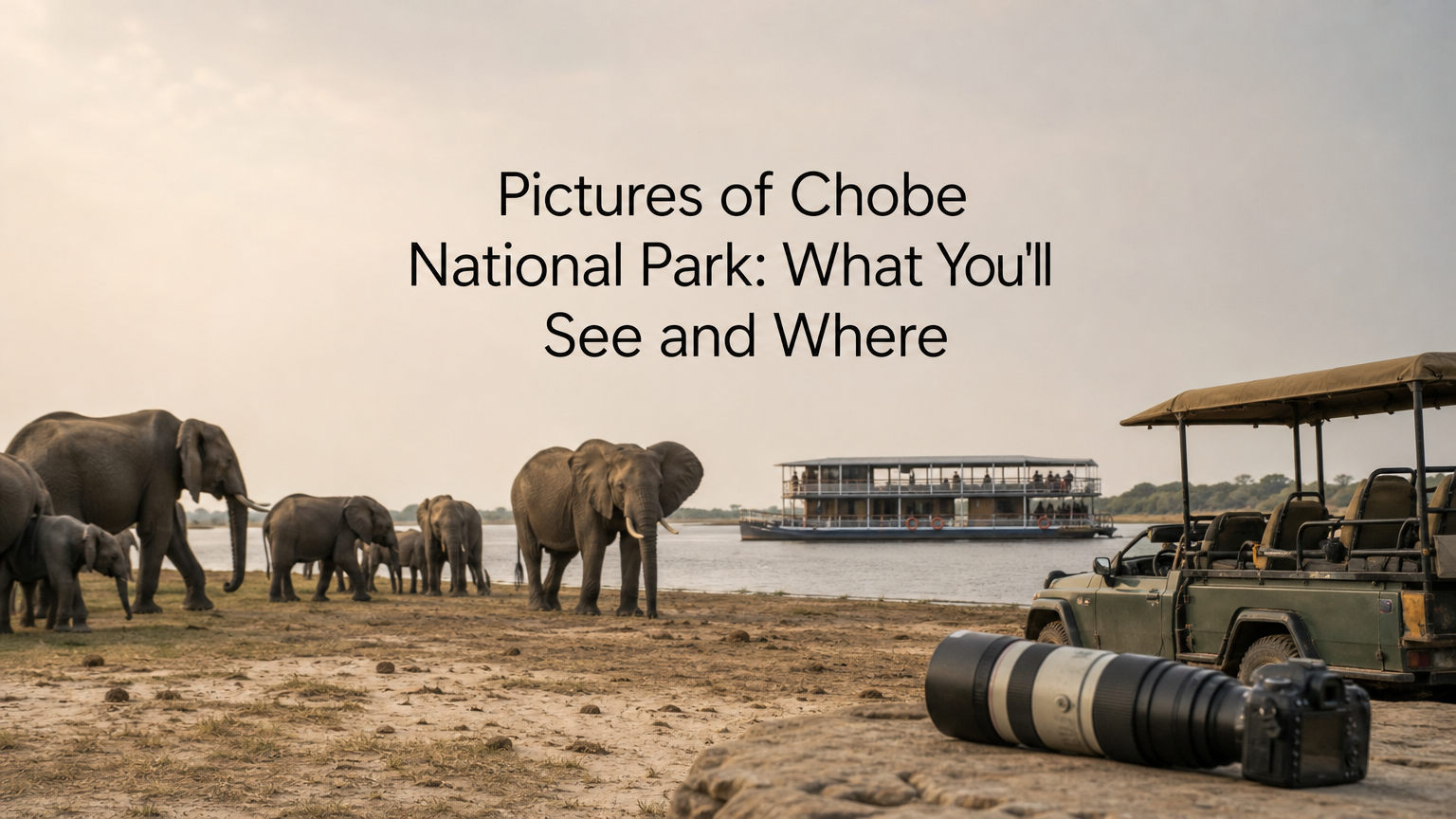
Pictures of Chobe National Park are photographs of Botswana’s 11,700 square kilometer reserve on the Chobe River. The park was established in 1968 and is known for some of the largest elephant herds in Africa. The classic shot is a herd drinking or crossing the river as the sun drops, usually taken from a boat at water level. Lions, hippos, buffalo, crocodiles, and a long bird list fill out the rest of the frame.
This guide explains what those images show and why they help you plan a trip. It also covers how to find free or licensed Chobe National Park images you can legally reuse, how to take your own, and how to spot photos that are mislabeled. You should not need a second search afterward.
Maximum Adventure Trails has organized Chobe game drives and river cruises since 2019. The advice below comes from how the park works on the ground, not from a stock library.
Why pictures of Chobe National Park matter before you go
Photos are the fastest way to learn what Chobe looks like in the month you plan to travel and which style of safari suits you. A good set of pictures of Chobe National Park shows scale, water levels, vegetation, and how close the animals come. Brochures rarely explain any of that.
What the images tell you before you book
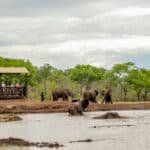
Look at the background of each picture, not the animal. Water, green floodplain, or dry grass behind an elephant tells you the season. A boat in the frame means the shot came from the Chobe River. A safari vehicle means it came from a game drive on land. Namibia’s bank sits just across the river, so a low, tree-lined opposite shore usually marks the riverfront.
Photos also set expectations. Chobe is known for elephants, and the images show why: herds of dozens, calves in the shallows, bulls feeding on islands. What they do not show is the quiet stretch between sightings. Treat every image as the best second of a long morning, not the average one.
The four areas and what each looks like
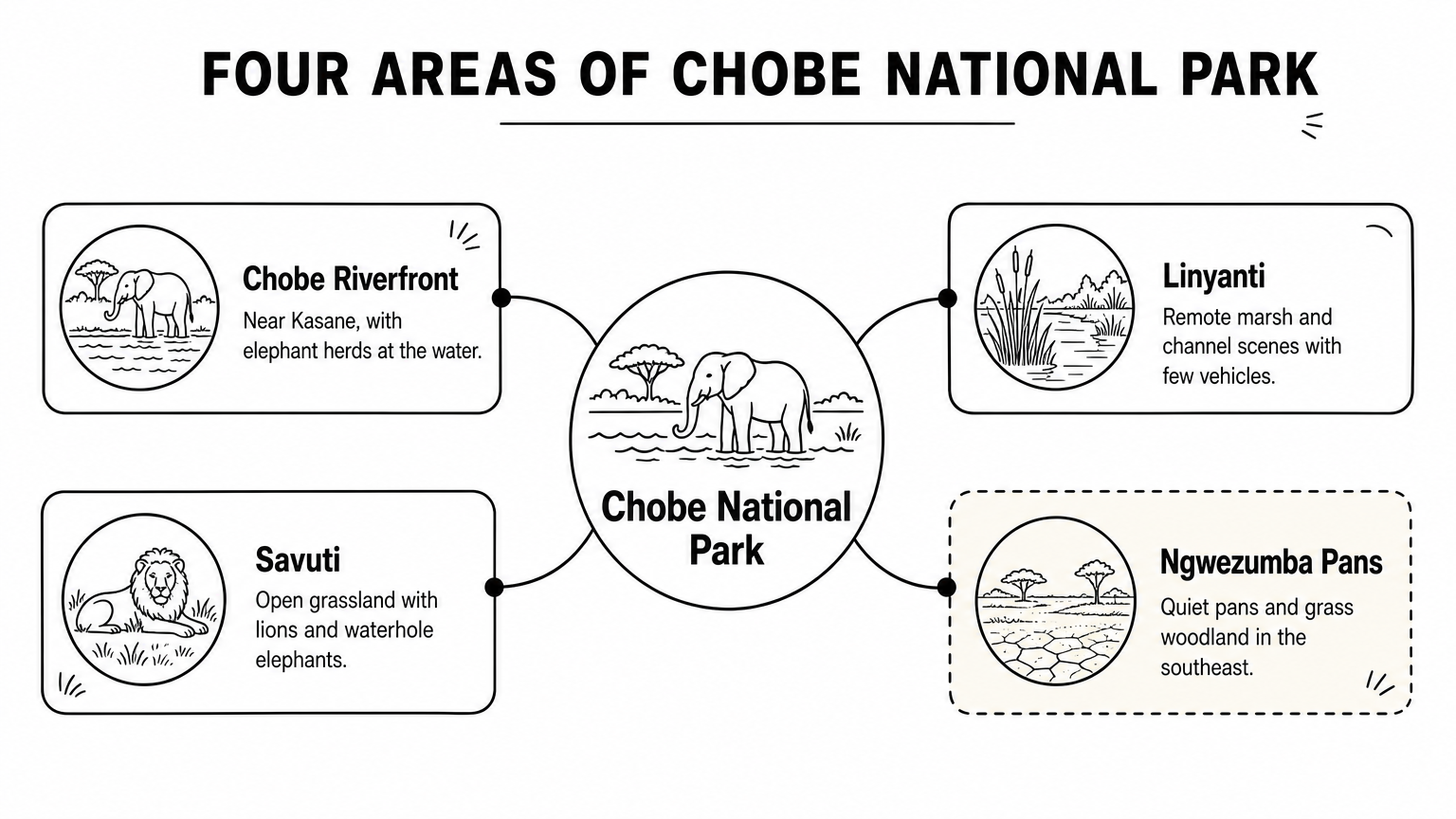
Chobe National Park has four distinct areas, and photos from each look different. Use this table to place any image you come across.
| Area | Where it sits | What the photos usually show |
|---|---|---|
| Chobe Riverfront | Northeast edge, near Kasane | Elephant herds at the water, buffalo, hippos, crocodiles, boats, sunsets over the floodplain |
| Linyanti | Northwest corner | Marsh and channel scenes, remote woodland, few vehicles |
| Savuti | South of Linyanti | Open grassland, the Savuti channel and marsh, lions, elephants at waterholes |
| Ngwezumba Pans (Nogatsaa) | Southeast interior | Pans, grass woodland, quiet and empty landscapes |
Most Chobe pictures online come from the riverfront because it is closest to Kasane and easiest to reach. If you want the remote, empty look, search for Savuti or Nogatsaa by name.
Why Chobe photographs so well
Three things make the park generous to photographers. The wildlife is used to vehicles and boats, so animals often stay calm at close range. The river lets you shoot from low angles with clean backgrounds, which is how the famous eye-level elephant images get made. And in the dry season, water pulls animals to one place, so you are not hunting for sightings.
Light does the rest. Early morning and late afternoon bring warm side light across the water, and that is when most of the strongest Chobe National Park photos were taken.
Chobe’s best photos come from the river, where low angles, calm animals, and warm light meet.
How to find free or licensed Chobe National Park images
You have three routes: free libraries with clear licenses, paid stock libraries, or direct permission from a photographer or lodge. Free libraries work for blogs and school projects. Paid libraries suit brochures and ads. Permission is the only route for one specific shot you love. Searching for Chobe National Park photos returns thousands of results, but only some of them are safe to reuse.
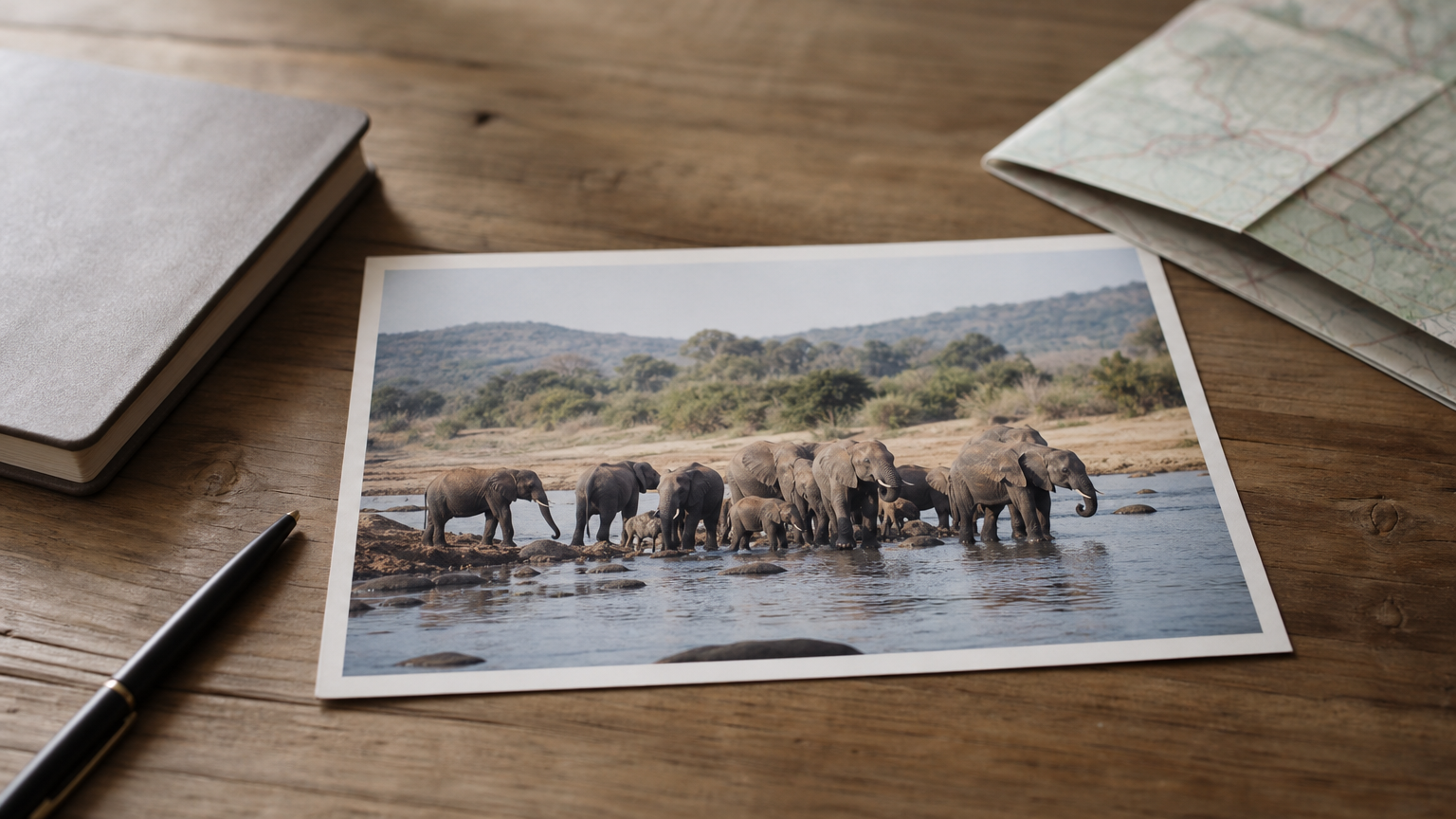
Free sources and what their licenses allow
Libraries such as Unsplash and Wikimedia Commons host Chobe images under stated licenses. Unsplash photos can be used for free, including commercially, without asking the photographer. Wikimedia Commons files carry different Creative Commons licenses, so you must read the one on each file page.
- Public domain or CC0: use freely, no credit required.
- CC BY: use freely with credit to the photographer.
- CC BY-SA: credit the photographer and share your adapted version under the same license.
- CC BY-NC: non-commercial use only, which rules out a business website.
A "free" photo is only free under its terms. The license shown on the download page is what counts, not the label you find on a search result.
Paid stock and permission requests
Paid libraries such as iStock sell Chobe images under royalty-free licenses. Royalty-free means you pay once and use the image within the license terms. It does not mean the image costs nothing. Check whether the license is editorial or commercial. Editorial images are for news and commentary. Advertising, brochures, and product pages need a commercial license.
Images with recognizable people usually need a model release for commercial use. If you fall in love with a specific shot from a lodge, tour operator, or tourism board, email the owner. Say where you will publish it and offer a credit. Many say yes.
A checklist before you publish
Run through these steps for every image:
- Confirm the license on the page where you download, not on a thumbnail.
- Save the license name, the page URL, and the date you downloaded it.
- Add the credit if the license requires one.
- Check for identifiable people or private property in the frame.
- Skip Google Images, Pinterest, and Instagram as sources. They index photos but do not license them.
- Verify the picture really shows Chobe, using the clues later in this guide.
A credit line you can copy and adapt:
Photo: [Photographer name] / [Source], licensed under [license name], [link to the photo page]
A pretty picture without a clear license is a liability, not a free asset.
How to take your own pictures in Chobe National Park
The reliable recipe for a photography safari in Chobe is one river cruise, one game drive, a telephoto lens, and the first and last hours of daylight. Those four choices account for most of the strong Chobe National Park images you see online. You do not need professional gear, but you do need to plan around how the park operates.
Choose both the boat and the vehicle
A boat cruise on the Chobe River puts you at water level, so elephants, hippos, and birds fill the frame against the floodplain. A game drive covers land scenes such as lions in grass, giraffes between trees, and kudu at the roadside. Doing both in one stay gives you a complete set, not a gallery of the same elephant.
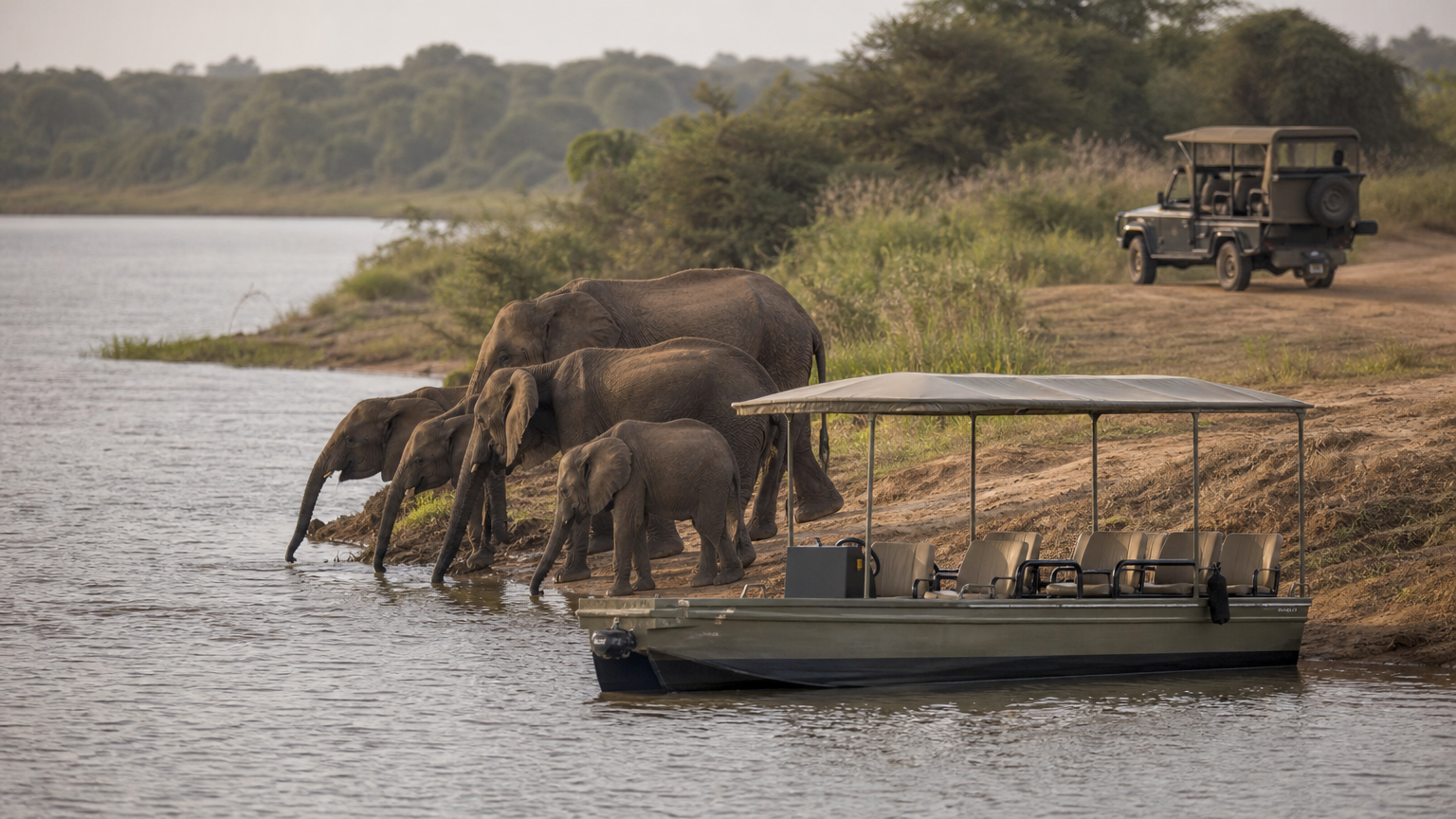
Know the rules before you go. Off-road driving is not allowed in the national park. Night drives and walking safaris are not permitted inside it either, because they are only possible in private concessions elsewhere in Botswana. Stay in the vehicle on land and out of the water. Swimming in the Chobe River is dangerous and forbidden, with crocodiles and hippos in residence.
Gear and settings that work
A 100-400 mm zoom, or an equivalent, covers almost everything. Your phone handles wide scenes such as sunsets and the river. Avoid digital zoom on animals. Use these safari photography shutter speeds as starting points.
| Subject | Shutter speed | Tip |
|---|---|---|
| Elephants walking or drinking | 1/800 to 1/1000 | Focus on the nearest eye |
| Birds in flight, such as fish eagles and bee-eaters | 1/2000 or faster | Use continuous autofocus and track from take-off |
| Hippos and crocodiles at the waterline | 1/500 to 1/800 | Shoot low, from the boat |
| Sunset silhouettes | Adjust to the sky | Expose for the bright sky and lower the exposure |
| Game drive on a rough track | 1/1000 | Rest the lens on a bean bag and ask the guide to switch off the engine |
Dust is real in the dry season. Carry a cloth, keep lenses capped between sightings, and change lenses inside the vehicle with the camera pointed down.
How the seasons change your photos
Season decides the look of your pictures more than any camera does, so check the best months to visit Chobe.
| Season | Rough months | What your photos will show |
|---|---|---|
| Dry season | May to October | Elephants and buffalo gathered at the river, dust in the light, thin vegetation, clear views |
| Green season | November to April | Lush floodplains, storm clouds, migrant birds and breeding activity, calves |
The rains typically start in December and run into March, though flood levels vary from year to year. If you can, visit in both seasons, because the same elephants look very different against low water and against a full floodplain.
How to tell if a photo really shows Chobe
Check the river, the shoreline, and the tags, because a surprising number of images labeled Chobe come from somewhere else. Stock libraries often carry loose keywords, and it is common to see Okavango Delta, Hwange, or Kruger tags on pictures captioned as Chobe National Park. A few seconds of checking keeps you from planning a trip around the wrong place or publishing a false caption.
Clues that a photo was taken in Chobe
Look for these signs:
- A wide river with a low, wooded far bank, which is Namibia seen from the Botswana side.
- Elephants crossing between islands, or herds drinking at the river edge in the dry season.
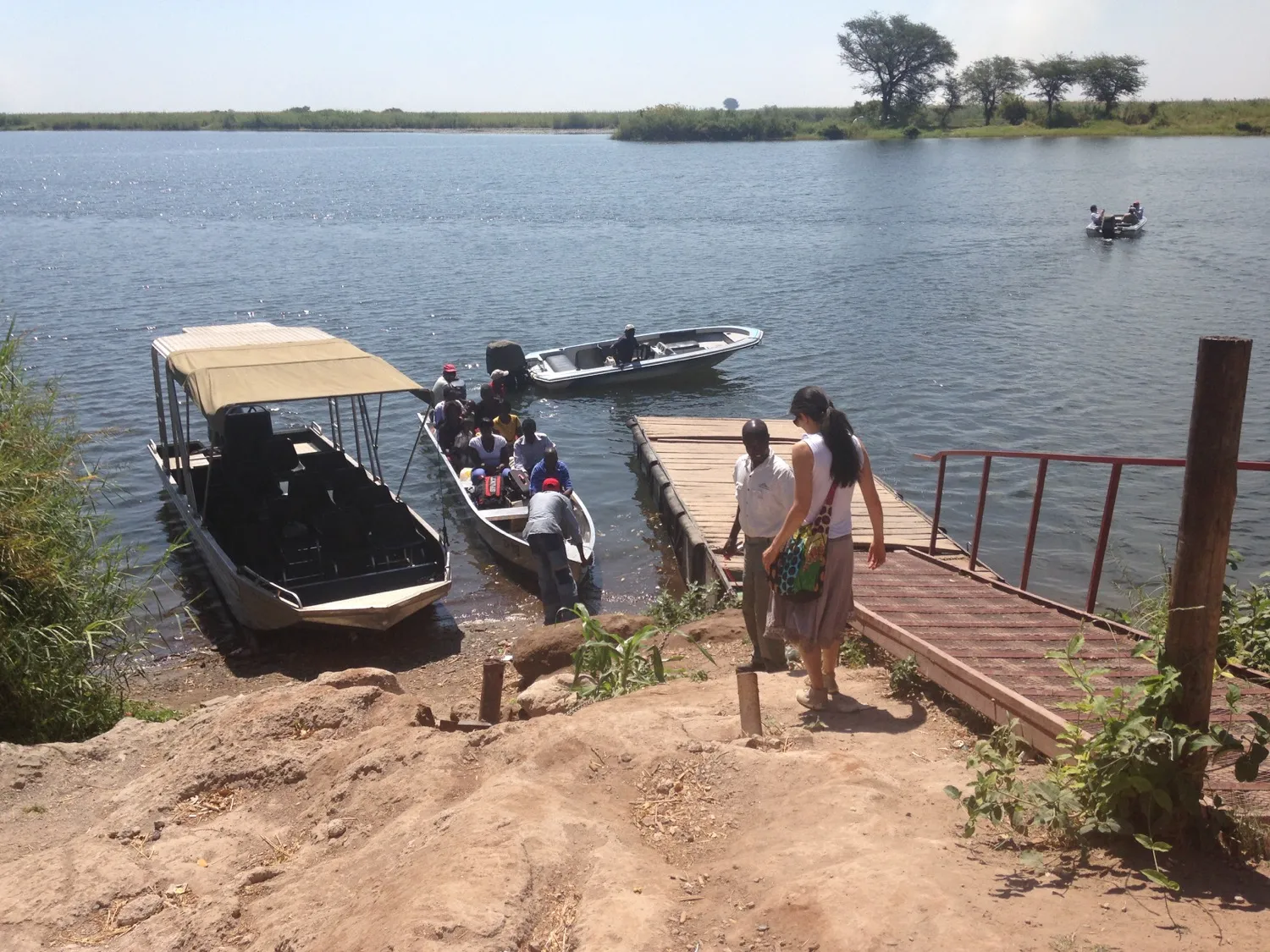
- Small tourist boats with open decks sharing the water with animals.
- Open grassland with a channel or marsh and big cat sightings, which points to Savuti.
- A mokoro (a dugout canoe) among water lilies, which belongs to the Okavango Delta and not Chobe.
Red flags in captions and what a photo cannot show
Be suspicious when a caption lists three or four parks at once, when the description says "Africa" without a place, or when the animal does not match the area. A caption that says Chobe but tags the Kalahari or Zimbabwe deserves a closer look. Ask the source where the picture was taken before you publish it.
Even a correctly labeled picture has limits. It will not tell you how many boats were nearby, how long the photographer waited, or how many mornings passed without a good sighting. Sightings are never guaranteed. Use pictures of Chobe National Park to understand the place, then plan enough time in Chobe, at least two or three days, to give the park a fair chance.
A photo proves what happened once, not what will happen on your trip.
Seeing Chobe for yourself
Pictures of Chobe National Park are the best preview you can get. Read the background for season and area, use only images with a clear license, and shoot your own from both the river and the road. Check every caption before you trust it.
The best Chobe photo is the one you take yourself, from a boat at sunset with elephants in the water. If you want that trip organized end to end, including game drives, river cruises, transfers, and accommodation, Maximum Adventure Trails can plan a Chobe safari with you.