

- 9 Views
- 13 Min Read
- (0) Comment
An Okavango Delta mokoro safari is a guided trip through the Delta’s shallow channels in a traditional canoe called a mokoro (muh-KORO, plural mekoro). A local guide, the poler, stands at the stern and pushes the boat along with a long pole. You sit low in the water, hear no engine, and glide past lilies, reeds, kingfishers, and sometimes elephants. Most outings last two to three hours, and you can also book full days or overnight trips.
This guide covers what makes the experience different from a game drive, which months give you enough water, and how long each format takes. It also covers what it costs, how to book, and what to pack. You will see where the safety question really stands with hippos and crocodiles, so you know what you are signing up for before you pay a deposit.
At Maximum Adventure Trails we arrange mokoro safaris in the Okavango Delta alongside transfers from Victoria Falls and Chobe. The advice below reflects how these trips run in practice, including the details that travelers usually ask about only after they arrive.
Why a mokoro safari is worth doing in the Okavango Delta
A mokoro safari is worth doing because it gives you what no vehicle can: a silent, eye-level view of the Delta’s water world. You trade speed and big-game drama for stillness, and the stillness is what reveals the small, strange details of the wetland.
What you experience on the water
The mokoro is a long, narrow canoe with a shallow draft. Traditionally it was carved from large riverside trees such as the sausage tree. Most mekoro today are fiberglass replicas, which leak less and spare the old trees. A mokoro usually carries one or two passengers, and the poler pushes against the bottom with a pole called a ngashi.
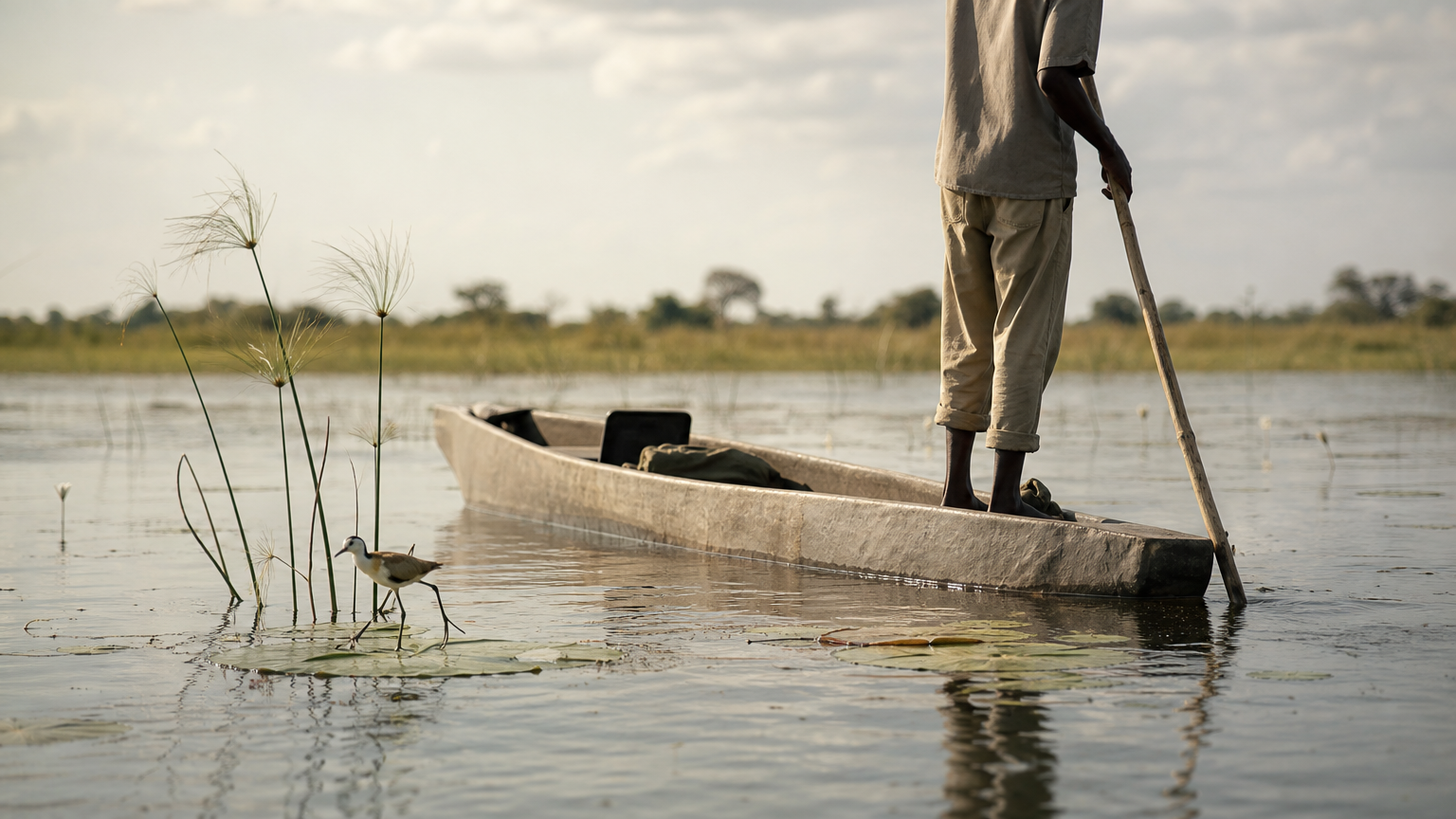
Because you sit near the waterline, the scale of everything shifts. A reed frog on a papyrus stem or a malachite kingfisher on a stalk becomes the main event. With no motor, birds and antelope stay relaxed, so you can get close and take better photos. Many people find that the silence is the real attraction, broken only by the tap of the pole and the calls of birds and frogs.
A mokoro trades speed for stillness, and stillness is what shows you the Delta.
Wildlife you can realistically expect
Set your expectations around small and medium wildlife, with large animals as a bonus. A mokoro trip is designed to showcase the wetland itself, and your poler, who is also a trained guide, explains the plants, tracks, and birds as you go. Sightings are never guaranteed, but these are common:
- Birds: African jacanas walking across lily pads, malachite kingfishers, and African fish eagles overhead.
- Frogs and insects: reed frogs and dragonflies, which fill the soundscape at dusk.
- Antelope: red lechwe wading through shallows and, with luck, the shy, semi-aquatic sitatunga.
- Big animals: elephants and hippos, usually at a safe distance from the channel.
Is it safe, and who is it for
Yes, a mokoro safari is considered safe when you go with a trained poler. Hippos and crocodiles live in the Delta, but guides stick to shallow channels that hippos avoid and that are too shallow for big crocodiles. The risk is reduced, not zero, so follow your poler’s instructions.
You need no paddling experience, because the poler does all the work. Age rules vary. Many lodges set a minimum of 12, while some shared budget trips accept children from about 4. Always confirm the rule with your operator before you book.
How to plan and book a mokoro safari
Plan your mokoro safari in three moves: pick a month with enough water, choose a format that fits your time and budget, then confirm what the price includes. Getting the season right matters most, because the water decides whether a mokoro trip can run at all.
Choose the right season
The Okavango floods when rain from Angola travels down and spreads across the Delta, with the water peaking from roughly June to August. June to October is the most reliable window for mokoro trips, and the weather is also mild and dry then. Camps that sit on permanent water can run mokoro outings year round. Land-based camps can usually offer them only during the flood, and some deep-Delta camps focus almost entirely on mokoro activities.
From November to March the Delta is green and excellent for birding and newborn antelope. However, some channels become too shallow or scattered for poling, so ask your operator what is possible on your dates.
Book your mokoro safari around the flood, not around the calendar you prefer.
Compare day trips, overnight trips, and costs
Formats range from a short outing to a camping expedition. The table below sets them side by side.
| Format | Typical length | Best for | Cost pattern |
|---|---|---|---|
| Half-day mokoro outing | 2 to 3 hours | First-timers and lodge guests | Often bundled into lodge activities, or a per-person fee |
| Full-day trip | Most of a day, often with walking stops | Birders and photographers | Higher per-person fee than a short outing |
| Overnight or multi-day | 2 to 3 days, camping on islands | Adventurous travelers | Budget shared camping exists; luxury lodges bundle it into the nightly rate |
Prices vary widely by operator, season, group size, and starting point. As a reference, some shared one-day mokoro trips from Maun are listed from around $190 per adult. Lodge-based mokoro outings cost more because they sit inside a high nightly rate. Before you compare quotes, ask for a written list of inclusions, including transfers, meals, community or park fees, and gear.
Steps to book
Follow this order and you will avoid most surprises:
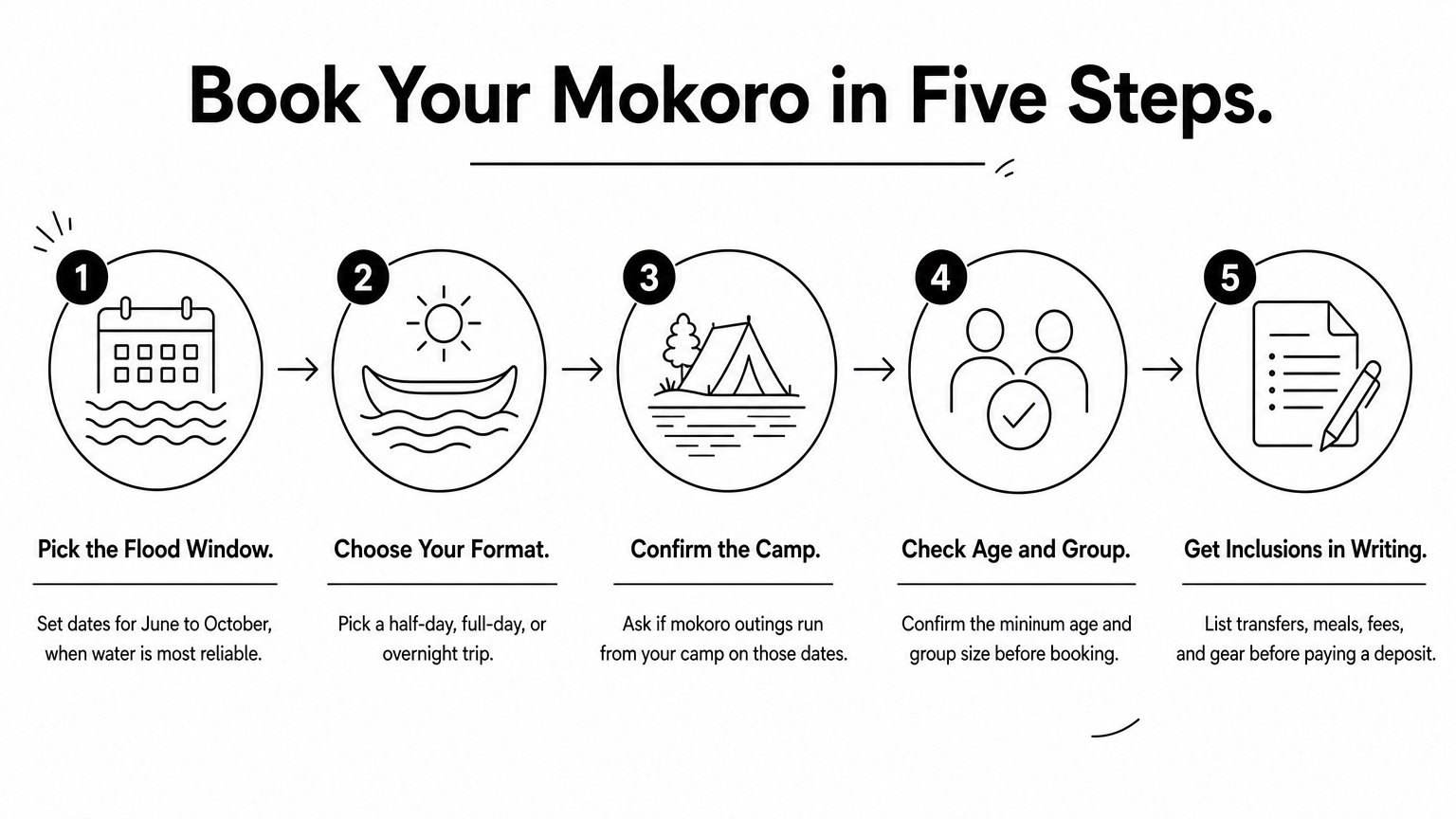
- Set your dates around the flood window.
- Decide on a half-day, full-day, or overnight format.
- Ask whether the mokoro runs from a water-based or land-based camp on your dates.
- Confirm age limits and group size.
- Get inclusions and transfer details in writing.
- Book early for June to October, when availability tightens.
If you are arriving from Victoria Falls or Chobe, ask the operator to include the cross-border transfer in the same booking.
What to pack and how to behave in a mokoro
Pack light, neutral, and waterproof, and once you are in the boat, stay seated and quiet. These two habits protect your gear and your comfort, and they help you get the most from any Okavango Delta mokoro safari.
What to bring
You sit low and in the sun for hours, so protection matters more than style. Bring this:
- Neutral clothing in khaki, olive, or tan. Avoid black and dark blue, which attract tsetse flies.
- A wide-brimmed hat, sunglasses, and high-SPF sunscreen.
- Binoculars and a camera in a waterproof bag or case.
- A reusable water bottle and insect repellent.
- Light layers for cool mornings and quick-drying sandals or water shoes.
How to behave on the water
Stay seated and keep your weight low, since a mokoro looks unstable until the poler steps in. Do not stand to take a photo, and keep your hands and cameras inside the boat. Wild animals and the poler both react to noise, so talk quietly.
Ask your poler questions. These guides grew up on the Delta, and their stories about tracks, birds, and plants are often the best part of the trip. If the poler decides to turn back or move away from an animal, follow that call without debate.
Your next step toward the Delta
<article_continued_placeholder>
Wait, correction below.
<title>Okavango Delta Mokoro Safari: What It Is and What to Expect</title>
This guide covers what makes the experience different from a game drive, which months give you enough water, and how long each format takes. It also covers what it costs, how to book, and what to pack. You will see where the safety question really stands with hippos and crocodiles, so you know what you are signing up for before you pay a deposit.
At Maximum Adventure Trails we arrange mokoro safaris in the Okavango Delta alongside transfers from Victoria Falls and Chobe. The advice below reflects how these trips run in practice, including the details that travelers usually ask about only after they arrive.
Why a mokoro safari is worth doing in the Okavango Delta
A mokoro safari is worth doing because it gives you what no vehicle can: a silent, eye-level view of the Delta’s water world. You trade speed and big-game drama for stillness, and the stillness is what reveals the small, strange details of the wetland.
What you experience on the water
The mokoro is a long, narrow canoe with a shallow draft. Traditionally it was carved from large riverside trees such as the sausage tree. Most mekoro today are fiberglass replicas, which leak less and spare the old trees. A mokoro usually carries one or two passengers, and the poler pushes against the bottom with a pole called a ngashi.
Because you sit near the waterline, the scale of everything shifts. A reed frog on a papyrus stem or a malachite kingfisher on a stalk becomes the main event. With no motor, birds and antelope stay relaxed, so you can get close and take better photos. Many people find that the silence is the real attraction, broken only by the tap of the pole and the calls of birds and frogs.
A mokoro trades speed for stillness, and stillness is what shows you the Delta.
Wildlife you can realistically expect
Set your expectations around small and medium wildlife, with large animals as a bonus. A mokoro trip is designed to showcase the wetland itself, and your poler, who is also a trained guide, explains the plants, tracks, and birds as you go. Sightings are never guaranteed, but these are common:
- Birds: African jacanas walking across lily pads, malachite kingfishers, and African fish eagles overhead.
- Frogs and insects: reed frogs and dragonflies, which fill the soundscape at dusk.
- Antelope: red lechwe wading through shallows and, with luck, the shy, semi-aquatic sitatunga.
- Big animals: elephants and hippos, usually at a safe distance from the channel.
Is it safe, and who is it for
Yes, a mokoro safari is considered safe when you go with a trained poler. Hippos and crocodiles live in the Delta, but guides stick to shallow channels that hippos avoid and that are too shallow for big crocodiles. The risk is reduced, not zero, so follow your poler’s instructions.
You need no paddling experience, because the poler does all the work. Age rules vary. Many lodges set a minimum of 12, while some shared budget trips accept children from about 4. Always confirm the rule with your operator before you book.
How to plan and book a mokoro safari
Plan your mokoro safari in three moves: pick a month with enough water, choose a format that fits your time and budget, then confirm what the price includes. Getting the season right matters most, because the water decides whether a mokoro trip can run at all.
Choose the right season
The Okavango floods when rain from Angola travels down and spreads across the Delta, with the water peaking from roughly June to August. June to October is the most reliable window for a mokoro safari in the Okavango Delta, and the weather is also mild and dry then. Camps that sit on permanent water can run mokoro outings year round. Land-based camps can usually offer them only during the flood, and some deep-Delta camps focus almost entirely on mokoro activities.
From November to March the Delta is green and excellent for birding and newborn antelope. However, some channels become too shallow or scattered for poling, so ask your operator what is possible on your dates.
Book your mokoro safari around the flood, not around the calendar you prefer.
Compare day trips, overnight trips, and costs
Formats range from a short outing to a camping expedition. The table below sets them side by side.
| Format | Typical length | Best for | Cost pattern |
|---|---|---|---|
| Half-day mokoro outing | 2 to 3 hours | First-timers and lodge guests | Often bundled into lodge activities, or a per-person fee |
| Full-day trip | Most of a day, often with walking stops | Birders and photographers | Higher per-person fee than a short outing |
| Overnight or multi-day | 2 to 3 days, camping on islands | Adventurous travelers | Budget shared camping exists; luxury lodges bundle it into the nightly rate |
Prices vary widely by operator, season, group size, and starting point. As a reference, some shared one-day mokoro trips from Maun are listed from around $190 per adult. Lodge-based mokoro outings cost more because they sit inside a high nightly rate. Before you compare quotes, ask for a written list of inclusions, including transfers, meals, community or park fees, and gear.
Steps to book
Follow this order and you will avoid most surprises:
- Set your dates around the flood window.
- Decide on a half-day, full-day, or overnight format.
- Ask whether the mokoro runs from a water-based or land-based camp on your dates.
- Confirm age limits and group size.
- Get inclusions and transfer details in writing.
- Book early for June to October, when availability tightens.
If you are arriving from Victoria Falls or Chobe, ask the operator to include the cross-border transfer in the same booking.
What to pack and how to behave in a mokoro
Pack light, neutral, and waterproof, and once you are in the boat, stay seated and quiet. These two habits protect your gear and your comfort, and they help you get the most from any mokoro safari in the Okavango Delta.
What to bring
You sit low and in the sun for hours, so protection matters more than style. Bring this:
- Neutral clothing in khaki, olive, or tan. Avoid black and dark blue, which attract tsetse flies.
- A wide-brimmed hat, sunglasses, and high-SPF sunscreen.
- Binoculars and a camera in a waterproof bag or case.
- A reusable water bottle and insect repellent.
- Light layers for cool mornings and quick-drying sandals or water shoes.
Neutral colors, sun protection, and a dry bag solve most mokoro packing problems.
How to behave on the water
Stay seated and keep your weight low, since a mokoro looks unstable until the poler steps in. Do not stand to take a photo, and keep your hands and cameras inside the boat. Wild animals and the poler both react to noise, so talk quietly.
Ask your poler questions. These guides grew up on the Delta, and their stories about tracks, birds, and plants are often the best part of the trip. If the poler decides to turn back or move away from an animal, follow that call without debate.
Your next step toward the Delta
A mokoro safari is the slowest, quietest way to see the Okavango. Time it with the flood, choose a format that suits your schedule, and keep your expectations on birds, frogs, and antelope, with elephants as a bonus. Pack neutral colors, protect your gear from water, and let the poler lead.
If you want the planning handled, from the Delta excursion to transfers and accommodation, Maximum Adventure Trails can build the whole safari in the Okavango Delta around your dates and budget.