
- 3 Views
- 13 Min Read
- (0) Comment
The best safari in Southern Africa depends on what you want to see, and seven places cover almost every answer. Chobe in Botswana is the pick for elephants and the easiest add-on to Victoria Falls. The Okavango Delta suits couples and photographers who want a quiet, water-based safari. Hwange in Zimbabwe gives you big herds and fewer vehicles. Kruger in South Africa is the simplest first safari for the Big Five. Etosha in Namibia is built for waterhole watching, while South Luangwa in Zambia and Mana Pools in Zimbabwe are for walking and canoeing.
Most travelers get stuck because every park looks great in photos and every list ranks them differently. The real differences are the season you travel, the number of days you have, whether you want to self-drive or be guided, and what you can spend. This article covers each park in the same way: what you will see, when to go, and who it suits. It then shows how to join parks into one trip, with a worked budget.
We are Maximum Adventure Trails, a travel agency based in Victoria Falls. Since 2019 we have organized safaris across Zimbabwe, Zambia, Botswana and Namibia. Where we run a trip in a park, you will find its length and price. Where we do not, we say so.
1. Chobe National Park, Botswana
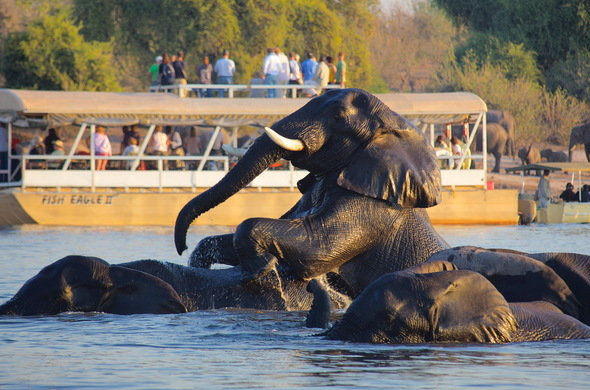
Chobe is the best safari in Southern Africa for elephants, and it is the easiest major park to reach from Victoria Falls. The Chobe River on the park’s northern edge is the draw, because herds and boats share the same riverbank.
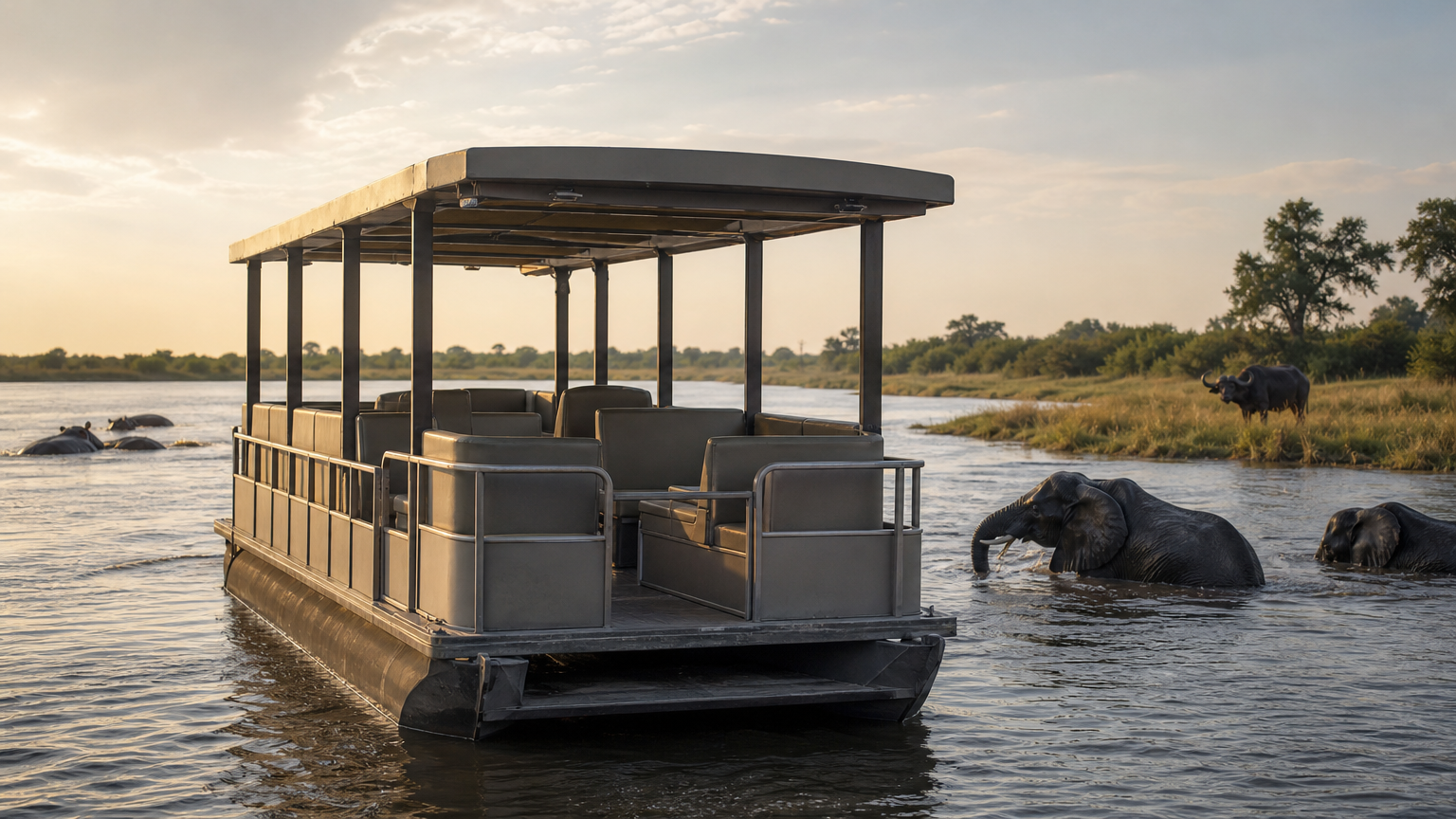
Come to Chobe for elephants, and book both a boat and a vehicle drive so you see each side of the river.
What you will see
Chobe holds one of the highest concentrations of elephants in Africa. Estimates run from about 50,000 to 70,000 depending on who counts and when. In the dry season the herds come to the river to drink, bathe and swim, and hippos, crocodiles, buffalo, lions and a long bird list share the floodplain.
The riverfront near Kasane is the most visited section. A river cruise puts you at eye level with swimming elephants, while a game drive along the bank takes you into lion and buffalo country. Inland, Savuti is drier and quieter, and you usually reach it on longer trips.
Best time to go
May to October is the dry season and the best window, because animals concentrate along the river. The seasons break down like this:
- July to October: the most animals and the most visitors. Book early.
- May and June: good viewing with thinner crowds.
- November to April: lush scenery and excellent birding, but animals spread out inland.
Who it suits and how to book
Chobe suits first-timers, families and anyone short on days. Our Chobe Day Trip from Victoria Falls costs from $180 per person, or $110 for children under 12. It runs about 10 to 11 hours from a 07:00 hotel pickup and combines a game drive with a river cruise. Transfers are included, visa or immigration fees are not, and you should book ahead in the dry season.
If you would rather not spend a long day on the road, our 3-night camping safari costs $620 per person. It keeps you inside the park with daily game drives, a river cruise, all meals, tents, sleeping bags and park fees. Camping gives you dawn and dusk drives that a day trip cannot. Botswana visa fees apply if your nationality needs one.
2. Okavango Delta and Moremi, Botswana
The Okavango Delta is the best Southern Africa safari if you want something quieter than a vehicle drive. This UNESCO World Heritage Site is a maze of channels and islands where you travel by mokoro, a traditional dugout canoe, and on foot.
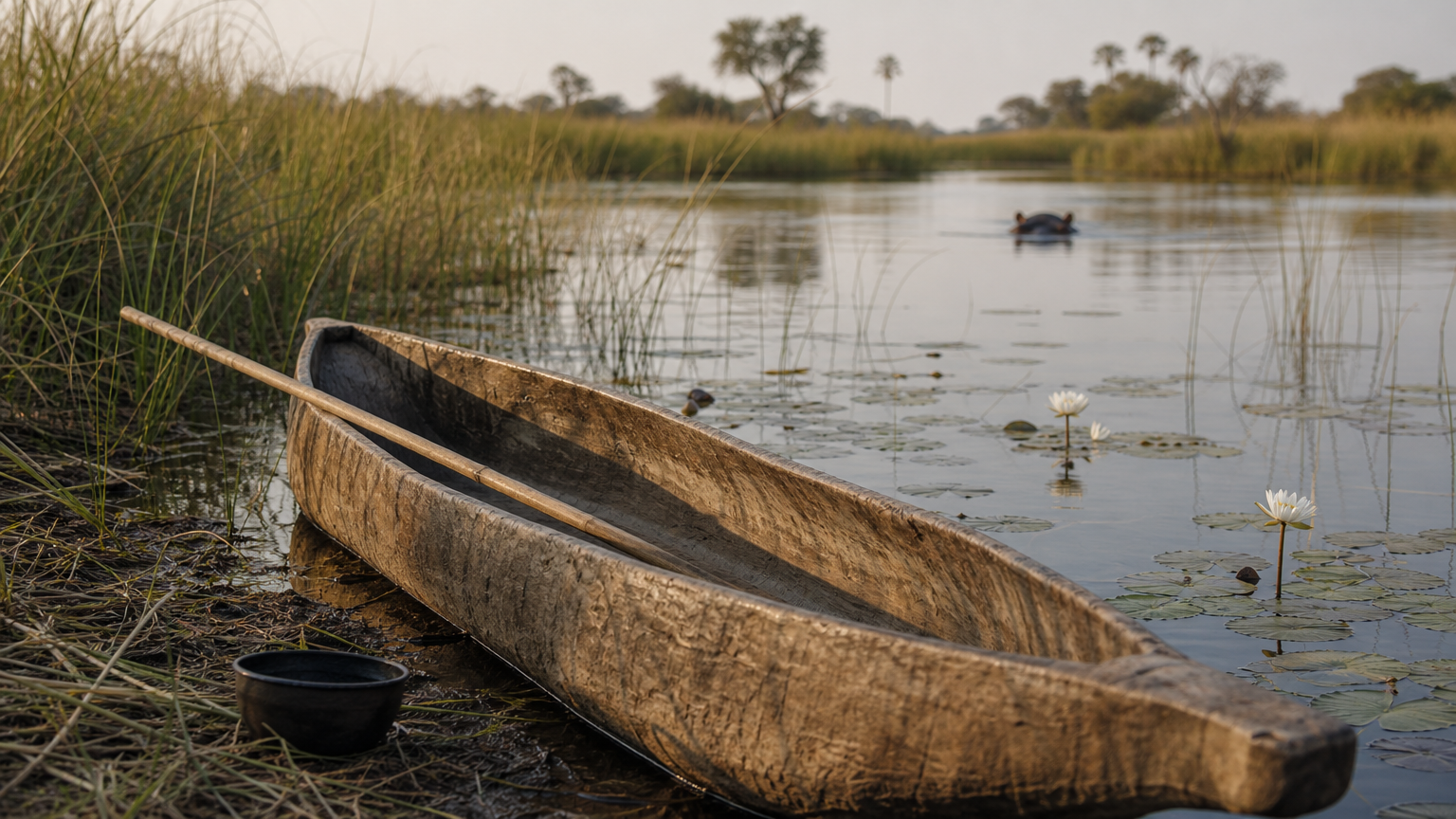
In the Delta you stop watching wildlife through a windshield and start gliding past it at water level.
What you will see
A guide poles you through reed-lined channels while hippos call in the distance. You also see elephants, many bird species, and smaller animals that a loud engine would scare off. Guided island walks add tracks, plants and insects to the picture.
Moremi Game Reserve covers part of the Delta and adds dry-land game drives with strong predator viewing, including wild dogs and big cats. Khwai and Savuti sit nearby, so long trips often combine the Delta, Moremi and Chobe.
Best time to go
Dry season, June to October, is the best time for game. The Delta’s floodwater arrives from the Angolan highlands around June to August, so you can have dry weather and full channels at the same time.
- June to August: the fullest channels, with cold mornings and warm days.
- September to October: land animals crowd the remaining water, and it gets hot.
- November to April: rain, green scenery and birding, with harder access.
Who it suits and how to book
The Delta suits couples, honeymooners and photographers. Our Okavango Delta Day Trip from Maun costs $140 per person. It lasts about 10 hours and includes a mokoro safari, a guided island walk, a picnic lunch and hotel pickup in Maun. The road transfer takes roughly 45 to 90 minutes, and you should bring at least 2 liters of water.
For game drives, our Moremi Game Reserve Day Trip from Maun is $270 per person. You drive 80 km each way, spend the day in a 4×4 with a licensed guide, and eat a picnic lunch in the reserve. Entry fees are included. For everything in one trip, our 12-Day Safari Adventure costs $4,680 per person. It links the Delta, Moremi, Khwai, Savuti and Chobe, ends at Victoria Falls, and uses tented camps and mid-range lodges.
3. Hwange National Park, Zimbabwe
Hwange is the best pick for big herds and fewer vehicles. It is Zimbabwe’s largest national park, and its waterholes pull wildlife in through the dry season.
Hwange rewards time, so give it at least two nights instead of squeezing it into a day.
What you will see
Expect large elephant herds, lions, giraffe, buffalo, many antelope species and a good chance of painted dogs, also called African wild dogs. Many pans are topped up with pumped water, so animals keep coming even late in the dry season.
Compared with Chobe or Kruger, you often share a sighting with few other vehicles. That makes Hwange a favorite for photographers and repeat safari-goers. Dawn and dusk drives in an open 4×4 are where the park earns its reputation.
Best time to go
July to October is the peak for waterhole viewing. The wider picture:
- July to October: the best concentrations, though October gets hot.
- May and June: cooler, with vegetation still thick early on.
- November to April: green season, strong birdlife, harder game viewing.
Who it suits and how to book
Hwange suits travelers who want depth over a checklist. Our 2-Night Safari Experience from Victoria Falls starts from $800 per person. It runs three days with two nights at Gwango Heritage Resort, four guided drives in an open 4×4, and full board.
Park entry is $24 per adult per day, so $48 for two days, payable at the gate. Budget for it on top of the package price. Because the trip starts from Victoria Falls, it pairs easily with a Chobe day or the classic package below.
4. Kruger National Park, South Africa
Kruger is the best first safari in Southern Africa if you want the Big Five with easy logistics. It covers about 7,500 square miles and has been a national park since 1926.
Kruger is the easy yes: big park, good roads, the Big Five, and options from self-drive to luxury.
What you will see
You can see the Big Five here: lion, leopard, elephant, buffalo and rhino. Hyenas, giraffes and, with luck, wild dogs round out the list. The bushveld is flat with plenty of trees and thick patches, so sightings take more patience than on open plains.
There are two ways to do it. Public roads let you self-drive or join guided drives, but you stay on the roads and share sightings with other cars. Private reserves like Sabi Sand share unfenced boundaries with Kruger, allow off-road driving and are known for leopards, at a much higher price.
Best time to go
May to September is the dry winter and the best window, with sparse vegetation and animals gathered at water. Mornings can be chilly.
- May to September: dry, clear and cool, with the easiest viewing.
- October to April: hot and wet, with babies and migrant birds but thicker bush.
- Malaria: Kruger is a malaria area, so ask a travel doctor. Some Eastern Cape reserves are malaria-free.
Who it suits and how to book
Kruger suits first-timers, families, self-drivers and anyone adding a safari to Cape Town or the Garden Route. You can fly to Kruger Mpumalanga International or Skukuza, or drive from Johannesburg in about 4 to 5 hours.
Kruger sits in South Africa, outside the countries we run trips in, so book it with a South Africa specialist. If you want to pair it with Victoria Falls and Chobe, we can plan the northern leg of the trip.
5. Etosha National Park, Namibia
Etosha is the best Southern Africa safari for waterhole watching and self-drive. This park in northwest Namibia surrounds the Etosha Pan, a vast salt pan whose name is commonly translated as "Great White Place."
At Etosha you do not chase wildlife, you pick a waterhole and let the animals come to you.
What you will see
The park covers about 8,600 square miles, and the white, flat pan makes it look unlike any other safari landscape. Elephants, lions, giraffes, zebras, oryx and hyenas all come to drink. Etosha also has a relatively large black rhino population, which makes sightings more likely than in most parks.
Camps such as Okaukuejo have floodlit waterholes you can watch after dark without leaving camp. The roads are good, which is why self-driving is the most popular way to see the park. Windhoek is about 270 miles away, roughly a 6-hour drive.
Best time to go
May to October is the dry season, and July to September is the most popular stretch.
- May to October: animals gather at waterholes in mild temperatures.
- November to April: rain scatters the animals, and the heat builds.
Who it suits and how to book
Etosha suits self-drivers, photographers and rhino fans. Plan at least three nights, because one night only gets you a taste. Staying inside the park saves driving time and gives you the floodlit waterholes.
Namibia is on our destination list, but we have no fixed Etosha package. If you want it, ask us for a custom itinerary that links Etosha with Victoria Falls or Botswana.
6. South Luangwa National Park, Zambia
South Luangwa is the best Southern Africa safari for walking and for leopards. It is widely seen as the home of the walking safari, and the river and lagoons pack wildlife into a compact area.
Walking in South Luangwa teaches you what a vehicle hides: tracks, smells and the small animals.
What you will see
The Luangwa River draws hippo pods, elephants, lions, wild dogs and Thornicroft’s giraffe, plus more than 400 bird species. The setting is golden woodland savanna with oxbow lagoons, and leopard sightings are a highlight.
A walking safari with an armed guide is the signature experience. Short morning walks are about the small things, such as dung, spoor and insects, and the ground-level view makes everything feel closer. Many camps also run night drives.
Best time to go
May to October is the dry season. As lagoons shrink, animals concentrate along the river.
- May to August: cooler mornings, comfortable for walking.
- September to October: hot, with intense river viewing.
- November to April: green and wet, many camps close, and roads can be difficult.
Who it suits and how to book
South Luangwa suits second-time safari-goers, walking fans and travelers who like small, remote camps. Most people fly to Mfuwe from Lusaka and stay four to five nights, so it works best as a dedicated leg.
Zambia is part of our region, and you can pair the Zambian side of Victoria Falls with a Luangwa stay by domestic flight. We have no fixed package for it, so ask for a custom itinerary.
7. Mana Pools National Park, Zimbabwe
Mana Pools is the best Southern Africa safari for getting close to wildlife on foot or by canoe, away from crowds. This UNESCO World Heritage Site on the Zambezi is remote and wild.
Mana Pools is where you stop watching elephants and start sharing the same shade with them.
What you will see
Elephants dominate, and they are famous for standing on their hind legs to reach acacia pods in the floodplain woodland. You also see wild dogs, lions, buffalo and hippos along the river.
The best way to experience it is slowly. Canoe safaris on the Zambezi and guided walks put you at wildlife level, and mobile camps add bush dinners and nights under the stars.
Best time to go
Plan for roughly June to October, when the park is accessible and animals depend on the river.
- June to August: cool and clear, the most comfortable months.
- September to October: hot, with the strongest game at the river.
- November to April: rains make access hard and many camps close.
Who it suits and how to book
Mana Pools suits adventurous travelers and photographers who accept simple camps and long transfers. Go with a guide on your first visit, and allow at least four nights because the park is remote.
Zimbabwe is our home country, but our guides know Victoria Falls, Chobe, Hwange and the Okavango Delta best. For Mana Pools we do not list a fixed package, so ask about a custom itinerary before you assume one exists.
How to combine parks into one trip
Use Victoria Falls as a base, because Chobe and Hwange are both within reach of it, and the Delta works best from Maun. Most travelers get more from two parks over a week than five parks in ten days.
Pick a base, add one or two parks, and leave a day of slack for border crossings.
Routes that work
These are our listed trips and the parks they cover. Prices are per person.
| Trip | Length | Price | Parks covered |
|---|---|---|---|
| Chobe Day Trip from Victoria Falls | 1 day | From $180 | Chobe |
| Chobe 3-Night Camping Safari | 4 days | $620 | Chobe |
| 2-Night Hwange Safari | 3 days | From $800 | Hwange |
| 4-Night Victoria Falls & Chobe Safari | 5 days | $1,100 | Victoria Falls, Chobe |
| 7-Night Victoria Falls, Chobe & Okavango Delta Safari | 7 nights | – | Victoria Falls, Chobe, Delta |
| 12-Day Safari Adventure | 12 days | $4,680 | Delta, Moremi, Khwai, Savuti, Chobe |
A worked budget example
Take a couple who want about eight days of Victoria Falls, Chobe and Hwange. The classic package plus a Hwange stay works like this:
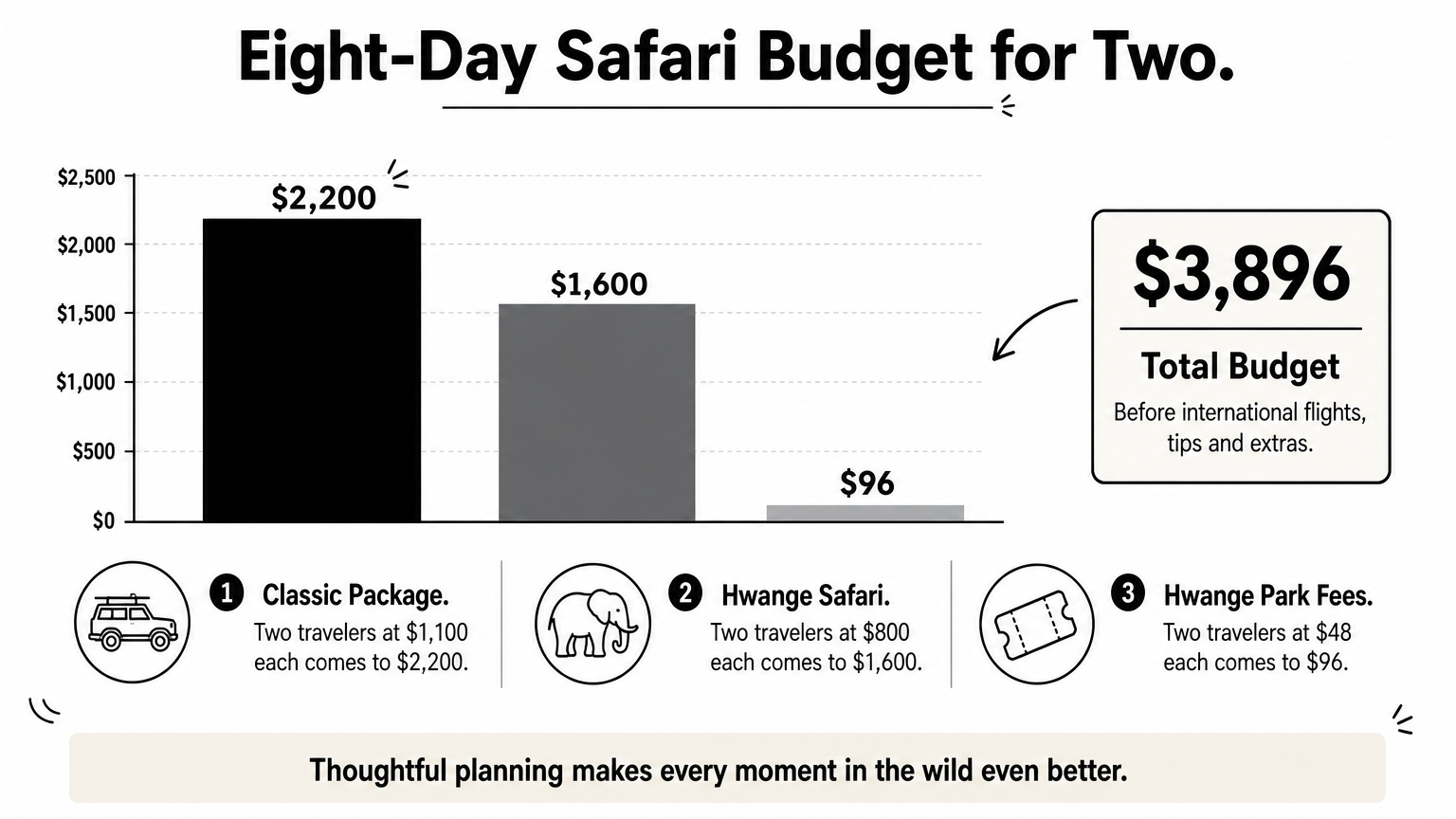
- Classic package: 2 x $1,100 = $2,200
- Hwange safari: 2 x $800 = $1,600
- Hwange park fees: 2 x $48 = $96
- Total: $3,896 before international flights, tips and extras.
Optional Devil’s Pool, offered August to January at $130 to $175 per person, adds $260 to $350 for two. That brings the total to $4,156 to $4,246.
What to check before you book
A few checks save money and stress:
- Malaria: most of these parks carry some risk, so ask a travel doctor.
- Visas: rules vary by passport and country, and we offer visa assistance.
- Dry-season dates: book early for July to October.
- Payment: we take a 50% deposit, with the balance due 90 days before departure. Cancel 90 or more days ahead for a full refund minus bank charges.
- Insurance: personal travel insurance is not included in our camping safari.
Choosing your Southern Africa safari
Pick Chobe for elephants, the Okavango Delta for a quiet water safari, and Hwange for big herds and fewer vehicles. Choose Kruger for the simplest Big Five trip, Etosha for waterholes, and South Luangwa or Mana Pools if you want to walk or paddle. Whatever you choose, travel in the dry season from May to October for the easiest game viewing, and give each park at least two nights.
If you want a trip that starts from Victoria Falls, you can browse our individual tours and book the one that fits your dates and budget. We handle the transfers, itinerary and bookings, and a team is available around the clock if your plans change.