

- 10 Views
- 18 Min Read
- (0) Comment
You've arrived at Victoria Falls with dust on your shoes, a camera battery charging beside the bed, and a question that keeps returning: will you find the animals, or spend the day driving through beautiful country hoping something appears? On a guided safari, the answer depends on far more than luck. A professional guide turns roads, tracks, weather, light, animal behavior, safety and timing into one working system.
That system has been refined over more than a century. Today's guided safari tours combine transport, wildlife interpretation, route planning and risk management, then adapt each element to the destination and season. The result isn't just a ride through a national park. It's a carefully managed way to understand what you're seeing while keeping the experience respectful for wildlife and practical for travelers.
Table of Contents
- What Guided Safari Tours Really Mean for First Time Visitors
- How Guided Safaris Evolved From Expeditions to Conservation Travel
- Choosing Your Safari Format and Travel Style
- What Is Included and How Much Guided Safari Tours Cost
- Sample Itineraries Across Victoria Falls Hwange Chobe Moremi and Okavango
- Packing Safety Health and Visa Essentials for a Smooth Safari
- How to Choose the Right Operator and Why Travelers Trust Maximum Adventure Trails
What Guided Safari Tours Really Mean for First Time Visitors
Your first morning might begin before sunrise. At the lodge gate, the air feels cool, the vehicle's canvas sides are open and everyone speaks in low tones while the guide checks the route. You may see impala almost immediately, but the guide doesn't rush toward them. Instead, they read the alarm calls, scan the tree line and explain why a group of birds suddenly lifting from the grass can matter more than the animals already in view.
A few minutes later, the guide notices tracks crossing the road. You'd probably pass them without a second thought. They identify the direction, estimate how fresh the marks are and contact other guides when appropriate. The vehicle slows, stops at a sensible distance and waits. That pause is part of the craft. The guide isn't only searching for wildlife, they're managing the encounter before it begins.
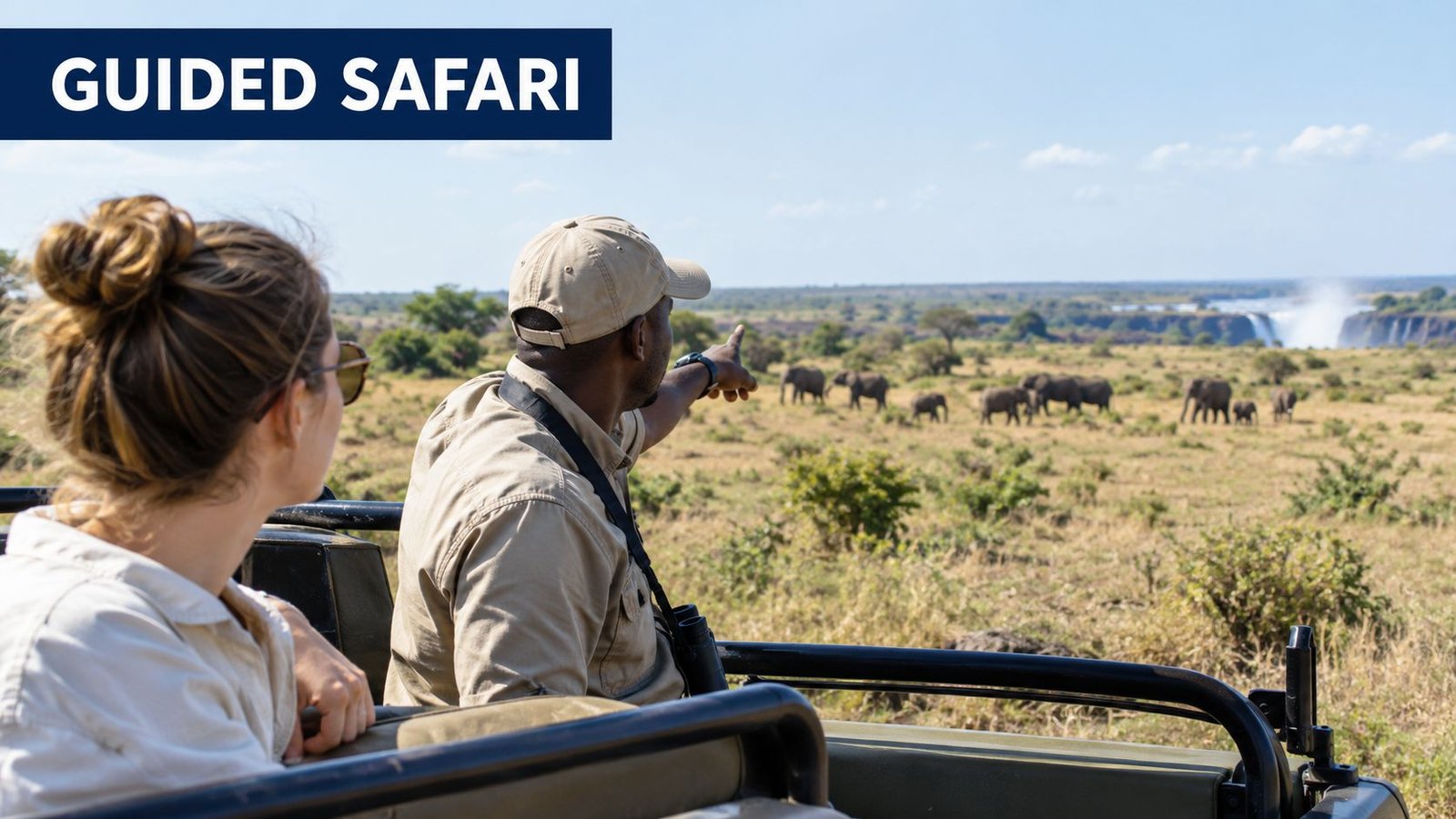
More than someone else driving
A guided safari normally joins several jobs in one role:
- Navigation: The guide knows park roads, seasonal access routes, water sources and reliable places to pause.
- Tracking: Footprints, dung, broken stems, alarm calls and movement patterns can point toward animals that remain hidden.
- Interpretation: You learn what an animal is doing, not just what species it is.
- Safety management: The guide controls speed, distance, vehicle position and passenger behavior around wildlife.
- Trip logistics: Meals, transfers, permits, lodge check-ins and activity timing fit together without you having to coordinate every handoff.
A self-drive trip can offer independence, but it also asks you to manage fuel, maps, road conditions, recovery plans and wildlife etiquette while trying to watch the bush. A guide removes much of that workload, leaving you more attention for photography, observation and questions. First-time visitors, families, travelers with limited time and people who want a deeper natural-history explanation usually benefit most.
Practical rule: A good guide doesn't promise a particular animal. They improve your understanding of the landscape and make better decisions with the information available.
The rhythm visitors should expect
Safari days rarely follow a city-break schedule. Early activity often takes advantage of cooler conditions and active wildlife, while the middle of the day may be suited to lunch, rest or a slower transfer. Afternoon drives then return attention to changing light and animal movement.
Shared vehicles also require patience. One guest may want birds, another may be waiting for a predator to move and a third may be absorbing the silence. A private vehicle offers more control, while a small group can provide companionship and reduce the pressure to organize everything yourself. For a destination-specific introduction, this first-timer's guide to an Okavango Delta safari can help you understand how water-based activities differ from a conventional drive.
The most useful expectation is simple: guided safari tours create better-informed opportunities, not guaranteed sightings. The bush remains unpredictable. That uncertainty is part of the experience, but a skilled guide gives it structure.
How Guided Safaris Evolved From Expeditions to Conservation Travel
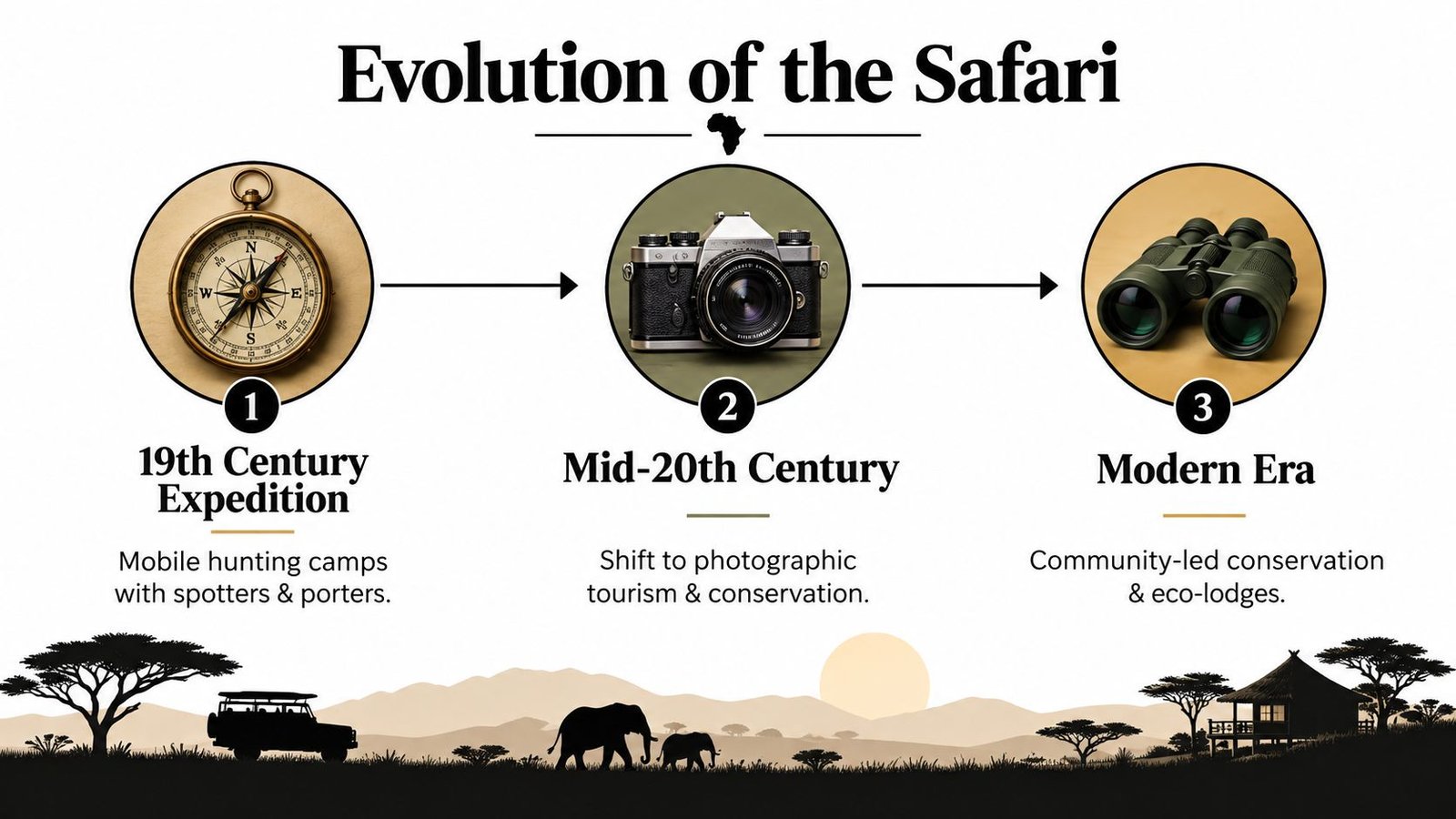
The modern safari didn't begin as a casual wildlife holiday. Historical scholarship describes the early safari as a guided, mobile hunting expedition supported by animal spotters, porters, cooks and photography equipment, rather than an informal outing. That detail explains why logistics sit at the heart of guided safari tours today. The original format needed people, supplies, transport, camp routines and local knowledge to move through difficult terrain.
The model developed in East Africa during the late nineteenth and early twentieth centuries, alongside railways, colonial administration and the early commercialization of travel. The colonial setting shaped who traveled, who controlled land and how local labor was organized, so the history deserves a critical reading. Still, the practical structure became influential across major safari markets, including Kenya, Tanzania, Botswana and Zimbabwe. Academic history of the safari's origins and development provides the historical foundation for that interpretation.
The first change was social
During the 1920s and 1930s, safaris became fashionable among wealthy travelers from the United States and Britain, helping establish a more organized industry. Travel companies, camps, guides and transport providers increasingly served visitors who wanted an experience that could be planned and sold.
The second major change concerned the purpose of the trip. By the 1960s, the transition away from hunting was effectively complete, and game watching had become the normal meaning of an African safari. The industry's central value shifted from collecting trophies to observing animals, interpreting habitats and supporting wildlife protection. This historical account of the safari's changing role explains why the modern experience is so closely tied to photography and conservation rather than hunting.
Why the old logistics still matter
A present-day game drive still depends on coordinated movement. The vehicle has to reach a wildlife area, the guide has to interpret signs, the camp has to provide food and rest, and the operator has to connect roads, flights, boats or walking activities. What changed was the objective. The same broad logistical discipline now supports non-consumptive wildlife viewing.
Later lodge development and ecotourism strengthened that shift. Guides became interpreters of ecology and behavior, not just hunting assistants. Destinations also developed distinct identities. Botswana's water-based Okavango experiences require an understanding of channels, flood patterns and boat or mokoro movement, while Zimbabwe's Hwange outings may emphasize dry-land tracking, waterholes and long vehicle drives.
The safari vehicle is only the visible part of a much larger system. The guide, camp team, trackers, pilots and conservation partners make the experience possible.
Today, travelers can also ask how their visit supports surrounding communities and wildlife management. That doesn't mean every tour has the same impact. Responsible travelers should ask what the operator funds, who benefits from employment and how visitor behavior is controlled. For readers considering a more active role, wildlife conservation volunteer opportunities offer a different type of engagement from a holiday safari, with different responsibilities and expectations.
Choosing Your Safari Format and Travel Style
There's no single best guided safari format. The right choice depends on whether you care most about broad wildlife coverage, close interpretation, photography, water scenery, physical activity or control over the day.
| Format | Best For | Trade Offs | Guide Role |
|---|---|---|---|
| Vehicle game drive | First-time visitors, large mammals, photography and longer-distance exploration | Less physical activity, shared timing unless private | Drives, tracks, positions the vehicle and interprets behavior |
| Walking safari | Tracks, plants, sounds and a closer understanding of the ground | Requires fitness, quiet movement and strict safety discipline | Reads signs, manages distance and explains the smaller details |
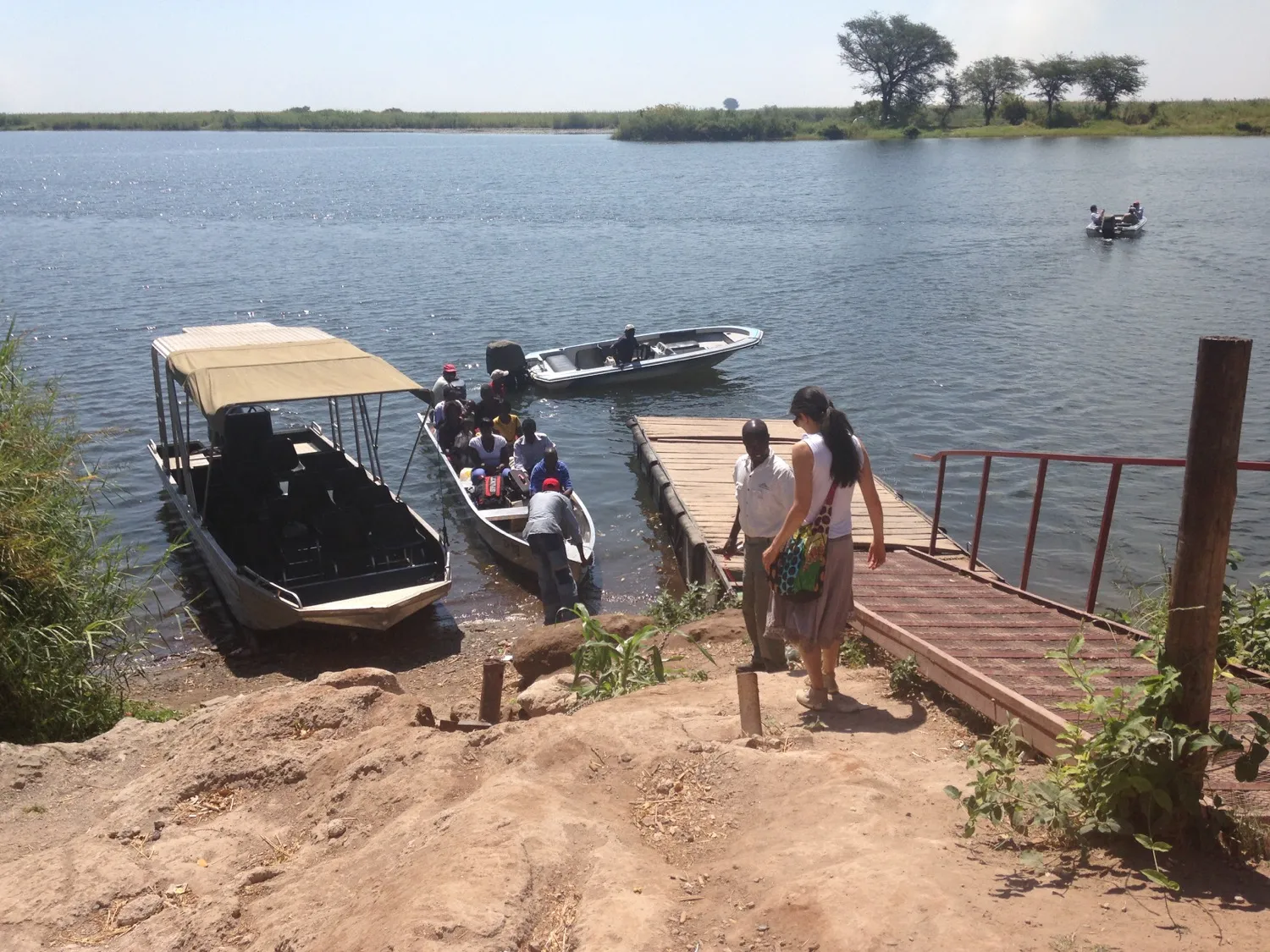
| Boat safari | Birds, hippos, crocodiles, river scenery and water-level views | Wildlife depends on water access and boat routes | Controls approach, reads channels and identifies river behavior |
| Mokoro safari | Quiet Okavango channels, aquatic plants and a low viewpoint | Not designed for fast movement or every type of big-game sighting | Explains waterways, wildlife signs and local ecology |
| Private vehicle | Families, photographers, couples and flexible pacing | Usually costs more than sharing | Adapts route, stops and timing to your interests |
| Small or larger group | Social travel and simpler budgeting | Less control over stops and personal preferences | Balances different expectations while maintaining safety |
Vehicle drives suit a broad first trip
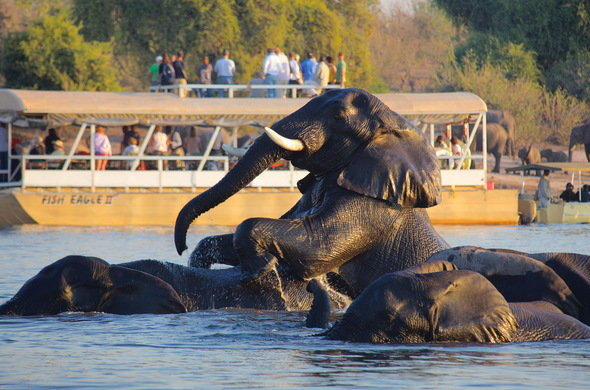
A vehicle is the most versatile platform for exploring varied terrain. You can cover more ground, carry layers and camera equipment comfortably, and spend time near a sighting without walking toward animals. In Hwange, a guide may build a drive around waterholes and dry-country movement. In Chobe, a vehicle drive can pair naturally with a river cruise, giving you two different viewing angles.
Walking changes your attention. A guide may stop over a faint track, point out a crushed seed or explain how wind affects scent. You might see fewer large animals during a walk, but you'll notice the living world beneath the headline sightings. Walking isn't a shorter version of a game drive. It's a different form of interpretation.
Water activities reward patience
Boat and mokoro outings work especially well when the water itself shapes the habitat. The boat's position can reveal birds along reeds, animals drinking at the edge or tracks on muddy banks. A mokoro moves through narrow channels, but it isn't a substitute for every land-based activity. If seeing a broad range of large mammals is your priority, combine it with vehicle drives rather than choosing it alone.
Choose the format that matches the way you want to pay attention. A game drive gives you reach, a walk gives you detail and a water activity gives you a different viewpoint.
Private travel provides the most control, but shared travel can be rewarding when everyone accepts the group rhythm. Before booking, write down your priorities. If you need long photography stops, say so. If you're traveling with children, ask about vehicle design and daily timing. If birding matters as much as mammals, tell the operator before the itinerary is built. This comparison of African safari packages can help organize those decisions around your priorities rather than around a generic destination list.
What Is Included and How Much Guided Safari Tours Cost
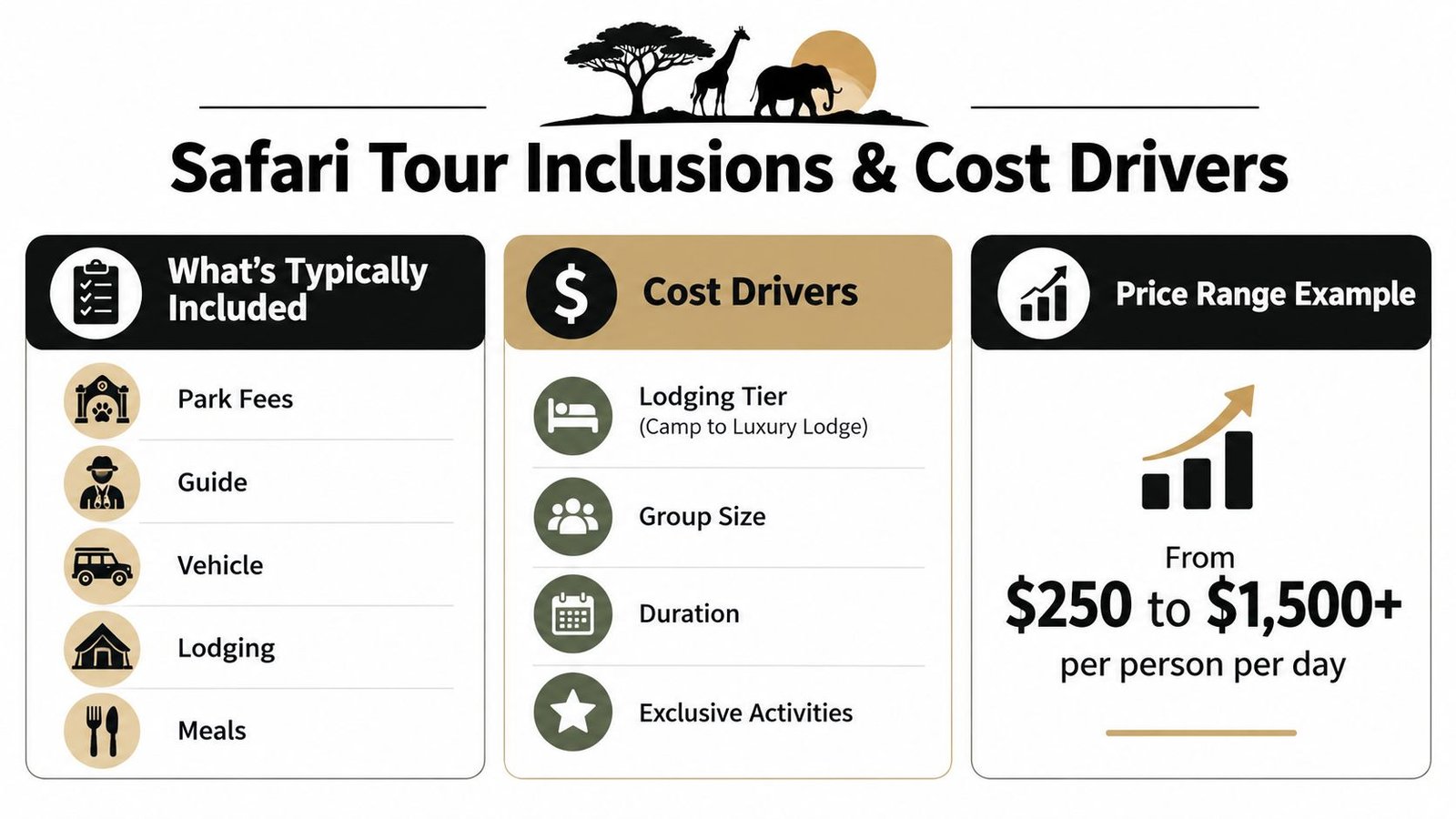
Safari prices make more sense when you stop treating the trip as a room plus a drive. A quote often combines accommodation, meals, a vehicle, guiding, park access, transfers and activities. Flights between remote camps, boat excursions, walking experiences and private-use arrangements can alter the total substantially.
The accommodation tier usually creates the clearest difference. Basic camping emphasizes outdoor logistics and simpler facilities. Tented camps add structure and service while keeping you close to the natural environment. Lodges generally provide more permanent rooms, amenities and dining arrangements. The right choice depends on how much comfort you want after a dusty drive, not on whether one category guarantees better wildlife.
Read the quote line by line
Look for these components before comparing operators:
- Park and conservation fees: Check whether access charges are included and whether they apply on transfer days.
- Guide and vehicle: Confirm whether you'll share the vehicle, have a private arrangement or change vehicles between locations.
- Lodging and meals: Ask which meals are included, especially on arrival and departure days.
- Transfers: Road transfers, airport pickups and border movements may be separate line items.
- Special activities: Boat trips, mokoro outings, walks and scenic flights may carry their own charges.
- Drinks, tips and personal purchases: These are commonly handled outside the main package.
A low headline price can become less attractive when it excludes transport or activities you already assumed were bundled. A higher quote may reflect remote access, longer transfers, better-positioned accommodation or a private vehicle. Compare like with like, using the same dates, accommodation standard, activity mix and group arrangement.
Season and design change the value
Green-season travel can offer lower prices and fewer visitors, while vistas become lush and bird activity may be especially appealing. The trade-off can include changing road conditions or less predictable access in some areas. Peak periods may provide easier dry-road movement and strong demand, but they can also bring more pressure at popular sightings.
Longer, multi-country trips add flights, border logistics and transfers, yet they can provide more habitat variety. A traveler who combines Victoria Falls, Hwange, Chobe and the Okavango isn't paying only for extra nights. They're choosing different ecosystems and activity types. For a destination-specific budgeting discussion, review this guide to Botswana safari costs, then ask for a written quote that separates included services from optional extras.
Sample Itineraries Across Victoria Falls Hwange Chobe Moremi and Okavango
A useful itinerary behaves like a well-packed field bag. Every item has a purpose, and the order matters. Water activities, long drives, walking and rest shouldn't be placed randomly, because each one affects your energy, luggage, transfer time and expectations for the next day.
The following examples are planning models, not promises of sightings. Exact routing depends on park conditions, lodge availability, border requirements and the operator's current schedule.
A short Victoria Falls and Chobe introduction
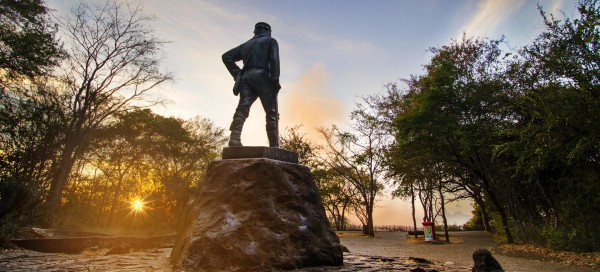
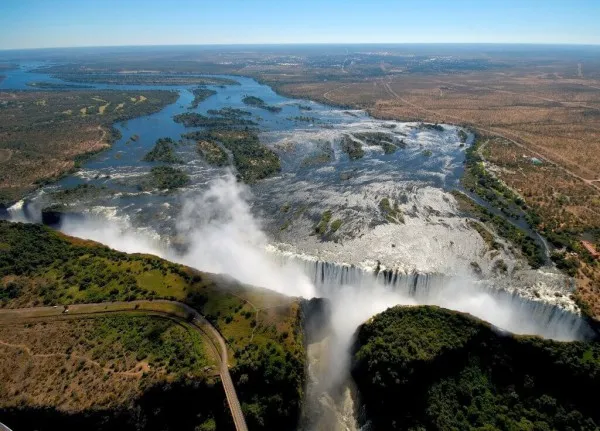
Begin with a guided Victoria Falls visit, allowing time to understand the river, viewpoints and local activity options rather than treating the falls as a quick photo stop. Add a Chobe day trip for a vehicle game drive and river cruise, which gives you a land-based and water-level view within one compact extension.
This plan suits travelers with limited time or those adding a safari to a wider Southern Africa journey. It offers variety, but the schedule leaves less room for a slow wildlife search or a weather-related change.
Victoria Falls and Hwange for a land-focused safari
Spend the opening portion around Victoria Falls, then transfer to Hwange National Park for several nights. A typical day can include an early game drive, a midday rest and a later drive when light softens. Depending on the camp and conditions, a walking activity may add tracks, plants and smaller wildlife to the vehicle-based experience.
Hwange works well for travelers who want a more concentrated land safari without crossing several borders. The park's scale also makes guide knowledge valuable, since route choices and water availability influence how the day unfolds.
Victoria Falls, Hwange and Chobe
This itinerary adds a river environment to a land-based Zimbabwe experience. Victoria Falls provides a strong arrival point, Hwange supplies deeper game-drive time and Chobe introduces boat viewing alongside vehicle exploration.
The transfer between destinations needs careful planning. Ask whether the quoted schedule includes border assistance, road transfers, meals during travel and the time required to reach each lodge. The itinerary feels relaxed only when those handoffs are visible on paper.
A broader Moremi and Okavango circuit
For travelers who want both terrestrial and aquatic habitats, continue from the Victoria Falls and Chobe region toward Moremi Game Reserve and the Okavango Delta. Moremi can combine vehicle drives with wildlife tracking, while the Delta adds mokoro or boat activities where water levels and local operating conditions allow.
Longer travel earns its place. You're not repeating the same drive in a new lodge. You're changing the viewing platform, habitat and daily rhythm.
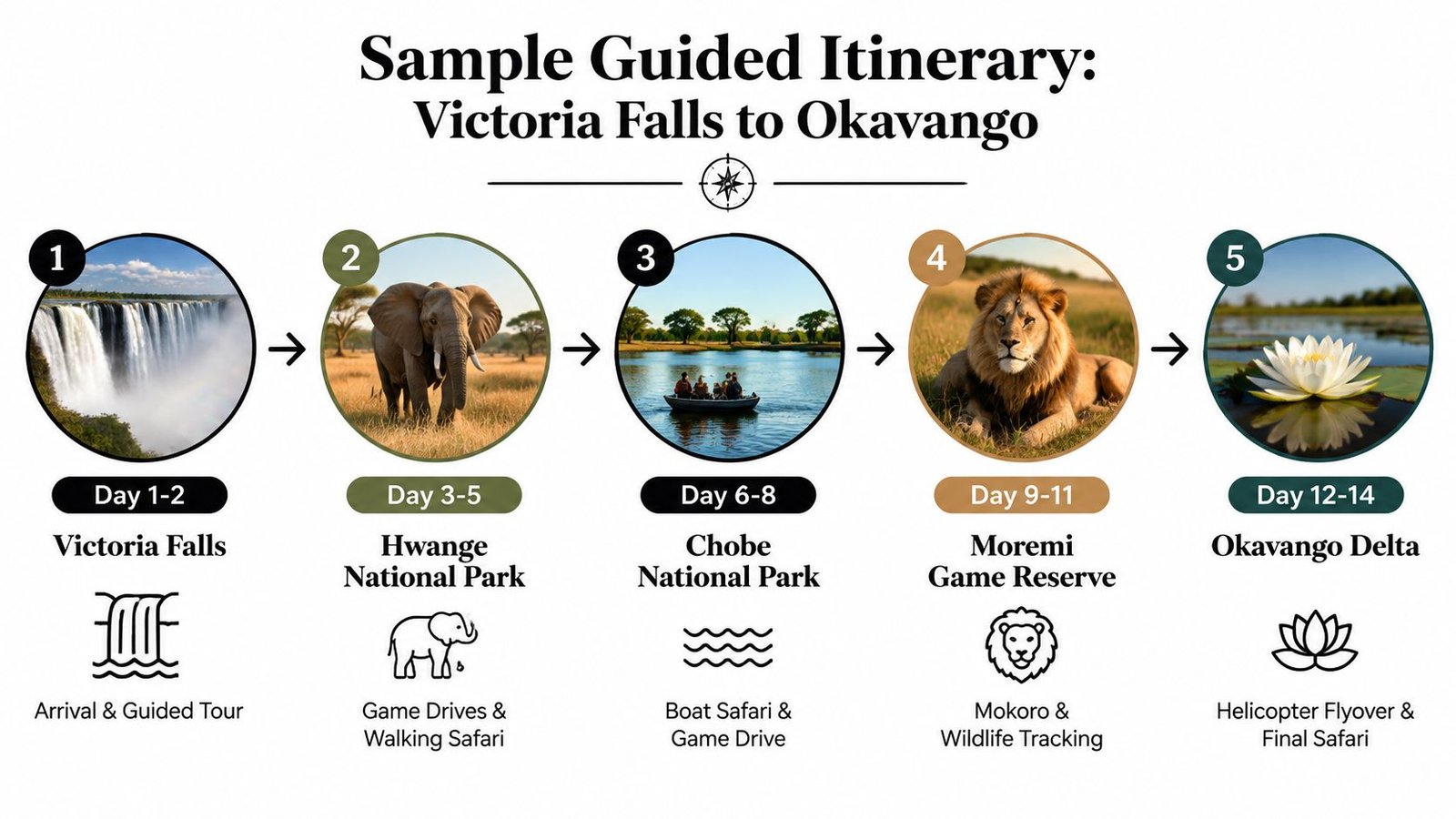
A fourteen-day progression
A two-week design can begin with Victoria Falls, continue through Hwange, move to Chobe, then reach Moremi and finish in the Okavango Delta. The sequence moves from a landmark and accessible activities toward more immersive wilderness time, with the final days reserved for water-based viewing and a slower finish.
Use the Victoria Falls safari packages as a starting point for the opening segment, then ask the operator to show every transfer and activity in one coordinated document. A good itinerary should make clear where you sleep, how you move, what happens each morning and which parts remain flexible.
Packing Safety Health and Visa Essentials for a Smooth Safari
Pack for movement between temperatures, not for one ideal photograph. Early drives can feel cold, while dust, sun and warm afternoons call for breathable clothing later. Neutral colors are practical, but comfort and layers matter more than building a costume.
A field-ready packing list
- Layered clothing: Bring a warm outer layer for early departures, light shirts for daytime and long sleeves for sun and insects.
- Footwear: Use closed, comfortable shoes for vehicle steps and walking activities. Break them in before departure.
- Sun protection: Pack a hat, sunglasses and high-protection sunscreen, then keep them reachable during drives.
- Camera protection: Carry spare batteries, memory cards and a dust-resistant bag. A compact lens or binoculars can be as useful as a long lens.
- Small essentials: Include a reusable water bottle, personal medication, hand sanitizer and a headlamp for camp settings.
Speak with a travel-health professional about malaria prevention, routine vaccinations and any destination-specific recommendations. Drink water regularly, follow camp guidance about food and insects, and tell the operator about medical conditions or mobility needs before arrival. If you're researching wildlife safety more broadly, this background on the mountain lion population in Yellowstone offers useful context on how large-predator encounters require habitat-specific understanding rather than generalized fear.
What guides do during wildlife encounters
Safety starts before an animal reacts. A conservation study found that disturbance reductions became measurable when vehicles stayed at least 25 metres away and traveled at 30 km/h or slower (vehicle speed and separation research). Another wildlife-conflict study reported that disturbance increased with vehicle speed, while visiting with more than 5 vehicles at a sighting and approaching closer than 20 metres were among frequently broken visitor rules (wildlife conflict and visitor behavior findings).
The guide chooses where to stop, when to move and how to leave without creating pressure. Walking requires stricter instructions because you share the animal's space without the vehicle as a barrier. Boat and mokoro guides manage approach angles, engine noise and channel conditions.
Safari tourism remains low-risk overall, but risk isn't zero. One travel-safety source estimates roughly 3 to 5 million safari tourists annually in Africa, with 1 to 2 wildlife-encounter deaths per year, equivalent to about 0.5 to 1.0 deaths per million participants (African safari safety overview). The same source identifies elephants as responsible for about half of wildlife-related fatalities and describes females protecting calves as the highest-risk scenario. Follow instructions immediately, never leave the vehicle without permission and ask how the operator handles emergencies.
Passport and border preparation
Visa rules depend on nationality, route and entry point. UK, US and European travelers should check official government advice and the relevant Zimbabwean or Botswana immigration authority before booking, because requirements can change. Confirm passport validity, blank-page needs, visa eligibility, border fees and whether your itinerary crosses between countries more than once.
Keep digital and printed copies of your passport, insurance, booking confirmation, emergency contacts and vaccination records where relevant. Ask the operator who assists at the border and whether transfers wait while documents are processed.
How to Choose the Right Operator and Why Travelers Trust Maximum Adventure Trails
The operator you choose determines whether the itinerary works in practice. Look beyond polished wildlife photographs and ask who guides the trip, how vehicles are maintained, what happens during a breakdown, which fees are included and how the company manages crowded sightings.
A useful enquiry should answer practical questions:
- Guiding: Who leads each activity, and what experience do they have in the relevant park?
- Vehicle standards: Is the vehicle suitable for the terrain, photography and number of passengers?
- Safety: What are the procedures for walking, boating, wildlife encounters and medical emergencies?
- Conservation: Does the operator explain its conservation and community relationships clearly?
- Logistics: Who handles transfers, border crossings, flights, lodge changes and missed connections?
- Flexibility: Can the itinerary accommodate birding, photography, family needs or slower pacing?
Maximum Adventure Trails offers safari, scenic adventure, activity and accommodation bookings around Victoria Falls, Hwange National Park, Chobe National Park, Moremi and the Okavango Delta, along with multi-day trips in Zimbabwe and Botswana. Its listed options include a two-night Hwange safari experience from Victoria Falls and a Chobe day trip featuring guided game-drive and river-cruise activities.
Ask for a day-by-day proposal before paying a deposit. It should show accommodation, travel time, activities, meal arrangements, park fees, exclusions and cancellation terms. Then compare the proposal with your priorities. The cheapest plan may spend too much time transferring, while the most expensive plan may include services you don't need.
The right operator isn't the one promising certainty. It's the one explaining decisions clearly, managing risk calmly and building a route that fits the way you want to experience the bush.
A well-designed guided safari tour lets you arrive curious instead of overwhelmed. You'll still encounter surprises, but the logistics won't obscure them, and the guide's interpretation will turn isolated sightings into a connected understanding of the environment, behavior and conservation.
Maximum Adventure Trails can help organize guided safari tours linking Victoria Falls, Hwange, Chobe, Moremi and the Okavango Delta, with activities ranging from game drives to river and mokoro experiences. Visit Maximum Adventure Trails to share your travel dates, preferred safari format and priorities, then request an itinerary built around the way you want to explore.