

- 2 Views
- 8 Min Read
- (0) Comment
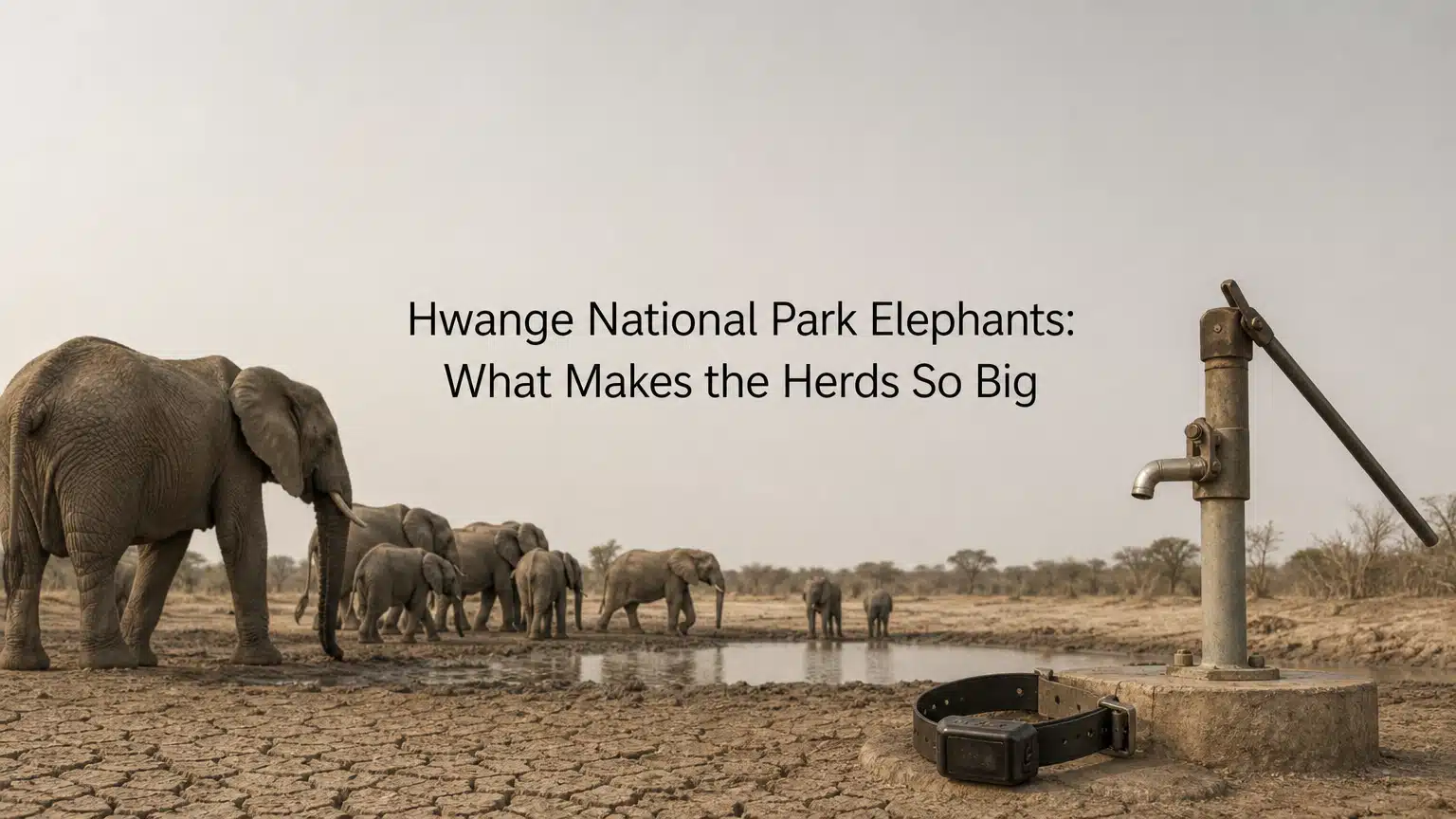
Hwange National Park elephants are the African savanna elephants that roam Zimbabwe’s largest national park, and most sources put their number at around 45,000. That makes Hwange one of the biggest wild elephant populations in Africa. The herds grew so large because the park has almost no permanent natural water, so managers have pumped groundwater into artificial waterholes since the 1930s. The elephants gather at those waterholes, and you see them best in the dry season, from June to October.
This article covers what the population figures say, why the numbers are a challenge as well as a success, and how to see the herds on a safari. You will find the best season, the waterholes where herds gather, and what a day trip or an overnight stay costs.
Maximum Adventure Trails organizes Hwange day trips and overnight safaris from Victoria Falls. The practical sections below are written with those real itineraries and prices in mind.
Why Hwange’s elephant herds matter
Hwange’s elephants matter because the park holds about 45,000 of them, one of the largest concentrations in Africa, and you can watch herds of dozens at a single waterhole. They also matter because that number is now a management problem for the park.
How many elephants live in Hwange
Sources agree on the order of magnitude but not the exact count, because surveys differ in method and year. Around 45,000 is the working figure used by conservation groups and most of the safari trade. The table sets the main figures side by side.
| Source | Figure | What it tells you |
|---|---|---|
| IFAW factsheet | About 45,000 in Hwange | Out of roughly 83,000 elephants in Zimbabwe |
| WWF | More than 45,000 | Second largest population in the Kavango Zambezi Transfrontier Area |
| Safari trade estimates | 45,000 to 50,000 | Upper range quoted for Hwange |
| National Geographic video | Around 40,000 | Lower, older style estimate |
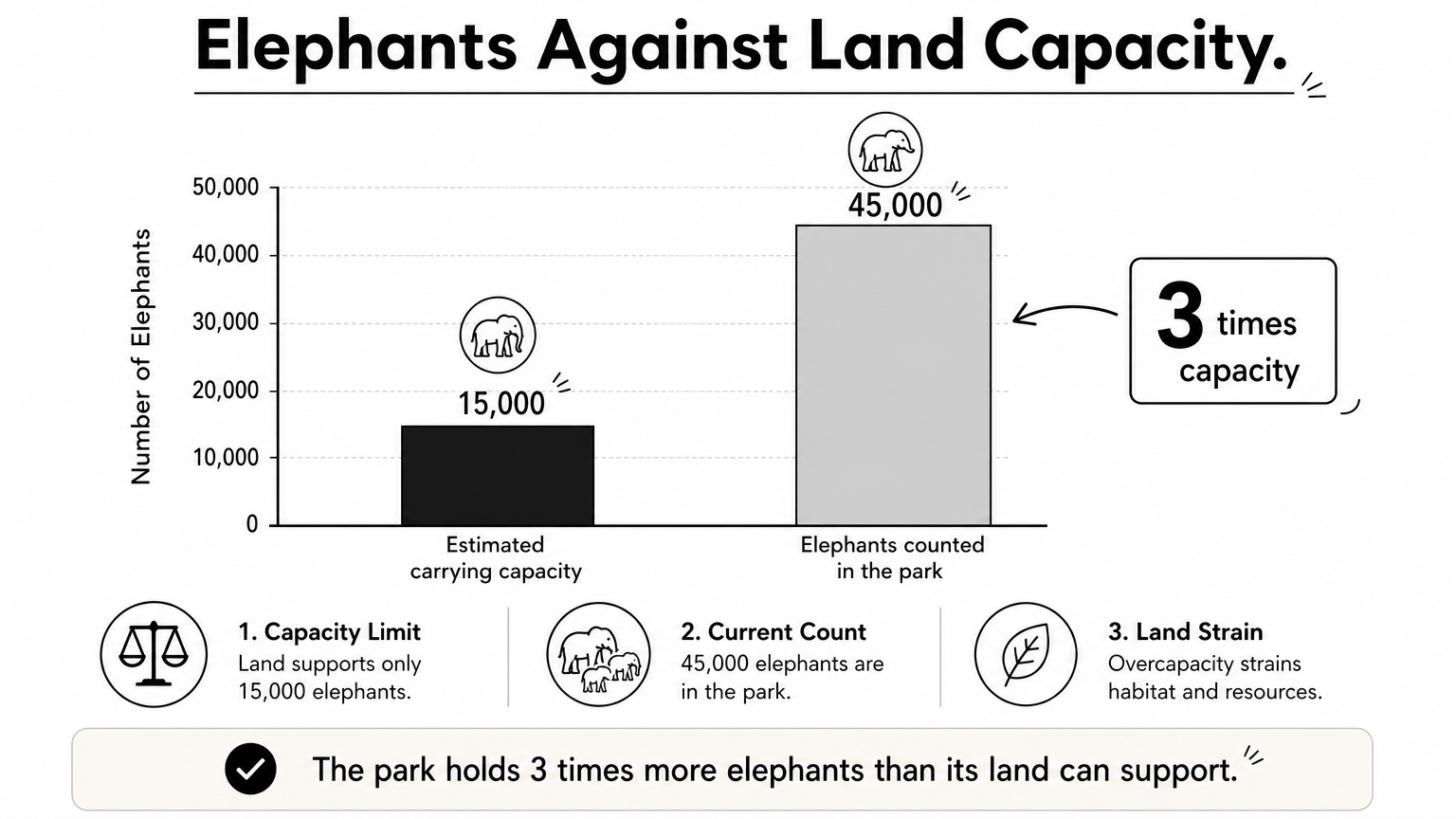
| Park officials (via AP) | About 15,000 | Estimated carrying capacity, not the count |
Zimbabwe as a whole is cited at about 83,000 elephants in the IFAW factsheet and about 100,000 in recent news reports. If someone asks which park in Africa has the most elephants, there is no settled ranking, because surveys draw park and ecosystem boundaries differently. What you can say safely is that Hwange is among the largest single-park populations on the continent.
Why the numbers are also a challenge
Officials say Hwange’s land can carry about 15,000 elephants, so the park holds roughly three times its estimated capacity. Crowded herds strip vegetation and push toward villages on the park’s edge, where conflict with farmers can turn deadly.
The Zimbabwe Parks and Wildlife Management Authority and IFAW now fit GPS collars to some elephants. When a collared herd heads toward a village, trained community guardians send warnings through WhatsApp groups and ride out to tell residents who have no phone signal. Project officials themselves acknowledge a large gap remains.
Hwange holds about three times the elephants its land can comfortably carry, and that gap shapes everything about the park’s future.
Why Hwange has so many elephants
Hwange has so many elephants because people supply water year-round, the herds migrate less than they once did, and the park is strictly protected. Each factor reinforces the others.
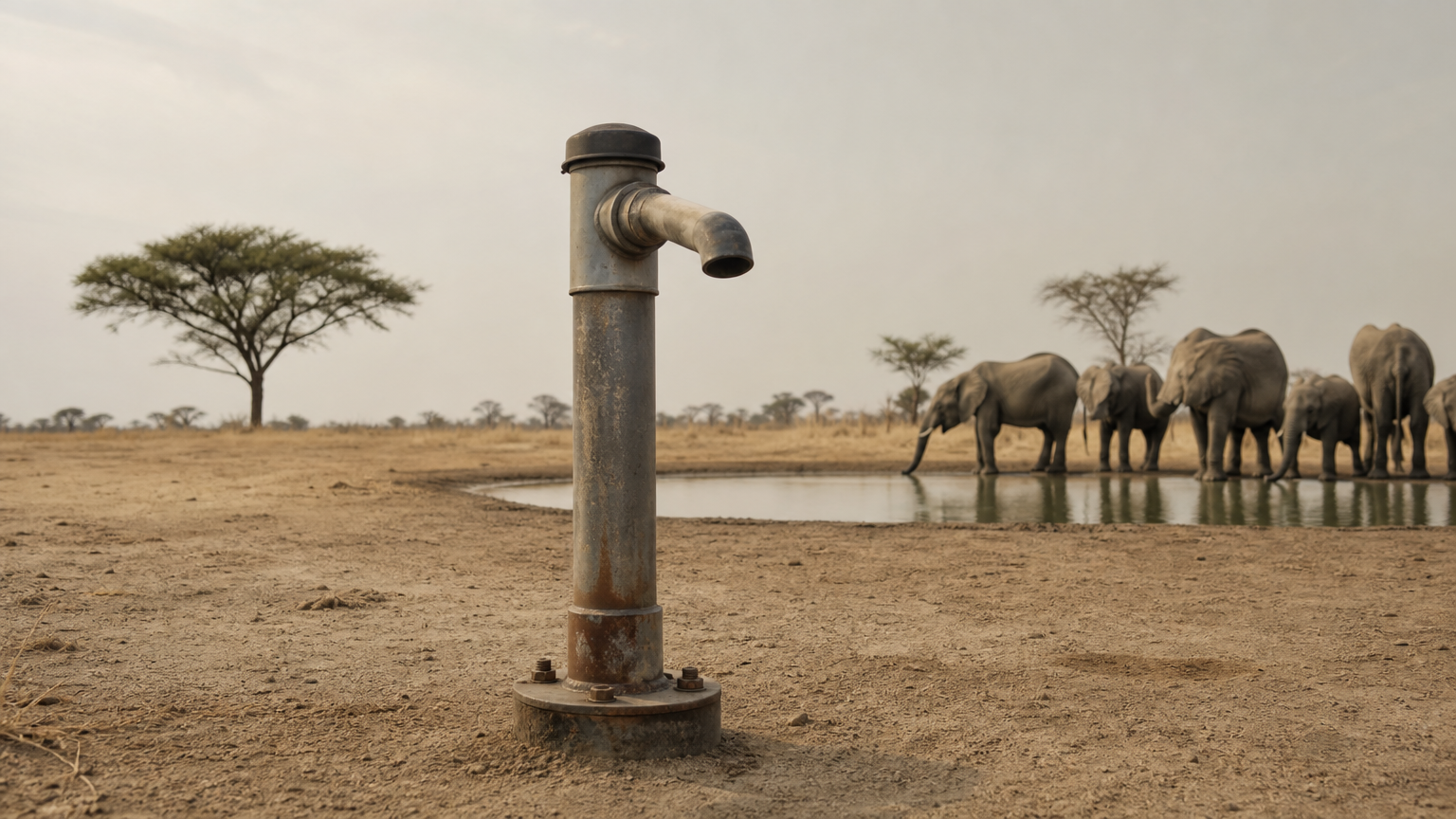
Boreholes created a permanent water supply
The park sits on Kalahari sand and has no permanent rivers, which once made the dry season a hard filter on wildlife numbers. The area became the Wankie Game Reserve in 1928 and a national park under its current name in 1961. In the 1930s, managers began drilling boreholes that feed artificial waterholes, and the practice continues today.
Elephants need to drink regularly, so a pumped waterhole is a magnet. Conservation groups and the park authority spend much of their effort keeping the boreholes running, because a failed pump in October can mean thirsty herds.
Less migration and strong protection
Before the boreholes, many elephants moved with the seasons. With reliable water inside the park, seasonal migration has decreased while the population has generally risen. Some herds still drift west into Botswana during the wet season, which matters when you plan a trip.
Hwange has also benefited from anti-poaching patrols and strict wildlife laws, which have helped keep the population stable. Add the elephants’ long lifespan and slow breeding, and a protected herd with water simply accumulates over decades.
Add reliable water, protect the animals, and the herds stop leaving and keep growing.
How to see Hwange’s elephants on safari
The most reliable way to see Hwange’s elephants is a guided game drive at a waterhole in the dry season, either as a long day trip from Victoria Falls or as an overnight stay. Timing and waterhole choice matter more than anything else.
When to go
Go between June and October. Animals concentrate around the few waterholes that hold water, and herds of up to 100 elephants can gather around a single one. Visibility is also good because the bush is thin.
The green season, from December to February, fills the park with grass and birds. Animals disperse, thick vegetation cuts visibility, and some elephants move west into Botswana. You still see elephants, but sightings are less dramatic.
Where the herds gather
Your guide will choose waterholes based on where the herds were that week. These are the names worth knowing:
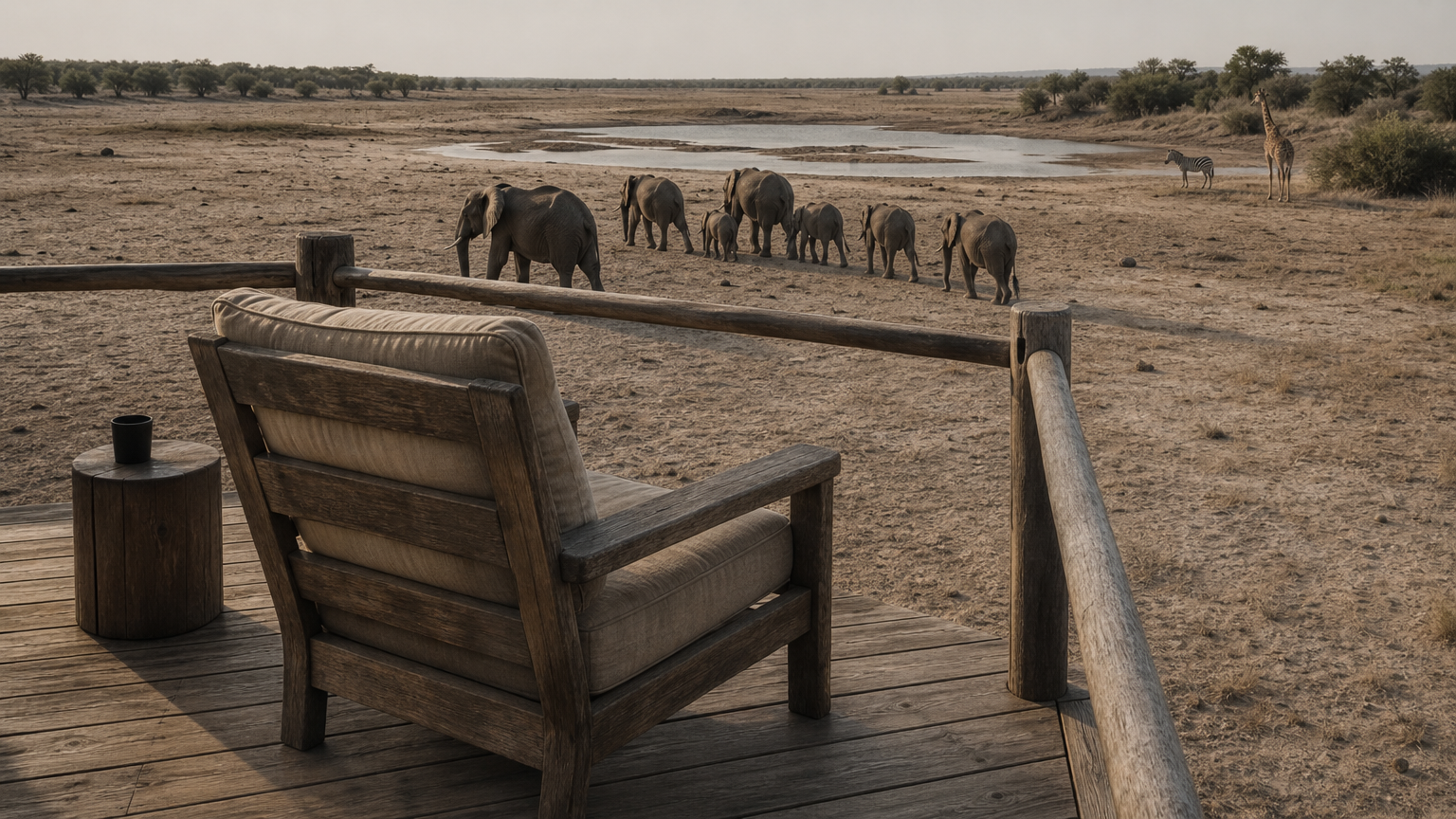
- Nyamandhlovu Pan: one of the oldest waterholes, with a raised viewing platform that lets you watch with little disturbance.
- Ngweshla Pan: quiet and lesser known, in the southeast of the park.
- Guvalala Pan: on a wildlife route, with a raised hide that draws elephants, giraffe, zebra and antelope.
- Deteema Dam: in the north, good for elephants and birds.
- Masuma Dam: a hide on the bank gives close views of elephants, plus hippo, lion and leopard.
Day trip or overnight stay
A day trip suits a tight Victoria Falls schedule, while an overnight stay gives you dawn and dusk drives. Both use open safari vehicles with a guide.
| Full day trip | 2-night safari | |
|---|---|---|
| Price | $290 per person ($160 for ages 5 to 11) | From $800 per person |
| Time | About 13 hours | 3 days, 2 nights at Gwango Heritage Resort |
| Game drives | 2 | 4 |
| Meals | Lunch in the park | Full board |
| Park entry | $24 per person at the gate | $24 per adult per day, $48 for 2 days |
For a couple, the day trip comes to 2 × $290 = $580, plus 2 × $24 = $48 in park entry tickets, so $628 in total. The overnight safari is at least 2 × $800 = $1,600, plus 2 × $48 = $96 in entry fees, so from $1,696. If you already have a vehicle plan inside Zimbabwe, a Victoria Falls to Hwange transfer to Hwange Safari Lodge or Main Camp costs USD 75 and needs a minimum of four passengers.
Choose the day trip if you have one free day, and the overnight safari if elephants are the main reason you came.
Watching elephants well, and what else you may see
You get more from a Hwange sighting by watching how the herd behaves at the water than by counting animals. A few habits and a basic eye for the animals help a lot.
Reading the herd at a waterhole
African savanna elephants are the largest land animals on Earth. Their huge ears radiate excess heat and their front legs look noticeably longer than their hind legs. Herds are usually led by an older female, so watch which animal arrives first and holds the others back or moves them forward.
Elephants also reshape the park. They dig into dry riverbeds and waterholes with their tusks and feet, which deepens the water source for other species. Use these habits on your drive:
- Stay seated and quiet in the vehicle, and follow your guide’s instructions.
- Ask to spend longer at one hide instead of moving between several.
- Bring binoculars so you do not need to push for closer positions.
- Expect close passes. Elephants at a waterhole often ignore vehicles that stay calm.
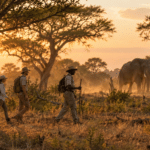
If you want a slower, on-foot view, Maximum Adventure Trails also offers "Through the Eyes of an Elephant" at $148 per adult, a guided bush walk alongside elephants, and an Elephant Encounter at $169 that excludes a $24 conservation fee. Check each tour page for location and requirements before you book.
Other wildlife on the same drive
Hwange has over 100 mammal species and about 400 bird species, so elephants are rarely the only highlight. Lions are well represented, including prides of up to 20 in the park’s well-known coalition. Leopards do live there, but they are secretive and far harder to find than lions.
African painted dogs are most often seen in the denning season, from June to August. Cheetah are present but rare. You may also see buffalo herds of 200 to 1,000, sable and roan antelope, and birds such as martial eagles, bateleurs and Kori Bustards.
A good Hwange sighting is a hide, a waterhole and an hour of patience, not a long list of animals ticked off.
Planning your time with Hwange’s elephants
Hwange’s roughly 45,000 elephants exist because boreholes, protection and reduced migration let the herds grow for decades. That success now strains the land and the villages around it. For you as a visitor, it means some of the most reliable elephant viewing in Africa, especially from June to October at the pans and dams.
Pick the format that fits your schedule. A 13-hour day trip covers two game drives. An overnight stay adds four drives and quieter hours at the hides. Either way, go in the dry season and spend your time at the water.
When you are ready, book a full day trip to Hwange with Maximum Adventure Trails and we will handle the bookings, transport and itinerary so you can concentrate on the herds.