
- 10 Views
- 22 Min Read
- (0) Comment
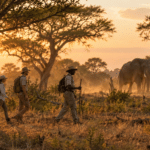
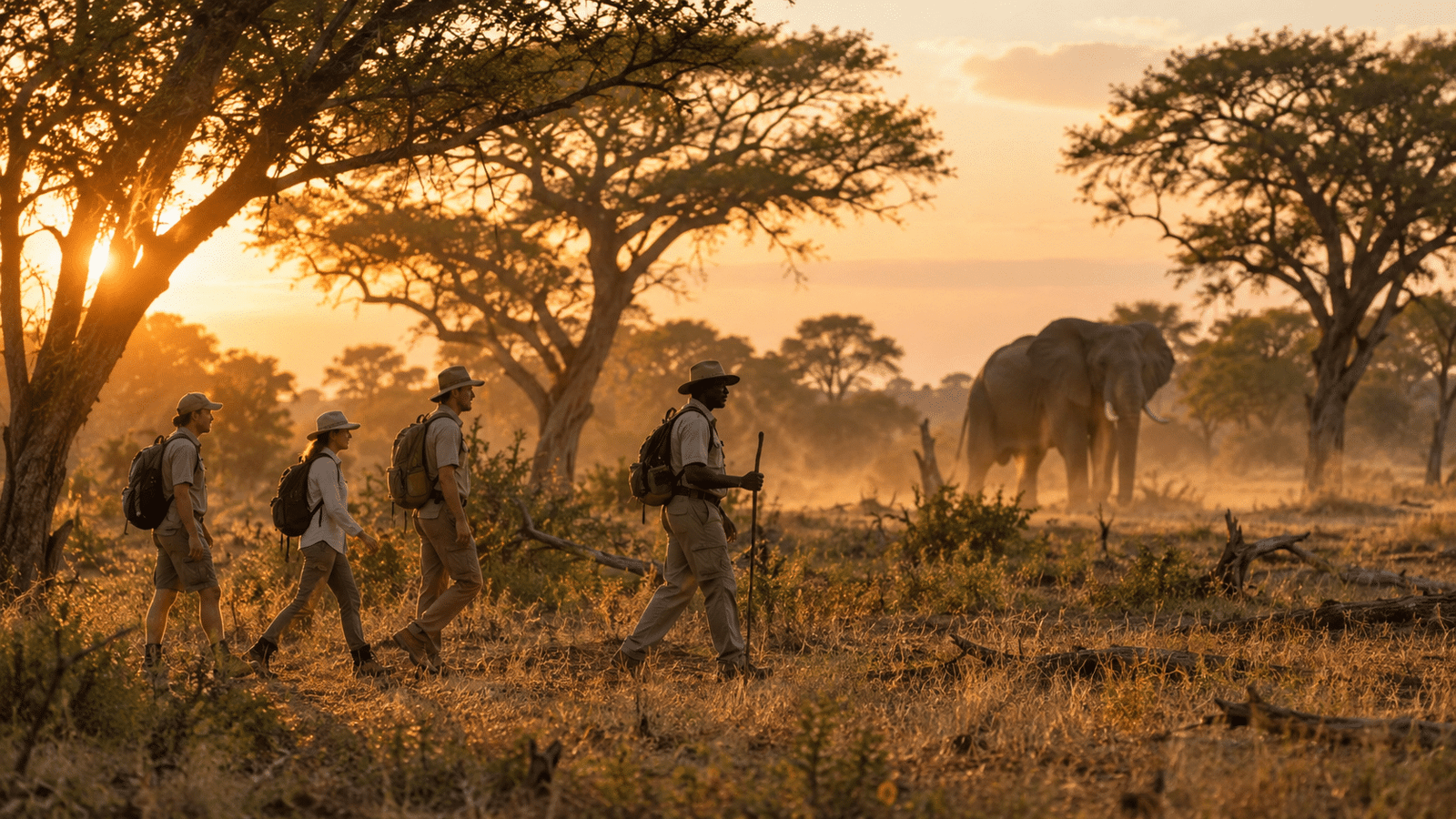
About twenty minutes into your first bush walk, the game-drive engine noise finally leavges your head. You hear the dry rattle of seed pods in the wind. You notice the musky smell of an elephant that passed an hour ago. Your guide raises a closed fist, and the whole group freezes. Sixty metres ahead, a herd moves through the trees as if you were not there.
That is a Zimbabwe walking safari, and it is why many seasoned travellers rank Zimbabwe among Africa’s finest walking destinations.
In a vehicle, you watch the wild. On foot you enter it. You read tracks, learn why a termite mound matters, recognise bird alarm calls and see the landscape at eye level. Zimbabwe has built its reputation on this style of travel through highly trained guides, wild and uncrowded parks, and one place in particular, Mana Pools, where walking is part of the park’s identity.
This guide covers everything you need to plan your own Zimbabwe walking safari: the best parks, the best time to go, a typical day, wildlife, safety, packing, accommodation, costs, sample itineraries, and how to choose an operator. For a wider look at the country, see our Zimbabwe safari destination page.
Table of Contents
- What Is a Zimbabwe Walking Safari?
- Why Choose a Walking Safari in Zimbabwe?
- Best Places for a Zimbabwe Walking Safari
- Best Time for a Zimbabwe Walking Safari
- What Happens on a Typical Walking Safari Day
- Wildlife You Can Discover on Foot
- Is a Zimbabwe Walking Safari Safe?
- Fitness Level and Who Can Join
- What to Pack
- Accommodation Options
- Costs and Budget
- Getting There and Getting Around
- Guided vs. Self-Guided Walking
- Walking Safari vs. Game Drive
- Health, Visas and Practical Tips
- How to Plan Your Trip: 6 Steps
- Sample Itineraries
- Choosing the Right Operator
- FAQs
- Final Thoughts
What Is a Zimbabwe Walking Safari?
A Zimbabwe walking safari is a guided wildlife experience in which guests explore suitable natural areas on foot rather than relying exclusively on a vehicle.
Walks are led by trained professional guides who understand animal behaviour, tracks, vegetation, weather and terrain. Depending on the destination and operator, the lead guide may be accompanied by a qualified armed guide, a tracker or other authorised personnel.
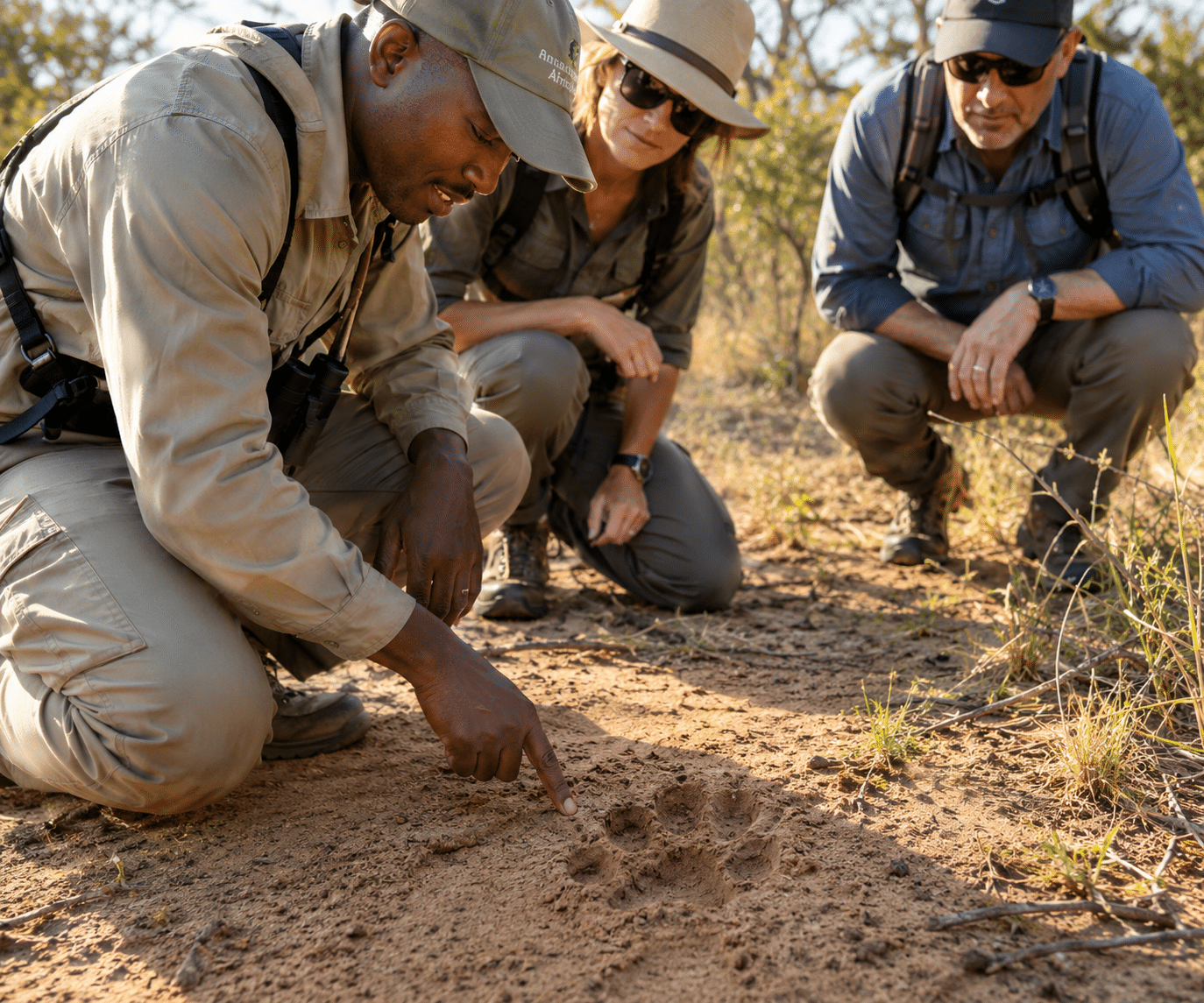
The purpose is not to get as close as possible to dangerous animals. It is to observe wildlife responsibly and understand how animals live and move through their environment. On a typical walk, your guide may show you how to:
- Recognise elephant footprints and distinguish different types of spoor
- Identify plants used by wildlife
- Listen for warning calls from birds
- Read signs of recent animal activity, from droppings to feeding marks
Walking safaris are usually part of a wider itinerary that includes game drives, birdwatching, photography and, in selected destinations, canoeing or boat trips. Most walks cover only a few kilometres at a gentle pace with many stops. The experience depends on the camp, concession, weather and wildlife movements.
Why Choose a Walking Safari in Zimbabwe?
1. Discover details a vehicle misses
Game drives cover more ground and are excellent for locating animals. Walking reveals the small things: tracks, insects, feeding signs, seed pods, and changes in vegetation.
2. Learn from experienced professional guides
Zimbabwe’s professional guide licensing has a reputation among safari insiders as one of the most demanding on the continent. Qualified guides combine years of field experience, tracking skills,s and firearms proficiency. A good guide does not just name a species. They explain why an animal is using a particular area and what its tracks reveal.
3. Wild, uncrowded landscapes
Zimbabwe’s parks see far fewer visitors than busier safari countries. You can walk for hours without seeing another vehicle.
4. Variety of landscapes
Within one country, you can walk Zambezi floodplains, Kalahari sand woodland, lakeshore grassland and ancient granite hills.
5. Rewarding photography
Walking offers ground-level opportunities to photograph tracks, plants, birds, insects and landscapes, always within the limits of safe viewing.
6. A deeper understanding of conservation
Time on foot shows how wildlife depends on healthy habitats, seasonal water and undisturbed land. Your visit helps fund their protection.
Best Places for a Zimbabwe Walking Safari
Mana Pools National Park: The Crown Jewel
If you only choose one destination for a Zimbabwe walking safari, make it Mana Pools.
On the Zambezi River in northern Zimbabwe, the park takes its name from the Shona word mana, meaning “four”, a reference to the four large pools left behind as the river shifted course. Together with the neighbouring Sapi and Chewore Safari Areas, it was inscribed as a UNESCO World Heritage property in 1984.
What makes it special for walkers:
- Open terrain: Tall winterthorn trees (Faidherbia albida) line the floodplain, creating a cathedral-like woodland with good visibility.
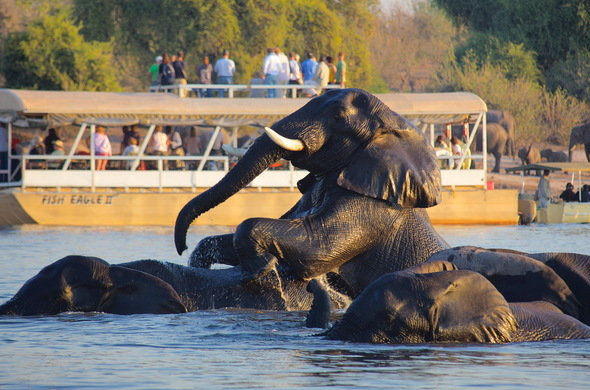
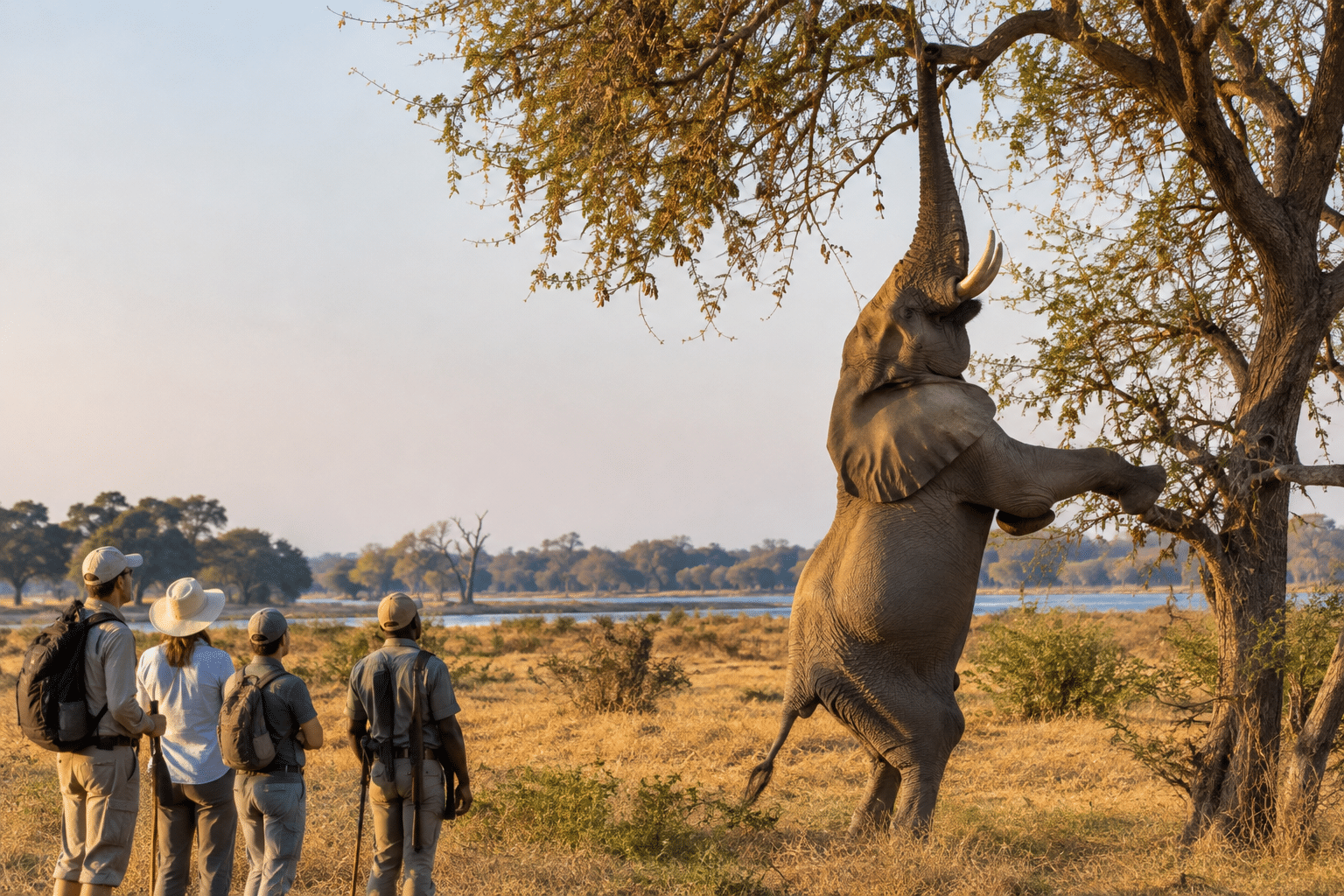
- Elephants on hind legs: In the late dry season, elephants sometimes rear up to reach nutritious pods. It is a natural behaviour and never guaranteed.
- Wildlife density: Elephants, buffalo, hippos, crocodiles and predators, including lions, leopards and African wild dogs, are present across the park.
- Birdlife: More than 380 species have been recorded, from carmine bee-eaters to fish eagles.
- A walking tradition: Mana Pools has specific rules that allow limited unguided walking, which is very rare in Africa (see the safety section below).
On a guided walk,k you may explore riverine forest and open floodplain, read animal signs in sandy soil, watch birds around the river and seasonal pools, and learn how water, vegetation and wildlife are connected.
Best for: wildlife enthusiasts, photographers, experienced safari travellers and anyone seeking a genuine wilderness experience.
Important: Walking conditions, camp operating dates and wildlife encounters vary. Commercial safari activities in Mana Pools must be run by an appropriately registered operator, and visitors must follow current park rules.
We have a dedicated guide to this destination: see our Mana Pools Walking Safari article.
Hwange National Park: Zimbabwe’s Largest Reserve
Hwange covers roughly 14,650 square kilometres in the northwest of the country. Its landscape is a mix of mopane woodland, teak forest, open grassland and seasonal pans, which makes it a rewarding place to learn how different habitats support different wildlife. It is renowned for its elephant populations, and in the dry season herds gather at waterholes in impressive numbers.
Game drives are a major attraction, but walking safaris are available in selected concession areas and through authorised operators. Availability depends on the camp, guide arrangements and local conditions.
On a guided walk, you may learn to recognise elephant and other mammal tracks, interpret feeding and movement signs, identify trees, grasses and smaller wildlife, and understand how animals depend on seasonal water.
Best for: travellers who want varied wildlife viewing and a combination of guided walks and game drives. Hwange is also convenient to reach from Victoria Falls.
Matusadona National Park: Lake Kariba’s Wild Shore
Matusadona sits on the southern shore of Lake Kariba, with lakeshore grassland, mopane woodland and the rugged escarpment behind. It is known for buffalo, elephants, lions, hippos and a conservation-significant black rhino population. Walks here have the glittering lake as a backdrop and often combine with boat cruises. Access is typically by boat or light aircraft, which keeps the area quiet and wild.
Matobo Hills National Park: Granite, Rock Art and Rhinos
Near Bulawayo, the ancient granite domes and balancing boulders of Matobo make for a different kind of walking experience. The area is a World Heritage landscape famous for its rock formations, cultural heritage, rock art and rich biodiversity, and it protects both black and white rhinos.
Guided walking here can focus on scenery, geology, birdlife, plants and the relationship between wildlife and the rocky terrain. Some operators offer guided rhino tracking on foot. Matobo should not automatically be treated as equivalent to a classic dangerous-game walking safari in Mana Pools, so confirm the permitted activities and guide arrangements with your operator.
Best for: travellers interested in hiking, landscapes, birdwatching, cultural heritage and a complement to a traditional safari.
Gonarezhou National Park: The Remote Frontier
In the far southeast, Gonarezhou (“place of elephants” in Shona) is wilder and far less visited. Its centrepiece is the red sandstone Chilojo Cliffs above the Runde River. It suits travellers who want solitude and big landscapes and are willing to put in the effort to reach it.
Victoria Falls and Zambezi National Park
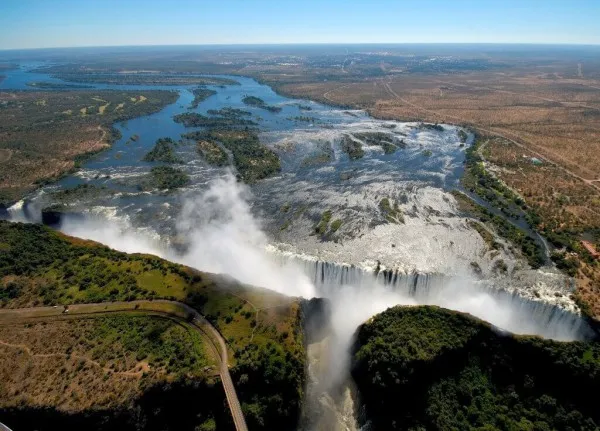
If you are visiting Victoria Falls, short guided walks in the nearby Zambezi National Park make a gentle introduction to bush walking and pair well with river cruises and the falls themselves.
Quick Comparison
| Park | Best For | Highlights | Difficulty |
|---|---|---|---|
| Mana Pools | Classic walking, river wilderness | Elephants, wild dogs, Zambezi views | Easy to moderate |
| Hwange | Varied wildlife, game drive combos | Waterholes, woodland habitats | Easy to moderate |
| Matusadona | Lakeshore walks | Lake Kariba, buffalo, lions | Moderate |
| Matobo Hills | Landscapes, rock art, rhinos | Granite scenery, birdlife | Moderate |
| Gonarezhou | Remote wilderness | Chilojo Cliffs, elephants | Moderate to challenging |
Best Time for a Zimbabwe Walking Safari
Walking is generally best in the dry months, when vegetation thins out, wildlife concentrates near water, and trails are easier to follow. Conditions still differ between parks, and walks always depend on safety assessments and seasonal availability.
| Period | What to Expect |
|---|---|
| May to June | Dry season begins. Cooler, comfortable mornings, lingering greenery, fewer visitors and good birding. |
| July to August | Cool mornings, warm days and thinning vegetation. Wildlife becomes more reliant on water. Excellent viewing. |
| September to October | Peak dry-season wildlife viewing, but temperatures climb, especially in October. Early-morning walks matter most. |
| November to April | Rainy season. Lush landscapes, newborn animals and excellent birding, but some camps and routes close or become inaccessible. |
These are general patterns, not guarantees.
Mana Pools: Many camps operate seasonally, commonly from around April into November, depending on the operator and conditions. August to October can be very rewarding for wildlife, though the heat can be intense.
Hwange: July to October is generally excellent, as dwindling natural water draws animals to waterholes.
Our recommendation: Consider June to September for a balance of strong wildlife viewing and more comfortable temperatures than the hottest late-dry-season months. Always check your chosen camp’s operating season before booking.
What Happens on a Typical Walking Safari Day
Schedules vary with the camp, weather, terrain and wildlife activity. Some walks last roughly two to four hours, and shorter or longer options exist.
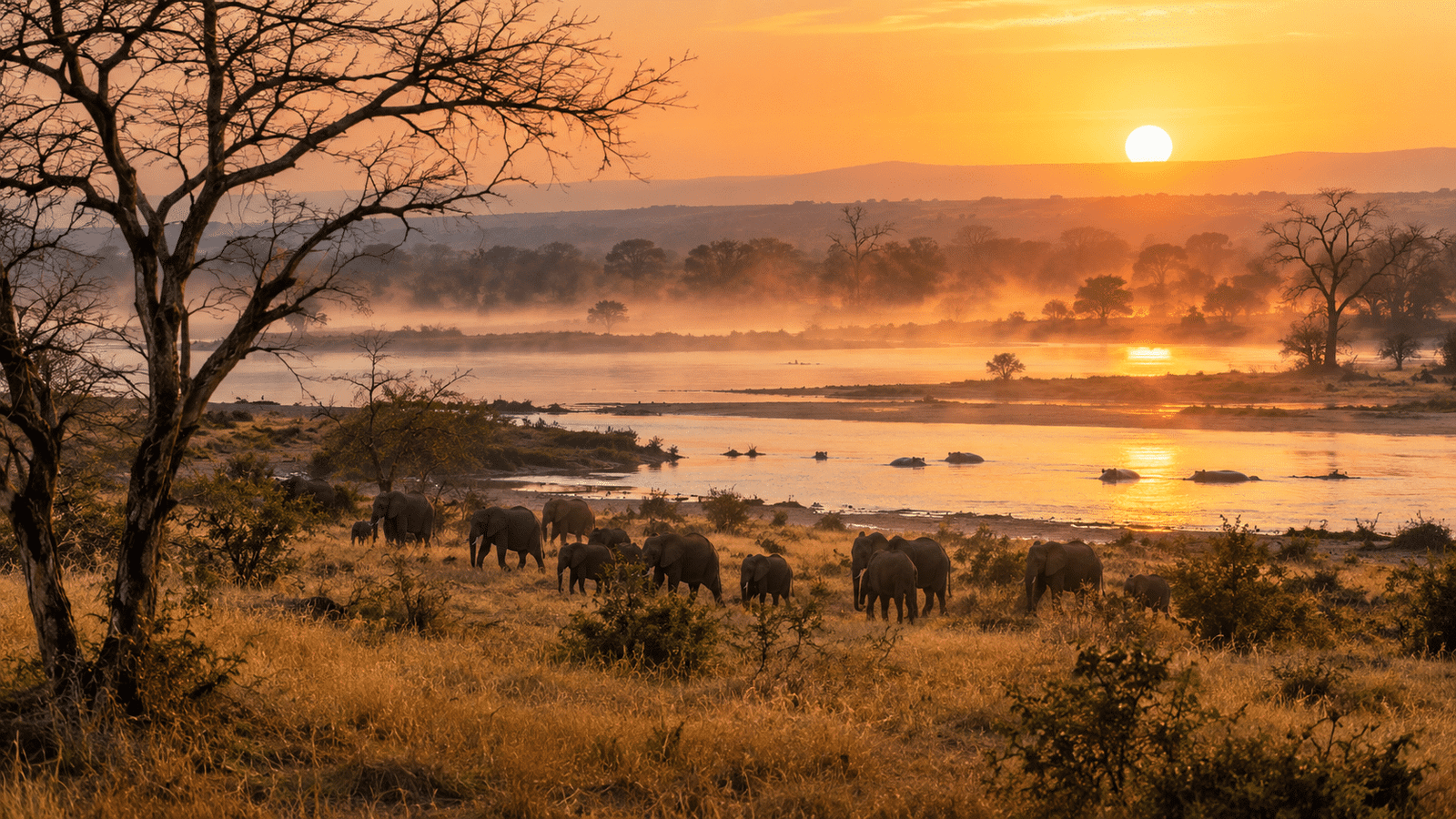
Early morning: Tea, coffee,e and rusks around the fire as the sky turns pink.
Before the walk: Your guide explains the plan, safety procedures and expected conditions. Tell them about any mobility limitations.
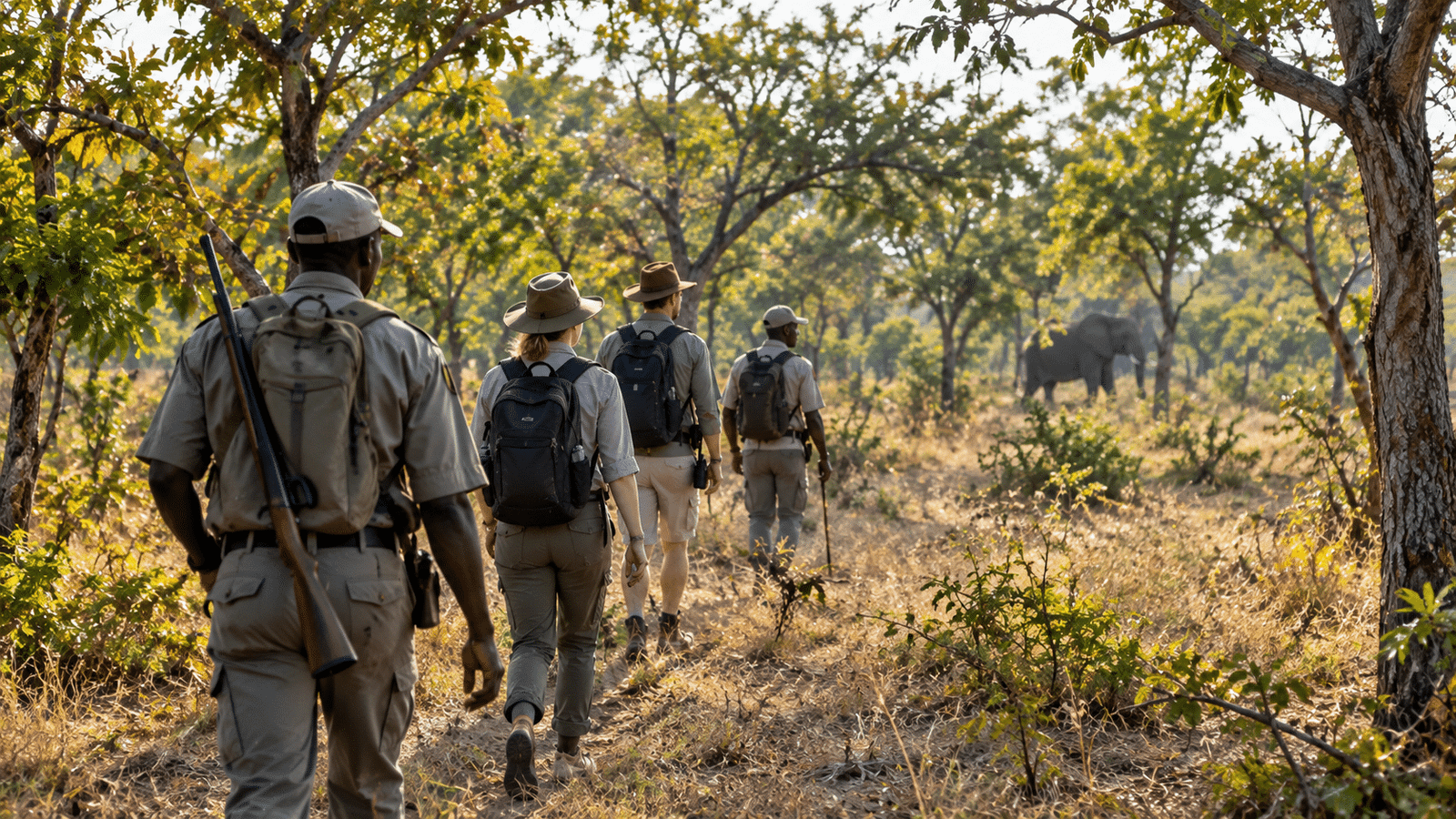
During the walk: The group moves in single file at a pace suited to the terrain, stopping to explain footprints, plants and bird calls. If potentially dangerous animals are encountered, the guide decides whether to keep observing, change direction or move away.
After the walk: Brunch or breakfast at camp, then rest, readi,ng or hide time through the heat of the day.
Afternoon: A second walk, a game drive, or a canoe or boat trip, depending on the location.
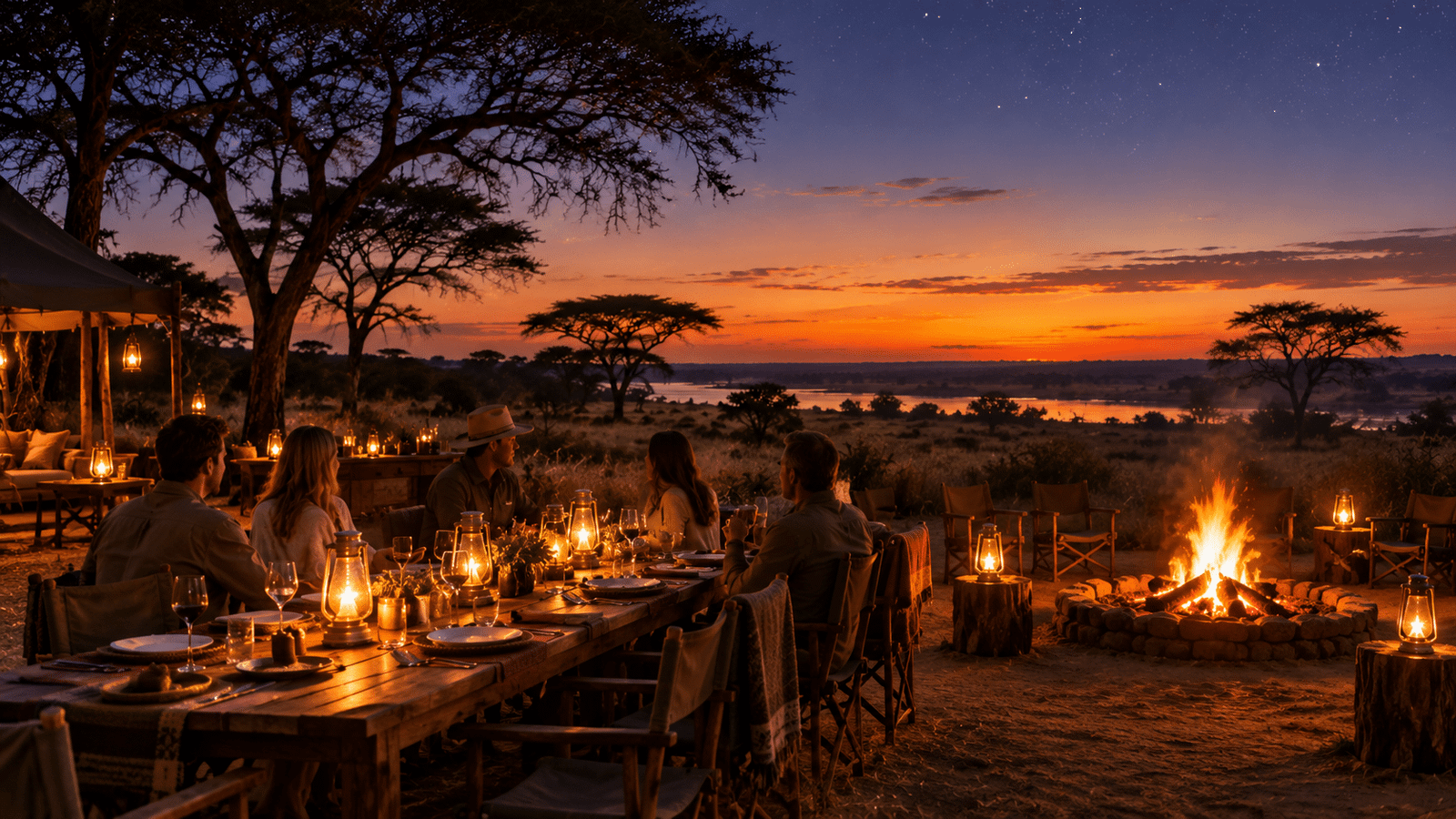
Evening: Sundowners, dinner by the fire and some of the best stargazing you will ever see.
Wildlife You Can Discover on Foot
What you encounter depends on habitat, location, season and daily conditions. A walking safari is about exploring responsibly, not guaranteeing a particular sighting.
- Elephants: Especially notable in Mana Pools and Hwange. Guides explain tracks, feeding habits and social behaviour.
- Buffalo: Found in Zimbabwe’s major wildlife areas and treated with great respect. Viewing distances are carefully managed.
- Antelope: Impala, waterbuck, kudu and, in some areas, sable and roan, depending on habitat.
- Predators: Lions, leopards, hyenas and African wild dogs occur in some areas. Sightings on foot are never guaranteed, and their presence calls for particular caution.
- Hippos and crocodiles: Seen from a safe distance along rivers and pools.
- Birds: Riverine habitats, woodland and savannah attract resident and migratory species, from fish eagles to bee-eaters.
- Small wildlife: Dung beetles, insects, reptiles, seeds and native plants become part of the story when you move slowly.
Mana Pools is especially notable for river-associated wildlife, while Hwange’s woodland and seasonal pans offer a different set of habitats and interactions.
Is a Zimbabwe Walking Safari Safe?
No walking safari is completely risk-free. You are on foot in natural habitat that contains potentially dangerous animals. Safety depends on the guide’s competence, the environment, wildlife movements, weather and your willingness to follow instructions. Done properly with a qualified operator, it is a well-managed activity.
The Guide Is Your Safety System
A professional guide is trained to read wind direction, interpret the body language of elephants, buffalo and predators, position the group so animals have an escape route, and make calm decisions in unexpected situations.
Essential Safety Rules
- Choose a qualified guide and confirm the operator is authorised for the area.
- Listen carefully to the safety briefing and follow every instruction immediately.
- Walk in single file and stay with the group. Never wander off alone.
- Stay quiet and avoid sudden movements around animals.
- Never run towards or away from wildlife. Follow the guide’s instructions if an encounter occurs.
- Never approach, feed or try to attract animals.
- Respect park rules, including current restrictions on distances, group sizes and viewing behaviour.
- Tell your operator in advance about physical limitations or medical needs.
Mana Pools Rules on Unguided Walking
Mana Pools’ published visitor code of conduct advises against unaccompanied walking unless the required permit has been obtained. Unguided walks are restricted to the floodplain, and visitors without considerable African wildlife experience are advised not to walk unaccompanied. Commercial safari activities must be conducted by a registered Mana Pools operator.
Fitness Level and Who Can Join
A Zimbabwe walking safari is accessible to most reasonably healthy adults. You do not need to be an athlete.
- Distance: Often 3 to 10 kilometres, at a slow, stop-and-start pace
- Terrain: Mostly flat in Mana Pools and Hwange, more uneven in Matobo and Gonarezhou
- Temperature: Cold mornings and hot afternoons, so layers matter
- Duration: Roughly two to four hours per walk, with breaks
Suits: couples, photographers, birders, solo travellers who enjoy small groups, and families with older, well-behaved children. Many operators set a minimum age, so check before booking.
May not suit: travellers with serious mobility limitations, anyone who cannot follow instructions quickly and quietly, and very young children.
If you have health concerns, tell your operator early so the plan can be adjusted.
What to Pack for a Zimbabwe Walking Safari
Keep it light, neutral and practical. Your operator should also provide a destination-specific packing list.
Clothing
- Lightweight, breathable layers in khaki, olive, tan or brown. Avoid bright colours and white.
- No camouflage. It is illegal for civilians in Zimbabwe.
- Long sleeves and trousers for sun, thorns and insects
- A warm layer, since June to August mornings can be very cold
- A wide-brimmed hat and a buff or scarf for dust
Footwear
- Comfortable, broken-in, sturdy closed shoes or boots, plus light camp shoes
Gear
- Binoculars, which are the best way to watch birds and distant wildlife without approaching animals
- Camera with a suitable zoom lens and spare batteries (charging can be limited)
- Headlamp or torch
- Refillable water bottle, carrying the amount your guide recommends
- Small, quiet daypack
Health and personal
- Sunscreen, lip balm, sunglasses
- Insect repellent
- Personal medication and a small first-aid kit
- Anti-malarial medication as advised by your doctor
Documents
- Passport (check validity requirements), visa if needed, travel insurance and booking confirmations
Accommodation Options for Walking Safaris in Zimbabwe
Accommodation ranges from simple bush camps to comfortable tented camps and luxury lodges. Mana Pools offers several types, subject to availability and the operating season, while Hwange has a range of lodges and camps with walking access varying by location and concession.
Do not assume every camp inside or near a park offers walking safaris. Before booking, confirm:
- Whether guided walks are actually offered
- Whether walks are included or charged separately
- The guide’s qualifications and the operator’s authorisations
- Whether game drives or other activities are available as alternatives
- Transfer arrangements and seasonal access
- Group size, comfort level and dietary requirements
Costs and Budget
Prices vary with the park, season, camp style and group size.
What affects the price
- Camp type: Mobile and bush camps, mid-range lodges and luxury camps differ greatly.
- Group size: Private guided safaris cost more per person than small shared departures.
- Season: August to October is typically the most expensive.
- Transfers: Light aircraft, road transfers and boat access add cost.
- Park fees: Charged per person per day and vary by park, so check current rates.
Rough guide: Many guided trips start from a few hundred US dollars per person per night including accommodation, meals, guided activities and park fees. Luxury camps with private guides cost considerably more. Ask for a current quote, as prices change by season.
Money tips
- US dollars are widely used in tourism, and many operators quote in USD.
- Carry small notes for tips and local purchases.
- Cards are not accepted everywhere, especially in remote areas.
- Tipping guides, trackers, and camp staff is customary.
Getting There and Getting Around
Main gateways
- Harare: Best for Mana Pools, Matusadona and the north
- Victoria Falls: The gateway for Hwange and the falls
- Bulawayo: Handy for Matobo Hills
To the parks
- By road: Possible for many parks, but distances are long. Mana Pools requires driving on rough tracks.
- By air: Light aircraft save time and are common for remote camps.
- By boat: Matusadona is typically reached across Lake Kariba.
- Hwange can be reached by road from the Victoria Falls and Bulawayo areas, depending on the camp and entrance used.
Guided vs. Self-Guided Walking
| Option | Pros | Cons |
|---|---|---|
| Guided | Safety, expert interpretation, wider access, no stress | Higher cost, group schedules |
| Self-guided (Mana Pools only) | Freedom, lower cost, sense of adventure | Higher risk, permit required, floodplain only, needs real bush experience |
Our advice: For a first visit, go with a licensed guide. You will see more, learn more and stay safer. Even experienced bush travellers benefit from a guided walk before attempting independent walking, and must follow the current park rules.
Zimbabwe Walking Safari vs. Game Drive Safari
| Feature | Walking Safari | Game Drive Safari |
|---|---|---|
| Main experience | Exploring and interpreting the bush on foot | Searching for wildlife from a vehicle |
| Coverage | Limited to the walking area | Much larger distances |
| Focus | Tracks, plants, birds, habitat, behaviour | Locating a broad range of animals |
| Physical effort | Walking on natural terrain | Less demanding |
| Best for | Nature enthusiasts who enjoy detail | First-timers wanting broad coverage |
Each reveals a different side of the same ecosystem, and combining them is often the most rewarding choice.
Health, Visas and Practical Tips
- Visas: Rules depend on your nationality and can change. Confirm with official Zimbabwe immigration sources or your operator before travelling. Regional visa options for Zimbabwe and Zambia have been offered before, but check current availability.
- Health: See a travel doctor six to eight weeks before departure. Malaria is present in many areas, including the Zambezi Valley, so discuss prophylaxis. Keep routine vaccinations current and carry medication in original packaging.
- Insurance: Comprehensive travel insurance with medical evacuation cover is strongly recommended for remote locations.
- Connectivity: Signal is limited or absent in many parks, and many remote camps have no Wi-Fi.
- Responsible travel: Choose operators who employ local guides, support communities and contribute to conservation.
How to Plan a Zimbabwe Walking Safari: 6 Steps
- Choose your main destination. Mana Pools for a Zambezi wilderness feel, Hwange for woodland habitats and walk-plus-drive combinations, Matobo for landscapes and heritage.
- Confirm seasonal availability. Check camp opening dates, walking schedules and any changes caused by rain, access or wildlife movement.
- Book with an appropriate operator. Confirm they are authorised for the planned activities and use qualified professional guides.
- Arrange transport. Mana Pools is remote, so plan flights or transfers around the camp and access conditions.
- Allow enough time. Three to four nights is a useful starting point, giving you more than one guided walk plus game drives or river activities.
- Confirm travel arrangements. Review entry requirements, insurance, health advice, transfers and cancellation terms.
Sample Zimbabwe Walking Safari Itineraries
These are illustrative and must be arranged with a qualified operator and your chosen camps.
Itinerary 1: 4-Night Walking Safari
- Day 1: Arrive, transfer to camp, receive the safety briefing, and enjoy a short nature activity if time allows
- Day 2: Morning guided walk, rest at camp, afternoon game drive or river activity
- Day 3: A second walk on a different route or habitat, then sundowners
- Day 4: Final dawn walk, a hearty brunch
- Day 5: Breakfast and departure
Best for: first-time walkers. In Mana Pools you may add canoeing on the Zambezi through an authorised operator. In Hwange, pair walks with waterhole game drives.
Itinerary 2: 8-Day Victoria Falls, Hwange and Matobo
- Days 1-2: Victoria Falls, with a river cruise and a short guided walk
- Days 3-5: Hwange, with waterhole viewing, game drives and guided walks where available
- Days 6-8: Matobo Hills, with landscape walks, rock art and, where offered, rhino tracking on foot
Best for: variety in one trip.
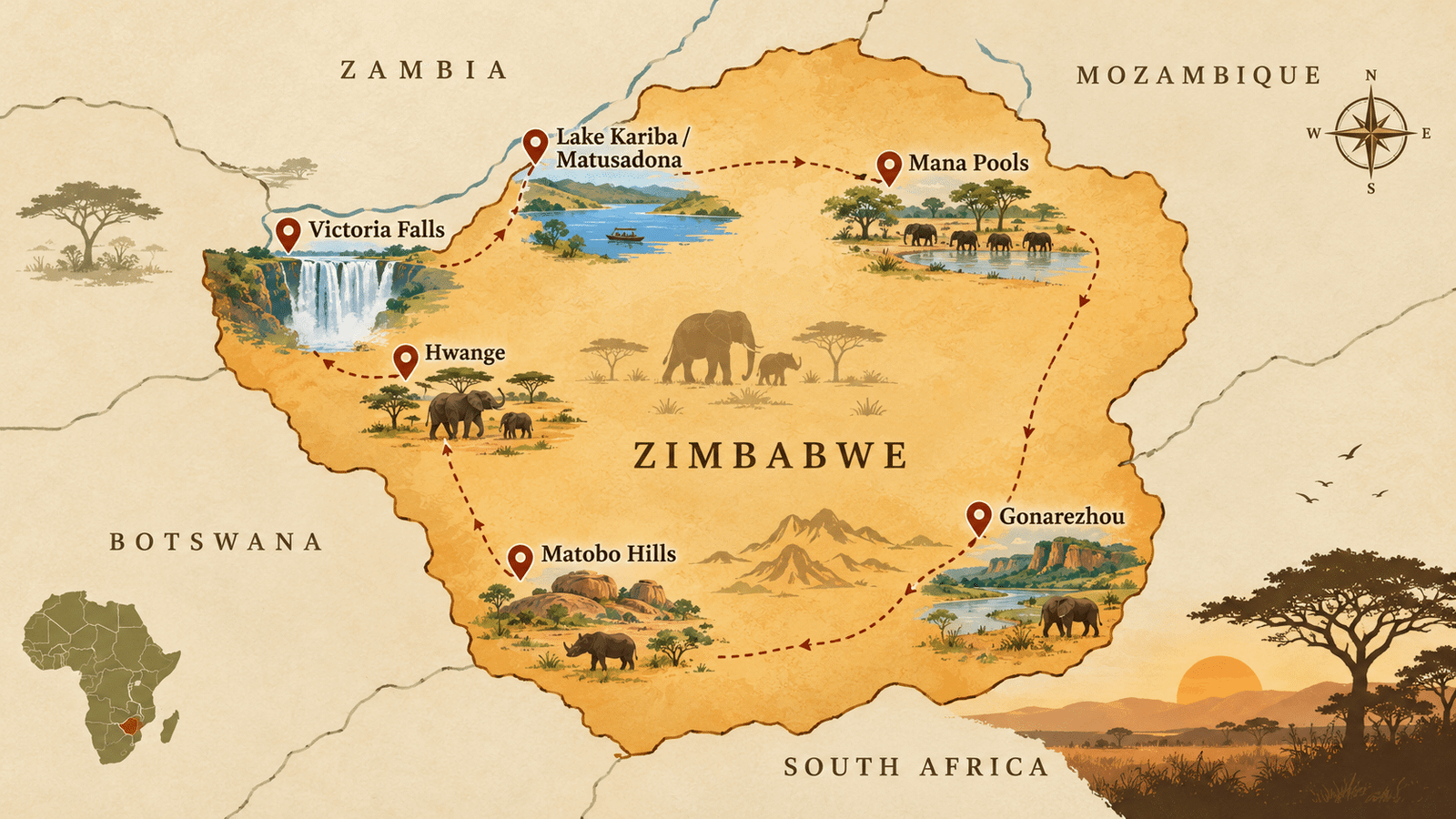
Itinerary 3: 10-Day Grand Zimbabwe
- Days 1-2: Victoria Falls
- Days 3-5: Hwange
- Days 6-7: Matobo Hills
- Days 8-10: Mana Pools as the Zambezi finale
Best for: adventurers who want the best of Zimbabwe on foot.
How to Choose the Right Zimbabwe Walking Safari Operator
- Licensed, experienced guides: Ask about qualifications and years in the field.
- Small groups: Quieter, safe ,and more intimate.
- Clear safety procedures: A good operator explains them openly.
- Local knowledge: On-the-ground teams adapt quickly to weather and road changes.
- Transparent pricing: Know what is included, such as park fees, transfers, drinks, and tips.
- Responsible practices: Community involvement and conservation support.
- Genuine reviews and fast responses.
Frequently Asked Questions (FAQs)
What is a Zimbabwe walking safari?
A Zimbabwe walking safari is a guided wildlife experience on foot in a national park or private concession, led by a qualified professional guide. It focuses on tracking, observation and learning about the ecosystem rather than covering long distances.
Where is the best place for a walking safari in Zimbabwe?
Mana Pools and selected areas of Hwange are two of the leading destinations. Mana Pools is widely considered the standout thanks to its open floodplain and walking tradition. Matusadona, Matobo Hills and Gonarezhou are excellent alternatives, each with its own character.
What is the best time for a Zimbabwe walking safari?
The dry season, broadly May to October, is generally best. June to September balances wildlife viewing and comfort, while August to October brings the biggest concentrations of animals near water, along with higher temperatures.
Is a walking safari in Zimbabwe safe?
There are inherent risks, because you are on foot among wild animals. Qualified guides, safety procedures, responsible behaviour and compliance with park rules greatly reduce them but cannot eliminate them. Book only with a reputable, authorised operator.
Can beginners go on a walking safari?
Yes. Many guided walks suit beginners who are comfortable on uneven natural terrain and can follow instructions. Your operator will advise on suitable routes for your fitness and experience.
Can I walk on my own in Mana Pools?
Mana Pools has specific rules for unguided walking, including permit requirements and restriction to the floodplain. Visitors without considerable African wildlife experience are advised not to walk unaccompanied.
How long does a walking safari last?
Many camp-based guided walks last roughly two to four hours, though shorter and longer experiences exist.
Do I need to be very fit?
No. If you can comfortably walk for a few hours with breaks, you can enjoy a Zimbabwe walking safari.
Can you see elephants on foot in Zimbabwe?
Yes, elephants occur in both Mana Pools and Hwange and may be encountered on guided walks. Sightings are not guaranteed, and all encounters are managed at a safe distance under the guide’s direction.
What other animals can I see?
Buffalo, antelope, hippos, crocodiles and a wide range of birds are common. Lions, leopards, hyenas, African wild dogs and rhinos occur in some areas, but sightings on foot are never guaranteed.
What should I wear?
Neutral colours such as khaki, olive and tan, with long sleeves, trousers, sturdy closed shoes, a sun hat and warm layers for early mornings. Avoid bright colours and white. Camouflage is illegal for civilians in Zimbabwe.
Is Mana Pools open all year?
No. Many camps and services operate seasonally, commonly from around April through November, but dates and access vary. Confirm directly before booking.
Can a walking safari be combined with game drives?
Yes. Many camps offer guided walks alongside game drives, depending on the destination, season and availability.
Can children join a walking safari?
Many operators set a minimum age, because walks require quiet and the ability to follow instructions instantly. Check before booking.
Do I need malaria tablets?
Malaria is present in many areas, including the Zambezi Valley. Speak to a travel doctor before your trip about prophylaxis.
How much does a Zimbabwe walking safari cost?
Costs depend on park, season, camp style and group size. Many trips start from a few hundred US dollars per person per night, with luxury options costing more. Request a custom quote for current rates.
Do I need a guide for a walking safari?
A professionally guided experience is strongly recommended, particularly in areas with dangerous wildlife.
Final Thoughts: Experience Zimbabwe on Foot
A Zimbabwe walking safari offers a way to discover the wilderness beyond the traditional game drive. From following tracks through Hwange’s woodlands to exploring the Zambezi floodplains of Mana Pools, each walk reveals more detail about the wildlife and the landscape that sustains it.
The most rewarding moments are not always the closest animal encounters. They are often the quiet ones: a guide explaining a fresh set of tracks, a bird call decoded, a herd of elephants passing as if you were part of the scenery. With the right destination, the right season and an experienced professional guide, a walking safari can become the highlight of your Zimbabwe adventure.
Ready to Explore Zimbabwe’s Wilderness?
Plan your African safari with Max Adventure Trails and experience Zimbabwe’s wildlife, landscapes and natural heritage through carefully planned safari activities.
Max Adventure Trails: Authentic. Guided. Wild.
Call or WhatsApp: +263-774 183 027
Email: info@maxadventuretrails.com
Plan your trip: Contact Max Adventure Trails