
- 1 Views
- 9 Min Read
- (0) Comment
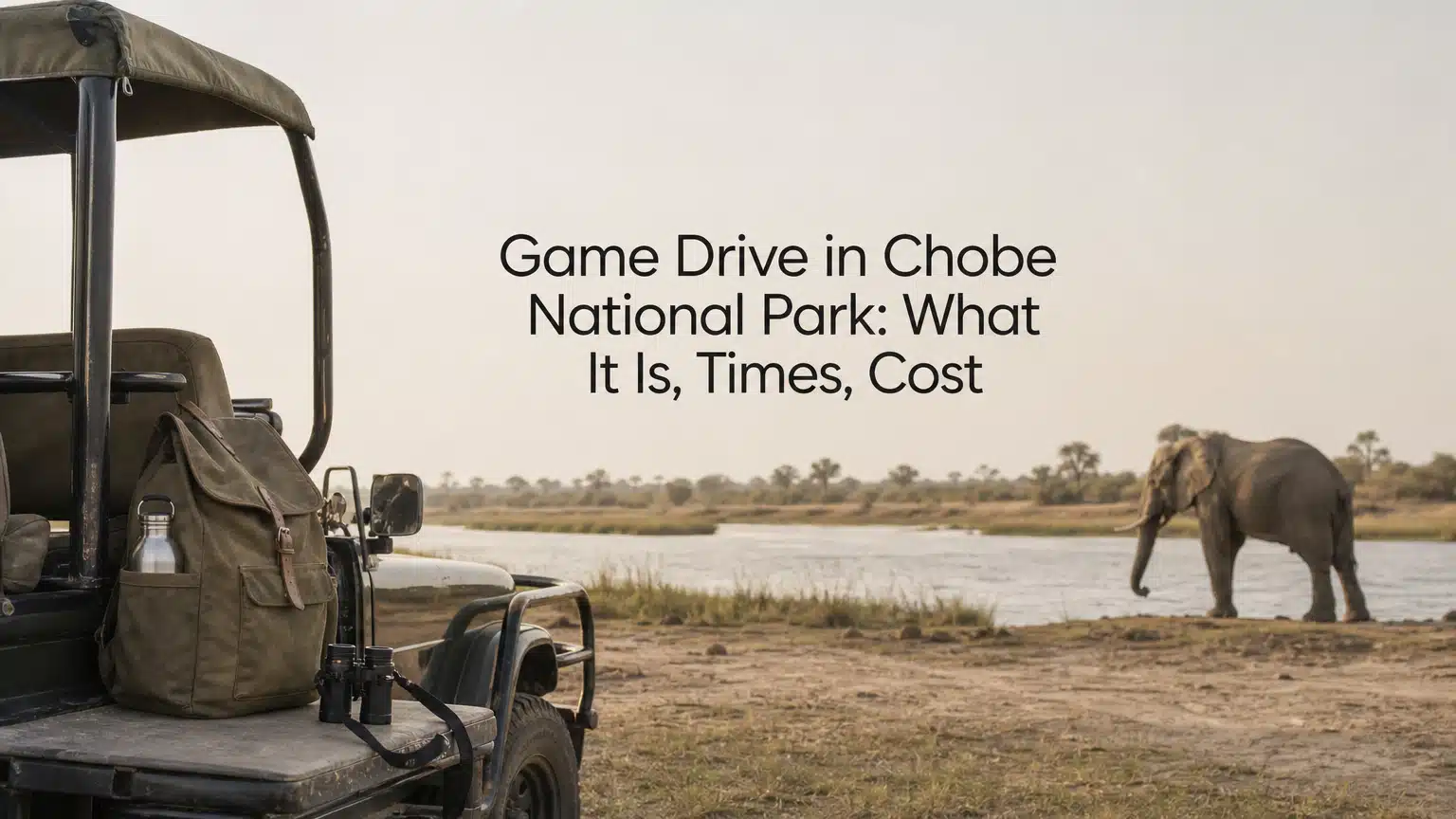
A game drive in Chobe National Park is a guided wildlife outing in an open-sided 4×4, usually along the Chobe River in northern Botswana. Most drives last three hours and leave at sunrise or mid-afternoon, when animals are most active. Half-day and full-day versions run 6 to 10 hours. Elephants are the near-certain highlight, because the park holds one of the largest elephant populations in Africa.
That definition is only the start. The details decide whether your drive is excellent or just fine. This guide explains why Chobe is worth the trip, how to choose and book the right format, what actually happens on the vehicle, what you can realistically see in each season, and how Chobe differs from self-drive parks like Kruger.
We organize Chobe trips from Victoria Falls and Livingstone, and our guides know the riverfront routes well. The figures below come from what we sell and from published Kasane rates, so you can compare options and budget before you commit.
Why a Chobe game drive is worth your time
A Chobe game drive is worth it because the park packs more large animals into a drivable area than almost anywhere in Africa, and the river keeps them in view. You spend less time searching and more time watching.
What makes Chobe different
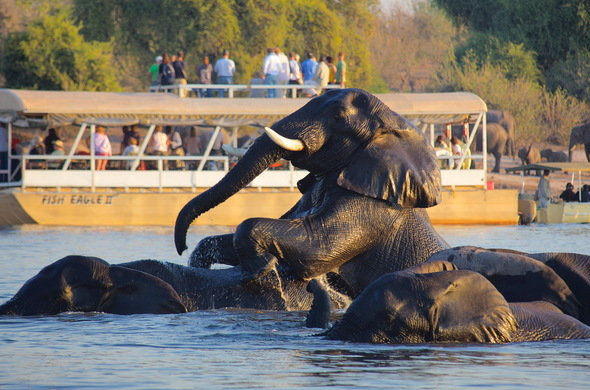
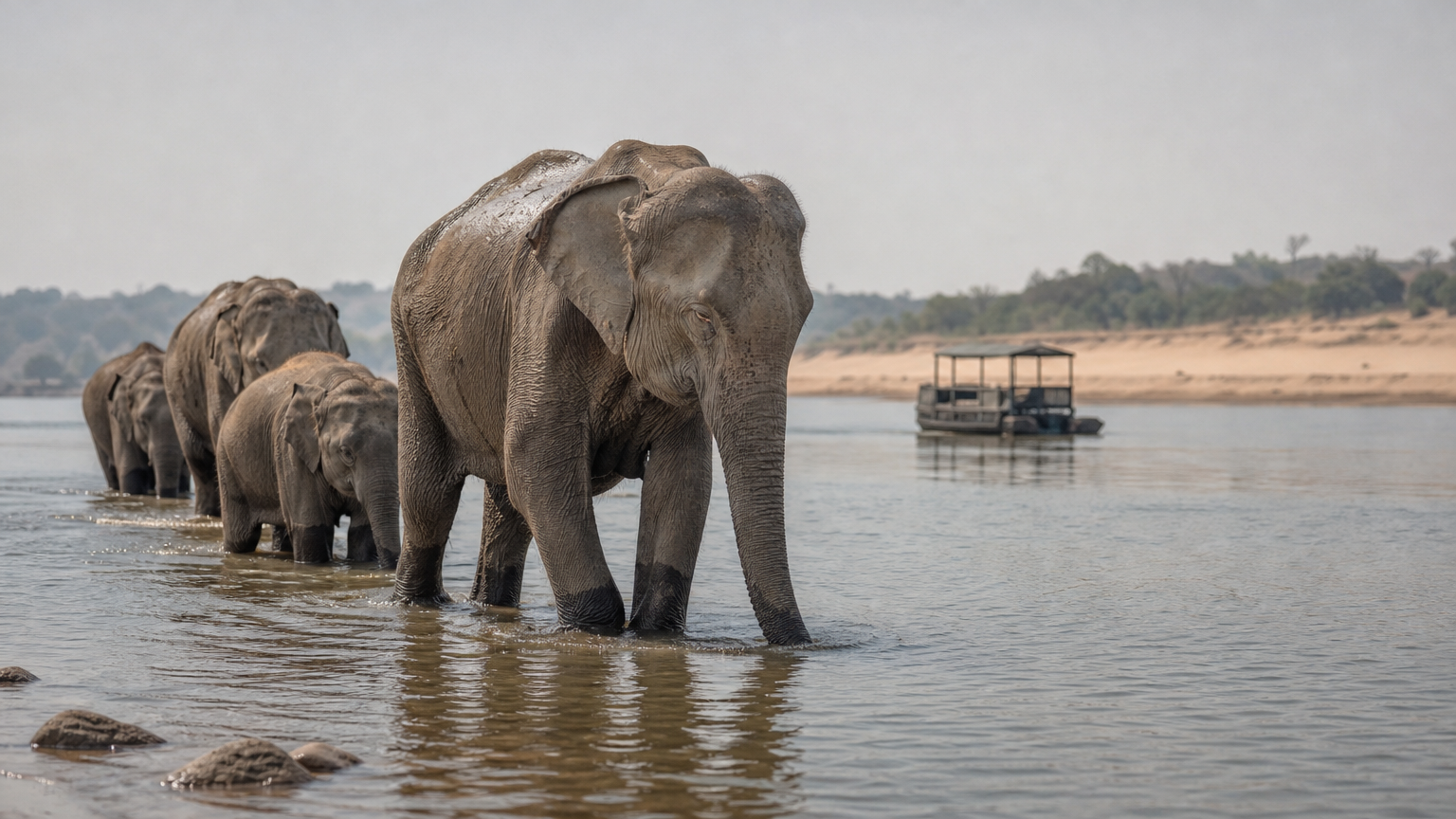
In the dry season, the river is the only dependable water for miles. Elephants, buffalo, giraffe and zebra walk in from the parched bush to drink, so the riverfront concentrates wildlife along a route you can cover in a few hours. Botswana’s tourism board notes that on an afternoon drive in the dry months you may see hundreds of elephants at one time.
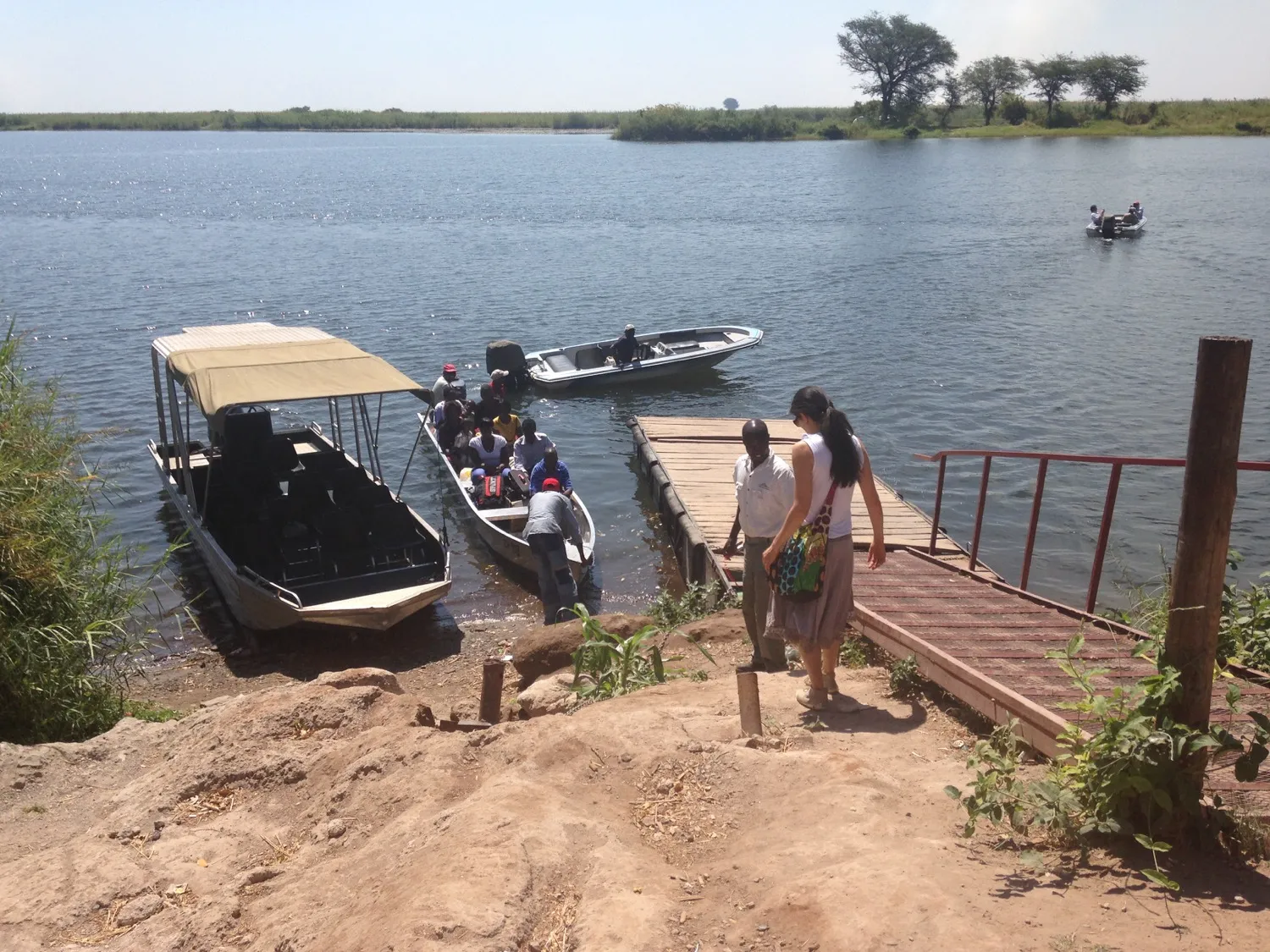
Chobe also lets you watch animals in two ways. You can drive the sand tracks in the morning and cruise the river in the afternoon, and each gives a different view. Boats get close to hippos, crocodiles and elephants crossing the water. Many day trips, including our Chobe day trip from Victoria Falls, bundle both.
Chobe’s river turns a game drive into a short, reliable wildlife show, because the animals come to you.
Game drive versus safari
People use the two words interchangeably, but they mean different things. A game drive is a single vehicle outing of a few hours with a guide. A safari is the whole trip, which may include several game drives, boat cruises, walks, meals and nights in a camp or lodge.
That difference affects how you judge what you book. A Chobe game drive safari is sold as a package, but you should compare the drive itself: the guide, the vehicle, the departure time and the group size. With only one day, you get one drive plus perhaps a cruise. With two or three days, repeat drives give you far more variety.
How to choose and book a Chobe game drive
Choose by how much time you have and where you are sleeping. Your options are a short drive booked in Kasane, a full-day trip from Victoria Falls or Livingstone, or an overnight camping safari inside the park.
Formats, times and costs
Here are our current options, per person in US dollars.
| Option | Duration | Price | Best for |
|---|---|---|---|
| Chobe Day Trip from Victoria Falls | 10 hours, pickup around 07:00 | $180 adult, $110 child under 12, transfers included | River cruise plus game drive in one day |
| Chobe Day Trip from Livingstone | About 10 to 11 hours, pickup around 07:00 | $190 | Travelers staying in Zambia |
| Chobe Safari and Impalila Island Day Trip | About 13 hours | From $200 | Adds a Namibian island visit and buffet lunch |
| 1 Night Chobe Camping Safari | 2 days, 1 night | From $330 | More drives and a night inside the park |
| 3-Night Camping Safari | 4 days, 3 nights | $620 | Daily drives and an optional walking safari |
A family of two adults and one child under 12 on the Victoria Falls day trip pays 2 x $180 + $110 = $470. Always confirm what the price covers before you pay, including park fees, drinks and lunch.
Travelers who sleep in Kasane book locally, and operators there price in Botswana pula. One Kasane operator lists BWP 498 for a 3-hour drive, BWP 983 for 6 hours and BWP 1,572 for 10 hours, with park fees extra and minimum group sizes. Two adults on the 3-hour drive pay 2 x 498 = BWP 996, plus 2 x 190 = BWP 380 in international park fees, for BWP 1,376 in total.
Day trip or overnight camping
A day trip suits you if you are based at Victoria Falls or Livingstone and have one free day. Be realistic, though. Of roughly ten hours, a good share goes to the road and the border crossing, and the Livingstone trip crosses at Kazungula. You still get a cruise and a drive, but only one of each.
Camping gives you time. A night inside the park means a sunset drive, a dawn drive and no long commute in between. Our overnight camping in Chobe rates run from $312 for 1 day and 1 night to $509 for 3 days and 2 nights, with transfers excluded and high-season rates from June to September. The 3-night camping safari excludes Botswana visa fees if they apply to your nationality.
If Chobe is the main reason for your trip, sleep in or beside the park. If it is one stop among many, a day trip does the job.
Booking steps
Follow this order and you avoid most surprises:
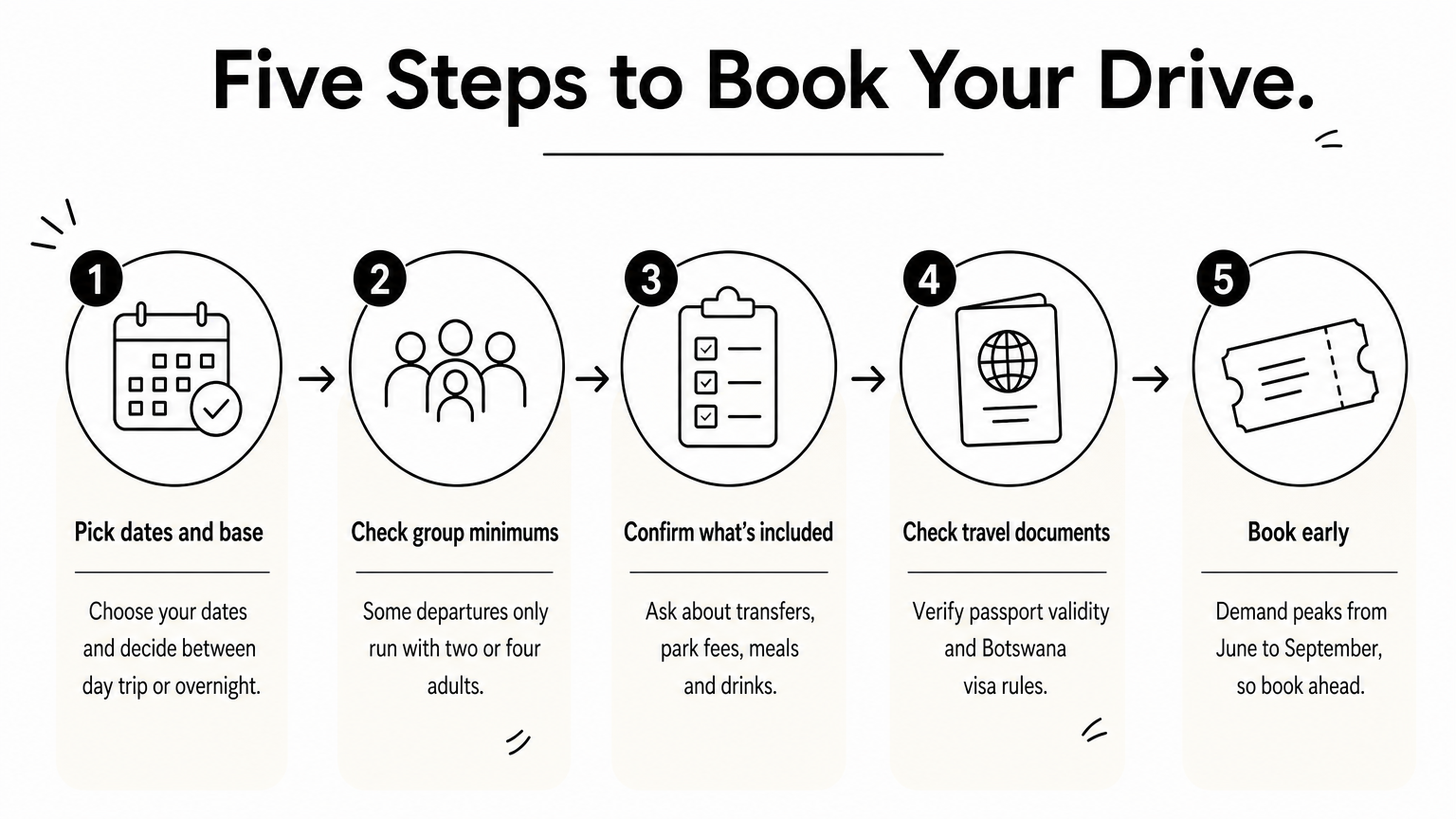
- Pick your dates and base, then decide between a day trip and overnight.
- Check group minimums, since some departures only run with two or four adults.
- Ask exactly what is included: transfers, park fees, meals and drinks.
- Check passport validity and visa rules for Botswana, and for Zambia or Zimbabwe if you cross borders.
- Book early for June to September, when demand peaks.
With us, a 50% deposit secures the booking and the balance is due 90 days before departure.
What happens on a Chobe game drive
On a Chobe game drive you ride with a professional guide in an open-sided 4×4, stopping wherever animals appear. Expect sand and gravel tracks, frequent halts for photos and commentary from the guide on behavior and habitat.
Duration, departure times and vehicles
The standard drive lasts about three hours and departs around 06:00 or 15:00. Those hours matter. Animals rest in the midday heat, while dawn and late afternoon bring predators, drinking herds and the best light. Longer drives run 6 hours (06:00 to 12:00) or 10 hours (08:00 to 18:00) and add a break, usually with a packed lunch on the full-day version.
Vehicles have open sides, so you get a clear panoramic view and can photograph without glass in the way. Roads are sandy and can be bumpy, which reviewers mention often, but nothing about the ride is physically demanding. Lodge-run drives start inside the park as the gates open, and some lodges now use silent electric vehicles.
Park fees and what to bring
Park entrance fees are normally separate from the tour fee on locally booked drives. A Kasane operator lists BWP 190 per international adult and BWP 145 per SADC adult. Children aged 8 to 17 pay BWP 95, and under-8s pay nothing. Fees can rise during the year, so check current figures.
Pack light and sensible:
- Passport, needed for ID and any border crossing
- Neutral clothing in khaki, green or brown
- A warm fleece or jacket, because dawn drives are cold
- Hat, sunglasses and high-SPF sunscreen
- Closed shoes, binoculars and a camera
Dress for the coldest part of the day, then peel layers as the sun climbs.
What you can see in Chobe, season by season
On a typical drive you will see elephants almost every time, along with buffalo, hippo, crocodile, giraffe, zebra and wildebeest. Lions and leopards turn up on some drives, but no guide can promise a specific sighting.
Wildlife you can expect
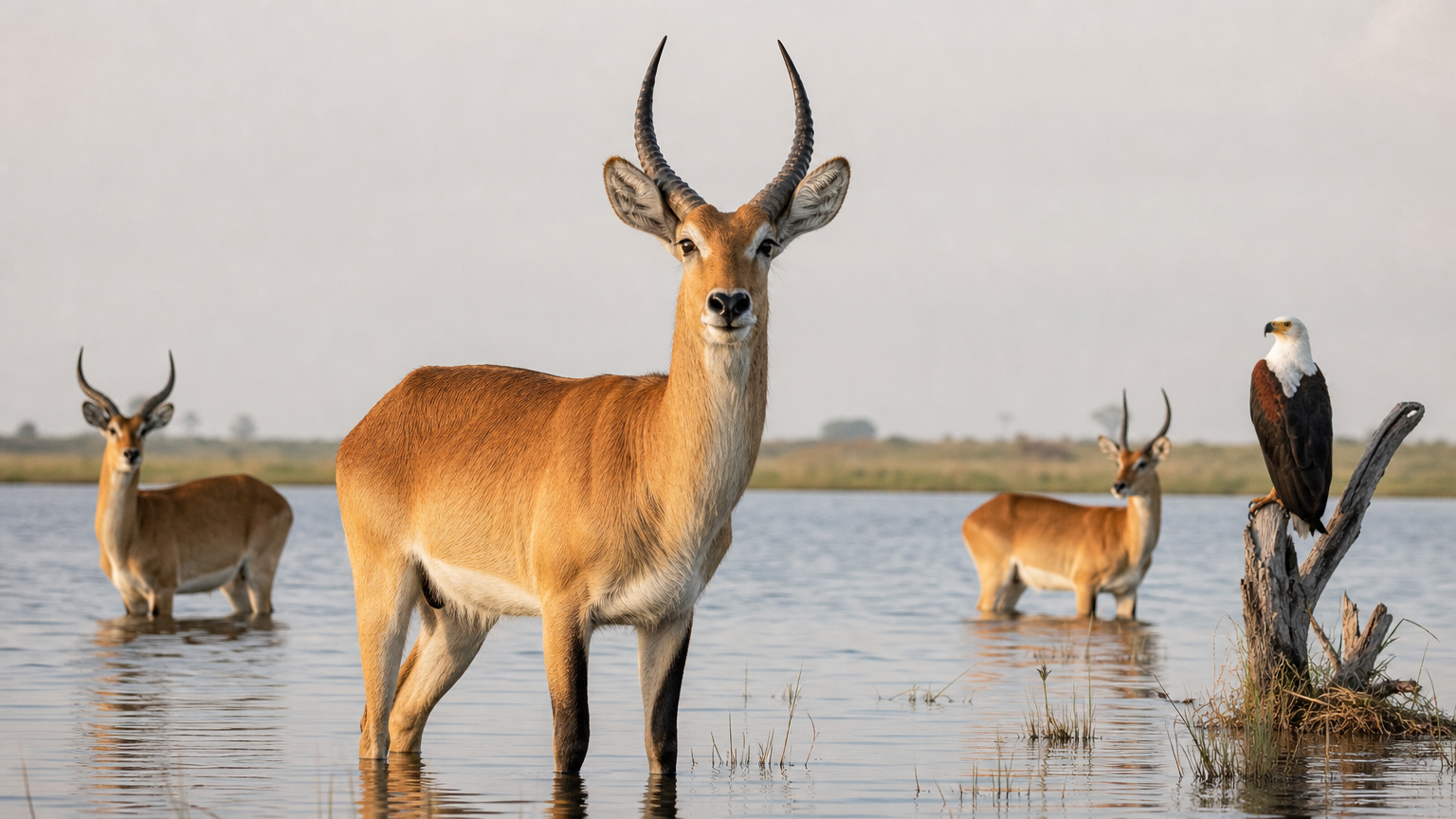
Chobe is home to the rarer puku and red lechwe antelope, which favor wetlands. Birders do well too, with more than 450 species recorded, from fish eagles to lilac-breasted rollers. Spotted hyenas and wild dogs also live in the northern park.
Many visitors ask whether Chobe offers the Big 5. You can see lion, leopard, elephant and buffalo, but rhino is the one you should not count on. Plan for four, and treat any extra as luck.
Which season suits you
The table below sets the two main seasons side by side.
| Season | Months | What it is like | What you see |
|---|---|---|---|
| Dry | May to October | Cold nights early, very hot by September and October | Huge elephant and buffalo gatherings at the river, more predators near water |
| Green | November to April | Hot and humid, scattered rain | Migrant birds, fuller rivers, fewer visitors, animals more spread out |
The dry season gives the strongest game viewing, which is why June to September is the peak and priciest time to visit Chobe. The green season suits birders and anyone who prefers quiet. Savuti, deep in the park, offers a zebra migration around December to March, but it needs overnight time to reach.
For the biggest herds, come between June and October. For birds and solitude, come in the green months.
Self-driving, Kruger and other common questions
You can self-drive in Chobe, but a guided drive is easier and usually shows you more. Chobe and Kruger are different experiences, so the better park depends on what you want from the trip.
Can you self-drive in Chobe?
Self-driving is possible with a capable 4×4 and park permits, but the sand tracks are deep in places and animals often stand on the road. A guide reads behavior, knows where the herds are moving and handles the logistics. If you are crossing from Victoria Falls or Livingstone, a guided trip also removes the vehicle and border paperwork. Most first-time visitors are better off with a guide.
Is Chobe better than Kruger?
Neither is better; they suit different travelers. Kruger is far larger, has an extensive road network that suits self-drivers and offers a better chance at rhino. Chobe is more compact and delivers dense elephant viewing with a river cruise from the same base. If your trip already includes Victoria Falls, Chobe is the easier add-on.
Choose Kruger for self-drive freedom and breadth. Choose Chobe for elephants, the river and an easy day trip from the Falls.
Planning your first Chobe drive
A game drive in Chobe National Park is a three-to-ten-hour guided outing in an open vehicle, with elephants at its center and the river shaping everything around them. Pick your format by time and base, confirm what the price includes, dress in layers and travel in the dry season for the biggest herds.
If you want one day, a day trip from Victoria Falls or Livingstone works. If Chobe is the main event, add a night in camp. When you are ready to compare dates and prices, book your Chobe game drive with Maximum Adventure Trails and we will handle the bookings, transport and itinerary.