

- 6 Views
- 7 Min Read
- (0) Comment
Key takeaways
- A Chobe camping safari pairs canvas tents and campfires with morning and evening game drives along one of Africa's richest wildlife rivers.
- Botswana holds roughly 130,000 elephants, the highest density on the continent, and most gather along the Chobe and Savuti systems (National Geographic, 2016).
- The dry season from May to October concentrates animals at the river, making it the strongest window for camping and game viewing.
- Camping costs less than a lodge and puts you closer to the sounds of the bush, with simpler comfort and a guided focus on wildlife.
A Chobe camping safari means sleeping under canvas near the Chobe River while guided game drives take you out at dawn and dusk to find elephants, lions and buffalo. You trade the walls of a lodge for the sounds of the bush, a campfire dinner and some of the densest wildlife in Africa right outside your tent. This guide explains what those nights are actually like, where and when to go, how to stay safe, and how a camping trip compares to a lodge stay.
Chobe National Park sits in Botswana's far north, where the river draws animals in numbers few places can match. It is a destination built for people who want to feel close to the wild rather than watch it from behind glass.
What a Chobe camping safari is really like
Days run on the rhythm of the animals, not the clock. You wake before sunrise for the first game drive when the air is cool and predators are still active, return to camp for breakfast, rest through the midday heat, then head out again in the late afternoon. Evenings end around the campfire with dinner and the calls of hippos and nightjars in the background.
The tents vary by trip. On a fully serviced camping safari, your guide and crew pitch a sturdy canvas tent, set up a camp bed with real bedding, and cook every meal. On a more rugged trip you help pitch a dome tent and share camp chores. Either way, a licensed guide drives, tracks game and manages the fire.
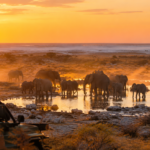
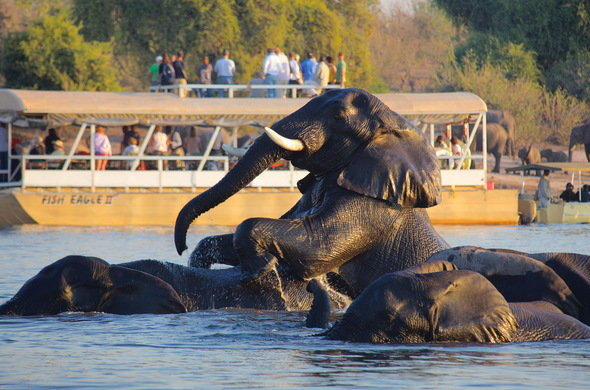
Chobe earns its reputation at the waterline. Botswana holds roughly 130,000 elephants, the highest density on the continent, and most gather along the Chobe and Savuti river systems (National Geographic, 2016). Camping here puts you within earshot of herds moving to drink at dusk.
Best campsites and seasons along the Chobe riverfront
The riverfront in the park's northeast is the prime camping zone, and the dry season from May to October is the prime window. As waterholes inland dry out, elephants, buffalo, zebra and the predators that follow them press toward the permanent water of the river. That concentration is what makes dry-season game viewing so reliable.
The riverfront sector is the busiest and most productive for sightings, with open floodplains that make animals easy to spot. The Savuti area to the southwest is known for its predators and dramatic, seasonal landscapes. Serondela, near the river, is a classic base for riverfront game drives and boat cruises.
Chobe is a serious wilderness. The park covers 11,700 square kilometers and was gazetted as Botswana's first national park in 1967, giving guided camping trips an enormous range of habitats to explore (UNESCO World Heritage Centre). For a fuller view of regions and routes, our Botswana safari trip planning guide maps out how the pieces fit together.
The green season from November to March brings rain, lush scenery, migratory birds and newborn animals. Game can be harder to find as water spreads across the land, but photographers and birders often prefer the light and the greenery.
Packing and safety essentials for camping in big-game country
Camping in Chobe works when you respect two things: the climate and the wildlife. Pack for warm days and genuinely cold mornings in the dry season, when temperatures can drop sharply before dawn. The goal is to stay comfortable on the vehicle and visible to no mosquito after dark.
What to pack for a Chobe camping safari:
- Neutral, layered clothing: light shirts for the day, a warm fleece and jacket for early drives
- A wide-brim hat, sunglasses and high-SPF sunscreen
- Insect repellent and long sleeves for dusk, plus any malaria prophylaxis your doctor advises
- A headlamp or torch with spare batteries for moving around camp
- Closed walking shoes, a reusable water bottle and binoculars
- A camera with a zoom lens and more memory than you think you need
Safety in big-game country comes down to following your guide. Stay inside your tent once the camp settles for the night, and never walk to the river or the tree line alone. Keep food sealed and stored properly so you do not draw animals into camp. Elephants, hippos and lions move through these areas, which is exactly why a licensed guide manages every fire, drive and movement after dark. Families traveling with children should ask their operator about age limits and suitable camps before booking.
Camping vs lodge safari: cost, comfort and adventure trade-offs
A camping safari usually costs less than a comparable lodge stay and trades some comfort for a closer connection to the bush. Lodges offer solid walls, en-suite bathrooms, pools and fine dining. Camping offers canvas, shared facilities or simple bush bathrooms, and nights spent listening to the wild rather than air conditioning.
The trade-off is really about experience. In a lodge you observe the wilderness from a protected base. In a tent you sleep inside it, hearing the herds and waking to frost on the canvas. Many travelers find that intimacy is the whole point of coming to Chobe.
Both styles deliver the same world-class wildlife, because the game drives and river cruises are shared ground. Chobe's famous elephant density is the draw either way, and camping simply puts you closer to the herds that gather at the water. Many travelers pair Chobe with the Okavango Delta next door to see both the dry riverfront and the flooded channels on one trip.
Which fits you? If budget and raw immersion matter most, camp. If you want hot showers and a soft bed after every drive, book a lodge. Plenty of travelers do both across one trip.
How to book a guided Chobe camping adventure with us
Booking a Chobe camping safari is simplest when a specialist handles the permits, campsites, guides and logistics for you. Maximum Adventure Trails arranges curated, guided camping trips across Chobe and the wider Southern Africa region, so you arrive to a set itinerary, a licensed guide and a camp already planned around the best game-viewing hours.
Start by deciding your season and comfort level: dry-season riverfront camping for peak wildlife, or green-season travel for birds and scenery. Choose between fully serviced tents and a more rugged participation trip. Then tell us your dates and group size, and we build the route, transfers and camps around them.
From there, the practical steps are straightforward. Confirm your itinerary, sort travel insurance and any malaria advice with your doctor, pack the essentials above, and leave the campfires, drives and safety to your guide. Reach out to Maximum Adventure Trails to turn these wild Chobe nights into a trip on the calendar.
Frequently asked questions
Is a Chobe camping safari safe?
Yes, when you camp with a licensed guide and follow camp rules. Stay inside your tent at night, never walk to the river alone, and keep food sealed. Guides handle fires, watch for wildlife and manage all vehicle movement.
What is the best time of year for a Chobe camping safari?
The dry months from May to October are best. Water sources shrink, so elephants, buffalo and predators gather at the Chobe River, giving reliable sightings and cooler, drier nights for camping.
Do I sleep in a tent or a lodge on a camping safari?
You sleep in a tent. Trips range from fully serviced tents with cots and bedding set up for you to simpler dome tents you help pitch. Game drives and meals are built around the camp routine.
How many elephants will I see in Chobe?
Chobe is famous for huge elephant numbers. Botswana holds around 130,000 elephants, many of them along the Chobe riverfront, so herds at the water are common in the dry season.