

- 10 Views
- 7 Min Read
- (0) Comment
Planning a trip to Zimbabwe’s largest game reserve and wondering what it actually costs to get through the gate? You’re not alone. Pricing for Hwange National Park tickets changes depending on where you’re from, how long you’re staying, and whether you’re driving in yourself or joining a guided safari, and outdated blog posts online make it hard to know what you’ll actually pay in 2026.
This guide breaks down the current Hwange National Park entrance fees by resident category, so you can budget accurately before you arrive, and pairs well with our complete guide to planning a Hwange safari in 2026. We cover daily gate prices for Zimbabwean residents, SADC nationals, and international visitors, plus vehicle fees, camping charges, and how costs shift for multi-day stays.
We’ve also included practical notes on payment methods at the gate, what’s included versus what you’ll pay extra for, and why booking your visit through a local safari operator often saves you time, money, and confusion at the entrance. Whether you’re planning a quick day trip or a full week tracking wildlife across Hwange’s plains, you’ll leave this page knowing exactly what to expect on your bill.
Why Hwange National Park entrance fees matter
Zimbabwe’s national parks operate on a tiered pricing system set by the Zimbabwe Parks and Wildlife Management Authority, and that structure directly affects how much you’ll pay for Hwange National Park tickets depending on your passport and residency status. Understanding this upfront matters because the gap between resident and non-resident rates is significant, sometimes three to four times higher for international visitors, and getting caught off guard at the gate with the wrong currency or an unexpected surcharge can delay your entry into the park.
Conservation funding depends on your ticket
Entrance fees aren’t just a formality. Revenue collected at Hwange’s gates funds anti-poaching patrols, road maintenance, waterhole pumping during dry months, and ranger salaries across one of Southern Africa’s most important elephant sanctuaries. Every dollar you spend on your ticket contributes to keeping the park’s roughly 45,000 elephants and other wildlife protected.
Paying the right entrance fee isn’t just paperwork, it’s what keeps Hwange’s wildlife and rangers funded year-round.
Accurate budgeting avoids surprises
Travelers who research Hwange National Park fees ahead of time, alongside a wider look at what to budget for a Zimbabwe safari, avoid the common mistake of underestimating total trip costs. A family of four crossing from Victoria Falls for a single day, for example, needs to account for individual entrance fees, a separate vehicle fee, and potentially a guide fee if they’re driving themselves. Skipping this math means arriving at the gate short on cash or confused about why the total is higher than expected.
Finally, knowing the fee structure helps you compare self-drive costs against booking through an operator, since guided packages often bundle entrance fees into the overall price and eliminate gate-side guesswork entirely.
How to pay for your Hwange National Park tickets
Gate staff at Hwange still prefer US dollars in cash, and you should carry small denominations since change isn’t always available. Card machines exist at the main entrances, but connectivity in this remote part of Zimbabwe is unreliable, so don’t count on a card as your only backup plan.
Bring small US dollar bills, because a gate agent with no change can turn a simple entry into a lengthy delay.
Zimbabwean dollars are rarely accepted for foreign visitors, and South African rand or Botswana pula won’t work at all. If you’re arriving from Victoria Falls or Kasane, exchange or withdraw dollars before you head into the bush, since ATMs near the park are scarce. Some entrances also accept EcoCash for residents, but that option doesn’t apply to international travelers.
Booking through a licensed safari operator removes most of this hassle. When you arrange your Hwange visit through Maximum Adventure Trails, your entrance fees, vehicle charges, and guide costs get bundled into one upfront payment, settled before you ever reach the gate. That means no scrambling for cash, no currency conversion headaches, and no uncertainty about whether your dollars will be accepted that day. It’s one less variable to manage on a trip where you’d rather be watching elephants than counting bills.
Hwange National Park entrance fees by visitor category
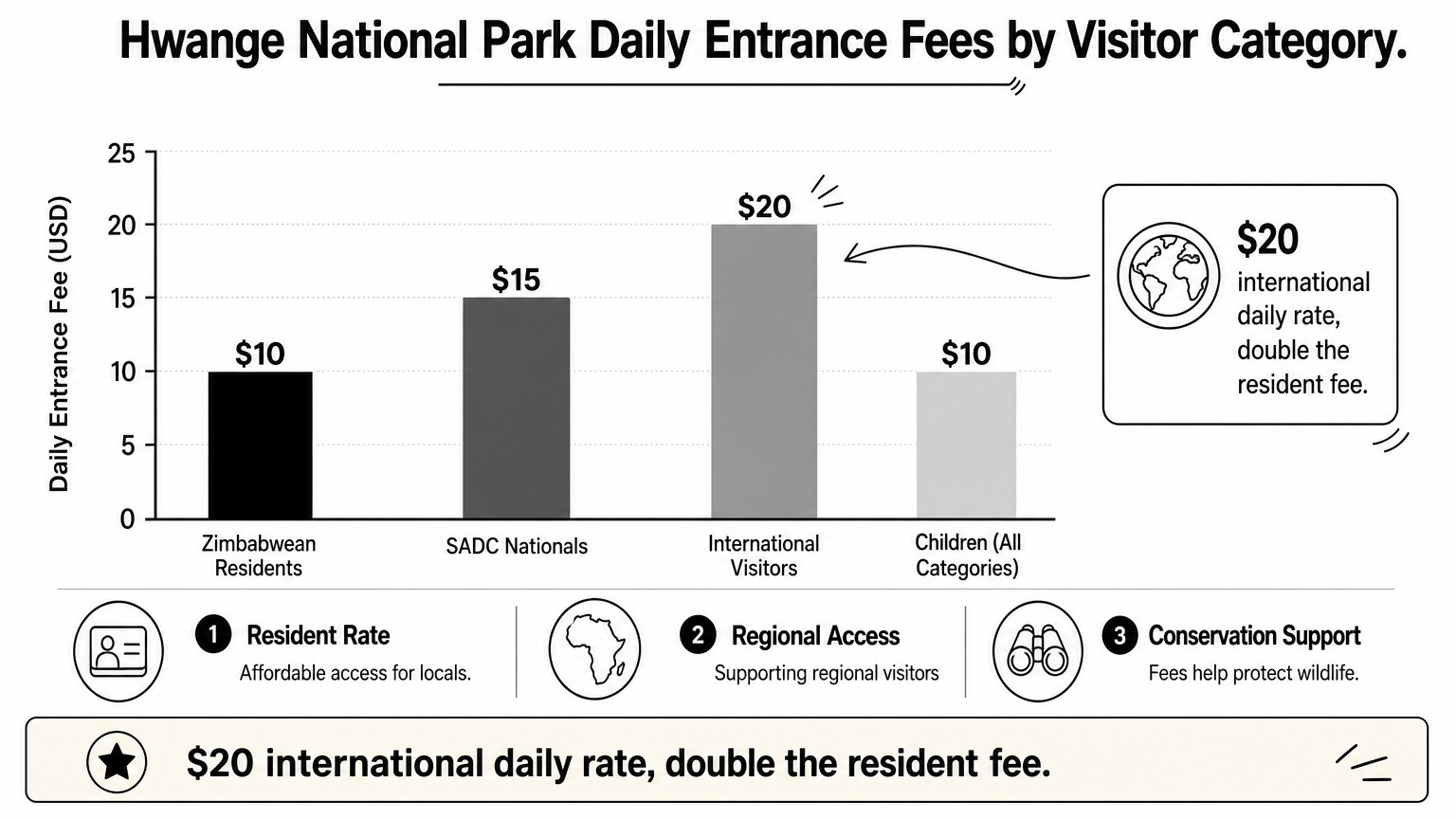
Hwange runs a three-tier pricing model, and where you fall determines exactly what you’ll pay per day. Zimbabwean citizens and residents get the lowest rate, SADC nationals (from countries like South Africa, Zambia, and Botswana) sit in the middle tier, and international visitors pay the highest daily rate. Children usually pay roughly half the adult price, and proof of residency or a valid passport is required at the gate to confirm your category.
Your passport determines your price, so always carry proof of residency if you qualify for a discounted rate.
Here’s a general breakdown of what to expect for Hwange National Park prices per person, per day:
| Visitor Category | Approx. Daily Fee (per adult) |
|---|---|
| Zimbabwean residents | $10 |
| SADC nationals | $15 |
| International visitors | $20 |
| Children (all categories) | Roughly 50% of adult rate |
Vehicle entry adds a separate charge, typically $10 for foreign-registered vehicles, on top of individual tickets. These figures shift periodically, so confirming current Hwange National Park entrance fee rates before you travel saves you from budgeting off outdated numbers.
Other costs to budget for your Hwange safari
Beyond the gate ticket, several extra charges add up fast if you’re not prepared. Camping fees inside the park run separately from your entrance ticket, and a game drive fee applies if you join a guided drive rather than self-driving through the reserve. Night drives, which are the only way to see Hwange’s nocturnal predators, carry their own permit cost and usually require a licensed guide, so it helps to compare guided Hwange wildlife tours before you decide.
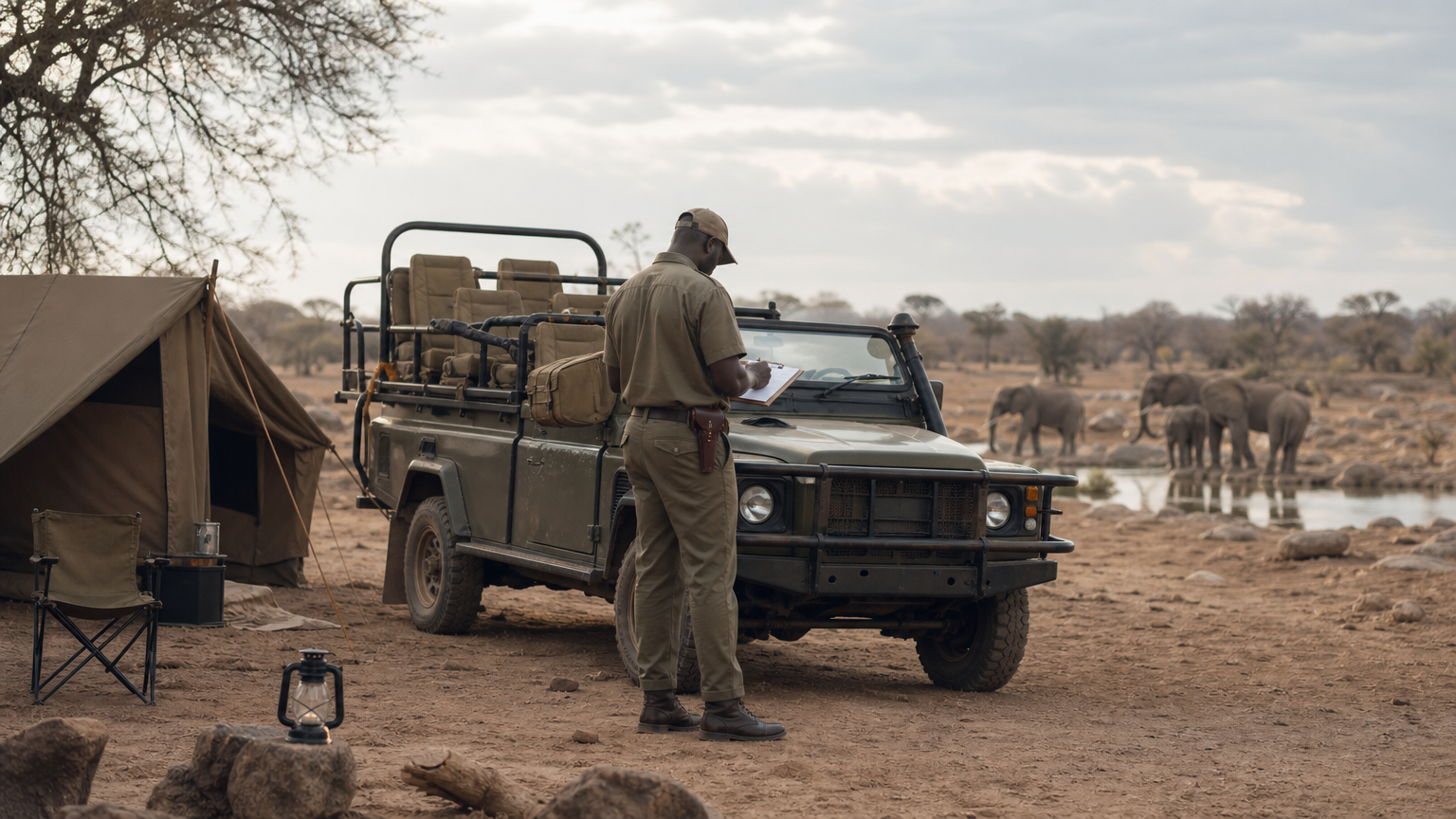
The entrance fee is only the starting line, not the finish, when it comes to budgeting your Hwange trip.
Accommodation swings your total dramatically, from basic public campsites to luxury Hwange lodges in Zimbabwe inside the park. Transfers from Victoria Falls to Hwange also cost extra unless bundled into a package. Here’s what typically adds to your bill:
- Camping fees (per person, per night)
- Guided game drive fees
- Night drive permits
- Vehicle entry charges for self-drivers
- Cross-border or lodge transfers
- Optional activities like walking safaris
Factor these in early, since a trip that looks affordable based on entrance fees alone can double once lodging and activities are added to the total.
Tips for getting the best value on your visit
Timing your trip well can shave real money off your total bill. Off-peak season travel, roughly November through April, often comes with discounted lodge rates and quieter gates, even though entrance fees themselves stay fixed year-round. Zimbabwe’s parks authority doesn’t offer seasonal ticket discounts, but everything around the ticket, transfers, accommodation, guided drives, gets cheaper when demand drops.
Book multi-day passes when possible
Underestimating your stay is a common way travelers overpay. Purchasing a multi-day entrance pass upfront, rather than paying daily at the gate, sometimes works out slightly cheaper and definitely saves you from renegotiating your rate each morning. If you know you’re staying three or four days, ask about consolidated pricing before you commit to daily tickets, and read our first-timer’s guide to a Hwange safari to shape the rest of the itinerary.
The best value rarely comes from the ticket price alone, it comes from bundling everything around it.
Bundle your trip through an operator
Working with Maximum Adventure Trails often beats piecing together a self-drive trip. Our packages combine entrance fees, transfers, guided game drives, and accommodation into one negotiated rate, which typically costs less than paying separately at each stage and removes the currency and cash headaches entirely.
Planning your Hwange National Park visit
Getting your Hwange National Park tickets sorted before you arrive means one less thing to worry about once you’re standing at that gate with elephants in the distance. Know your visitor category, carry US dollars in small bills, and budget beyond the entrance fee for vehicles, camping, and guided drives. Prices shift over time, so always confirm current rates rather than relying on old blog posts.
Hwange rewards travelers who plan ahead, and the difference between a smooth entry and a frustrating one usually comes down to preparation. Whether you’re self-driving for a single day or spending a week chasing wildlife across the reserve, having your fee structure and payment method sorted removes the guesswork.
If you’d rather skip the gate-side math entirely, let someone handle it for you. Book a Hwange National Park full day trip from Victoria Falls with Maximum Adventure Trails and get entrance fees, transfers, and game drives bundled into one straightforward price, so you can focus on the wildlife, not the paperwork.