


- 9 Views
- 8 Min Read
- (0) Comment
Key takeaways
- A fully guided Zimbabwe safari covers transfers, park fees, expert guides, game drives and accommodation so you focus on the wildlife.
- Hwange, Victoria Falls and Mana Pools form the core circuit, each protected under long-standing conservation status.
- Most itineraries run 7 to 12 days, linking two or three parks by road and light aircraft.
- Guided tours reach private concessions and off-road sightings that self-drive visitors cannot access.
- Book 6 to 12 months ahead for peak dry-season months and small-group departures.
A curated guided safari tour in Zimbabwe bundles your transfers, park entry, professional guiding, game drives and lodging into one arranged trip, so all you decide is which parks to see. That single arrangement removes the logistics that trip up independent travelers and puts you in front of elephants, lions and painted wolves with an expert reading the bush for you.
Zimbabwe rewards this approach. Its parks are vast, its roads long, and its best sightings happen where private guides hold access. Below you will find what a full package includes, the highlights across the country's three flagship reserves, realistic durations and routes, why guided access beats going it alone, and how to lock in an exclusive departure.
What a Fully Guided Safari Tour Zimbabwe Package Includes
A complete package handles the trip from the moment you land. When you book a safari tour Zimbabwe operators like Maximum Adventure Trails design end to end, the price typically covers:
- Airport and inter-camp transfers by road and light aircraft
- All national park and conservancy entry fees
- A licensed professional guide, often paired with a local tracker
- Daily game drives, and walking or boating safaris where the park allows them
- Accommodation, from tented camps to lodges, with most meals included
- Park conservation levies and, on many routes, local flights between reserves
The guide is the part you cannot replicate on your own. Zimbabwe's guiding qualification is among the most demanding in Africa, requiring years of field training before certification. That expertise turns a distant shape in the grass into a full account of what the animal is doing and why.
Good operators also match the itinerary to your interests. Photographers get early starts and long stays at productive waterholes. First-time visitors get a broader loop that samples different habitats. Couples looking for a quieter pace can lean toward a private honeymoon setup with dedicated vehicles and secluded camps.
Highlights Across Hwange, Victoria Falls and Mana Pools
Three destinations anchor almost every Zimbabwe itinerary. Each brings a different character.
Hwange National Park
Hwange is Zimbabwe's largest national park and its oldest, proclaimed in 1928. It protects a huge stretch of dry savanna and Kalahari sand woodland in the country's west. According to the Key Biodiversity Areas database, the park records 105 mammal species and 410 bird species, and holds the only substantial population of African wild dogs in Zimbabwe. Its black rhino numbers are slowly increasing inside a protected zone.
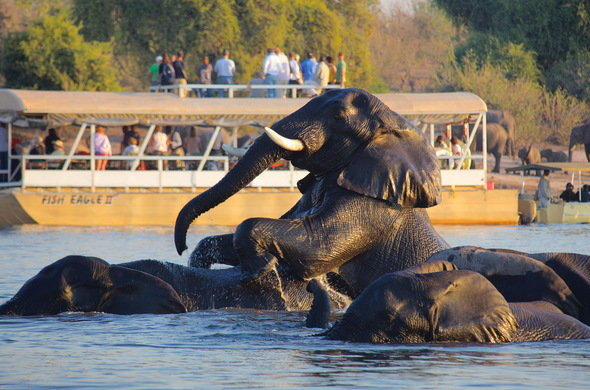
Hwange is best known for elephants. Enormous herds gather at the park's pumped and natural waterholes in the dry months, and the density of big game in the dry season is hard to match elsewhere in the region. For a deeper look at where to base yourself, our guide to Hwange safari tours breaks down the main camp areas.
Victoria Falls
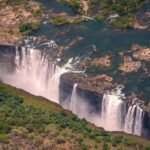
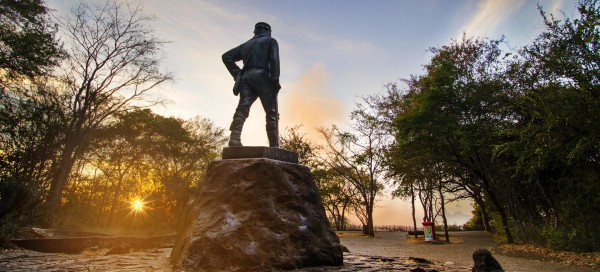
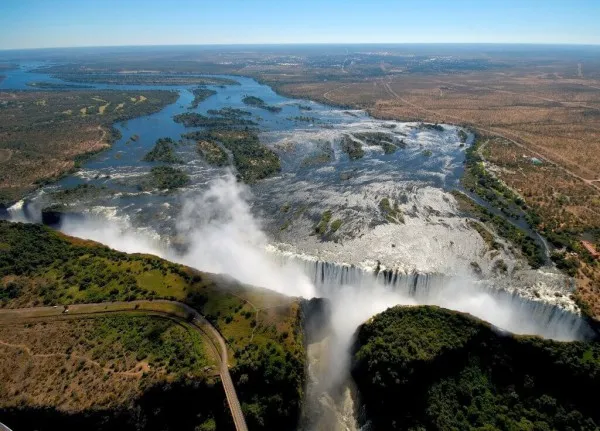
On the Zambezi River, Victoria Falls is one of the largest curtains of falling water on Earth and a UNESCO World Heritage Site. The spray is visible for miles, and the surrounding rainforest supports its own wildlife. Most tours use the town of Victoria Falls as an arrival and departure hub because it has an international airport and easy road links to Hwange and to Botswana's Chobe.
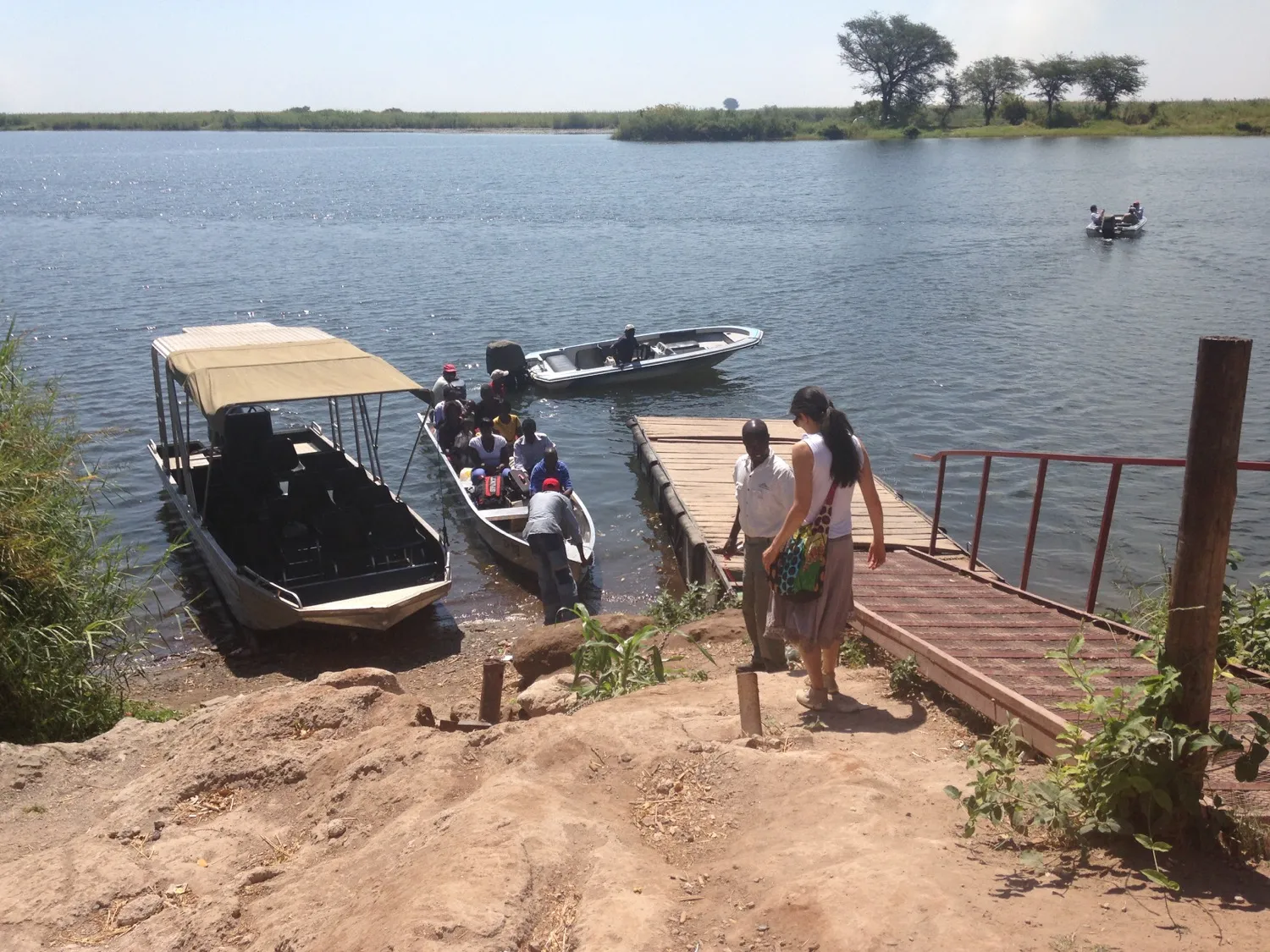
Beyond the viewpoints, the area offers river cruises, cultural visits and adventure activities, which makes it a natural place to add rest days between game-viewing legs.
Mana Pools
Mana Pools sits along the lower Zambezi in the far north and is a UNESCO World Heritage Site prized for wilderness and walking safaris. The floodplain draws elephants that famously stand on their hind legs to reach acacia pods, along with buffalo, big cats and one of southern Africa's better chances at seeing painted wolves on foot. It is remote, seasonal and rewards travelers who want raw bush over polished infrastructure.
Sample Tour Durations and Routing
Zimbabwe distances are long, so the length of your trip decides how many parks you can realistically enjoy. These sample structures reflect how most curated packages are built.
5 to 6 Days: Falls and One Park
Fly into Victoria Falls, spend two nights on the river and its viewpoints, then transfer by road to Hwange for two or three nights of game drives. This is the classic short introduction and pairs well with a longer regional trip.
7 to 9 Days: The Western Circuit
Combine Victoria Falls, Hwange and a stopover in Botswana's Chobe, which lies just across the border. Road transfers connect the three, and a Zambezi region cruise slots in neatly. This circuit suits travelers who want maximum variety without the internal flights that the far northern parks require.
10 to 12 Days: The Full Zimbabwe Loop
Add Mana Pools to the western circuit. Because Mana Pools is remote, most operators fly you in by light aircraft rather than drive. A typical routing runs Victoria Falls to Hwange to Mana Pools, with internal flights saving a full day of road travel between the last two.
Longer trips also make room for slower mornings, a walking safari, and a canoe leg on the Zambezi, which the compressed itineraries cannot fit.
Why Guided Tours Offer Better Wildlife Access
Self-driving Zimbabwe is possible in a few parks, but a guided tour changes what you actually see.
Private concessions and off-road driving. Many of the best camps sit on private concessions bordering the national parks. Guests there can drive off-road to a sighting and stay out after dark for night drives, both of which are restricted or banned for general visitors on public park roads. That access is the single biggest difference in sighting quality.
Reading animal movement. Guides track daily patterns: which waterhole the elephants favored yesterday, where a lion pride made a kill, which channel the wild dogs denned near. That local knowledge, built over seasons, is what puts you in the right place at the right hour.
Walking and boating safaris. In Mana Pools especially, the great encounters happen on foot or from a canoe, and both legally require a qualified guide. Without one, you are limited to the vehicle.
Logistics and safety. Border crossings, park permits, remote fuel, light-aircraft schedules and medical planning all sit with the operator. In big-game country that handled safety is not a luxury.
The payoff is measurable in what you witness. With more than a hundred mammal species in Hwange alone and the region's strongest painted-wolf viewing at Mana Pools, having a specialist decide where to point the vehicle is the difference between a long drive and a full sightings book. For guidance on stitching the whole trip together, see our Victoria Falls safari tours guide.
How to Book an Exclusive Zimbabwe Tour
Booking a private or small-group Zimbabwe safari comes down to a few clear steps.
- Set your window. The dry season from May to October delivers the strongest game viewing, and July through September books out first. Aim to reserve 6 to 12 months ahead for those months.
- Choose your parks. Decide whether you want the quick Falls and Hwange combination or the full loop that adds Mana Pools. Your available days will guide this.
- Pick your style. Tented camp or lodge, shared vehicle or private guide, road transfers or internal flights. Each choice shapes both the experience and the price.
- Confirm what is included. Check that park fees, conservation levies, internal flights and most meals are inside the quoted price, so there are no surprises on arrival.
- Work with a specialist operator. A curated operator holds camp relationships, concession access and the guiding network that make the exclusive sightings possible.
Maximum Adventure Trails builds Zimbabwe itineraries around these decisions, arranging private guides, concession access and seamless transfers so the trip runs as one connected journey.
Start by deciding your travel month and how many days you can give the trip, then request a tailored Zimbabwe itinerary that links the parks you most want to see. That single step turns a wish list into a confirmed departure.
Frequently asked questions
How many days do you need for a Zimbabwe safari tour?
Plan for at least 7 days to combine two parks. A 10 to 12 day trip lets you link Hwange, Victoria Falls and Mana Pools at a relaxed pace.
When is the best time for a safari tour in Zimbabwe?
The dry season from May to October offers the strongest game viewing, as animals gather at waterholes and vegetation thins out.
Are guided safari tours worth it compared to self-driving?
Yes. Guides know animal movements, access private concessions with off-road privileges, and handle all logistics, which raises your sighting rate and safety.
What wildlife can I expect on a Zimbabwe safari?
Expect large elephant herds, lion, buffalo and antelope in Hwange, plus painted wolves and elephants at Mana Pools. Hwange alone records 105 mammal species.