

- 24 Views
- 25 Min Read
- (0) Comment
Choosing Victoria Falls Zambia or Zimbabwe is the first big decision every traveler faces, and it is easy to get wrong. Most articles give a lazy answer like “Zimbabwe has better views, Zambia is more adventurous.” That is partly true, but it hides the details that matter: the season you travel in, your budget, your visa situation, how much walking you can do, and whether you want to see the falls or get into them.
I’ve spent years in affiliate marketing, building and auditing travel content, and one pattern shows up in reader behavior again and again. People searching this exact question are not casually browsing. They are usually 4 to 12 weeks from booking and have one worry: “What if I pick the wrong side and miss the best part?” This guide answers that worry directly, with no filler and nothing exaggerated.
Quick answer: If you can only visit one side and you want the widest, most classic views of the falls, choose Zimbabwe, especially from roughly March to July when the water is high. If you want adventure, dry-season access to Devil’s Pool, closer-up perspectives and a more relaxed base town, choose Zambia. If you have 2 to 3 days, do both, because the border crossing is easy and the falls are only a few kilometers from either town.
Details below, including where the common advice is outdated or oversimplified.
Victoria Falls at a Glance: Key Facts
Before comparing the two sides, here are the basics. Everything below is well documented and stable.
| Fact | Detail |
|---|---|
| Location | Zambezi River, on the border of Zambia and Zimbabwe |
| Local name | Mosi-oa-Tunya (“The Smoke That Thunders”) |
| Width | About 1.7 km (roughly 1 mile) |
| Maximum height | About 108 meters (around 355 feet) |
| Named by David Livingstone | He saw the falls in 1855 and named them after Queen Victoria |
| UNESCO status | World Heritage Site, inscribed in 1989 as Mosi-oa-Tunya / Victoria Falls |
| Nearest towns | Victoria Falls (Zimbabwe) and Livingstone (Zambia) |
| Famous landmark | Victoria Falls Bridge, completed in 1905 |
| Why it’s famous | Often described as the world’s largest sheet of falling water |
A note on accuracy that many blogs get wrong: Victoria Falls is not the tallest waterfall in the world (Angel Falls in Venezuela is far taller) and not the widest (Khone Falls in Laos is wider). Its reputation comes from the combination of width and height, which produces the largest continuous curtain of falling water. That is the claim to use.
Where Victoria Falls Actually Is (and Why Two Countries Share It)
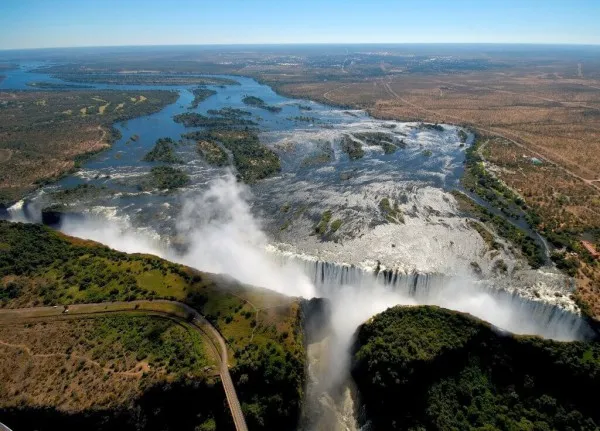
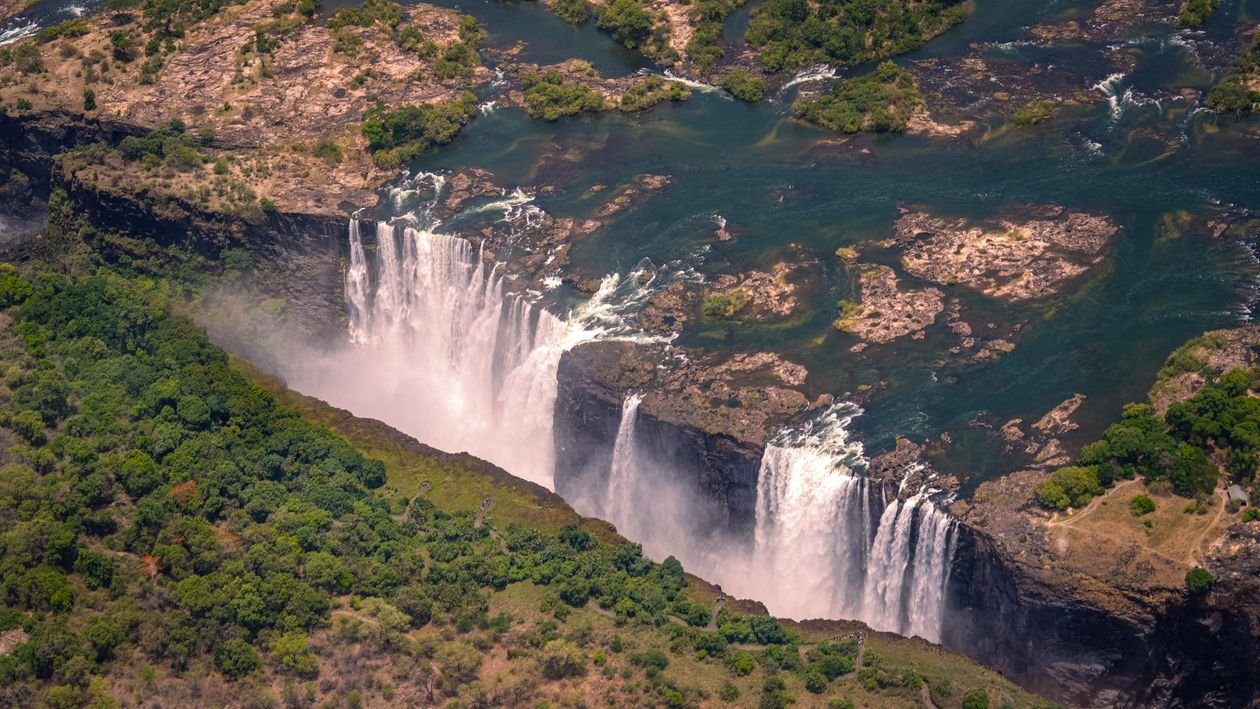
The Zambezi River forms the border between Zambia and Zimbabwe at this point. The river runs across a wide basalt plateau and then plunges into a long, narrow gorge cut along ancient fault lines. That is why you don’t see the falls from far away: the water drops into a slot, and the gorge is roughly the same width as the river above the falls.
Two practical consequences follow from this geography:
- The best frontal views are from the opposite bank. Because the gorge is narrow, one side of the border faces the falls almost head-on. That is the Zimbabwean bank, which is why Zimbabwe is commonly credited with the most complete panoramic views. You’ll often see the figure “about 75% of the falls,” which is a widely repeated estimate rather than an official measurement, so treat it as a rule of thumb.
- The falls look different on each side. Zimbabwe gives you a long walk facing the curtain of water. Zambia lets you get up close to the Eastern Cataract, the Knife-Edge Bridge and, in season, the very lip of the falls.
Both national parks are separate, with separate entry tickets, separate rules and separate opening details. Keep that in mind when you plan, because a ticket for one side does not cover the other.
Victoria Falls Zimbabwe Side: What to Expect
The Zimbabwean side is run as Victoria Falls National Park, with the small tourist town of Victoria Falls about 2 km away, close enough that many visitors walk to the park entrance.
The Views
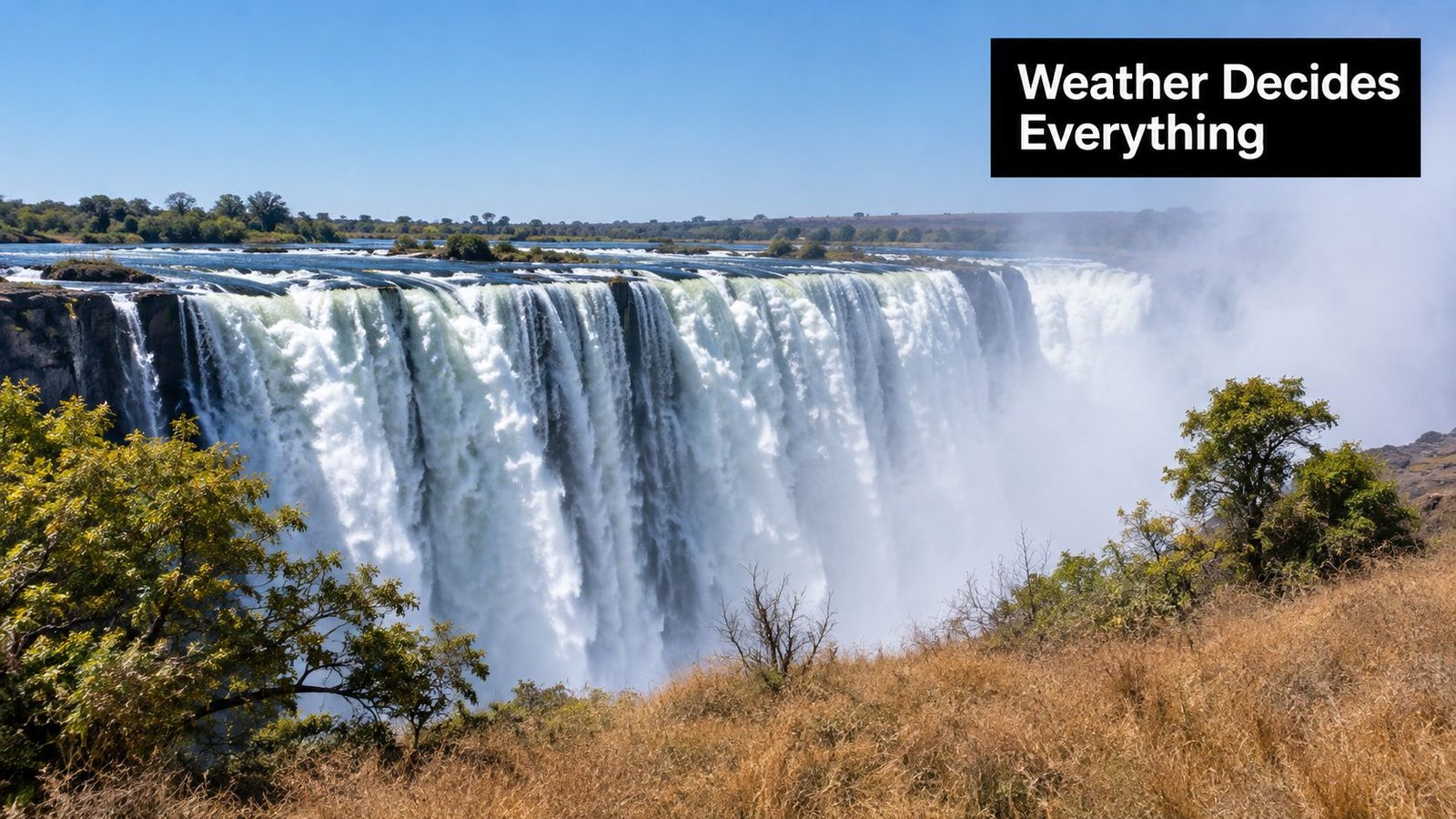
A well-marked path follows the rim of the gorge directly opposite the falls, with a series of numbered viewpoints. Walking the trail from one end to the other takes most people between 1.5 and 3 hours, depending on how much you stop for photos and how wet you get.
Highlights typically include:
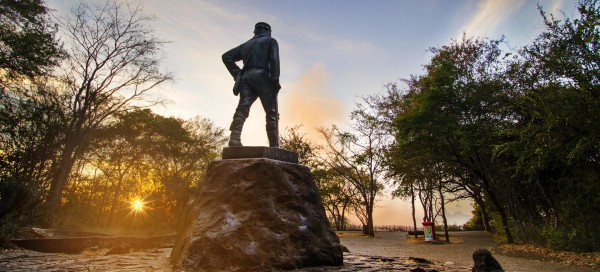
- Devil’s Cataract: at the western end, where the water pours into the gorge with a thunderous roar. This is also where the statue of David Livingstone stands.
- Main Falls: the tallest, most powerful section, and usually the most dramatic view of the whole visit.
- Horseshoe Falls and Rainbow Falls: the sections that give the trail its “wall of water” feeling, particularly in high water.
- Danger Point: a viewpoint at the eastern end with a sheer, unfenced drop into the gorge, where you can see the Victoria Falls Bridge. It is exactly as risky as the name suggests, so take care, especially with children.
The Water Factor (This Matters More Than Most Blogs Admit)
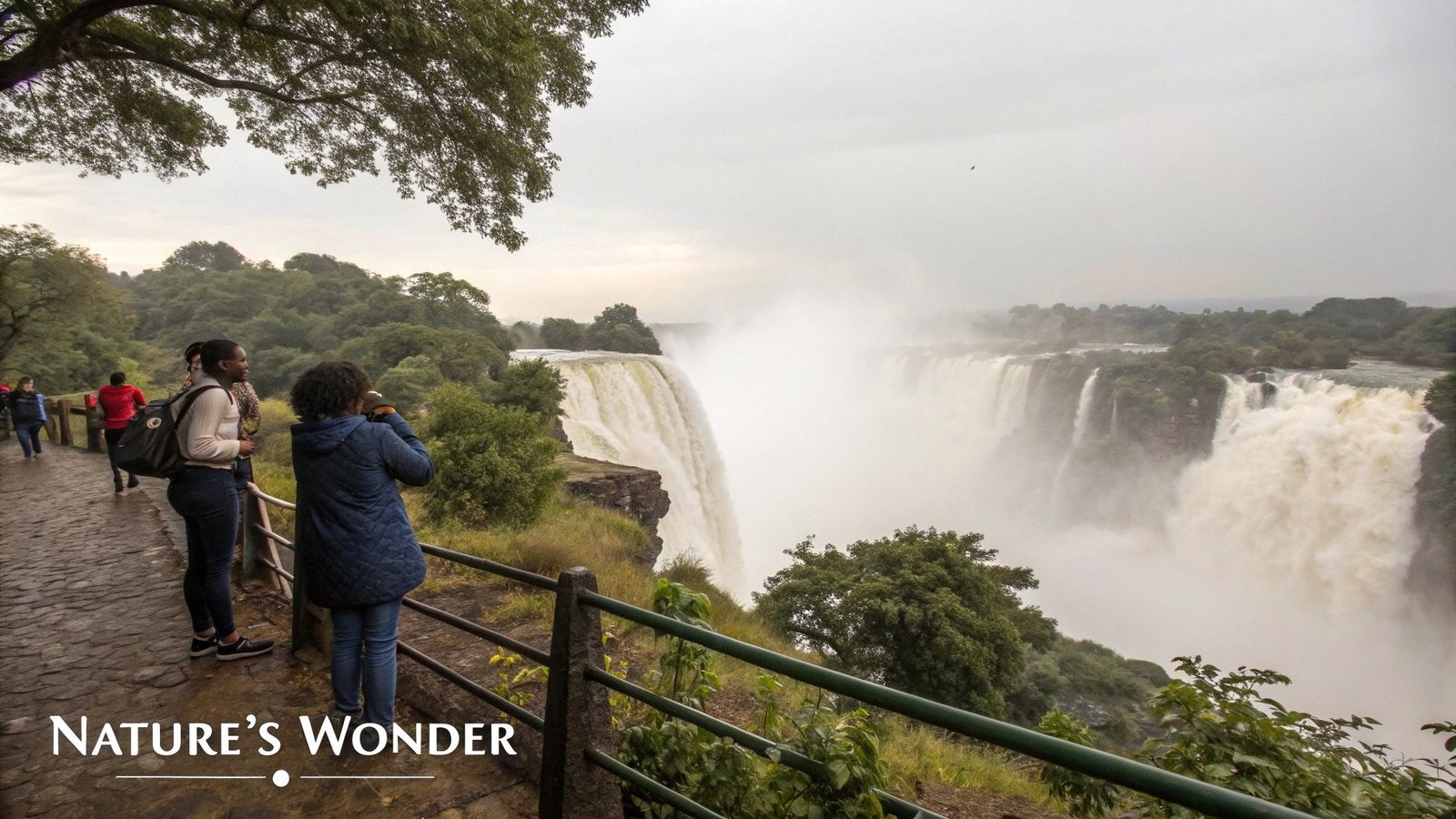
In peak flood season, the spray on the Zimbabwean side is so heavy that the trail can feel like walking through a rainstorm. Visibility of the falls themselves can be reduced, and photos of the main curtain may be difficult. The mist is part of the experience, but if your main goal is a clean photograph of the full falls, the early high-water period or the drier months can work better.
In low water, the falls are thinner but the cliff face, the gorge and the rock structure become far more visible. The Main Falls generally keeps flowing, so there is still plenty to see.
Other Things to Do on the Zimbabwe Side
- Victoria Falls Bridge: walk out to the border zone for views of the gorge, the falls and the bungee platform.
- Activities: bungee jumping from the bridge (about 111 meters), gorge swing, zip line, white-water rafting in the Batoka Gorge, helicopter and microlight flights, sunset river cruises and elephant-back or walking safaris.
- Zambezi National Park: a short drive from town, useful for game drives.
- Victoria Falls Hotel: a colonial-era hotel dating back to 1904, well known for afternoon tea with a view of the bridge. It’s a good stop even if you are not staying there.

- Victoria Falls Hotel: a colonial-era hotel dating back to 1904, well known for afternoon tea with a view of the bridge. It’s a good stop even if you are not staying there.
Pros of the Zimbabwe Side
- The most complete, frontal view of the falls
- Easy walking distance from the town center
- Well-developed tourism infrastructure with many activity operators
- Falls generally stay impressive even in the drier months
Cons of the Zimbabwe Side
- The spray can be extreme at peak flood
- No Devil’s Pool experience (that’s a Zambian activity)
- Tourism pricing is usually in US dollars and can feel expensive for what you get
Victoria Falls Zambia Side: What to Expect
The Zambian side falls within Mosi-oa-Tunya National Park, and the base town is Livingstone, roughly 10 km from the falls. Livingstone has a more local, lived-in feel than the compact tourist hub across the border.
The Views
The Zambian side offers a different perspective, more intimate and physical than panoramic:
- Eastern Cataract: the section closest to the Zambian bank.
- Knife-Edge Bridge: a narrow footbridge across a chasm, facing the Main Falls. It’s the most photographed spot on the Zambian side and gets extremely wet in high water. Waterproof protection for your phone and camera is essential.
- Boiling Pot: a steep trail leads down to the bottom of the gorge where the Zambezi swirls after dropping. The climb back up is steep and demanding in the heat.
- Victoria Falls Bridge: this vantage point is reachable from the Zambian side too.
Livingstone Island, Angel’s Armchair and Devil’s Pool
This is Zambia’s headline attraction. In the lower-water season, guided tours reach Livingstone Island at the very lip of the falls. From there, the tours go to Devil’s Pool (a natural rock pool at the edge of the drop) and Angel’s Armchair (a rock formation where you can sit on the edge). Details, timing and honest safety notes are covered below.
Other Things to Do on the Zambian Side
- Mosi-oa-Tunya National Park: known for white rhino and other wildlife, with guided rhino walks available.
- Livingstone Museum: the largest and oldest museum in Zambia, with exhibits on the region and on David Livingstone.
- Rafting and river activities: operators run trips from the Zambian side, with the route depending on water level.
- Sunset cruises on the upper Zambezi: relaxed and popular with hippos and elephants sometimes visible from the river.
- Chobe day trips: Botswana’s Chobe National Park is accessible as a day excursion, and Livingstone is a common base for it.

- Chobe day trips: Botswana’s Chobe National Park is accessible as a day excursion, and Livingstone is a common base for it.
Pros of the Zambia Side
- Close-up, adrenaline-filled perspectives
- Devil’s Pool and Livingstone Island in season
- Generally a more relaxed, less crowded atmosphere in town
- A wider range of budget accommodation in Livingstone
- Easy access to wildlife activities
Cons of the Zambia Side
- Less panoramic frontal view of the main curtain of water
- In the driest months, the Eastern Cataract can be reduced to a trickle or dry patches
- The town of Livingstone is about 10 km from the falls, so you’ll need transport
Zambia vs Zimbabwe: Side-by-Side Comparison
Here’s the comparison most people want. It reflects general patterns, not guarantees, because water levels, prices and operating conditions change.
| Factor | Zimbabwe Side | Zambia Side |
|---|---|---|
| Best for | Panoramic views, first-time visitors | Adventure, close-up perspectives |
| Main view | Head-on across the gorge | Eastern Cataract, Knife-Edge Bridge, lip of the falls |
| High water (Mar-Jun) | Excellent, but very wet | Impressive, but Knife-Edge is soaked |
| Low water (Sep-Dec) | Still flowing, thinner | Eastern Cataract can be much reduced, but Devil’s Pool opens |
| Devil’s Pool | No | Yes, seasonal |
| Town distance to falls | About 2 km, walkable | About 10 km, needs transport |
| Town feel | Compact, tourist-oriented | Larger, more local |
| Signature activities | Bungee, gorge swing, zip line, rafting | Devil’s Pool, rhino walks, rafting |
| Wildlife nearby | Zambezi National Park | Mosi-oa-Tunya National Park (white rhino) |
| Crossing needed for other side? | Yes, via the Victoria Falls Bridge | Yes, via the Victoria Falls Bridge |
My take, based on years of reviewing what travelers actually want: for a first-time visitor with limited time, the classic “one-side” answer is Zimbabwe. For anyone traveling between roughly September and December who wants a once-in-a-lifetime photo, Zambia’s Devil’s Pool is hard to beat. The best plan is to combine them.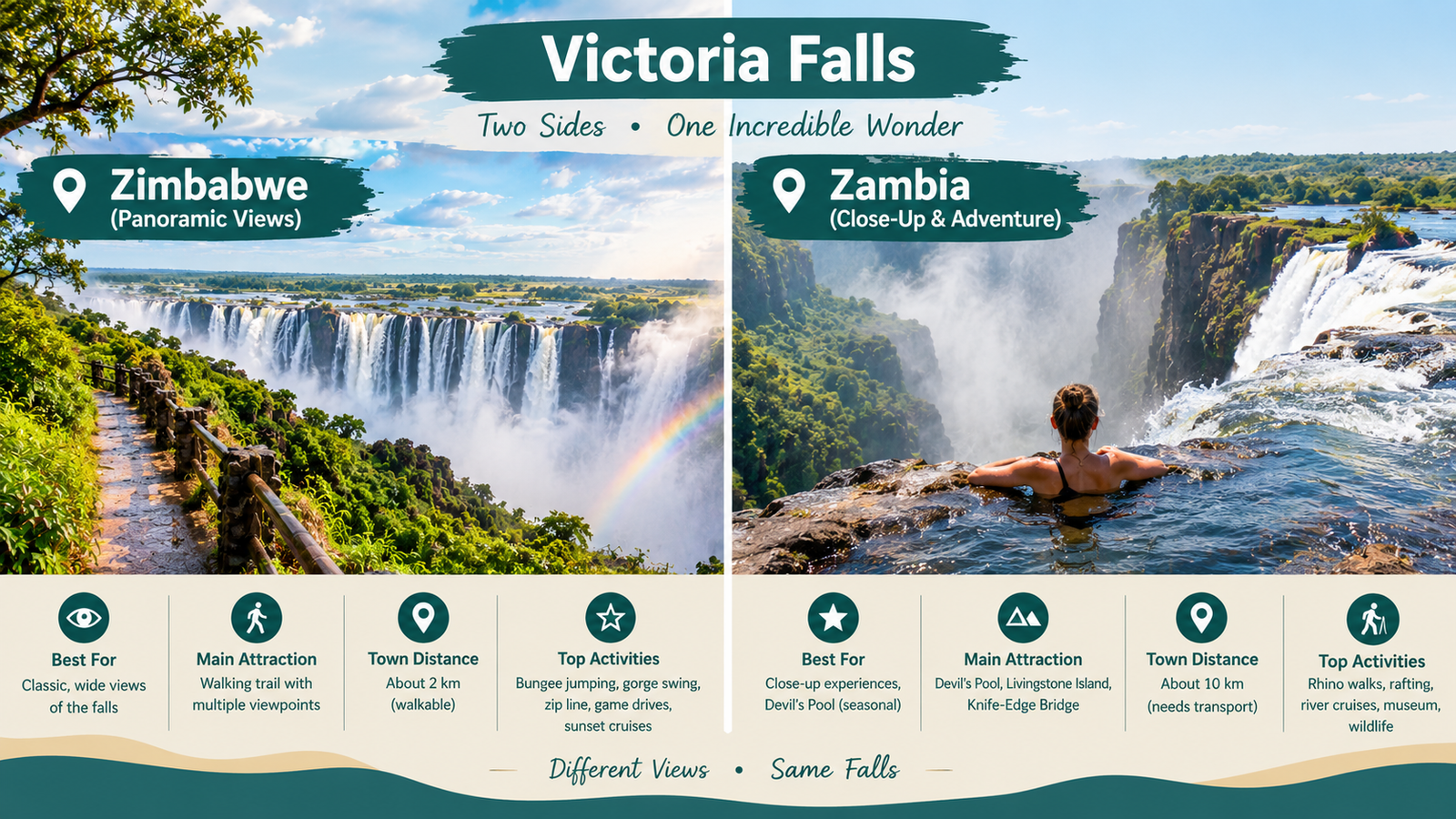
Best Time to Visit Victoria Falls (Month by Month)
The Zambezi’s flow depends on rainfall across the wider river catchment, and the peak arrives after the local rains, which is why the falls are fullest around March to May even though the wettest local weather is earlier.
| Period | Water level | What it means for visitors |
|---|---|---|
| Jan-Feb | Rising | Rainy season heat and humidity; falls building up |
| Mar-May | Peak flood | Most powerful falls, heaviest spray, difficult photography. Devil’s Pool is closed |
| Jun-Jul | High but falling | Often considered the sweet spot: strong flow with better visibility |
| Aug | Medium | Cooler, drier weather; spray reduced |
| Sep-Dec | Low | Devil’s Pool typically operates; rafting is at its best; Eastern Cataract may shrink |
| Nov-Dec | Lowest, early rains begin | Hot temperatures; the river begins to rise again |
My Practical Recommendations
- Want to see the falls at their most powerful? Late February through May. Bring proper rain gear and accept the mist.
- Want the best balance of flow and visibility? June and July are widely considered ideal.
- Want Devil’s Pool? Plan for roughly September through December. Tour operators decide daily based on water conditions, so the exact opening and closing dates change from year to year. Confirm with your operator before you build the whole trip around it.
- Want white-water rafting? Low-water season, roughly August to December, offers the fullest routes. High-water rafting exists but is limited to fewer sections.
- Want the “lunar rainbow” experience? On full-moon nights, the spray can produce a moonbow. Moonlight tours are offered when conditions allow, but availability varies, so confirm ahead.
Honest warning: you’ll find articles claiming “the best time is X.” There is no single best month. It depends on whether you value power, photographs, swimming at the edge, or rafting. Anyone who claims otherwise is oversimplifying.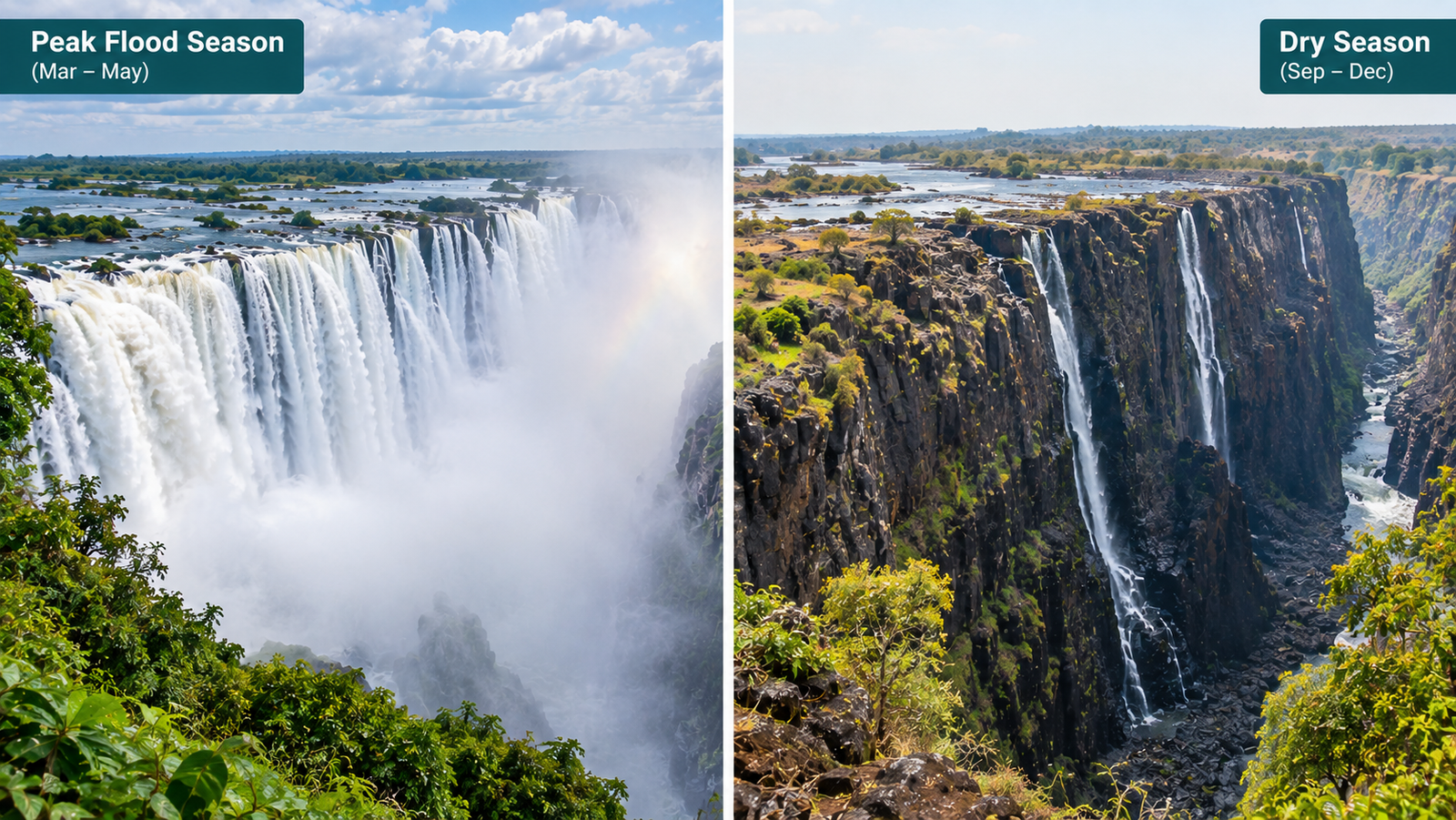
Devil’s Pool and Livingstone Island Explained
Devil’s Pool draws a large share of the search interest around the Zambia-versus-Zimbabwe question, so it deserves clear, careful information.
What It Is
Devil’s Pool is a natural pool formed in the rock at the very edge of the falls on the Zambian side, on Livingstone Island. A natural rock lip helps hold visitors in place while they look over the drop.
How You Get There
Access is only by guided tour. Tours typically depart from the Zambian side and use a boat to reach Livingstone Island. Tours are run by licensed operators, and breakfast, lunch or high-tea packages are commonly offered. Independent access is not something to attempt.
When It’s Available
Only when water levels are low enough for the operators to consider it safe, which is typically from around late August or September to around December or January. The operator makes the final call on the day.
Is It Safe?
It’s a guided activity with experienced guides, and it has a good reputation, but it involves swimming near the edge of a very large waterfall. Take these points seriously:
- Follow the guide’s instructions exactly.
- Do not go if conditions are questionable or if you’re a weak swimmer and uncomfortable in moving water.
- Keep valuables secure; phones and cameras are usually handled by the guides or photographers.
- Choose a licensed operator with a track record, not the cheapest option.
Any responsible article should say plainly: this is an adventure activity, and there is a real risk. Avoid anyone who sells it as “totally safe.”
Angel’s Armchair
Another rock formation on Livingstone Island where you can sit at the edge of the falls. It’s typically included in the same tour when conditions allow.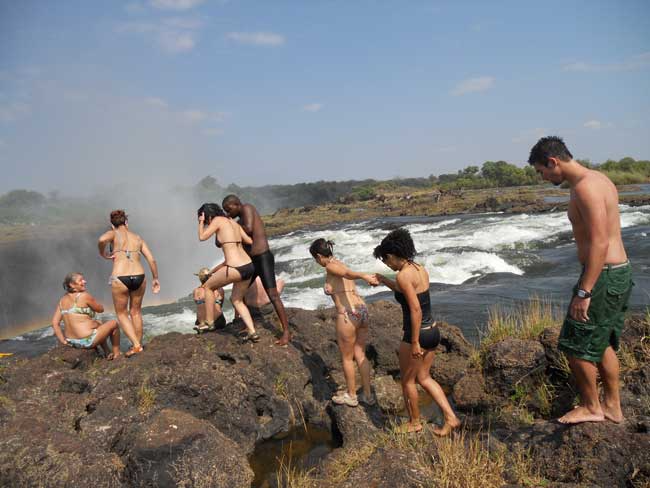
Crossing the Border Between Zambia and Zimbabwe
Many travelers assume they must pick one side and stay put. In practice, you can visit both, and I recommend it if your schedule allows.
The Basics
- The Victoria Falls Bridge connects the two countries. Immigration posts sit at each end.
- You can cross on foot or by taxi or shuttle, and many hotels and operators arrange transfers.
- Crossing usually involves exiting one country and entering the other, so bring your passport, and expect to fill out immigration forms or pay any applicable fees.
Visas: What to Know
Visa rules depend on your nationality and can change, so check the official immigration websites of both Zambia and Zimbabwe before you book. Here is the general picture, which you should verify:
- Some nationalities can get a visa on arrival, others need to arrange an e-visa or an embassy visa in advance, and some are exempt.
- The KAZA UNIVISA has been offered to eligible nationalities as a single visa covering Zambia and Zimbabwe (and permitting day trips to Botswana’s Chobe). Its availability, price and eligibility have changed over the years, so confirm its current status on official sources before assuming you can use it.
- Multiple entries can matter if you plan to cross more than once. Confirm whether your visa allows it.
Tips From Experience
- Carry small US dollar notes for visa fees or border costs, in case card facilities are unavailable. Check current requirements.
- Allow extra time on both sides. Border queues vary widely by time of day and season.
- Don’t plan a tight schedule around a border crossing, for example a rafting departure an hour after you cross.
- Keep your passport dry. Misted, drenched documents are a real and common problem on the wet trails.
Important: I don’t include specific visa prices because they change and are region-dependent. Anyone quoting a fixed number without a date is likely to be out of date.
Getting There: Airports and Transport
There are two main airports:
- Victoria Falls Airport (VFA), Zimbabwe: roughly 20 km from Victoria Falls town, served by regional flights (often via Johannesburg, and sometimes Harare, Addis Ababa and others depending on the period).
- Harry Mwanawasa International Airport (LVI), Livingstone, Zambia: a short drive from Livingstone town and the falls, also served by regional connections such as Johannesburg and Lusaka.
Which Should You Fly Into?
Choose the airport that fits your itinerary and flight price, not the side you plan to see. Because the border is easy to cross, either one works. Compare the total cost of flights plus transfers.
Getting Around
- Zimbabwe side: the town is compact, and many people walk to the falls, though taxis and shuttles are common.
- Zambia side: you’ll generally use taxis or hotel transfers between Livingstone town and the park.
- Both sides have organized transfers to the border and to activity meeting points.
Overland
Long-distance buses and organized overland trips connect the region with cities in Zambia, Zimbabwe, Botswana and Namibia. If you’re combining several countries, check up-to-date routes and border requirements.
Where to Stay: Livingstone or Victoria Falls Town?
Victoria Falls Town (Zimbabwe)
Best for: short trips, first-timers who prefer walkability, and those wanting many restaurants and activity booking points in one place.
- Compact and tourism-focused
- Easy walking to the national park entrance
- Wide range from lodges and boutique hotels to backpacker hostels
Livingstone (Zambia)
Best for: budget-conscious travelers, those planning Devil’s Pool or rhino walks, and people who want a less concentrated tourist bubble.
- A wider spread of budget guesthouses and hostels
- Higher-end riverside lodges along the Zambezi
- More local flavor, with markets and museums
Riverside Lodges
Both sides have upmarket lodges along the Zambezi, sometimes with views of elephants or hippos from the deck. If wildlife matters to you, riverside options can add something a town hotel can’t.
A pricing note: I’m deliberately not quoting nightly rates. Prices swing widely by season, and accommodation across both towns ranges from budget dorms to luxury lodges. Use booking sites to compare current rates.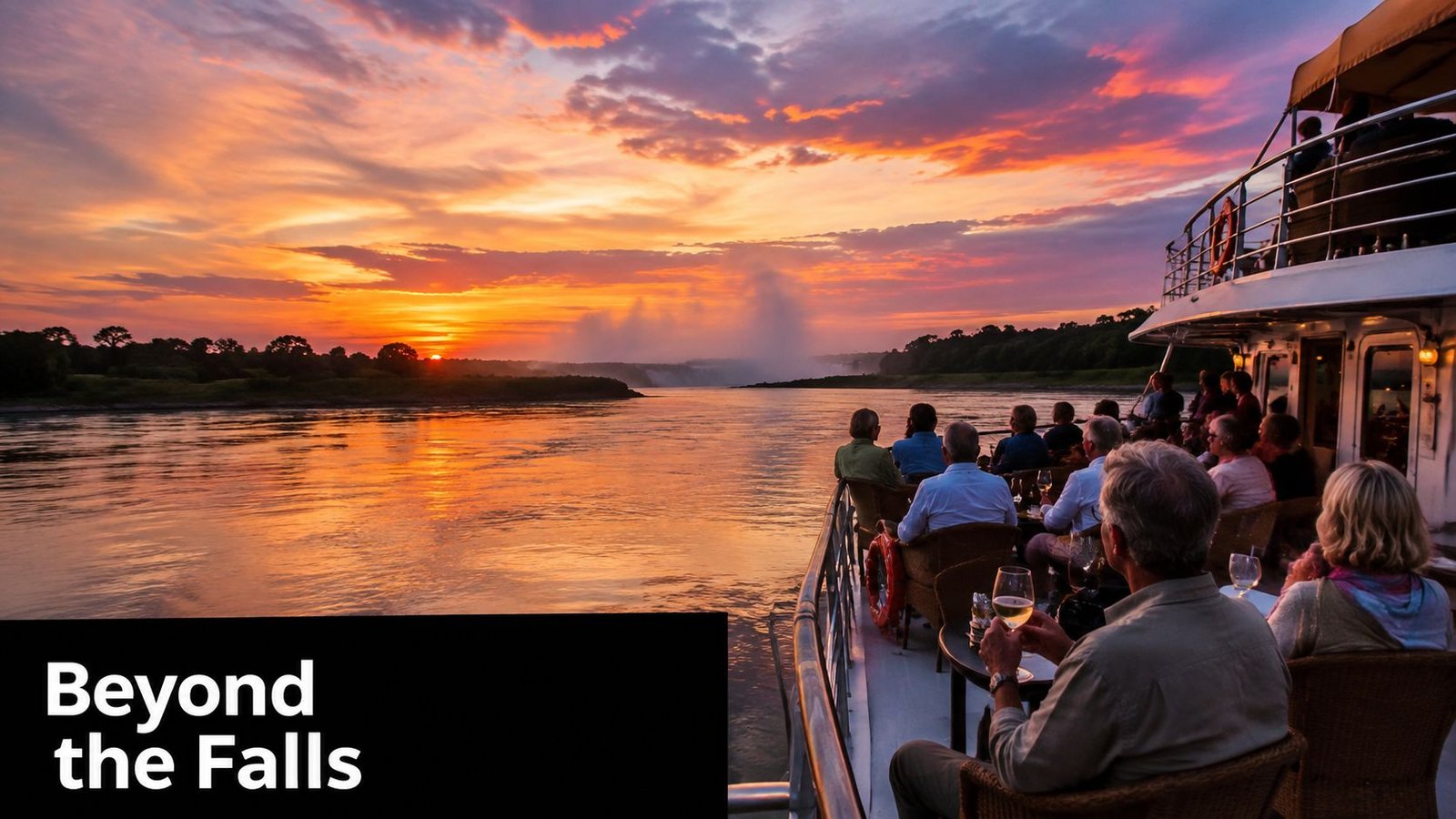
Best Activities on Each Side
Activities Available (or Commonly Offered) Around Both Sides
- White-water rafting in the Batoka Gorge below the falls (route depends on season)
- Helicopter flights over the falls, a popular choice for the full view
- Sunset cruises on the upper Zambezi
- Day trips to Chobe National Park in Botswana
- Bridge activities: bungee jumping and related experiences on the Victoria Falls Bridge. Check the meeting point and operator when booking.
Zimbabwe-Leaning
- Guided walks along the national park trail
- Gorge swing and zip line
- Zambezi National Park game drives
- Afternoon tea at the Victoria Falls Hotel
Zambia-Leaning
- Devil’s Pool and Livingstone Island (seasonal)
- Knife-Edge Bridge and Boiling Pot trail
- Rhino walks in Mosi-oa-Tunya National Park
- Livingstone Museum
Activity Advice From a Content Strategist’s View
When I audit travel guides, the pages that convert best (and help readers most) don’t list 30 activities.
They help readers pick 2 or 3. My suggestion: choose one view experience (walking trail or helicopter), one adventure (rafting, Devil’s Pool or bungee), and one calm experience (sunset cruise or a good meal with a view). That’s plenty for a short trip.
Sample Itineraries
One Day (If You’re Short on Time)
- Morning: walk the national park trail on the side you’re based on.
- Midday: lunch, then a short activity (helicopter flight or a bridge visit).
- Late afternoon: sunset cruise on the Zambezi.
Reality check: one day means choosing one side. Cross the border only if time and visas are straightforward.
Two Days (Recommended Minimum)
Day 1, Zimbabwe side: Full walk of the national park in the morning. Afternoon at the Victoria Falls Bridge and a sunset cruise.
Day 2, Zambia side: Cross the border in the morning. Knife-Edge Bridge and the Boiling Pot. In season, a Livingstone Island tour instead. Afternoon rhino walk or relaxing at a riverside lodge.
Three Days (Comfortable Pace)
Day 1: Zimbabwe trail and town.
Day 2: Rafting or a helicopter flight, depending on the season, plus a relaxed evening.
Day 3: Zambia side (Knife-Edge, Devil’s Pool in season) and a Chobe day trip or wildlife activity.
Padding tip: leave at least a half-day of slack for border delays, weather changes or rafting cancellations.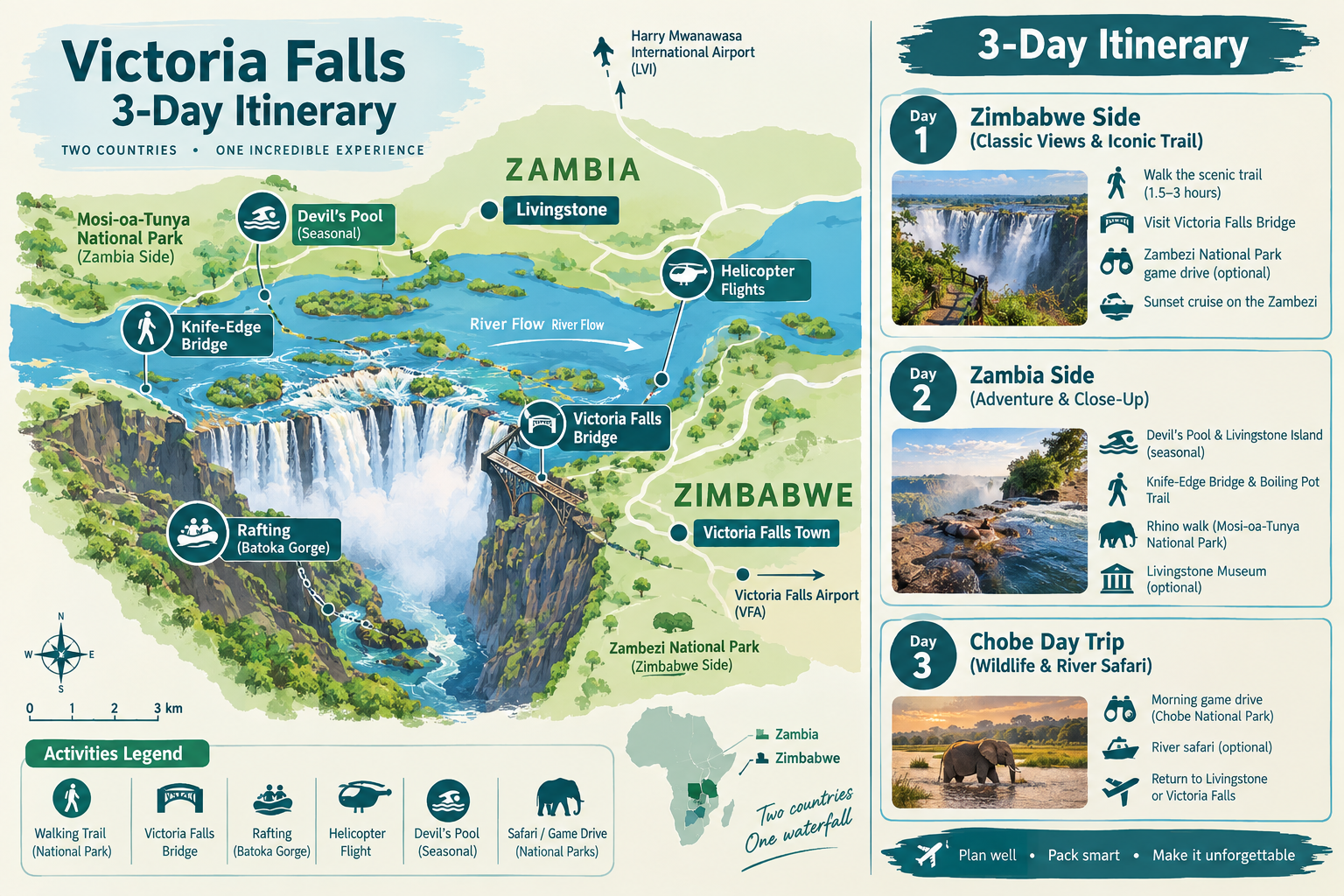
Budget and Money Tips
I won’t give specific price figures, because entry fees, activity prices and visa costs change and vary by nationality. Instead, here’s how to plan a realistic budget:
Main Cost Categories
- Flights (usually the biggest single cost)
- Accommodation
- Park entry fees for each side you visit
- Visas and border costs
- Activities (Devil’s Pool, rafting, helicopter flights and bungee are typically the priciest)
- Transfers and local transport
- Food and drink
Currency Notes
- Zimbabwe: the US dollar is widely used in tourism, alongside the local currency, which has changed over recent years. Confirm the current situation before you go.
- Zambia: the Zambian kwacha is the local currency, but tourism operators often quote or accept US dollars.
- Cards: accepted at many hotels and larger operators, but not everywhere. Carry some cash in small denominations as a backup.
Ways to Save Without Cutting the Experience
- Visit in shoulder months (some parts of the dry season) when accommodation can be cheaper.
- Base yourself in Livingstone for more budget options.
- Pick a couple of high-value activities instead of booking everything.
- Book directly with reputable operators, and compare a few before paying.
Fact-check habit: always confirm current prices on the official park or operator websites before you publish or rely on any figure. I’ve seen travel articles lose reader trust fast by quoting outdated fees.
Safety, Health and Practical Info
Safety
Both Livingstone and Victoria Falls town are established tourist destinations, and most visitors have trouble-free trips. Standard precautions apply: avoid displaying valuables, use reputable taxis and operators, and don’t walk alone in isolated areas after dark. Check your government’s current travel advice for both countries.
Wildlife
Elephants, hippos and other animals can wander through town or near lodges. Keep your distance, follow local guidance and never approach wildlife.
Health
- Malaria is present in the region. Speak with a doctor or travel clinic about prevention well before you travel.
- Yellow fever certificate: may be required if you’re arriving from a yellow fever risk country. Check current rules.
- Sun and heat: strong, so use sun protection and stay hydrated.
- Water: stick to bottled or purified water unless your accommodation says otherwise.
- Travel insurance that covers adventure activities and medical evacuation is strongly advised.
Power and Connectivity
- Both countries use 220-240V. Plug types vary (types C, D and G appear, depending on location), so a universal adapter is the safe choice.
- Local SIM cards are available in both countries, and many hotels offer Wi-Fi, though speeds vary.
Accessibility
The trails on both sides include uneven, wet and sometimes slippery surfaces. The Zambian Boiling Pot trail is steep. Travelers with mobility limitations should check current conditions and consider a helicopter flight or a guided visit with a private driver.
What to Pack (Gear That Actually Matters)
This is the section where my affiliate marketing background is most relevant, and I want to be transparent about how I approach it. The most useful gear recommendations aren’t long lists of 30 products. They’re the five or six items that solve real problems at this specific destination. Everything else is noise.
1. Waterproof Phone Pouch or Dry Bag
The spray on both sides is heavy, especially on Zambia’s Knife-Edge Bridge and in the Zimbabwe rainforest section during high water. A waterproof pouch protects your phone, and a small dry bag protects your passport and camera.
2. Lightweight Rain Poncho
Many visitors rent or buy ponchos on site, but a compact one packed from home is a cheap, useful backup.
3. Quick-Dry Clothing and Grippy Sandals or Trail Shoes
Cotton stays wet all day. Quick-dry fabrics and shoes with good traction help on slippery paths.
4. Compact Binoculars
Useful for wildlife on river cruises, in the national parks and on Chobe day trips.
5. Universal Travel Adapter
Because plug types vary, one adapter saves hassle.
6. Insect Repellent and Sun Protection
Repellent, sunscreen, a hat and sunglasses. Check with a travel clinic for what’s appropriate for you.
7. Action Camera or Water-Resistant Camera (Optional)
Good for rafting, boat trips and high-spray viewpoints.
How I choose products to recommend: I favor items with a long record of solid reviews and a clear purpose, and I avoid recommending anything just because it has a high commission. Readers notice, and it protects trust and long-term conversions. (Edit this paragraph to reflect your real practice. Only describe testing or personal use if it’s true.)
Common Mistakes to Avoid
These are the errors that come up most often in traveler questions and comment sections:
- Assuming the two sides look the same. They don’t. Decide what you want to see.
- Booking Devil’s Pool for the wrong season. It isn’t available in high water. Confirm dates with the operator.
- Under-planning for the spray. Phones and cameras get soaked, and photos can be ruined.
- Leaving no buffer for border crossings. Delays happen.
- Ignoring visa rules until the last minute. Requirements depend on nationality and can change.
- Trying to see everything in one day. Rushing spoils the experience.
- Relying only on cash, or only on cards. Bring a mix.
- Trusting outdated blog information. Fees, visa systems and currencies change. Check official sources.
- Underestimating the heat and the walking. Both can be tiring.
- Booking the cheapest operator for adventure activities. Safety standards matter.
Final Verdict: Victoria Falls Zambia or Zimbabwe?
Here is my honest, no-nonsense summary.
Choose Zimbabwe if:
- You want the widest, most classic views of Victoria Falls.
- You prefer a compact, walkable base town.
- It’s your first visit and you can only pick one side.
- You’re traveling in the high-water months, when the frontal view is most spectacular.
Choose Zambia if:
- You’re visiting roughly September to December and want to try Devil’s Pool.
- You prefer an intimate, close-up experience over a panorama.
- You want a more budget-friendly base and a relaxed atmosphere.
- Wildlife activities such as rhino walks are on your list.
Choose both if:
- You have at least two days.
- Your visa allows for it.
- You want the full picture, which is the approach I recommend for most travelers.
There’s no wrong side, only a mismatch between your expectations and the season. Match your dates, your interests and your comfort level, and either side delivers.
Frequently Asked Questions
Which side of Victoria Falls is better, Zambia or Zimbabwe?
Neither is better for everyone. Zimbabwe generally offers the fuller, more panoramic view of the falls, while Zambia offers a closer-up experience, including Devil’s Pool in the low-water season. If you have time, visit both.
Can I see Victoria Falls from both Zambia and Zimbabwe in one trip?
Yes. The Victoria Falls Bridge connects the two countries, and many visitors cross in a single day. You’ll need to check your visa requirements and allow time at the border posts.
Is it worth visiting both sides of Victoria Falls?
For most travelers with 2 or more days, yes. The perspectives are different, and each side offers unique activities. If you only have one day, choose one side and do it well.
Which side has more water?
The water is the same river, but the falls look fuller from Zimbabwe in most seasons because of the head-on view. In the dry season, the Zambian side’s Eastern Cataract can be significantly reduced.
When is the best time to visit Victoria Falls?
It depends on your priorities. The falls are at their most powerful from around March to May, June and July offer a good balance of flow and visibility, and September to December is the low-water season, when Devil’s Pool and the fullest rafting routes are usually available.
Is Devil’s Pool open all year?
No. It’s only available when water levels are low enough, generally from around late August or September to around December or January. The operator makes the final decision each day.
Is Devil’s Pool safe?
It’s a guided adventure activity with experienced operators, but it involves swimming at the edge of a major waterfall. Follow your guide’s instructions, choose a reputable, licensed operator and skip it if you aren’t comfortable in moving water.
Do I need a visa for Victoria Falls?
It depends on your nationality. Zambia and Zimbabwe have separate visa systems, and a single visa for both (the KAZA UNIVISA) has been offered to some nationalities, though its availability has changed over time. Always check the official immigration websites for both countries before you travel.
How many days do I need at Victoria Falls?
Two days is a sensible minimum for seeing both sides, and three days allows time for activities such as rafting, a helicopter flight or a Chobe day trip.
Is it safe to visit Victoria Falls?
The main tourist areas are used to visitors and most trips are trouble-free. Follow standard travel precautions, check your government’s current travel advice and use reputable operators.
Which airport should I fly into?
Victoria Falls Airport (Zimbabwe) and Harry Mwanawasa International Airport in Livingstone (Zambia) are both options. Choose based on flight prices and your itinerary, since crossing the border is straightforward.
Do I need to pay separate entry fees for each side?
Yes. Each side has its own national park with its own entry fee, so a ticket for one doesn’t cover the other. Confirm current fees on the official park websites.
What should I wear at Victoria Falls?
Quick-dry clothing, shoes or sandals with good grip and a rain poncho, especially in the high-water months. Bring a waterproof pouch for your phone and sun protection for the drier months.
Conclusion
The question of Victoria Falls Zambia or Zimbabwe doesn’t have a single right answer, but it does have a right answer for you. Zimbabwe delivers the classic panorama. Zambia delivers the close-up thrill. Together they give you the full experience of one of the planet’s great natural wonders.
Plan around the season, verify visa and fee details from official sources, pack for the spray and leave buffer time. Do that and you’ll avoid the mistakes I see repeated most often.
If this guide helped you plan, consider bookmarking it, and check back, because I update information as conditions change.