

- 82 Views
- 13 Min Read
- (0) Comment
The Undeniable Allure of a Trip to Africa Safari
After months of routines and screen time, a journey into the wild offers a chance to reconnect with something real. The idea of a trip to africa safari speaks to travelers who crave genuine encounters and moments of reflection. Out on the plains and in the bush, every sighting and heartbeat feels immediate, making these trips a meaningful reset.
The Post-Pandemic Desire for Meaningful Travel
Planning a trip to africa safari also involves understanding the ecosystems you’ll explore and the unique experiences each destination offers.
In the post-pandemic era, vacation plans carry new weight as people arrive seeking conservation insight and cultural exchange rather than lounge chairs. Guides note a 38% jump in global searches for African safaris in Q1 2023, driven mostly by 60% of queries focused on South Africa, Kenya and Tanzania. July stands out as the peak planning month. Read the full research here.
The Power of Visual Storytelling on Social Platforms
Instagram and TikTok feeds have become digital windows into the savanna. A drone shot of lions at dawn can spark thousands of booking inquiries. This rise of visual storytelling turns followers into future travelers eager to step off-screen and into those landscapes.
Conservation Success Stories Fueling Emotional Bonds
Wildlife wins, like the rebound of black rhino populations in certain regions, deepen the emotional impact of a safari. When guests learn their trip dollars fund anti-poaching patrols or local schools, the adventure becomes a personal investment. Many lodges now highlight how each visit supports protective units and offers scholarships to nearby communities.
What Separates Casual Interest From Profound Encounters
The modern safari blends psychology with geography. Travelers aren’t just ticking off a wildlife checklist; they’re chasing moments that reshape their worldview. Here’s how the main drivers of this shift affect your experience:
| Driving Factor | Impact on the Safari Experience |
|---|---|
| Post-Pandemic Mindset | Focus on learning and personal growth |
| Social Media Inspiration | Heightened anticipation and visual cravings |
| Conservation Narratives | Emotional investment and repeat visits |
| Multisensory Nature Immersion | Deeper connection through sounds, scents, sights |
Together, these elements prove that today’s safari is as much about the mind as it is about the wild.
Main Takeaways:
- Safari trips now prioritize authentic connections over luxury amenities
- Social platforms fuel desire by showcasing real-time wildlife moments
- Conservation successes create emotional stakes and repeat bookings
- July remains the top month to start planning for the year’s best game viewing
With these insights in mind, the next step is choosing the perfect destination where your safari dreams come true.
Signature Destinations: Where Your Safari Dreams Come True
Below is a data chart presenting projected growth rates and market share for major safari markets in Africa.
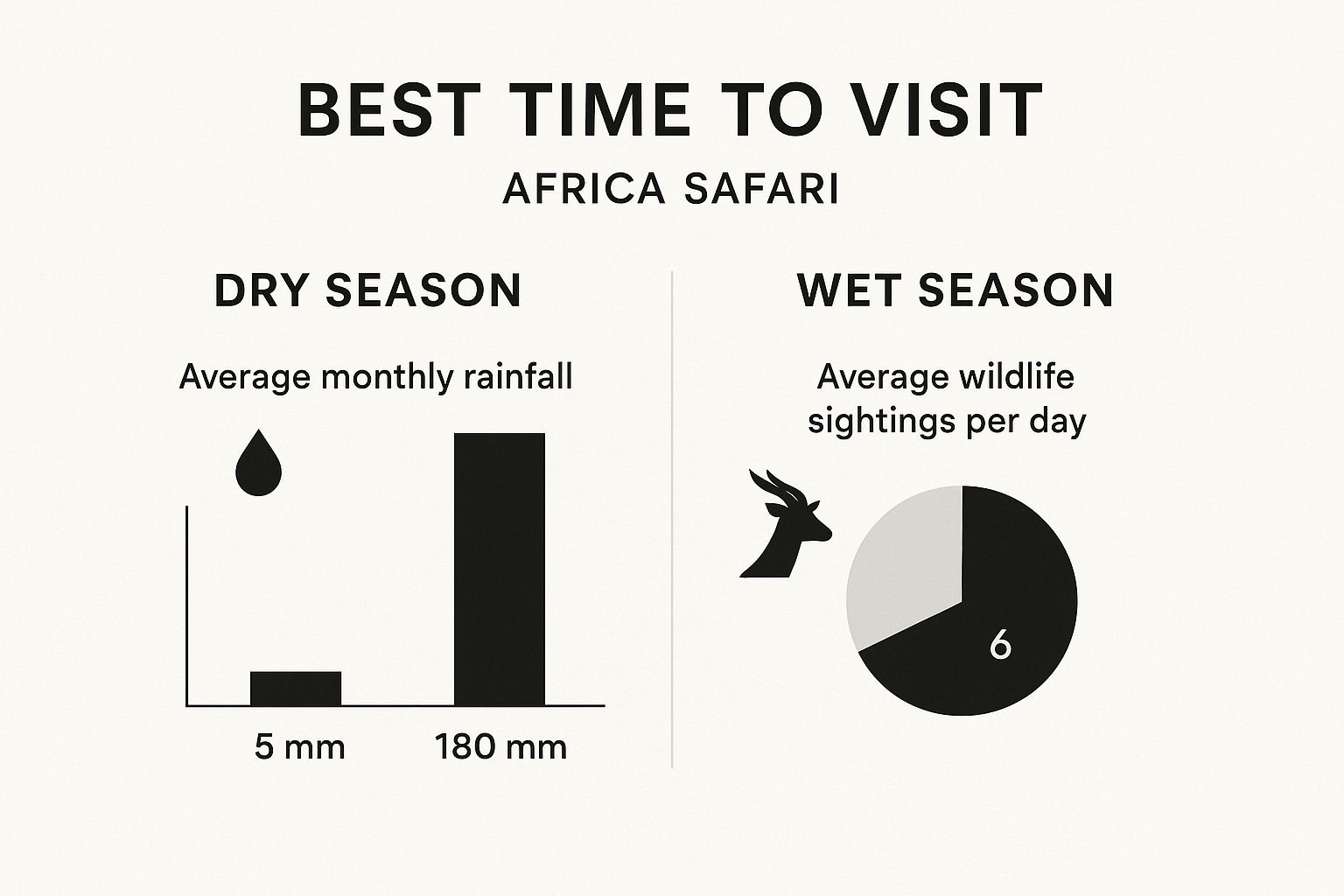
This chart shows Tanzania leading with a 6.5% CAGR, followed by South Africa at 6.2%, while Botswana and Kenya register 5.8% and 5.5% respectively.
Africa’s safari landscapes range from vast migration plains to hidden wetlands. Tanzania’s Serengeti hosts over 1.5 million wildebeest during peak months, while floodwaters transform Botswana’s Okavango Delta into a wildlife haven. South Africa’s Kruger National Park stands out for its easy road access and dense Big Five populations—all driven by seasonal rhythms that set each destination apart.
Market Growth And Emerging Hotspots
Tour operators and travellers alike are eyeing expanding opportunities. The African safari tourism market is on track for a 6.2% CAGR between 2024 and 2030, thanks to rising incomes and social buzz.
Tanzania—anchored by the Serengeti and Ngorongoro Crater—is forecast to outpace peers with a 6.5% CAGR over the same period.
Iconic Migration Corridors And Wetland Paradises
Here’s what makes each ecosystem unique:
- Serengeti, Tanzania
- The Great Wildebeest Migration
- Sunrise hot-air balloon flights
- Ngorongoro Crater, Tanzania
- Dense wildlife in a volcanic caldera
- Guided crater-floor walks
- Okavango Delta, Botswana
- Mokoro excursions through floodplains
- Nighttime wildlife listening safaris
- Kruger National Park, South Africa
- Self-drive freedom across 1,948 km²
- Options from luxury lodges to campsites
- Madikwe Game Reserve, South Africa
- Malaria-free Big Five safaris
- Community-led rhino tracking excursions
Comparison of Top African Safari Destinations
Below is a comparison of the major safari destinations across Africa, highlighting their key features, best viewing seasons, and signature wildlife experiences.
| Destination | Best Time to Visit | Signature Wildlife | Accommodation Types | Unique Experiences |
|---|---|---|---|---|
| Serengeti, Tanzania | June–July, Dec–Mar | Wildebeest Migration, Lion prides | Tented camps, Mobile lodges | Hot-air balloon flights at dawn |
| Ngorongoro Crater, Tanzania | June–Oct | Black rhino, Elephants | Crater-edge lodges | Guided crater-floor walks |
| Okavango Delta, Botswana | May–Sept | African wild dog, Hippos | Water camps, Safari boats | Mokoro excursions, Night safaris |
| Kruger National Park, South Africa | May–Sept | Elephant herds, Big cats | Safari lodges, Campsites | Self-drive and Bus safaris |
| Madikwe Game Reserve, South Africa | Apr–Oct | African wild dog, Leopard | Luxury lodges, Family bush homes | Community-led conservation excursions |
This table highlights differences in wildlife focus, lodging styles, and seasonal advantages to help you pick a destination that matches your priorities.
Main Takeaways:
- Seasonal floods and migrations create dramatic viewing windows
- Growth projections point to East Africa’s circuits expanding fastest
- Destination choice shapes accessibility, exclusivity, and wildlife density
You might be interested in: Check out our guide on How to Master Destination Selection for deeper planning strategies.
Crafting Your Trip To Africa Safari: Strategic Planning
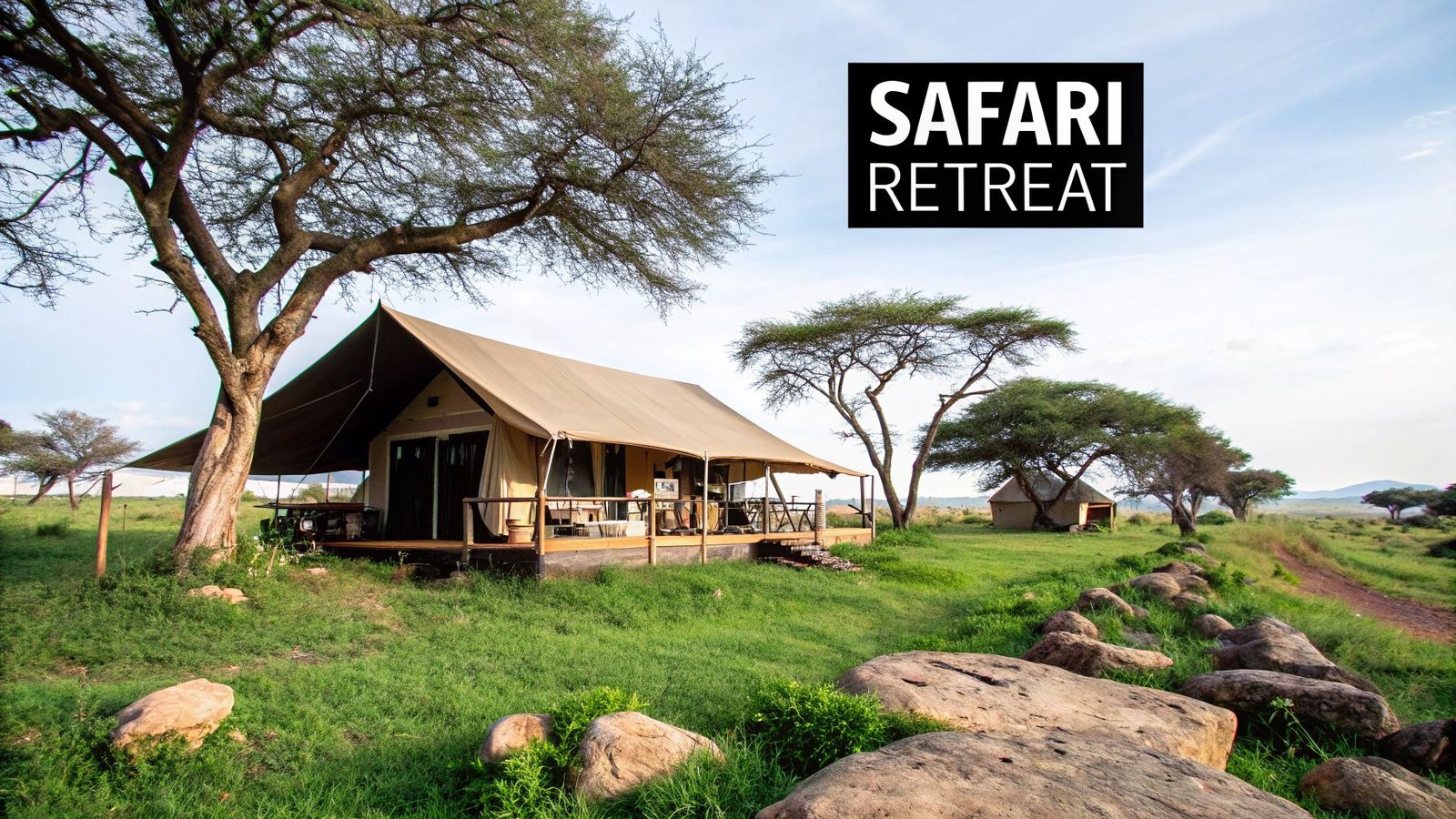
Planning a trip to Africa safari goes beyond flights and luggage. Season, weather and the right questions can elevate your route into a memorable exploration. Here’s a step-by-step guide to help you plan with confidence.
Timing And Budget Considerations
Booking at the ideal time can save you thousands and guarantee top lodges. Consider this timeline:
- 6–12 Months Before Travel: Secure peak-season rates and popular camps
- 3–6 Months Ahead: Snag green-season deals and flexible vehicle upgrades
- Off-Peak Months: Enjoy 15–25% lower prices in exchange for occasional rain
Following this schedule keeps you ahead of key booking deadlines and sets you up for great game drives.
Aligning Weather Patterns With Wildlife Activity
Each region has unique seasons that affect animal sightings. For example:
- Dry Season (June–October): Animals gather at watering holes in southern Africa
- Calving Season (January–March): Young wildlife and predators concentrate in the Serengeti
- Green Season (November–May): Verdant landscapes with brief showers
Knowing these cycles helps you choose months with the best chance to see your favorite species.
Key Questions To Ask Your Safari Outfitter
A responsive outfitter adapts to your style. Be sure to ask:
- What is your guide-to-guest ratio?
- Can game drives shift based on real-time sightings?
- How often are vehicles serviced and upgraded?
- Which local partnerships support conservation?
Clear answers mean your trip matches your expectations. Next, let’s cover health precautions.
Health And Safety Essentials
Think of vaccinations and prophylaxis as your safety net in the bush:
- Yellow Fever and Typhoid immunizations
- Malaria prevention and local clinic contacts
- Travel insurance with medevac coverage
With these measures in place, you can focus on gear rather than worries.
Packing Smart: Guide Recommendations
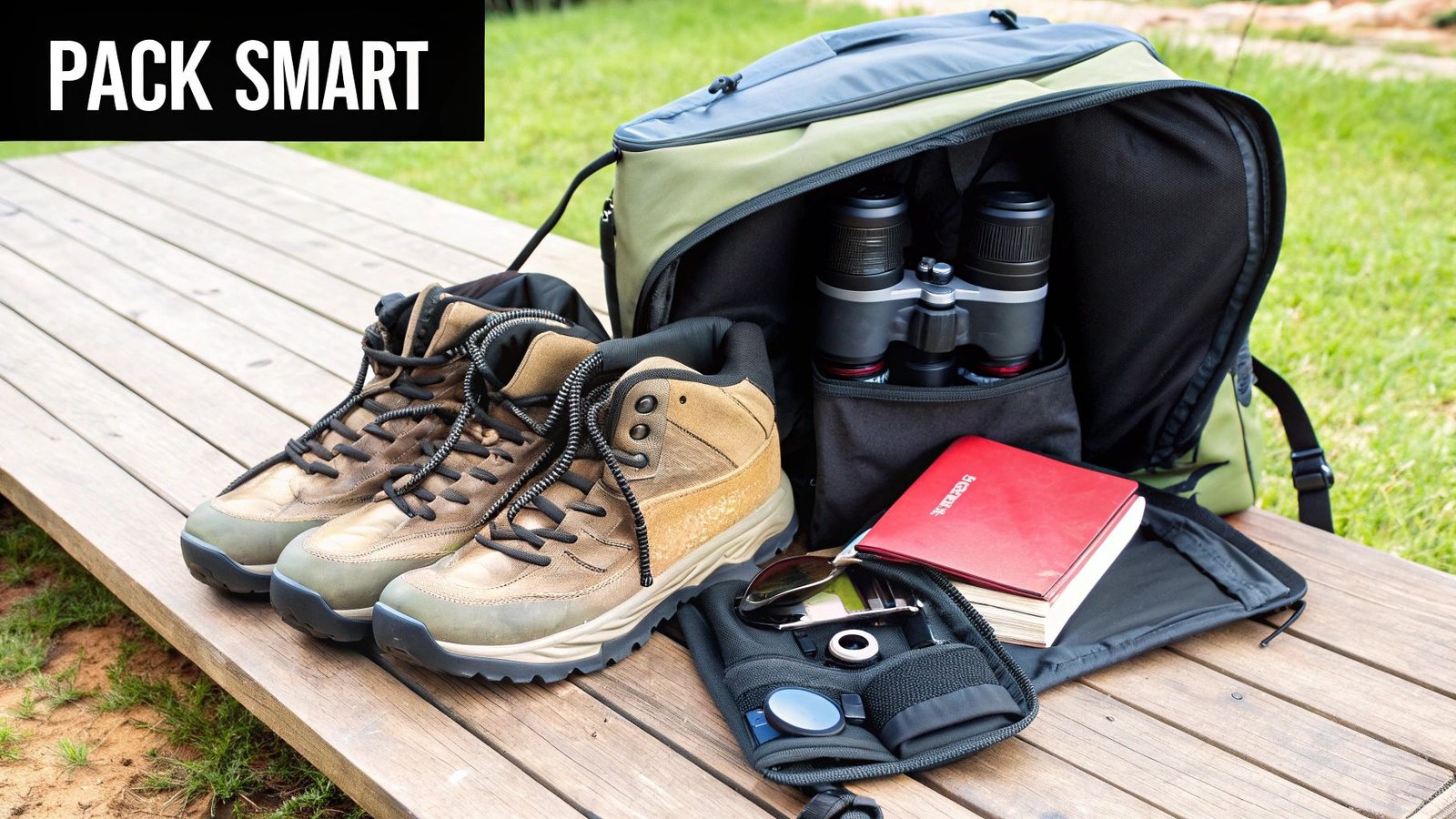
Seasoned guides recommend light, neutral-color layers and compact luggage:
- Bring: Breathable shirts, quick-dry pants, binoculars, sun hat
- Skip: Heavy boots, bulky sweaters, bright patterns that startle wildlife
A lean packing list eases moves between camps and paves the way for restful nights.
Balancing Comfort And Authenticity In Accommodations
| Accommodation Type | Comfort Level | Cultural Immersion | Price Range (per night) |
|---|---|---|---|
| Tented Safari Camp | Moderate | High | USD 200–350 |
| Eco-Lodge with Chalets | High | Medium | USD 300–500 |
| Luxury Mobile Camp | Premium | Intimate | USD 500–800 |
Selecting the right basecamp completes your plan and prepares you for rich wildlife encounters.
Beyond its visitor appeal, safari tourism in Africa is projected at USD 18,014.3 million by 2023, rising to USD 34,564.9 million by 2033 at a 6.7% CAGR. Find more detailed statistics in the Future Market Insights report
Also explore our guide on How to Master Your Safari Itinerary
Main Takeaways:
- Early Booking locks in the best lodges and rates
- Seasonal Research boosts your wildlife-viewing odds
- Targeted Questions ensure your outfitter meets your style
- Smart Packing and health prep keep you agile on safari
- Accommodation Choice blends comfort with local culture
Finding Your Safari Style: Experiences Beyond the Brochure
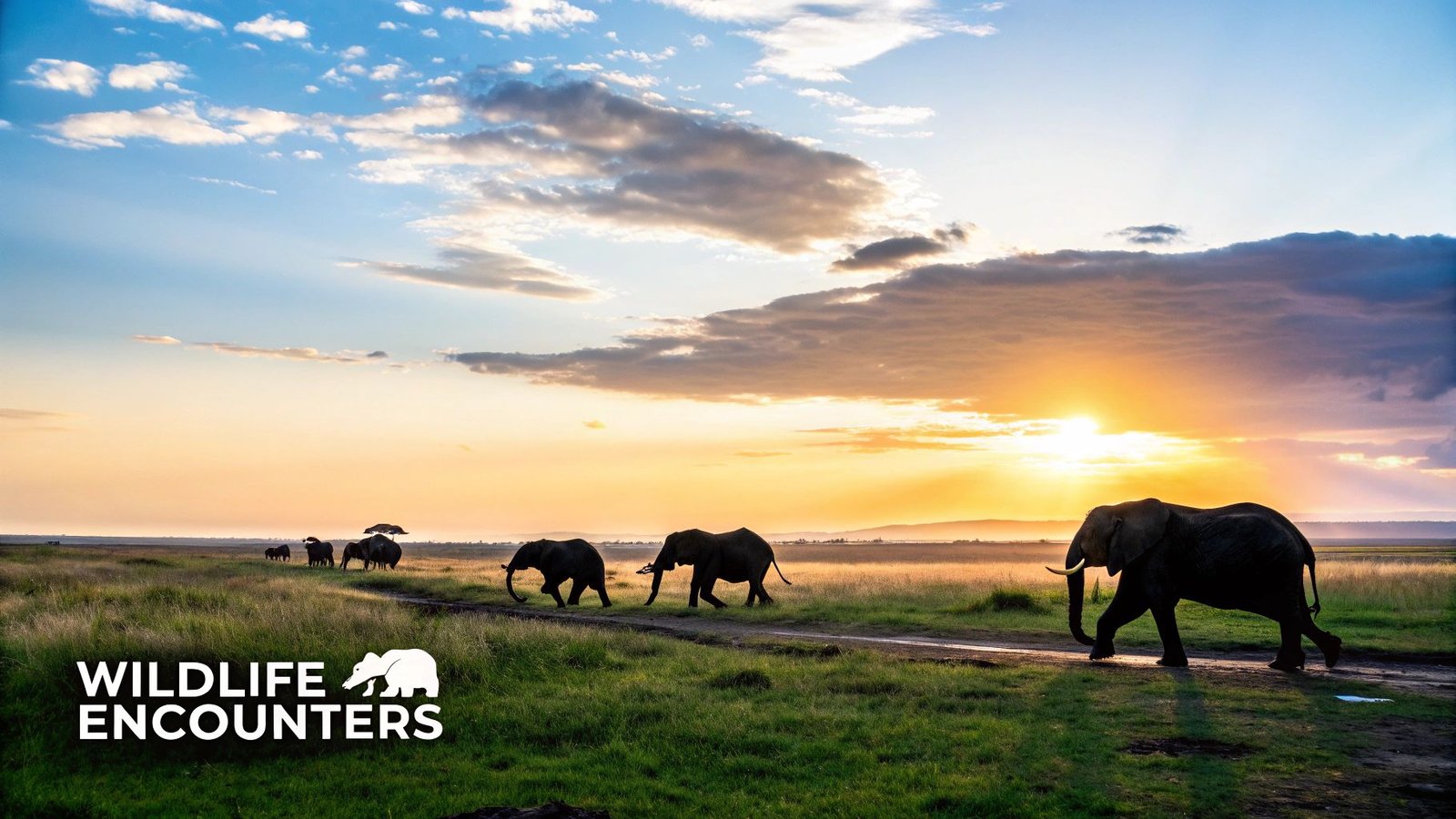
Your trip to Africa safari isn’t one-size-fits-all. By choosing how you move—on foot, behind the wheel, or with a lens in hand—you shape each moment into something unique.
Different formats highlight different sides of the bush:
- Walking safaris reveal hidden tracks, birdcalls, and the scent of the wild.
- Photo tours teach composition and timing so you capture that perfect shot.
- Vehicle safaris cover more ground and spot larger mammals with ease.
Reflect on how you want to connect with the environment before you choose your path.
Immersive Walking Safaris: Engage Every Sense
Walking safaris invite you off the beaten track. On foot, you notice tiny details—an insect’s shimmer or a track in the dust—that vanish when peeking from a vehicle.
Trackers from local communities add depth by interpreting signs you might miss. This close-up approach boosts small-game and bird sightings, and offers a genuine local perspective.
Self-Drive vs Guided Safaris: Freedom Or Insight
Deciding between self-drive and guided safaris boils down to control versus expertise:
- Control: Set your own pace in a rental vehicle.
- Expertise: Benefit from a guide’s knowledge and safety protocols.
- Costs: Rentals can be 20% cheaper than full-guide packages.
- Sightings: Guided teams log two extra sightings per day on average.
Hybrid models now blend both options, giving you autonomy with expert back-up.
Specialized Experiences: Focus On Your Passion
When you zero in on one interest, your safari transforms into a mission:
- Big Cat Behavior Tours: Follow lion prides with carnivore experts.
- Bird Migration Safaris: Watch over 500 species move through wetland stopovers.
- Conservation Volunteer Trips: Support anti-poaching and habitat surveys.
- Photography Expeditions: Work with mentors to catch wildlife at dawn or dusk.
Choose the theme that sparks your curiosity, then dive into a photo-friendly, expert-driven, or conservation-focused track.
Safari Types and Their Key Characteristics
Below is a comparison to help you match your travel style. This table breaks down the different types of safari experiences available, comparing them across factors like cost, wildlife viewing opportunities, comfort level, and ideal traveler profile.
| Safari Type | Price Range | Wildlife Viewing | Physical Activity Level | Best For | Average Duration |
|---|---|---|---|---|---|
| Walking Safari | $250–$400/night | Small game, birds | High | Nature enthusiasts | 3–7 days |
| Self-Drive Adventure | $150–$300/day | Mixed sightings | Moderate | Independent travelers | 5–10 days |
| Guided Classic Safari | $300–$500/night | Big Five | Low | First-time visitors | 4–8 days |
| Photographic Expedition | $350–$600/night | Prime light and action | Moderate | Amateur photographers | 5–9 days |
| Conservation Safari | $200–$350/night | Behind-the-scenes | Variable | Cause-driven travelers | 7–14 days |
This side-by-side view highlights how each style varies in cost, pace, and focus. Use it to zero in on the trip that best suits your pace and interests.
For more tips, check out our guide on How to match your safari to your interests.
The right safari style will turn your wildlife encounter into a lasting memory.
Wildlife Encounter Mastery: Seeing Beyond Looking
Stepping into an African safari goes beyond spotting animals; it’s about tuning into wildlife on their own terms. Imagine watching elephants gather at a waterhole—not just for the visual, but understanding why they choose that spot at dawn. Achieving that level of insight comes from deliberate observation techniques refined by guides and photographers over decades. Recognizing animal behavior is what turns ordinary sightings into unforgettable experiences.
Understanding Animal Behavior Patterns
Experts say that spotting success can improve by up to 70% when you learn basic behavior cues. Identifying feeding, resting, and migration rhythms helps you predict where animals will show up.
- Grazing Cycles: Most herbivores feed at pre-dawn and dusk
- Predator Patrols: Lions and leopards often move to shaded areas around midday
- Waterhole Visits: Frequent gatherings during the dry season
Knowing these daily routines prepares you for richer encounters and sharper observations. Up next: how to use light and camera settings to capture them.
Mastering Light And Camera Settings
Natural light shapes both what you see and the images you take. Early morning offers warm hues and long shadows, adding depth to your view.
| Condition | Best Time | Camera Settings | Photography Tip |
|---|---|---|---|
| Soft Dawn Light | 05:30–07:00 | ISO 400, f/5.6, 1/500 sec | Try a low-angle shot to highlight contours |
| Midday Shade | 11:00–14:00 | ISO 800, f/8, 1/250 sec | Frame subjects against bright sky for contrast |
| Golden Hour | 17:00–18:30 | ISO 200, f/4, 1/800 sec | Use backlighting for silhouettes and rim light |
Adjusting your gear for each condition moves your images from snapshots to stories. This table readies you for the savanna’s shifting light and leads into the next vital skill: patience.
Patience And Guide Collaboration
Working with your guide is key to the most rewarding wildlife moments, but patience remains essential on every game drive.
- Share Interests: Let your guide know which species or behaviors you’re keen to see
- Read The Signs: Look for dust clouds or alarm calls that hint at nearby activity
- Reserve Judgment: Hold still when animals pause—sudden movement can send them away
You might be interested in: Check out our guide on Choosing Your Safari Accommodations to ensure you rest well between early starts. This partnership often reveals rare scenes like lion cub play or elephant greeting rituals.
Main Takeaways:
- 70% higher sighting success when you learn daily wildlife routines
- Light mastery transforms ordinary images into memorable stories
- Patience and clear communication with guides unlock deeper connections
- Integrating behavior knowledge and photography techniques turns every game drive into a lasting memory
The Conscious Safari: Making Your Trip To Africa Safari Matter
Every choice you make on safari shapes wildlife habitats and local economies for years to come. Thoughtful decisions—like booking with genuine conservation partners—directly support anti-poaching patrols and fund schools in nearby villages. This means that your trip to Africa safari can leave a legacy beyond stunning photos and unforgettable moments.
Linking Tourism Revenue To Wildlife Protection
Parks that reinvest 20–30% of lodging fees into ranger units often report a 25% reduction in poaching within two years. In one Tanzanian reserve, USD 1.2 million from ticket sales went straight to patrol teams in 2023 alone.
However, not every safari operator allocates funds fairly. Research shows that up to 40% of commercial safari profits never reach conservation budgets when intermediaries skim margins. How can you tell who’s making a real impact?
Spotting Ethical Safari Operators Versus Greenwashing
Look for these indicators before you book:
Greenwashing Warning Signs:
• Ambiguous claims like “supports communities” with no figures
• Absence of third-party certifications or local partnerships
• Little detail on revenue-sharing or anti-poaching fundingEthical Operator Indicators:
• Transparent Reports showing exact fund allocation and outcomes
• Hiring local guides and staff – at least 60% of wages paid in-country
• Membership in recognized bodies (e.g., African Travel & Tourism Association)
| Feature | Greenwashed Option | Ethical Operator |
|---|---|---|
| Revenue Disclosure | Absent | Detailed Annual Reports |
| Community Engagement | Token Visit | Long-Term Partnerships |
| Conservation Funding | Undefined | ≥25% of Net Profits |
Check out our guide on community-based wildlife tourism for more insights.
Empowering Communities Through Tourism
Community-based models can raise village incomes by 15–20% year-on-year. Local homestays, craft cooperatives and guided cultural walks keep revenue where it matters most. These projects also foster a deeper respect for wildlife when residents see living animals as more valuable than ivory or bushmeat.
- Homestays and guesthouses run by village cooperatives
- Hand-crafted souvenir markets with clear revenue-sharing plans
- Cultural tours led by community storytellers and elders
Conservation Success Stories From The Frontlines
Tourists funding trail-camera programs have helped some lion populations grow by 8% annually. In one Zimbabwean conservancy, income from 50 camera-trap nights paid salaries for 30 anti-poaching rangers. These wins prove how tourism dollars can help reverse species declines.
Practical Tips To Maximize Your Positive Impact
- Book with operators that publish impact reports
- Reduce your carbon footprint: choose group transfers over private flights
- Bring a reusable water bottle and avoid single-use plastics
- Respect viewing distances to minimize wildlife stress
Main Takeaways:
- A conscious safari channels 25–30% of trip costs into protection
- Vet operators by transparency, local hiring and certifications
- Community enterprises can boost local incomes by 15–20%
- Small choices—like reusable bottles—amplify your positive impact
Ready to turn your adventure into action? Discover authentic, impact-driven safaris with Maximum Adventure Trails and make your next trip to Africa safari truly matter.