

- 2 Views
- 7 Min Read
- (0) Comment
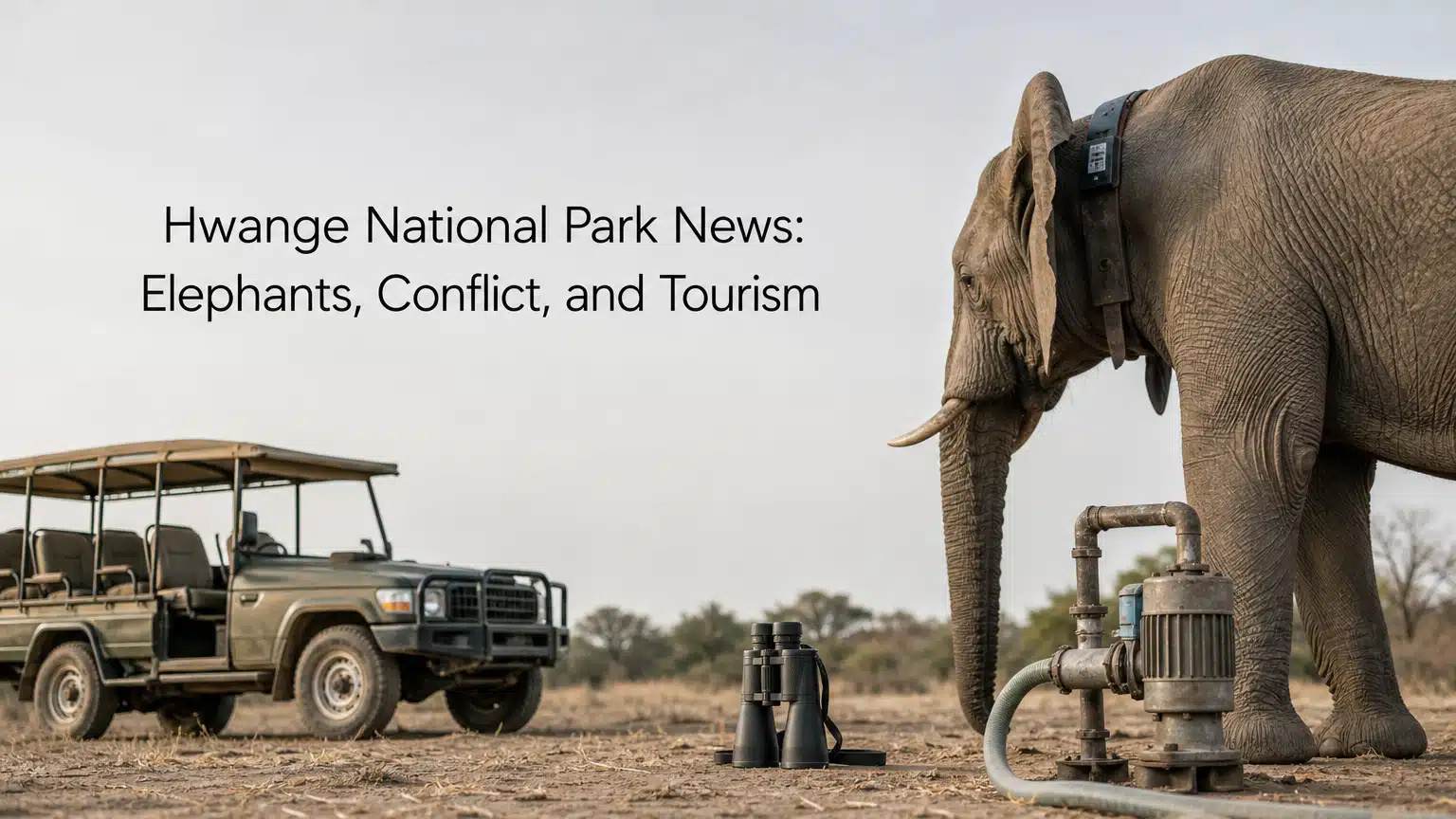
Hwange National Park news is the ongoing coverage of Zimbabwe’s largest park, and it currently centers on three stories. The park holds too many elephants for its land, elephants and nearby villagers are in growing conflict, and a tourism recovery is helping pay for protection. Hwange covers about 14,650 square kilometers in northwestern Zimbabwe. It holds roughly 45,000 elephants, three times the 15,000 that parks officials say it can support.
This article explains why those stories matter, how to follow them and check what you read, and what each one involves. It ends with what the news means if you plan to visit.
Maximum Adventure Trails runs day trips and overnight safaris into Hwange from Victoria Falls. We read this news as people who send travelers into the park, so the practical side gets as much space as the headlines.
Why Hwange National Park news matters to you
Hwange news matters because it explains what you will find on the ground, and because the park is a live test of how a country manages too many elephants. These stories affect wildlife sightings, park logistics, and the cost of a safari.
If you are planning a visit
Park conditions shape your trip. Hwange relies on pumped waterholes in the dry season, so fuel supply and cost matter in a park this remote. Elephant movements, ranger capacity, and camp upgrades also show up in the news before they show up in a brochure.
Reading recent coverage helps you pick the right length of stay. If reports say visitor numbers are climbing, book camps and guides early. If they describe herds moving toward villages, ask your operator which areas of the park they use.
If you follow conservation
Hwange anchors the Kavango-Zambezi Trans-Frontier Conservation Area, a cross-border landscape that shares its elephants. The park holds about 150 mammal species and 400 bird species, so its management decisions reach well beyond one species.
Hwange news is really three stories at once: too many elephants, people living beside them, and tourism money that pays for protection.
How to follow Hwange news and judge what you read
Start with the sources closest to the park, then test every headline with four quick checks. This takes about ten minutes and keeps outdated or misplaced numbers from misleading you.
Where reliable updates come from
- ZimParks (Zimbabwe Parks and Wildlife Management Authority): the park’s manager, with official information and video updates on its social channels.
- IFAW: a conservation partner that reports on ranger support, anti-poaching, and community projects in the park.
- Friends of Hwange: a supporters’ group whose newsletter covers day-to-day conditions, including fuel costs and elephant arrivals.
- Wire services such as AP: they cover the big conflict stories with named officials and figures.
Each source has an angle. ZimParks speaks for the authority, partners speak for their programs, and news outlets pick the dramatic story. Read two of them side by side and you get a fair picture.
Four checks before you trust a headline
- Park or country? About 45,000 is the Hwange elephant count. About 100,000 is Zimbabwe’s national total.
- What is the date? Visitor numbers and elephant counts change, so a 2022 figure is not a current one.
- Who gave the number? "Parks officials say" is a different claim from a published survey.
- Is it really about Hwange? Some headlines tagged to the park describe national decisions, such as drought-related plans to kill elephants for food.
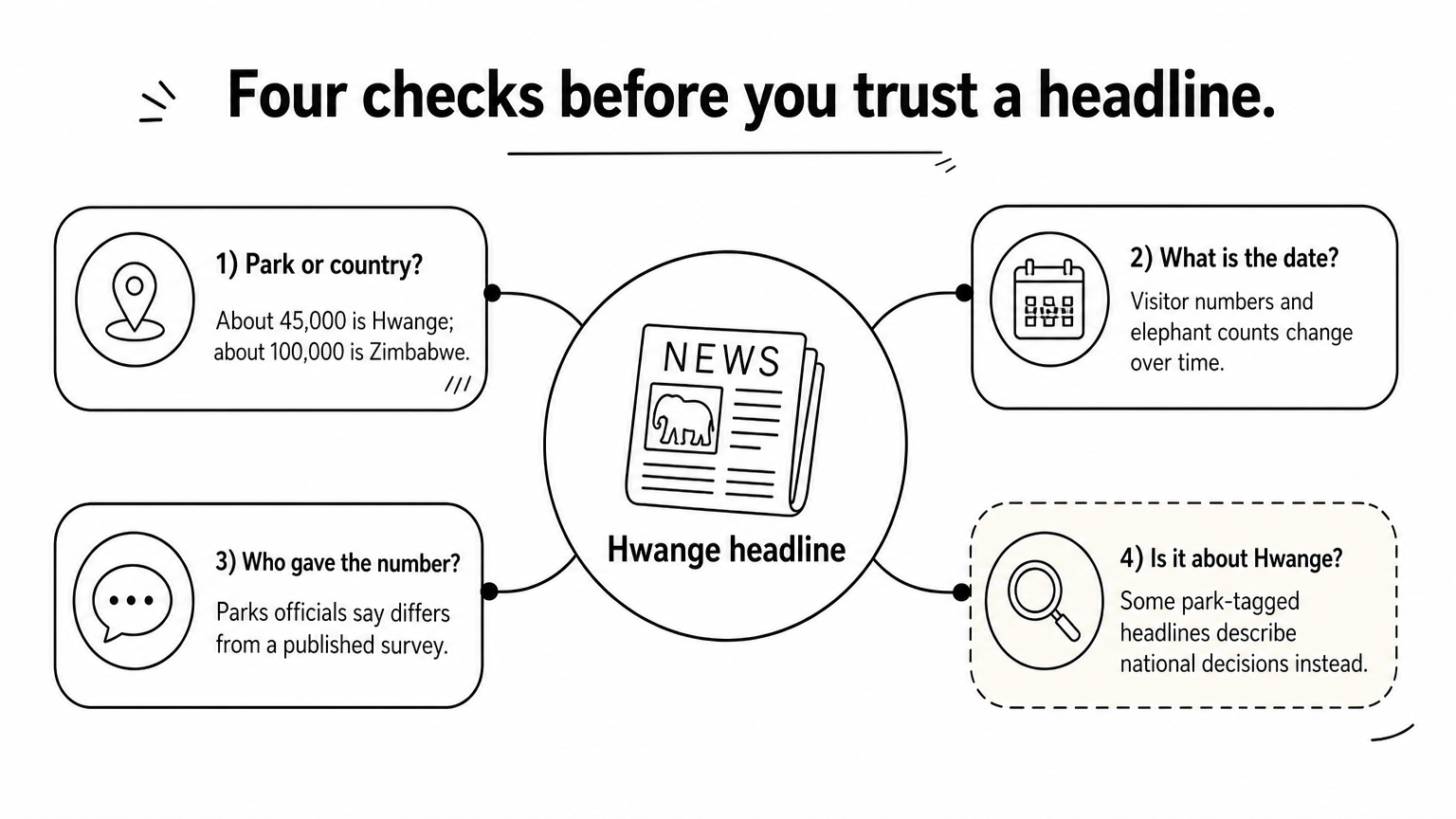
Check whether a number describes the park or the whole country before you repeat it.
The elephant overpopulation and conflict story
The biggest Hwange story is the gap between elephants and land. Parks officials say the park can carry about 15,000 elephants and holds about 45,000. Zimbabwe as a whole has about 100,000, roughly double its capacity. Elephants that outgrow the park push toward villages, and that conflict can be deadly.
The figures side by side
| Measure | Figure |
|---|---|
| Hwange area | About 14,650 sq km |
| Elephants in Hwange | About 45,000 |
| Hwange capacity (parks officials) | About 15,000 |
| Elephants in Zimbabwe | About 100,000 |
| Zimbabwe capacity | About half the current number |
The excess puts pressure on vegetation and water. It also pushes herds into fields and settlements outside the park boundary.
How rangers and villagers respond
ZimParks and IFAW run a GPS collar alert system. Collared elephants send location data, and an alert goes out when a herd heads toward a village. Local guardians such as Capon Sibanda post warnings in WhatsApp groups, then ride a bicycle to warn residents who have no phone or network. Rangers also use drones and the EarthRanger platform to track movements.
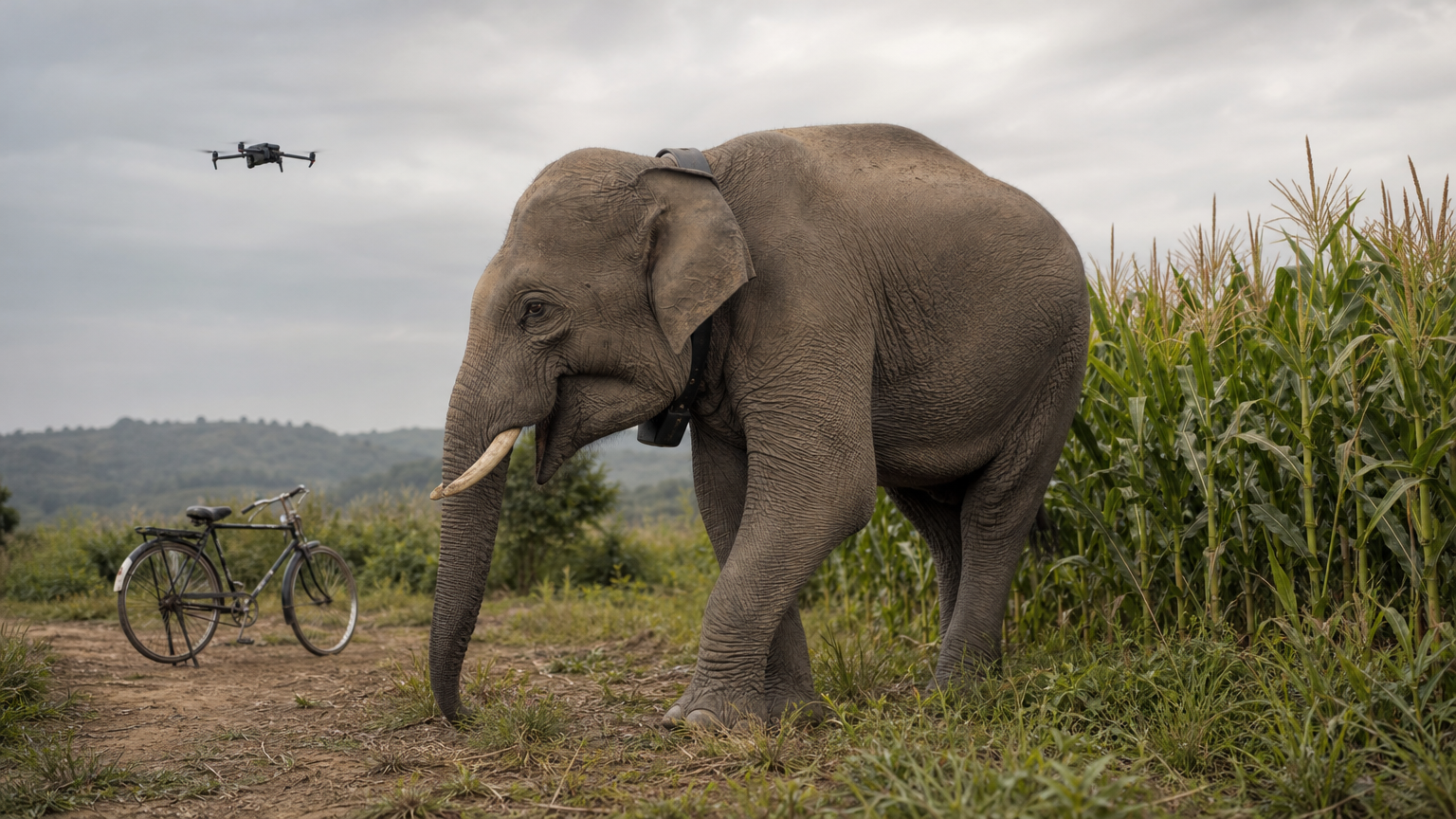
The limit is coverage. Only collared herds trigger alerts, and project officials admit a huge gap remains between the 45,000 elephants and the tools available. Culling is also under debate. Headlines have reported Zimbabwe and Namibia plans to kill scores of elephants to feed people facing drought.
Collars and alerts protect villagers from the herds they can track, but they do not solve a three-to-one overpopulation.
Tourism, poaching, and community developments
The encouraging Hwange news is that tourism is recovering and poaching has stayed low where rangers are supported. Both matter because visitor income funds the park and gives nearby communities a reason to value wildlife.
Visitors are coming back
| Period | Park entries per year |
|---|---|
| Before the pandemic | More than 40,000 |
| Pandemic low | About 10,000 |
| 2022 | More than 30,000 |
ZimParks staff report a shift toward travelers who prefer camping and quieter, wilder spaces. Domestic flights to Hwange, new tourism investment, and renovated camp sanitation have helped the recovery. The Mandabvu area in the north has become a draw because its dam attracts elephants, lions, zebras, and kudus.
Protection and community benefits
IFAW signed an agreement with ZimParks in late 2019 to support the park’s management. When tourism stopped, the partners increased patrols and upgraded ranger facilities, including the Makona base. IFAW reported no elephant poaching in its supported areas since 2021, as of early 2024.
The partnership has also rehabilitated community services, including the Dete Old Age Home, boreholes for drinking water, and community gardens. This is the model officials point to when they talk about people and wildlife sharing a landscape.
Tourism income is the funding line that keeps patrols running, so a quiet season in Hwange is also a conservation story.
What the news means for your Hwange safari
The news does not make Hwange less worth visiting. It makes elephant sightings close to guaranteed, and a well-run trip adds to the income that sustains the park. The real choice is how much time you give it.
What you can realistically see
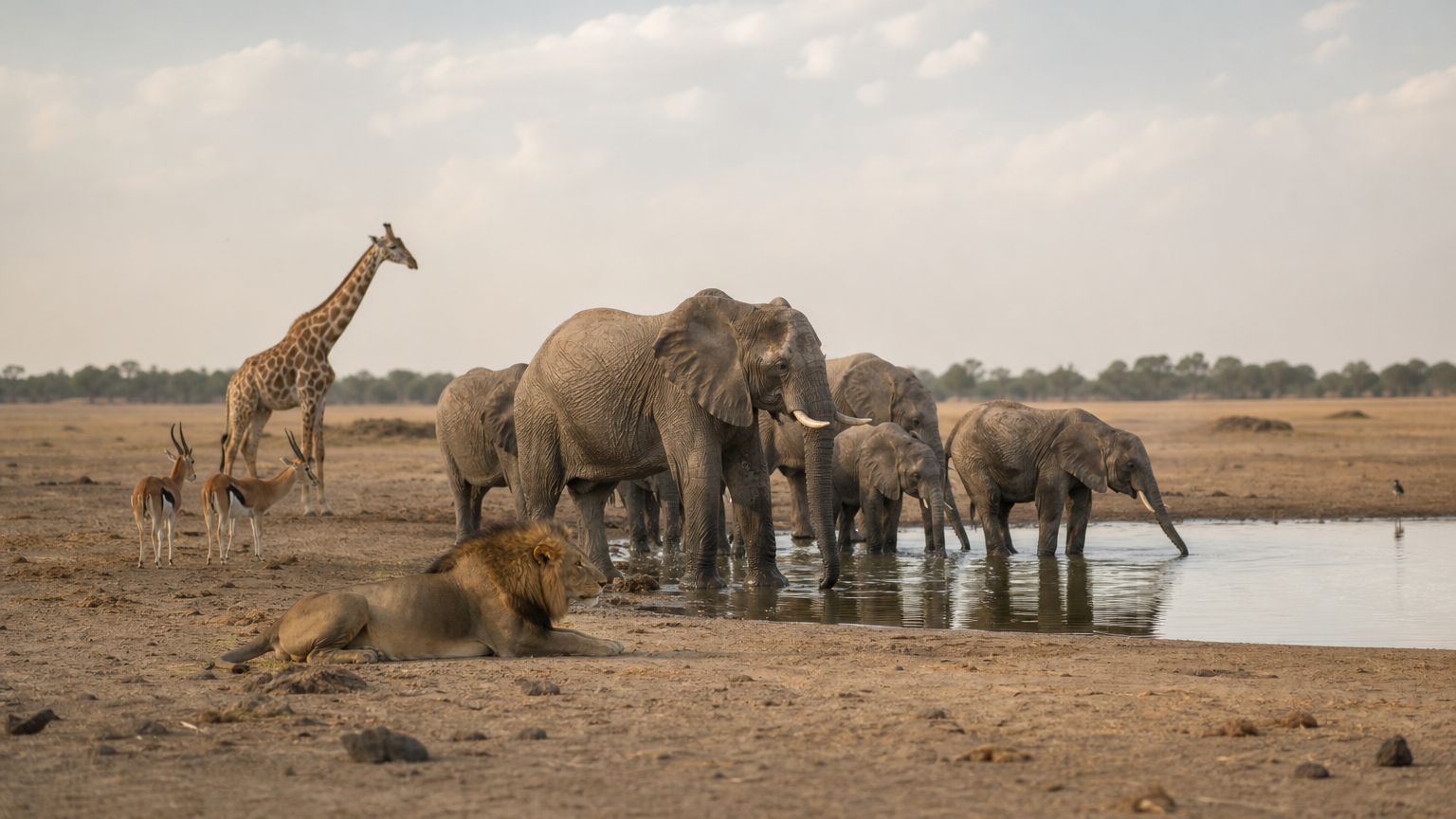
Expect large elephant herds, especially at waterholes in the dry months. Lions and buffalo are regular sightings, and giraffes and many antelope are common. Leopards live in the park but are elusive, and rhinos are few and rarely seen. Hwange is often described as a Big Five park, but treat leopard and rhino as bonuses, not promises.
Options from Victoria Falls
| Option | Key facts |
|---|---|
| Full day trip | From $270 per person. 13 hours, with about 2 hours’ drive each way over 160 km, two game drives, and lunch in the park |
| 2-night safari | From $800 per person. Gwango Heritage Resort, four game drives in an open 4×4, full board |
| Transfers only | USD 75 to Hwange Safari Lodge or Hwange Main Camp, minimum 4 passengers |
Park entry is extra: $24 per adult per day, paid at the gate. For two adults on the day trip at the from-price, that is 2 x $270 = $540, plus $48 in entry fees, for $588 before tips. For the 2-night safari, it is 2 x $800 = $1,600, plus 2 adults x $48 = $96, for at least $1,696.
One day shows you the elephants. Two nights give you dawn and dusk drives, when the park is at its best.
Staying current on Hwange
Hwange’s story is one of abundance under strain. Elephants outnumber the land’s capacity three to one, villagers bear the cost, and tourism income and anti-poaching support are the main tools keeping the park secure. Check the date and scope of any figure you read, and compare ZimParks with a conservation partner or wire report.
If you want to see Hwange for yourself, plan your Hwange safari with Maximum Adventure Trails. We can handle the bookings, the transfers, and the itinerary around your dates.