

- 5 Views
- 12 Min Read
- (0) Comment
The best time for an African safari is the dry season, when thin vegetation and shrinking water sources push animals into the open. In Southern Africa, which covers Botswana, Zimbabwe, Zambia, Namibia and northern South Africa, that means May to October, with August and September at the top. In East Africa, which covers Kenya and Tanzania, the dry windows are January to March and June to October. If you want the Great Migration river crossings, plan for roughly June to October.
"Best" is not one date for the whole continent, though. The seasons run in opposite rhythms north and south of the equator, and the animal event you want decides the month. This guide explains why timing matters, shows you how to choose your dates, compares the seasons, walks through every month, and breaks down the major destinations.
Maximum Adventure Trails has organized safaris out of Victoria Falls since 2019, across Zambia, Zimbabwe, Namibia and Botswana. The Southern Africa detail below is where our experience is deepest. The East Africa sections give you enough to compare the two regions fairly.
Why the time of year changes everything on safari
Timing decides what you see, how easily you see it, and what you pay. Three forces move with the calendar: water, animal behavior, and demand.
Water and vegetation decide how easy animals are to find
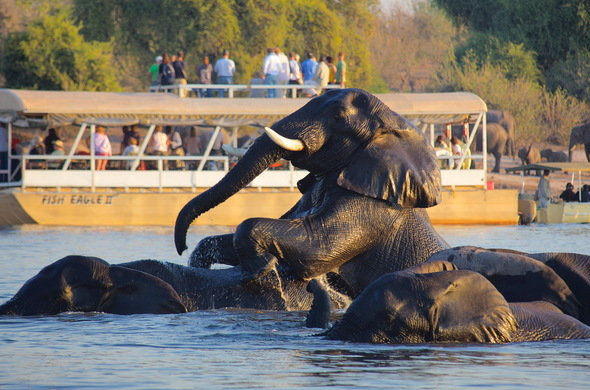
In the dry season, animals have to come to the water. Grass is short, many trees drop their leaves, and rivers and pans become the only drinking spots for miles. A guide can park near a river or waterhole and let the wildlife arrive. That is why Chobe’s riverfront and Hwange’s pans are at their best from roughly May to October.
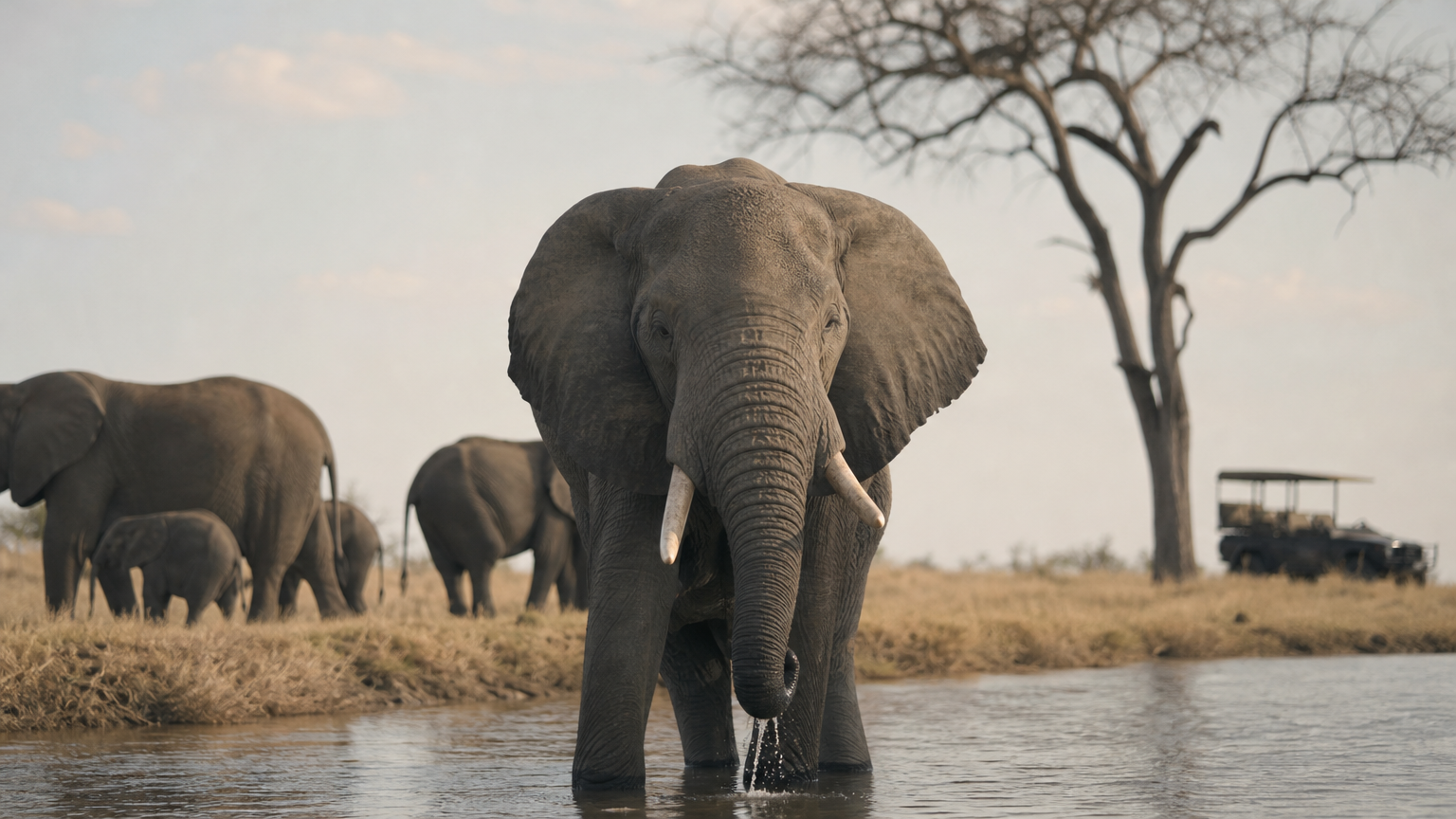
The wet season works the other way. Water is everywhere, so herds spread out, and tall grass and full foliage hide animals that would be obvious in September. Tracks turn muddy, and some camps and roads close.
The dry season concentrates wildlife at water, and that one fact explains most "best time" advice.
Animal events follow the rains
The rains are more than a nuisance, because they trigger births. In East Africa, the calving season in the southern Serengeti and Ndutu region runs about December to March. Thousands of newborns take their first steps, and lions, cheetahs and leopards follow. In Southern Africa, many antelope give birth in the green months from about November, and the rains bring migratory birds, so keen birders often prefer November to April.
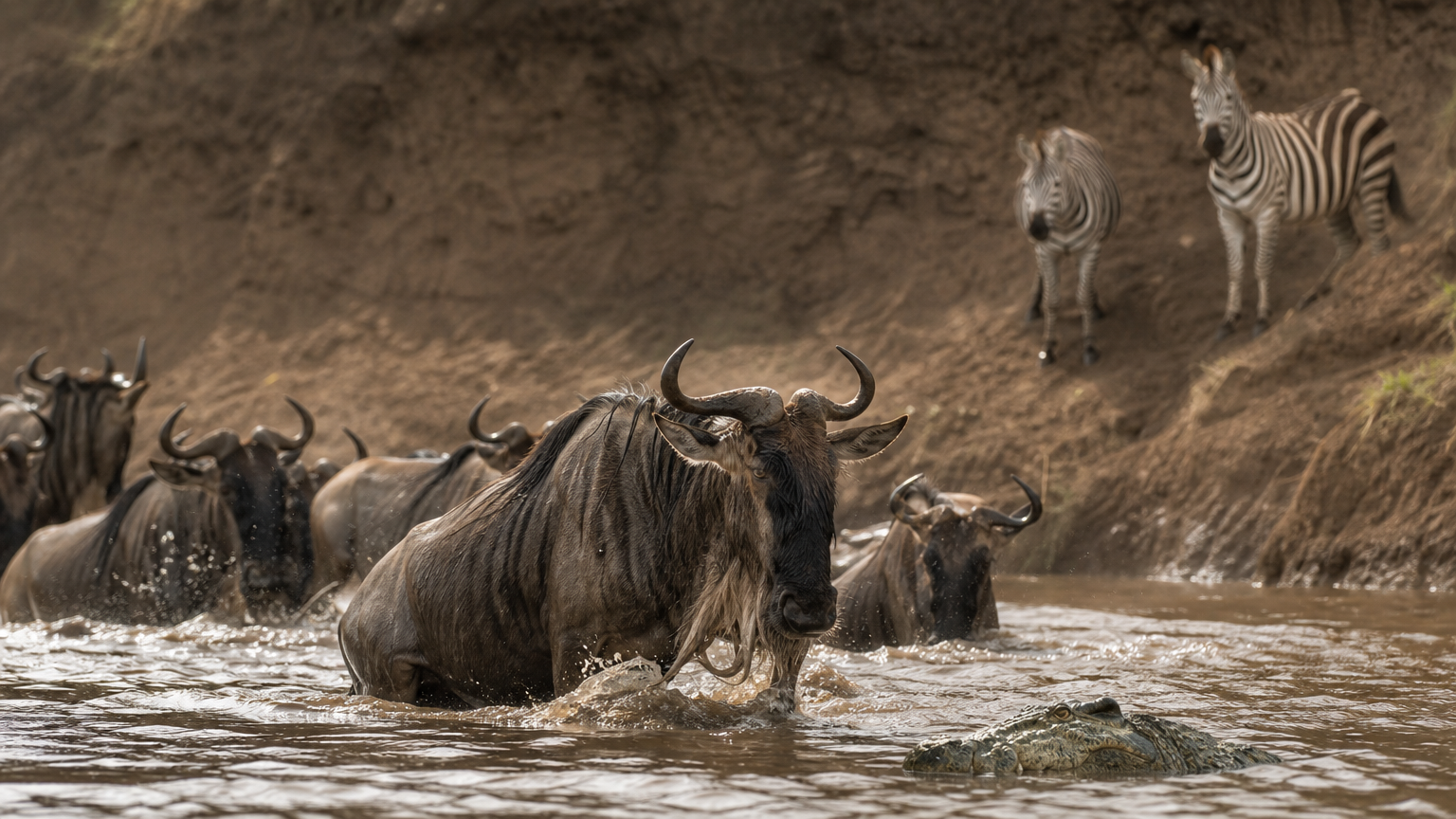
The Great Migration itself never stops moving. The herds circle between Tanzania and Kenya all year, and the dramatic Mara River crossings fall in the June to October window.
Crowds, prices and health risk also move
Demand peaks with the dry weather. July to September are the busiest and most expensive months in both regions, and good camps sell out early. Green season rates are usually well below peak, though in East Africa the April to May long rains close many camps.
Malaria risk is lowest in the dry season, but it does not disappear in most safari areas. Talk to your doctor or a travel clinic about prophylaxis before you book.
How to pick the best time for your safari
Start with the animals you want, then work backward to a region and a month. Most people do it the other way around and end up with the right trip in the wrong season.
Five steps from wish list to travel dates
Use this order and you will land on a date range in about ten minutes.
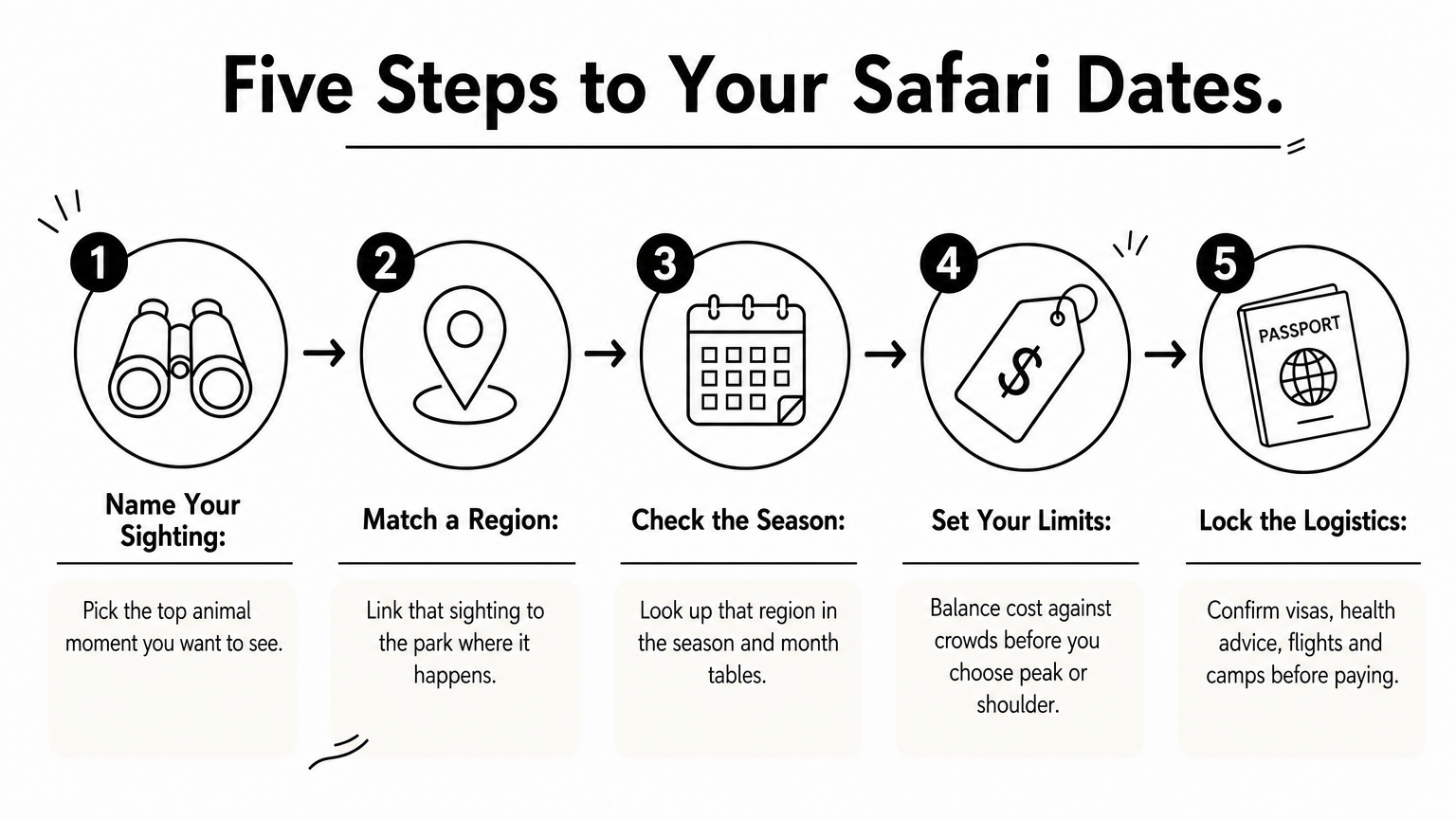
- Name your top sighting. Examples: river crossings, big elephant herds, newborn animals, gorillas, a thundering Victoria Falls, or birds.
- Match it to a region. Crossings point to the northern Serengeti and Maasai Mara. Elephant herds point to Chobe and Hwange. Newborns point to Ndutu in the southern Serengeti.
- Check that region’s season in the comparison and month tables below.
- Set your limits on cost and crowds. Peak months give the best viewing at the highest price. Shoulder months trade a little viewing for value.
- Lock the logistics. Confirm visas, health advice, flights and camp availability before you pay for anything non-refundable.
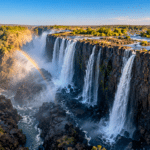
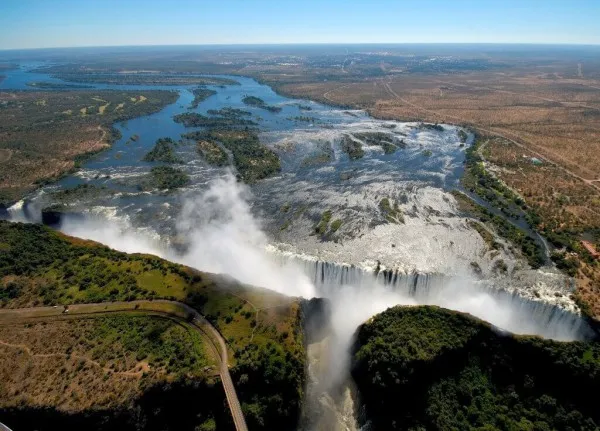
Combining a safari with Victoria Falls needs one extra thought. The Falls are in full flood from about February to July, while the best game viewing comes later. May and June are the compromise, with the Falls still powerful and the dry season starting. At peak flood the spray can hide parts of the view, so a later visit gives clearer sightlines.
Pick the animal first, then the region, then the month.
A worked example for a couple
Say two people want big elephant herds and the Falls, and they travel in late August. Our 4-Night Victoria Falls & Chobe Safari is listed at $1,100 per person for five days. It covers Victoria Falls on the Zimbabwe and Zambia sides, a full-day Chobe National Park game drive, the 13-minute "Flight of Angels" helicopter flight, roundtrip airport transfers, a professional driver/guide, and all taxes and VAT.
The Devil’s Pool swim is an optional extra at $130 to $175 per person, and it runs seasonally from August to January. The package price is quoted by travel dates, group size and room type, so treat the figures below as a starting point.
| Item | Per person | Two people |
|---|---|---|
| 4-night package | $1,100 | $2,200 |
| Devil’s Pool (optional, Aug to Jan) | $130 to $175 | $260 to $350 |
| Total | $1,230 to $1,275 | $2,460 to $2,550 |
International flights and tips are not included in these totals. Add them before you set a budget.
Book early, especially from the United States
Peak dry-season months overlap with the northern summer, so US travelers compete with each other for the same camps. Book six to twelve months ahead for July to September, and earlier for small camps. Flights from the US involve at least one connection, so fix your dates before you buy tickets.
Our own terms are built around that long lead time. A 50% deposit secures a booking, the balance is due 90 days before departure, and bookings on hold never expire, so you can reserve a date while you finish your other plans.
Dry season, wet season and the months in between
Southern Africa has one dry season, May to October, and East Africa has two dry windows split by the long rains. The table puts the dates side by side.
| Region | Dry seasons | Wet seasons |
|---|---|---|
| Southern Africa (Botswana, Zimbabwe, Zambia, Namibia, northern South Africa) | May to October | November to April, heaviest December to March |
| East Africa (Kenya, Tanzania) | January to March and June to October | Long rains April to May, short rains November to December |
Dry season: easiest viewing, highest prices
Late dry season, August to October, gives the strongest concentrations at water. Early dry season, May and June, is greener and cooler, with fewer visitors and lower prices. Nights in Southern Africa can be cold in mid-winter, while days stay mild, so pack layers for dawn drives in open vehicles.
Game drives follow the light. Morning and afternoon drives are the standard formats, and night drives are available in some areas. Dawn and dusk are when predators move, so the dry season rewards you for getting up early.
Green season: value, birds and newborns
In Southern Africa the green season is hot and sometimes humid, with short, intense bursts of rain rather than all-day downpours. The landscape is green, birdwatching is exceptional, and many animals give birth. Rates fall well below peak, and the Falls run high.
The trade-off is thicker bush. Animals are harder to spot, and some tracks and camps can be hard to reach. If your priority is a lion sighting every drive, this is not your season. If you want value, photography with dramatic skies, or babies, it can beat the crowded months.
The worst time depends on your goal
There is no worst month for the whole continent, only a mismatch between month and goal. For classic game viewing in East Africa, April and May are the weakest. The long rains bring afternoon downpours and many camps close. In Southern Africa, January to March has the densest vegetation and the heaviest heat.
The same months can be ideal for other goals. April suits budget travelers who want a full Falls, and December to March suits calving. If you want shoulder-season value without losing much viewing, May, June, October and early November in Southern Africa are the safest bets.
A "bad" month is only bad for the goal you did not choose.
Best time to go on safari in Africa, month by month
Southern Africa shines from June to October and East Africa from January to March and June to October. The table shows what each month does best and what it costs you.
The calendar at a glance
| Month | Standout experiences | Trade-offs |
|---|---|---|
| January | Calving in the southern Serengeti and Ndutu, dry weather in Kenya | Southern Africa is hot, wet and leafy |
| February | Peak calving, Victoria Falls rising | Thick bush in the south |
| March | Falls near full flood, green season rates | Rains build toward April in East Africa |
| April | Lowest rates, very full Falls | East Africa long rains, many camps closed |
| May | Southern dry season begins, Falls still big | East Africa rains linger |
| June | Dry weather across the south, herds moving north | Cold mornings in Southern Africa |
| July | Mara River crossings, Okavango flooded, excellent game viewing | Busiest and priciest period |
| August | Crossings, Chobe elephants, Devil’s Pool opens | High demand, book early |
| September | Best overall for Southern Africa, Hwange and Chobe at their peak | Busy, hot afternoons late in the month |
| October | Strongest waterhole viewing, lower East Africa rates | Hot, first rains possible by month’s end |
| November | Short rains in East Africa, birds, newborn animals, low rates | Humid and wet in Southern Africa |
| December | Calving begins in the Serengeti, festive season | Holiday pricing, hot and wet in the south |
If you can only pick one month
September is the strongest single answer for Southern Africa. Water is scarce, so wildlife is concentrated, the Okavango is flooded, and the Chobe riverfront and Hwange’s pans deliver. If your heart is set on Mara River crossings, August is the better pick, and the dry weather in the south is excellent at the same time.
Neither month is cheap or quiet. If you can shift by four to six weeks, June or October keeps most of the viewing quality and takes some pressure off your budget. Choose by priority: viewing quality first, price second, or the reverse.
Best time for a safari by destination
Each park has its own best window, even inside the same region. This section gives you the destination view, starting with the places we know best.
Southern Africa: Victoria Falls, Chobe, Hwange and beyond
The table shows when each major Southern Africa destination peaks.
| Destination | Best months | Why |
|---|---|---|
| Chobe National Park, Botswana | May to September | Elephants and other game gather along the river |
| Hwange National Park, Zimbabwe | July to October | Animals concentrate at pans and waterholes |
| Okavango Delta, Botswana | About June to September | Floodwaters arrive in the dry season, so water-based safaris and wildlife both peak |
| Victoria Falls | February to July for volume, September to December for clear views | Flow drops later in the year and the spray thins |
| Etosha, Namibia | Dry months | Game gathers at waterholes, though Namibia is good all year |
| Kruger, South Africa | May to September for game, October to April for birds | Winter is dry and the bush is thin |
Pair destinations by season. A trip that combines Victoria Falls and Chobe works well from June to October, and Devil’s Pool is only offered from August to January. A camping safari or a 4×4 safari experience in Zambia, Zimbabwe, Namibia or Botswana also suits the dry months, since tracks are firmer and the nights are clear.
The Great Migration by month
The herds follow the rain, so the Great Migration is a year-round circuit rather than a single event.
- December to March: Herds gather in the southern Serengeti and Ndutu for calving.
- April to May: The herds move north and west as the long rains fall.
- June to July: The herds push through the western and northern Serengeti.
- July to October: Mara River crossings take place, from the northern Serengeti into Kenya’s Maasai Mara.
- November to December: The herds drift back south toward the calving plains.
For crossings, August and September are the most dependable months. For newborns and predators, February is the standout.
Kenya or Tanzania, and gorilla trekking
Neither country is better in general. Tanzania is stronger from January to March, when the calving herds are in the south. Kenya and Tanzania are both excellent from June to October, when the herds cross the Mara River. Kenya’s Maasai Mara is the place to be for crossings from about June to November, while the Serengeti is huge, so the right place at the right time matters more than the country.
Gorilla trekking in Uganda and Rwanda is a year-round activity. The drier, cooler months of January and February, and June to September, make the forest hikes more comfortable.
Choose the park for the month, not the month for the country.
Pick your animal, then your month
The best time for an African safari is the dry season in most places, which means May to October in Southern Africa and January to March plus June to October in East Africa. Within that, the calendar shifts with your goal. Choose September for elephants and waterholes, August for river crossings, February for newborns, and May or June if you want the Falls full and the bush opening up.
If you want help turning a month and a wish list into a real itinerary, plan your Southern Africa safari with Maximum Adventure Trails. We handle bookings, transport and itineraries across Victoria Falls, Chobe, Hwange and the Okavango Delta, and our team is available around the clock.