

- 7 Views
- 24 Min Read
- (0) Comment
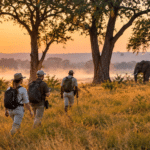
Imagine walking across a quiet African floodplain as morning light filters through ancient trees. Elephants feed beneath the branches in the distance, birds call from the riverbank, and animal tracks in the sand tell stories you would never notice from a vehicle.
That is what makes a Mana Pools walking safari in Zimbabwe so special. Noo engine noise and no roof separate you from the bush. You explore on foot with an experienced guide, learn to read tracks, interpret animal behaviour, and notice the small details that make up the wilderness.
Mana Pools National Park lies on the southern bank of the Zambezi River in northern Zimbabwe. It forms part of the Mana Pools National Park, Sapi and Chewore Safari Areas UNESCO World Heritage property. It is known for large elephant populations, rich birdlife and some of the best walking and canoe safari country in Africa.
This guide covers everything you need to plan your trip. You will find what a walking safari involves, the wildlife you may see, the best time to go, safety rules, accommodation, costs, what to pack and how to get there.
What Is a Mana Pools Walking Safari?
A Mana Pools walking safari is a wildlife experience in which visitors explore parts of the park on foot, usually with a qualified guide, instead of relying only on a vehicle.
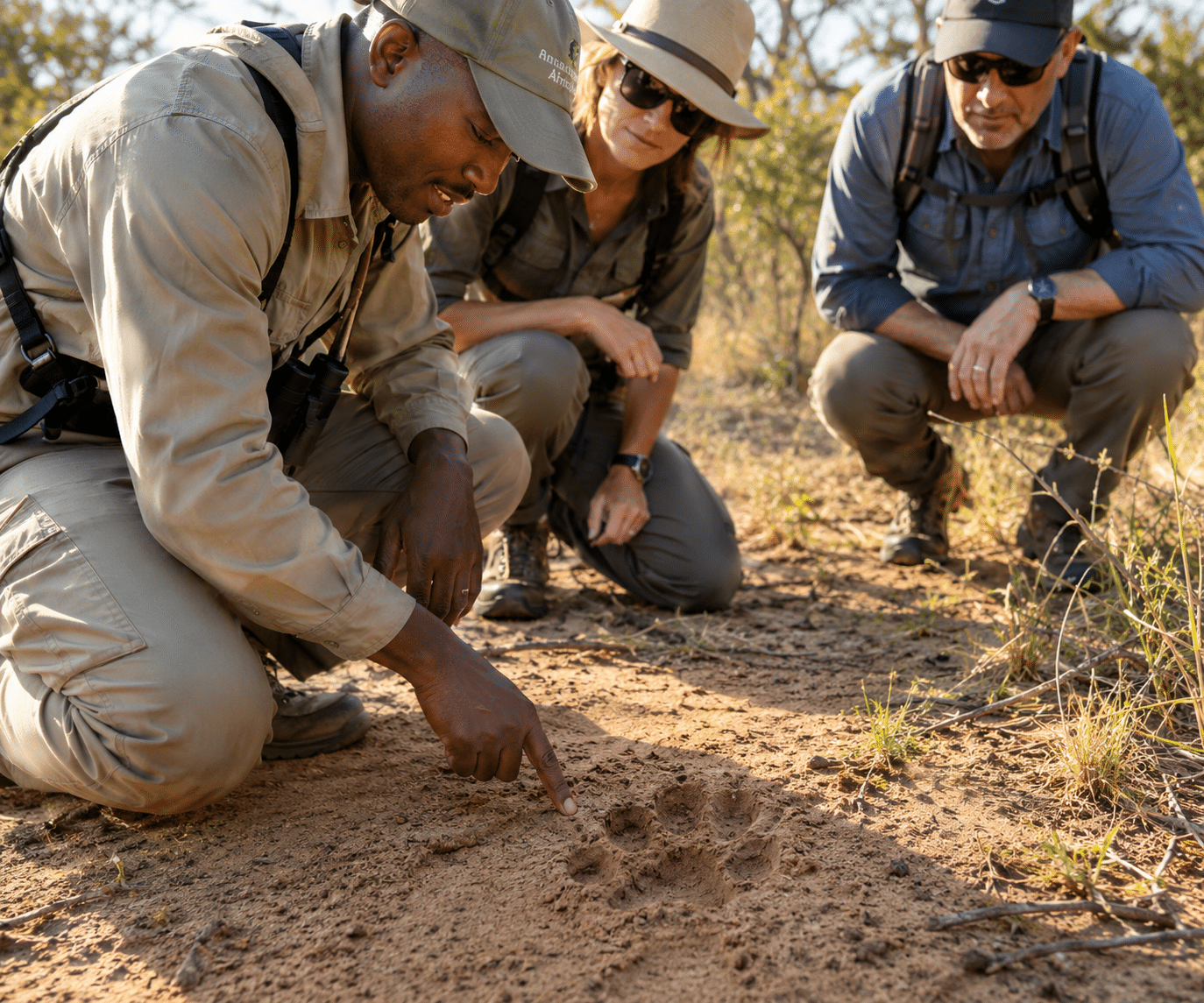
The focus is on understanding the bush. Your guide may explain animal tracks, identify birds by their calls, point out signs of feeding, or describe how different species use the floodplain. The pace is slower and more observational than a game drive. You might spend twenty minutes watching a family of elephants feed, or kneel in the sand to study a lion’s paw print.
Walking in Mana Pools is unusual in Africa. Many parks with large populations of elephants, buffalo, lions and hippos restrict visitors to vehicles. Here, walking is part of the park’s identity, which is why it attracts serious wildlife enthusiasts, photographers and repeat safari travellers.
There are two ways to walk in the park:
- Guided walking safaris. A professional guide leads a small group. This is the recommended option and the one most visitors choose.
- Unaccompanied walking. The park’s visitor code allows this only under specific conditions, including a permit, restricted area,s and the visitor accepting the risks. It is not advisable without real bush experience, and rules can change, so always check with ZimParks first.
A walking safari does not guarantee any particular sighting. Wildlife moves freely, and what you see depends on the weather, the season, animal movements,s and your guide’s skill.
Where Is Mana Pools National Park?
Mana Pools sits in the Zambezi Valley of northern Zimbabwe, along the southern side of the Zambezi River. Zambia lies across the water. The surrounding valley combines floodplain, riverine woodland, open grassland and distant escarpment views.
The park is remote compared with Zimbabwe’s more visited safari areas such as Victoria Falls and Hwange. That remoteness is part of the appeal, but it also means advance planning matters, especially for transport and seasonal access.
Why Is It Called Mana Pools?
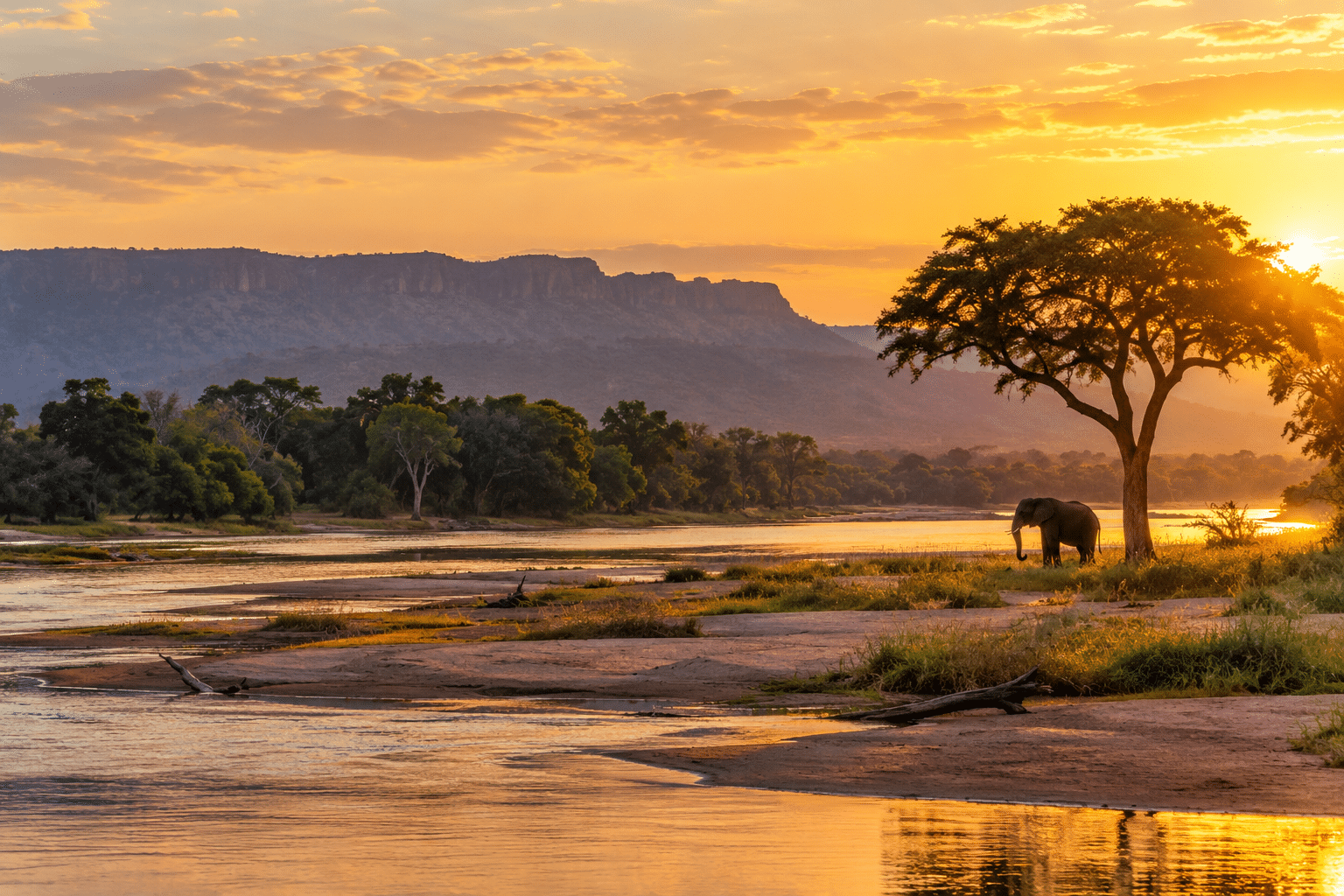
“Mana” means “four” in the Shona language. The name refers to four large pools left behind by former channels of the Zambezi River as it shifted its course over thousands of years. These pools and other seasonal water sources are important for wildlife, particularly in the dry season, when animals gather close to permanent water.
A UNESCO World Heritage Site
Mana Pools was inscribed as a UNESCO World Heritage Site in 1984, together with the neighbouring Sapi and Chewore Safari Areas. The property protects a large stretch of the Middle Zambezi Valley and is recognised for its wildlife concentrations and natural processes along the river.
What Makes the Landscape Special?
- Open floodplains beside the Zambezi River
- Riverine woodland and large shade trees
- Sandy tracks shaped by wildlife movements
- Seasonal channels and pools
- Woodland where elephants and other animals feed
- Escarpment scenery framing parts of the valley
Open terrain, good visibility and relatively flat ground make walking comfortable and give you excellent chances to observe animal behaviour from a safe distance.
Why Choose Mana Pools for a Walking Safari?
1. Experience Wildlife on Foot
A walking safari changes how you see your surroundings. Instead of focusing only on big animals, you learn how the whole ecosystem works. A guide might show you how to tell tracks apart, how animals use shade during hot weather, or how wind direction affects the way a walk is conducted.
2. Watch Elephants in Their Natural Habitat
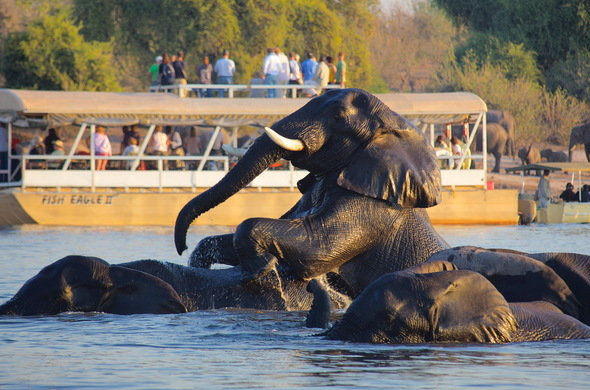
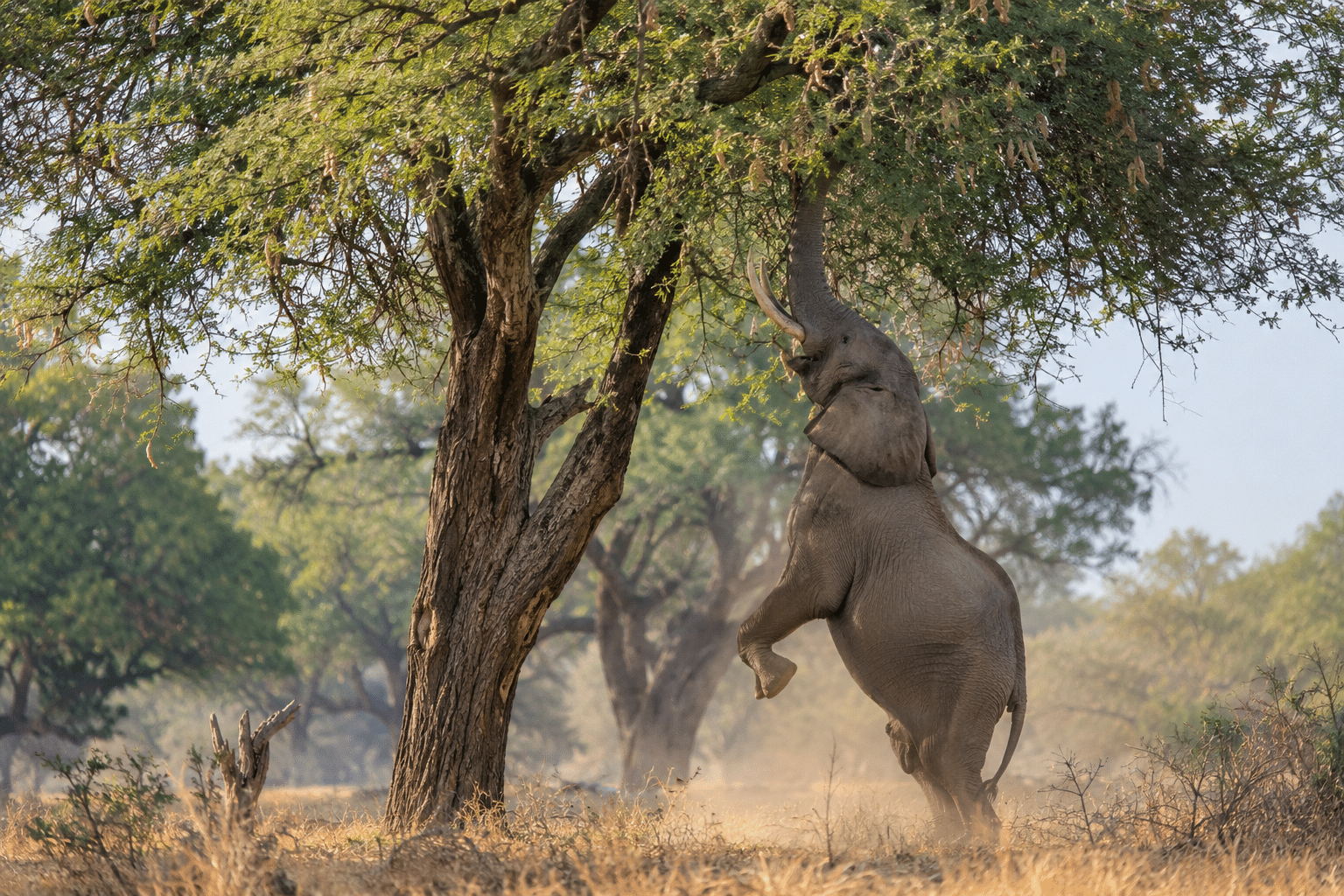
Elephants are the stars of Mana Pools. The park is especially known for the stands of Faidherbia albida (winter thorn or apple-ring acacia) that line the floodplain. These tall trees drop nutritious pods in the dry season, and elephants gather beneath them to feed. Some stretch up or rise onto their hind legs to reach the branches.
This behaviour depends on the individual animal, the food available and local conditions, so it should never be expected on every visit. Still, watching elephants feed from a respectful distance with an experienced guide is one of the great moments in African wildlife watching.
3. Enjoy a More Intimate Safari
A vehicle safari usually involves travelling between sightings. Walking encourages you to slow down and notice details that are easy to miss: birdsong, the texture of the soil, fresh tracks and changes in vegetation. This slower pace builds a deeper appreciation of the landscape beyond its most famous animals.
4. Fewer Crowds
Mana Pools is remote and relatively uncrowded. Camps are small, and vehicle numbers are low, which suits travellers who value authenticity and quiet over convenience.
5. Combine Walking With Other Activities
Depending on your camp, operator, permits, and current conditions, you can combine walking with game drives, birdwatching and canoeing on the Zambezi. For a river-based perspective, see our Mana Pools National Park Canoe Safari guide.
What to Expect on a Mana Pools Walking Safari
A typical day follows the rhythm of the bush. Exact schedules depend on the camp, season, weather, and guide.
Early Morning Briefing
Walks usually begin soon after dawn, when it is cool and animals are active. After tea or coffee and a light snack, your guide explains the planned route, expected conditions, and essential safety procedures. This includes what to do if you meet an elephant or buffalo.
Walking Through the Bush
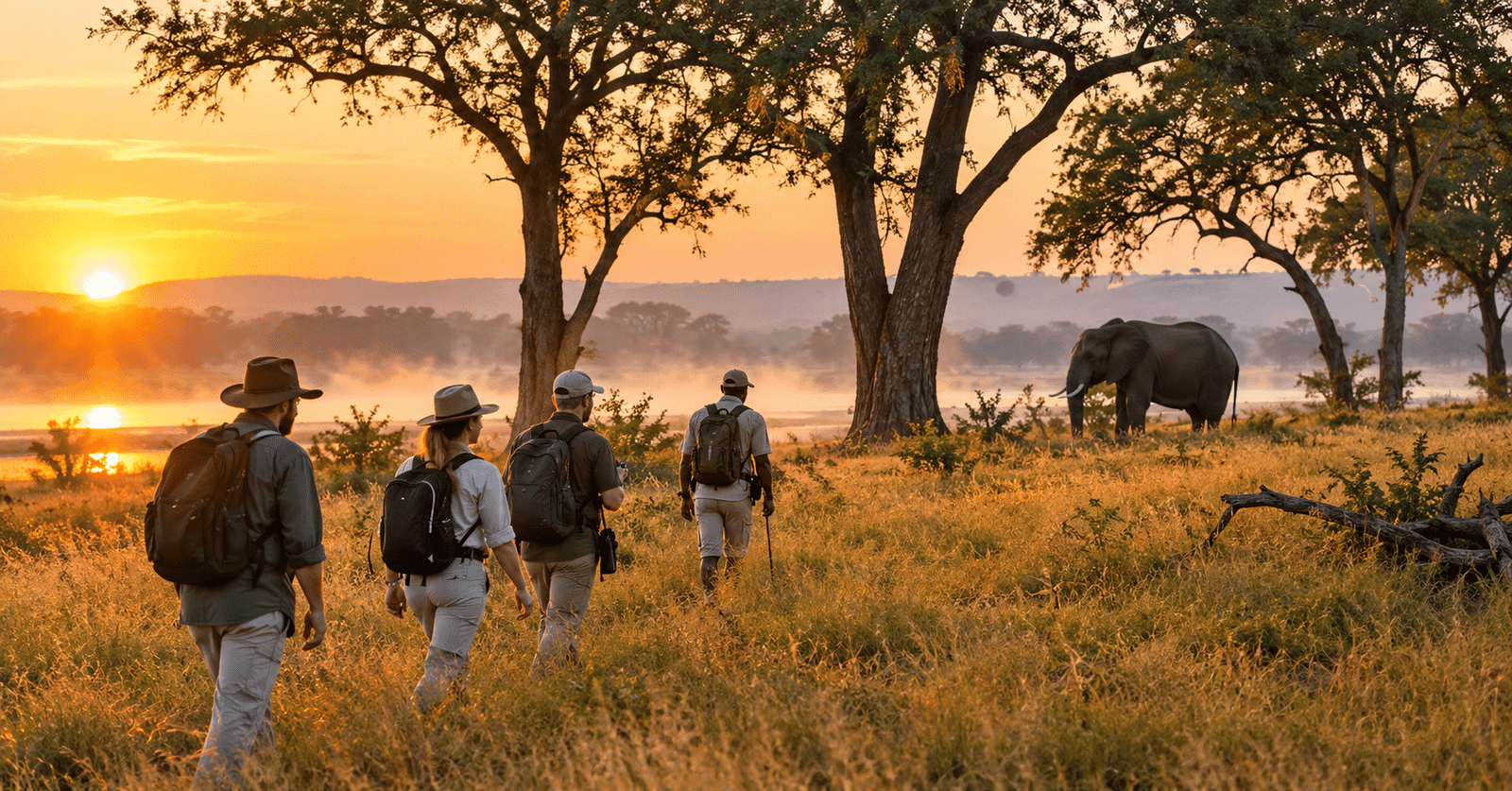
Groups walk slowly, usually in single file, and stop whenever the guide finds something worth examining. That might be a set of tracks, evidence of feeding, an interesting bird, or movement among the trees. Walks commonly last two to four hours, depending on conditions and the group’s pace.
Wildlife Observation
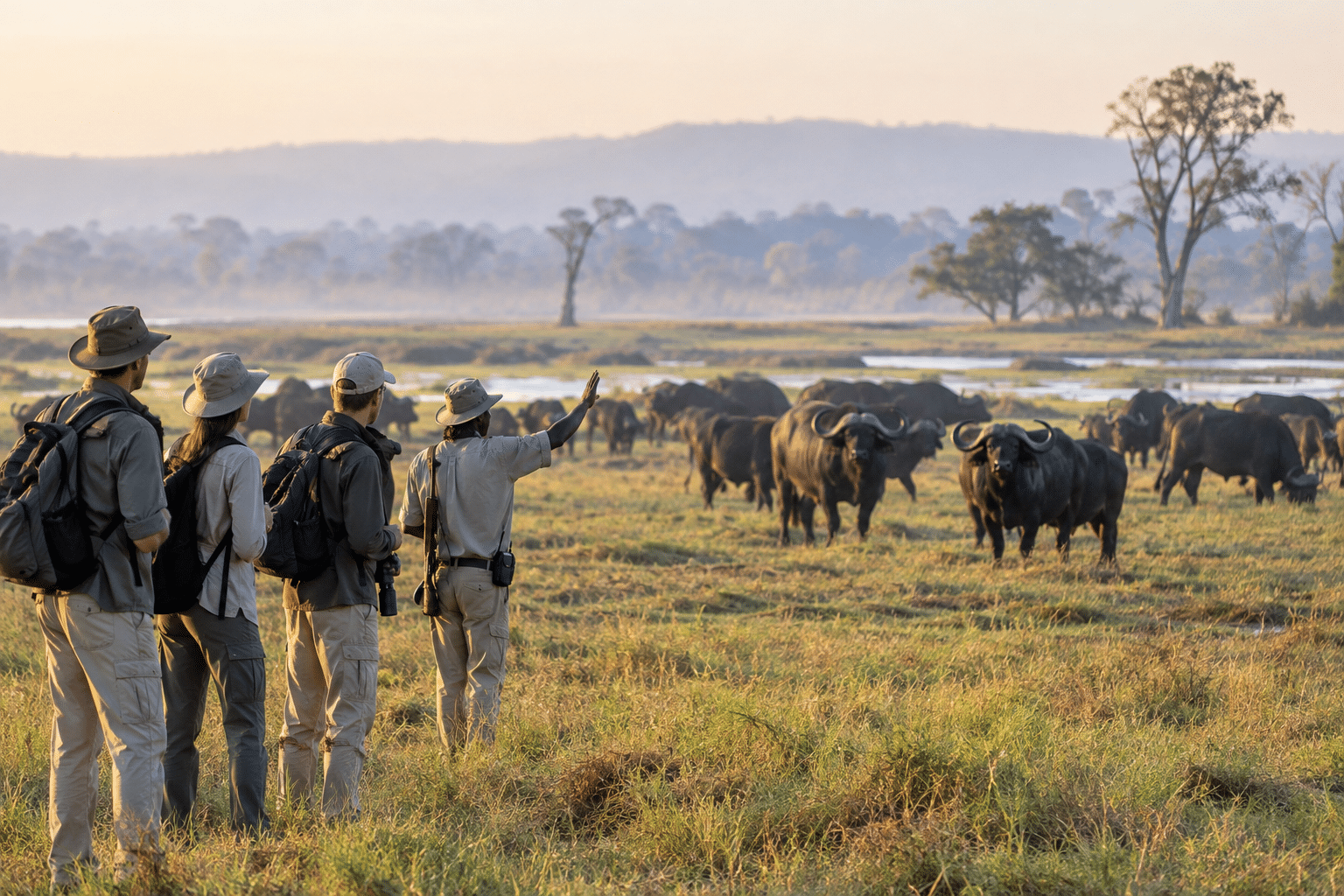
When you meet wildlife, the guide decides whether it is appropriate to stay. You observe from a safe distance and learn about the animals’ movements and behaviour without trying to get close. The goal is not to get as near as possible. It is to experience the wilderness while respecting the animals’ space.
Brunch and Midday Rest
After the morning walk, guests usually return to camp for a hearty brunch. Midday can be hot, especially from September to November, so most people rest, read, or watch wildlife from camp.
Afternoon Activities
Late afternoon is another good time for a walk, a game drive or a canoe trip. Many itineraries mix these activities so you see the park from several angles.
Evenings by the Fire
Dinner is served under the stars, often around a fire. Lions and hyenas may call in the dark, and elephants sometimes wander through camp.
Wildlife You May See on a Mana Pools Walking Safari
Mana Pools supports a wide variety of mammals, birds and reptiles. What you see on any walk depends on local conditions, and no species is guaranteed.
African Elephants
Elephants use the floodplains and woodland to feed and to move between water and food. You may see them browsing beneath large trees, crossing sandy ground or gathering near water. On foot, you notice behaviour you would miss from a vehicle, such as how a family moves together, how calves stay close to their mothers and how bulls interact. Your guide decides when to observe and when to give more space.
African Buffalo
Buffalo graze in herds across open areas and near the river. They are powerful and can be dangerous when startled or cornered, so your guide assesses behaviour and terrain before deciding whether a sighting is safe.
Lions
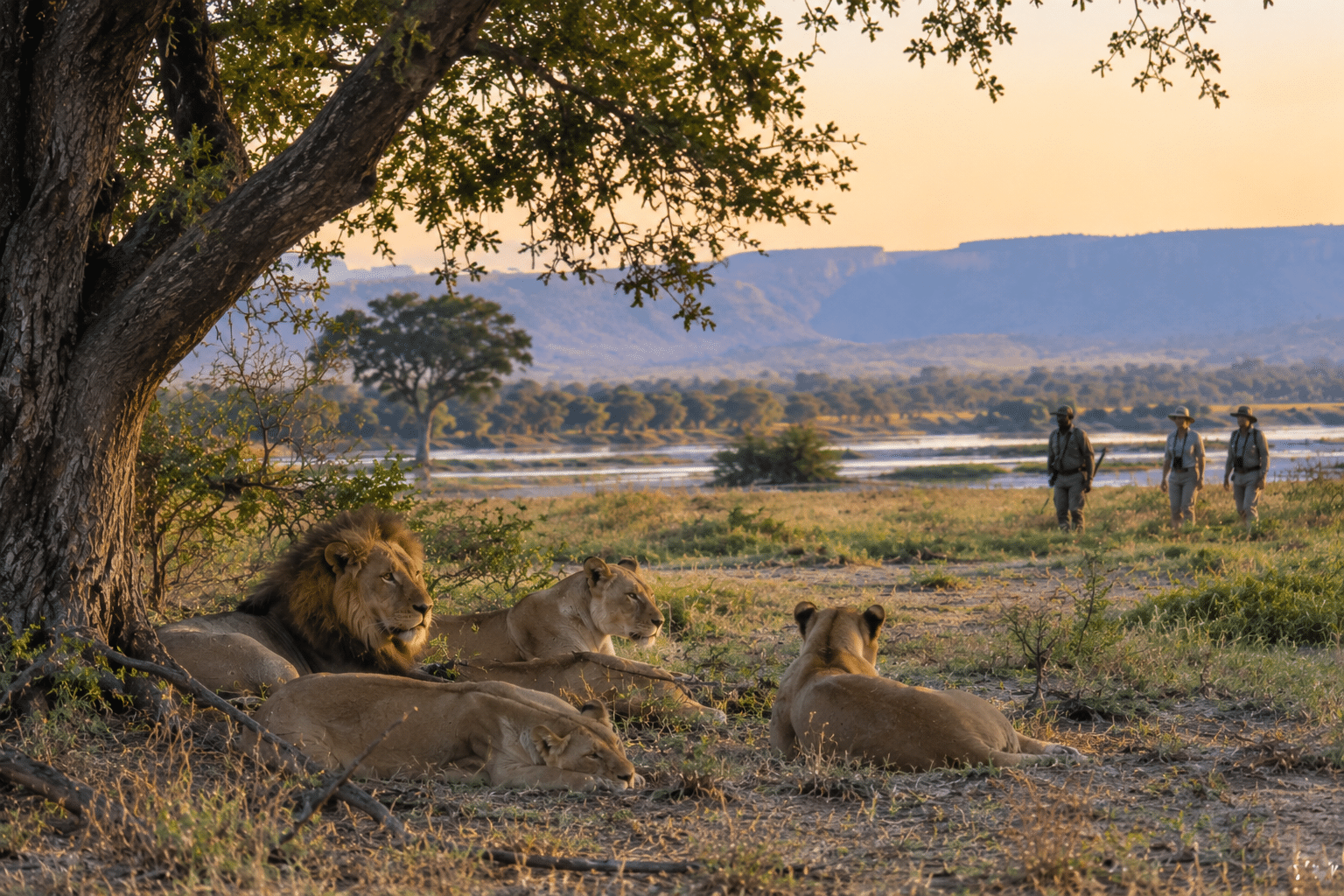
Lions live throughout the wider ecosystem and may be found in suitable habitat. Their movements vary with prey, temperature and season. Seeing lions on foot is never guaranteed, and if you do find them, the guide’s instructions come before photography.
Leopards and Other Predators
Leopards live in woodland and riverine habitats, but their secretive nature makes sightings unpredictable. Spotted hyenas and African wild dogs also occur in the area, and cheetahs are recorded in the wider protected landscape. How likely you are to see them varies by season and location.
Antelope, Zebra and Other Herbivores
Depending on where you walk, you may see impala, waterbuck, kudu, bushbuck, eland and zebra. These animals form the base of the food web that supports the predators. Watching their feeding patterns and their reactions to sounds in the environment can be as interesting as watching the big animals.
Hippos and Crocodiles
The Zambezi River and its pools hold hippos and Nile crocodiles. They are one reason riverbanks and water access points demand extra caution. Walking safaris never involve approaching these animals or entering the water. Any river activity should be organised through a suitable operator and follow local safety instructions.
Birdlife
Mana Pools is a rewarding birdwatching destination. UNESCO records more than 450 bird species across the wider World Heritage property, including resident and migratory species. Walkers may see African fish eagles, kingfishers, herons, bee-eaters, storks and many more, depending on habitat and season. Binoculars help you watch birds without disturbing them, and your guide can help with identification by call, flight pattern and behaviour.
Best Time for a Mana Pools Walking Safari
The best time for a Mana Pools walking safari is generally June to October. In the dry season, vegetation thins out, and water inland disappears, so wildlife gathers along the Zambezi and around the remaining pools. Seasonal access and camp opening dates vary from year to year, so always confirm them with your operator before booking. For another seasonal overview, see Best time to visit Mana Pools (SafariBookings).
June to August: Cooler Dry Season
These months are popular for walking. Mornings and evenings can be cold, while daytime conditions are usually more comfortable for walking than in the hottest part of the year. Visibility is good in open areas. Pack warm layers for early starts and sun protection for later in the day.
September to October: Hotter Dry Season
Wildlife concentrations are at their peak as water becomes scarce, and the albida trees drop their pods, drawing elephants. Temperatures can be very high, particularly in October, so walks usually start early and finish before the heat peaks. Always follow the guide’s decision on whether conditions are suitable for walking.
April to May: Transitional Period
The rains are ending and the landscape is drying out. Some areas stay green, and birdwatching can be excellent. Road conditions, river levels and camp availability depend on the season’s rainfall and the operator’s schedule, so confirm access before booking.
November to March: Rainy and Green Season
Heavy rain can make remote roads difficult or impassable, and many camps close. The scenery is lush, and the birdlife is excellent, but walking safaris should not be assumed to be available. Confirm park access, accommodation opening dates, transport and guided activities with a registered operator before planning anything.
Quick Comparison
| Period | Conditions | Wildlife Viewing | Notes |
|---|---|---|---|
| April–May | Drying out, green in places | Good | Confirm access and camp dates |
| June–August | Cool mornings, warm days | Excellent | Popular, book early |
| September–October | Hot to very hot | Outstanding | Animals concentrate near water |
| November–March | Rainy, humid | Limited | Many camps closed, access difficult |
Walking Safari Safety in Mana Pools
Mana Pools is a genuine wilderness, not a controlled wildlife park. Elephants, buffalo, lions, leopards, hippos and crocodiles are all free-roaming wild animals, and encounters can be dangerous. Safety is the first thing to plan for.
Choose an Experienced, Registered Operator
Commercial safari activities inside Mana Pools must be run by an operator registered for the park. Ask about your guide’s qualifications and experience, group size, emergency procedures and what is included before you confirm a booking. A good guide reads animal behaviour, wind and terrain and keeps the group out of trouble before problems start.
Know the Park’s Rules
The park’s published Code of Conduct for Visitors sets out specific rules for wildlife viewing. For example, visitors must not approach closer than 30 metres to elephants, lions, African wild dogs or animal dens. Guide decisions or circumstances may require even more distance. Read the Mana Pools Code of Conduct for Visitors before you travel.
Basic Safety Rules on Every Walk
- Stay in single file and follow the guide’s pace.
- Follow instructions immediately, even if they seem unnecessary.
- Never run. Running can trigger a chase response in predators.
- Keep quiet and avoid sudden movements.
- Stay with the group. Do not leave to take photographs or inspect tracks.
- Never get between animals, such as a hippo and the river or an elephant and her calf.
- Never touch, feed, surround or attract an animal, or block its route to water.
- Avoid bright clothing and strong perfume.
Never Assume an Animal Is Harmless
Even calm animals can react unexpectedly. Elephants can charge if they feel threatened, particularly bulls in musth and females with calves. Buffalo are unpredictable, and hippos cause many human deaths across Africa each year, usually when people come between them and the water. A safe sighting depends on the guide’s assessment, the animals’ behaviour and the terrain, not simply on how relaxed the animals look.
Health and Heat
- Malaria: The Zambezi Valley is a malaria area. See a travel-health professional well before your trip about prophylaxis, and use repellent and protective clothing.
- Heat and dehydration: The valley can get extremely hot, especially late in the dry season. Drink regularly, wear a hat and tell your guide if you feel dizzy, unwell,l or overheated.
- Tsetse flies: They can be a nuisance in woodland. Neutral clothing helps, as they are attracted to dark blue and black.
- Medical care: Facilities are far away. Make sure your travel insurance covers walking safaris and emergency evacuation.
Unguided Walking
The visitor code allows unaccompanied walking only under specific conditions, and it is not advisable for inexperienced visitors. For almost everyone, a professionally guided walk is the right way to experience Mana Pools.
How to Get to Mana Pools National Park
Mana Pools is remote, so confirm transport arrangements before you travel.
By Light Aircraft
Many itineraries use charter flights from Harare or another regional safari hub to an airstrip near the camp. The flight usually takes around one to one and a half hours and offers aerial views of the Zambezi Valley. Camps normally arrange this. Baggage limits on light aircraft are strict, so confirm weight restrictions with your operator before booking connecting flights.
By Road
Driving from Harare is possible, but the journey is long and demanding, often six to eight hours. The final stretch involves gravel roads, and a 4×4 and off-road driving experience are recommended. Rain can change road conditions quickly, especially at the start and end of the wet season. Check conditions with local operators before departure.
Planning Your Arrival
Allow extra time for transfers and possible schedule changes. Mana Pools is not a destination where transport, accommodation or guided activities can easily be arranged on arrival. For a broader overview of route planning, see Safari in Zimbabwe, Africa: Where to Go.
Visas and Entry
Visa rules depend on your nationality. Check current requirements with the Zimbabwean immigration authorities or your operator, and make sure your passport has enough validity and blank pages.
Where to Stay During a Mana Pools Walking Safari
Accommodation ranges from luxury tented camps to public campsites. Choose based on budget, comfort level, activity interests and how much help you want with planning and transport.
Luxury and Mid-Range Tented Camps
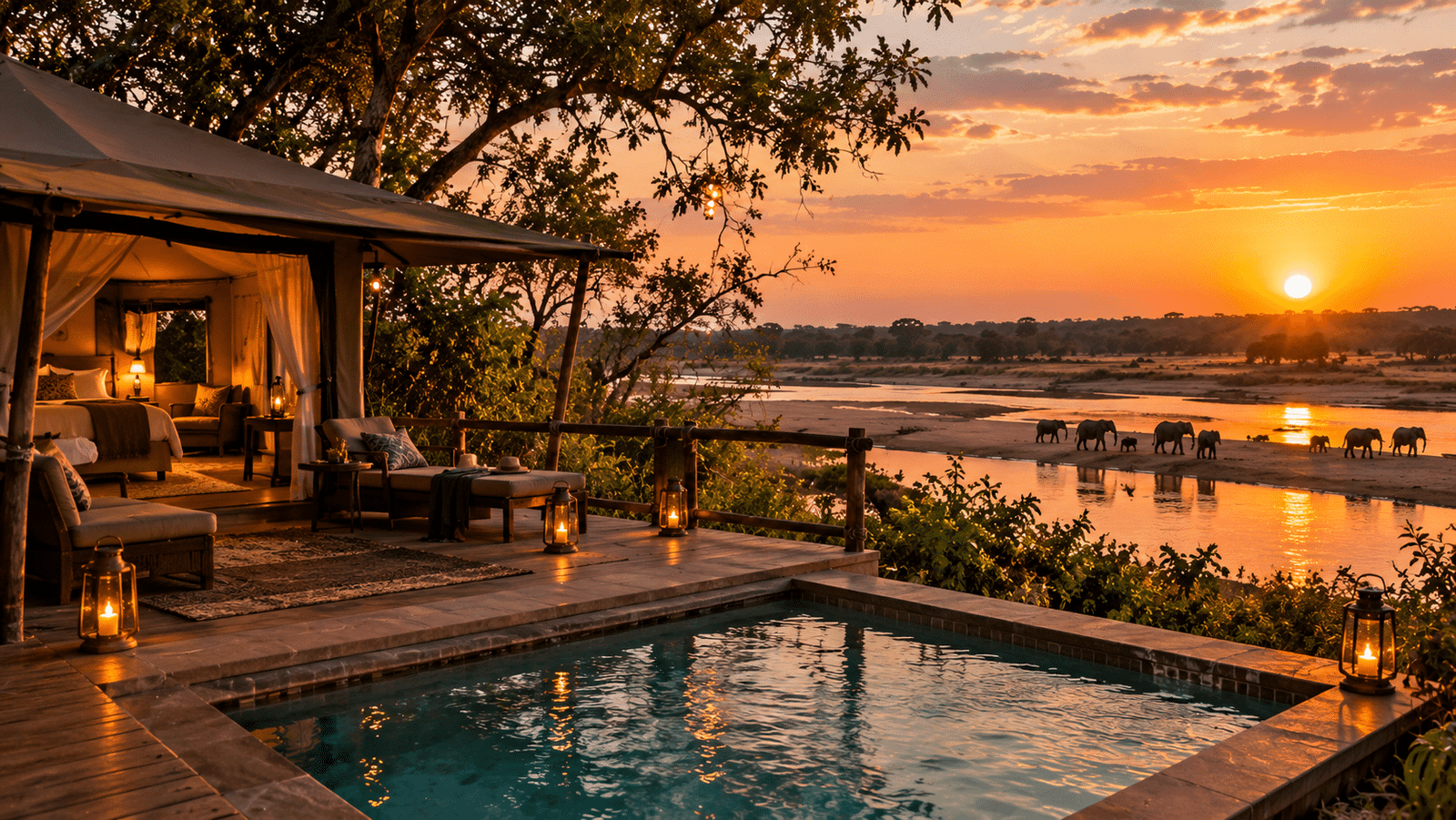
Small tented camps on the Zambezi offer an immersive bush experience at different levels of comfort. Higher-end camps may have well-appointed tents with en-suite facilities, tailored guiding and organised transfers. Typical inclusions are meals, guided activities, camp staff and airstrip transfers, but packages vary, so check exactly what is covered.
Mobile and Semi-Permanent Safaris
For a deeper wilderness experience, some operators run mobile walking safaris. You move between simple camps with minimal infrastructure, and these trips usually involve more walking and canoeing. They suit travellers who prefer adventure over luxury.
Public Campsites
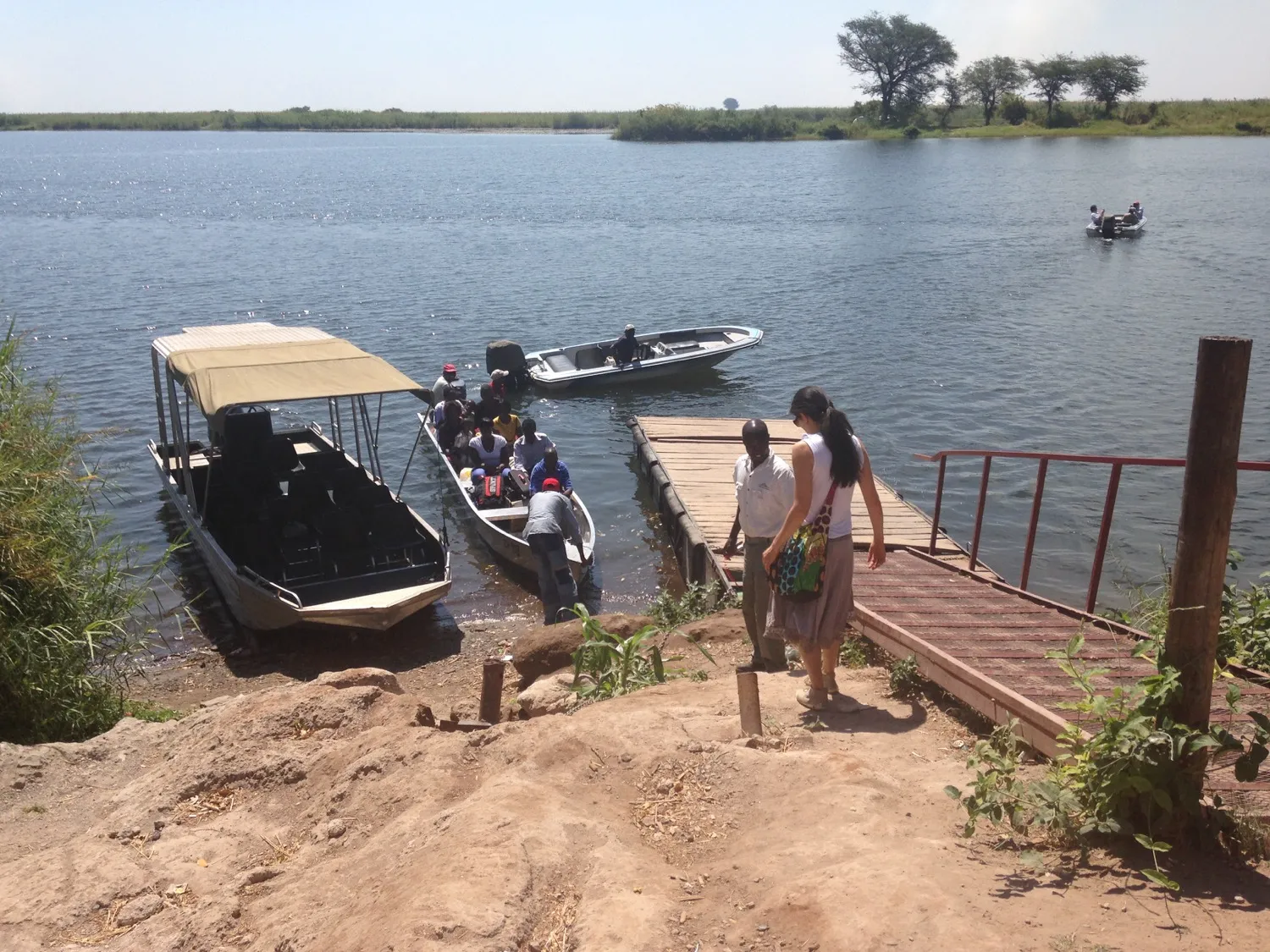
Self-drive visitors sometimes stay at public campsites run by ZimParks. This is the cheapest option, but it requires a suitable 4×4, camping gear, supplies, emergency planning and strong bush awareness. A public campsite does not automatically include a guide or organised walks.
Booking tip: Before paying a deposit, confirm the camp’s opening dates, walking safari availability, park fees, transfers and cancellation terms.
How Many Days Do You Need?
Three to five nights is a useful starting point for most travellers. A longer stay gives you time to settle in, see different habitats and avoid rushing. If you want to combine walking, canoeing and game drives, five to seven nights is ideal.
Sample Three-Night Itinerary
Actual activities depend on the camp and current conditions.
- Day 1, Arrival and orientation: Arrive by your confirmed transport, settle into camp and receive a safety and wildlife briefing. Enjoy a relaxed afternoon if the schedule allows.
- Day 2, Guided walking safari: Start with an early walk. Learn about tracks, bird calls and feeding behaviour while watching wildlife from a safe distance. Rest during the heat of the day, then enjoy a late-afternoon activity.
- Day 3, Explore more of the wilderness: Depending on availability, take another guided walk, a game drive or a properly organised canoe safari.
- Day 4, Final morning and departure: Enjoy a last activity if time allows, then leave for your onward transfer.
If walking is your main priority, tell the operator so the itinerary leaves enough time for walks rather than concentrating on driving or transfers.
How Much Does a Mana Pools Walking Safari Cost?
There is no single price. Costs vary with accommodation, travel dates, group size, transport, guide arrangements and activities. A luxury fly-in safari has a very different price structure from an independent camping trip, and peak months from July to October usually cost more.
What Is Usually Included
- Accommodation and meals
- Guided walking safaris, and often game drives and canoe trips
- Camp staff and transfers (in many packages)
What May Cost Extra
- International and domestic flights, and charter flights to the park
- National park entry and activity or conservation fees (sometimes charged separately)
- Visas
- Premium drinks and laundry
- Tips and gratuities
- Travel insurance
When comparing quotes, check whether the price includes park fees, transfers, meals, drinks, guided activities and taxes. Ask for a written breakdown so you can compare like with like. Do not rely on old online prices. Confirm current fees with the Zimbabwe Parks and Wildlife Management Authority or your registered operator.
What to Pack for a Mana Pools Walking Safari
Clothing
- Neutral colours: khaki, olive, beige and brown. Avoid bright colours, white, and dark blue or black.
- Light layers: mornings can be cold in June and July, while afternoons are hot.
- Lightweight long trousers and a long-sleeved shirt for sun and insect protection.
- Comfortable closed walking shoes or boots with good grip, well broken in.
- Wide-brimmed hat and sunglasses.
- Warm fleece or jacket for early mornings and evenings.
Gear
- Binoculars: essential for wildlife and birds.
- Camera with a zoom lens: a 100–400mm lens works well on foot.
- Spare batteries and memory cards.
- Headlamp or torch.
- Reusable water bottle, or the water your operator supplies.
- Dust-proof bag for equipment.
Health and Personal Items
- Malaria prophylaxis as advised by your doctor
- Insect repellent
- High-SPF sunscreen and lip balm
- Personal medication and a basic first-aid kit
- Travel insurance documents and copies of your passport
Follow your operator’s instructions on footwear, bags and equipment, and avoid carrying anything that makes walking uncomfortable.
Health and Travel Preparation
Consult a travel-health professional before you go. They can advise on malaria prevention, recommended vaccinations and any destination-specific guidance based on your health, itinerary and dates.
Check that your travel insurance covers walking safaris, emergency medical treatment and evacuation from remote locations. Keep copies of your travel documents, and confirm visa requirements, park access and transport before departure.
Wildlife Photography on a Walking Safari
Mana Pools offers striking photographic opportunities, from elephants beneath giant trees to birds along the river and shifting light across the floodplain. Walking photography takes patience, and the guide’s safety decisions always come before a picture.
- Use binoculars to find wildlife before reaching for your camera.
- Carry a zoom lens so you can shoot from a respectful distance.
- Work with the soft light of early morning and late afternoon.
- Avoid sudden movements and noise that could disturb animals.
- Never ask your guide to move closer purely for a photograph.
Commercial photography may need extra permission from the park authorities, so check the rules if you are travelling professionally.
Tips for Your First Mana Pools Walking Safari
- Choose the right operator. Look for experienced guides, small groups and a strong safety record.
- Book early. Camps are small, and the best dates from July to October can fill up many months ahead.
- Be reasonably fit. You do not need to be an athlete, but you should be comfortable walking for a few hours on flat, sandy ground in heat.
- Listen to your briefing and follow instructions exactly.
- Keep quiet. Silence helps you see more and keeps animals relaxed.
- Be patient. Walking is about quality, not quantity, and some of the best moments are small and slow.
- Spend less time behind the camera. Do not miss the moment because you were looking at a screen.
- Combine activities. Pair walking with canoeing and game drives.
- Stay at least three to four nights.
- Respect wildlife and communities. Never feed animals, leave litter or disturb wildlife.
Combine Your Walking Safari With Other Activities
Canoe Safaris on the Zambezi
Gliding down the Zambezi in a canoe gives a completely different perspective. You drift past elephants drinking at the bank, hippos in the shallows and birds in the reeds. Canoe trips are guided and combine well with morning walks.
Game Drives
Game drives cover more ground and reach parts of the park that are too far to walk. They are useful in the heat of the day.
Extend Your Trip
- Victoria Falls: a dramatic waterfall and a range of land and water activities, which contrasts well with a remote wilderness stay.
- Hwange National Park: known for large elephant populations and varied wildlife viewing.
- Lake Kariba: boat-based experiences and lakeside stays that show another side of the Zambezi region.
For more planning ideas, read Safari in Zimbabwe: Where to Go and Mana Pools National Park Canoe Safari.
Responsible Tourism and Conservation
Mana Pools matters as a protected landscape as well as a safari destination. Responsible travel helps protect the wildlife and habitats that make it special.
- Never feed animals, leave litter or remove natural objects.
- Follow park rules and the instructions of staff and registered guides.
- Choose operators that keep groups small, support anti-poaching work and local employment, and educate guests about conservation.
Protecting the World Heritage property means respecting the natural behaviour of animals, not treating encounters as staged experiences.
Is a Mana Pools Walking Safari Right for You?
A walking safari suits travellers who enjoy nature, photography, birdwatching and learning about wildlife behaviour, and who are comfortable following a guide’s instructions throughout an outing.
It is not ideal for everyone. Heat, distances and unpredictable wildlife can be demanding. If you have mobility concerns or a medical condition that could affect participation, discuss it with your operator before booking. Families should check age requirements, as many camps set minimum ages for walking. If you prefer a vehicle-based safari, you can combine a guided walk with game drives instead of making walking the main activity.
Final Thoughts: Experience Zimbabwe’s Wilderness on Foot
A Mana Pools walking safari is one of the most immersive ways to experience Africa. You walk beneath giant trees, watch elephants feed nearby and hear the Zambezi flowing in the distance. You feel part of the landscape rather than a spectator.
The dry season, especially June to October, is generally the best time for wildlife viewing, but the right trip also depends on heat, access, accommodation and the quality of your guide. With careful preparation and a responsible operator, Mana Pools can be the highlight of your Zimbabwe safari.
Ready to plan your Mana Pools walking safari? Contact Maximum Adventure Trails to design a custom itinerary around your dates, budget and interests.
Button: Request a Free Quote →
Frequently Asked Questions About Mana Pools Walking Safaris
1. Is Mana Pools a good destination for walking safaris?
Yes. Mana Pools is well known for guided walking safaris in a true wilderness setting. Its floodplains and riverine woodland offer excellent chances to observe wildlife and learn about the ecosystem on foot.
2. Is a Mana Pools walking safari safe?
It involves real wildlife risks. A guided walk with an experienced professional, strict compliance with park rules and attention to changing conditions are essential. Serious incidents on guided walks are rare, but you should never approach dangerous animals or ignore your guide’s instructions.
3. Can I walk in Mana Pools without a guide?
The park’s visitor code allows unaccompanied walking only under specific conditions, including a permit, restricted areas and acceptance of the risks. It is not recommended for inexperienced visitors, and rules can change. Most travellers should book a guided safari and check current rules with ZimParks.
4. When is the best time for a Mana Pools walking safari?
June to October is generally best. Dry conditions concentrate wildlife near the Zambezi and the remaining water. September and October can be extremely hot, so consider temperature as well as wildlife. Always confirm seasonal access and camp availability.
5. What animals can I see on a walking safari in Mana Pools?
Possible sightings include elephants, buffalo, zebra, eland, waterbuck, kudu, impala and many birds. Lions, leopards, hyenas and wild dogs also occur in the ecosystem, and hippos and crocodiles live in the water. Sightings vary, and no species is guaranteed.
6. How close can you get to wildlife on foot?
The visitor code says visitors must stay at least 30 metres from elephants, lions, African wild dogs and animal dens. Your guide may require more distance depending on the animals’ behaviour and the terrain.
7. How long should I stay in Mana Pools?
Plan at least three to four nights. Five to seven nights is ideal if you want to combine walking, canoeing and game drives.
8. How fit do I need to be?
You do not need to be an athlete. Walks are usually at a slow, steady pace over flat terrain and last two to four hours. You should be comfortable walking in heat and able to stop, start or move quickly if your guide asks.
9. What should I wear on a walking safari?
Wear neutral-coloured, comfortable clothing, closed walking shoes, a hat and sun protection. Bring insect repellent and follow your guide’s advice on water. Layers are useful for cool mornings.
10. Are children allowed on walking safaris in Mana Pools?
It depends on the camp’s policy and the activity. Many camps set a minimum age for walking safaris because of the safety demands. Check with your operator before booking.
11. Do I need malaria tablets for Mana Pools?
The Zambezi Valley is a malaria-risk area, so speak to a doctor or travel clinic well before your trip about prophylaxis. Also use repellent, wear protective clothing and sleep under a net.
12. Can I combine walking and canoe safaris?
Depending on the camp, operator, season and conditions, you can often combine guided walks with canoeing on the Zambezi. Book canoe activities through an appropriate operator and follow all river-safety instructions.
13. How do I get to Mana Pools?
Most visitors fly to Harare and take a light aircraft charter to an airstrip near their camp. You can also drive, which takes about six to eight hours, with a 4×4 recommended for the final stretch. Confirm current routes, schedules and luggage limits before you travel.
14. Are camps and activities available all year?
Not necessarily. Many camps operate seasonally, and rain can affect access. Confirm opening dates and the availability of guided activities before you book.
15. How much does a Mana Pools walking safari cost?
Costs depend on the type of camp, season, transport and length of stay. A luxury fly-in safari costs far more than an independent camping trip. Ask for a written breakdown of inclusions and confirm current fees with your operator or ZimParks.