

- 2 Views
- 15 Min Read
- (0) Comment
The best Okavango Delta safari camp sits on permanent water, keeps guest numbers small, and offers the activities you actually want to do. If you want boats, mokoro canoes and bush walks in comfort, pick Camp Okavango. If you want game drives and water in one stay, look at Xugana Island Lodge, Mapula or Machaba. Budget travelers should start with Delta Camp or Sango Safari Camp, and anyone who wants to sleep close to the bush should consider a camping safari.
The hard part is that Okavango Delta safari camps look alike in photos but behave very differently. Some are surrounded by water all year, while others are land camps on the Delta’s edge. Rates are rarely published, and the month you travel changes what you see. Many travelers end up with ten tabs open and no clear answer.
This guide compares seven options, from a camping safari to water lodges and Khwai tented camps. For each one you get what it offers, who it suits, and what it costs where figures are public. Then the camps are set side by side, with prices and the best time to go. We are Maximum Adventure Trails, a Victoria Falls agency that books Okavango Delta trips, so this is the advice we give travelers before they choose.
1. Camping safari in the Okavango Delta with Maximum Adventure Trails
A camping safari in the Okavango Delta region puts you in a tent or at a campsite instead of a lodge suite. Maximum Adventure Trails, founded in 2019 and based in Victoria Falls, offers camping safaris and books Delta trips from Maun. It suits travelers who value time in the bush over thread counts.
Setting and comfort level
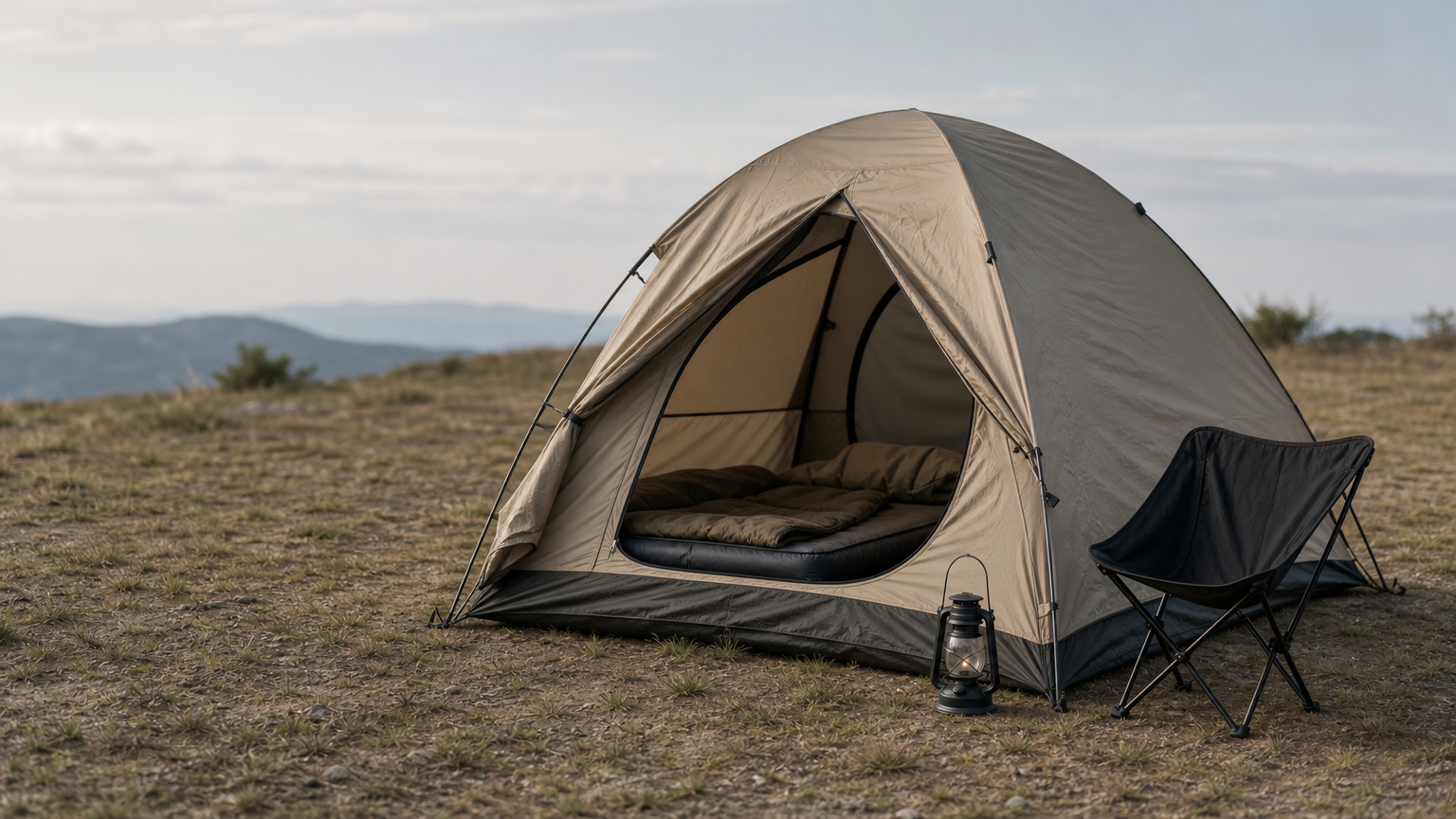
You sleep in tents or at campsites inside national parks, game reserves and other protected areas. Facilities and comfort vary by destination and campsite, so ask exactly what is provided: bedding, bathroom setup, meals, and who cooks.
Expect the wild to come close. Campsites in parks and reserves are typically unfenced, so elephants, hippos and hyenas can pass through at night. Guides brief you on the rules, such as staying in your tent after dark. For many travelers that closeness is the whole point.
A camping safari trades comfort for closeness, so confirm the facilities before you pay.
Activities and wildlife
The activities depend on the route you book. Typical options for a camping trip in this region include:
- Mokoro excursions through the channels, often with an island nature walk
- Game drives in reserves such as Moremi and Khwai
- Guided walks and birding
- Longer routes that link Chobe National Park and Victoria Falls
For a long journey, the agency’s 12-day safari runs through the Okavango Delta, Moremi Game Reserve, Khwai Concession, Savuti, Chobe National Park and Victoria Falls.
Who it suits and what it costs
Adventurous couples, small groups and budget-conscious travelers get the most from camping. It is a poor fit if you need air conditioning, a pool or a spa. Camping is also more comfortable in the dry season, when rain and humidity are lower.
Prices depend on the route, group size and campsite standard, so request a quote for your dates. If you want to test the Delta first, the Okavango Delta day trip from Maun lasts 10 hours and costs $140 per person. It includes a mokoro safari, an island nature walk and a picnic lunch. For two people that is $280.
2. Camp Okavango
Camp Okavango is a permanent water camp on Nxaragha Island in the heart of the Delta, run by Desert & Delta Safaris. It is the right pick if you want boat, mokoro and walking safaris from comfortable suites and do not need game drives.
Setting and rooms
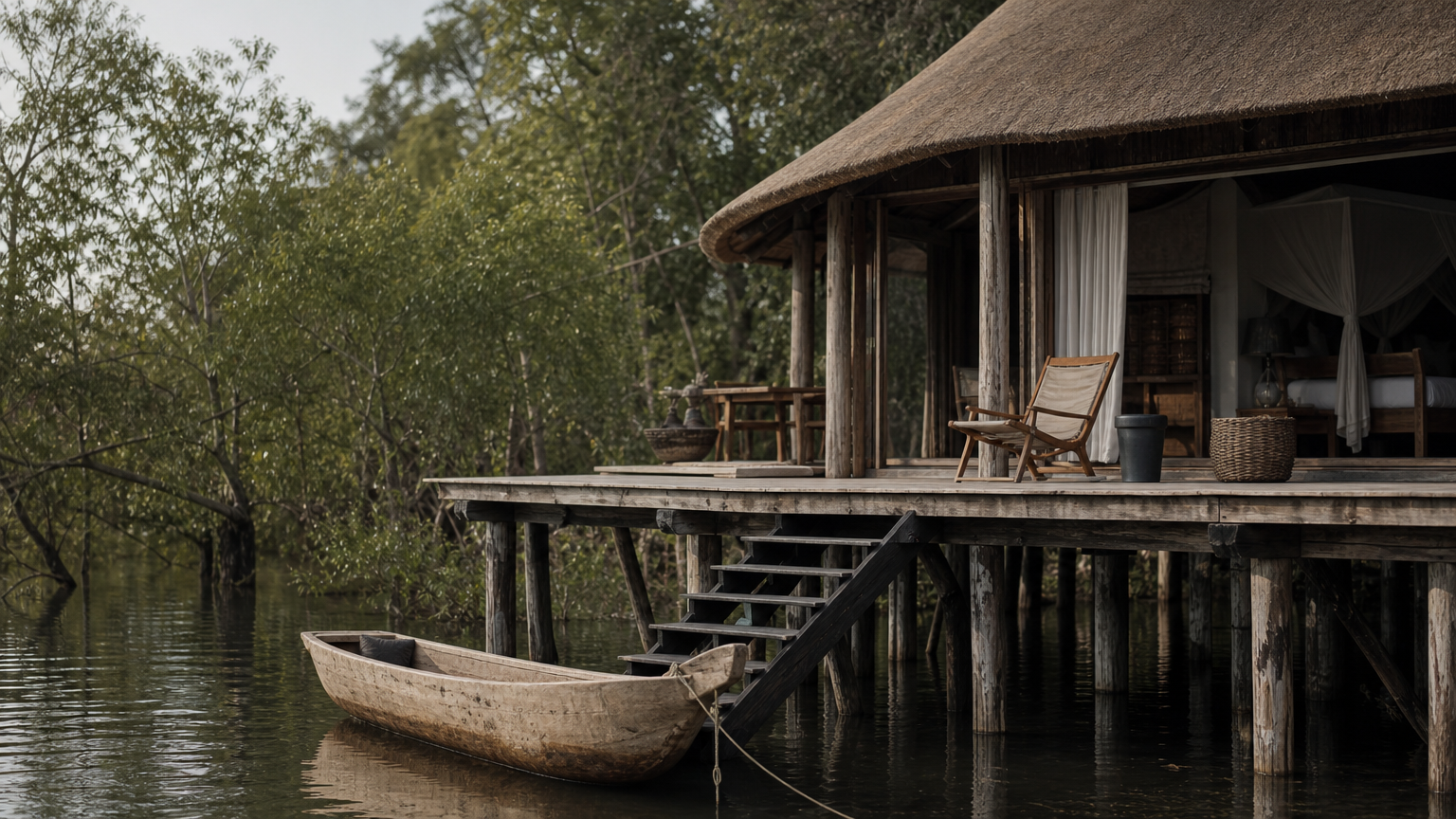
The camp holds only 24 guests. There are 11 safari suites and one family suite with two en-suite bedrooms. Each sits on its own raised wooden platform under thick Delta vegetation, with a private deck and a bathroom with a double vanity and double shower.
Shared areas include two lounges, a library, a dining room, a self-service bar, two open-air fire decks and a rim-flow pool. Rooms have fans but no air conditioning, and Wi-Fi runs over a satellite link, so constant connectivity is not guaranteed. Children must be six or older.
Camp Okavango is a water camp, so game drives are not part of the stay.
Activities and wildlife
Everything is guided, and boats and walks are shared with other guests. The activity list covers:
- Motorized boat safaris through deeper channels and lagoons
- Mokoro excursions in shallower channels and floodplains
- Guided walks on surrounding islands, in small groups with two guides
- Seasonal fishing for bream, plus tiger fish for anglers
- Scenic helicopter flights, at an extra charge
- A sleep-out deck for stays of three nights or more
Reviewers report elephants and hippos at close range from the water and lions on foot. One guest put it well: treat this as a Delta experience, not a big-game checklist.
Who it suits and what it costs
Tripadvisor shows 4.7 out of 5 from about 400 reviews, and guests regularly praise the guides, the food and the singing welcome. It suits couples, birders and families with children six and older.
The sources we reviewed publish no nightly rate, so request a quote for your dates and budget for light-aircraft transfers. The camp has its own airstrip. When the landing field has flooded, reviewers have arrived by a boat ride of 40 to 45 minutes instead. Dining is family style.
3. Xugana Island Lodge
Xugana Island Lodge overlooks the Xugana Lagoon, which Desert & Delta Safaris describes as the most beautiful of the permanent water sites in the Delta. It suits travelers who want game drives and mokoro trips in the same stay.
Setting and rooms
The lodge sits beside a lagoon in the Delta’s permanent water. That matters because permanent water means boating and mokoro trips work in every season, not only when the flood is high. Seasonal-flood camps can be much drier in some months.
Xugana belongs to the same Desert & Delta collection as Camp Okavango and Mapula. Some travelers combine two or three of these camps in one trip, which keeps service and style consistent. For current room details, check the operator’s page for your travel dates, because camps update their suites.
Activities and wildlife
The activity list is broader than at a pure water camp:
- Game drives
- Bird watching
- Mokoro excursions
- Scenic helicopter flights
Xugana gives you land and water in one stay, which is rare among permanent water camps.
Game drives make this a better fit than Camp Okavango if big mammals matter to you.
Who it suits and what it costs
First-time visitors who want variety will like Xugana. So will photographers who want both lagoon light and land-based wildlife. Pure water purists may prefer Camp Okavango.
Rates are not published in the sources we checked, so ask for a quote that includes transfers, park fees and activities. Compare what is included before comparing totals.
4. Mapula
Mapula blends land, water and strong wildlife numbers in one camp. Desert & Delta Safaris pitches it as the complete Botswana safari experience, and it suits travelers who only have one Delta stay and want every activity.
Setting and rooms
The operator describes Mapula as a place where land, water and some of the country’s highest wildlife numbers meet, in a lightly visited setting. That makes it a hybrid camp, closer in spirit to Xugana than to a pure island water camp.
Water activities depend on flood levels, so ask what boating looks like in your travel month. A hybrid camp is strongest when you pick a month that suits both the water and the animals.
Activities and wildlife
The list is one of the widest in the Delta:
- Motorboat safaris
- Mokoro excursions
- Walking safaris
- Fishing
- Birding
- Scenic helicopter flights
Mapula suits travelers who refuse to choose between water and walking.
Few camps combine boat, canoe and foot in one stay.
Who it suits and what it costs
Choose Mapula if this is your only Delta camp and you want to sample everything. It also works for mixed groups, where one person wants birds and another wants walks.
No nightly rate appears in the sources we reviewed. Request a quote and check which activities are included and which, like helicopter flights, carry a surcharge.
5. Delta Camp
Delta Camp is one of the original Okavango camps, a rustic, eco-friendly lodge on the Xaxaba Concession that offers an affordable Delta stay. It suits travelers who prefer quiet mokoro and walking days over motorized safaris.
Setting and rooms
Locally grown reed and grass form most of the structure, with canvas where needed and no glass in the windows. The elevated lounge and dining areas look over riverine forest and swamp, and an open bar runs through the day.
Chalets have en-suite bathrooms with hot and cold water, a shower with a view, mosquito netting and solar-powered lighting. Trees grow through some roofs and floors. Light impact is the design goal, so expect character, not luxury.
Delta Camp trades polish for personality and quiet, which is exactly its appeal.
Activities and wildlife
Only mokoro and walking are offered, with no motorized activities. Excursions run twice daily and are private, so the schedule bends to you. Extras include:
- Village visits for a look at local culture
- Full-day walks with a picnic lunch
- Camping expeditions deeper into the Delta, arranged at booking
One caution: walks happen in Moremi Game Reserve, where firearms are not permitted, so guides are unarmed. One agency that sells the camp advises against walking safaris there. Ask the camp directly before you book walks.
Who it suits and what it costs
Delta Camp suits budget-minded couples, slow-pace travelers and anyone who wants a quiet Delta experience. The camp accepts all ages but books only families with children over six.
It is described as a very affordable Okavango experience, but no nightly rate appears in the sources we reviewed. Request a quote and compare it with the listed rates for the Khwai camps below.
6. Sango Safari Camp
Sango Safari Camp is a classic tented camp on the Khwai River, listed from about $435 per person. It is the budget pick if you care more about land-based game viewing than a water wilderness.
Setting and rooms
Tents sit in the shade of trees overlooking the Khwai River. The camp is on the outskirts of the traditional village of Khwai, on the border of Moremi Game Reserve. That puts you on the eastern side of the Delta, where the scenery is riverine woodland and floodplain.
The setting suits travelers who want to combine wildlife with a look at local life. Expect a simpler tented camp, not a deck-and-pool lodge.
Activities and wildlife
Khwai is well known for good game viewing. Typical activities here include:
- Game drives on the Khwai concession
- Visits connected to the nearby village
- Night drives at many Khwai camps, which are not allowed inside Moremi itself
Sango is the cheapest way in this list to get serious game viewing near Moremi.
Confirm the exact activity list with the camp.
Who it suits and what it costs
Sango suits first-time safari goers, small groups and travelers who want game drives on a tighter budget. If your priority is mokoro or boat time, choose a water camp.
One agency lists it from $435 per person. Check whether that is per night and what it covers, since activities, transfers and park fees often sit outside a starting rate.
7. Machaba Camp
Machaba Camp is a down-to-earth camp with sophisticated touches in the game-rich Khwai concession, listed from about $754 per person. It suits mid-range travelers who want strong guiding, good food and stylish rooms without a flashy lodge.
Setting and rooms
The camp sits under sycamore trees in a quiet corner of the Khwai concession, in the eastern Okavango. The description stresses a friendly, down-to-earth feel with stylish, thoughtfully designed rooms and excellent food.
Khwai has some of Botswana’s larger wildlife concentrations, which is why land camps here draw repeat travelers. Machaba sits a step above Sango in finish and price, but it is still a camp, not a resort.
Activities and wildlife
Game viewing leads. Typical activities at Khwai camps include:
- Game drives with guides who know the concession
- Night drives, which are not permitted in Moremi itself
- Birding along the river
Machaba is where Khwai game viewing meets a more polished camp experience.
Confirm the current list, since water levels and concession rules shape what each camp can run.
Who it suits and what it costs
Machaba suits couples and small groups who want an authentic safari plus good food and guiding. It is less suited to travelers who want the isolation of an island camp.
One agency lists it from $754 per person. Treat it as a starting rate and ask for a quote that spells out transfers, fees and activities for your dates.
Okavango Delta safari camps compared side by side
The table below sets all seven options side by side, so you can see the trade-offs in one glance. Price signals come from the listings above, and "quote on request" means no rate appeared in our sources.
Quick comparison table
| Camp | Setting | Main activities | Price signal |
|---|---|---|---|
| Camping safari (Maximum Adventure Trails) | Tents or campsites in parks and reserves | Varies by route: mokoro, game drives, walks | Quote on request |
| Camp Okavango | Nxaragha Island, permanent water | Boat, mokoro, walks, fishing | Quote on request |
| Xugana Island Lodge | Xugana Lagoon, permanent water | Game drives, mokoro, birding | Quote on request |
| Mapula | Land and water | Boat, mokoro, walks, fishing, birding | Quote on request |
| Delta Camp | Xaxaba Concession | Mokoro and walks only | Described as very affordable |
| Sango Safari Camp | Khwai River | Game viewing | Listed from $435 per person |
| Machaba Camp | Khwai concession | Game viewing | Listed from $754 per person |
Water camps versus land camps
Water camps like Camp Okavango put you on or beside channels, so you move by boat, mokoro and foot. You feel close to the animals, but you will usually see fewer of them. One reviewer who also visited Chobe said drive camps show more wildlife, while the Delta feels closer.
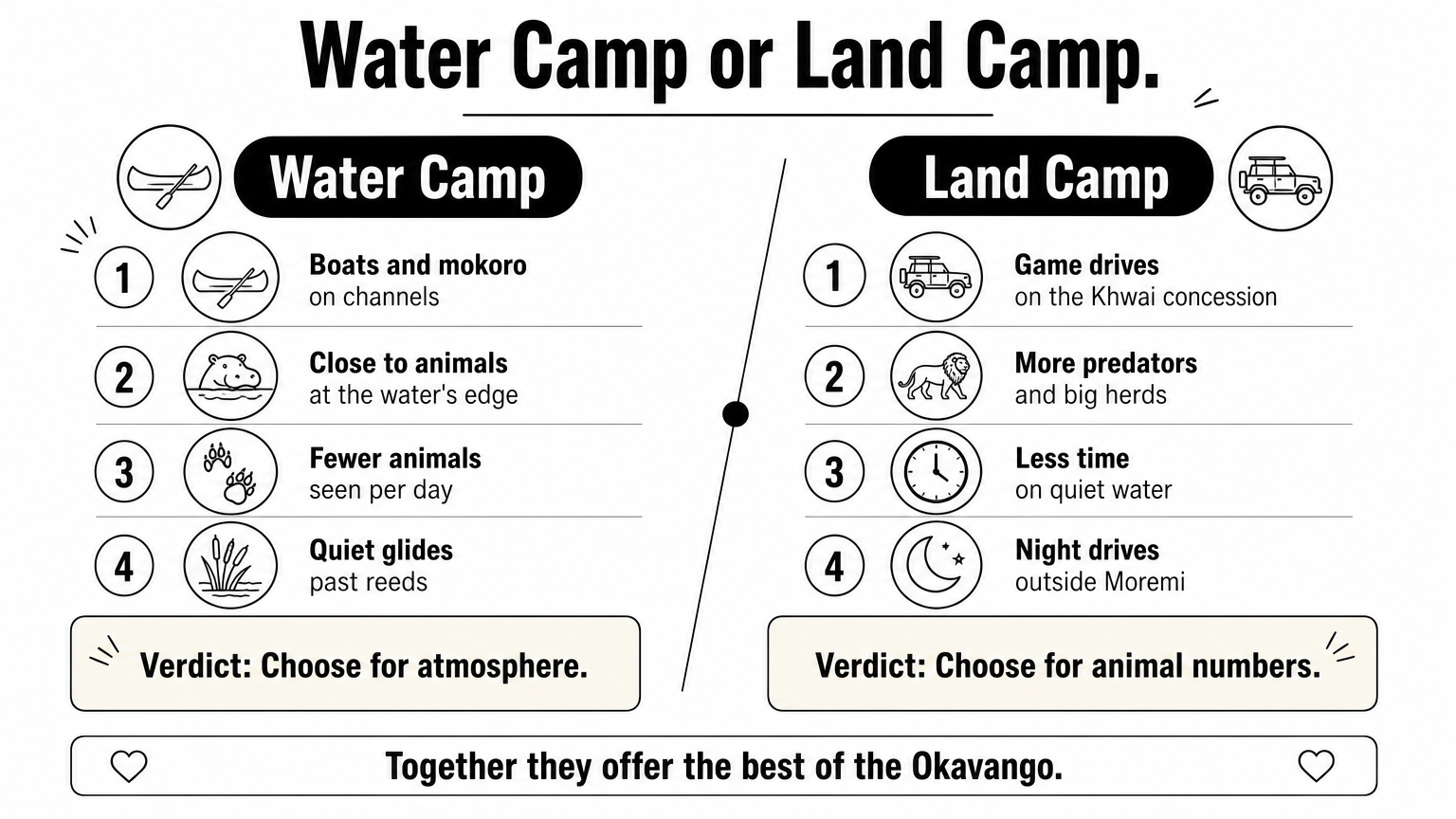
Land camps in Khwai and near Moremi rely on game drives. They give you more predators and big herds per day. The trade-off is that you lose the quiet of gliding past reeds. If you can, split a trip: three nights on the water and two or three in Khwai.
Pick a water camp for atmosphere, and a land camp for the number of animals you see.
Matching a camp to your trip
Use this shortlist to decide quickly:
- First Delta trip, comfort matters: Camp Okavango or Mapula
- Birding and photography: Xugana Island Lodge
- Tight budget, quiet pace: Delta Camp
- Budget with game drives: Sango Safari Camp
- Mid-range land safari: Machaba Camp
- Adventure and tents: a camping safari
Okavango Delta safari camp costs, best time and booking tips
An Okavango Delta safari camp stay costs more than most safari destinations, because camps are remote and guest numbers are low. The rates we can verify start in the hundreds of dollars per person, and many camps quote on request.
What a Delta safari costs
Here are the figures that appear in our sources and on our own trip pages:
| Option | Figure |
|---|---|
| Okavango Delta day trip from Maun | $140 per person |
| Moremi Game Reserve day trip from Maun | $270 per person |
| Sango Safari Camp | Listed from $435 per person |
| Machaba Camp | Listed from $754 per person |
| 7-night Victoria Falls, Chobe and Okavango Delta safari | $2,640, international flights excluded |
Starting rates for camps are usually quoted per person per night, but confirm that. As an example, two adults for three nights at the listed Sango rate would come to 435 x 2 x 3 = $2,610. At the Machaba rate it would be 754 x 2 x 3 = $4,524. Add light-aircraft transfers and park fees.
Compare camps by what the rate includes, not by the headline number.
Best time to visit the Delta
The best season to visit the Delta depends on what you want to see. Rains in Angola feed the Delta, and the floodwater arrives months later, so water is highest when the sky is clear.
| Months | What to expect |
|---|---|
| November to March | Hot and green, afternoon storms, rich birdlife, fewer guests |
| April to May | Green scenery, floodwater building, comfortable weather |
| June to August | High water, cool mornings, strong game viewing, busiest season |
| September to October | Receding water, hot days that can top 95°F, animals gather near water |
Reviewers have enjoyed both ends of the year. One chose February for the green season and saw lions and kingfishers, and another found fans enough in October.
Booking and packing tips
Book early for June to October, when small camps fill. Maun is the gateway, and light aircraft reach most camps with soft bags and tight weight limits, often about 20 kg (44 lb).
Skip dark blue and black clothing. Tsetse flies are attracted to those colors, so wear khaki, olive or tan. If you book through us, we take a 50% deposit and the balance 90 days before departure. We also handle the transport, transfers and hotels around your stay.
Choosing your Delta camp
The right Okavango Delta safari camp matches your activities, your budget and your month. Camp Okavango, Xugana and Mapula suit water and walking, Delta Camp is the quiet budget choice, Sango and Machaba bring Khwai game drives, and a camping safari gives you the most direct contact with the bush.
Pick two shortlisted camps, ask for quotes with transfers and fees included, and check the water level for your dates. If you want a single team to handle bookings, transport and itinerary, plan your 7-night Victoria Falls, Chobe and Okavango Delta trip with Maximum Adventure Trails.