

- 6 Views
- 9 Min Read
- (0) Comment
Elephants in Chobe National Park are African savanna elephants, the largest land animals on Earth, and the park holds one of the densest populations of them anywhere. Estimates for the park itself run from about 50,000 to 70,000 animals. Counts for the wider Chobe region reach 120,000 or more, depending on the season and where the boundary is drawn. The park covers roughly 11,700 square kilometers in northern Botswana, and the Chobe River is the reason the herds gather there.
This article explains why so many elephants live here, how to see them well, which other animals share the park, and how elephant behavior shapes what you watch on a game drive or river cruise. Use the numbers to set realistic expectations and the checklist to know what to look for.
At Maximum Adventure Trails, we run game drives and Chobe River cruises with locally trained guides. The details below come from the routes, seasons, and sightings we plan around. If you are weighing a day trip against a multi-day safari, this guide gives you what you need to decide.
Why Chobe has so many elephants
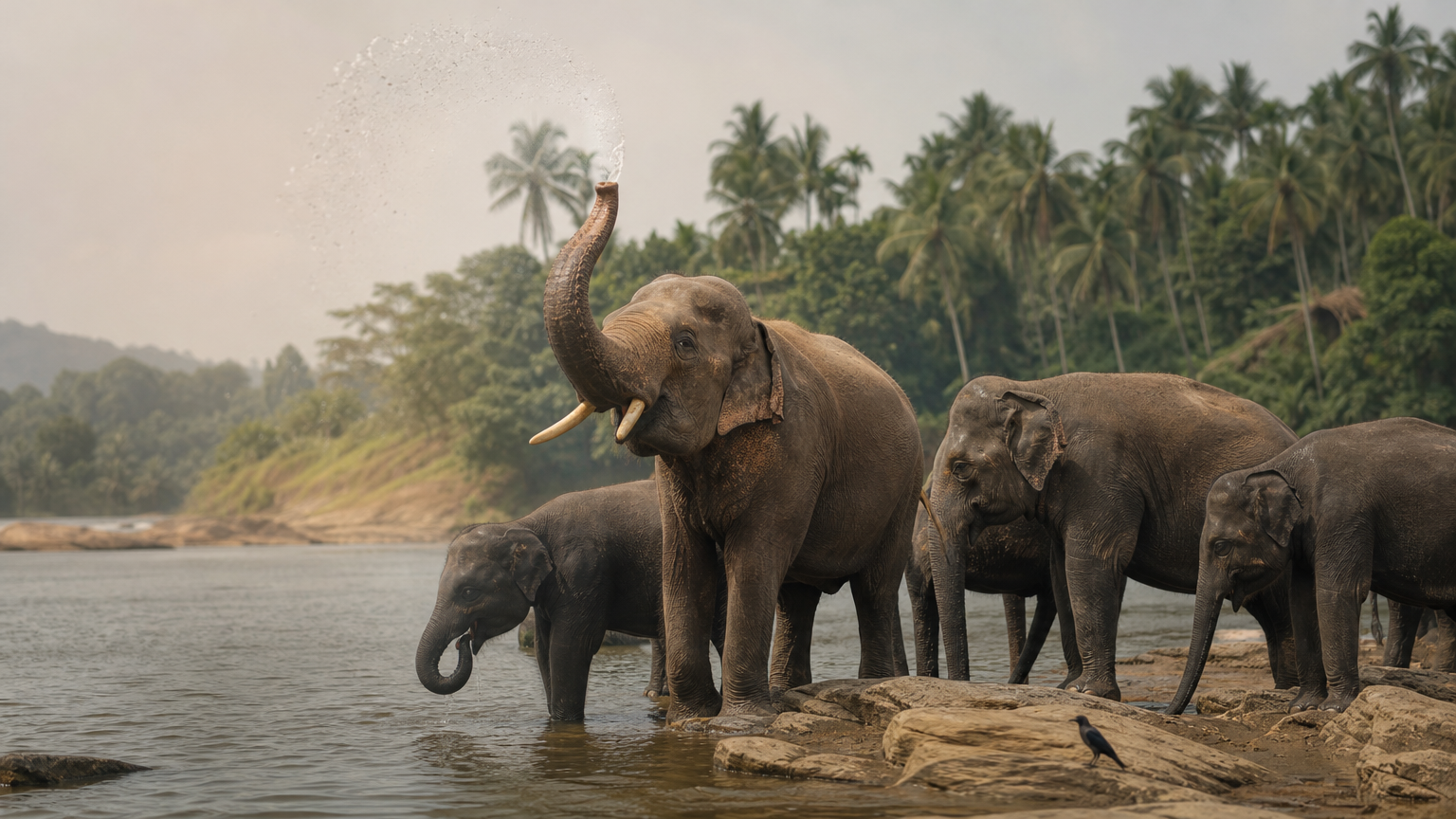
Chobe has so many elephants because it offers permanent water, shade, and food inside a protected area, and because Botswana’s herds have held steady while many African populations have declined. Those conditions pull animals in from across the northern Kalahari, especially in the dry season.
How many elephants live in Chobe
Published figures differ because they measure different areas. This table sets the common ones side by side.
| Area counted | Typical estimate | What it covers |
|---|---|---|
| Chobe National Park | 50,000 to 70,000 | Animals inside the park boundary |
| Chobe region in the dry season | 120,000 to 150,000 | Park, forest reserves, and surrounding wildlife areas |
| Botswana overall | Over 130,000 | A third or more of Africa’s savanna elephants |
The gap is not a mistake. Elephants cross park boundaries freely, counts change with the season, and survey methods differ. For planning, treat 50,000 to 70,000 as the park figure and 120,000 or more as the regional peak.
Chobe’s elephants ignore park boundaries, so every count depends on where you draw the line.
What draws elephants to the Chobe River
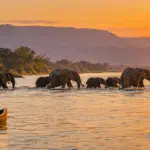
Water is the main draw. The Chobe River keeps floodplains green on the park’s northern edge while the Kalahari interior dries out. Elephants in the district move between the park, the forest reserves, and the river in search of water, shade, and forage. They follow routes that each family group has learned over generations.
Protection plays a part too. Protected areas make up about 70% of Chobe District. Researchers working there also note that hunting and poaching pressure in neighboring countries keeps elephants close to Botswana’s borders. A safe, well-watered refuge attracts more animals every year.
Why the numbers matter for your trip
For you, density means reliability. In the dry season you can watch dozens of elephants drinking, bathing, and crossing the river within a single hour. You do not need luck or a long search.
Density also changes how the trip feels. Chobe District has more elephants than people, so herds turn up near Kasane and on roads outside the park as well. Allow extra time on transfers, because an elephant crossing the road always wins. Plan to enjoy those pauses instead of fighting them.
How to see elephants in Chobe National Park
The most reliable way to see elephants in Chobe National Park is to visit between May and October and combine a river cruise with a game drive along the riverfront. Each gives a different view of the herds, and together they cover the animals from the water and from the road.
Pick the right season
Season decides how many elephants you meet and what else fills the days.
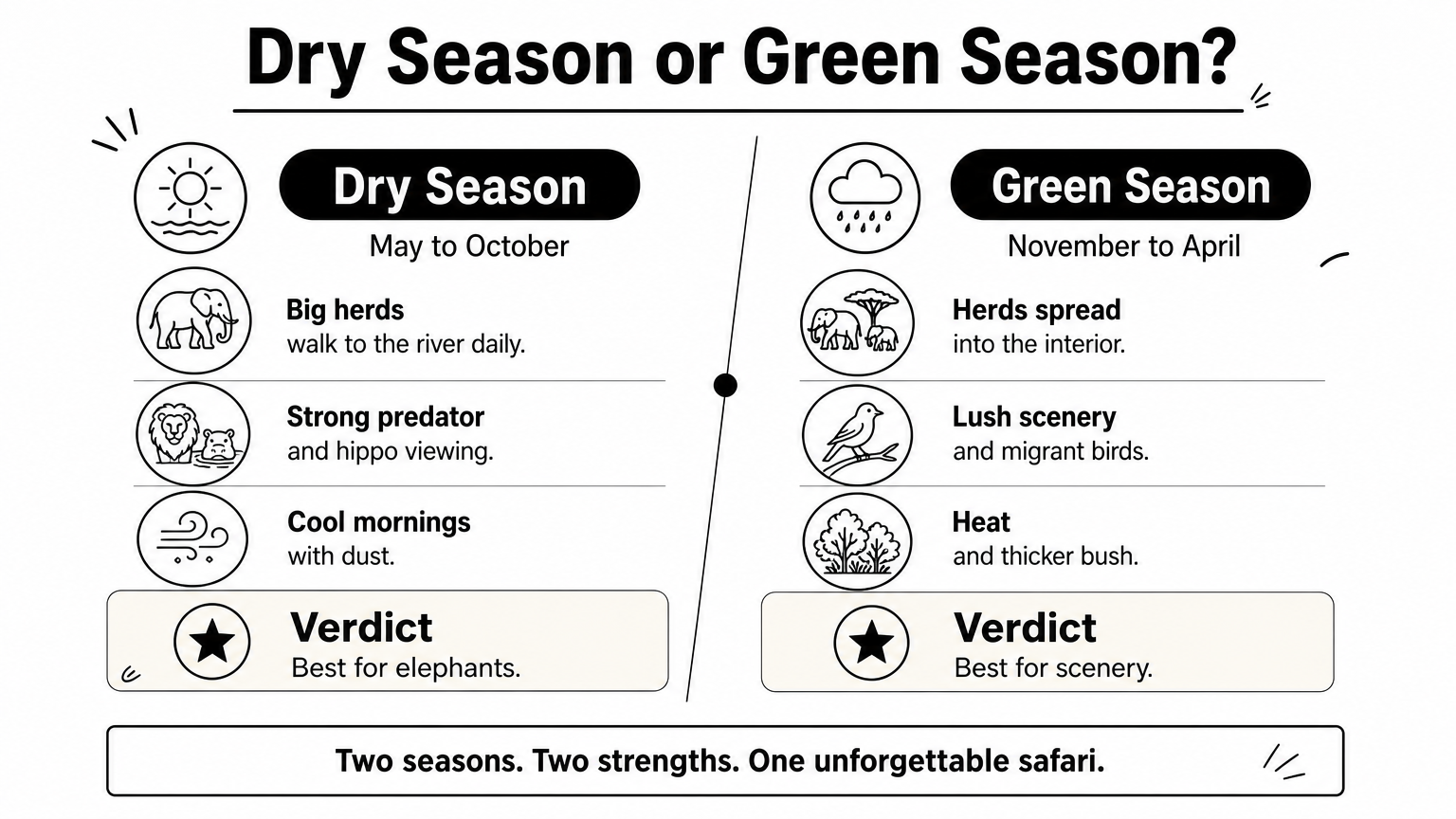
| Season | Months | Elephant behavior | What else to expect |
|---|---|---|---|
| Dry | May to October | Big herds walk to the river every day | Strong predator and hippo viewing, dust, cool mornings |
| Green | November to April | Herds spread into the interior as rain pools fill | Lush scenery, migrant birds, newborn antelope, heat and thicker bush |
October is hot, but the river is crowded with animals. The green season still delivers elephants, just in smaller groups and in places a guide must find for you. If elephants are your top priority, book the dry months, the best time to visit Chobe National Park for herds.
Boat cruise or game drive
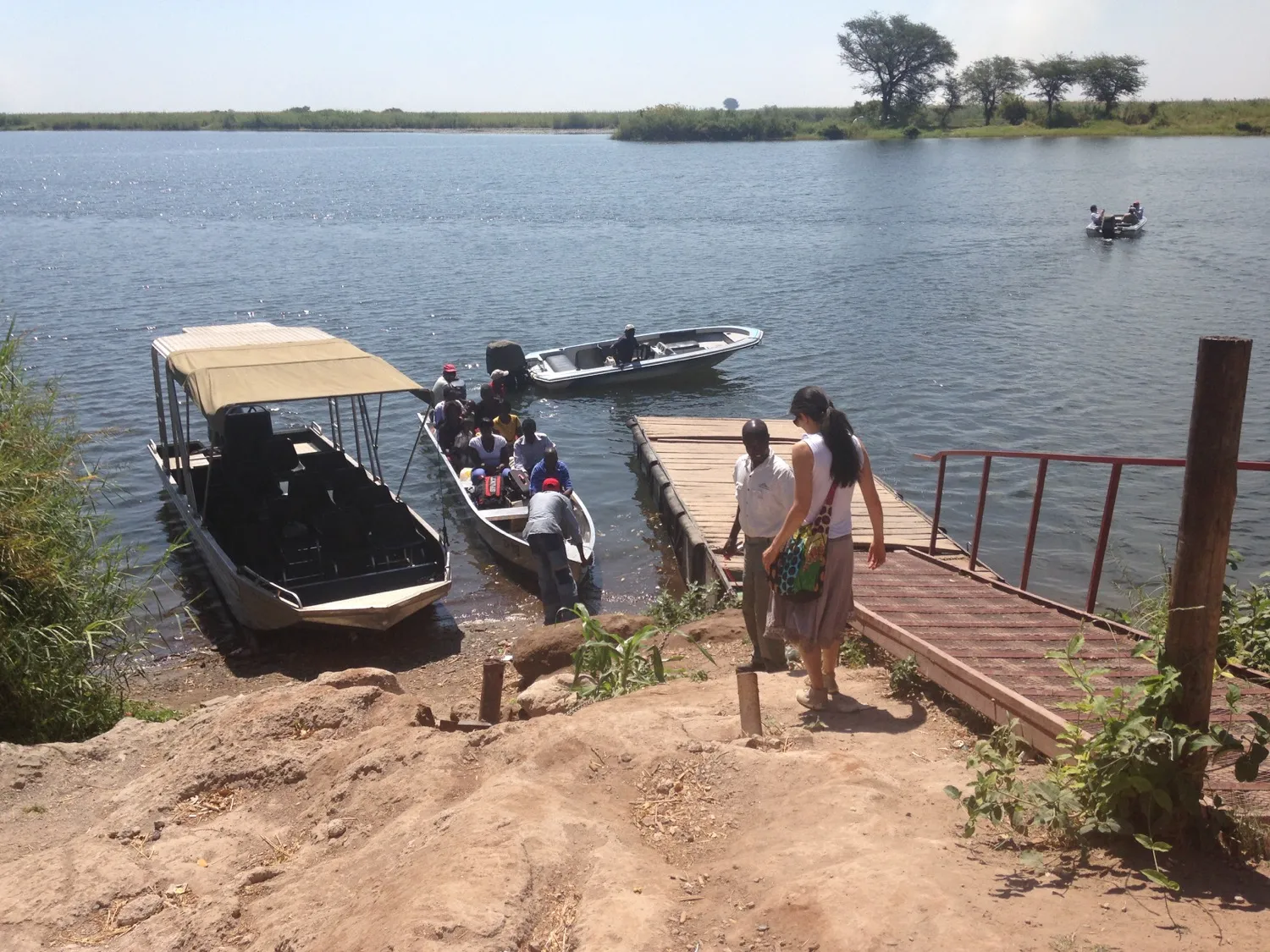
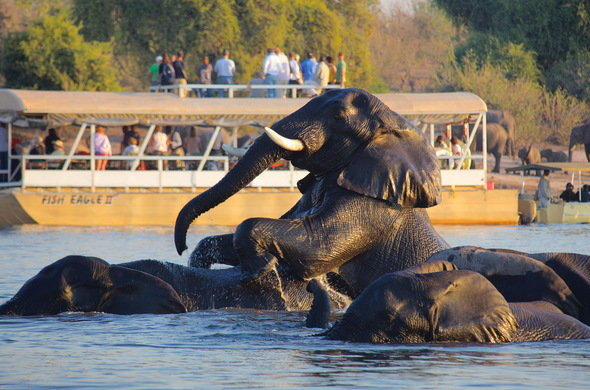
A river cruise puts you at eye level with elephants drinking, bathing, and swimming between islands. Boats drift close without disturbing the animals, and the afternoon light is excellent for photos. You also see hippos, crocodiles, and water birds on the same trip.
A game drive covers the riverfront roads and, on longer trips, the Savuti area in the west, where lions, hyenas, and cheetahs work open plains. Go early, when elephants and predators are most active. Many travelers pair a morning drive with an afternoon cruise. Day trips from Victoria Falls are possible through the Kazungula border crossing, but a night or two in Kasane gives you far more time. Visa rules depend on your passport, so check them early or ask us to handle visa assistance and cross-border transfers.
Safety around elephants
Elephants are calm most of the time, but they can be dangerous when wounded, ill, or protecting young. Your guide reads their mood, and these rules keep everyone safe:
- Stay seated and quiet in the vehicle or boat, and never stand up in an open vehicle near a herd.
- Keep your distance, and let your guide decide when to move closer or back away.
- Never get between a mother and her calf.
- Watch for warning signs: ears spread wide, head shaking, a raised trunk, or a mock charge.
- Do not feed, call out to, or throw anything at an elephant.
Treat every elephant as wild and unpredictable, and let your guide set the distance.
Animals in Chobe National Park: a full list
Chobe National Park animals include four of the big cats and carnivores, around 19 antelope species, and roughly 450 bird species. Elephants dominate the first impression, but the wildlife in Chobe National Park is varied enough to fill several days. The checklist below groups the animals by what you are most likely to see.
Predators and where to find them
The park’s predators concentrate in different areas, so the route you choose matters. Lions are the most commonly seen, especially around Savuti and the riverfront. Leopards stay shy and hide in thick woodland. Cheetahs prefer the open plains of Savuti.
- Lion: Savuti and the riverfront, often hunting buffalo and, in the right conditions, young elephants.
- Leopard: Riverfront woodland, best at dawn and dusk.
- Cheetah: Open grassland around Savuti.
- Spotted hyena: Widespread, most active at night and early morning.
- African wild dog: Rare and unpredictable, with occasional sightings in Savuti and Linyanti.
Herbivores and river animals
Large herbivores are the easy wins. Buffalo herds, giraffes, zebras, and warthogs appear on almost every drive. The river adds hippos and crocodiles, and the floodplains hold antelope that are hard to find elsewhere in Botswana.
| Animal | Where to look | Notes |
|---|---|---|
| Cape buffalo | Riverfront and floodplains | Large herds in the dry season |
| Hippo | Chobe River | Seen from boats, active at dusk |
| Giraffe | Woodland and riverfront roads | Common on drives |
| Plains zebra | Savuti and Linyanti | Seasonal movements in the green season |
| Impala, kudu, waterbuck | Throughout | Impala drop lambs in the early rains |
| Sable and roan antelope | Open woodland | Prized sightings |
| Puku and red lechwe | Riverfront floodplains | Water-loving specialists |
| Warthog, baboon | Throughout | Constant, entertaining company |
Do not count on rhinos. They are not a reliable sighting in the park, and a guide who promises one is overselling.
Elephants get the headlines, but the buffalo, hippos, and predators make a Chobe trip feel complete.
Birds and reptiles
Bird life is exceptional along the river. African fish eagles call from the treetops, saddle-billed storks wade the shallows, and kingfishers flash past the boat. Carmine bee-eaters nest in river banks from about September to November, which is a highlight for photographers.
Reptiles are easier to spot from the water. Nile crocodiles bask on sandbars, often beside hippos, and monitor lizards sit on fallen logs. Bring binoculars and ask your guide to slow down for birds. The best moments often happen at the water’s edge.
Elephant behavior you will see in Chobe
Chobe’s elephants live in family herds led by an older female, the matriarch, and what you watch on a drive is mostly the business of that family: drinking, feeding, protecting calves, and moving together. Knowing the pattern turns a pile of gray shapes into a story you can follow.
Family structure and calves
A typical family unit has around 10 females and their young. Units merge and split, and several can combine into a clan of several hundred. A female carries a calf for 22 months, the longest pregnancy of any mammal, and a calf arrives only every four to five years. That is why you will see small calves tucked in the middle of the herd.
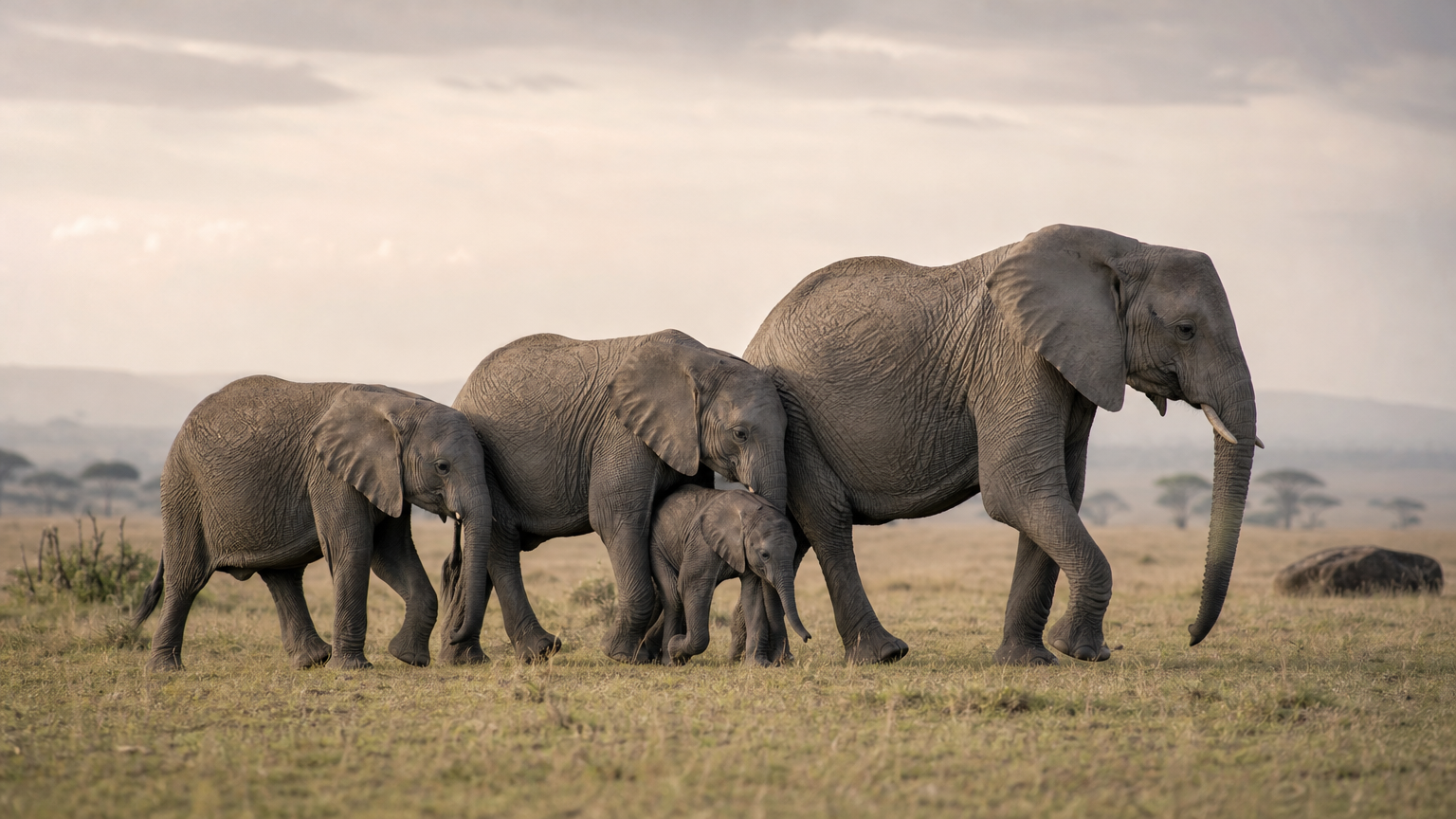
Young males leave the family at around 12 to 14 years old. They roam alone, then join loose groups of older bulls, which you often find at the river. Bulls enter a period called musth once or twice a year, when testosterone makes them aggressive. Guides keep extra distance from a bull in musth, and you should too.
How elephants shape Chobe
Elephants are the park’s engineers. They push over trees, open up woodland, and spread seeds. A large elephant can eat up to 600 pounds of food in a day, so a herd visibly changes the riverfront vegetation. Their feeding keeps parts of the park open enough for grazing animals to thrive.
That same appetite creates friction outside the park. Elephants trample crops, break fences, and damage boreholes in nearby farms and townships. Communities and conservation groups try solutions such as beehive fences and chili fences, which discourage elephants without harming them. When you choose a licensed, well-run operator and keep your distance, you support a system that tries to let people and elephants share the same ground.
Planning your elephant safari
Chobe is the place to see elephants in numbers. The park holds tens of thousands, the regional count is higher still, and the dry months between May and October put big herds on the riverfront. Add the lions, hippos, buffalo, antelope, and 450 bird species, and one or two days is enough to feel you have seen the real Africa.
The practical steps are simple. Pick dry-season dates if elephants are your priority, combine a river cruise with a game drive, and follow your guide’s lead around the herds. If you want a team to handle the transfers, accommodation, and permits, plan your safari in Chobe National Park with Maximum Adventure Trails.