

- 1 Views
- 8 Min Read
- (0) Comment
Key takeaways
- Chobe rewards water-level photography from a boat, while Hwange delivers classic dusty waterhole scenes from a vehicle.
- Shoot in the first and last hour of daylight for warm, low-angle light, and plan trips for the dry season when animals gather at water.
- A 100-400mm zoom covers most situations; a beanbag beats a tripod inside a vehicle or boat.
- Hwange holds between 20,000 and 50,000 elephants, giving photographers unusually reliable elephant sightings.
- Ethical photography means keeping distance, cutting your engine, and never baiting or crowding animals for a shot.
The best spots for a photography safari in this part of Africa are the Chobe riverfront in Botswana and the waterholes of Hwange in Zimbabwe. Chobe lets you shoot from a boat at the animals' eye level, while Hwange gives you dense dry-season gatherings at classic savanna waterholes. Put together, these two parks sit a few hours apart and cover almost every scene a wildlife photographer wants.
This guide walks through why these parks stand out, when to shoot, what to pack, how boat and vehicle angles differ, and how to work ethically around wildlife.
Why Chobe and Hwange are top photography safari destinations
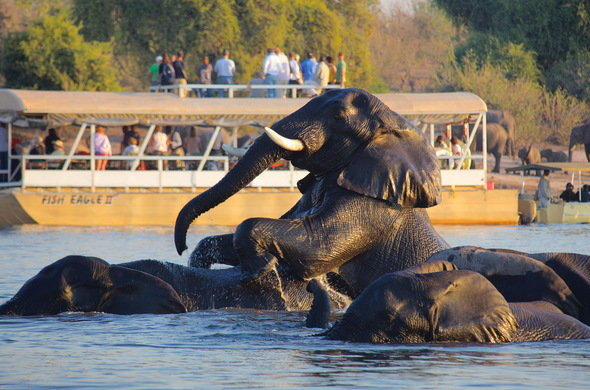
Chobe National Park is built around a river, and that single fact shapes everything. Herds of elephants, buffalo, hippos, and antelope come down to drink, and the Chobe River lets you photograph them from the water. Approaching by boat drops your camera to the surface, so you shoot up at your subject instead of down on it. That low angle, with soft reflections and open sky behind the animal, is the look most people picture when they imagine African wildlife photography.
Hwange works differently. It is a vast, mostly dry interior park where animals rely on waterholes, many of them pumped, during the long dry months. That predictability is a gift for a photographer: you can set up near a busy waterhole and let the wildlife come to you. The elephant numbers are the headline. The greater Hwange area holds between 20,000 and 50,000 elephants, which makes reliable, large-herd sightings far more likely than in most African parks (Wildlife Conservation Network). The same ecosystem supports a strong lion population, so predator action is a genuine possibility rather than a long shot.
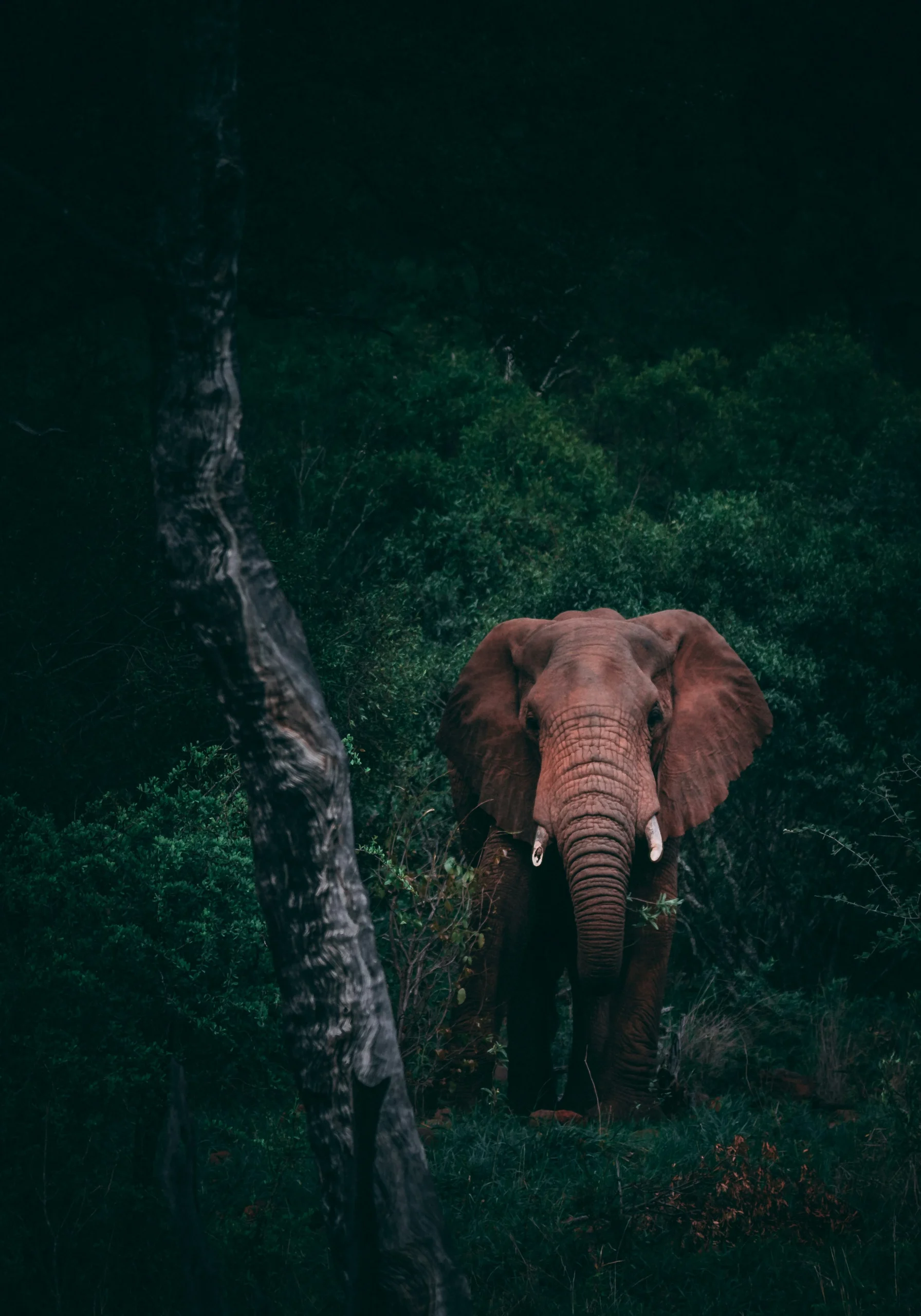
The two parks complement each other. Chobe gives you water, reflections, and boat angles. Hwange gives you dust, scale, and the drama of animals queueing for water. Mapped onto one route, they cover almost every wildlife scene a photographer could want.
Best times of day and season for stunning shots
Light decides most of your images. The first hour after sunrise and the last hour before sunset give you warm, low-angle light that wraps around an animal and separates it from the background. Through the middle of the day the sun sits high and harsh, flattening detail and blowing out highlights on pale animals like elephants and lions. Use those midday hours to rest, review images, and recharge batteries, then be back in position well before the good light returns.
Season matters just as much. The dry season, roughly May to October, is the strongest window for both parks. As seasonal pools dry up and the bush thins out, animals concentrate around the Chobe River and Hwange's waterholes, and the sparse vegetation gives you cleaner lines of sight. By late in the dry season the action around water can be almost constant.
The green season, from November to around March, brings dramatic skies, newborn animals, and migratory birds, but taller grass and scattered water make subjects harder to find and frame. If birds are your priority, the wet months are worth it. For broader timing advice across the region, see our notes on the best time to visit Victoria Falls for every traveler, which is an easy add-on to a Chobe trip.
Recommended gear and boat vs vehicle angles
You do not need a bag full of exotic lenses. A single telephoto zoom in the 100-400mm range covers the large majority of sightings, from a full-frame elephant to a tight portrait of a lion. Add a wide-angle lens for landscapes and big-sky scenes, and you have the core kit. A faster lens helps in the dim minutes around dawn and dusk, but it is not essential if your camera handles higher ISO well.
A short checklist that earns its place in the bag:
- Two camera bodies if you can, so you avoid lens changes in dust.
- A beanbag to steady the camera on a vehicle door or boat rail. It beats a tripod in both settings.
- More memory cards and batteries than you think you need. Wildlife rewards burst shooting, and that fills cards fast.
- A rain cover or large zip bag to protect gear from dust and spray.
- A microfibre cloth, because river spray and fine Hwange dust get everywhere.
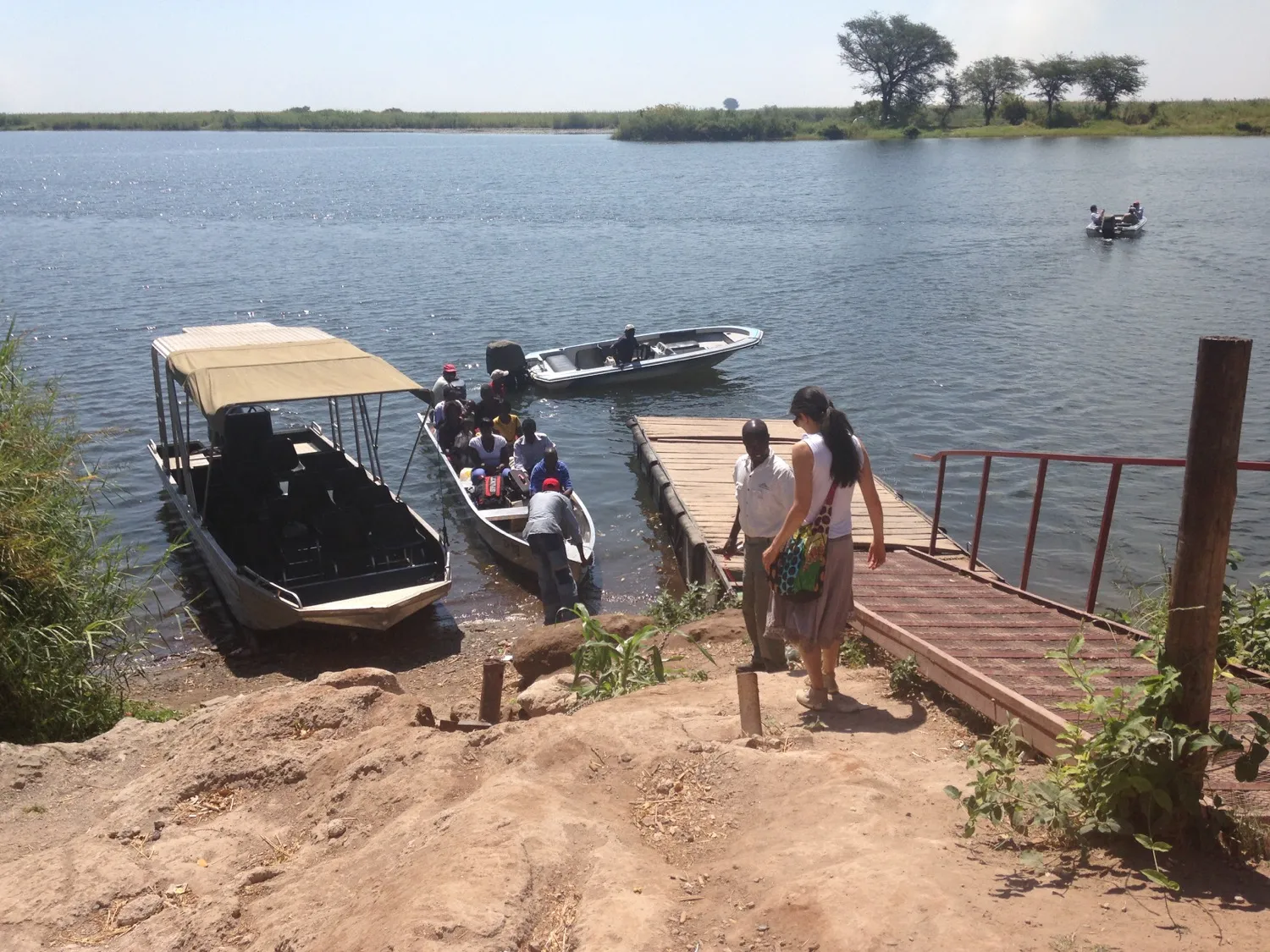
The angle is where the two parks really diverge. On the Chobe River, a boat puts you low and level with your subject. You can drift quietly, cut the engine, and let the current hold position while elephants cross or a fish eagle dives. That water-level perspective, with reflections doubling the scene, is Chobe's signature.
In Hwange, you work from a vehicle on land. A high, open vehicle gives you reach across a waterhole and a clean background of sky or distant treeline when you drop low in your seat. Position matters: a good guide will angle the vehicle so the light falls across your subject rather than behind it, and so you are shooting with the sun over your shoulder in the golden hours.
Ethical wildlife photography practices
A good photograph is never worth stressing an animal. The core rule is distance: use your zoom to get close in the frame, not your vehicle or boat to get close in reality. If an animal changes its behaviour because of you, by stopping feeding, turning to watch, or moving away, you are too close, and the right response is to back off.
A few habits keep your presence low-impact:
- Cut the engine when you can and let animals settle. Calm subjects make better pictures anyway.
- Keep noise down, and never call out, bang the vehicle, or play sounds to make an animal look at you.
- Never bait wildlife or ask a guide to do so. It is harmful and, in these parks, against the rules.
- Give right of way to the animals, especially elephants with calves, and never block a path to water.
- Follow your guide's instructions without argument. They read the animals' mood better than you can from behind a viewfinder.
Staying inside park rules protects the wildlife that makes these places special, and it protects the experience for everyone who comes after you. The payoff is practical too: animals that feel unthreatened carry on behaving naturally, which is exactly what you want in the frame.
Specialist photographic safari options
A general game drive and a dedicated photographic safari are different experiences. On a standard drive, the vehicle serves a mixed group with a range of interests, so it may move on just as the light turns perfect. A specialist photographic safari is built around the camera. Vehicles carry fewer guests, so everyone gets a clear window and a stable shooting position, and the day is planned around light rather than a fixed schedule.
These trips usually include guides who understand photography, bean-bag mounts or camera brackets fitted to the vehicle, and the patience to wait at a sighting until the moment arrives. Some add in-field tuition, which helps beginners climb the learning curve quickly while giving experienced shooters someone to talk settings with.
Maximum Adventure Trails can arrange photography-focused itineraries that combine the Chobe riverfront with Hwange's waterholes, so you capture both the water-level and classic savanna looks on one trip. If you want to see how these parks sit within a wider Zimbabwe route, our Hwange safari tours page lays out the options.
The simplest next step is to pick your season first. If you want the fullest waterholes and the easiest sightings, aim for the dry months and start building the trip around a Chobe-and-Hwange pairing. Tell your operator that photography is the priority from the outset, so the vehicle, the pace, and the timing are all set up for the shot rather than the schedule.
Frequently asked questions
What is the best time of year for a photography safari in Chobe and Hwange?
The dry season from roughly May to October is best. Thinning vegetation and shrinking water sources concentrate animals at rivers and waterholes, making them easier to find and photograph.
Do I need a boat for a Chobe photography safari?
A boat is the signature way to shoot Chobe. Working from the Chobe River puts your lens at eye level with elephants, hippos, and birds drinking at the bank, which a vehicle cannot match.
What camera gear should I bring on a photography safari?
A camera body with a 100-400mm zoom handles most sightings. Add a wide lens for landscapes, spare batteries and cards, and a beanbag to steady the camera on a vehicle door or boat rail.
Is Hwange or Chobe better for elephants?
Both are excellent. Chobe is famous for large riverfront herds you can shoot from the water, while Hwange offers huge numbers at pumped waterholes during the dry season.
Can beginners go on a specialist photographic safari?
Yes. Specialist photographic safaris welcome all levels. Guides position the vehicle for light and angle, and many trips include tuition so beginners improve quickly.