



- 5 Views
- 8 Min Read
- (0) Comment
Key takeaways
- Peak water flow runs roughly February through May, when the falls are at their loudest and mistiest.
- Low water from September through January reveals rock faces and opens the Devil's Pool swim.
- The dry season, May through October, is both comfortable at the falls and prime for safari game viewing.
- June to August is the sweet spot for combining strong falls views with excellent wildlife sightings.
- Traveling in the shoulder months of May and November trims crowds and often lowers prices.
The best time to visit Victoria Falls is between June and August if you want one deciding answer: the water is still strong, the weather is dry and mild, and the surrounding parks are at their game-viewing peak. If your priorities are different, so is your ideal month. A photographer chasing the full curtain of spray, a swimmer eyeing the Devil's Pool, and a family combining the falls with a safari each want a different slot on the calendar.
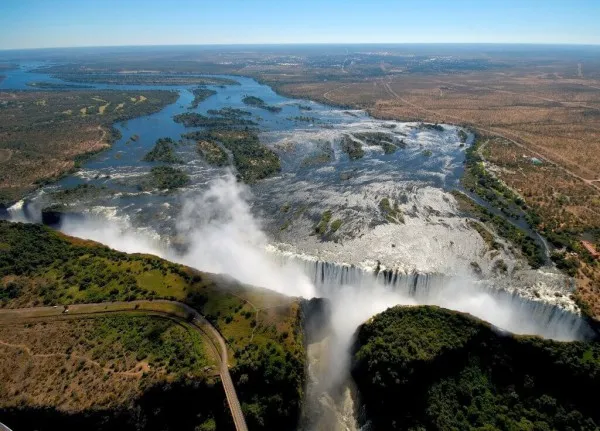
Victoria Falls sits on the Zambezi River between Zambia and Zimbabwe, and it was inscribed as a UNESCO World Heritage Site in 1989 under its local name, Mosi-oa-Tunya, the smoke that thunders (UNESCO World Heritage Centre). The falls drop about 108 metres at their deepest point and stretch roughly 1,708 metres wide, which makes the seasonal swing in water volume dramatic. Knowing that swing is the key to picking your dates.
Peak Flow Versus Low Water: What Each Season Offers
The single biggest variable at Victoria Falls is how much water is going over the edge, and it changes enormously through the year. The long-term mean flow measured at the falls is around 1,100 cubic metres per second, but the river swings far above and below that average across the seasons (Zambezi River Authority).
Peak flow, roughly February to May. After the summer rains fill the Zambezi catchment, the falls reach full power. At the top of the season the spray can climb hundreds of metres and drift so thickly that viewpoints get soaked and the far wall of the gorge disappears behind mist. This is the falls at their most overwhelming. The trade-off is visibility: on the biggest days, the spray itself can hide the water you came to see, and photography from ground level gets tricky.
Low water, roughly September to January. As the dry season deepens, flow drops steeply. The Zimbabwe side keeps water across most of its width for longer, while the Zambian side thins out and, late in the season, parts of it can slow to a trickle. What you lose in raw volume you gain in clarity. You can see the geology of the gorge, the individual cataracts stand out, and one specific thing becomes possible that peak season rules out entirely.
Weather Month by Month: Livingstone and the Zimbabwe Side
Livingstone in Zambia and Victoria Falls town in Zimbabwe sit on opposite banks and share nearly identical weather. The year splits cleanly into a wet, hot summer and a dry, cooler winter.
- November to March (wet, hot). Afternoon thunderstorms, high humidity, and daytime highs that regularly push into the mid-30s Celsius. This rain is what feeds the peak-flow season a few months later. Mornings can still be clear and pleasant.
- April to May (transition). Rain tapers off, greenery is still lush, and the falls are near full. Comfortable temperatures make this an underrated window.
- June to August (dry, cool). The most comfortable stretch of the year. Warm, sunny days and genuinely cold early mornings, especially on safari drives. Skies are clear and the light is excellent.
- September to October (dry, hot). Temperatures climb ahead of the rains, and October is typically the hottest month. Water levels are at or near their lowest, so the falls look their most skeletal, but adventure conditions are ideal.
If your comfort matters most, aim for the June to August core of winter. If you can tolerate heat, the shoulder edges of the dry season reward you with fewer people.
Best Months for the Devil's Pool and Adventure Activities
The Devil's Pool is the natural rock pool at the very lip of the falls on the Zambian side, and it only exists as a safe experience when the water is low enough for a rock rim to hold swimmers back from the drop. It typically opens from around mid-August to mid-January, with the exact dates set each year by water levels. If sitting at the edge of one of the world's great waterfalls is on your list, you must travel in that low-water window. There is no workaround during peak flow.
Other adventures track the water in their own ways:
- White-water rafting on the Zambezi below the falls is at its best in low water, roughly August through December, when more rapids are runnable.
- Bungee jumping, the gorge swing, and the zip line run year-round, since they depend on the bridge and gorge rather than the river level.
- Helicopter and microlight flights are spectacular in every season, and are the one way to appreciate the full width of the falls during peak flow when ground-level spray blocks the view.
For a swimmer and thrill-seeker, September to November is close to ideal: the pool is open, rafting is prime, and the heat is a feature rather than a bug when you spend the day in and around water.
Combining Falls Timing With Safari Game-Viewing Seasons
Most travelers do not fly all this way for the falls alone. The region around Victoria Falls holds some of Africa's best wildlife country, and the dry season stacks the deck in your favor. From about May to October, water sources shrink, vegetation thins, and animals concentrate around remaining rivers and waterholes, which makes them far easier to find.
This is why June to August is such a strong overall answer. The falls still carry real volume, the weather is comfortable, and nearby parks are entering their best game-viewing months.
- Hwange National Park in Zimbabwe is a short drive away and delivers famous dry-season elephant herds that gather at waterholes as the land dries out.
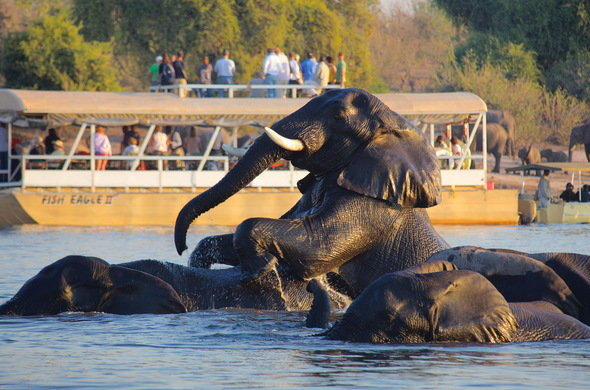
- Chobe in Botswana, with its river cruises, pairs naturally with a falls visit and peaks in the dry months.
- The Okavango Delta works on a different, water-driven calendar, so it rewards a bit more planning.
At Maximum Adventure Trails we build many itineraries around exactly this overlap, folding a few days at the falls into a wider Southern Africa safari so the timing works for both. If you are weighing how the pieces fit, our Victoria Falls safari tours guide lays out common routings.
Planning Around Crowds and Pricing
Victoria Falls has clear high and low seasons for visitors, and they mostly follow the weather. The dry winter months of June to August draw the largest crowds and the firmest prices, because that is when conditions are most comfortable and safari demand peaks across the region. Accommodation books out earliest for this window, so reserve well ahead if these are your dates.
The shoulder months reward flexibility:
- May often gives you a still-powerful waterfall, greener scenery, and thinner crowds before the winter rush.
- November offers low water for the Devil's Pool and rafting, along with some of the year's better rates, at the cost of real heat and the first storms.
The wet-season peak-flow months can be quieter than the winter high season despite the falls being at their most impressive, largely because of the humidity and the spray. For a traveler chasing the raw spectacle without winter crowds, February to April can be a smart, less obvious choice.
Choosing the Best Time to Visit Victoria Falls for You
Start from what you most want to do. If it is the Devil's Pool or rafting, lock onto September through November. If it is the falls at maximum power, target February through May and plan a flight over the top to beat the spray. If you want the strongest all-around trip, especially one that pairs the falls with a safari, book June through August and reserve early.
The next step is to sketch your rough dates against the activity that matters most to you, then check what game viewing looks like in the parks you want to add. When you are ready to turn those dates into a concrete route, tell us your travel window and top priority, and we will build the falls-and-safari combination that fits it.
Frequently asked questions
What is the overall best time to visit Victoria Falls?
For most travelers, June through August balances a strong waterfall, comfortable dry weather, and peak safari game viewing across the region.
When can you swim in the Devil's Pool?
The Devil's Pool typically opens from mid-August to mid-January, once water levels drop enough to make the natural rock pool safe.
When is Victoria Falls at its fullest?
Water flow usually peaks between February and May, following the rainy season, when the Zambezi carries its heaviest volume over the edge.
Is the dry season good for Victoria Falls?
Yes. The dry season brings clear skies and pleasant temperatures, though by late in the season the Zimbabwe side can look thin while the Zambian side may run low.