

15 — Victoria Falls & Adventure
White-Water Rafting on the Zambezi River
A high-adrenaline river adventure downstream of Victoria Falls, mainly through the dramatic Batoka Gorge, where fast-moving white water, technical rapids, calmer river sections and a physically demanding gorge walk form the experience.
Overview
Adventure on the Zambezi below Victoria Falls
White-water rafting takes place on the powerful river channels below the Falls rather than over or through Victoria Falls itself.
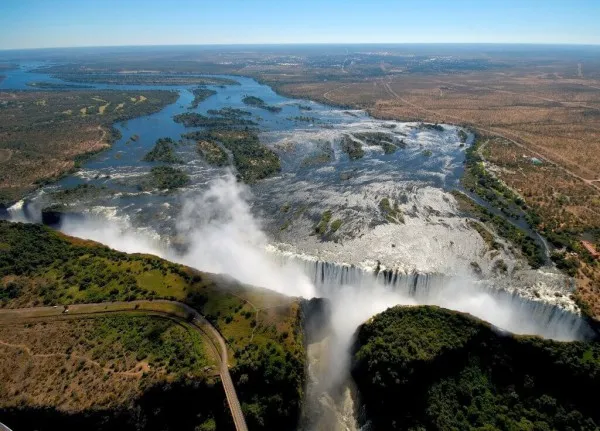
White Water Rafting on the Zambezi River is conducted downstream of Victoria Falls, mainly through the dramatic Batoka Gorge on the Zambezi River. The gorge is formed by steep-sided basalt walls, and the commercial rafting routes operate in this downstream river environment.
The experience combines fast-moving white water, technical rapids, calmer stretches of river and a physically demanding walk into and out of the gorge. Commercial rafting is conducted with trained river guides and safety equipment such as helmets and buoyancy aids.
The exact route, starting point and rapids encountered depend on the water level and the rafting season.
Participants do not raft over or through Victoria Falls. Commercial rafting takes place downstream of the waterfall, in the Zambezi River and Batoka Gorge.
Where It Takes Place
Victoria Falls, Zambia & Zimbabwe — Batoka Gorge
Victoria Falls lies on the border between Zimbabwe and Zambia, while operators may organise rafting from either side.
Below Victoria Falls
The rafting route is on the Zambezi River below Victoria Falls, rather than on the upper river above the waterfall.
Batoka Gorge
The route passes through a deeply incised basalt canyon shaped by the long-term erosive action of the Zambezi.
Two sides of the Falls
Depending on the operator and rafting arrangement, departures may be organised from Victoria Falls, Zimbabwe, or Livingstone, Zambia.
UNESCO describes the gorges below Victoria Falls as part of the geological and geomorphological system associated with the Falls.
The specific departure point, transport arrangements and rafting section can vary according to the chosen operator, river level, season and operating conditions.
The Experience
What a typical full-day rafting trip involves
The exact itinerary varies, but the activity commonly follows these stages.
Hotel or town transfer
Depending on the operator, guests may be collected from designated hotels or meeting points in Victoria Falls or Livingstone and transferred towards the rafting area. Pickup and transfer arrangements vary by operator and booking.
Safety briefing
Before entering the river, participants receive instruction covering rafting procedures, paddle commands, river behaviour and emergency responses. Safety instruction is an essential part of the activity because the route contains powerful rapids and changing water conditions.
Equipment
Participants are normally provided with essential rafting safety equipment, including a helmet and buoyancy aid/life jacket. Paddles are also supplied where the rafting format requires participants to paddle. Exact equipment varies by operator.
Descent into the gorge
The rafting route requires a walk into the Batoka Gorge before reaching the river. The return walk out is steep and physically demanding. Operators commonly describe the gorge exit as comparable to climbing a multi-storey building, with rest stops available.
Rafting through the rapids
Guests work with their guide and fellow rafters to negotiate a sequence of rapids. Some sections are extremely powerful, while others are calmer pools where the raft can recover before the next rapid. Operators commonly describe commercial sections as containing Grade 3 to Grade 5 rapids, with major sections reaching Grade 5 under the grading system used by operators.
Lunch and refreshment
Full-day rafting programmes commonly include a meal or lunch, although the exact location and menu depend on the operator and route. Some operators provide lunch at the end of the rafting section, while arrangements can differ between high-water and low-water trips.
Return from the gorge
At the conclusion of the river section, participants leave the river and undertake the steep walk back out of the gorge before transferring back towards Victoria Falls or Livingstone.
Post-activity arrangements
The final transfer, dry-clothing access, refreshments and any optional photography or video services depend on the selected operator and package.
The Rapids
Understanding the changing white water
Named rapids are commonly referenced on the Zambezi rafting routes, but no single trip should be assumed to include every rapid.
Not every rafting trip necessarily encounters every one of these rapids. The actual route changes according to river levels, operating conditions and the section being run that day.
For professional website copy, it is therefore safer not to promise a fixed list of rapids unless that exact route has been confirmed by the operating company.
The names shown here are commonly referenced examples, not a guarantee of what every guest will encounter on every departure.
Rafting Seasons
Low-water and high-water routes
The Zambezi changes significantly through the year, and water level affects the sections of river that can be used for commercial rafting.
Closer to Victoria Falls
During lower-water conditions, commercial rafting can generally begin closer to Victoria Falls, with some operators starting at or near the Boiling Pot directly below the Falls. Routes may then continue through a longer sequence of rapids in the Batoka Gorge.
Approximately August–December
Lower-water rafting is generally associated with approximately August to December, although opening and closing dates vary according to rainfall, river levels and operational safety decisions.
Farther downstream
During higher river flow, rafting normally begins farther downstream because the upper section immediately below the Falls may not be suitable for commercial rafting under those conditions.
Around Rapid 11
One established Victoria Falls operator states that its high-water route begins around Rapid 11, approximately 10 kilometres downstream of the Falls, and continues towards later rapids in the gorge.
Lower water does not automatically mean an easier trip. Certain rapids can become technically demanding as the river level falls, and the route may contain highly concentrated white-water sections.
High-water rafting is commonly associated with the first part of the year, but the exact operating period is not fixed. River levels can change with seasonal rainfall, so the dates and route should always be confirmed before booking.
There is no single universal calendar that applies to every rafting operator. Different companies publish slightly different seasonal dates because their operating decisions depend on water level, rainfall and safety conditions.
“Rafting availability and route selection are seasonal and depend on Zambezi River water levels. Exact operating dates and departure points should be confirmed at the time of booking.”
Safety
What visitors should understand about safety
White-water rafting is an adventure activity in natural moving water and therefore carries inherent risks.
The Zambezi below Victoria Falls is a serious white-water environment, which is why commercially operated trips use trained river guides and specialist safety equipment.
Established operators report that their river guides receive rafting-specific training and first-aid or swift-water-rescue training. Participants are normally equipped with a buoyancy aid/life jacket and helmet, and the trip begins with a safety briefing.
However, no adventure activity can be described as completely risk-free. Conditions on a natural river can change, and participants must follow the instructions of their guides throughout the experience.
Guide instructions, the operating company's procedures and the current river conditions are central to the activity. The exact safety arrangements should be checked with the selected operator before departure.
Participation
Swimming, age and fitness requirements
Meeting the operator's participation requirements is important because rafting combines powerful moving water with a steep gorge walk.
Swimming ability may not be mandatory
Swimming ability is not universally required for commercial Zambezi rafting, and established operators specifically state that non-swimmers may participate. Non-swimmers should inform the trip leader before entering the river. Participants are provided with buoyancy aids/life jackets.
15 years is commonly stated
The minimum age commonly stated by established Victoria Falls rafting operators is 15 years. Age requirements can vary between operators and specific rafting products, so the applicable requirement should be confirmed in advance.
Reasonable fitness is important
The physical challenge comes from paddling and navigating rapids as well as walking into and out of the Batoka Gorge. The return climb is particularly steep.
Participants should be prepared for:
- Walking on uneven and rocky terrain
- A steep descent into the gorge
- A demanding climb out of the gorge
- Spending several hours in a physically active environment
- Working together with the rafting team
- Following guide instructions during fast-moving river sections
Guests should disclose relevant health conditions or required medication to the operator before participating, particularly where the activity or gorge hike could present an additional physical challenge.
What to Wear
Practical clothing and packing
A sensible rafting outfit should be comfortable, secure and appropriate for repeated exposure to water and outdoor conditions.
Swimwear
Suitable swimwear for the river activity.
T-shirt / light top
A lightweight top suitable for outdoor activity.
Secure footwear
Comfortable rafting sandals or secure shoes.
Sun protection
Sunscreen and suitable protection from the sun.
Bring any essential personal medication you require. Some operators may provide additional equipment depending on water temperature and seasonal conditions.
It is also useful to have dry clothing available after the rafting trip. Operators may provide secure storage arrangements so that dry clothes can be collected after leaving the gorge.
Because rafting involves repeated exposure to water, guests should avoid carrying unnecessary valuables into the rafting environment.
Leave Behind
What not to take into the rafting environment
Protect your essential belongings by keeping unnecessary valuables and unprotected electronics out of the activity.
- Valuable jewellery
- Passports unless specifically required
- Unprotected electronic devices
- Anything that is not waterproof or securely stored
Established operators specifically recommend leaving valuables at the accommodation rather than taking them into the rafting environment.
Package Details
What is usually included?
Inclusions vary by operator and package, so these points should be treated as common examples rather than a universal package promise.
Rafting gear
Rafting equipment, helmet and buoyancy aid/life jacket are commonly supplied.
Professional guides
Commercial trips are guided, with a safety briefing before entering the river.
Designated pickups
Transfers from designated hotels or meeting points may be included, depending on the package.
Lunch or refreshments
Full-day programmes commonly include lunch, refreshments or drinking water, subject to the operator's package.
Post-activity transfer
Some packages include the transfer back after the gorge section.
Photos or video
Some operators provide photographs or video recordings as an additional purchase rather than part of the standard package.
Additional Costs
What may not be included?
Extra charges depend on the operator, the route and the selected booking package.
National park / conservation fees
These may be charged separately, depending on the package.
River usage fees
River-related fees may be separate from the base activity price.
Professional photos / video
Photography and video may be sold separately.
Other personal or transfer costs
Personal expenses and transfers outside normal pickup areas may be additional.
Because inclusions and fees vary, visitors should check the exact package details before booking.
Duration
How long does the activity take?
A standard full-day Zambezi white-water rafting trip generally occupies most of the day.
| Reference | What is stated | Important context |
|---|---|---|
| Established Victoria Falls operator | Approximately 6 hours of rafting activity | This describes rafting activity rather than necessarily the entire day. |
| Another operator example | Roughly 07:30 to 15:00 | This example includes briefing, transfers and other components. |
| Actual trip duration | Varies | Starting point, water level, route, weather, river conditions, group size, safety procedures and gorge-walk time can affect the itinerary. |
The final itinerary and exact duration should be confirmed with the operator at the time of booking.
Natural Surroundings
Wildlife and the Batoka Gorge environment
White-water rafting is primarily an adventure activity, but it takes place in a natural river and gorge environment.
The Batoka Gorge contains rugged basalt cliffs, riverine vegetation, rock formations and quieter stretches between the rapids. The wider Victoria Falls area forms part of a protected and internationally recognised natural landscape.
Wildlife and birdlife may sometimes be present along the river and gorge, but sightings are entirely natural and cannot be guaranteed. Wildlife observation should be considered an additional possibility rather than the primary purpose of the rafting experience.
This is a white-water adventure first. Any wildlife or bird sightings are incidental and depend on natural conditions, animal movement and the surrounding environment.
What Makes It Distinct
The character of Zambezi rafting
The experience is defined by the interaction between white water, the gorge, seasonal river changes, teamwork and physical challenge.
Powerful natural rapids
The river contains substantial white-water sections, including rapids classified by operators within the upper grades used for commercial rafting.
Batoka Gorge
The rafting route passes through a dramatic basalt gorge with steep walls rising around the river.
Changing river conditions
Seasonal water levels can change the launch point and the section of river used for rafting.
Team-based adventure
Depending on the rafting format, participants work together with the guide and group members to respond to paddle commands and navigate the rapids.
Physical challenge
The activity includes river work plus the demanding walk into and out of the gorge, making fitness an important consideration.
Who It Is For
Suitable for adventure-minded travellers
Zambezi white-water rafting is generally suited to travellers who meet the applicable age and fitness requirements and are comfortable taking part in a physically demanding river activity.
Adventure travellers
For people looking for an active river-based experience around Victoria Falls.
Couples & friends
The activity can appeal to couples and friends travelling together.
Small groups
Small groups may enjoy the team-based nature of the experience, subject to operator arrangements.
Outdoor enthusiasts
It can appeal to experienced outdoor enthusiasts as well as travellers seeking a physically active Victoria Falls experience.
The minimum age, medical suitability, fitness requirements and other participation conditions must be checked against the rules of the selected operator.
Before Booking
Important things visitors should know
White-water rafting on the Zambezi is a genuine adventure activity, not a gentle sightseeing cruise.
- The river is natural and conditions can change.
- The route is seasonal.
- The starting point may change according to water level.
- The activity involves strong rapids and a steep gorge walk.
- A reasonable level of fitness is required.
- Participants must follow the instructions of their rafting guides.
- Swimming ability may not be mandatory, but non-swimmers should inform the trip leader.
- The minimum age commonly used by established operators is 15 years.
- Exact trip duration, inclusions, fees and departure arrangements vary by operator.
Frequently Asked Questions
White-Water Rafting on the Zambezi
Clear answers to the practical questions visitors commonly ask before booking.
Is the rafting done over Victoria Falls?
No. Commercial white-water rafting takes place downstream of Victoria Falls, in the Zambezi River and Batoka Gorge. Participants do not raft over or through the waterfall itself.
Where does the rafting start?
The launch point depends on the water level. During lower-water conditions, established operators may start near the Boiling Pot below Victoria Falls. During higher-water periods, rafting can begin farther downstream, such as around Rapid 11, depending on operating conditions.
Is Zambezi rafting available all year?
Not continuously. Rafting is seasonal, and operators may temporarily suspend rafting during periods of unsuitable river conditions or very high water. Exact operating dates vary according to river levels and rainfall.
Do I need previous rafting experience?
Previous rafting experience is generally not required for standard commercial trips, because participants receive instruction and are accompanied by trained river guides. However, the activity is physically demanding and involves serious white water.
Do I need to be a strong swimmer?
No established operator reviewed here requires participants to be swimmers. Life jackets are provided, and non-swimmers should inform the trip leader.
What is the minimum age?
A minimum age of 15 years is commonly stated by established Victoria Falls rafting operators.
How fit do I need to be?
You need a reasonable level of fitness because the activity includes rafting and a steep walk into and out of the gorge.
What should I bring?
Bring swimwear, a T-shirt, suitable secure footwear, sunscreen, sun protection and any medication you require. Dry clothes can be useful after the activity.
Can I take my camera or phone?
Because the trip involves significant exposure to water, valuable or non-waterproof electronics should generally be left behind unless the equipment is properly protected and the operator permits it. Professional photographs and videos may be available through the operator.
Can I see wildlife during the rafting trip?
Wildlife and bird sightings are possible in the natural river environment, but sightings are unpredictable and should never be guaranteed.
Is lunch included?
Many full-day rafting packages include lunch or refreshments, but the exact arrangement varies by operator and route. This should be confirmed before booking.
Max Adventure Trails
Make this part of your African journey.
Tell us where you are travelling, when you are planning to go and what kind of experience you want. We can then confirm the activity options that fit your itinerary, subject to the selected operator and current river conditions.
Start Your Enquiry →