
13 — Victoria Falls & Adventure
Victoria Falls – Zambia Side
Explore the Zambian viewpoints of Victoria Falls within Mosi-oa-Tunya National Park near Livingstone, with established walking paths, changing seasonal views, the Eastern Cataract, Knife-Edge Bridge, Boiling Pot and the rainforest and spray zone.
Overview
Victoria Falls from the Zambian Side
Victoria Falls – Zambia Side is a scenic waterfall experience in Mosi-oa-Tunya National Park near Livingstone, Zambia, focused on the Zambian viewpoints of one of Africa’s most famous natural landmarks.
The Victoria Falls lies on the Zambezi River along the Zambia–Zimbabwe border and is known locally as Mosi-oa-Tunya, meaning “The Smoke That Thunders.” The name is inspired by the immense spray and sound produced by the Falls. The Victoria Falls World Heritage property is jointly shared by Zambia and Zimbabwe.
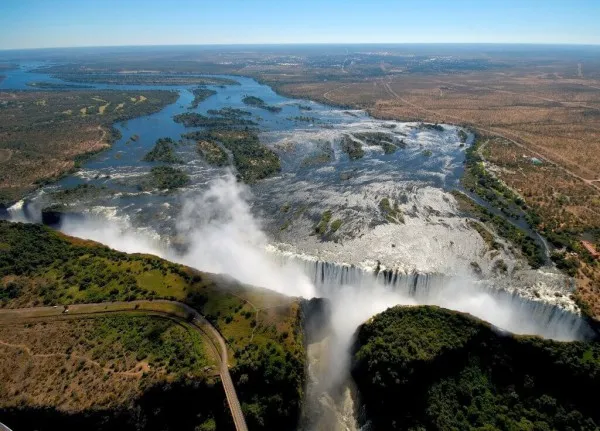
The Zambian side provides a series of walking paths and viewpoints through the vegetation and spray zone beside the Falls. One of its most distinctive viewpoints is the Knife-Edge Bridge, which provides views towards the Eastern Cataract, Main Falls and the Boiling Pot.
The experience takes place on the Zambia side of a transboundary natural site shared by Zambia and Zimbabwe.
The wider Mosi-oa-Tunya/Victoria Falls World Heritage property is jointly shared by Zambia and Zimbabwe.
The Falls are created where the Zambezi River reaches a major basaltic geological formation and plunges into a series of deep gorges. The immense spray generated by the Falls creates a distinctive humid rainforest environment in the immediate splash zone.
From Zambia, visitors can follow the established paths around the Falls area and experience changing views as the route passes through the surrounding vegetation and along the edge of the gorge. During periods of high water, the spray can be extremely heavy, while during the dry season the exposed basalt cliffs and gorge formations become much more visible.
Main Highlights
The Zambia Side Experience
The main viewing and walking features described for the Zambian side of Victoria Falls.
Main Falls Viewpoints
The Zambian viewing area provides opportunities to see sections of the main waterfall system from close to the opposite side of the gorge. The appearance of the Main Falls changes considerably according to the Zambezi’s water level. During high-water periods, the Falls can produce enormous volumes of spray, while lower-water conditions can reveal more of the underlying rock formations and gorge structure.
Eastern Cataract
The Eastern Cataract is one of the major sections of Victoria Falls visible from the Zambian side. The Knife-Edge Bridge is specifically noted as a viewpoint for the Eastern Cataract as well as the Main Falls.
Knife-Edge Bridge
The Knife-Edge Bridge is one of the defining features of the Zambian-side walking route. It crosses a narrow section of the gorge-side landscape and provides close views towards the Falls and surrounding gorge. This viewpoint offers views of the Eastern Cataract, Main Falls and the Boiling Pot.
Because water spray can make the surrounding paths and bridge wet, visitors should take particular care with their footing, especially during high-water periods.
Boiling Pot
The Boiling Pot is located below the Falls where the Zambezi turns and continues through the Batoka Gorge. It is an important geological and visual feature of the Victoria Falls landscape and can be seen from viewpoints on the Zambian side, including from the Knife-Edge Bridge area.
Rainforest & Spray Experience
Walking around the Zambian side is not only about viewing the waterfall from a distance. The paths pass through vegetation influenced by the constant spray from the Falls. During high-water periods, visitors may experience substantial mist and spray while moving between viewpoints. Raincoats or umbrellas may be necessary when water levels are high.
Seasonal Changes
Water Levels Change the Experience
Victoria Falls changes dramatically throughout the year because the volume of water in the Zambezi varies seasonally. The experience from the Zambian side can therefore be very different depending on when a visitor travels.
High-Water Season
The peak flood period is generally around March and April, although actual conditions depend on seasonal rainfall and river levels. At this time, the Falls can produce an enormous amount of spray. Heavy spray can sometimes make it difficult to see the entire width of the Falls from ground level. Waterproof clothing is particularly useful during this period.
Falling Water Levels
As the flood begins to decrease, the Falls often become easier to see from ground-level viewpoints. Views generally improve as the water level falls, with increasingly clear views later in the year.
Low-Water Season
By approximately October, some sections of the Falls begin to carry considerably less water. Around November and December, some areas can become narrow streams or may temporarily have little or no visible falling water, depending on the section and the year’s river conditions. This can provide a very different perspective of the exposed basalt cliffs, gorge and geological structure. The exact appearance should never be guaranteed for a particular date because river levels change from year to year.
Separate Activities
Livingstone Island & Devil’s Pool
These activities are associated with the Zambian side but should be treated separately from a standard Victoria Falls Zambia-side walking visit.
Livingstone Island
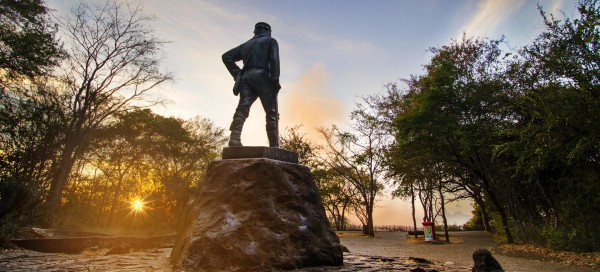
Livingstone Island is situated on the Zambezi near the lip of the Falls and is historically associated with David Livingstone’s first recorded sighting of the Falls in 1855.
Access depends on river conditions and is only possible when water levels and currents permit. Access is generally possible during the lower-water period, approximately August to December, while the island is generally inaccessible between March and June. Access must be undertaken with a trained guide, and group-size and age restrictions apply.
Devil’s Pool
Devil’s Pool is a naturally formed rock pool located close to the edge of the Falls and is not the same experience as simply visiting the standard waterfall viewpoints.
Because access depends heavily on river conditions and safety considerations, Devil’s Pool is only available during suitable periods and must be visited with a guide. It is usually accessible during the lower-water season, approximately August to January, although the actual operating period depends on conditions.
Visitors should never attempt to reach or enter Devil’s Pool independently.
Other Nearby Experiences
Victoria Falls Bridge & Additional Adventures
These are separate experiences and are not automatically part of a standard Victoria Falls Zambia-side waterfall tour.
The Victoria Falls Bridge is close to the Falls and connects Zambia and Zimbabwe. It is a road, railway and pedestrian bridge and has its own historical and adventure attractions.
Activities associated with the bridge include guided bridge experiences and adventure activities such as bungee jumping.
Helicopter flights and microlight flights are separate experiences that can be added to a Victoria Falls itinerary depending on the operator and seasonal conditions.
Rafting and other Zambezi or Batoka Gorge adventures are separate experiences that can be added depending on the operator and seasonal conditions.
What Visitors Can Expect
The Core Zambia-Side Visit
The standard visit normally focuses on the following features.
- Waterfall viewpoints — Views of sections of Victoria Falls from the Zambian side.
- Eastern Cataract — One of the major sections of the Falls visible from the Zambian viewpoints.
- Main Falls — Views of the major waterfall system and gorge.
- Knife-Edge Bridge — A distinctive viewpoint along the Zambian walking route.
- Boiling Pot — A dramatic section where the Zambezi turns and continues into the Batoka Gorge.
- Rainforest and spray zone — A close-to-nature walking experience influenced by the Falls’ spray.
The exact route, duration, guide arrangement and additional inclusions can vary between tour operators, so these details should be confirmed when making a booking. The standard waterfall visit should not be presented as automatically including Livingstone Island, Devil’s Pool, bridge adventures, helicopter flights or rafting unless those services are specifically included in the booking.
Best Time to Visit
Choose the Season for the Experience You Want
There is no single season that provides exactly the same Victoria Falls experience for every visitor.
Travel during the high-water period can offer extraordinary volumes of water and powerful spray, but the spray may partially obscure ground-level views of the Falls.
Later in the year, as water levels fall, viewpoints can become clearer and the geological structure of the gorge becomes increasingly visible. During very low-water conditions, certain sections may have substantially reduced flow.
Maximum water and spray, clearer waterfall views, or greater visibility of the underlying basalt cliffs and gorge can all lead to different seasonal preferences.
What to Bring
Practical Essentials
For a Victoria Falls Zambia-side visit, the following items are practical.
- Comfortable walking shoes with good grip
- Lightweight waterproof clothing or a raincoat, particularly during high-water periods
- Sun protection such as sunscreen, sunglasses and a hat
- Drinking water
- A waterproof bag or protective case for phones and cameras
- Extra protection for electronic equipment when heavy spray is expected
The need for waterproof clothing is particularly relevant during high-water periods because of the substantial spray generated by the Falls.
Safety
Respect the Power of the Falls
Victoria Falls is a powerful natural environment. Visitors should follow all park rules, barriers, signs and instructions from guides or park personnel.
Paths and rocks can become wet and slippery because of waterfall spray, so suitable footwear and careful movement are important.
Visitors should remain on designated routes and never approach restricted edges or enter water in areas where swimming is not specifically authorised.
Activities such as Livingstone Island and Devil’s Pool must be undertaken with the appropriate trained guides and only when conditions permit.
Access from Livingstone
Reaching the Zambia Side
Victoria Falls on the Zambian side is accessed from Livingstone, Zambia.
The Falls are approximately 11 km (6.8 miles) from Livingstone town via Mosi-oa-Tunya Road, with access to the walking areas from the Falls area.
For visitors crossing from Zimbabwe, border formalities apply before entering Zambia. Entry and border requirements can vary by nationality and can change, so travellers should verify the current requirements before travel rather than relying on outdated tour information.
Zambia Tourism currently notes that the Victoria Falls border post operates 24 hours, but other official guidance can contain different listed hours, so current border information should be confirmed close to the travel date.
Important Information
Zambia and Zimbabwe Offer Different Viewpoints
Victoria Falls is a transboundary natural site, but the experience from Zambia and the experience from Zimbabwe are not identical.
The Zambian side has its own park entrance, walking routes and viewpoints, while the Zimbabwean side has a different viewing area.
Visiting one side does not mean that every viewpoint on the other side has automatically been visited. UNESCO recognises the wider Mosi-oa-Tunya/Victoria Falls World Heritage property as a transboundary site shared by Zambia and Zimbabwe.
River levels vary significantly through the year, and the visual character of the Falls can change substantially between high-water and low-water periods. Visitors should not be promised the same water volume or exact appearance for every date.
Frequently Asked Questions
Victoria Falls – Zambia Side
What is included in the standard Victoria Falls Zambia-side experience?
The standard visit normally focuses on waterfall viewpoints, the Eastern Cataract, Main Falls, Knife-Edge Bridge, Boiling Pot, and the rainforest and spray zone. Exact route, duration, guide arrangement and additional inclusions can vary between tour operators.
Is Livingstone Island automatically included?
No. Livingstone Island should be treated as a separate guided activity rather than automatically being included in a standard Victoria Falls Zambia-side walking visit.
Is Devil’s Pool part of the normal waterfall viewpoint visit?
No. Devil’s Pool is a separate guided activity associated with the Zambian side and depends on suitable river conditions and operating periods.
When is the high-water period?
The peak flood period is generally around March and April, although actual conditions depend on seasonal rainfall and river levels. Heavy spray may partially obscure ground-level views during this period.
What happens during the low-water season?
By approximately October, some sections of the Falls can carry considerably less water. Around November and December, some areas can become narrow streams or may temporarily have little or no visible falling water, depending on the section and the year’s river conditions.
Do water levels change from year to year?
Yes. River levels vary from year to year, so the exact appearance of the Falls should not be guaranteed for a particular date.
What should I bring?
Comfortable walking shoes with good grip, lightweight waterproof clothing or a raincoat, sun protection, drinking water, a waterproof bag or protective case for phones and cameras, and extra protection for electronic equipment when heavy spray is expected.
How far is Victoria Falls from Livingstone town?
The Falls are approximately 11 km (6.8 miles) from Livingstone town via Mosi-oa-Tunya Road.
Can I approach restricted edges or enter the water?
Visitors should remain on designated routes, follow park rules, barriers, signs and guide or park personnel instructions, and never enter water in areas where swimming is not specifically authorised.
Make Victoria Falls – Zambia Side Part of Your Journey.
Exact route, duration, guide arrangement, seasonal access and additional inclusions should be confirmed for your travel dates.
Start Your Enquiry →