
08 — River & Water Experiences
Boat Safaris
A Boat Safari is a wildlife and nature experience conducted from a boat on a river, channel, lagoon, floodplain, or other suitable waterway. Instead of viewing wildlife only from land, travellers explore the aquatic environment from the water and observe animals, birds, vegetation and landscapes from a different perspective. In southern Africa, boat-based wildlife experiences are particularly associated with the Zambezi River, Chobe River and Okavango Delta, while suitable waterways in Namibia’s north-eastern regions also support boating and river-based wildlife experiences. The exact type of boat, route, duration, wildlife encountered and operating season depend on the destination, water conditions, local regulations and individual safari operator.
What Is a Boat Safari?
What Is a Boat Safari?
A Boat Safari combines wildlife viewing with exploration by water. Depending on the location, the experience may take place on a motorised safari boat, pontoon-style vessel, specialised wildlife boat or another locally appropriate craft.
From the water, guests can observe wildlife along riverbanks, islands, channels, sandbanks and floodplains. Animals may be seen drinking, bathing, crossing waterways, resting near the shore or moving through the surrounding vegetation. Waterbirds and other aquatic wildlife can also become a major part of the experience.
Unlike a conventional game drive, where the vehicle follows roads or tracks across the land, a boat safari follows the natural movement of the waterway. This can provide a different viewing angle and allow guests to experience parts of the landscape that are closely connected with rivers and wetlands. Botswana Tourism specifically describes Chobe river cruises as providing a different vantage point from which to see hippos, crocodiles and waterbirds.
Where Can You Experience Boat Safaris?
Where Can You Experience Boat Safaris?
Boat-based wildlife experiences are not available in every safari area. They depend on the presence of suitable waterways, navigable conditions, wildlife habitat, access arrangements and local regulations.
Zambia
Lower Zambezi National Park and the surrounding Lower Zambezi area are among the clearest examples of boat-based safari experiences in Zambia. Zambia Tourism lists boat cruises and boating safaris among activities available in the Lower Zambezi. Recent Zambia Tourism information also describes boating on the river alongside game drives and other safari activities, with some boating activities operating seasonally.
The Lower Zambezi landscape is strongly influenced by the Zambezi River, and wildlife is closely associated with the river and surrounding floodplain. Boat excursions can provide opportunities to observe elephants near the water, hippos, crocodiles, water-associated antelope and a wide variety of birds. Zambia Tourism has also documented river cruises from which guests have viewed wildlife along the riverbanks.
Boat safari availability in the Lower Zambezi can be seasonal, so guests should confirm the current operating period with their safari operator before travelling. Zambia Tourism currently lists some Lower Zambezi boating experiences as seasonal, while individual properties may operate for particular periods of the year.
Botswana
Botswana offers several important water-based safari environments, most notably the Chobe River and Okavango Delta.
On the Chobe River, boat cruises operate along the river adjoining Chobe National Park. Botswana Tourism describes river cruises as an opportunity to view wildlife from the water, including hippos, crocodiles and numerous waterbirds. The Chobe Riverfront is also well known for large concentrations of elephants and Cape buffalo, particularly during the dry winter period when animals gather around available water.
The Okavango Delta is another major water-based safari environment. Botswana Tourism identifies boating among the principal activities in the Delta and notes that wildlife viewing and birdwatching are closely connected with its extensive waterways. Activities vary between camps and areas of the Delta.
It is important to distinguish a conventional boat safari from a mokoro excursion. A mokoro is a shallow-water canoe traditionally propelled by a standing poler using a pole. Botswana Tourism treats the mokoro as a distinct experience and explains that its relatively quiet movement is particularly suited to the shallow waterways of the Okavango Delta.
Zimbabwe
Zimbabwe has important Zambezi River wildlife areas, particularly around Mana Pools and the Zambezi Valley. Mana Pools lies along the Zambezi River and contains permanent water bodies where hippos, crocodiles, elephants and aquatic birds occur.
Water-based experiences in this region include canoeing and other boating-related activities. The current Mana Pools management documentation describes canoeing as an established tourism activity, including single-day and multi-day experiences, while Zimbabwe's Zambezi Valley planning documents discuss canoeing, house-boating, motorboat use and other river activities.
However, boating arrangements in Zimbabwe should not be described as universally available or year-round. Access, launch points, permitted areas, operating periods and other requirements can be subject to park management rules and operator arrangements. The Mana Pools management documentation contains specific proposed/draft boating controls, so current operator and park regulations should always be checked before booking.
Namibia
Namibia's north-eastern Zambezi and Kavango regions provide a different side of the country's landscape, with rivers, wetlands, floodplains and riverine woodland supporting wildlife and birdlife.
The Namibia Tourism Board describes the north-eastern region as a water-rich environment where visitors can take part in boating, sunset cruises, photo safaris, swamp safaris and dug-out canoe experiences. The same source notes wildlife including elephant, crocodile, hippo and buffalo in the region.
Boat-based experiences are also available along the Kavango and Zambezi waterways. Namibia Tourism has documented morning boat cruises on the Kavango River where visitors observed a variety of birds as well as hippo, crocodile and elephant in the wider river environment.
Therefore, for Namibia, it is accurate to describe Boat Safaris as river-based wildlife and nature experiences in suitable northern waterways, rather than suggesting that all Namibian safari destinations offer boat safaris.
Wildlife & Birdlife
What Can You See on a Boat Safari?
Wildlife sightings always depend on the destination, season, water level, weather, time of day and animal behaviour. A Boat Safari should never be marketed as guaranteeing particular animal sightings.
Elephants
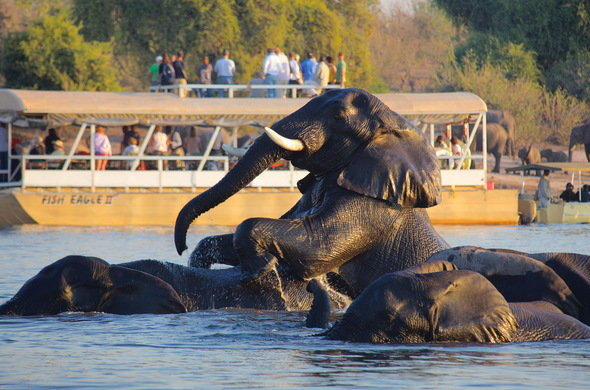
Elephants are particularly associated with several river-based safari environments. Along the Chobe River, large numbers of elephants can gather near the water during dry periods. In the Lower Zambezi, elephants also occur along the river and surrounding floodplain.
From a boat, guests may observe elephants approaching the river to drink, bathing, moving along the shoreline or, depending on circumstances, entering the water.
Hippopotamus
Hippos are strongly associated with permanent and seasonal waterways. They may be observed partially submerged in rivers, with only their heads visible above the surface, or resting in groups in suitable water habitats.
The Chobe and Lower Zambezi areas are recognised for hippo viewing from water-based activities.
Crocodiles
Nile crocodiles inhabit many southern African rivers and wetlands. On a boat safari, they may be seen resting on riverbanks, sandbanks or other exposed areas near the water.
Botswana Tourism specifically highlights crocodiles as one of the animals commonly seen during Chobe river cruises.
Antelope and Other Mammals
Depending on the destination, animals associated with wetland and river habitats may include waterbuck, red lechwe, puku, buffalo, impala and other antelope species. Chobe, for example, supports a wide variety of wildlife around the riverfront.
Birds
Birdwatching is one of the major strengths of a Boat Safari. Waterways and wetlands attract waders, kingfishers, herons, egrets, cormorants, darters, fish eagles and many other species.
Chobe National Park has recorded more than 460 bird species, while the Okavango Delta supports a very large diversity of birdlife.
For photographers and bird enthusiasts, travelling slowly along waterways can provide opportunities to observe birds feeding, fishing, flying, calling or resting along the river margins.
What Makes a Boat Safari Different From a Game Drive?
What Makes a Boat Safari Different From a Game Drive?
A Boat Safari and a Game Drive complement one another rather than replacing one another.
A Game Drive provides access to terrestrial habitats such as woodland, grassland, floodplain and open bush, allowing guests to follow roads and tracks through larger areas of land.
A Boat Safari focuses on waterways and their immediate surroundings. The boat provides a low, water-level perspective and can reveal animals and birds that may not be visible from a vehicle.
For this reason, combining a morning or afternoon game drive with a boat experience can provide a broader view of a safari destination. In Lower Zambezi and Chobe, tourism operators commonly offer both land-based and water-based activities.
Boat Safari vs. River Cruise vs. Mokoro
Boat Safari vs. River Cruise vs. Mokoro
These terms should not automatically be treated as identical.
Boat Safari generally refers to wildlife-focused exploration from a boat, where wildlife viewing is an important part of the activity.
River Cruise can be primarily scenic, although wildlife viewing may be a major component. Some river cruises are specifically designed for wildlife observation, while others may focus more on scenery, relaxation or sunset viewing.
Mokoro Excursion is a specialised shallow-water canoe experience particularly associated with the Okavango Delta. A mokoro is traditionally propelled by a standing poler and moves quietly through shallow waterways.
A website should therefore describe the exact experience offered by the operator rather than using these terms interchangeably.
The Best Time for a Boat Safari
The Best Time for a Boat Safari
There is no single best month for every Boat Safari in Africa because waterways behave differently from one destination to another.
In Chobe, the dry winter period can bring large concentrations of elephants and other wildlife to the river because surface water becomes increasingly important. Botswana Tourism specifically notes that large herds of elephants and buffalo converge on the Chobe River during the dry winter months.
In the Okavango Delta, the annual flood is particularly important. UNESCO explains that the Delta's annual flood arrives during the dry season, with the peak of the flood generally occurring around June/July, creating extensive wetland conditions that strongly influence wildlife distribution and activity.
In the Lower Zambezi, boating can be seasonal, and individual camps and operators may have different operating periods. Zambia Tourism currently lists some Lower Zambezi boating activities as seasonal.
For this reason, the most accurate wording for a website is:
Boat Safari availability and conditions vary by destination and season. Water levels, wildlife movements, weather, park regulations and operator schedules can all influence the experience. Travellers should confirm the operating season and activity availability when booking.
What Is the Experience Like?
What Is the Experience Like?
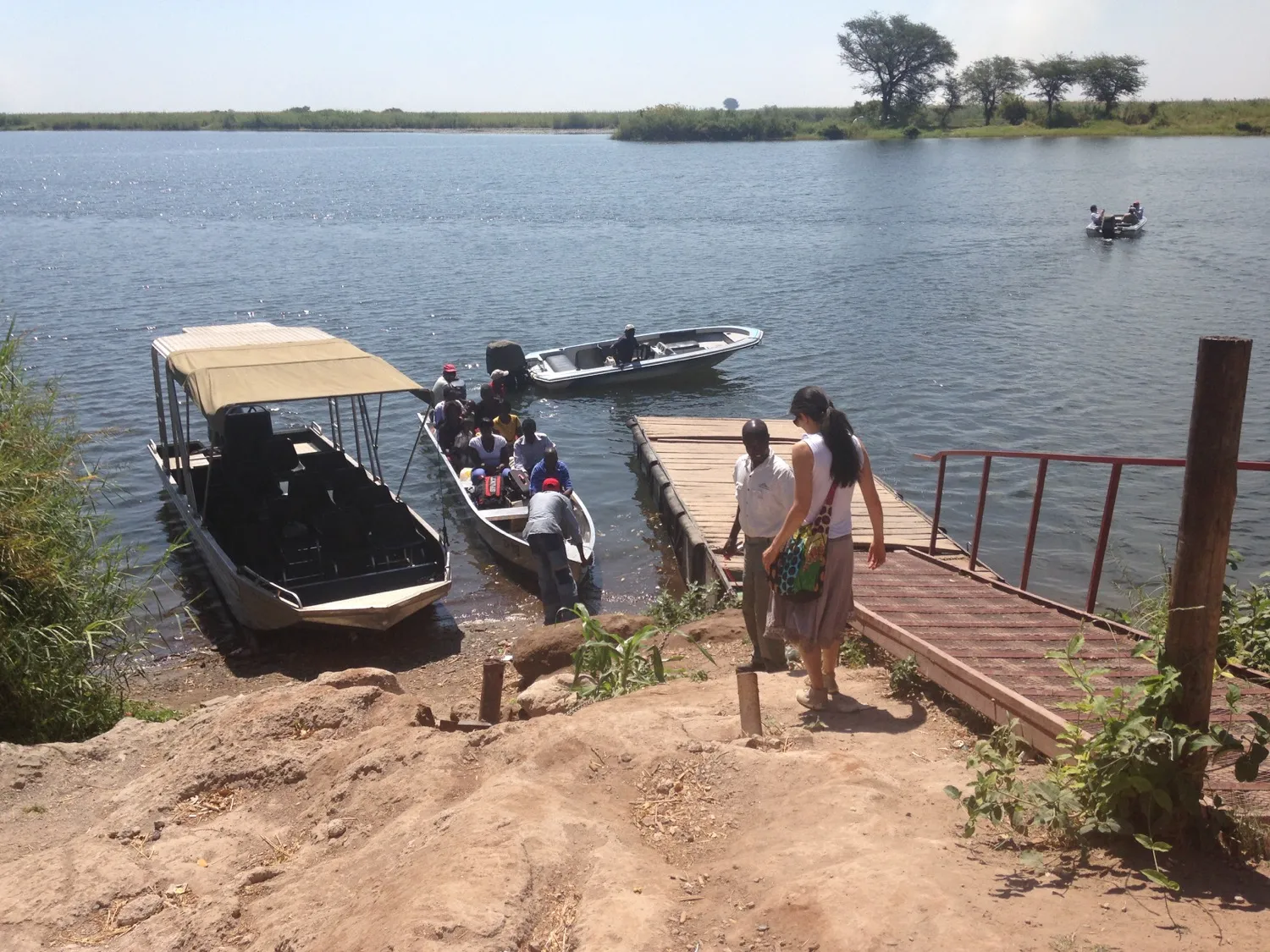
A typical Boat Safari may begin from a riverside lodge, camp, boat station or designated launch point. Guests board with their guide or skipper and travel along a selected waterway.
The route may include open stretches of river, channels around islands, shallow floodplains, reed-lined banks and areas where wildlife is known to occur. The guide normally helps guests interpret animal behaviour, identify birds and understand the surrounding ecosystem.
Depending on the location and operator, excursions may be scheduled in the morning, afternoon or late afternoon, and some experiences may include a sunset component. Botswana Tourism, for example, specifically highlights late-afternoon Chobe cruises and sunset experiences.
Boat design also varies. Some safari boats have shaded seating, while others are more open to maximise visibility and photography. Capacity, seating arrangements, shade and onboard facilities depend entirely on the vessel and operator.
Photography on a Boat Safari
Photography on a Boat Safari
Boat Safaris can be particularly rewarding for wildlife and landscape photography because the water provides constantly changing reflections, open sightlines and different angles for observing animals.
Photographers may have opportunities to capture:
- Elephants drinking or crossing the water
- Hippos emerging from or submerging in the river
- Crocodiles resting on banks and sandbanks
- Waterbirds feeding or flying
- Birds reflected in calm water
- Wildlife silhouettes during late-afternoon light
- River landscapes, islands and vegetation
- Sunsets over rivers and wetlands
Photography conditions can change quickly because the boat, wildlife and natural light are constantly moving. A good guide can help position the boat responsibly while maintaining appropriate distance and avoiding unnecessary disturbance.
A Boat Safari should never be presented as a guaranteed photographic opportunity. Wildlife is unpredictable, and sightings vary from one trip to another.
Safety on a Boat Safari
Safety on a Boat Safari
Boat Safaris take place in genuine wildlife environments, and safety must always come first.
Rivers containing hippos and crocodiles can be hazardous. Guests should therefore follow the instructions of the guide and skipper throughout the excursion.
Basic responsible behaviour includes:
- Remain seated or positioned as instructed by the skipper.
- Follow all safety instructions before and during the trip.
- Do not put hands, feet or equipment unnecessarily into the water.
- Never enter or swim in the water unless the responsible operator has specifically confirmed that it is safe and permitted.
- Do not feed wildlife.
- Avoid loud or sudden behaviour that could disturb animals.
- Keep personal belongings secure.
- Follow all local park and boating regulations.
Zambia Tourism specifically warns that guests should not swim without permission from the skipper because of risks associated with submerged hippos and crocodiles, and boating safety is also part of professional guide training in the Lower Zambezi.
Boat safety procedures can differ between operators, so guests should follow the specific instructions provided by their safari company.
Is a Boat Safari Suitable for Everyone?
Is a Boat Safari Suitable for Everyone?
A Boat Safari can be enjoyed by many travellers, including couples, families, wildlife enthusiasts, photographers and birdwatchers. However, suitability depends on the particular boat, route and operator.
Travellers should consider factors such as:
Boat type: Some vessels are stable and spacious, while others are smaller and more open.
Duration: Trips may range from shorter excursions to substantially longer water-based experiences.
Weather: Conditions on open water can change, and sun exposure can be significant.
Mobility: Boarding, seating and movement around a boat may present challenges for travellers with limited mobility. These arrangements should be confirmed with the operator before booking.
Children: Minimum ages and child policies vary between operators and destinations.
Medical or physical considerations: Anyone with specific mobility or other practical concerns should discuss them with the safari operator before the activity.
What to Bring
What to Bring
For a comfortable Boat Safari, travellers may consider bringing:
- Lightweight, comfortable clothing
- A hat or cap
- Sunglasses
- High-SPF sunscreen
- Drinking water
- Binoculars
- Camera and spare batteries
- Waterproof protection for sensitive electronic equipment
- A light jacket or outer layer when travelling during cooler periods
- Any personal medication required during the excursion
Because boats can be exposed to direct sunlight and reflected light from the water, sun protection can be particularly important. Zambia Tourism also recommends appropriate protection from the strong sun during river activities.
Responsible Boat Safari
Responsible Boat Safari
A responsible Boat Safari should aim to provide wildlife experiences while minimising disturbance to animals and their habitats.
Responsible practices include maintaining appropriate distances from wildlife, avoiding unnecessary pursuit of animals, respecting restricted areas, following navigation and park regulations, and avoiding actions that alter natural animal behaviour.
This is particularly important in sensitive river and wetland ecosystems. Wildlife may depend heavily on waterways for drinking, feeding, breeding and movement.
In the Lower Zambezi, conservation organisations work with the relevant wildlife authorities to protect the ecosystem and promote sustainable use of natural resources.
Why Choose a Boat Safari?
Why Choose a Boat Safari?
A Boat Safari offers travellers an opportunity to experience African wildlife from a perspective that cannot be replicated from a conventional safari vehicle.
The combination of water, wildlife, birds, changing landscapes and close connection with river ecosystems makes the experience particularly distinctive.
Depending on the destination, guests may cruise beside elephant-rich riverbanks, watch hippos and crocodiles in their natural environment, observe waterbirds along reed-lined channels, photograph wildlife from the water and enjoy the changing light across the river.
The experience is not about guaranteeing a particular animal sighting. It is about entering a natural ecosystem and observing wildlife as it behaves in its own environment.
Questions
Frequently Asked Questions
What is a Boat Safari?
A Boat Safari is a wildlife-viewing and nature experience conducted from a boat on a suitable river, wetland, channel or other waterway.
What animals can I see?
Depending on the destination and season, sightings may include elephants, hippos, crocodiles, buffalo, antelope and numerous bird species. Wildlife sightings are never guaranteed.
Is a Boat Safari safe?
Boat Safaris are conducted in natural wildlife environments and involve inherent risks. Following the instructions of the professional guide and skipper is essential, particularly around areas inhabited by hippos and crocodiles.
Is a Boat Safari the same as a mokoro ride?
No. A mokoro is a shallow-water canoe traditionally propelled by a standing poler and is particularly associated with the Okavango Delta. A conventional Boat Safari normally uses a motorised or other suitable boat.
Can I take photographs?
Yes. Boat Safaris can provide excellent opportunities for wildlife, bird and landscape photography. However, the quality and number of sightings depend on wildlife behaviour, weather, light, water conditions and the route taken.
Are Boat Safaris available all year?
Not necessarily. Availability varies by destination and operator. Some Lower Zambezi boating experiences are explicitly seasonal, while conditions in other river and wetland areas depend on water levels, weather and local operating arrangements.
Where can I experience a Boat Safari with Max Adventure Trails?
Boat-based experiences may be available in suitable safari and river environments across the destinations included in your itinerary, subject to the specific route, season, water conditions, local regulations and availability of the selected operator or camp. The exact location and activity should therefore be confirmed as part of the individual safari itinerary.
Final Overview
Final Overview
A Boat Safari is more than simply travelling along a river. It is an opportunity to experience Africa's waterways and wildlife from a completely different perspective. From the elephant-rich Chobe River in Botswana to the wildlife-filled waterways of the Lower Zambezi in Zambia, the wetlands of the Okavango Delta, and the river environments of Namibia's north-eastern regions, water-based safari experiences reveal an important side of Africa that cannot be fully experienced from land alone.
Every Boat Safari is influenced by nature. Water levels change, wildlife moves freely, weather conditions vary and individual sightings cannot be guaranteed. The most rewarding approach is therefore to travel with an experienced operator, respect wildlife and park regulations, and allow the river environment to determine the pace of the experience.
For travellers who enjoy wildlife, photography, birdwatching, landscapes and peaceful exploration, a well-operated Boat Safari can be a memorable part of an African safari itinerary.
Plan Your Boat Safari
Boat-based experiences may be available in suitable safari and river environments across the destinations included in your itinerary, subject to the specific route, season, water conditions, local regulations and availability of the selected operator or camp.
Start Your Enquiry →