


- 118 Views
- 11 Min Read
- (0) Comment
Key takeaways
- Hwange National Park covers 14,651 square kilometers, making it Zimbabwe’s largest reserve (Wikipedia).
- The dry season from May to October is the best time for a first Hwange safari, when up to 50,000 elephants gather at waterholes.
- Hwange holds about 160 African wild dogs, the most substantial population in Zimbabwe (African Wildlife Foundation).
- First-timers should book a guided package that bundles transfers, lodging, and game drives to avoid the park’s self-drive logistics.
- The park protects 105 mammal species and 410 recorded bird species, including four of the Big Five.
A Hwange National Park safari gives first-timers one of Africa’s best chances to see huge elephant herds without the crowds of more famous parks, alongside lion prides, buffalo and leopard and many other animal species. Plan your trip for the dry season, travel with a licensed guide, and give yourself at least three nights, and you will leave with the classic safari you pictured.
Hwange sits in northwestern Zimbabwe, roughly 180km from Victoria Falls. It is the country’s largest and oldest national park, and it packs in elephants, lions, and rare wild dogs across a landscape of teak forest, open grassland, and dusty pans. This guide walks you through when to go, what you will see, how long to stay, and how to book without getting tangled in logistics.
We are Maximum Adventure Trails, a Victoria Falls-based operator, and we run guided game drives here through the seasons. This guide walks you through what makes Hwange special, when to come, what to pack and how to get there, so your first visit feels planned rather than guessed.
Key Takeaways
- Hwange spans 14,651 square kilometers, Zimbabwe’s largest park.
- The dry season (May to October) is the best window, when up to 50,000 elephants gather at waterholes.
- The park holds about 160 African wild dogs, the largest population in Zimbabwe.
- A guided package that bundles transfers, lodging, and game drives removes the hardest planning for newcomers.
What Makes Hwange National Park Worth Visiting?
Hwange covers 14,651 square kilometers, which makes it Zimbabwe’s largest national park and one of the biggest reserves in Africa (Wikipedia). That scale is the whole point for a first safari: space for wildlife to roam and far fewer vehicles per sighting than you find in the busiest East African parks.
Hwange National Park was proclaimed a protected area back in 1928, giving the wildlife nearly a century of sanctuary. That scale and history are exactly why the game viewing feels so generous.
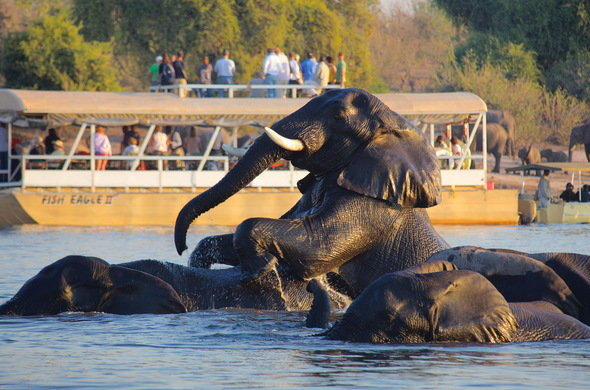
The park is famous for its elephants. During the dry season, up to 50,000 elephants gather within its boundaries, roughly 10 percent of the continent’s population. Watching a hundred-strong herd file down to a waterhole at dusk is the kind of moment first-timers remember for years.
The park is also serious lion country. Oxford University’s WildCRU has studied Hwange’s lions since 1999, and this is where Cecil, the collared lion whose 2015 death drew global attention, lived and was tracked for eight years. That research reshaped conservation policy: after Zimbabwe cut its annual lion hunting quota, Oxford researchers documented the study population increasing by 62 percent, with adult males rising sharply.
Oxford also reports that the outcry over Cecil helped push Zimbabwe to slash its yearly lion hunt quota, part of Cecil’s lasting conservation legacy. Seeing a Hwange pride at dawn carries that weight of hard-won recovery.
Wildlife variety runs deep too. Hwange holds 100 mammal species and nearly 400 bird species, including four of the Big Five: elephant, lion, leopard, and buffalo. Sable antelope, giraffe, and buffalo herds are common, and the park is one of the few places where you can reasonably hope to see endangered African wild dogs.
Habitats that keep the game moving
Part of Hwange’s appeal is variety. The northern reaches hold mopane woodland and teak forest, while the south opens into Kalahari sand and grassy pans. Because much of the park has no permanent surface water, wildlife clusters around the waterholes, many of them kept flowing by pumps. For visitors, that concentration is a gift: park beside a busy pan and the animals come to you.
When Is the Best Time for a Hwange Safari?
The dry season from May through October is the best time for a first Hwange National Park safari, with July through October as the peak months. As surface water disappears, animals crowd around the park’s pumped waterholes and pans, so you spend less time searching and more time watching.
Bird lovers may prefer the green season. Hwange records well over 400 bird species, and migrant birds arrive with the summer rains from November onward. The bush turns lush and photogenic then, though tall grass makes spotting big cats harder.
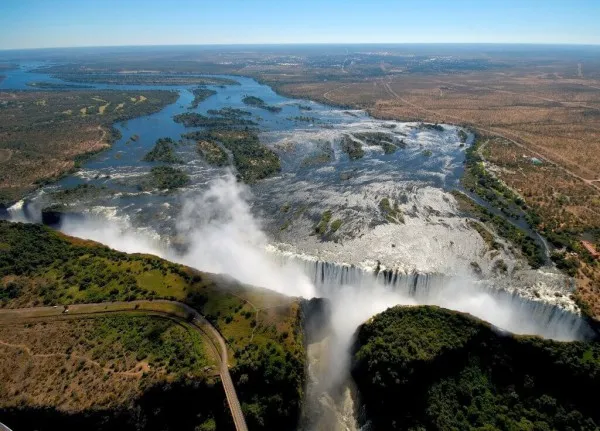
For a first visit, weigh your priorities. Dry-season game viewing is more reliable and better suited to newcomers who want guaranteed big-animal sightings. If you plan to combine Hwange with the falls, note that the wet season brings peak water flow, covered in our Victoria Falls safari tours guide.
Quick season guide:
- May to October: dry, best overall game viewing, waterhole action, cooler nights
- August to October: peak elephant congregations, hottest daytime temperatures
- November to April: green, best birding, fewer visitors, lower prices
- January to March: wettest months, some tracks may be difficult
If your priority is elephants and predators, aim for the dry season. If you love birds, want quieter camps or are travelling on a tighter budget, the green season is a fine choice.
Which Animals Will You See in Hwange?
First-timers can expect elephants on nearly every drive, plus a strong chance of lions and general plains game. Hwange has four of the Big Five, so leopard and buffalo sightings are realistic, while rhino remain rare and confined to protected zones. Setting that expectation early keeps your first safari from feeling like a checklist.
The park’s standout is the African wild dog. About 160 wild dogs, also known as painted dogs, live in Hwange and its environs, the most substantial population in Zimbabwe (African Wildlife Foundation). Seeing a pack on the hunt is a genuine highlight, and Hwange offers better odds than almost anywhere on the continent.
Beyond the headline predators, the park delivers depth. Giraffe, zebra, kudu, sable, and roan antelope share the grasslands with hyena and jackal. Night drives from private concessions can turn up smaller nocturnal species that day visitors miss entirely.
How Long Should Your First Hwange Trip Be?
Plan for at least three nights to do a first Hwange safari justice. Two nights work only if you are pairing the park with Victoria Falls, but three to four nights let you explore different sections and raise your chances of predator sightings across morning and afternoon drives.
The park breaks roughly into three areas, each with a different feel. The north around Sinamatella has rugged, hilly terrain. The central Main Camp region offers reliable waterhole action and good roads. The remote south near private concessions delivers exclusive game viewing with fewer vehicles.
A sensible first-timer rhythm looks like this:
- Day 1: Arrive, settle in, and take an afternoon game drive.
- Days 2 to 3: Full days with dawn and late-afternoon drives when animals are most active.
- Day 4: A final morning drive before you transfer out.
Spreading drives across cooler hours matters. Midday heat sends most animals into the shade, so the golden windows at dawn and dusk are when the park comes alive.
How Do You Get to Hwange and Book a Safari?
Most travelers reach Hwange by flying into Victoria Falls or Bulawayo, then continuing by road transfer or light aircraft. The park lies roughly halfway between the two, so many itineraries fold it into a wider Zimbabwe circuit that also takes in the falls.
Booking a guided package is the simplest route for a first safari. Coordinating international flights, regional transfers, park fees, lodging, and daily game drives yourself is doable but time-consuming, and small missteps can cost you prime viewing time. Maximum Adventure Trails bundles these pieces into curated Southern Africa itineraries, so your transfers, camps, and drives are arranged and led by licensed guides before you arrive.
Whichever way you book, confirm a few essentials up front: whether park entry and conservation fees are included, how many game drives you get per day, and whether your guide is professionally licensed. Those three answers separate a smooth first safari from a frustrating one.
What Your Hwange National Park Safari Includes
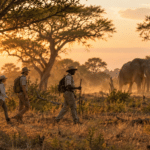
A first Hwange safari runs far more smoothly with a local guide who knows the pans, the pride territories and the daily rhythm of the animals. Our guided game drives are built around that local knowledge.
What’s included in a Maximum Adventure Trails game drive:
- A trained, licensed local guide who reads tracks and animal behaviour
- Open safari vehicle with raised seating for clear views and photography
- Park entry permits and fees handled for you
- Bottled water and a shaded rest stop on longer drives
- Flexible timing around dawn and late afternoon, when wildlife is most active
- Pickup and logistics coordinated from your lodge or from Victoria Falls
We plan drives for the golden hours because that is when Hwange comes alive: lions moving before the heat, elephants marching to water, birds calling across the pans. Because we handle permits, transport and timing, you can simply watch.
What to pack for a Hwange safari
- Neutral-coloured clothing in layers: warm for dawn, light for midday
- A wide-brimmed hat, sunglasses and high-factor sunscreen
- Closed walking shoes and a light windproof jacket
- Binoculars, a camera and spare batteries or a power bank
- Insect repellent and any personal medication
- A reusable water bottle and a small daypack
Keep luggage soft-sided and modest. Light aircraft and safari vehicles have limited space, and you will not need much beyond comfort and camera gear.
Getting There and Where to Stay
Hwange sits about 100 kilometres south of Victoria Falls, a drive of roughly two to two and a half hours to the main gate. That proximity is one of the park’s best features: you can experience the thunder of the Falls and a full Hwange safari in the same trip without long transfers. We arrange road transfers directly from Victoria Falls, and the park is also reachable by short scheduled flights for travellers who prefer to fly in.
Accommodation spans every budget and style:
- Camps and campsites: simple, well-placed options for backpackers and self-drivers who want to be close to the action for less.
- Mid-range lodges: comfortable rooms, guided drives and often a private waterhole view, ideal for families and first-timers.
- Luxury lodges: premium tented suites, expert guiding and fine dining for honeymooners and travellers wanting the full private-safari experience.
Many camps overlook a waterhole, which means the safari continues from your veranda. Wherever you stay, we match the lodge to your budget and pace so the logistics stay invisible and the wildlife stays centre stage.
Plan Your Hwange Safari With Us
The simplest next step is to tell us your travel dates and what you most want to see, whether that is elephants at a waterhole, lions at dawn or a quiet birding trip in the green season. From there we will suggest a tailored Hwange itinerary that fits your budget and pairs neatly with Victoria Falls.
Reach out to Maximum Adventure Trails to enquire about a Hwange safari, and we will handle the guides, transfers and lodges so your first visit is all wonder and no worry.
Conclusion
Start by locking in your travel dates for the dry season, ideally between July and October, since that single decision shapes how good your first Hwange safari will be. Once your window is set, request a guided itinerary that includes airport transfers, at least two game drives a day, and a licensed guide, then build the rest of your Zimbabwe trip around those anchor dates. Reach out to Maximum Adventure Trails to match a Hwange package to your calendar and pair it with Victoria Falls for a complete first visit.
Frequently asked questions
How many days do I need for a Hwange safari?
Three to four nights lets you cover different areas of the park and improve your odds of spotting predators. A shorter two-night stay works if you pair Hwange with Victoria Falls.
Is Hwange National Park safe for first-time safari-goers?
Yes, when you travel with a licensed guide and stay in established camps. Guides manage wildlife encounters, and most lodges sit inside fenced or patrolled areas.
What is the best time to visit Hwange National Park?
The dry season from May through October offers the best game viewing. Sparse vegetation and scarce water push animals to concentrate at waterholes, especially in the peak months of July through October.
Will I see the Big Five in Hwange?
Hwange has four of the Big Five: elephant, lion, leopard, and buffalo. Rhino sightings are rare and limited to protected zones, so most visitors see four of the five.
How do I get to Hwange National Park?
Most travelers fly into Victoria Falls or Bulawayo, then drive or take a light aircraft transfer to the park. Hwange sits roughly halfway between the two towns in northwestern Zimbabwe.