

- 5 Views
- 6 Min Read
- (0) Comment
Weather Victoria Falls searches usually mean two things: the live forecast for the next few days, and the seasonal climate that decides when to go and what to bring. Victoria Falls has a subtropical climate with three seasons. A hot, wet season runs from mid-November to April. A mild, dry winter runs from May to mid-August. A very hot, dry stretch runs from late August to November. Average daily highs range from about 77°F to 91°F (25°C to 33°C), and roughly 95% of the yearly rain falls between November and April.
The weather matters more here than at most destinations, because it controls how much water goes over the Falls and which activities run. This guide explains why, shows you how to read a forecast and pick the right month for your goal, gives month-by-month temperature and rainfall figures, and tells you what to pack. We are based in the town of Victoria Falls, Zimbabwe.
Why the weather decides what you see at Victoria Falls
The weather matters because rain far upstream, not rain in town, sets the Zambezi River’s flow. That flow decides how the Falls look, how wet you get, and which activities are open.
Rain upstream fills the Falls months later
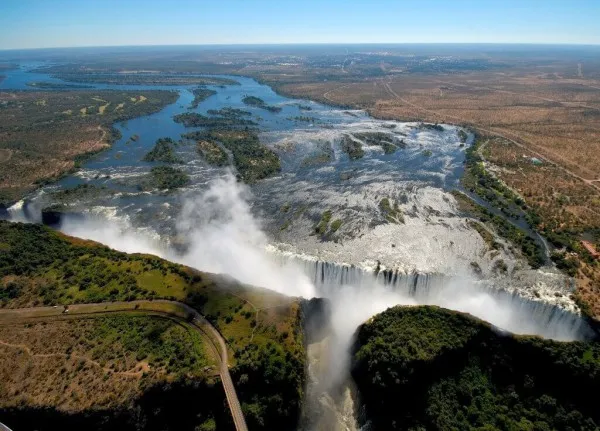
Local showers barely change the river. The big rise comes when rain that fell in Zambia and Angola reaches the Falls, starting around February and peaking around April. Commonly quoted estimates put the flow at about 500 million liters per minute at the peak, against about 10 million at the lowest point in November and early December.
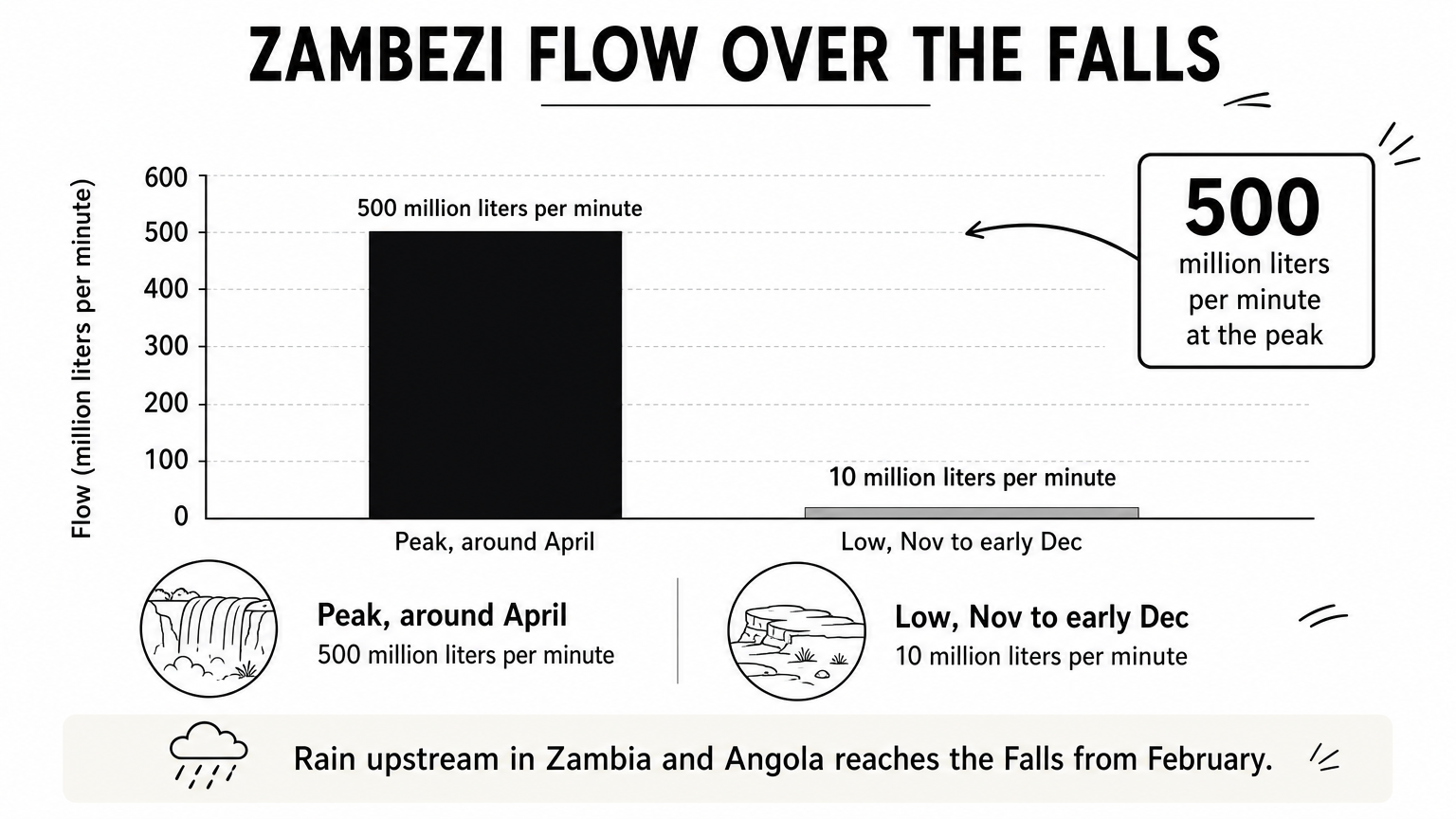
Those extremes change the experience. In March and April the spray is so heavy that viewing from the ground is difficult and photography is close to impossible, though aerial views are spectacular. In November and December, sections of the Falls can dry up and expose bare rock, especially on the Zambian side.
A sunny, dry day in town can still mean a soaking walk at the Falls.
Heat and storms shape the activity calendar
Water level and season also decide what you can book. These are the patterns we plan around:
- Rafting: best from August to December at low water. It generally closes around April or May, when the river is too high.
- Devil’s Pool: swims run in the low-water months, roughly August to December, and conditions set the exact dates.
- Livingstone Island tour: it usually closes from April to about late June.
- Game viewing: best from late August to mid-November, when animals gather at the river.
- Zambezi National Park: heavy rain from December to March can close roads.
- Mosquitoes: more active from December to April.
How to check the forecast and plan your dates
Check a live forecast with hourly data in the week before you travel, and choose your month by the one thing you most want to do. Those two steps cover most planning decisions.
Reading a live forecast
Forecast sites and apps all show the same basics, but a few habits make them more useful here:
- Trust 7 days, glance at 14. Beyond a week, treat the numbers as a trend, not a promise.
- Open the hourly view from November to March. Storms build in the late afternoon, drop a torrential downpour, and clear in about an hour. A "70% chance of rain" often means one short storm, not a washed-out day.
- Convert units once. Multiply Celsius by 1.8 and add 32. A 33°C forecast is 91°F.
- Remember the forecast describes the town. At the Falls themselves, spray adds its own rain in high-water months.
Read the hourly forecast, not the daily icon, because Victoria Falls rain arrives in short, hard bursts.
Matching the month to your goal
If you can only choose one month, May or June suits most first-time visitors. The Falls are still full, the spray has eased, nights are cool, and almost no rain falls. Use this table when your priorities differ.
| Your goal | Best months | Why |
|---|---|---|
| Full, thundering Falls | February to June | High water, with the heaviest spray in March and April |
| Comfortable temperatures | May to August | Dry, with highs around 77°F to 82°F |
| Rafting and Devil’s Pool | August to December | Low water makes both possible |
| Wildlife on a safari add-on | Late August to mid-November | Sparse vegetation, animals at the river |
| Fewer mosquitoes | May to November | Dry months carry less risk than December to April |
Victoria Falls weather month by month
The average high peaks at 91°F in October and bottoms out at 77°F in June and July. Rain is concentrated in December and January, with almost none from May to September.
Average temperatures and rainfall
| Month | High °F (°C) | Low °F (°C) | Rain in. (mm) | Rain days |
|---|---|---|---|---|
| Jan | 86 (30) | 64 (18) | 6.6 (168) | 14 |
| Feb | 84 (29) | 64 (18) | 5.0 (126) | 10 |
| Mar | 86 (30) | 63 (17) | 2.8 (70) | 7 |
| Apr | 84 (29) | 57 (14) | 0.9 (24) | 2 |
| May | 81 (27) | 50 (10) | 0.1 (3) | 1 |
| Jun | 77 (25) | 43 (6) | 0.0 (1) | 0 |
| Jul | 77 (25) | 43 (6) | 0 (0) | 0 |
| Aug | 82 (28) | 46 (8) | 0 (0) | 0 |
| Sep | 90 (32) | 55 (13) | 0.1 (2) | 1 |
| Oct | 91 (33) | 63 (17) | 1.1 (27) | 4 |
| Nov | 90 (32) | 64 (18) | 2.5 (64) | 8 |
| Dec | 86 (30) | 64 (18) | 6.9 (174) | 13 |
Averages hide the extremes. October is the hottest month, and individual days can climb past 100°F (38°C) before the rains cool things down. The yearly total is about 26 inches (660 mm), so the dry season is truly dry.
Expect heat in October, rain in December and January, and cool, clear mornings from May to August.
Zimbabwe side and Zambia side
The weather is the same on both banks, because the two sides of the Falls sit only a few miles apart (Livingstone, Zambia, is about 6 miles away). Searching for Victoria Falls Zambia weather or Victoria Falls Zimbabwe weather gives you the same climate. What differs is the view. The Zimbabwe side keeps a good flow all year, while the Zambian side can run nearly dry in November and December.
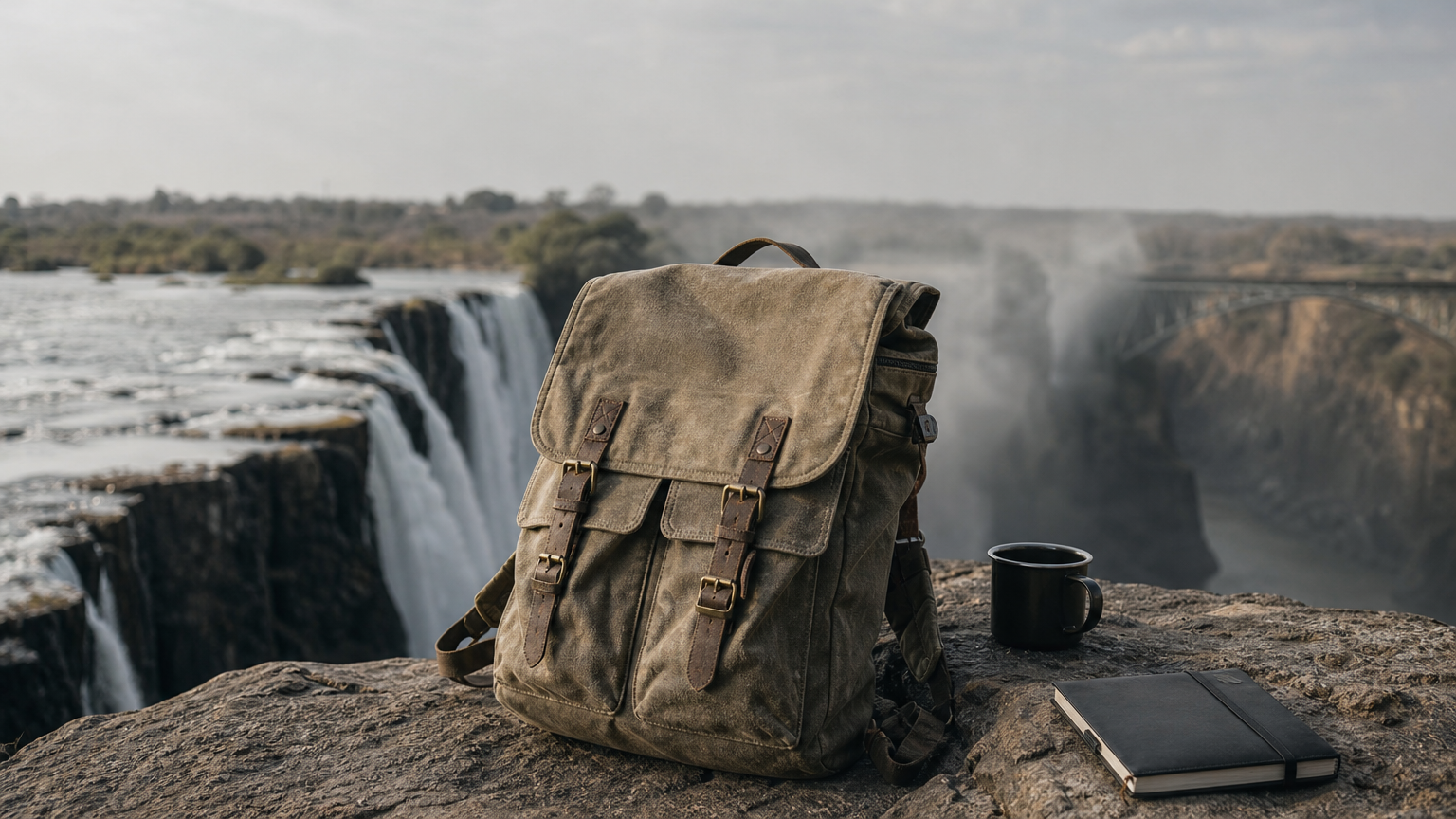
The town sits at about 2,900 feet (880 m) above sea level. That elevation explains the cold early mornings in winter, when lows drop to the mid-40s°F. It also explains why summer heat feels dry and sharp rather than humid, except during the rains.
What to pack for Victoria Falls weather
Pack light layers all year, add waterproofs for the high-water months, and bring a warm top for winter mornings.
Packing by season
| Season | Months | Pack |
|---|---|---|
| Hot and wet | Dec to Apr | Breathable cotton or quick-dry clothes, light rain jacket, insect repellent, sandals that dry fast |
| Cool and dry | May to Aug | Long pants, a sweater or fleece for dawn game drives, sunglasses, sunscreen |
| Hot and dry | Sep to Nov | Hat, high-SPF sunscreen, light long sleeves for sun, a refillable water bottle |
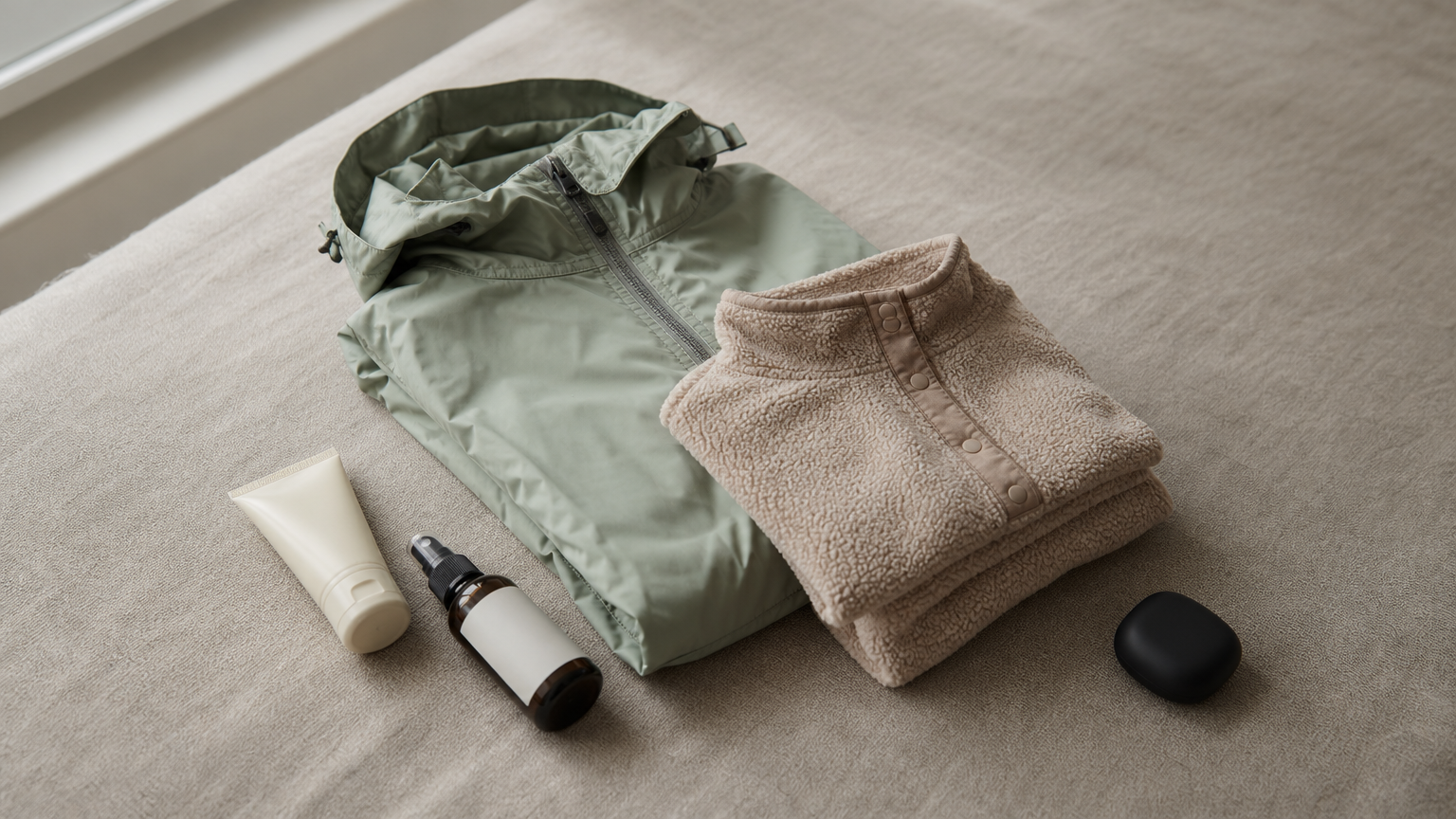
Neutral colors suit game drives in every season. Sun protection matters year-round, because the area gets about eight hours of sunshine on an average day.
Do you need a raincoat?
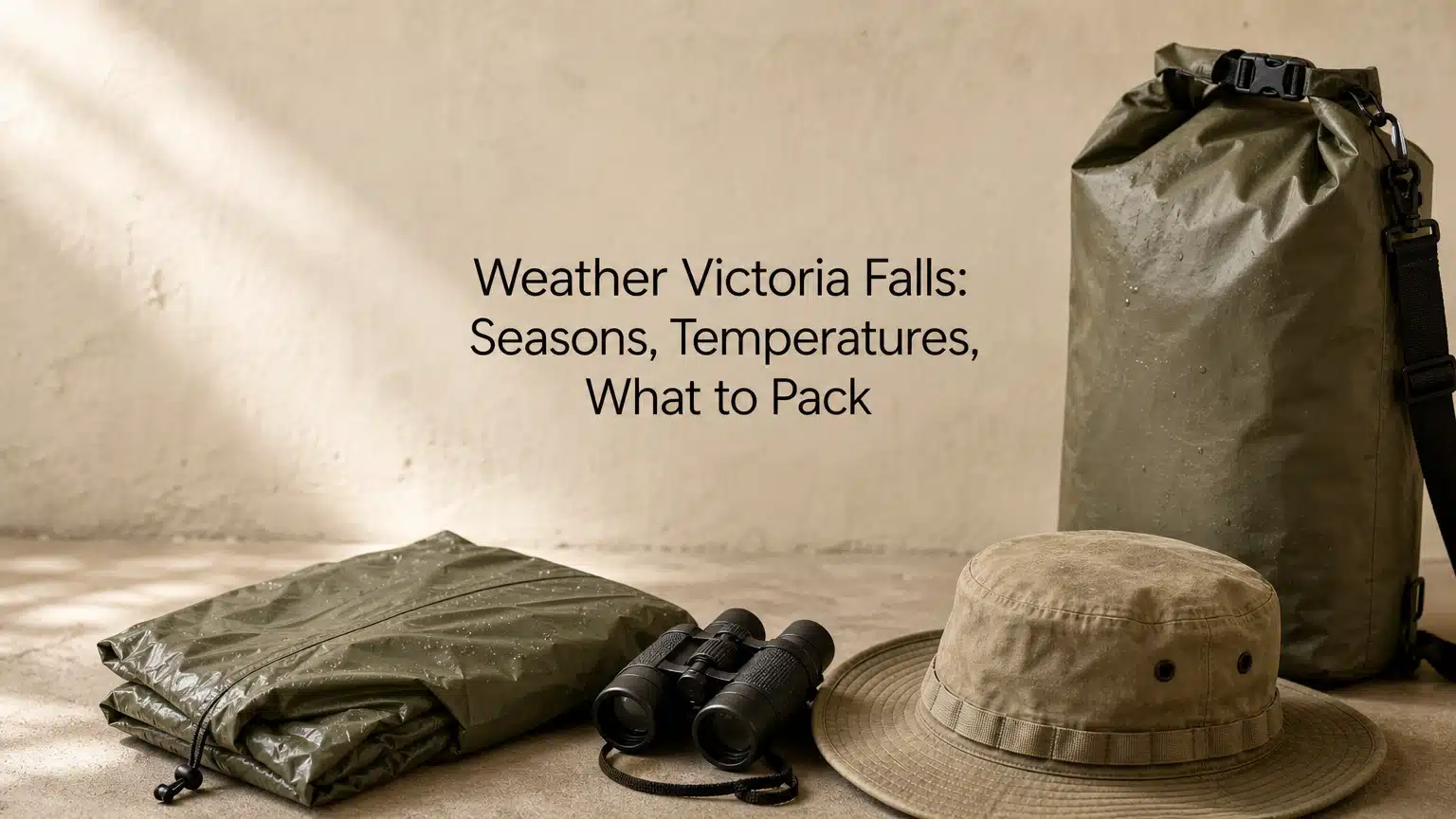
Yes, if you visit between February and June. Walking the viewpoints in high water feels like standing in a steady rainstorm, even under a blue sky. A light waterproof jacket or poncho works better than an umbrella, and a dry bag or waterproof cover protects your phone and camera. From August to November you can leave the rain gear at home, because the spray is far lighter.
Plan around the water, then the heat
Victoria Falls weather comes down to one question: do you want the Falls at full power, or the freedom to raft, swim, and watch wildlife at low water? High water runs roughly February to June, low water roughly August to December, and temperatures stay comfortable for most of the year except the October peak. Check the hourly forecast a week out, and pack layers for the season you chose.
If you want help matching your dates to the activities you care about, talk to the Maximum Adventure Trails team about your Victoria Falls trip.