
- 3 Views
- 7 Min Read
- (0) Comment
Planning a safari in the Okavango Delta can feel overwhelming. Prices range from a few hundred dollars a day to well over $1,500, and the right month can change what you see. Camps sit on islands, in flooded woodland, or on dry land, and not every one fits your budget or your style of travel.
Here is the short answer. The best time to go is June through October, when floodwater peaks and wildlife gathers around the channels. Expect to pay roughly $400 to $1,800 per person per night depending on the camp, with mid-range tented camps and guided mokoro trips giving the best value for most travelers.
Below, we break down costs, season by season timing, lodge and camp types, and activities like mokoro trips, walking safaris, and game drives. Our guides at Maximum Adventure Trails lead trips across Botswana, Zimbabwe, and Zambia, so we also show how to combine the Delta with Victoria Falls and Chobe and what to book first.
Why an Okavango Delta safari is worth planning
A wetland that floods in the dry season
The Okavango Delta is the world’s largest inland delta and a UNESCO World Heritage Site since 2014. The Okavango River rises in Angola and spills across the Kalahari sands instead of reaching the sea. Depending on the year, floodwater spreads over roughly 6,000 to 15,000 square kilometers.
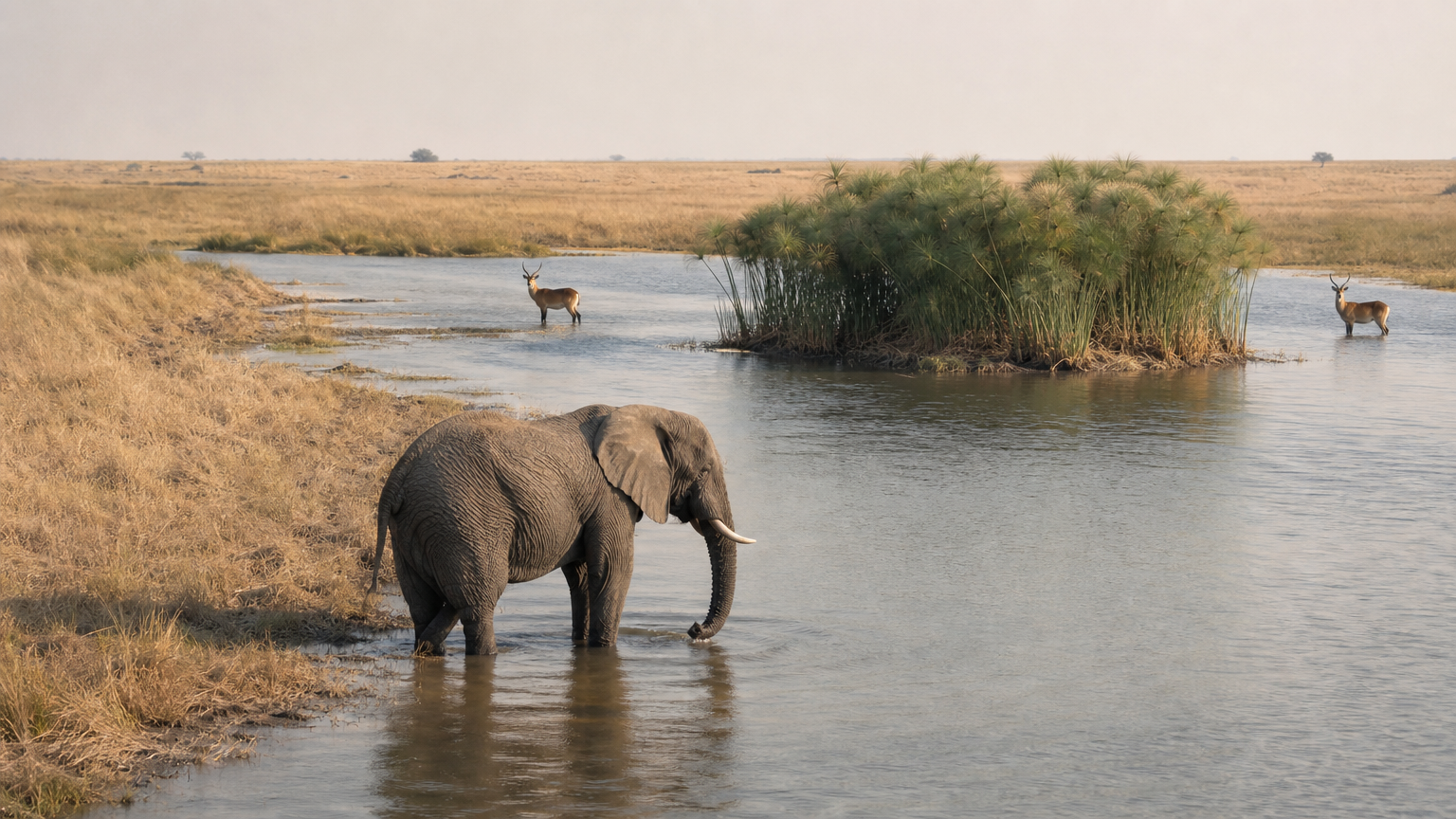
Timing is the surprise. Rain falls in Angola from December to March, but the water needs months to travel south. It reaches Botswana around April and peaks between June and August, right in the dry season. Pools elsewhere vanish, so animals crowd around the channels and islands.
The Delta floods when the surrounding Kalahari is driest, and that is why wildlife concentrates here.
What you see and do
Wildlife is the main draw. You can find elephant, lion, leopard, buffalo, and wild dog, plus water specialists like red lechwe and sitatunga. Birders can tick off more than 400 species, from African fish eagles to Pel’s fishing owls. Each activity shows you the Delta differently:
| Activity | What it feels like | Best months |
|---|---|---|
| Mokoro trip | Silent poling through reed channels | June to October |
| Game drive | Tracking big cats and elephant on dry land | May to October |
| Walking safari | On foot with an armed guide on an island | Dry months |
| Motorboat trip | Faster access to remote lagoons | High water |
Botswana keeps this wilderness quiet through a low-volume, high-value tourism model. Camps are small, concession areas are huge, and you often share a sighting with no other vehicle. That exclusivity explains the prices, but it also means a good Okavango Delta Botswana safari delivers a sense of space that crowded parks cannot match.
How to plan your Okavango Delta safari
Build your route and length of stay
Most travelers reach the Delta through Maun. From there, a light aircraft flies you to camp in 20 to 45 minutes. Plan three to six nights for a safari in the Okavango Delta, and split them between two camps. One camp should sit on water and the other on dry land, so you see both floodplain and woodland habitat.
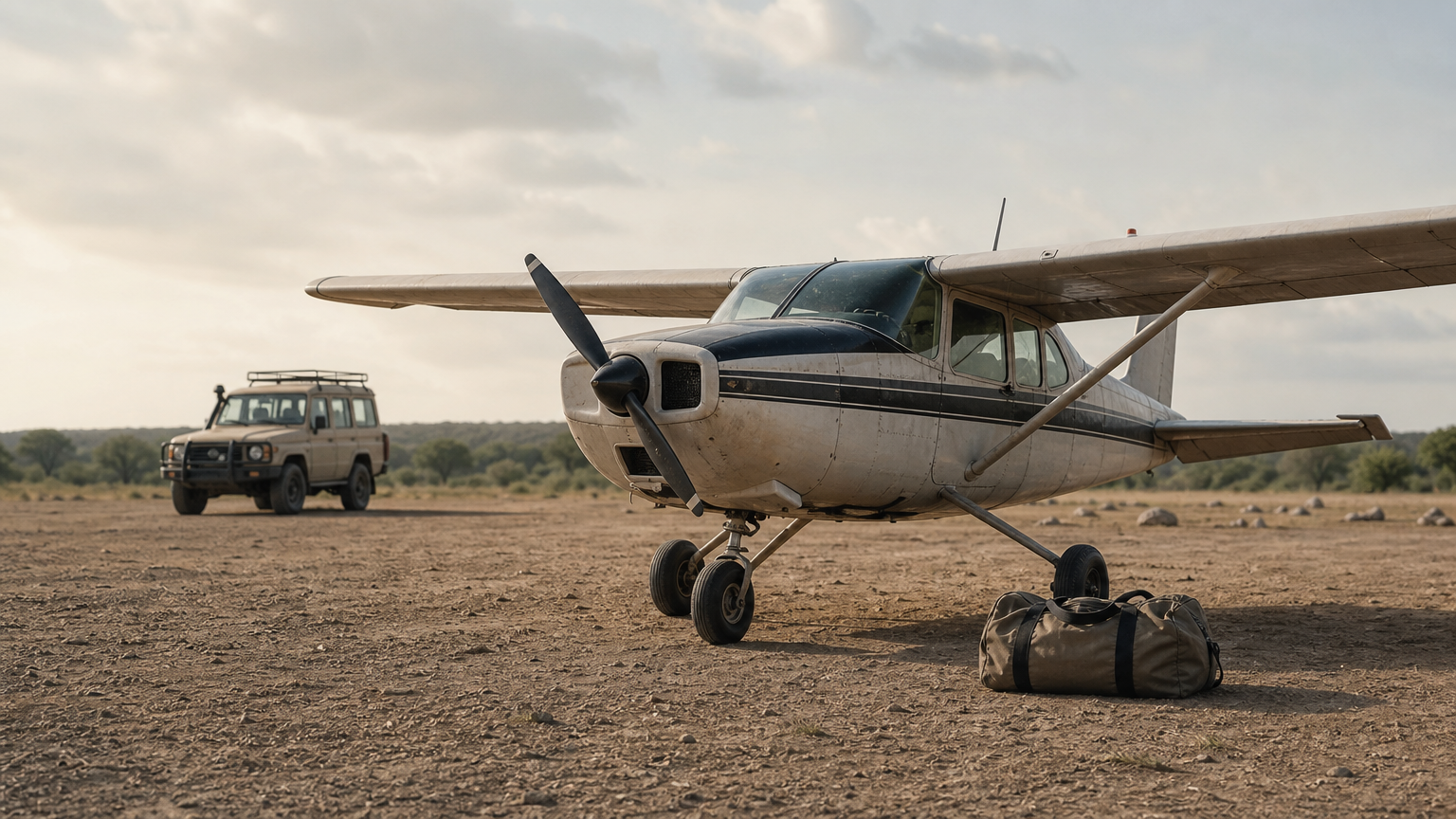
Split your nights between a water camp and a dry-land camp to see the whole Delta.
Book in the right order
Booking order matters because small camps sell out first. Peak dates from July to September often fill 9 to 12 months ahead. Lock in these items in sequence:
- Camp dates, starting with your preferred lodge.
- Flights into Maun and the light aircraft transfers.
- Add-ons such as Victoria Falls and Chobe, including cross-border transfers.
- Passport validity, entry rules, and travel insurance with medical evacuation cover.
Follow a Botswana safari packing list and choose soft duffel bags under 20 kg (44 lb), because bush planes enforce strict luggage limits. Leave hard suitcases at your Maun hotel or with your transfer provider.
Best time to visit the Okavango Delta by season
The right month to go depends on what you want from a safari in the Okavango Delta. Dry months give the strongest wildlife viewing, but the green season offers lower prices and fewer vehicles if you can handle the heat.
Season by season at a glance
Water arrives late, so the flood peaks June to August even though rain falls from November to March. Use this table to match your month to your goals.
| Season | Months | Conditions | Best for |
|---|---|---|---|
| Cool dry | May to Aug | Days near 77°F, nights near 41°F | Mokoro trips, big cats |
| Hot dry | Sep to Oct | Highs of 95°F to 104°F | Elephant herds, predator action |
| Green | Nov to Apr | Afternoon storms, lush bush | Birding, baby animals, lower rates |
Our recommendation
Most first-timers should choose late July to early September. Water is high, game is concentrated, and rain is rare.
Choose July to September for the most reliable Delta game viewing.
September and October suit travelers who want predator sightings at shrinking waterholes, but pack for serious heat. Budget travelers should look at November to March, when many camps cut rates by 30 percent or more. Expect humidity and some flooded or closed tracks, but birding is excellent.
What an Okavango Delta safari costs
The Okavango Delta safari cost runs high because camps are remote, small, and reached by air. Most rates are quoted per person, per night, all-inclusive, covering meals, drinks, and daily activities.
Nightly rates by camp type
Expect these ranges in high season, July to October. Solo travelers often pay a single supplement of 50 to 100 percent, so sharing a room saves real money.
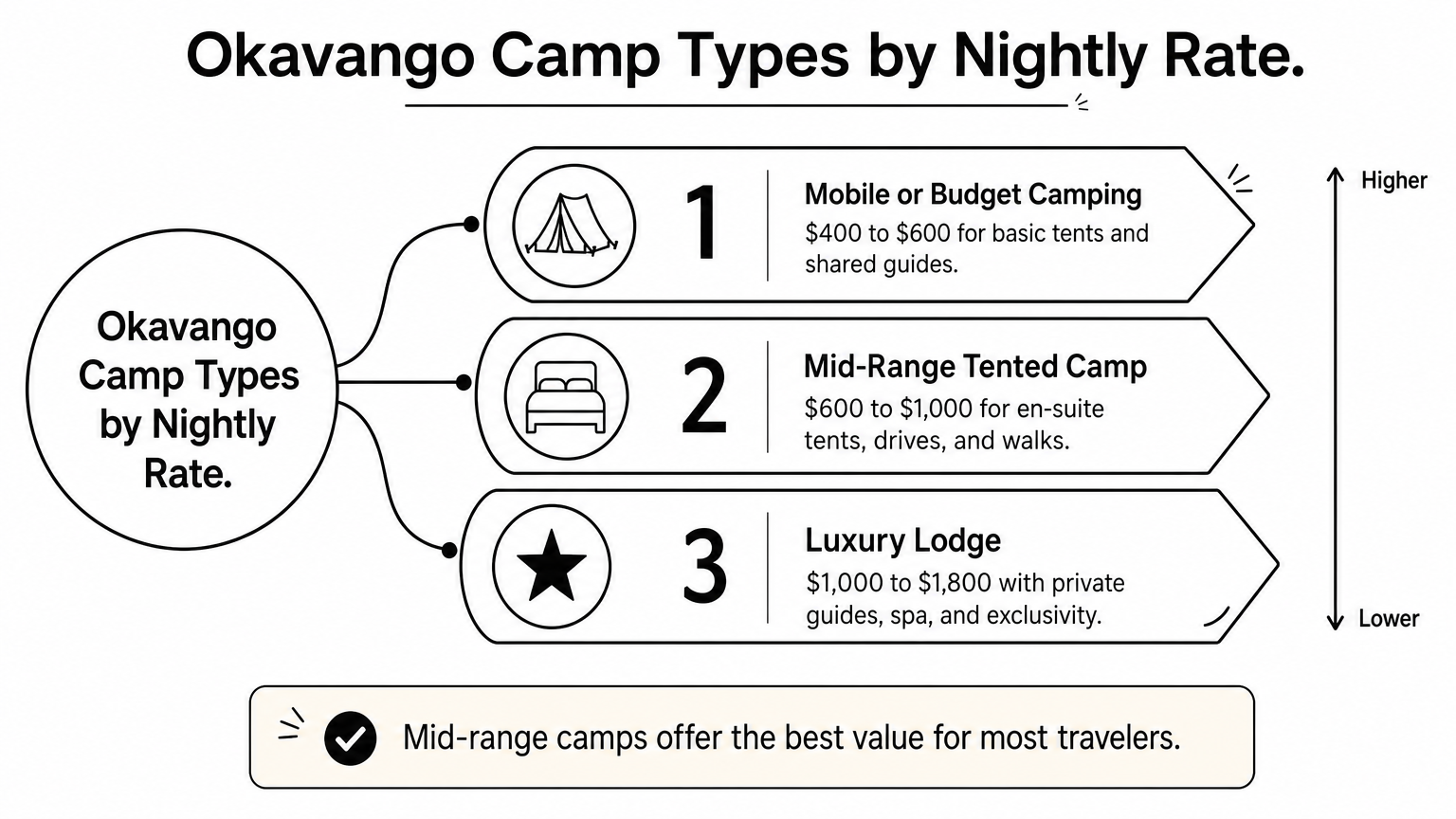
| Camp type | Per person per night | What you get |
|---|---|---|
| Mobile or budget camping | $400 to $600 | Basic tents, mokoro trips, shared guides |
| Mid-range tented camp | $600 to $1,000 | En-suite tents, game drives, walks |
| Luxury lodge | $1,000 to $1,800 | Private guides, spa, small-group exclusivity |
Mid-range tented camps give most travelers the best mix of guiding quality, access, and price.
What the rate leaves out
Flights are the biggest extra. Light aircraft transfers from Maun usually add $250 to $450 per person round trip. Also budget for travel insurance, international flights, and guide tips of about $15 to $25 per guest per day.
Savings come from timing. Green season rates drop 30 percent or more, and multi-night Okavango Delta safari tours often bundle transfers. Before you compare any Botswana Okavango Delta safari lodge, ask exactly what the rate includes.
Choosing lodges, camps, and tours in the Delta
Pick the concession first
Location, which you can see on an Okavango Delta map, shapes your trip more than décor does. Private concessions such as Kwara and Duba allow night drives, walking safaris, and off-road tracking. Moremi Game Reserve is public land, so night drives and walks are not allowed there. Good Okavango Delta lodge options exist in both, but the activity lists differ.
Choose the concession before the camp, because it decides which activities you can actually do.
Questions to ask before you book
Water levels shift every year, so a camp offering mokoro trips in July may not offer them in March. Put these questions to any camp or operator before you pay a deposit:
- Is the camp on water or dry land in my travel month?
- Are mokoro trips guaranteed, or do they depend on water levels?
- Does the rate include flights from Maun?
- How many guests does the camp hold, and what is the guide ratio?
Guided packages versus booking alone
Independent booking suits travelers who enjoy comparing camps one by one. A tour operator saves time, though, and often secures space at small camps that look sold out online. Our Okavango Delta safari tours bundle camp stays, Maun transfers, and add-ons like Chobe and Victoria Falls, so one team handles every handoff between countries.
Ready to plan your Delta trip?
A great safari in the Okavango Delta comes down to three decisions. Pick your season, set a realistic nightly budget, and choose the concession before the camp. Late July to early September gives the most reliable game viewing, and mid-range tented camps offer the best value. Pairing a water camp with a dry-land camp shows you the whole wetland.
Book early, because small camps fill 9 to 12 months ahead for peak dates. Add Victoria Falls or Chobe if you want more variety in one trip. If you would rather not juggle camps, bush flights, and cross-border transfers yourself, talk to our team at Maximum Adventure Trails and we will build a Botswana Delta safari around your dates and budget, starting from our 7-night Victoria Falls, Chobe and Okavango Delta safari.