
12 — Victoria Falls & Adventure
Victoria Falls Tours
Guided sightseeing and walking experiences centred on Mosi-oa-Tunya / Victoria Falls, with designated viewing areas, the surrounding rainforest or spray zone, and opportunities to learn about the Falls' geology, landscape, history and cultural significance.
Overview
Victoria Falls at a glance
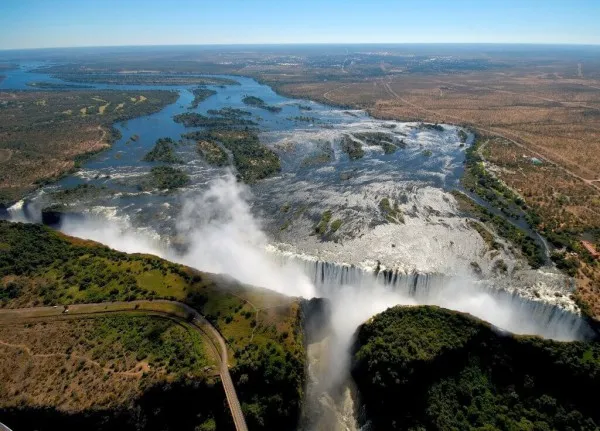
Victoria Falls Tours are guided sightseeing and walking experiences centred on Mosi-oa-Tunya / Victoria Falls, the spectacular waterfall formed where the Zambezi River plunges through a series of basalt gorges on the border between Zimbabwe and Zambia. The Victoria Falls World Heritage property is shared by the two countries and was inscribed on the UNESCO World Heritage List in 1989. UNESCO describes Victoria Falls as the world’s greatest sheet of falling water, with a total width of about 1,708 metres and drops reaching approximately 108 metres.
The name Mosi-oa-Tunya, commonly translated as “The Smoke That Thunders,” refers to the huge spray and mist produced as the Zambezi River descends into the gorges. The spray, mist and rainbows are important parts of the natural character of the site.
A Victoria Falls Tour normally focuses on experiencing the waterfall from designated viewing areas, walking through the surrounding rainforest or spray zone, and learning about the Falls' geology, landscape, history and cultural significance. The exact route, duration, inclusions and departure location depend on the operator and whether the tour takes place on the Zimbabwean side, the Zambian side, or both sides.
Shared by Zambia & Zimbabwe
The Victoria Falls World Heritage property is shared by the two countries and was inscribed on the UNESCO World Heritage List in 1989.
About 1,708 metres wide
UNESCO describes Victoria Falls as the world’s greatest sheet of falling water, with a total width of about 1,708 metres.
Approximately 108 metres
The Falls have individual drops of different heights, while the deepest point of the gorge reaches approximately 108 metres.
Mosi-oa-Tunya
Commonly translated as “The Smoke That Thunders,” referring to the huge spray and mist produced as the Zambezi descends into the gorges.
The Tour
What is a Victoria Falls Tour?
A Victoria Falls Tour is primarily a guided sightseeing experience that allows visitors to explore the designated viewing areas around the waterfall.
Depending on the tour arrangement, the experience can include transportation from a hotel or lodge, entry into the relevant protected area, a guided walk, interpretation of the Falls and surrounding landscape, photography opportunities, and time at selected viewpoints.
The tour is not one standard product with identical inclusions everywhere. Different operators offer different durations, departure points and combinations. Some tours concentrate entirely on the Falls, while others may be combined with transport, cultural experiences or other activities. Visitors should therefore check exactly what is included in their selected tour before booking.
For a dedicated Victoria Falls Tours activity page, the main focus should remain on viewing and understanding Victoria Falls itself rather than treating separate experiences such as helicopter flights, white-water rafting, sunset cruises or Devil's Pool as part of the standard Falls tour. Those activities are operated separately and may have their own requirements and seasonal conditions.
The dedicated Victoria Falls Tours activity should remain focused on viewing and understanding Victoria Falls itself. Helicopter flights, white-water rafting, sunset cruises and Devil's Pool are separate experiences and may have their own requirements and seasonal conditions.
Zimbabwe
Exploring Victoria Falls from Zimbabwe
On the Zimbabwean side, the main waterfall viewing experience takes place within Victoria Falls National Park, which is managed by the Zimbabwe Parks and Wildlife Management Authority (ZimParks). The park covers approximately 23.4 square kilometres and contains a spray-fed rainforest around the Falls.
A guided tour normally follows the established visitor routes and viewing areas along the Falls. The viewpoints provide changing perspectives across different sections of the waterfall, the gorge and the Zambezi landscape.
Victoria Falls National Park
Managed by the Zimbabwe Parks and Wildlife Management Authority (ZimParks). The park covers approximately 23.4 square kilometres and contains a spray-fed rainforest around the Falls.
Established viewing areas
A guided tour normally follows the established visitor routes and viewing areas along the Falls, providing changing perspectives across different sections of the waterfall, the gorge and the Zambezi landscape.
Falls viewpoints
Devil's Cataract, Main Falls, Horseshoe Falls, Rainbow Falls, Armchair Falls, Eastern Cataract, and views towards the gorge and the Victoria Falls Bridge from designated areas.
The exact viewpoints available to visitors and the visibility of individual sections can change according to water levels, spray conditions, park management and other site conditions. A visitor should not expect every section of the Falls to be equally visible at every moment.
Spray Zone
The rainforest experience
One of the distinctive features of a Victoria Falls Tour from the Zimbabwean side is the rainforest created by the spray of the waterfall.
The area immediately around the Falls has a specialised ecosystem influenced by high humidity and regular moisture from the waterfall's spray. UNESCO identifies this spray-zone rainforest as a fragile ecosystem associated with the Falls.
During a walk, visitors may see lush vegetation, water droplets on leaves, mist moving through the trees and changing views of the Falls between the vegetation.
The amount of spray varies considerably with river conditions and season. During periods of high flow, some viewpoints can become extremely wet and visibility can be reduced by dense mist. During lower-flow periods, sections of the rock formations and gorge may be easier to see.
The area immediately around the Falls has a specialised ecosystem influenced by high humidity and regular moisture from the waterfall's spray. UNESCO identifies this spray-zone rainforest as a fragile ecosystem associated with the Falls.
Zambia
Exploring Victoria Falls from Zambia
On the Zambian side, the Falls form part of Mosi-oa-Tunya National Park, located near Livingstone. The Zambian section is part of the same transboundary UNESCO World Heritage property as the Zimbabwean section.
A Victoria Falls Tour from Zambia provides a different geographical perspective of the waterfall. Depending on the route and current access conditions, visitors may explore viewing areas associated with the Eastern Cataract, the gorge and the river below the Falls.
The Knife-Edge Bridge area is a well-known part of the Zambian-side Falls experience. Because this area is exposed to spray and wet conditions, walking conditions can change with the flow of the river and the amount of mist.
Some guided tours may also offer a descent towards the Boiling Pot as an optional extension. This should not automatically be treated as part of every Victoria Falls Tour because the route, physical requirements and access arrangements can vary.
Some guided tours may offer a descent towards the Boiling Pot as an optional extension. It should not automatically be treated as part of every Victoria Falls Tour because the route, physical requirements and access arrangements can vary.
Two Perspectives
Zimbabwe side and Zambia side
Victoria Falls is a single natural feature, but visitors can view it from protected areas in both countries.
The Zimbabwean side includes Victoria Falls National Park and a series of viewpoints along the western and central sections of the waterfall. The route gives visitors access to multiple frontal viewing areas across the Falls.
The Zambian side is within Mosi-oa-Tunya National Park and provides access to the eastern section and viewpoints associated with the Eastern Cataract, gorge and surrounding landscape.
UNESCO specifically confirms that direct frontage viewing of the Falls is possible from both Zambia and Zimbabwe.
A two-country visit therefore involves travelling between two national jurisdictions, rather than viewing two different waterfalls.
Western & central sections
The Zimbabwean side includes Victoria Falls National Park and a series of viewpoints along the western and central sections of the waterfall, giving visitors access to multiple frontal viewing areas across the Falls.
Eastern section
The Zambian side is within Mosi-oa-Tunya National Park and provides access to the eastern section and viewpoints associated with the Eastern Cataract, gorge and surrounding landscape.
One natural feature
A two-country visit involves travelling between two national jurisdictions, rather than viewing two different waterfalls.
Observation
What you can see during a Victoria Falls Tour
A guided Falls visit can provide opportunities to observe several different elements of the landscape.
The Waterfall
The central feature is the enormous curtain of water formed by the Zambezi River. The Falls extend for roughly 1,708 metres, while individual sections have different heights. UNESCO records drops ranging from about 61 metres at Devil's Cataract to approximately 99 metres at Rainbow Falls, with the deepest point of the gorge reaching about 108 metres.
The Gorge
Below the waterfall, the Zambezi has carved a dramatic series of basalt gorges. UNESCO identifies eight spectacular gorges associated with the Falls and explains that erosion continues to shape the landscape.
Spray, Mist and Rainbows
Water descending into the gorge generates enormous amounts of spray and mist. Under suitable weather and light conditions, this can produce rainbows around the Falls. However, a rainbow or clear view cannot be guaranteed at a particular viewpoint because visibility depends on water flow, sunlight, wind and spray conditions.
Vegetation
The rainforest around the waterfall is particularly noticeable because it is sustained by the moisture generated by the Falls. Visitors can encounter dense vegetation and plant life associated with this humid environment.
Wildlife and Birdlife
The surrounding protected landscape supports wildlife and birdlife, but a Victoria Falls sightseeing tour should not be advertised as a wildlife safari. ZimParks notes that baboons, warthogs and monkeys occur in the Victoria Falls National Park and that leopard sightings are possible only on rare occasions. UNESCO also identifies bird habitats associated with the gorges.
Wildlife sightings
Wildlife sightings are naturally unpredictable and should never be presented as guaranteed.
Geology & Landscape
The geological story of Victoria Falls
Victoria Falls is more than a scenic waterfall. It is also an important geological and geomorphological site.
The Zambezi River has cut through basalt formations and created a series of deep, winding gorges. Over geological time, the position of the waterfall has moved as erosion progressively affected the basalt. UNESCO notes that seven earlier waterfall positions correspond with gorges downstream of the present Falls.
During a guided tour, visitors can therefore learn about the Zambezi River and its route through the landscape; basalt geology; formation of the waterfall and surrounding gorges; continuing erosion and landscape change; and the relationship between water flow, spray and the rainforest ecosystem.
This geological context helps explain why the Falls are recognised as a World Heritage property under both natural beauty and geological criteria.
- The Zambezi River and its route through the landscape
- Basalt geology
- Formation of the waterfall and surrounding gorges
- Continuing erosion and landscape change
- The relationship between water flow, spray and the rainforest ecosystem
History & Culture
History and cultural significance
Victoria Falls is locally known as Mosi-oa-Tunya, or “The Smoke That Thunders.” The name reflects the enormous spray and sound produced by the Falls.
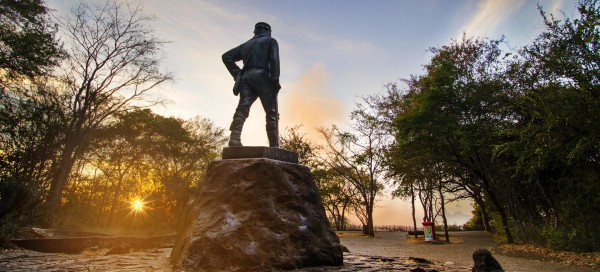
The site has long been associated with local communities and cultural traditions. European explorer David Livingstone saw the waterfall in 1855 and later became associated with the name Victoria Falls. Zambia Tourism records the historical connection between Livingstone and Mosi-oa-Tunya.
A responsible guided tour should distinguish between documented history and local traditions or stories. Cultural stories can be an important part of the visitor experience, but they should be presented accurately and with appropriate context.
Seasonality
When to experience Victoria Falls
Victoria Falls changes significantly during the year because the volume of water in the Zambezi varies seasonally.
During higher-flow periods, the waterfall can produce extremely heavy spray and mist. This can create dramatic atmospheric conditions, but it can also make some sections difficult to see clearly.
During lower-flow periods, more of the underlying rock formations and individual channels may become visible from certain viewing areas.
This means there is no single season that provides exactly the same Falls experience for every visitor. The preferred timing depends on whether the visitor's priority is high water volume, heavy spray, clearer views of the gorge and rock formations, or particular seasonal activities.
Water levels and access conditions can also affect specific experiences, so current conditions should be confirmed before travel.
There is no single season that provides exactly the same Falls experience for every visitor. Timing depends on whether the visitor's priority is high water volume, heavy spray, clearer views of the gorge and rock formations, or particular seasonal activities.
Planning
How long does a Victoria Falls Tour take?
There is no single standard duration for a Victoria Falls Tour.
A guided visit to the main viewing areas commonly takes several hours, but the exact duration depends on the side of the Falls being visited, the selected walking route, the number of viewpoints included, transport time, the pace of the group, weather and water conditions, and whether additional stops are included.
Some organised sightseeing tours are designed as half-day experiences, while other itineraries allow more time at the Falls or combine the visit with other services.
The duration shown for a particular tour should therefore reflect the actual itinerary rather than a universal fixed time.
Side & walking route
The side of the Falls and the selected walking route affect the duration.
Stops included
The number of viewpoints and whether additional stops are included affect the total time.
Transport time
Transport time can form part of the itinerary.
Weather & water
Weather, water conditions and group pace can influence the visit.
Preparation
What to bring
Visitors should prepare for both walking and changing water conditions.
- Comfortable walking shoes: The visitor routes involve walking and some surfaces can become wet or slippery.
- Waterproof protection: A light rain jacket, poncho or other waterproof layer can be useful because spray may be heavy, particularly during higher-flow periods.
- Camera or smartphone: The Falls provide numerous photographic viewpoints, although electronic equipment should be protected from moisture.
- Water: Carry drinking water, particularly in warm weather.
- Sun protection: Sunscreen, sunglasses and a hat can be useful, especially during periods when visitors are exposed to the sun between shaded sections.
- Light clothing suitable for the weather: Conditions around the Falls can vary throughout the day.
- ZimParks specifically advises visitors to bring cameras, binoculars and suitable walking shoes and warns visitors about slippery rocks and cliff edges.
Safety
Safety during a Victoria Falls Tour
Victoria Falls is a powerful natural environment and visitors should follow the instructions of guides, park authorities and designated signs at all times.
Visitors should remain on authorised paths and viewing areas and should not approach cliff edges or restricted areas. Wet rocks can be slippery, particularly where spray reaches the visitor routes.
ZimParks specifically cautions visitors to avoid cliff edges and slippery rocks.
The conditions around the Falls can change with water levels, weather and spray. A responsible guide will adapt the visit to current site conditions and should never encourage guests to ignore safety restrictions for photographs or closer views.
Visitors should remain on authorised paths and viewing areas and should not approach cliff edges or restricted areas. Wet rocks can be slippery, particularly where spray reaches the visitor routes.
Accessibility
Accessibility and physical requirements
A Victoria Falls Tour involves walking, standing and moving between viewing areas. The exact level of physical effort depends on the route and the side of the Falls being visited.
The standard sightseeing experience should not automatically be described as suitable for every mobility level. Visitors with mobility limitations should confirm the specific route, terrain, distance and available facilities with the tour operator before booking.
Optional sections involving steep descents, such as routes towards the Boiling Pot on the Zambian side, can have additional physical requirements and should be assessed separately.
Inclusions
What may be included in a Victoria Falls Tour?
The inclusions depend on the selected package and operator. A tour may include:
Guided sightseeing at Victoria Falls
Only when specifically included in the selected package.
Local professional guiding
Only when specifically included in the selected package.
Hotel or lodge transfers
Only when specifically included in the selected package.
Transport to and from the Falls
Only when specifically included in the selected package.
Entrance fees to the relevant park or viewing area
Only when specifically included in the selected package.
Time at designated viewpoints
Only when specifically included in the selected package.
Rain protection or other equipment, where specifically stated
Only when specifically included in the selected package.
Photography and sightseeing stops
Only when specifically included in the selected package.
Not every package includes all of these. Items such as meals, drinks, park entrance fees, cross-border transfers, visas, travel insurance and equipment rental should only be described as included when they are specifically part of the booked package.
Cross-Border
Cross-border Victoria Falls Tours
Because the World Heritage property extends across Zambia and Zimbabwe, travellers may choose to experience the Falls from one side or visit both.
A cross-border tour involves travelling between two countries and therefore may require appropriate travel documents and compliance with the immigration requirements applicable to the traveller's nationality and current regulations.
A tour operator may organise transfers and assist with the itinerary, but border entry requirements are not automatically the same for every traveller. Passport, visa and other requirements should be confirmed with the relevant immigration authorities before travelling.
For this reason, a tour description should never promise that every visitor can cross the border using the same document or visa arrangement.
Responsible Travel
Responsible tourism at Victoria Falls
Victoria Falls is both a major tourism destination and a protected World Heritage property. The site contains important geological, ecological and cultural values that require protection.
Visitors can help protect the area by staying on designated routes, avoiding litter, respecting wildlife, not disturbing vegetation, following park regulations and listening to local guides and conservation staff.
The World Heritage Committee continues to emphasise the need for careful management and protection of the site's Outstanding Universal Value as tourism and development pressures increase.
A responsible Victoria Falls Tour should therefore combine tourism with respect for the natural environment and the communities connected to the area.
Stay on designated routes, avoid litter, respect wildlife, do not disturb vegetation, follow park regulations and listen to local guides and conservation staff.
Victoria Falls Tours
Frequently asked questions
What is a Victoria Falls Tour?
A Victoria Falls Tour is a guided sightseeing and walking experience focused on viewing and understanding Mosi-oa-Tunya / Victoria Falls, including designated viewpoints and the surrounding landscape.
Can Victoria Falls be visited from both Zambia and Zimbabwe?
Yes. Victoria Falls is a transboundary World Heritage property shared by Zambia and Zimbabwe, and direct frontage viewing of the Falls is possible from both sides.
Which side of Victoria Falls does the tour visit?
That depends on the selected tour. Tours can operate from the Zimbabwean side, the Zambian side, or be arranged as a cross-border experience covering both sides.
Is Victoria Falls a single waterfall or several waterfalls?
Victoria Falls is one major waterfall system consisting of several named sections and cataracts along its broad rim, including Devil's Cataract, Main Falls, Rainbow Falls and Eastern Cataract.
How high is Victoria Falls?
The Falls have individual drops of different heights. UNESCO records approximately 61 metres at Devil's Cataract, 83 metres at the Main Falls, 99 metres at Rainbow Falls and 98 metres at the Eastern Cataract. The deepest point of the gorge reaches approximately 108 metres.
How wide is Victoria Falls?
The waterfall spans approximately 1,708 metres across its rim.
Why is Victoria Falls called Mosi-oa-Tunya?
Mosi-oa-Tunya is commonly translated as “The Smoke That Thunders,” referring to the tremendous sound and spray generated by the Falls.
Will I get wet during the tour?
You may get wet from the spray, especially when water levels are high and depending on the viewpoint, weather and wind conditions. The amount of spray is not constant, so waterproof protection is recommended.
Will I see a rainbow?
Rainbows can form when sunlight interacts with the spray from the Falls, but their appearance depends on sunlight, spray, water conditions and viewing position. A rainbow cannot be guaranteed at a particular time or viewpoint.
Can I see wildlife during a Victoria Falls Tour?
Wildlife and birdlife occur in the protected areas around Victoria Falls, but sightings are unpredictable. The Falls tour is primarily a waterfall and natural-heritage sightseeing experience rather than a dedicated wildlife safari.
Is the Victoria Falls Tour suitable for children?
Many families visit Victoria Falls, but suitability depends on the child's age, walking ability and the specific route. Parents and guardians should follow all park safety instructions and keep children away from cliff edges and restricted areas.
What footwear should I wear?
Comfortable walking shoes with good grip are recommended. Wet conditions and slippery surfaces can occur around the Falls.
Can I visit Victoria Falls without a guide?
Independent access to designated visitor areas may be possible depending on the relevant park and current regulations, but a guided tour adds interpretation about the Falls' geology, history, environment and viewpoints. The exact access arrangements and park rules should be confirmed before visiting.
Can Victoria Falls be visited throughout the year?
Victoria Falls is a year-round destination, but the character of the Falls changes as Zambezi water levels change. High-flow periods can produce very heavy spray, while lower-flow conditions can provide clearer views of some rock formations and gorge sections.
Is Victoria Falls the same on both sides of the border?
The natural waterfall is the same transboundary feature, but the viewing areas and perspectives differ between Zambia and Zimbabwe. Each side offers access to different sections and viewpoints of the Falls.
Plan Your Victoria Falls Experience.
Tell us where you are travelling, when you are planning to go and what kind of experience you want. The exact route, duration, inclusions and departure location depend on the selected operator and itinerary.
Start Your Enquiry →